
The success of AI in healthcare depends on active collaboration between clinicians and technology.
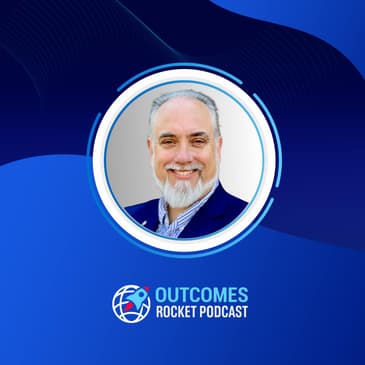
In this episode, Dr. Ed Glynn, the Chief Clinical Officer at RhythmX AI, discusses the pressing issues facing primary care today, such as cognitive overload and access to care. He highlights how his company’s precision care platform is helping clinicians by providing hyper-personalized care through AI, offering real-time patient summaries and evidence-based recommendations. Dr. Glynn stresses the importance of collaboration between clinicians and AI to improve healthcare outcomes and pave the way for a future where technology enhances, rather than replaces, the human touch in medicine. He also shares his vision of a future where AI empowers clinicians to make better decisions, leading to improved patient outcomes.
Tune in and learn how AI is transforming primary care, addressing critical healthcare challenges, and improving patient outcomes!
Resources:
[00:00:02] [SPEAKER_01]: Hey everyone, welcome back to the Outcomes Rocket so excited that you joined us again.
[00:00:08] [SPEAKER_01]: Today I have the privilege of hosting Dr. Ed Glynn. He joined the leadership team of RhythmX AI as their chief clinical officer.
[00:00:19] [SPEAKER_01]: RhythmX AI, let me give you a little bit about them. They are a Gen AI native company with a precision care platform for doctors.
[00:00:27] [SPEAKER_01]: That Dr. Glynn is going to unpack for us. It's all about hyper-personalized care, right patient, right time.
[00:00:34] [SPEAKER_01]: And Dr. Glynn, as the chief clinical officer there, his background is a board certified family physician and informaticists.
[00:00:42] [SPEAKER_01]: Any plans to leverage the unique experiences of the company's clinical experts with the power of AI to help us all in a big way.
[00:00:51] [SPEAKER_01]: So Dr. Glynn, such a pleasure to have you here on the podcast.
[00:00:54] [SPEAKER_00]: Thank you, Saul. I'm looking forward to this discussion.
[00:00:58] [SPEAKER_01]: Likewise, likewise. And look, I always like to start at the beginning, the why behind why leaders in this field do what they do.
[00:01:06] [SPEAKER_01]: To help us understand your journey and tell us what inspires your work in the healthcare space.
[00:01:11] [SPEAKER_00]: Yeah, you know, I think this is common to most everyone who's in the medical field.
[00:01:15] [SPEAKER_00]: It is not simply a job. It is more of a mission that we usually enter in, especially those of us who have entered into direct patient care.
[00:01:25] [SPEAKER_00]: And so if I look back on my history, I have a very kind of unique background like not unlike many clinicians.
[00:01:33] [SPEAKER_00]: I actually looked as a very young individual. I was not looking to being a doctor.
[00:01:39] [SPEAKER_00]: I was actually looking to go into ministry and spend more years of my life studying to be a brother and that a priest.
[00:01:48] [SPEAKER_00]: And actually worked as a hospital chaplain in New York City in the early 90s.
[00:01:54] [SPEAKER_00]: That's where I saw a suffering that was tremendous.
[00:01:58] [SPEAKER_00]: This was when AIDS was just coming out. HIV was not a common word.
[00:02:02] [SPEAKER_00]: And I saw that tremendous amount of suffering. And I also saw that I had the ability to academically do whatever I put my mind to.
[00:02:10] [SPEAKER_00]: So that's when I decided to move from that type of human service to now direct patient care.
[00:02:18] [SPEAKER_00]: And I was the first in my family to enter into medicine. There was no other doctors and so it was a kind of a unique journey for me going from Spanish major in New York City to the first time I looked through a microscope.
[00:02:30] [SPEAKER_00]: And so I was after I had my bachelor degree and going back for premed courses as well.
[00:02:35] [SPEAKER_00]: And it's a non-traditional student, but it was a wonderful journey and I think my background served me well.
[00:02:41] [SPEAKER_00]: And so that's how I first entered into medicine.
[00:02:44] [SPEAKER_00]: You know, I've always been a geek.
[00:02:46] [SPEAKER_00]: I've had the other side of me that I kept separate from my medical side.
[00:02:51] [SPEAKER_00]: When I was in fifth grade, I received my first computer.
[00:02:54] [SPEAKER_00]: It was a TI 994A Texas Instruments and began programming with that.
[00:03:01] [SPEAKER_00]: My father was a very instrumental in having me look into technology early.
[00:03:07] [SPEAKER_00]: He was always an early adopter. He early adopted beta cassettes rather than VHS for those of you who never had your aging yourselves.
[00:03:17] [SPEAKER_00]: But in fact, God bless him Philip Glenn. He was a tremendous technology advanceer. He passed away about a decade ago playing Xbox at right at a year early.
[00:03:31] [SPEAKER_00]: He actually did.
[00:03:32] [SPEAKER_00]: That's how I actually had my technological background, my medical background and then they all came together once I became a clinician.
[00:03:40] [SPEAKER_01]: That's great. Well, really appreciate you sharing that.
[00:03:43] [SPEAKER_01]: And you know, it's awesome to just hear your commitment to this space.
[00:03:48] [SPEAKER_01]: You didn't start. This wasn't even like a path.
[00:03:51] [SPEAKER_01]: But it was that time when you were a chaplain at the hospital where you said, wow, this is a need and you did it.
[00:03:59] [SPEAKER_01]: And then you always had this like informaticist kind of geek in you.
[00:04:03] [SPEAKER_01]: And now I think you're sort of like home with what you guys are doing here at the company.
[00:04:09] [SPEAKER_01]: So why don't you break down what the AI revolution in primary care is here with rhythm X AI and the work that you guys are up to.
[00:04:20] [SPEAKER_00]: Absolutely.
[00:04:21] [SPEAKER_00]: And I'll just continue this story arc right into that. So, you know, I made a fundamental change way back in the day to go into medicine.
[00:04:28] [SPEAKER_00]: And then as I went through my medical career and seeing patients, I naturally found myself engaged in the healthcare operations and in healthcare informatics.
[00:04:38] [SPEAKER_00]: And over time, realize that I had to make a decision because as a primary care clinician, your patients want to have access to you and only to you as they're mentoring guides throughout their healthcare journey.
[00:04:50] [SPEAKER_00]: And I was bouncing too many of those aspects. So what I decided in 2012 was to combine all of my background skills into one area that would be directly an informatics.
[00:05:03] [SPEAKER_00]: In 2012, I joined HCA to be their chief medical information officer for their ambulatory clinics.
[00:05:10] [SPEAKER_00]: And eventually became their chief health information officer for all their ambulatory clinical care.
[00:05:15] [SPEAKER_00]: And did that for about 12 years?
[00:05:18] [SPEAKER_00]: And what I realized over that 12 years was that with the advent of artificial intelligence, we were on and are on a precipice of a new revolution and not just healthcare, but in many different industries.
[00:05:31] [SPEAKER_00]: And again, I see the need to step out of what is very comfortable. I had a great job at a great company and had a very potential long term job there.
[00:05:43] [SPEAKER_00]: But I realized that I am seeing this revolution and as humans, we could miss this revolution. We could actually be bogged down by the complications of actually trying to bring artificial intelligence to the bedside of the patient.
[00:05:57] [SPEAKER_00]: And so I wanted to step out and do what I could to assist to make sure that we don't miss this revolution. And we take care of it as soon as possible, because to be honest, we are in dire streets in healthcare today.
[00:06:12] [SPEAKER_00]: And so that's where I met rhythm XAI. rhythm XAI is a tremendous company with a great lineage. It came from the SAI group which has now four great companies with it. First one is symphony AI and then concert AI.
[00:06:26] [SPEAKER_01]: Yeah, we interviewed the CEO of concert. That's what intrigued me about the project you guys were taken to for sure.
[00:06:33] [SPEAKER_00]: Absolutely. And to come from that rich real world application, artificial intelligence already in healthcare and already in retail space to be able to join with those giants and step on their shoulders.
[00:06:46] [SPEAKER_00]: And now go into direct patient care focusing in our primary care. That's where rhythm XAI comes in.
[00:06:52] [SPEAKER_00]: And I do want to mention, you know, get well health, get well is now a fourth company in this arm.
[00:06:58] [SPEAKER_00]: And that's another tremendous area of expansion for the SAI group. But with rhythm XAI, the focus is truly on assisting primary care clinicians with the most pressing problems in healthcare that we see are happening today.
[00:07:14] [SPEAKER_00]: There's a basic areas here. There is the cognitive overload that every one of our primary care clinicians are facing. The healthcare is changing at such a rapid pace. It's much more rapid than any other generation in the past.
[00:07:29] [SPEAKER_00]: In the past, there was a very methodical way of approaching studies and then doing identifying gold standards.
[00:07:37] [SPEAKER_00]: And then having those gold standards approved and changed by healthcare standards and bodies like American College of Obstetric Psychology, American College of Cardiology, American Academy of Family Practice.
[00:07:49] [SPEAKER_00]: And then those guidelines would be approved and they would be passed through. And then the education would be changed and all that would take about 10 years to adopt something new.
[00:07:59] [SPEAKER_00]: Well now guidelines are changed more than annually and standards of care are changing tremendously, especially in cardiology and primary care and all these areas.
[00:08:08] [SPEAKER_00]: And so that's one major area that we see is a tremendous overload. You know, the human capacity to learn and memorize and be able to regurgitate and follow memorized medicine has not increased in the past decade.
[00:08:21] [SPEAKER_00]: And so, Lauren the past generation or generations aren't computer is amazing. But it's fixed and so that's one of those areas. The second area is now access.
[00:08:32] [SPEAKER_00]: Access is a universal problem across our patients, whether that's getting into for emergent care for urgent care for routine care actually getting in to see a clinician is really difficult.
[00:08:44] [SPEAKER_00]: And then if you need to see a specialist is just as if not in more difficult.
[00:08:49] [SPEAKER_00]: And then you combine the two of those this cognitive overload, this access was mean as a primary care clinician always overburden with there's I have a full patient load.
[00:08:58] [SPEAKER_00]: I've got to see and guess what now I've got more that actually need to see me today.
[00:09:02] [SPEAKER_00]: And that leads to this burnout and we've seen many different angles of this burnout it's the EHR's fault it's the overload fault it's everything there is all these combined forces that are really making it difficult to be a clinician in 2020.
[00:09:16] [SPEAKER_00]: And then find this fourth area is truly the data that we need which is encompassed in some Latin electronic health record but some what outside of electronic health record.
[00:09:27] [SPEAKER_00]: And so trying to get all of this data to the patient some of which is in private care clinics some was in various disparate health systems some of its in billing systems and putting that in front of this overburdened clinician and getting them to be able to really address these problems in a coherent way is.
[00:09:46] [SPEAKER_00]: difficult so combining all of that what we see where the max AIs you have very intelligent the highest train clinicians that we've ever been able to produce is society.
[00:09:59] [SPEAKER_00]: And then we have the idea of holistic health care outcomes which is not just better anyone sees not just better blood pressures that's how most of healthcare is measured now.
[00:10:09] [SPEAKER_00]: How well is this doctor compared to other doctors well let's look at their blood pressure it's not blood pressure control doesn't equal a patients ability to think clearly and communicate with their family and a one see that's control doesn't equal.
[00:10:25] [SPEAKER_00]: So you've got this gap clinicians and holistic outcomes and we see that gap rolling and that's the gap that we're heading into fill.
[00:10:34] [SPEAKER_00]: The main way we're approaching that is by creating this assistant that will intelligently serve up help to the clinicians as are seeing patients in between seeing patients and it does that in four different ways.
[00:10:48] [SPEAKER_00]: First off it provides a summary who is this patient for me and you can dive into that summary and get more details or step back just to get a broad view of the patient.
[00:10:57] [SPEAKER_00]: It serves up key clinical indicators so if you look at and these are dynamic this is not a kind of an algorithm that's approached by every patient gets the same set of notes.
[00:11:07] [SPEAKER_00]: Looking deeply at this individual patient and seeing what their current and inferred diseases are serving up the key clinical indicators to the clinician so they're aware of those.
[00:11:17] [SPEAKER_00]: And then keeping those two in mind and standard evidence based medicine with guidelines as well built into it as guardrails we serve up recommendations to the clinicians.
[00:11:29] [SPEAKER_00]: So you've got those three key aspects but then the final aspect is this co pilot which you can have a dialogue back and forth with about the patients conditions about the patients medical record etc.
[00:11:40] [SPEAKER_00]: And so that's the beginning of this healthcare platform is serving up these key intelligence recommendations and co pilot.
[00:11:48] [SPEAKER_01]: That's great. No, thank you for that Dr Glenn definitely it's a problem right I mean clinicians are burned out we've got awesome resources in the market now around the note taking being able to spend time with more time with patients less time on the EMR.
[00:12:05] [SPEAKER_01]: And now you're offering up an entirely new opportunity where clinicians can actually get some cognitive relief and an opportunity to you know work with this intelligence platform.
[00:12:20] [SPEAKER_01]: To take the next best actions and I love that you focused on co pilot because a lot of these technologies are still not all the way there they depend on the physician to make the choice.
[00:12:30] [SPEAKER_00]: I think that's a key point and it's a key ingredient to our secret sauce is really we don't see this as hey we're building a bridge to your AI doctor the future we see that with holistic healthcare outcomes that the true idea of health.
[00:12:45] [SPEAKER_00]: It requires a human individual with artificial intelligence and a patient combined together the three of those together that is our platform and you can't remove any of those three aspects to have our platform you have to have all three.
[00:13:02] [SPEAKER_00]: So we'll always keep at the front center real world clinicians our clinicians we have clinicians that are working with us as we enhance and build this platform out at every level.
[00:13:13] [SPEAKER_00]: Every level from building into our guard rails to understanding our engineering with artificial intelligence to our applications at the top.
[00:13:22] [SPEAKER_00]: We're always including real world clinicians when I say real world clinicians it's unlike myself who is now moved out of direct patient care.
[00:13:29] [SPEAKER_00]: These are individuals who are on a daily basis seeing patients in their office and at night weekends are working with us to make this platform because they're energized.
[00:13:38] [SPEAKER_00]: They see the future that this revolution could create an instilling new confidence you know a lot of times when a clinician walks in many times they make bare minimal changes or they automatically refer to a specialist simply because of the cognitive overload and the fear of not knowing exactly what I could do for this patient.
[00:13:58] [SPEAKER_00]: In this time and honestly the system is just overloaded with that type of care they can't move forward.
[00:14:05] [SPEAKER_00]: So these real world clinicians working with us are very excited to have that new confidence again in remembering yep I just needed that little reminder yeah I knew that that was in the guidelines but I didn't see how it applied to this patient in this hyper personalized way.
[00:14:19] [SPEAKER_00]: And they move forward to care for their patients in this with new confidence and actually as you said with that freedom of being burdened by trying to memorize everything.
[00:14:29] [SPEAKER_01]: Totally I love it yeah there's no need to memorize everything we have tools and we have the opportunity to leverage technologies like like these.
[00:14:38] [SPEAKER_01]: And so really appreciate highlighting the problem the solution now how do we move forward right like we have these opportunities.
[00:14:47] [SPEAKER_01]: What's the biggest obstacles you're seeing out there for adoption of these types of systems.
[00:14:53] [SPEAKER_00]: So I think the big problem was when electronic health records and I started very early on and was a true believe in electronic health records still him but the revolution is coming thank goodness.
[00:15:04] [SPEAKER_00]: We are still in the era of should we have a V6 or V8 engine in this EHR rather than looking at should each tire have its own independent electric engine.
[00:15:16] [SPEAKER_00]: We're in the rudimentary stages of continue to really understand how to create and facilitate healthcare delivery with technology and I'm looking forward to this revolution that's going to happen because right now what we really focused on was assuring that we had.
[00:15:32] [SPEAKER_00]: Enough information in electronic health record to properly build for the patient and hidden amongst these building requirements and these regulatory requirements and these secondary outcomes that we focused on when I say secondary outcomes.
[00:15:46] [SPEAKER_00]: I mean, did the patient have an A1C that was controlled rather than does the patient experience a holistic sense of physical emotional and social health.
[00:15:59] [SPEAKER_00]: So as we're moving forward here what I really found that the biggest difficulty was getting the information in front of the clinician and in front of the platform.
[00:16:09] [SPEAKER_00]: So we have information that are across disparate health systems which are across disparate electronic health records and even though we begun to approach us with ideas of common well and care quality.
[00:16:22] [SPEAKER_00]: Getting that information all together in a readable format for a platform to be able to serve up that information has been the biggest challenge and much more challenging than it should be.
[00:16:35] [SPEAKER_00]: And so I'm looking forward to artificial intelligence actually helping us more in these standards to assure that we can put the data together in consumable ways.
[00:16:46] [SPEAKER_00]: For these platforms to really help us revolutionize healthcare. So I think the biggest setback right now is getting that information it's vast and it's disparate and it's all over the place.
[00:16:57] [SPEAKER_00]: And so pulling that together and including a very key aspect which we still don't do a good enough job with and that's the patience information that's in their head.
[00:17:07] [SPEAKER_00]: What are their expectations? What's their biggest fear when they come to the doctor what are they afraid to mention what is inside of them that perhaps needs to have the ability to come out when they walk into that room and unfortunately a lot of times they walk into that room and the clinician has a prepared way.
[00:17:25] [SPEAKER_00]: You have diabetes hypertension depression low back pain and we are going to address those because I have these secondary measures that are against me.
[00:17:34] [SPEAKER_00]: But it perhaps doesn't include that the idea of what is health to this patient. So I'm really looking forward to getting all that information.
[00:17:42] [SPEAKER_00]: Taking that cognitive burden off the clinician so that they can sit down and really refocus on that relationship and developing together what the idea of health is for this patient.
[00:17:52] [SPEAKER_01]: Love that thank you for that doctor Glenn and look one last question here is this available.
[00:18:00] [SPEAKER_01]: For use today, you know, is this something that somebody can call you they listen to our podcast and they're like hey wait a minute I'd like to open this up a little bit and see if I could use this is it available.
[00:18:13] [SPEAKER_00]: So right now we have two customers who are partners there are first lighthouse partners.
[00:18:18] [SPEAKER_00]: Centaurial health system and presbyterian health system in New Mexico both of those health care systems have been instrumental in helping us.
[00:18:26] [SPEAKER_00]: We are now very busy with our next and final few lighthouse customers and individuals who are interested in reaching out to us.
[00:18:34] [SPEAKER_00]: And certainly reach out to us at rhythmx.ai and they can reach out to myself as well.
[00:18:41] [SPEAKER_00]: We are always looking and discussing with many different customers and again what we're creating here is not simply a plug-in play application as much as this is the platform that begins in primary care and focuses on that hyper personalized care for that patient.
[00:18:56] [SPEAKER_00]: But we have great ideas of where this is going to go in the future.
[00:19:00] [SPEAKER_01]: I love it. No, this is fantastic Dr. Glenn. I imagine opportunities and referrals to specialty care prior authorization et cetera and primary care is the beginning so absolutely.
[00:19:13] [SPEAKER_01]: I mean, it's hyper focus.
[00:19:15] [SPEAKER_01]: Well, this is great folks take advantage of our time today with Dr. Ed Glenn.
[00:19:21] [SPEAKER_01]: He is just an extraordinary individual and again as a reminder chief clinical officer at the company.
[00:19:28] [SPEAKER_01]: You're going to want to make sure you check out him.
[00:19:31] [SPEAKER_01]: You're going to want to make sure you check out rhythmx.ai and all the work that they're up to check out the show notes for ways to get in touch with him in the company.
[00:19:38] [SPEAKER_01]: Dr. Glenn really appreciate you being with us.
[00:19:41] [SPEAKER_00]: Thank you so much.
[00:19:42] [SPEAKER_00]: I look forward to our next conversation.
[00:19:44] [SPEAKER_00]: Looking forward to it. Thank you.