Specialty care remains one of the biggest black boxes in healthcare, creating delays, unnecessary referrals, and major frustration for both patients and primary care providers.
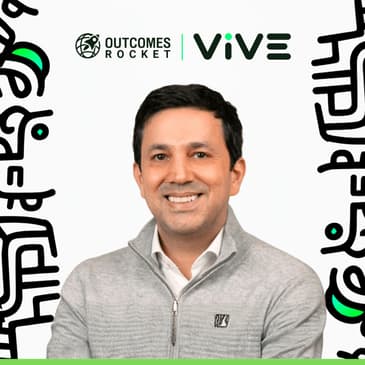
In this episode, Reza Sanai, co-CEO and co-founder of PicassoMD, discusses how his team is helping primary care providers access specialist expertise in near-real time while also improving the referral process when specialty care is truly needed. He explains why specialty access often breaks down at the point of care, how fragmented provider data makes navigation more difficult, and why better coordination between primary care and specialists can reduce unnecessary ER visits, improve triage, and speed access to the right care. Reza also shares how PicassoMD is supporting rural and underserved communities, why visibility into the patient journey matters so much, and how thoughtful partnerships are essential to making innovation work in real healthcare settings.
Tune in and learn how smarter specialist access could help close one of healthcare’s most persistent care coordination gaps!
Resources:
● Connect with and follow Reza Sanai on LinkedIn or reach out via email.
● Follow PicassoMD on LinkedIn and visit their website!
[00:00:10] Hello everyone and welcome back to the Outcomes Rocket, reported live here at Vive in Los Angeles. So excited to be hosting an outstanding guest today, Reza Sanai. He is the Co-CEO and Co-Founder at PicassoMD. Reza, welcome to the podcast. Thank you very much. Thanks for having me. Yeah, so how's the meeting going for you so far?
[00:00:33] So far, great. A lot of interesting presentations. I think AI has definitely been the star of the show. But good to meet up with some of my colleagues and kind of learn different perspectives. So, so far, very, very positive. I love it. And so for our listeners and viewers, help us understand what PicassoMD does.
[00:00:54] Yeah, so we are a platform kind of dedicated to specialist access. So, you know, we have a lot of organizations that concentrate on primary care, which is an incredible part of the health ecosystem. But when it comes to specialty care, it often is a black box. So, you know, we try to think of creative solutions to help create more streamlined communication between primary care providers and specialists.
[00:01:20] So, what we call our curbside feature. And then once, if and when a referral is necessary, we try to help automate that transition of care to more thoughtful specialists and kind of create some intelligence around that process to make sure patients get in faster. And then in more rural markets, we're, you know, just launching an ability to do actual teleconsultations to help scale access in the more rural and underserved communities.
[00:01:46] So kind of that package is kind of what we what we try to offer as a value proposition. That's great. And so the platform is it does it sit with primary care? Yeah, we're as a staunch believer that care should should say with a medical home and that medical home should be the primary care provider. But what we've as a cardiologist by training. Yeah. And so what we kind of learn in our life is like everything is siloed there.
[00:02:15] And as a result of that, you just have a difficulty kind of accessing expertise or kind of thought processes. So if our job is to kind of blur those lines and when appropriate and a referral is necessary, kind of really take that white glove approach to help get that patient to a more thoughtful specialist in a more timely fashion. And and that overall vantage point is is kind of where we live, but mainly PCP facing. Understood. Got it. Got it. Really, really helpful.
[00:02:43] Reza. And I didn't realize you're a physician. So, yeah, yeah. That's so great. Still on Saturdays. So are you still seeing patients on Saturdays? Yeah, that's right. As staying in to you with the skill. Yeah. You love what you do. Obviously, running a technology platform with a team is is is a 60 to 70 hour work week. But when you know, you don't want to lose touch with what brought you into medicine in the first place. So it's hard for me to let go. So, yeah, still Saturdays. Awesome. That's great.
[00:03:13] So tell us a little bit more about, you know, the pain points that you're addressing. And and who ultimately buys this? Yeah. So what we want to try to solve for is the atomic unit problem. I just believe if you can solve for the atomic unit, then you can solve care and a multitude of modalities. So that atomic unit problem is a primary care provider seeing a patient. So in that 15 minute window.
[00:03:43] Two major decisions are made and that those two the same two decisions are being made, whether you're in a rural clinic and FQHC or a high, you know, high flying PCP practice in the urban areas. And that first question is like, what do I do with this patient? They're sitting in front of me. You're here presenting with X, Y and Z symptomology. Like, what do I do next?
[00:04:10] And so our first solution creates a real time near real time, about 15 second connection between the PCP and the specialist. So you have a dermatology question. We connect with the dermatologist in 15 seconds, a cardiology question, a cardiologist in 15 seconds. And if you can imagine for every major medical and surgical specialty, if we can connect you with the specialist in real time, the outcomes would be, you know, probably elevated decision making. So less ER visits, less referrals coming out of the PCP office.
[00:04:40] And then if a decision is made to refer, the next question is, well, who do I send this patient to who wants to see a female cardiologist who's Spanish speaking and that is, you know, mission oriented? At that point, it's kind of becomes very difficult to navigate. So if we can just take over that entire process and help navigate the patient to that specialist and help with that care coordination, like that package is generally what we offer. We have two personas of who we partner with.
[00:05:10] The first are value-based organizations. So ACOs, advanced primary care groups who are looking to really manage their total cost of care for specialty. And the second, which came more organically, is just helping scale specialists access in rural and underserved communities. So, you know, we partner with over 60 FQs across the country, as well as with the umbrella organizations.
[00:05:32] So you can imagine in rural Mississippi, when a provider has a question and there's really no specialist for their patients to access, now we're able to kind of give them that access in real time. Really, really great to know and understand the segments. Yeah. You know, one of the big problems in healthcare is provider data and even directories. How does that factor into sort of the platform and then making navigation easier?
[00:06:02] That's a very astute question. Yeah. So there's, that is a big problem. Like who does what and for what patients? And so that's... Is it in network? Is it in network? No, exactly right. Not at the carrier level, at the plan level. Yeah. And what's the lead time to consultate? So you send a referral out. If the patient is not able to schedule for six months, is it really, are they going to really wait six months to see that specialist?
[00:06:29] So all of that is part of the kind of data inputs that we kind of put into our referral solution. And then I think a key unlock is also giving the patient some autonomy in the journey. So the one component where we are currently having patient face is that last mile where we hand off a referral to you, but also allow you to re-navigate based on...
[00:06:54] Sometimes you may work at location X and live in location Y, and you may want to re-route the referral to someone closer to where you live, not where you work. Well, how do you maintain that quality of specialist and navigation? So that's kind of what we do. But to your point, that is a big unlock. So we have many inputs that kind of help us with that problem, but that is a constant struggle.
[00:07:22] The quality of data and scrubbing it to a fashion and layering in technology to make sure that the output is appropriate and not just a guess. Yeah, for sure. Yeah, it's a big issue. And I'm sure that's where you and your company are providing some really opportunities to do the matching in a way. And augment that, right.
[00:07:44] And outside of what's available in the community, how do you then augment that to provide that extra layer of value? What's the most important innovation that your team is focused on right now, Reza? And what problem is it designed to solve? Yeah, I mean, I think we're not innovative. What we do is we identify problems and we provide solutions to address those.
[00:08:11] So I think that initial workflow where we match PCPs with specialists, we've been operating that for six years now and it works pretty well. On the edges, we can improve that kind of workflow. But I think that transition of care and really leveraging technology to help identify the right specialists. But then secondly, helping with that care coordination.
[00:08:34] That is where we spend probably the majority of our time and energy now is how do you create visibility into the patient journey for both the patient as well as the PCP? And then create processes and technology and workflows to optimize that and then feed that back to the PCP. That referral loop or journey, I could identify 20 points of failure along that process.
[00:09:04] So we just systematically address it, whether it's through homegrown technology, AI, etc., to address that in a thoughtful way. That's fantastic. CMS is doing a lot around this space to allow technology to play a role. How is that impacting the organization and your ability to help these larger organizations deliver better care? Making like teams, you know. A team approach. Exactly. Yeah. So that's a great question. Like who do you send that patient to?
[00:09:34] Historically, that's been brick and mortar specialists, correct? That's not the world that we live in now, right? There are organizations that I call them digital point solutions that are really best in class at scaling, at least for the population, specialty care. So it could be digital point solutions. It could be AI-led digital solutions that access model, as an example, is trying to help facilitate. And it can also be specialists as well that do telemedicine or in person.
[00:10:04] So there's like four layers of care. So our goal is to be the entry point to facilitate care in each of those four models and tie it all together. So you may end up going to a digital point solution, but if that patient needs to be then sent to an in-person, you know, skilled facility, how do you facilitate that process? So that's kind of where we live. That's awesome. Yeah. It's building out that ecosystem that reflects today's reality. Yeah. Right. Which is a good thing.
[00:10:33] Yeah, it is. It's better to have more optionality than less. Definitely. Definitely. As we close out today's, you know, session, what would you advise our viewers and listeners and using a platform like yours to solve the challenges that they're facing? I think there's a lot of great solutions out there. So for me, it's really about priority. It's a successful partnership for us has generally largely been driven by the partners we identify and work with.
[00:11:03] We're not a solution isolation. If we were, you know, we would be a multi-billion dollar company. What makes us successful is that partnership thread. So what I would recommend is like really prioritizing the North Star of an organization and then identifying a thoughtful way of potential partners and then meeting with them and seeing how you can work as a team to address those problems and having an iterative approach.
[00:11:30] Meaning, meaning I say we probably get 50% of what we do right now on month one. And our goal is to partnership to increase that percentage over time to align ourselves with our partners. But you can't do that just off the shelf. That really does take a little bit of a nuance in how you implement and how you go to mark with each organization. Thank you for that. And if people want to learn more about you, about Picasso MD, where can they reach out?
[00:11:58] Yeah, you can just email me, reza at picassomd.com. You can go to our website, picasso.md. We're always available and happy to learn. That's fantastic. Well, there you have it, ladies and gentlemen. Dr. Reza Sanai with us today. Co-CEO and co-founder of Picasso MD. Make sure you check out the show notes so you can get all the ways to get in touch with him and the team. Thank you all for tuning in. And Reza, thanks for being with us. Thank you, man. Take care.