Better clinical decisions require more than evidence; they also require the right information inside the physician’s workflow at the moment it matters.
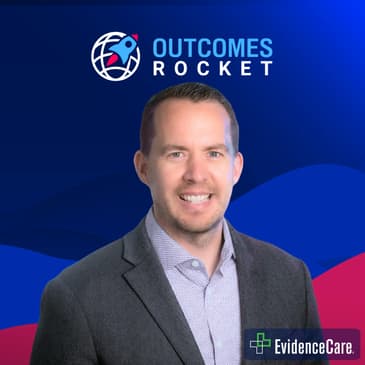
In this episode, Dr. Brian Fengler, Co-Founder and Chief Medical Officer of EvidenceCare, explains how clinical decision support helps health systems improve patient care while addressing operational and financial challenges. He discusses how EvidenceCare integrates directly into EHR workflows to guide physicians, reduce administrative burden, improve revenue capture, and increase visibility into utilization and costs. Brian also explores how the BetterCare platform supports the patient journey through AdmissionCare, CareGauge, and Care Insights by providing real-time feedback on care variation and performance. Finally, he shares his perspective on how AI and ambient documentation are reshaping physician workflows and enhancing the patient experience.
Tune in to learn how actionable data, workflow integration, and physician engagement can help health systems deliver better care while improving efficiency and financial performance!
Resources:
[00:00:03] Hello, everyone, and welcome back to the Outcomes Rocket podcast. I'm thrilled to be with an outstanding leader, physician, and just an incredible person in healthcare. His name is Dr. Brian Fengler. He's the co-founder and Chief Medical Officer of EvidenceCare.
[00:00:23] During his career as an emergency medicine physician, Brian saw and experienced a provider struggle to access evidence-based content quickly and at the bedside. And looking to fill this gap, Brian founded EvidenceCare in 2014. They're doing extraordinary things in the space, and I'm excited to give him the platform. Not that he needs one, because he also runs the Better Care podcast with his co-hosts there at the company.
[00:00:52] But looking forward to our conversation today, Brian. Thanks so much for joining us. Yeah, absolutely. Happy to be here, Saul. Yeah, look, I gave a preview on sort of your background, but tell us a little bit more. Yeah, happy to. A trained emergency medicine physician. Practiced emergency medicine for 10 years in Nashville, Tennessee.
[00:01:12] It was through my practice of medicine that I came up with the idea for evidence care, recognizing that there's a gap, especially when EHRs were first being deployed 10 years ago, in regards to really giving clinical guidance to physicians and nurses, helping them understand what the best treatment would be for their patients to realize the best outcomes and make the best care decisions. And so that's why I founded EvidenceCare.
[00:01:39] I think it's brilliant. And by the way, I've been impressed as I talked to a lot of leaders in health care, a lot of entrepreneurs. I'm impressed by the number of emergency physicians in the ranks of entrepreneurs. What's your thought on that? Why? Yeah, I think by very nature, folks who go into emergency medicine are folks who have a lot of interest in a lot of different things.
[00:02:00] I think that by nature of our schedules, it actually allows us to have some flexibility to be able to do some activities outside of the hospital. Whereas with some other specialties, if they're in their office from 9 to 5 Monday through Friday or through their surgeon with patients in the hospital 24-7, it's just harder for them to get away from the hospital and be able to have the time and energy to devote to outside projects.
[00:02:30] That's fair. Yeah, I never thought about the structural piece, right? You definitely have freedom, more freedom to do different things. No, I appreciate that highlight. Look, so what got you into health care? What inspired it all? Yeah, I mean, that goes back to my childhood. My mother was a labor and delivery nurse. Was. Yep. Cool. Daycare when I was growing up during summers was hanging out at the hospital at the nurse's station. That's awesome.
[00:02:56] By the age of about 14, I started getting pulled into deliveries and delivered my first baby when I was four years old. Yeah, you can't do that these days. About different days. Oh, don't allow that. But that's where I got my first flavor for medicine and taking care of patients and proceeded through college with the thought around medicine. And then actually my older brother got sick and had cancer and actually passed away from cancer when I was in college.
[00:03:27] And seeing people through that and the amazing care that his physicians provided to him just really reinforced that mission for me to go down that path of becoming a doctor myself. Wow. No, that's I'm sure that was tough, Brian. And kudos to the moms out there, to Ms. Fangler. Is she still with us? No, she passed away. She passed away. You know what? She's in our hearts and the power of mothers in this world and how they inspire us, like just an incredible thing.
[00:03:56] And for you, man, like tough times with your brother there that you just had this all these forces pushing on you to do this. Yeah. Ultimately, what are you still practicing? I never asked you this. No. Okay. I stopped practicing around 2016. Okay. At that point in time with evidence care, we had raised enough capital that we were starting to hire our first full-time employees. Cool.
[00:04:22] But evidence care was still fitting in between my clinical shifts and nights and weekends. And finally got to the point where my co-founder and I decided, hey, if we're going to do this, we need to do this full-time. And so I actually took a year sabbatical from the hospital. And that year went by like that. Wow. And very quickly. And they said, hey, we're ready for you to come back. And I said, well, I'm not ready to come back. Wow.
[00:04:48] And so, yeah, haven't been had any direct clinical care in close to 10 years now. But it's cool that you did it that way. You had the option, right? You had the option to go back. The year flew by. And you're like, I'm down the right track. I feel like I'm doing the right thing here. Absolutely. Yeah. It was great to have that option. And I think that the thought process was, let me give this a year.
[00:05:12] If this fails terribly, you know, I can go back to practicing medicine, which I love doing and I enjoy doing. But, yeah, at that point in time, things were starting to pick up with the business and we were growing. And I knew that this was the path. That's so great. I'm in the middle of reading Scott Becker's book. He just brought up. He's a good friend of mine. Great companies. And there's a chapter in there about do you burn the boats or not? I think, Brian, this is a unique way to do it.
[00:05:41] So kudos to how you did it. Yeah. Thank you. Yeah. All right. Let's shift gears to evidence care. Talk to us a little bit more about the company. What do you guys do? How is it different? Yeah. So our core mission is to live at that intersection of physician workflows and the EHRs, helping to give them that decision support and nudges to help them make the best care decisions for their patients.
[00:06:05] But also where we've leaned very heavily into is also the operational and financial impact side of things. I didn't fully recognize that at the beginning of the company. My original mission was let's just deliver better care to patients. And we thought that was enough. But obviously, all that's happened in healthcare now over the last five, six years with COVID and coming out of COVID. It isn't enough for us to just help doctors deliver better care to patients.
[00:06:32] We also have to make sure that we are helping the hospitals perform more efficiently. And that's where we've really, with all of our tools, brought that together so that we're not only helping the doctor's workflow, we're not only helping the patients with better care, but also having that operational and financial impact. We're really hitting all the checkboxes that the health systems are going to want to see in their evaluation of our products to say, is this going to add value to our organization? Yeah, that's great, Brian.
[00:07:01] You guys are hitting that quadruple aim at the end of the day, right? And is there any story you would point to as like a success story of some of the work that you've done? Yeah, absolutely. We have dozens of health system clients across the country, the biggest of the big down to very small. And at the end of the day, I guess I don't have any particular ones I'm going to highlight, but just in the broad stroke is our products are very successful and in helping to make
[00:07:30] the doctor's job easier and make it so that their workflow is more efficient and make it so that the patients are getting the right care. And then on the back end, being able to track that from an analytics perspective and show the CFO, hey, I've gotten a 10x or a 20x return on this product deployment. To your point, everybody's happy and we've had great success with that across our clients and that's what keeps us excited every day. That's great. Yep.
[00:07:59] So then it's the BetterCare platform and within the umbrella, there's admission care, there's care gauge and care insights. Help us understand the ecosystem for anybody that may not be familiar with it. Yeah. Yeah. So we do, we have created a platform these days with all the EHRs are doing. Nobody wants to buy a point solution and have a hundred different vendors. So we have built our platform.
[00:08:27] We're continuing to add more tools to the platform so that our health systems can have a partner that they can work with that solves multiple challenges. Our platform is integrated with Epic, Cerner and Meditech. We do focus on the acute care market for patients that are in the hospital. But as you mentioned, our three products, so admission care and all of our products follow the patient journey. Okay.
[00:08:52] So, you know, admission care is a tool that gets used at that time of decision to bring a patient into the hospital, making sure that we're getting that patient in the appropriate bed status, which is not super exciting from a clinical perspective, but very important for the hospital from a reimbursement perspective to help them optimize revenue capture and reduce denials. So that's admission care. And we do that all automated within the physician's workflow, reduce the amount of administrative burden coming back to them.
[00:09:22] Care gauge kind of sits in the middle. Care gauge gets utilized once the patient's in the hospital. It gives the doctor's real-time visibility into utilization of imaging labs, medications, length of stay, as well as cost of care. Because it's our thesis that most physicians want to be good stewards of care resources. They know what's going on in healthcare. They know that we need to be mindful of cost of care. Doctors have no tools today to help them do that.
[00:09:52] They're not going to look at claims data that's six months old. And the payers have more information on all of this than even the health systems do. And the doctors really don't have any of this information. They're flying blind. At a disadvantage, right? Yeah. You don't have the right tools. Yeah. Yeah. So care gauge is these little gauges. They're color-coded. They're right within the doctor's workflow in the EHR. They're green, yellow, or red. And it gives them that real-time visibility. And it is real-time.
[00:10:21] If they go and they place more radiology orders, or if they go to place a lab order that's an expensive lab, they might see those gauges move. Now, think about like the gas gauge in your car. They usually ignore it when it's green. Right. But when those gauges go yellow, go red, kind of bothers them a little bit. What's going on here? Why are we in the red? And then they start to see where that care variance is happening, where those extra radiology
[00:10:50] tests, those expensive labs and medications that they never had the visibility on. Because within any class of medications, there's a dozen options. A lot of times physicians use the option that they've just become comfortable with during their training. A mentor liked a certain medication. A drug rep took them out to a dinner. So they've used that one option within that drug class for years.
[00:11:19] But if you told them, hey, did you realize that option costs $150 a dose three times a day? And there's the other option costs a dollar a dose. Boy, they would change their behavior pretty quick. And that's the kind of, and we see that change in behavior really quickly with CareGage. Wow. Just by giving the doctors that transparency and that visibility that they don't have today. That's fantastic. Yeah. And then Care Insights. So new product on our platform.
[00:11:47] We actually acquired a company last year. Saw that. Yep. Yep. So we acquired. Congratulations. Thank you. Yep. Company was called Agathos. Great team and great product that they built. We've fully integrated that product into our platform. We've rebranded that product to be called Care Insights. And really, we think of Care Insights as a physician performance improvement tool. Every health system these days working with their physician groups.
[00:12:13] And really, we're kind of targeting emergency doctors and hospitalists with this tool. They're looking to optimize their physician performance around patient throughput, utilization, quality measures. And what Care Insights does is take all of that data and make it actionable for the doctors. We do that with one text message a week to the doctor's phones. That one text message is that week's metric of the week.
[00:12:41] And everybody in the group gets the same text message. And they all can see their performance data unblinded with the rest of their peers in their group. Now, in some cases, that brings some uncomfortableness. Because if I'm the doc in the group that utilizes CT scans twice as much as my peers, I need to have some self-reflection and recognize where my care pattern may be different.
[00:13:08] Maybe I need to talk with a colleague who's a high performer on that metric and learn from them how they think about that differently. And what we see with that tool is a 5% to 10% improvement on each of these metrics. That then when we stack them on top of each other, we then see increased hospital throughput, decreased length of stay, improved quality scores, reduced utilization. Basically, all the things that hospitals are trying to achieve today. But that's all really hard.
[00:13:37] Hospitals have all this data, but doctors don't log in and look at dashboards. And if they do, there's 20 metrics and they don't know what to do with it and it's too confusing. And so really, we designed Care Insights to be that physician performance improvement tool. That's fantastic. I love that it's one text once a week. We get bombarded by so many different things. And texts are great. Like for me, it's text and LinkedIn direct messages. That's how you can get me, right?
[00:14:06] And the text breaks through a lot of things. Oh, yeah. Well, and it's interesting. Every health system we work with, they have all the data, analytics teams, Power BI or Tableau or all these things. So they're like, we have all these. We built all these metrics. And we say, well, do you track? Most of them don't even track if the doctors look at them or not. Those that do track it say, yeah, we get about 10% login rate every month. We get 90% physician engagement every month with our platform.
[00:14:35] And to your point, if I got the text right now and I'm busy and I don't look at it, but two hours from now, somebody was like, hey, do you see the report today on CT scans? You're really high on that. Like, boy, you better get on the report because everybody's seeing it unblinded across the board. That's fantastic. I love it. Thanks for breaking it down. It sounds like from admission to discharge, the visibility in between,
[00:15:01] there's a clear way in these really kind of margin compressing, the margin compressing time that we're in right now to actually make an impact. So love that. Look, businesses don't get built without challenges. Brian, what's an example of a challenge you guys have run into that's made you better? Yeah. I mean, there's a lot of challenges in healthcare. Big, beautiful bill. Hospitals are under financial and budget pressures. So much turnover within hospital system leadership.
[00:15:31] We spend two or three years building really good relationships with our executive team at particular health systems. And then they leave. And our contract is still with that health system. So then we have a completely new team that we have to introduce ourselves to, communicate the value proposition. So that's challenging as a small company. Certainly the EHRs are doing more and more and more and more of the health systems are hearing the messaging from the EHRs of, we're all you need.
[00:16:00] Trying to fit within that ecosystem and demonstrate as a company that's very focused on our tools and has spent 10 years building these tools, how these tools are best in class and how these tools do what your EHR doesn't do. And even if they're saying they're going to do it, probably won't do it for two or three or four years and won't do it as effectively as we do it. And then, of course, you have all the AI stuff changing every industry. It's changed the way we do our business over the last 18 months,
[00:16:30] both in terms of the functionalities of our products, embedding AI within those products, but then also how our teams operate to deliver value as quickly as possible to our health systems and communicate data back to them and give them insights. It's moving fast and you're dodging the hits as they come, figuring it out, being resilient. And you guys have done a beautiful job. You've been in business for, what is it, over 10 years now? Yeah, 10 years. Growing massively.
[00:16:58] I've seen the accolades you guys have received from Nashville and even nationally. So kudos on the growth. Brian, you had to point to one trend or technology that you think is going to change the game, help systems battle with OB3. What is it? The easy answer there again would be AI, but I'll go a little deeper and I just think ambient documentation is a game changer. And I know that obviously there's been massive deployments of the ambient documentation tools over the last two, three years.
[00:17:28] I'm surprised it's actually taking as long as it's taking. Because as a physician previously myself, I mean, 10 years ago, I thought, boy, wouldn't it be great if I just walk in the room and have a conversation with the patient and all of that got captured? I walked out of the room and then walk into the next room. I know there's great companies. We don't do anything in that space. But if you were to say, like, as a physician, what do you think is really going to change the practice of medicine?
[00:17:56] I see those ambient documentation tools as huge benefits to not only physicians and nurses, but also the patients. Because when the doctors and nurses can spend more time interacting and talking and having dialogue with the patients, then the patients are getting better patient care. Yeah, I agree. Yeah. The utility, I think, once you get it, you're capturing all this information. The downstream impact, too, on RCM, on the whole thing, right, is impactful. Love that.
[00:18:25] Look, we can sit here and keep chatting, Brian, but we're at the end. What do you want to leave our listeners with? A closing thought. And then the best place they could reach out to you and the team. Yeah, I guess my closing thought would be, we know health systems are struggling these days. We know that there's a lot of industry headwinds, a big, beautiful bill, lots of margin pressure. But we know your EHR vendors are saying they can deliver everything for you. But I would encourage them to, you know, take a look at evidence care.
[00:18:54] I think we're hitting on a lot of the top priorities for health systems where we focused our tools are around revenue capture, throughput length of stay, cost of care, care, which I don't know any health system that isn't in trying to improve one of those items. Yeah. In terms of where you can find us, evidence.care is our website. You can learn a little bit more about the company, our culture, our products.
[00:19:20] You could always take a listen on the Better Care podcast, which is our podcast where... Let's give that a shout out because that's a really good podcast. Yeah. Yeah. We have our own podcast. We do once a month. We rotate. Sometimes it'll be myself. Sometimes it'll be other Evans Care team members. And we bring a lot of different folks on. We bring hospital CEOs on. We bring clinical leaders. We bring informatics leaders just so that we can really advance the conversation around
[00:19:47] what's going on in the industry, what challenges are folks seeing, where are they seeing opportunities, just being a part of the conversation. I love it. Brian, very easy way to get in touch with you guys. We'll leave all those ways to get in touch with you and the team in the show notes. Folks, I strongly recommend the Better Care podcast. I've been listening to the episodes lately and just top-notch episodes with some of the best CMOs, CMIOs, CEOs in the business. So definitely, if you don't know about it, check it out.
[00:20:16] We'll link it in the show notes as well. Brian, thank you so much for joining us. This was a real treat today. Yeah, absolutely. Enjoyed it. Thank you. Thank you. Thank you.