
High-quality care only improves outcomes when patients can access it, navigate it, and complete the next step in their care journey.
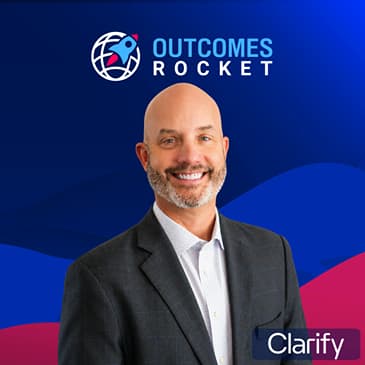
In this episode, I speak with Todd Gottula, Co-Founder and CEO of Clarify Health Solutions, about his personal experience navigating a serious back injury and how it reinforced the importance of timely access to care. Todd shares how Clarify Health uses nationwide claims data, AI-enabled insights, and outcome-based partnerships to help health systems identify where patients are leaving their networks or facing barriers to care. He also discusses Clarify Meridian, which supports physician activation, and Arrival, a patient activation solution designed to help more patients complete specialty referrals and receive the care they need.
Tune in to learn how better data, patient engagement, and aligned incentives can help health systems improve access and outcomes!
Resources:
[00:00:03] [SPEAKER_01] Hello, everyone, and welcome back to the Outcomes Rocket. So excited you tuned in for another episode because today I have the privilege of bringing back a friend to the podcast. His name is Todd Gottula. He's the co-founder and CEO of Clarify Health, and he's been on the podcast before, so he's no stranger to you all.
[00:00:25] [SPEAKER_01] But I wanted to bring him back both because he's coming back with a personal story, but also a new go-to-market with the business. So really pumped to have you on the podcast, Todd, and so glad you made the time to join us.
[00:00:40] [SPEAKER_00] Now, it's great to be back and really excited, as you said, to share my own personal experience, but maybe more importantly, share the journey that Clarify has been on since the last time you and I had the opportunity to speak and talk about the impact that we're having and the success and the benefits that we're bringing. And to communities around this country.
[00:00:57] [SPEAKER_01] That's great, Todd. And for those that may not know you yet, that may be tuning into this episode and didn't check out your last one, help them understand what brought you into healthcare and what keeps you in healthcare.
[00:01:08] [SPEAKER_00] Yeah. Founded Clarify Health Solutions with an ex-partner from McKinsey, Dr. Jean Duran. Honestly and candidly didn't know much about the healthcare industry other than what us as consumers and interactors with the community or with the system understand, which is frankly not very much now that I've been immersed to it for a decade.
[00:01:27] [SPEAKER_00] But look, I was in a financial services organization and had a lot of success, myself and a group of individuals who knew that we wanted to do something outside of that industry with much more social impact. And again, Matt, John was inspired by his vision for how we could use large data assets and great people to drive better outcomes for those that deserve them, which is all of us, frankly, here in this country.
[00:01:51] [SPEAKER_00] And have been, as I said, immersed in this industry, really trying to find the ways to work with health systems and other participants in the community to drive better outcomes for all of us. It's been a heck of a journey. If you look back at some of our previous conversations, I don't want to go back there necessarily, but anyone who dives in here understands and learns very quickly that there's a lot of work to be done. There's a lot of really great people that want to work with organizations like Clarify.
[00:02:16] [SPEAKER_00] Finding the match, where you can have that impact is the challenge. And again, I'm excited to be here today to kind of show you the aspect of the puzzle that we believe we've solved and how we're helping health systems really connect with those that can benefit from the high quality services that they offer.
[00:02:32] [SPEAKER_01] That's great, Todd. So I've been following you on LinkedIn. You've talked to us, right? Because the last few posts you did, you got hurt and you sort of became the patient. Talk to us about that first, and then I want to hear about Clarify, but tell us about your experience and how that ties into the new direction.
[00:02:49] [SPEAKER_00] Sure. You know, like I made a decision a while ago to start being more vulnerable in various social media channels because with AI and the ability to generate content, there's just a lot of words out there.
[00:03:05] [SPEAKER_00] And that's not who I'm going to be here.
[00:03:35] [SPEAKER_00] I put a pretty serious herniation of one of my discs in between L2 and L3. And it was not something that I had ever experienced before. I was a college athlete, and I just think I'm invincible still, even though I'm 53. But it was incredibly debilitating. And for anyone who's experienced either a slipped disc or a herniated disc, you know that it is one of the most confusing and painful experiences because the pain doesn't exhibit in the back.
[00:04:00] [SPEAKER_00] Where exhibits is or expresses is where the nerve root terminates in your body. And so all of a sudden you've got this, you know, I'm not a clinician. I call it phantom pain. They would say it's not phantom pain, but you start to feel serious limitations in places that you're just, you're like, what's going on with my leg in my case? And I have the benefit, given my participation in this healthcare community, of being able to call out to senior individuals.
[00:04:27] [SPEAKER_00] And so my journey was one of self-diagnosis of something being significantly wrong and then being able to outreach to individuals and not having to go through necessarily the quote-unquote normal channels. And those individuals really stepped up for me. And this is what I spoke about in my series of LinkedIn posts was I just really benefited from access. And I think that is the word that I'm going to keep coming back to through this conversation is patient access.
[00:04:54] [SPEAKER_00] And look, I was afforded privileged access and that allowed me to get prioritized scheduling to get in to see an individual that then immediately made the recommendation that I get imaging. And I was able to get imaging within 24 hours, which getting two MRIs in 24 hours for most individuals is just unheard of. And that diagnosed immediately what the issue was.
[00:05:18] [SPEAKER_00] And then within 72 hours, I had a surgical consult and was able to get on a pathway to recovery, to function, which I've, over the course of the last couple of weeks, I have been able to say it's been successful. And that is emblematic of what shouldn't have to be the case for every individual, but it's what everyone deserves, which is high quality, affordable, and high available access to care.
[00:05:45] [SPEAKER_00] That gets us from a position of needing recovery to being recovered. It's almost ironic that I went on this journey simultaneous to what we're doing at Clarify, because that really is the point, which is how do we ensure that individuals get the access that they deserve to the available healthcare services in this community or the communities that they are in? Because right now that's not the case. That's not what is happening and available right now for every individual.
[00:06:12] [SPEAKER_00] And so that's what's so exciting about what we're doing for Clarify, because I'm essentially trying to create a scalable version of my experience.
[00:06:18] [SPEAKER_01] Are you sure you didn't get hurt on purpose to do this?
[00:06:23] I'll think this.
[00:06:25] [SPEAKER_00] No, I absolutely not, because I don't want that.
[00:06:32] [SPEAKER_01] I'm just messing with you, man. I'm just messing with you. How crazy would that be? No, for sure. And nobody wants to get hurt. But you know what? Ultimately, it's going to happen to all of us, right? We're going to get sick. We're going to run into it. And access is key. Affordability is key. And timeliness is key. So talk to us about what Clarify is up to now, man. What's the focus and who are you guys working with?
[00:06:58] [SPEAKER_00] So what is so exciting about where we are today is that there is this confluence of events that is really putting tailwinds behind our ability to serve communities. And I keep coming back to that sort of servant and access or those two words.
[00:07:17] [SPEAKER_00] So Clarify spent a decade building a nation-scale data asset that allows us to harvest de-identify claims data, convert that into high-fidelity patient journeys that helps us understand exactly where care has historically been rendered and why.
[00:07:33] [SPEAKER_00] So effectively, if you think about a patient journey from primary care resulting in a diagnosis that then causes a referral to a specialist, a specialist potentially referring or deciding to do procedural work, and then the site of service being selected, we have visibility into something on the order of 80% of all the rendered healthcare in this country. So we know where people have gone. We know essentially the steps that have been taken in their journeys.
[00:08:01] [SPEAKER_00] And then we know the quality of the care, the timeliness of that care, and to a certain degree, the affordability of that care. What does that care cost to the system? And potentially, in some cases, what it's cost to the individual. So you think about that market map. It's an incredible wealth of information. But what's been missing is, okay, as a health system, I'm looking at that and I'm seeing that patients that should be coming to me because I'm in a position to offer high-quality healthcare to those individuals are going elsewhere. And when they go elsewhere, it takes them longer to get appointments.
[00:08:30] [SPEAKER_00] And the outcomes that they're receiving are not as good as I could offer to them. What do I do about it? And so it's a classic tree fall in the woods, you know, does anybody here kind of situation? Because what is the primary responsibility of a healthcare system? Well, it's to offer healthcare to those that show up at the front door. And so this idea of out-network migration prevention or leakage recapture is not something that it's a secondary, tertiary concern. Sure, it's a concern for these health systems. But it's on the list of things that the organization is responsible for addressing.
[00:09:01] [SPEAKER_00] And so what we decided to do about seven months ago, eight months ago, was to say, you know what? We're not in the insight game anymore. We are actually in the outcomes game. So I love the fact this is the Outcomes Rocket podcast because that's what we're all about, right? Our alignment is not to sit across the table from health systems, but to sit on the same side of the table, shoulder to shoulder, bringing resources and technology, AI enabled, to say to a health system, look, I can help you be more successful.
[00:09:26] [SPEAKER_00] I can help ensure that those in your community that deserve to be served by you are getting served. And I can identify where the pinch points are in your flow. I can identify why out-network migration is occurring. I can identify of that out-network migration, what is addressable, how much of that is reasonable for you to bring back. And what do you need to do in order to actually bring it back? And what are the conversations that need to be had? And if you don't have the capacity to have those conversations, I'll have those conversations for you.
[00:09:53] [SPEAKER_00] So that really is the fundamental transformation of Clarify as a business. Because instead of us saying, look, here's all the insights, you go figure out what to do about it. I'm saying, look, I've got the insights and I've got the people and I'll work with you effectively to deliver. And you know what? My economics are such that I'll deploy all of this infrastructure and all of these people and I'll only succeed when you succeed.
[00:10:18] [SPEAKER_00] And so I deliver a guaranteed ROI model to health systems that is around ensuring that individuals get timely and affordable access to the health care they deserve. And so it's such a mission alignment, purpose-driven focus for us as an organization. And it puts us in a place of very unique partnership with health systems because it checks the boxes, right? I'm delivering powerful insights. I'm delivering a guaranteed ROI.
[00:10:42] [SPEAKER_00] And I'm aligning with the purpose of these organizations in these communities, which is to offer health care services that the communities deserve and need.
[00:10:50] [SPEAKER_01] That's great, Todd. And as far as the landscape of health care goes, are you guys focused on any particular program or care delivery type or provider type? I'm thinking things like, are you focused on Medicare or are you focused on value-based care? Tell me more about that if there's any areas.
[00:11:10] [SPEAKER_00] So we are effectively dialing into the organizations to assist them where they most can benefit from what we do. So what does that mean? If you're a peer fee-for-service hospital and you have a blend of payer mix coming across your ransom, your door, then we're going to work with you to ensure that you are essentially have an efficient flow and pipeline.
[00:11:32] [SPEAKER_00] That your specialists are open to seeing new patients, that the specialists are getting efficient blocking and tackling into your procedural capacity. But where we focus most on is where there are actual procedural events that need to occur either in the brick and mortar acute care hospitals or in their outpatient or ambulatory centers. So, again, it is always about access to high-quality, affordable health care.
[00:11:55] [SPEAKER_00] But look, the economics of health care are that we need to make sure that the facilities are full and that their throughput is maximized because that is often the throttling issue that are preventing people from getting access to the care that they deserve. And so what we do is we analyze where are their efficiency issues and where is it where you've got specialists who are focusing more on repeat visits as opposed to accepting new patients.
[00:12:19] [SPEAKER_00] And how can you rebalance the economics for employed individuals and employed physicians against the RV balance that they're essentially getting paid for? Where is it that you're seeing bottlenecks in the ability to book into procedural capacity? So, look, at the end of the day, there is a revenue component of what we're talking about because no margin, no mission. And yeah, it is part of the leave that we're doing. But what we're trying to do is identify where systems are in a place because they've demonstrated sufficient quality of care.
[00:12:47] [SPEAKER_00] And let's make sure that where there are individuals who are struggling to get access to that care, that we make that match. It's really a bridging match. And so it's like middle-bralling all aim-at models. And really what we're doing is saying, look, let me give you an example. Well, CMS team, right? It's a mandatory bundle payment program that comes down from Medicare beneficiaries. And the knee-jerk response would be, hey, let's try to make sure that all those Medicare beneficiaries where we get the overlay payment model benefit or bonus from CMS team come our way.
[00:13:15] [SPEAKER_00] Well, not all health systems are great relative to the target prices. So in some situations, you actually don't want to be the one. You want those individuals to go get care from somebody who's in a better position to deliver the care and earn that bonus. And so it's not all just around, quote-unquote, hungry hippos to bring all the volume. It's really identifying where you can offer high-quality services in your position to ensure that individuals return to function, return to form in a timely and efficient way.
[00:13:39] [SPEAKER_01] I like the hungry hippos analogy.
[00:13:42] [SPEAKER_00] There are the two strategy shops that I'll sit to work with. And you said, look, part of the problem that's happening right now in these markets is that it's hungry hippos for commercial volume. And that's the wrong sentence, right? We all need to make sure that he used the example that everybody's out there trying to grab spinal fusion, but not every facility is great at spinal fusions. And that's a pretty catastrophic situation if you've got an issue there, right? This is a potential paralysis.
[00:14:07] [SPEAKER_00] So you don't necessarily want everybody going in and pulling just because they're $60,000 procedures, commercial spinal fusion. I'm like, it's exactly right.
[00:14:15] [SPEAKER_01] You know, but yeah, and that analogy is so visceral too, you know, like smashing. I don't know if you ever played that as a kid. Oh yeah, for sure. You're literally smashing us trying to get all the marvels.
[00:14:25] [SPEAKER_00] Give it to me. Look, I have a, although it may be, I am not naive to believe that this is something that is eminently achievable, but wouldn't it be great then if we were in a world where there was a set of large anchor health systems in the same geography, that they were willing to balance the volume against the things that they were great at. You have a musculoskeletal specialty center, you've got a cardiovascular spell, you've got an oncology specialty center, and they all agreed to divvy up the pot.
[00:14:53] [SPEAKER_00] Now, it's going to take a long, you know, I don't know if we'll ever get there, but that would be a much healthier system for us as individuals where that was the case, because there is truth to the matter that centers of excellence and repeat volume does generally lead to better outcomes. And so you don't necessarily want the individual that's only done two or three of these, albeit high dollar, but also high risk events or interventions to be the one doing it.
[00:15:20] [SPEAKER_00] You want the person who's done 500 total joint replacements operating on. Exactly. Exactly.
[00:15:26] [SPEAKER_01] Yeah. Yeah. Or like robotics, like somebody that has a robotic program with standardized outcomes, right? Standardization is the key for now. That's great. I love it, Todd. I love the new focus. I think it makes a lot of sense. Everybody needs this, and it sounds like it's a risk-based program basically going in. And if they win, you win. If people wanted to learn more about what you guys are up to, case studies, et cetera, where can they reach out?
[00:15:54] [SPEAKER_00] Yeah. So look, clarifyhealth.com is where all of our information is and really exciting. And probably by the time that this airs, you'll see there's been a significant update, which is the program I'm talking about is Clarify Meridian, which is really around physician activation. So it's working with primary care practices and specialty care practices to ensure that this flow is happening in the most efficient and effective way.
[00:16:17] [SPEAKER_00] At the end of May, I acquired an organization called Loyal Health, which is the other side of the coin, which is patient activation. Because I put a LinkedIn post about this yesterday that there was a Duke study that was done several years ago that on the order of 30 to 40% of all specialty referrals don't actually complete. So think about that. Somebody's been in a primary care setting. They have been referred to a specialist, but they don't receive the next step in their care journey, which means they go untreated and the situation gets worse.
[00:16:46] [SPEAKER_00] So that's a patient activation issue, right? The physician has made the recommendation. The individual has walked out of the office with a little slip of paper or whatever it is, but they never complete the next phase in the journey. So that's where-
[00:16:58] [SPEAKER_01] So like they never make it? They never make it to that specialist appointment? Is that what it is? Either they never book the appointment or they book the appointment and they don't show up. And they don't show up. Okay. Okay.
[00:17:06] [SPEAKER_00] And so look, this is a human interaction problem, right? Sometimes it's difficult to get that specialty appointment because you're like, do I have to call the phone number? Do I get a website? Like, how do I actually get the appointment booked? We don't necessarily make it incredibly easy here to get a specialist appointment if you don't know how to navigate the system. And then look, life happens, right? Sometimes people miss the appointment. Well, then how do they rebook it? Is the referral still valued? Because referral recommendations expire. So we have, again, I acquired Loyal, which is focused specifically on this aspect.
[00:17:35] [SPEAKER_00] They've been working for a decade in the space of patient relationship management, patient activation, and patient outreach. And we are launching what we have integrated and rebranded as Arrival. So there's Meridian and then there's Arrival. And Meridian's about physician activation and then Arrival is about patient activation. So you'll see that also on our website because we want to complete the loop, right? We want to be able to identify, ensure, and then make sure that the individual receives the care.
[00:18:01] [SPEAKER_01] Piles through and receives the care. Yeah, that's awesome. We'll definitely leave the link to go learn more in the show notes. So folks, make sure you check that out. Learn more about Meridian as well as it was Arrival. What was the arrival?
[00:18:16] [SPEAKER_00] Yeah.
[00:18:16] [SPEAKER_01] Arrival. Arrival. I love the name, by the way. Keep it simple, right? Just get there. Arrival. Make it happen, people. No, this is good. That number shouldn't be the case. That 30% should be a lot lower. We could all benefit from it. And so really appreciate the vision here, Todd, and what you guys are doing. Appreciate you jumping on and looking forward to staying in touch with you.
[00:18:40] [SPEAKER_00] No, always great to see you. And thanks for having me on.
[00:18:42] [SPEAKER_01] Always a pleasure. Hey, see you later.