
This podcast is brought to you by Outcomes Rocket, your exclusive healthcare marketing agency. Learn how to accelerate your growth by going to outcomesrocket.com
Maternal mental health care is undergoing a transformation through cutting-edge technology and innovative solutions.
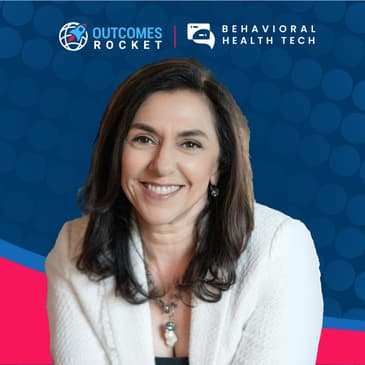
In this episode, Malekeh Amini, CEO and founder of Trayt Health, shares how her personal experiences with maternal mental health have driven her passion for improving care and prevention through Trayt’s platform. This platform enhances providers' access via integrated care models and emphasizes the importance of universal screening beginning before pregnancy, as maternal mental health affects entire families and future generations. She highlights the urgent need to treat maternal mental health as a critical issue, advocating for public-private partnerships to foster solutions. Malekeh also underscores the significance of educating mothers and families about accessible care and highlights the crucial role of leaders and funders in supporting universal screening initiatives.
Tune in to discover the strides being made in maternal mental health and the innovative technologies shaping the future of healthcare.
Resources:
- Connect with and follow Malekeh Amini on LinkedIn.
- Follow Trayt Health on LinkedIn and explore their website.
Fast Track Your Business Growth:
Outcomes Rocket is a full service marketing agency focused on helping healthcare organizations like yours maximize your impact and accelerate growth. Learn more at outcomesrocket.com
[00:00:01] This podcast is produced by Outcomes Rocket, your healthcare-exclusive digital marketing agency. Outcomes Rocket exists to help healthcare organizations like yours to maximize their impact and accelerate growth. Visit outcomesrocket.com or text us at 312-224-9945.
[00:00:34] Hey everyone, welcome back to another episode of the Expanding Access podcast recorded here at Behavioral Health Tech in Arizona. Today I have the pleasure of being with Malekeh Amini. She is the CEO and founder of Trayt Health. Malekeh, great to see you. Great to see you, Saul. It's good to be back. It's always great to be back. And just to kick things off, Malekeh, tell us what brings you to the conference this year.
[00:00:59] Trayt is a technology platform that is enabling access to care and also improving the quality of that access through objective measurement-based care. And this conference is very much aligned with the work that we do, behavioral health technology. And we are very excited to be back discussing especially maternal mental health at the conference. It's a big theme here and I'm definitely excited to unpack this a little bit more.
[00:01:27] Tell us a little bit more about yourself and what inspired your work. It's interesting you asked that question, Saul. I think mental health in general tends to pull from the heart. Everyone who is in this space more or less has had a personal story and so have I. And I am in this business. I've been in the healthcare and health tech space for a long time, but I've been in this business because I think like many other families, many other women,
[00:01:53] I've personally been touched by issues with my own maternal mental health, with my own postpartum challenges, and also just generally with my children's challenges with this and recognizing what a big impact mom's health has on child's mental health. And so that's my reason for being here. I love it. I love that your personal story sort of brings you to the work that you do. And it's so important.
[00:02:21] You just finished a panel about this topic on mental health for mothers. So Malik, many people think that postpartum depression is what maternal mental health is. What else do we need to be aware of as we address the needs of pregnant individuals and their families? Actually, what we need to know is that maternal mental health is a lot more than postpartum depression. It does begin even before pregnancy.
[00:02:45] And it does impact not just the mom, but the entire family, the spouse, the siblings of the child that's born. And also it has a significant impact on that child's developmental path and long-term mental health in general. And it can carry multiple generations after.
[00:03:07] So it is very important to know that what a mom experiences before pregnancy, during pregnancy, and postpartum are all very important in the development of multiple generations after. And there is a lot of statistics about this.
[00:03:24] Just one simple example is a 16-year-old that's been exposed to postpartum depression has a five times higher chance of having depression himself or herself compared to those teenagers that were not exposed to postpartum depression. And this is just one example. So scratching the surface, but it does carry multiple generations.
[00:03:48] Another point that's really important to understand is, especially after the DOV changes in access to reproductive health. And a lot of data has been, there's a lot of published data on the level of anxiety, depression, and even fear in families and young women, especially. In terms of their future decisions about building their own families.
[00:04:14] And this is something that brings up a lot of other concerns in maternal mental health long before postpartum depression or even pregnancy, where you can detect these symptoms early on with younger women.
[00:04:29] And which brings up another point around the importance of having universal screening and detecting these risks very early, given the multigenerational and family-wide impact that the mental health of the mom has. And one of the things that I think is going to be really important as we think about maternal mental health is to not only think about postpartum depression or pregnancy depression, but to really remember that the clock starts long before pregnancy.
[00:04:58] And the universal screening, especially in the current environment of decoductive uncertainty, is very important. Yeah, that's a really great point. And the screening that needs to take place is critical, all right? Access to it is limited. Talk to us about how Trait Health supports this growing need for maternal mental health. So Trait has deployed, and that's primarily our focus.
[00:05:21] We are deploying our platform in what is called psychiatry access programs in child and adolescent and also in maternal mental health. These are programs that integrate primary care physicians into the psychiatry ecosystem. And it helps them through consultation and having some support from psychiatrists to provide the needed care within their own clinic for their pregnant or postpartum moms.
[00:05:48] And that is what Trait facilitates, both in terms of its workflow and in terms of tracking the data on ensuring access is provided, ensuring OBGYNs do have the ability to receive that type of care, and also in looking at the health of the mom and whether they are receiving the right type of care in their clinic. And that's one area where we have facilitated and deploy our application when it comes to maternal mental health. Another one is facilitating universal screening.
[00:06:17] So OBGYNs are able, through the Trait platform, to universally screen all of their patients or women who are being seen or have their annual exams by their OBGYN even before pregnancy. So the universal screening, as I mentioned, is one of the very important factors, especially today.
[00:06:38] And that is something that Trait facilitates through automated processes that assigns the screeners, receives the results, makes it very easy for an OBGYN to see the risk or detect the risk and be able to very quickly receive services from psychiatrists or even make the right referrals for the mom or mom-to-be at the right time.
[00:07:00] That's great. And so you're not only enabling the screenings, but you're also enabling the physicians, the pathways for care. Exactly. Care and prevention. And prevention. Very cool. Very cool. What advice do you have for our viewers and listeners? What can members of the mental health community be doing now to help increase access to mental maternal health care?
[00:07:25] So I think number one is education. I think that families, mothers, young women, even clinicians need to be really educated about the impact of maternal mental health, the impact of mother's health on the family, on the multiple generations within that family, and also the impact of having severe mental health challenges on physical health of the entire family.
[00:07:52] I think that level of education will bring some urgency to this matter. And I think that families, especially families, are not really educated about their own health and about their own mental health. And it is very important to know what postpartum depression is, what type of care is accessible to them. But that's one area where I think that the mental health community can really have an impact.
[00:08:13] And I think that for decision makers, policymakers, funding agencies like HRSA, and anyone who is a thought leader or an influencer in this space, it is extremely important to encourage and to drive and to incorporate universal screening into the care of mothers, into maternal care in general,
[00:08:36] in order to not only address the maternal and postpartum care, but also to address the prevention of maternal mental health, given its incredible impact, again, multigenerational impact. So when you think about the cost to a mother, it's not just to the mother. It is a multiple generations of children and families that are impacted by it.
[00:09:00] To that universal screening and the education and the implementation and the funding behind universal screening becomes a very important factor. And I think that's another area where I think we need to encourage all of our decision makers. One other aspect for mental health community is to really look at mental health not as a crisis anymore, but as an emergency. But we looked at the pandemic. We just came out of the pandemic and we saw that with private and public partnerships.
[00:09:30] And with a real focus on finding a solution, we were able to contain a pandemic in two years. And we did that in at a pace that is not seen in the industry, in anything else. And I think this is what the mental health community needs now is to really treat this as the emergency that it is.
[00:09:50] And to encourage all of those public private partnerships and the implementation speed that is required in order to address the current crisis. I love the call to action there, Malike. And the involvement of yourself and your organization, Trait Health, in making this better is encouraging to all of us. Thank you so much for what you do. Thank you. And thanks for being here with us.
[00:10:16] Folks, make sure you check out the show notes for ways to get in touch with Malike Amini, CEO and founder of Trait Health. Any closing thoughts, Malike? Amazing. Just universal screening. Encourage that and excited to see the current trends. Yeah, I'm looking forward to the future. Likewise. Malike, thanks for being with us. Thank you. If the viewers and listeners want to get in touch with you, what's the best way for them to do that? So the best way to get in touch with us is to go to Trait Health.
[00:10:46] There is a contact page there. You can reach out to us and for anything, honestly. But if you have any questions about maternal mental health and about what's available in your state in terms of services, please do reach out to us. We'll be happy to help. Thank you, Malike. Thanks, Saul. Thanks for having me. Likewise.
[00:11:17] This podcast is produced by Outcomes Rocket, your healthcare exclusive digital marketing agency. Outcomes Rocket exists to help healthcare organizations like yours to maximize their impact and accelerate growth. Visit outcomesrocket.com or text us at 312-224-9945.