
Innovative psychiatric care models are reshaping how we address behavioral health crises.
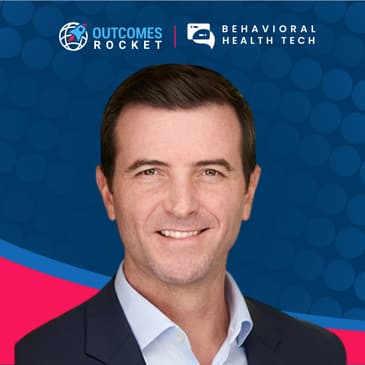
In this episode, Colin LeClair, CEO of Connections, discusses Connections' freestanding emergency psychiatric units that provide alternatives to traditional hospital settings, aiming to rapidly stabilize patients in crisis and reduce the burden on hospitals. Colin addresses significant barriers to behavioral health parity, particularly health plan engagement, and advocates for a shift towards value-based care models. He highlights potential cost savings from reducing inpatient admissions, which can be reinvested into preventive care. Emphasizing the importance of specialty providers forming consortiums to effectively engage payers, Colin calls for collaborative efforts within the industry to promote systemic change.
Tune in to learn how behavioral health parity and innovative care models are transforming the landscape of psychiatric care!
Resources:
[00:00:01] This podcast is produced by Outcomes Rocket, your healthcare exclusive digital marketing agency. Outcomes Rocket exists to help healthcare organizations like yours to maximize their impact and accelerate growth. Visit outcomesrocket.com or text us at 312-224-9945.
[00:00:25] Hey everyone and welcome back to the Expanding Access podcast recorded live here at the Behavioral Health Tech Conference 2024 in the amazing state of Arizona. Today I have the privilege of hosting Colin LeClair with us. He is the CEO of Connections. Colin, thanks for joining us. Thank you for having me.
[00:00:54] Colin, to begin with, tell us a little bit about what brings you to the conference. Colin LeClair, CEO of Connections, Special Technology, CEO of Connections, Planning, and
[00:01:00] So I I've always seen this conference as a great opportunity to hear sort of provocative and cutting-edge ideas about the future of behavioral health. I think we're as an industry in our infancy and we're about 34 years behind physical health and the innovation that's happened on the physical health side. And I've always thought of this as one of the aggregators of the best talent and most innovative thinking in our industry. And so I'm excited to see what people are talking about and thinking about in terms of both technology and innovative services.
[00:01:29] That's great. And speaking of innovating services, you guys are doing just that. So for our listeners and viewers that don't know Connections, let them know a little bit about the company and also about yourself.
[00:01:40] Sure. So I'm Colin McClare. I'm the CEO of Connections. We operate freestanding emergency psychiatric units as an alternative site of care to an emergency department visit or an inpatient stay. And so we build medium, small to medium sized facilities designed to provide immediate access 24 hours a day, seven days a week to patients who are in the crisis. And our goal is to stabilize them rapidly and then take accountability for the outcome post discharge.
[00:02:07] That's beautiful. And many people might be thinking, wow, you're building these out. Is it similar to an ASC model where the hospital system gets involved locally? Tell me, kind of help me distinguish. From a medical economic standpoint, yes, we are trying to displace a very expensive and potentially stigmatizing event in a hospital. What's different is that we are not a threat to our hospital partners. We're a complementary and supportive solution.
[00:02:35] Hospital EDs are radically overburdened by psychiatric patients that are coming into their ED that are really not appropriate or whom the hospitals are not very well equipped to handle. And so we represent relief to that system. It means to get patients out of that environment. They're not waiting there for five hours. They're not overburdening the staff and give them really high quality psychiatric care in a trauma informed appropriate environment.
[00:02:58] So, yes, we are a solution that removes patients from that environment and moves them into an alternate site of care. But we're doing it in partnership with hospital systems as opposed to sort of in competition with them. Got it. Thanks for that distinction. In your experience, what are the most significant barriers to true parity in behavioral health? And how can health care providers work alongside policymakers to overcome them?
[00:03:20] Yeah, I mean, the biggest barrier today is sort of health plan engagement. It's not their fault. You know, health plans are being asked to essentially meaningfully expand their benefits and provide new access to patients that previously was not available. And so, you know, if you believe that health plans are essentially just a fiduciary financial intermediary, then they're going to need more funding to provide enhanced benefits and more access. So I think currently and most recently, the health plans have been the barrier. I think that's changing rapidly.
[00:03:50] I also think that health plans are recognizing that there is a value-based path to expanding access to care without dramatically increasing cost and at the same time improving quality and outcomes. So if you look at patients that have chronic illness, for example, if a control group of those patients also have a comorbid behavioral health condition, the patient in the comorbid behavioral health condition group tend to be three and a half times more expensive.
[00:04:14] Health plans understand that. So they recognize that if we don't address the behavioral health conditions and manage those diagnoses, we're never really going to be able to effectively manage the chronic illness. And so I think there's an acknowledgement that this is a good thing for the patients. There is a benefit from a medical economic standpoint to being providing better access to preventive behavioral health care. And so I think we're seeing a sea change in health plan engagement and receptivity.
[00:04:42] So I'm excited about the future of parity, but I also think that it's sort of the lowest bar that we should be aiming for. Providing basic access to behavioral health services should be obvious. What comes next is providing the value-based payment model that wraps around all of those services that also allows providers to provide social supports and integrated psychiatric primary care services.
[00:05:08] All of those wraparound services that's going to treat the whole person and get them on the path to ambulatory care and stabilization. So we've got a long way to go. Parity is the first step. And I'm seeing, I think, a lot of receptivity from health plans that historically were disimplined to doing cash. Well, that's great to hear that there's progress being made. And so you mentioned value-based care, right?
[00:05:32] And so as we strive for parity in behavioral health, how could value-based care ensure behavioral health services remain equitable and accessible while driving accountability across the board? So we think value-based care is not a nice to have. We think it's an imperative. And the reason for that is that we assume in the short term there are finite resources in the system. There's not likely going to be a massive windfall of new funding into the behavioral health system across the country. And so where is it going to come from? We believe strongly that we need a lot more preventive care for behavioral health conditions.
[00:06:01] But in the absence of a windfall of resources, we need to find those resources somewhere else. They can most easily be found in an inpatient setting. So for the U.S. population, between 30 and 40 percent of every behavioral health care dollar is spent in an inpatient setting. And we know empirically that between 60 and 70 percent of those inpatient events are completely avoidable. So if we can find a way to reduce the use of inpatient admissions, reduce the use of emergency department admissions,
[00:06:28] we can save an enormous percentage of that behavioral health care dollar spend that can then be reinvested, redistributed to stronger preventive care access. We think that's the answer. And the only path that I see to getting there is value-based payment models. And who's paying that now? You know, that inpatient? Who's paying for the inpatient care now? Utilization.
[00:06:50] So I think statistically primarily Medicaid, but all commercial Medicare exchange MCOs are paying for inpatient utilization. There's also a large percentage of uninsured utilization in inpatient settings. And that's covered by philanthropic dollars, bad debt from the hospitals. It's a pretty significant burden.
[00:07:10] And so by alleviating or by reducing the use of inpatient settings and ED settings, you're certainly reducing the cost that's borne by the health clans, but also by those other sort of the hospitals that are paying for the uninsured and so on. You're reducing the burden across the entire ecosystem. And if you're helping a patient avoid that high acuity setting, by definition, you're keeping them healthier, right? The patient is probably the primary beneficiary of this model.
[00:07:39] And we think that providers should be rewarded for participating in helping patients avoid that higher acuity setting. I love that. I love that perspective. And it's a very realistic approach where you're like, hey, we're not going to get a bunch of new money out of the blue. Right. So where do we look to to make things better? And it's value-based care. When it comes to implementing value-based care specifically for behavioral health, you know, I've been hearing a lot this topic of specialty-based value-based care.
[00:08:07] And I think of behavioral health value-based care in the same light. What unique challenges are providers going to face? And are there specific strategies to make this shift more impactful for patients? Yeah. Well, if you think about your value-based strategy, the number one problem you have to be solving is where is the greatest pain for the payer? And so if you look at how a payer thinks about prioritizing value-based contracts, it starts with where is the greatest source of cost?
[00:08:36] Where is the greatest source of quality pressure? Where do we have the biggest problem with access? So those are the three. Cost, quality, and access. And so you have to align yourself as a solution for one of those three things. And if you're not focused on that for a large enough population, it's going to be really, really difficult to get the payer to pay attention. That's particularly true for subspecialty behavioral health providers. Because the population, the sample size that you're focused on gets smaller and smaller and smaller, right? So it makes it harder to make an argument that I'm going to make a really big dent on cost, quality, or access.
[00:09:05] So I think for the specialty providers, it makes a lot more sense to align themselves in sort of a consortium or an ACO-like arrangement where you're aggregating more lives across more specialty services. And you're going to have a bigger impact. That's how you're going to get the attention of the payers. That's how you're going to get them to – you're going to motivate them to develop a value-based framework that makes sense for you but also for this ecosystem of providers that you brought together. So for specialty care, I think there's absolutely a need. There's a meaningful impact.
[00:09:35] But you have to aggregate enough patients across all those specialties to make it worthwhile for a health plan to go through the work of developing a value-based framework for you. Sure. And what's big enough? I mean, the actuarial math is you need about 5,000 patients to have an actuarially sound sample size. It's great to have that clarity. Like, you know you need at least 5,000. About. Yeah. Okay. That's really great. Well, you certainly have given this a lot of thought and so has your organization.
[00:10:01] If everybody kind of listening and watching to us today wanted to know more, what call the action would you leave them with and where can they visit you? Well, so first you can visit us at connectionshs.com. You can learn about our expansion activity across the country. We're building crisis facilities across the country. We've also published a lot of white papers about our services over the last 15 years. We are the national leader in crisis care, and we're an open book.
[00:10:26] You know, we're one of very, very few providers that are doing this in the country, and we want more providers to join this mission, which is to deinstitutionalize and decriminalize mental health in the community. So I'd encourage everybody to check us out online. And then what I would encourage people to do is don't work on this in a silo. It takes a village to solve this problem, and none of us can do it alone.
[00:10:46] And so work with your competitors or your colleagues in the ecosystem to develop a better system, to encourage health plans, to move down the path of value-based contracting, to change legislation, to fight for parity. It takes all of us to work together. And I think we have a really unique opportunity at this point in time to do that right and get it right. So work together. I love that. What a great call to action, Colin. And for everybody with us, make sure you check out the show notes of this episode of Expanding Access by Behavioral Health Tech.
[00:11:15] In the show notes, you'll see every way to get in touch with Colin LeClaire, CEO of Connections. Just take advantage of today's discussion and make sure you reach out to him and his team. Colin, thanks for joining us. Yeah, thank you, sir. Appreciate it.
[00:11:42] This podcast is produced by Outcomes Rocket, your healthcare-exclusive digital marketing agency. Outcomes Rocket exists to help healthcare organizations like yours to maximize their impact and accelerate growth. Visit outcomesrocket.com or text us at 312-224-9945.