
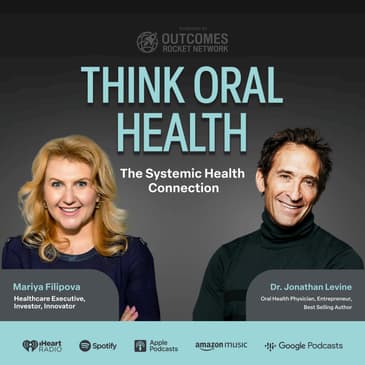
Discover the importance of an end-to-end platform that simplifies the pre-treatment workflow and ensures collaborative care between dental and medical experts.
In this episode, Alice Limkakeng shares her insights on transitioning to digital workflows, streamlining patient experiences, and the pivotal role of technology in bridging the gap between medicine and dentistry. She also discusses the challenges and opportunities for dental professionals entering this field and how her platform is designed to simplify and optimize care from end-to-end.
Sit back and join us for a compelling conversation with Alice Limkakeng.
Resources:
- Connect with and follow Alice Limkakeng on LinkedIn.
- Follow SleepArchitects on LinkedIn and explore their website!
- Email Alice here and call her at (914) 341-2468 or their team’s number: (888) 777-3198
- Watch the entire episode on YouTube and get more details at Think Oral Health.
[00:00:04] [SPEAKER_03]: Welcome to Think Oral, where we connect you and connected between oral and physical health. I'm your host, Dr. Jonathan Levine. And I'm your host, Maria Filipova. Let's get at it.
[00:00:16] [SPEAKER_03]: Hey, everyone, and hello to all our listeners. This is Maria Filipova and our co-host, Dr. Jonathan Levine, where, as usual, we will take you through the connections between oral health and overall health.
[00:00:36] [SPEAKER_03]: We have an exciting guest today, and we have a topic we haven't covered yet, even though it's near and dear to both myself and Jonathan. Jonathan, we're talking about sleep today, and please introduce our conversation partner.
[00:00:51] [SPEAKER_00]: Yeah, no, it's great to have Alice here. We are really excited to have you here because we love talking about how we connect the dots between medicine and dentistry.
[00:01:00] [SPEAKER_00]: Alice is the CEO of a great startup called Sleep Architects. It's an innovative company creating a platform to integrate medicine and dentistry and revolutionize really how we diagnose sleep apnea care from a dental perspective,
[00:01:17] [SPEAKER_00]: but using our and utilizing our medical colleagues and creating this digital workflow platform.
[00:01:23] [SPEAKER_00]: Alice has over 25 years experience, worked for Bain Capital as a senior executive in health care, served as strategic advisor to progressive patient engagement companies like patients like me,
[00:01:35] [SPEAKER_00]: received her MBA from a place called Harvard. I think it's Harvard Business School, Maria.
[00:01:40] [SPEAKER_00]: I think you might have heard about that. And saw a real slacker as a Baker scholar.
[00:01:47] [SPEAKER_00]: So amazing. Pedigree, undergraduate dual degree from University of Pennsylvania.
[00:01:52] [SPEAKER_00]: And on with Wharton, Magnaculmout, and really impressive.
[00:01:58] [SPEAKER_00]: Alice, so great to have you here.
[00:02:00] [SPEAKER_00]: I mean, can't wait to start talking about how we connect the dots when it comes to sleep diagnostics
[00:02:05] [SPEAKER_00]: and sleep apnea between dentistry and medicine.
[00:02:09] [SPEAKER_01]: Wow. Well, I'm excited to be here, delighted, and to be with two of my favorite people and to get this conversation going.
[00:02:15] [SPEAKER_01]: And thank you for that too kind introduction.
[00:02:18] [SPEAKER_03]: Welcome to the podcast.
[00:02:19] [SPEAKER_03]: And let's just dive right in.
[00:02:22] [SPEAKER_03]: This is a Think Oral Health podcast.
[00:02:25] [SPEAKER_03]: Why are we talking about sleep?
[00:02:27] [SPEAKER_01]: Ah, yes.
[00:02:28] [SPEAKER_01]: So it does seem unusual that on an oral health podcast, we might be talking about sleep.
[00:02:35] [SPEAKER_01]: But in fact, sleep and sleep medicine is the perfect intersection of oral and dental, medical and dental healthcare.
[00:02:43] [SPEAKER_01]: Because the sleep industry, we've actually taken a really nice turn in the sleep industry
[00:02:49] [SPEAKER_01]: and understanding now these connections on the importance of sleep, on our overall health,
[00:02:55] [SPEAKER_01]: and how the deepest part of our sleep cycle really affects so many systems in our body.
[00:03:01] [SPEAKER_01]: So inflammation, the lack of sleep, the lack of oxygen drives chronic diseases,
[00:03:07] [SPEAKER_01]: high blood pressure, diabetes, cardiovascular disease.
[00:03:09] [SPEAKER_01]: So it's a whole body problem.
[00:03:12] [SPEAKER_01]: But yet sleep apnea, which is when somebody's airway collapses when they're sleeping at night
[00:03:19] [SPEAKER_01]: and they don't get oxygen while they're sleeping, it all happens in the oral cavity, right?
[00:03:24] [SPEAKER_01]: So it's the tongue, it's the soft tissues in the back of the throat, the oropharynx,
[00:03:28] [SPEAKER_01]: all these structures that are influenced by the dentition, your occlusion, the position of your jaw,
[00:03:35] [SPEAKER_01]: your tongue space.
[00:03:36] [SPEAKER_01]: And really it is a true, in order to diagnose and treat and follow these patients,
[00:03:41] [SPEAKER_01]: we need the expertise of both medical doctors and dental professionals
[00:03:47] [SPEAKER_01]: to bring all that expertise to bear to really treat these patients.
[00:03:51] [SPEAKER_01]: And that's why we're talking about it.
[00:03:52] [SPEAKER_03]: We have a brilliant clinician here, oral physician here in the room, so virtual room.
[00:03:57] [SPEAKER_03]: So Jonathan, from physiological perspective, I love how you describe
[00:04:02] [SPEAKER_03]: why a dental team may have a role to play in treating sleep apnea.
[00:04:06] [SPEAKER_03]: And maybe touch for our listeners just the difference between central
[00:04:10] [SPEAKER_03]: and obstructive sleep apnea.
[00:04:12] [SPEAKER_03]: Because here we're talking about obstructive sleep apnea.
[00:04:15] [SPEAKER_03]: Maybe just give us a little bit of a primer on that.
[00:04:18] [SPEAKER_00]: Yeah, sure.
[00:04:20] [SPEAKER_00]: Obstructive sleep apnea, otherwise we describe it as upper airway restricted syndrome, URs.
[00:04:28] [SPEAKER_00]: There's a blockage somewhere.
[00:04:30] [SPEAKER_00]: And when we're breathing, as Alice has stated,
[00:04:33] [SPEAKER_00]: when we're getting into our sleep cycles and we want to get into the reparative part of our sleep cycles,
[00:04:39] [SPEAKER_00]: we have to get into this deep sleep, which is maximizing the oxygen in our body for repair.
[00:04:46] [SPEAKER_00]: Repairing oxidative stresses, which can turn into cancers,
[00:04:49] [SPEAKER_00]: turning into repair of our collagen, sore muscles, working out.
[00:04:54] [SPEAKER_00]: All these things are happening in this deep reparative sleep cycle.
[00:04:57] [SPEAKER_00]: If you can't get in it, which means if you can't oxygenate your body,
[00:05:01] [SPEAKER_00]: which means if you can't breathe because your airway is restricted or your jaw size is small
[00:05:07] [SPEAKER_00]: or you have a mild functional problem and your tongue is in the wrong place and it's too far back,
[00:05:13] [SPEAKER_00]: that ability to breathe, whether it's through the nose or some people have issues
[00:05:18] [SPEAKER_00]: because their nose is obstructed and then they're only breathing through the mouth,
[00:05:22] [SPEAKER_00]: you're getting these inefficiencies of oxygenating and getting into deep sleep.
[00:05:28] [SPEAKER_00]: Obstructive means you're not breathing and think of you're either breathing through a large garden hose.
[00:05:34] [SPEAKER_00]: Great. I can oxygenate.
[00:05:36] [SPEAKER_00]: Or you're breathing through a straw, something small.
[00:05:40] [SPEAKER_00]: The beauty that we have now in dentistry is that dentists are the tip of the spear for diagnostics
[00:05:47] [SPEAKER_00]: because of our new technology and our new science really understanding these things.
[00:05:54] [SPEAKER_00]: Where before sleep apnea was owned really centrally by the ear, nose and throat,
[00:05:59] [SPEAKER_00]: by the pulmonologists, and there was really one diagnostic treatment.
[00:06:05] [SPEAKER_00]: We'll talk more about that.
[00:06:07] [SPEAKER_00]: But Allison's brilliantly broad and I want to ask a couple of questions.
[00:06:10] [SPEAKER_03]: Yeah. I just want to make sure that we've got like, it is an obstructive sleep apnea.
[00:06:15] [SPEAKER_03]: It has not the central nervous system sleep apnea that is caused by your brain telling your body not to breathe.
[00:06:23] [SPEAKER_03]: And that's a very different treatment set.
[00:06:25] [SPEAKER_00]: Exactly right. Exactly right.
[00:06:27] [SPEAKER_00]: And that's not, we deal with the obstructive sleep apnea patient.
[00:06:31] [SPEAKER_00]: And in fact, the different phases of OSA, as we call it.
[00:06:37] [SPEAKER_00]: And the early phases that we never realized before.
[00:06:40] [SPEAKER_00]: So let's go to Alice for a second.
[00:06:42] [SPEAKER_00]: Thanks for that question, Maria.
[00:06:44] [SPEAKER_00]: But so Alice, here you are dealing with the dental professions.
[00:06:48] [SPEAKER_00]: We know that adoption in medicine and dentistry is north of 17 years.
[00:06:54] [SPEAKER_00]: As an entrepreneur and someone who's building a business,
[00:06:58] [SPEAKER_00]: what are some of these difficult roadblocks that you have to navigate around to get adoption of the platform that you have built?
[00:07:08] [SPEAKER_00]: And what is the platform?
[00:07:09] [SPEAKER_00]: Tell our listeners what the platform does.
[00:07:11] [SPEAKER_01]: Yeah.
[00:07:13] [SPEAKER_01]: I have spent, I'm pretty new to the dental industry.
[00:07:16] [SPEAKER_01]: That comes with some good and some bad.
[00:07:18] [SPEAKER_01]: But I really think about bringing a lot of my experience from other companies and other early stage companies innovations to the dental industry in this regard.
[00:07:28] [SPEAKER_01]: And what we've really learned and trying to focus on here at Sleep Architects,
[00:07:32] [SPEAKER_01]: which is our company that we're trying to help dentists really integrate into the dental medical system to help treat patients with obstructive sleep apnea,
[00:07:41] [SPEAKER_01]: is three big components.
[00:07:44] [SPEAKER_01]: One is that it has to be comprehensive.
[00:07:46] [SPEAKER_01]: Okay.
[00:07:47] [SPEAKER_01]: We have come of age in the dental sleep medicine world with point solutions,
[00:07:54] [SPEAKER_01]: with companies that expertly provide oral appliances or home sleep testing or medical billing or different parts of the puzzle.
[00:08:04] [SPEAKER_01]: And what we've learned through that experience is that in order to really facilitate the best quality of care,
[00:08:13] [SPEAKER_01]: it needs to be connected.
[00:08:15] [SPEAKER_01]: Everything needs to, all the dots need to be connected because there are too many points where a patient or even the providers can miss a handoff,
[00:08:23] [SPEAKER_01]: can fall off.
[00:08:25] [SPEAKER_01]: And so the first concept is really a platform that is comprehensive from end to end.
[00:08:30] [SPEAKER_01]: The second concept is collaborative care.
[00:08:34] [SPEAKER_01]: So it's at the heart of what we're talking about here, which is that both dental and medical expertise is needed.
[00:08:41] [SPEAKER_01]: And so having an easy mechanism for sleep doctors and dentists and even other adjunct providers to collaborate on and share information and work together is the second big tenet.
[00:08:56] [SPEAKER_01]: The third is make it simple because we, and think about the patient experience, both the patient experience and the provider experience.
[00:09:04] [SPEAKER_01]: Because we know that through many other adoption cycles or attempts at adoption that unless it's simple, unless it's easy,
[00:09:15] [SPEAKER_01]: it could be the best thing in the world, the best treatment, the best technology, the best widget,
[00:09:21] [SPEAKER_01]: but it won't get adopted unless it's super easy and fits into existing workflows of providers and even patients.
[00:09:30] [SPEAKER_01]: So those are the three big tenets of sleep architects.
[00:09:33] [SPEAKER_01]: And what we do is we've created a technology, a platform that really manages the pretreatment workflow,
[00:09:40] [SPEAKER_01]: which is the most difficult part.
[00:09:42] [SPEAKER_01]: And Jonathan, you talk about obstacles, talking about getting a patient screened, diagnosed properly,
[00:09:48] [SPEAKER_01]: medical insurance, understanding what the next step is, et cetera,
[00:09:52] [SPEAKER_01]: managing that whole pretreatment workflow seamlessly for patients and dentists
[00:09:57] [SPEAKER_01]: and bringing in sleep doctors to collaborate in an easy function.
[00:10:01] [SPEAKER_01]: And then a clinical expertise to help the dentist actually treat the patient and monitor the patient,
[00:10:10] [SPEAKER_01]: follow up with the patient after treatment.
[00:10:12] [SPEAKER_01]: So again, comprehensive one-stop shop.
[00:10:15] [SPEAKER_01]: And what our dentists do is they use our technology platform to send essentially a sleep quiz to the patient's phone
[00:10:24] [SPEAKER_01]: while they're sitting in the waiting room.
[00:10:26] [SPEAKER_01]: Patient completes that really easily, punches through it,
[00:10:29] [SPEAKER_01]: and that information gets delivered immediately chair-side to the clinical team in the back office
[00:10:35] [SPEAKER_01]: so that when the patient goes back, they can click on one button and see the risk factors that the patient self-identified
[00:10:42] [SPEAKER_01]: can have a quick but meaningful discussion to say,
[00:10:46] [SPEAKER_01]: Maria, you said that you rucks your teeth or you grind your teeth.
[00:10:51] [SPEAKER_01]: You have felt sleepy during the day.
[00:10:54] [SPEAKER_01]: You might be taking high blood pressure medication.
[00:10:58] [SPEAKER_01]: These are all signs of a disease called sleep apnea, obstructive sleep apnea.
[00:11:02] [SPEAKER_01]: And I want you to take a sleep test to see if this is the cause.
[00:11:07] [SPEAKER_01]: And if it is, there may be something I can help you with as a dentist.
[00:11:11] [SPEAKER_01]: And the dentist can literally click a button, one click simple,
[00:11:15] [SPEAKER_01]: one button to refer the patient to that next step.
[00:11:19] [SPEAKER_01]: So no gaps, no waiting.
[00:11:22] [SPEAKER_01]: You can click a button, refer the patient to home sleep testing.
[00:11:25] [SPEAKER_01]: Sleep Architects basically picks up there and ensures that the patient has a seamless and high-quality interaction
[00:11:33] [SPEAKER_01]: with board-certified sleep doctors, getting diagnosed properly, work on the medical insurance, all the jazz.
[00:11:40] [SPEAKER_01]: And those patients who are appropriate for oral appliance therapy
[00:11:44] [SPEAKER_01]: then basically get delivered back to the dentist ready to start treatment.
[00:11:49] [SPEAKER_01]: And we do a lot of patient education along the way too because this is a newer therapy as far as patients go.
[00:11:56] [SPEAKER_01]: And so helping them understand the next steps, how to do them, how easy they are, what therapy is.
[00:12:03] [SPEAKER_01]: And so that's really the solution that we've put together again with those three tenets in mind.
[00:12:08] [SPEAKER_03]: That's amazing.
[00:12:09] [SPEAKER_03]: And let me just take a moment to acknowledge and put in context the monumental lift that's required.
[00:12:18] [SPEAKER_03]: So you design a streamlined, end-to-end, collaborative workflow that is simple.
[00:12:26] [SPEAKER_03]: Because I could tell you from my time as an executive on the health insurance side
[00:12:31] [SPEAKER_03]: or even from a self-insured employer side,
[00:12:35] [SPEAKER_03]: currently, the current state is vastly different from what you just described.
[00:12:40] [SPEAKER_03]: Right?
[00:12:40] [SPEAKER_03]: And for our listeners, it comes as no surprise that 80% of sleep apnea is undiagnosed.
[00:12:47] [SPEAKER_03]: And this is not only about snoring.
[00:12:50] [SPEAKER_03]: Right?
[00:12:50] [SPEAKER_03]: We know American Academy of Sleep Medicine, and I'll ask you about the numbers, Alice,
[00:12:56] [SPEAKER_03]: but we know over $150 billion of costs to the healthcare system because of untreated apnea.
[00:13:05] [SPEAKER_03]: Right?
[00:13:06] [SPEAKER_03]: It goes beyond the comorbid diseases that you and Jonathan listed earlier today.
[00:13:10] [SPEAKER_03]: It's about lost productivity.
[00:13:12] [SPEAKER_03]: How about accidents?
[00:13:13] [SPEAKER_03]: Like people falling asleep on the wheel behind machinery or cars or workplace accidents.
[00:13:19] [SPEAKER_03]: And so $150 billion of lost productivity and cost, healthcare costs in the system,
[00:13:27] [SPEAKER_03]: that are avoidable if we could treat and diagnose sleep apnea appropriately.
[00:13:34] [SPEAKER_03]: So that's why what you've done is truly monumental,
[00:13:38] [SPEAKER_03]: and it really goes after a pretty impressive and huge problem in the healthcare system today.
[00:13:44] [SPEAKER_03]: Yeah, that's right.
[00:13:46] [SPEAKER_01]: The numbers are widely published that patients who are untreated for sleep apnea
[00:13:51] [SPEAKER_01]: cost thousands and in some cases tens of thousands of thousand dollars more per year
[00:13:56] [SPEAKER_01]: in terms of medical cost than patients who are treated for sleep apnea.
[00:14:01] [SPEAKER_01]: Because the persistence of sleep apnea drives all these chronic, expensive disease.
[00:14:09] [SPEAKER_01]: That's on the cost side.
[00:14:11] [SPEAKER_01]: Then, of course, you think of the social aspect of exactly what you said, Maria.
[00:14:15] [SPEAKER_01]: People driving on our streets, driving our kids' school buses, driving our trains,
[00:14:21] [SPEAKER_01]: our commuter trains, who are suffering and are not able to get treatment,
[00:14:27] [SPEAKER_01]: and therefore evidenced in daytime sleepiness and tragic results.
[00:14:32] [SPEAKER_01]: So it's all around us, and it's really that which inspires me to really make a difference in this industry.
[00:14:39] [SPEAKER_00]: Yeah.
[00:14:39] [SPEAKER_00]: So let's dig in a little bit.
[00:14:41] [SPEAKER_00]: So Alice, for the entrepreneurs that are listening and understanding the nuances of our industry,
[00:14:49] [SPEAKER_00]: because the business model of this industry is rapidly changing,
[00:14:53] [SPEAKER_00]: what have you experienced from a standpoint of getting the dentist that doesn't have a great background in sleep?
[00:15:03] [SPEAKER_00]: How do you get that dental office up to speed?
[00:15:07] [SPEAKER_00]: How do you get them listening?
[00:15:09] [SPEAKER_00]: And how do you get them to become a sleep doctor and being part of this whole diagnostic movement forward
[00:15:17] [SPEAKER_00]: to help our patients be overall healthier?
[00:15:21] [SPEAKER_01]: Yeah.
[00:15:22] [SPEAKER_01]: So I'd say there are a lot of great reasons for a dentist to start up a therapy line of dental sleep medicine
[00:15:29] [SPEAKER_01]: and be involved in this industry.
[00:15:31] [SPEAKER_01]: There's certainly the compliance aspect.
[00:15:33] [SPEAKER_01]: The ADA policy on sleep requires every dentist to screen patients,
[00:15:38] [SPEAKER_01]: screen every patient for sleep breathing disorders,
[00:15:41] [SPEAKER_01]: and collaborate with sleep doctors and treat where appropriate.
[00:15:45] [SPEAKER_01]: There's, of course...
[00:15:46] [SPEAKER_01]: That's the standard.
[00:15:48] [SPEAKER_01]: It's the standard of care.
[00:15:49] [SPEAKER_01]: It's becoming a standard of care long overdue,
[00:15:52] [SPEAKER_01]: and that's a great reason, right?
[00:15:55] [SPEAKER_01]: There's, of course, the community reasons that we just talked about,
[00:15:58] [SPEAKER_01]: and there's growing your practice.
[00:16:01] [SPEAKER_01]: This is a really viable revenue stream for dental practices,
[00:16:07] [SPEAKER_01]: as well as for building relationships with your patients.
[00:16:12] [SPEAKER_01]: You're treating them over time,
[00:16:13] [SPEAKER_01]: and you're doing something for them that...
[00:16:17] [SPEAKER_01]: I can't tell you how many times we've heard patients tell their dentists,
[00:16:21] [SPEAKER_01]: you've saved my life.
[00:16:22] [SPEAKER_01]: You've saved my marriage.
[00:16:23] [SPEAKER_01]: I feel like a completely new person from getting treated,
[00:16:27] [SPEAKER_01]: and this is something that patients are really grateful for.
[00:16:31] [SPEAKER_01]: So for all those great reasons,
[00:16:33] [SPEAKER_01]: these are motivations for various dentists to get involved.
[00:16:37] [SPEAKER_01]: We can work with dentists and meet them where they are,
[00:16:42] [SPEAKER_01]: whether they have taken lots of courses,
[00:16:45] [SPEAKER_01]: are very knowledgeable on the clinical side,
[00:16:47] [SPEAKER_01]: and really just need assistance with a system and the workflow.
[00:16:52] [SPEAKER_01]: And we can also take and have been successful with doctors who are really starting from ground zero.
[00:16:58] [SPEAKER_01]: And the reason is we do all of the heavy lifting of all the parts that are really the obstacles
[00:17:04] [SPEAKER_01]: and let the dentist and their team focus on the clinical piece,
[00:17:09] [SPEAKER_01]: which is very easy for them to pick up.
[00:17:12] [SPEAKER_01]: It's not rocket science.
[00:17:13] [SPEAKER_01]: This is the therapy itself.
[00:17:16] [SPEAKER_01]: The ins and outs of the clinical pieces are pretty easy for a dentist to grasp,
[00:17:20] [SPEAKER_01]: and similar to a lot of things that in terms of taking the scans
[00:17:24] [SPEAKER_01]: and fitting an oral appliance and monitoring it over time.
[00:17:27] [SPEAKER_01]: And the best part is that they've got support from our team,
[00:17:31] [SPEAKER_01]: from the sleep doctors who are collaborating with them
[00:17:35] [SPEAKER_01]: and who are reviewing their charts and their intake charts
[00:17:37] [SPEAKER_01]: and are available for questions.
[00:17:39] [SPEAKER_01]: And so they're really not doing it alone.
[00:17:41] [SPEAKER_01]: And that's the whole point.
[00:17:43] [SPEAKER_01]: We work together.
[00:17:44] [SPEAKER_01]: We work best together.
[00:17:46] [SPEAKER_01]: And yeah, we have a nice system that enables really any level of dental practitioner
[00:17:52] [SPEAKER_01]: to get involved and be successful.
[00:17:53] [SPEAKER_03]: I love that.
[00:17:54] [SPEAKER_03]: Is there, I'm curious to hear both of your perspectives on this.
[00:17:57] [SPEAKER_03]: I've been talking about sleep since my days in a large insurance company
[00:18:03] [SPEAKER_03]: on the healthcare side.
[00:18:04] [SPEAKER_03]: And every year we've been talking, it's around the corner, it's around the corner,
[00:18:09] [SPEAKER_03]: it's around the corner.
[00:18:10] [SPEAKER_03]: It seems to me though, that now, finally, it's around the corner.
[00:18:16] [SPEAKER_03]: And I'm saying this because of the tailwinds that I'm seeing, right?
[00:18:21] [SPEAKER_03]: One is, yes, it's the American Dental Association is putting it as a standard.
[00:18:27] [SPEAKER_03]: Your dentist needs to screen for to start to sleep apnea.
[00:18:31] [SPEAKER_03]: Secondarily, we're seeing, when Alice, please comment on this,
[00:18:35] [SPEAKER_03]: we're seeing large insurance companies like United coming up with policies
[00:18:41] [SPEAKER_03]: that require patients to fail oral appliance therapy
[00:18:46] [SPEAKER_03]: before they go into a surgical intervention for abstracted sleep apnea.
[00:18:52] [SPEAKER_03]: And we could talk about the different modalities on
[00:18:55] [SPEAKER_03]: what are the different options to treat sleep apnea.
[00:18:57] [SPEAKER_03]: But now, on the medical side, there is a very clear signal that says,
[00:19:02] [SPEAKER_03]: you could try CPAP, you could try oral appliance therapy,
[00:19:07] [SPEAKER_03]: and fail both of these before you start going down the path of surgical intervention.
[00:19:13] [SPEAKER_03]: So that policy is a second tailwind.
[00:19:16] [SPEAKER_03]: And thirdly, empowered consumers and patients, right?
[00:19:19] [SPEAKER_03]: I'm seeing a lot of patients who are much more engaged in their health,
[00:19:22] [SPEAKER_03]: auto ring wearables who are asking questions about,
[00:19:27] [SPEAKER_03]: how can I optimize my health and performance?
[00:19:30] [SPEAKER_03]: So are you seeing those tailwinds?
[00:19:32] [SPEAKER_03]: Is it truly around the corner or is it, do you see it differently?
[00:19:37] [SPEAKER_01]: Yeah, absolutely.
[00:19:38] [SPEAKER_01]: We, right now as an early stage company,
[00:19:41] [SPEAKER_01]: we really work directly with dental providers,
[00:19:43] [SPEAKER_01]: but I can't, and we do not really do any marketing at the current moment
[00:19:47] [SPEAKER_01]: outside working with dental providers.
[00:19:49] [SPEAKER_01]: I can't tell you how many reach outs or inbound connections we get from patients
[00:19:54] [SPEAKER_01]: who are just Googling and they're saying,
[00:19:59] [SPEAKER_01]: hey, I think I need help for sleep.
[00:20:01] [SPEAKER_01]: I just kind of learned through you that dentists could help me.
[00:20:05] [SPEAKER_01]: Can you connect me to a dental provider?
[00:20:07] [SPEAKER_01]: And so it happens very regularly,
[00:20:10] [SPEAKER_01]: even though we have zero presence in reaching out to consumers and patients.
[00:20:14] [SPEAKER_01]: And so that's, I think, a signal in addition to the things that you mentioned,
[00:20:20] [SPEAKER_01]: Marie, I just read a statistic from the American Academy of Sleep Medicine that said
[00:20:24] [SPEAKER_01]: a third of people in the United States,
[00:20:27] [SPEAKER_01]: a hundred million people, something like that,
[00:20:29] [SPEAKER_01]: have tried a wearable, a sleep tracker of some sort.
[00:20:34] [SPEAKER_01]: Obviously the interest in how many sleep and snoring apps there are out there,
[00:20:38] [SPEAKER_01]: the consumer interest in understanding sleep in every aspect of sleep,
[00:20:41] [SPEAKER_01]: how many minutes, what position are you sleeping in, snoring, oxygen desaturations,
[00:20:47] [SPEAKER_01]: really even understanding that is becoming a lot more.
[00:20:49] [SPEAKER_01]: Or a low consumption before you go to bed, all these factors are important.
[00:20:52] [SPEAKER_01]: Yeah, exactly.
[00:20:53] [SPEAKER_01]: Sleep hygiene routines is becoming a lot more ubiquitous.
[00:20:56] [SPEAKER_01]: And people are really starting to understand the importance of sleep,
[00:21:01] [SPEAKER_01]: which is a welcome change from the days of,
[00:21:03] [SPEAKER_01]: you guys probably remember,
[00:21:04] [SPEAKER_01]: it used to be a sign of heroism to pull an all-nighter or to brag about how little sleep you need.
[00:21:12] [SPEAKER_01]: Now people are finally realizing how important sleep is and taking pride in it and taking action on it.
[00:21:20] [SPEAKER_01]: And I do believe all those tailwinds you mentioned in terms of the consumer trends,
[00:21:27] [SPEAKER_01]: the ADA pushing it, the medical insurance policy actually being put out there saying,
[00:21:35] [SPEAKER_01]: outwardly stating that oral appliance therapy,
[00:21:38] [SPEAKER_01]: it's always been included in the guidelines in terms of treatment, it's effective.
[00:21:42] [SPEAKER_01]: But insurance companies putting it out there and saying that oral appliance therapy is positively saying
[00:21:48] [SPEAKER_01]: that it is an effective and necessary kind of component as part of our portfolio of treatment options.
[00:21:55] [SPEAKER_01]: And in fact, preferred over surgery is a new change and a welcome one.
[00:22:02] [SPEAKER_01]: And I think well-deserved.
[00:22:04] [SPEAKER_01]: And then of course we have the issue of the CPAP recalls,
[00:22:08] [SPEAKER_01]: which are throwing a big problem into what has been the traditional gold standard in treating patients.
[00:22:17] [SPEAKER_01]: And practically speaking, we need all the additional therapies to treat these patients
[00:22:23] [SPEAKER_01]: because that CPAP recall is going to be going on for quite some time.
[00:22:28] [SPEAKER_01]: So yeah, I am really bullish and really optimistic about the near-term tailwinds that we have,
[00:22:36] [SPEAKER_01]: the tailwinds that we have that will provide near-term adoption
[00:22:41] [SPEAKER_01]: and engagement with the dental industry in collaborating with medical
[00:22:47] [SPEAKER_01]: and really getting optimal solutions for patients.
[00:22:50] [SPEAKER_00]: Alice, let me ask you, if you took the learnings that you have now a couple of years out,
[00:22:55] [SPEAKER_00]: and if you knew back then what you know now,
[00:22:59] [SPEAKER_00]: what would you have changed from how you approached the business model?
[00:23:05] [SPEAKER_00]: What changes would you have done right away?
[00:23:07] [SPEAKER_00]: And it's a question for all of us entrepreneurs to think about those learnings.
[00:23:11] [SPEAKER_00]: Oh, I wish I understood that back then.
[00:23:14] [SPEAKER_00]: So what are those big ones?
[00:23:17] [SPEAKER_01]: Yeah, so we've transitioned our model to a digital workflow.
[00:23:21] [SPEAKER_01]: We started with very much a train-the-trainer model that put everything in one solution,
[00:23:28] [SPEAKER_01]: but really still expected the dental provider and team to actually execute some of the key pieces.
[00:23:35] [SPEAKER_01]: And while we provided a really a lot of support and kind of systems to do that and tools,
[00:23:42] [SPEAKER_01]: we realized it was just still even that was too much of a roadblock, too much friction.
[00:23:49] [SPEAKER_01]: So I'd say from that end, realizing that and the patient aspect of patients really just want to do things on their own time.
[00:23:58] [SPEAKER_01]: They want to do things with technology.
[00:24:01] [SPEAKER_01]: And so making it digital and using technology as well as some service on our end to connect the dots for patients on behalf of the dental practices
[00:24:12] [SPEAKER_01]: so that we're really doing all the administrative, any administrative work that would normally fall on the dental team members
[00:24:24] [SPEAKER_01]: and really just taking every single aspect of it and figuring and trying to decide how can we make this simpler?
[00:24:30] [SPEAKER_01]: How can we make it one click simple?
[00:24:32] [SPEAKER_01]: How can we make it faster, more efficient?
[00:24:35] [SPEAKER_01]: That's what we've come to now.
[00:24:37] [SPEAKER_01]: And I think we have a great solution.
[00:24:39] [SPEAKER_01]: If I could do it over again, I would have had that realization earlier and started making that transition earlier.
[00:24:46] [SPEAKER_01]: But we think this is really the way to go and it continues to get even better.
[00:24:51] [SPEAKER_01]: We're looking at AI enhancements that we think are going to continue to provide more personalization, less work, more efficiencies, better experience.
[00:25:01] [SPEAKER_01]: So we're continuing to iterate.
[00:25:03] [SPEAKER_00]: Yeah.
[00:25:04] [SPEAKER_00]: Yeah.
[00:25:04] [SPEAKER_00]: Maria, it was so interesting what Alice said before about not disrupting the existing workflows of the dentist.
[00:25:13] [SPEAKER_00]: Yeah.
[00:25:13] [SPEAKER_00]: And being a prosthodontist and running a multi-specialty clinic, you have something existing.
[00:25:20] [SPEAKER_00]: Alice, tell us a little bit about that statement because I thought it was incredibly insightful.
[00:25:25] [SPEAKER_03]: It spoke to you, right?
[00:25:25] [SPEAKER_03]: It was like, oh, don't mess with what we've created over the last decade.
[00:25:30] [SPEAKER_01]: When it comes to adoption, again, I think a lot of businesses, and I've made this mistake in the past before,
[00:25:37] [SPEAKER_01]: is you create this great thing and because of the theories of scalability and efficiency,
[00:25:43] [SPEAKER_01]: you just want to have everyone adopt the same thing.
[00:25:46] [SPEAKER_01]: Say, like, just use this.
[00:25:47] [SPEAKER_01]: And exactly the way I've created it.
[00:25:50] [SPEAKER_01]: And what we've realized is that having to fit into the practices workflow is really the key, the driving factor.
[00:26:00] [SPEAKER_01]: And so what we've created is a system that has enough flexibility that it can be systematic but adaptable.
[00:26:09] [SPEAKER_01]: And so if that means that in this practice, it's not going to be the front desk person who's administering the sleep test or sending that link to the patient,
[00:26:24] [SPEAKER_01]: but it's going to happen when the patient goes in the back or maybe it's going to happen when they send out a package prior to the visit
[00:26:32] [SPEAKER_01]: because that's the way they get all the other forms filled out and paperwork,
[00:26:37] [SPEAKER_01]: or it's going to happen on the website because they direct the patient to the website to complete all their pre-visit forms,
[00:26:44] [SPEAKER_01]: then that's how we fit it in.
[00:26:46] [SPEAKER_01]: Because we don't want to create a new, oh, yeah, and then you have to do this.
[00:26:50] [SPEAKER_01]: It just needs to be part of the existing workflow.
[00:26:54] [SPEAKER_01]: And so that's just an example of the various ways that we adapt our system to the dental practices' existing workflow
[00:27:04] [SPEAKER_01]: so that it's easier for them to adopt and it should be seamless for them.
[00:27:08] [SPEAKER_03]: Also optimize the administrative portion of this because it's not lost on our listeners multiple times.
[00:27:15] [SPEAKER_03]: We've talked about the $1 trillion of administrative cost that is accounted towards the total cost of healthcare,
[00:27:25] [SPEAKER_03]: both medical and dental side in the U.S.
[00:27:27] [SPEAKER_03]: And so there's a lot of opportunities, let's call them, to optimize the administrative side of it.
[00:27:33] [SPEAKER_03]: And at the same time, there's a lot of complexity, right?
[00:27:37] [SPEAKER_03]: Think about all the relationships sleep architects needs to manage, right?
[00:27:40] [SPEAKER_03]: Patient, dental team, patient, medical team with a sleep specialist, dental office, lab, right?
[00:27:50] [SPEAKER_03]: Lab, dental office.
[00:27:51] [SPEAKER_03]: So all of these relationships and the flow of information between them is, it adds up quickly.
[00:27:59] [SPEAKER_03]: So tell us how you solve this.
[00:28:01] [SPEAKER_01]: Yeah, so I'll give you maybe just a couple of concrete examples.
[00:28:04] [SPEAKER_01]: The dentists who are not using our system or are doing it themselves to manage those themselves,
[00:28:10] [SPEAKER_01]: these data treat patients for sleep.
[00:28:13] [SPEAKER_01]: Let's say they screen a patient, patient's deemed at risk.
[00:28:16] [SPEAKER_01]: They want the patient to take a sleep test, right?
[00:28:20] [SPEAKER_01]: Oh, they need to call and make a referral or write out something for the patient to take with them
[00:28:28] [SPEAKER_01]: and request that they get a sleep test and either have the patient figure it out or use some of their own resources to figure that out,
[00:28:35] [SPEAKER_01]: how the patient's going to get that done.
[00:28:38] [SPEAKER_01]: And then on the back end, if the patient gets it done, to have somebody reach out, collect that information,
[00:28:44] [SPEAKER_01]: collaborate with the sleep doctor, understand is this patient, where I referred you this patient,
[00:28:49] [SPEAKER_01]: where they stand, what are the treatment options and is oral appliance therapy one of them?
[00:28:53] [SPEAKER_01]: Those are conversations and actions that take time and at every moment have an opportunity to be forgotten,
[00:29:03] [SPEAKER_01]: lost and or not executed.
[00:29:05] [SPEAKER_01]: And forms?
[00:29:06] [SPEAKER_01]: Just checking.
[00:29:07] [SPEAKER_01]: Are we still in healthcare industry?
[00:29:09] [SPEAKER_03]: We need to get rid of those forms at least.
[00:29:11] [SPEAKER_01]: Yeah, no, faxes still do exist.
[00:29:13] [SPEAKER_01]: In fact, we have one.
[00:29:14] [SPEAKER_01]: We have them at Sleep Architects that, you know, because some, some healthcare providers really,
[00:29:20] [SPEAKER_01]: and even dental providers still only take things by fax.
[00:29:24] [SPEAKER_03]: The Jonathan's favorite mode of communication, digital workflow and fax machines.
[00:29:29] [SPEAKER_01]: Yes.
[00:29:29] [SPEAKER_00]: Oh, yeah.
[00:29:30] [SPEAKER_00]: That's right.
[00:29:31] [SPEAKER_01]: So we use technology for all of that.
[00:29:33] [SPEAKER_01]: It's about that one click button that sends a link to the patient.
[00:29:36] [SPEAKER_01]: The patient can click on it and schedule right there.
[00:29:39] [SPEAKER_01]: They can pay there.
[00:29:40] [SPEAKER_01]: They can schedule their telemedicine visit.
[00:29:43] [SPEAKER_01]: We send education videos so that patients can watch them in their own time when they have time.
[00:29:50] [SPEAKER_01]: And in getting the results, we have the hub, we house the hub of information.
[00:29:56] [SPEAKER_01]: So we're receiving back in the home sleep test results and, and making sure that the dentist
[00:30:04] [SPEAKER_01]: is aware of those and understands the next step.
[00:30:07] [SPEAKER_01]: And so we're just making all those connections and reducing the friction from those, what seems
[00:30:13] [SPEAKER_01]: like little interactions or little actions that providers or patients might need to take.
[00:30:20] [SPEAKER_01]: But if they don't do one of them, the whole thing falls apart.
[00:30:24] [SPEAKER_01]: That's up.
[00:30:25] [SPEAKER_01]: We ensure that they all happen and seamlessly and easily.
[00:30:29] [SPEAKER_03]: That's impressive.
[00:30:29] [SPEAKER_03]: I know where you're in the company of an serial entrepreneur with Jonathan, a serial intrapreneur
[00:30:36] [SPEAKER_03]: where I've built businesses in large organizations.
[00:30:39] [SPEAKER_03]: No company is the same.
[00:30:41] [SPEAKER_03]: No industry is the same.
[00:30:42] [SPEAKER_03]: So how are you finding building a company in dental?
[00:30:47] [SPEAKER_03]: Jonathan started our conversation with your background.
[00:30:51] [SPEAKER_03]: You are new to dental.
[00:30:54] [SPEAKER_03]: And so you built and exited a company on the healthcare side.
[00:30:57] [SPEAKER_03]: So what did you find helpful from your prior experience in healthcare?
[00:31:02] [SPEAKER_03]: And what are the things you had to unlearn?
[00:31:04] [SPEAKER_03]: Because dental is quite different.
[00:31:07] [SPEAKER_01]: Yeah.
[00:31:07] [SPEAKER_01]: I mean, I think the, the, this conversation that we've had about not changing workflow is universal.
[00:31:13] [SPEAKER_01]: It's definitely something I've learned in prior experiences and have applied here.
[00:31:19] [SPEAKER_01]: Also this aspect of simple, make it simple.
[00:31:24] [SPEAKER_01]: It's gotta be simple.
[00:31:25] [SPEAKER_01]: It's gotta be easy.
[00:31:26] [SPEAKER_01]: Otherwise people won't use it.
[00:31:27] [SPEAKER_01]: Those are some of the couple of big tenants that I've learned in other companies and different
[00:31:34] [SPEAKER_01]: technologies, adoptions of different technologies and are employing here.
[00:31:40] [SPEAKER_01]: What I have come to realize and love about the dental industry is that dentists are so different
[00:31:54] [SPEAKER_01]: that they're not going to be able to do.
[00:32:01] [SPEAKER_01]: They're not going to be able to do that.
[00:32:04] [SPEAKER_01]: They're not going to be able to do that.
[00:32:08] [SPEAKER_01]: They're not going to dentists just because they're in pain or because they are, they need something fixed.
[00:32:15] [SPEAKER_01]: They do that too.
[00:32:16] [SPEAKER_01]: They do that too, but they're also dentists are in the position to be monitoring and maintaining somebody's health over time.
[00:32:26] [SPEAKER_01]: And that is such a unique relationship and viewpoint that enables a dentist to really have a massive impact and influence on a patient's overall health.
[00:32:36] [SPEAKER_01]: Especially now as we're going to be able to do that.
[00:32:38] [SPEAKER_01]: Especially now as we continue to learn about the connections between oral health and systemic health.
[00:32:42] [SPEAKER_01]: And so if we're not taking advantage of that relationship that has been built over hundreds of years, drive the best outcomes for patients, then we're doing something wrong as a system.
[00:32:56] [SPEAKER_01]: Right?
[00:32:58] [SPEAKER_01]: And I guess that's part of how I think about talking to dentists and understanding those who are in that mindset, who can really engage with this idea of being that shepherd, that really impactful guide for a patient's health.
[00:33:17] [SPEAKER_01]: And so when we can find that connection and direct it towards good of treating patients for sleep apnea in this case, but in terms of a platform, we think of this concept and the platform we've built, the interactions that it manages as being applied to so many other diseases that we know are at this intersection of oral and medical health.
[00:33:39] [SPEAKER_01]: Then that's where we really make magic.
[00:34:09] [SPEAKER_00]: Systemic inflammatory diseases.
[00:34:12] [SPEAKER_00]: How is your business model and the platform?
[00:34:15] [SPEAKER_00]: Because I know it is, but it's a rhetorical question.
[00:34:17] [SPEAKER_00]: I want our listeners to know, of course, but how is your business model designed in a way to get to things earlier?
[00:34:25] [SPEAKER_00]: That whole kind of educational process for everyone involved.
[00:34:30] [SPEAKER_01]: Yeah.
[00:34:31] [SPEAKER_01]: And it's the comprehensive nature of it, right?
[00:34:33] [SPEAKER_01]: Right.
[00:34:33] [SPEAKER_01]: So we're starting with screening and we're helping the dental practice be involved systematically with screening and diagnosis and treatment, right?
[00:34:44] [SPEAKER_01]: And importantly, the whole financial billing, medical billing in this case portion of it, because we know that's one of the major obstacles that dental providers have trouble with.
[00:34:57] [SPEAKER_01]: So in this case, in sleep apnea or obstructive sleep apnea treatment.
[00:35:03] [SPEAKER_01]: And so it's really about looking at a comprehensive system.
[00:35:09] [SPEAKER_01]: So you've got to start in the beginning.
[00:35:11] [SPEAKER_01]: It's got to have patient education, a ton of patient education, as well as clinical education, which we do, as I mentioned, along the way, meeting the provider where they are.
[00:35:22] [SPEAKER_01]: But the starting with screening every patient and breaking down these myths.
[00:35:28] [SPEAKER_01]: I just did another talk last week about the myths of cherry picking people for screening, whatever disease you're talking about, and only choosing to screen people who look like literally physically look like they might have sleep apnea.
[00:35:44] [SPEAKER_01]: We know from the data that you can't rely on that.
[00:35:48] [SPEAKER_01]: We need to be screening everybody, and that's how you get diagnostics more upstream is people understanding that they can't be cherry picking.
[00:35:55] [SPEAKER_01]: Screening is screening.
[00:35:56] [SPEAKER_01]: That means everybody.
[00:35:57] [SPEAKER_01]: And having a system that makes it easy to do that.
[00:36:00] [SPEAKER_01]: And having a system that helps them get the rewards on the back end of if I screen every patient, then of course that's good clinically for the patients.
[00:36:11] [SPEAKER_01]: But it's also good for my practice in terms of my efforts will be financially reported with being paid for the work I'm doing.
[00:36:20] [SPEAKER_01]: And so it's all these different aspects that make it worthwhile and easy for a dental practice to do that upstream work.
[00:36:30] [SPEAKER_00]: Right, right.
[00:36:30] [SPEAKER_00]: Those very important early intake questions that helps you delineate health from certain behaviors that's putting people into, unfortunately, a non-healthy situation.
[00:36:46] [SPEAKER_00]: How early can we get?
[00:36:47] [SPEAKER_00]: It has to be right up front, right, with those easy intake questions that then puts them into,
[00:36:53] [SPEAKER_00]: okay, let me get you the sleep quiz, which then potentially, if there's something really going on, now you're running down the road of your platform that you've built.
[00:37:03] [SPEAKER_00]: And the simplicity of it is really what's so relevant so that the dental practices, even without a high knowledge of sleep, can deliver these excellent solutions when indicated.
[00:37:14] [SPEAKER_00]: Tell us a little bit about what you built with the telemedic platform and bringing the MDs into this conversation.
[00:37:22] [SPEAKER_00]: Has telemedicine helped you?
[00:37:24] [SPEAKER_00]: And is that the technology that you could see that really evolving into the future to connect the dots of medicine and dentistry?
[00:37:32] [SPEAKER_01]: Yeah, telemedicine has helped tremendously, at least in this regard, of making it easy and convenient for patients to connect with a specialist like a sleep doctor.
[00:37:43] [SPEAKER_01]: Right.
[00:37:44] [SPEAKER_01]: Because the amount of information in the case of this disease that can be communicated over telemedicine is large in terms of the discussion, the questions that need to be answered, the sort of viewing the physical attributes.
[00:37:58] [SPEAKER_01]: And so we incorporate a telemedicine visit with every patient who is getting a sleep test, of course, so that the patient can have a face-to-face discussion about the results, about understanding the disease, about treatment options directly from a sleep doctor.
[00:38:20] [SPEAKER_01]: And the part of the key of doing that is making it easy, again, back to the simplicity and convenience of a patient getting that visit.
[00:38:32] [SPEAKER_01]: Because as we also know, medical practices like sleep doctors are not always so organized in setting up telemedicine visits and providing what I would call consumer-oriented care and making it easy for patients to interact with them.
[00:38:52] [SPEAKER_01]: So that's the connection that we do.
[00:38:55] [SPEAKER_01]: We make this handoff between dentists, dental providers, and board-certified sleep doctors and the patient really seamless and easy, and that each person knows where the person's coming from, what the situation is, what the information is, what the next steps are.
[00:39:11] [SPEAKER_00]: Yeah.
[00:39:11] [SPEAKER_03]: Yeah.
[00:39:12] [SPEAKER_03]: Simplicity is the unlock to scale.
[00:39:15] [SPEAKER_03]: I love that theme for the whole conversation today.
[00:39:18] [SPEAKER_03]: Okay.
[00:39:19] [SPEAKER_03]: Any, in the last couple of minutes here, any advice or even better call to action for those listeners who are struggling with snoring and fatigue and have tried different options for treatment?
[00:39:35] [SPEAKER_03]: Or dentists who, or general dentists who haven't been involved in sleep?
[00:39:40] [SPEAKER_03]: So what is the call to action for our audience from you?
[00:39:44] [SPEAKER_01]: If you're a patient, as Maria just said, a person who might be struggling with either storing or perhaps you've been told that you need to get a sleep test and even doing that can be very difficult.
[00:39:56] [SPEAKER_01]: You don't know where to start.
[00:39:57] [SPEAKER_01]: First of all, you're not alone.
[00:39:58] [SPEAKER_01]: So many people, the prevalence of sleep apnea is enormous and growing.
[00:40:05] [SPEAKER_01]: And so you're certainly not alone.
[00:40:07] [SPEAKER_01]: And you're not alone in finding it a confusing system.
[00:40:09] [SPEAKER_01]: Don't despair.
[00:40:10] [SPEAKER_01]: And if you're hearing this, just know that we could help you.
[00:40:14] [SPEAKER_01]: There is help out there.
[00:40:15] [SPEAKER_01]: People can call our main number, which is 888-777-3198.
[00:40:22] [SPEAKER_01]: My personal cell phone number, 914-341-2468.
[00:40:27] [SPEAKER_01]: Or my email address, Alice, just like Alice in Wonderland, A-L-I-C-E, at sleeparchitects.com.
[00:40:36] [SPEAKER_01]: That's spelled sleep, S-L-E-E-P.
[00:40:39] [SPEAKER_01]: And then same word, architects, just like it sounds, A-R-C-H-I-T-E-C-T-S.com.
[00:40:47] [SPEAKER_01]: And just connect with us.
[00:40:49] [SPEAKER_01]: So that goes for people, patients, dental providers who might be interested in this.
[00:40:55] [SPEAKER_01]: And my other message to dental providers is I guarantee you, 100% guarantee you, that you
[00:41:03] [SPEAKER_01]: have at least 100 patients in your practice.
[00:41:06] [SPEAKER_01]: Probably more like 200 or 300.
[00:41:07] [SPEAKER_01]: But I'll say I guarantee you there's probably there's at least 100 in your practice who need
[00:41:15] [SPEAKER_01]: help with obstructive sleep apnea.
[00:41:18] [SPEAKER_01]: And the vast majority of those, you could probably help with an oral appliance.
[00:41:22] [SPEAKER_01]: So do not wait.
[00:41:24] [SPEAKER_01]: They are there in your patient base.
[00:41:27] [SPEAKER_01]: You don't need to go out and find new patients.
[00:41:29] [SPEAKER_01]: They are coming in and out of your door every day.
[00:41:32] [SPEAKER_01]: And they need your help.
[00:41:33] [SPEAKER_01]: So please contact us.
[00:41:35] [SPEAKER_03]: Wow, we've had so many CEOs and founders coming into our program.
[00:41:40] [SPEAKER_03]: This is our first where we're getting somebody's personal phone number and email.
[00:41:43] [SPEAKER_03]: So we can tell how personal it is that this company is for you and how invested you are
[00:41:49] [SPEAKER_03]: in that mission.
[00:41:50] [SPEAKER_03]: So thank you for that.
[00:41:51] [SPEAKER_03]: And thank you for everything you do.
[00:41:53] [SPEAKER_03]: Thank you, Jonathan, for introducing me to Alice a couple of years ago now and just finding
[00:41:58] [SPEAKER_03]: this like-minded tribe of people who consider oral health.
[00:42:03] [SPEAKER_03]: And so with that, thank you for joining us, Alice.
[00:42:07] [SPEAKER_03]: Thank you for having me.
[00:42:08] [SPEAKER_01]: This has been fantastic.
[00:42:09] [SPEAKER_03]: Yeah, one of many.
[00:42:11] [SPEAKER_03]: We look forward to having you back with some updates soon.
[00:42:15] [SPEAKER_03]: All right.
[00:42:16] [SPEAKER_00]: Thank you, Alice.
[00:42:17] [SPEAKER_00]: Great day.
[00:42:17] [SPEAKER_00]: Thank you.
[00:42:25] [SPEAKER_00]: Thanks for listening to the Think Oral podcast.
[00:42:28] [SPEAKER_00]: For the show notes and resources from today's podcast, visit us at www.outcomesrocket.health
[00:42:37] [SPEAKER_00]: slash think oral.
[00:42:39] [SPEAKER_02]: Or start a conversation with us on social media.
[00:42:42] [SPEAKER_02]: Until then, keep smiling.
[00:42:44] [SPEAKER_02]: And connecting care.