
This podcast is brought to you by Outcomes Rocket, your exclusive healthcare marketing agency. Learn how to accelerate your growth by going to outcomesrocket.com
Transforming mental healthcare through personal stories and innovative solutions is pivotal in enhancing access for all.
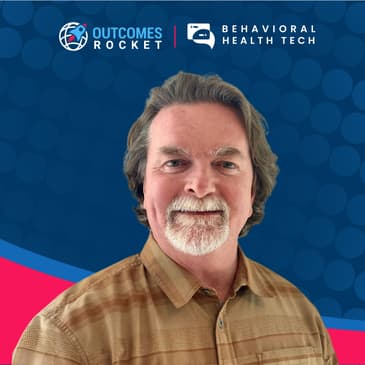
In this episode, Dr. Mike Franz, Executive Medical Director for Behavioral Health at Regence BlueCross BlueShield of Oregon, shares his personal battles with depression and anxiety, illustrating how these experiences shape his empathetic approach to patient care. He emphasizes the significance of effective treatment, highlighting therapy, medication, and the need to destigmatize mental health issues. Dr. Franz discusses the interdependence of mental and physical health, showcasing the accessible services his health plan offers, such as rapid access to psychiatrists and therapists. He encourages leaders to openly share their mental health journeys to help reduce stigma and foster a more supportive environment.
Tune in to discover how Dr. Franz is transforming behavioral health care, breaking down barriers to access, and inspiring inclusive solutions for everyone!
Resources:
- Connect with and follow Dr. Mike Franz on LinkedIn.
- Follow Behavioral Health Tech on LinkedIn and explore their website.
Fast Track Your Business Growth:
Outcomes Rocket is a full-service marketing agency focused on helping healthcare organizations like yours maximize your impact and accelerate growth. Learn more at outcomesrocket.com
[00:00:01] This podcast is produced by Outcomes Rocket, your healthcare exclusive digital marketing agency. Outcomes Rocket exists to help healthcare organizations like yours to maximize their impact and accelerate growth. Visit outcomesrocket.com or text us at 312-224-9945.
[00:00:25] Hello, everyone, and welcome back to another episode of Expanding Access, recorded live here at the Behavioral Health Tech Conference in Arizona. Today, I have the privilege of hosting Dr. Mike Franz on the podcast. He's the Executive Medical Director for Behavioral Health at Regence BlueCross and BlueShield.
[00:00:53] Mike, thanks for joining us today. Great to be here with you, Saul. Thanks. It's such a privilege. And so what brings you to the conference? As you said, I'm a medical director at a health plan. So lots of opportunity here to interact with some novel behavioral health solutions and see what's out there. Some of the providers or vendors we're already contracted with. So it's an opportunity to enrich those relationships as well as to learn more about other opportunities that we might want to pursue.
[00:01:22] It's also great to get together with colleagues. I have some psychiatrist friends that are here and so getting some good social time. Nice. It's great to be in Arizona in November. It sure is. A little weird being here for the election, but there was a nice watch party last night. Yeah. We got through it. I'm also practicing child and adolescent psychiatrist. And it actually has some meaning to my practice as far as what's available here for me to learn. That's amazing. Yeah.
[00:01:50] That's so great. A lot of really great reasons to be here. Yeah. Yeah, for sure. I love it, Mike. It's certainly a pleasure to be speaking with you. Tell us a little bit about you and your experience. What behavioral health challenges have you faced? Yeah. So I've struggled intermittently throughout my life as a lot of behavioral health conditions are episodic. And for me, they have been with a combination of depression and anxiety. Sometimes one more than the other, sometimes in combination.
[00:02:20] A lot of the time, fully in remission. But it's caused some challenges. Sometimes it's been brought on by life events like relationship challenges when I was younger or perhaps more stressful situations. Like a classic one for me that I think is pretty calm and it's hard to call maybe a behavioral health issue is public speaking and anxiety and even experiencing panic in those situations. Yeah. But for me to be able to do my job effectively, I've needed to overcome that. Yeah. And for the most part, I have.
[00:02:49] So I've had some success there, too. And you're here with us. Thank you for doing this. You bet. I'm doing a panel tomorrow and I did one last year and I do a lot of public speaking and media engagements these days. Wow. Awesome. Well, it's great to see you tackle that and be here to share those experiences with us. What treatment interventions have been helpful? So nothing too surprising. Generally, a combination of therapy, talk therapy and medications.
[00:03:17] So probably more eclectic therapy when I was in or just out of residency and fellowship, started seeing a psychiatrist who was actually a faculty member at the program where I trained. And I would say engaged in more psychodynamic psych. At other times, I've done a little bit more cognitive behavioral therapy approaches. And then medications have been basically the classic SSRIs. So antidepressants that also are helpful for anxiety as well.
[00:03:46] So you get two birds with one stone with those. And a little trial and error with that, which is pretty common in my practice. A lot of the patients I treat, there's some trial and error with medications. But eventually landed on something that seemed to work for me and didn't need to be on it very long, but was helpful. And the combination of both of those. And I'd say I've episodically entered therapy two or three more times as well, but haven't had to go back on the medications. And the therapy's been enough to get me through some rough patches.
[00:04:14] And fortunately, it's been years now that I'd say I've been doing pretty well. That's awesome. Congratulations. And I love that you're speaking openly about it because it's normal. It is. It's common. It's super common. I think we underestimate a lot of times. We say one in five adults at any time is struggling with a behavioral health condition. Those statistics are very conservative. I think it's a lot closer to a third, especially coming out of COVID. I think that's more of the data we're seeing. And that's, you know, at any given point in time.
[00:04:44] So we all are struggling generally with some sort of physical health condition, even if it's a cold intermittently. Chronic medical conditions like heart disease, diabetes, COPD, hypertension, very common. We, of course, seek treatment for that. And there's no reason we shouldn't seek treatment for being in health conditions. It's all about getting rid of that stigma. And I think finally we're making some progress in that area. That's great. Yeah, I'm very excited about it as well.
[00:05:12] What message do you want to convey to our audience most? I'd say mostly that behavioral health treatment works. Again, sometimes you have to do a little bit of trial and error. You need a good match with a therapist if that's a primary intervention. You might, if you're going to benefit from medications, it may take a little bit of trial and error there. But treatment works. And generally it's accessible. And I can speak from our health plan.
[00:05:38] We have tons of access right now for outpatient behavioral health. A lot of it is virtually available. But we could get folks in literally within 48 hours to see a psychiatrist, even for a medication evaluation in addition to therapy. In many of our solutions, we get folks in within seven days, 94% of the time. So it's accessible. It's effective. And it can also improve your physical health. One of my passions is the interdependence of physical health and behavioral health.
[00:06:08] And how you really must address both to have full person health. So for that reason, it's really important to make sure you're at the top of your game and your mental health as well. I love that. Some great resources there and great points. How has your lived experience affected how you approach your work? I think it's made me more passionate. It's certainly given me more empathy.
[00:06:31] I think both for our members that we try to help at the insurance plan, certainly for my patients that I treat to have been in their shoes to a certain extent, not in every way. And it also has given me maybe a little bit more direction on some of the solutions that we need to focus on because I do have that lived experience. I can see it from that perspective as well.
[00:06:55] And I know, and I, again, back to the interdependence of mental health and physical health, I can really appreciate that when I'm not at my best in a mental health perspective, my physical health suffers as well. So that experience also lends me to really understand that appreciation that we need to address all of it. I love that. And that perspective is certainly valuable in a way that you serve your patients, the members on the plan, and even program design, I would imagine, right? Absolutely. Oh, yes, definitely.
[00:07:25] The solutions we go for, and it really makes me appreciate it at a visceral level that I think I wouldn't have that connection to if I hadn't experienced it myself. Not that I think people should have behavioral health conditions, but if you do, it can be a strength as well. A hundred percent. A hundred percent. Mike, this has been a very great discussion. I thank you for joining us today.
[00:07:49] And if you wanted to close with any calls to action with our audience, what would you leave them with and where can they reach out or connect with you to learn more? Yeah, I would encourage leaders out there to share your own experience, whatever you do. We still have a ways to go in reducing stigma.
[00:08:09] And when leaders self-disclose in this way, thoughtfully, intentionally, with good intentions, it could really move the dial in that regard and make behavioral treatment more accessible to everyone. So that's what I would leave folks with. And yeah, you can reach me on LinkedIn. Amazing. Mike, thank you very much. Really appreciate your time. Thank you very much. Thank you very much.
[00:08:31] Thanks for being with us on the Expanding Access podcast here with Dr. Mike Franz, Executive Medical Director for Behavioral Health at Regents Blue Cross and Blue Shield. In the show notes, you'll find ways to learn more about him and his organization and how you too can apply what you learn on this episode to your daily work and helping influence your teams and your family and your friends. Thanks for tuning in. And Mike, thanks for being with us. Thanks, Samal. Pleasure.
[00:08:59] This podcast is produced by Outcomes Rocket, your healthcare exclusive digital marketing agency. Outcomes Rocket exists to help healthcare organizations like yours to maximize their impact and accelerate growth.
[00:09:29] Visit outcomesrocket.com or text us at 312-224-9945.