
Enhancing revenue cycle management by preventing denials through provider education, AI, and automation.
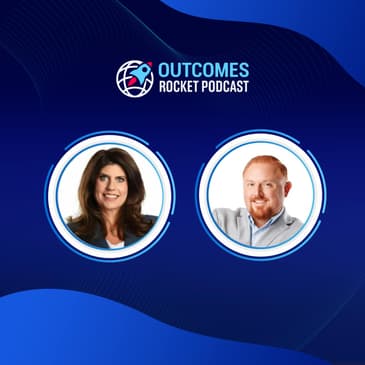
In this episode, Jeremy Sturgill, VP and Chief Product Officer, and Suzette Rahn, VP and Chief Operating Officer, both from BRSi, shed light on the valuable solutions BRSI is delivering to the healthcare ecosystem, particularly in denials management and utilizing AI for prediction. They discuss BRSi's background, its initial focus on denials management in healthcare, and its evolution into various healthcare spaces. Jeremy and Suzette then touch on the company's innovative use of AI, particularly a beta product for denial prediction. They also emphasize the importance of collaboration and partnerships in addressing healthcare challenges, highlighting the company's rebranding to BRSI.
Stay tuned as Jeremy and Suzette share their insights and how healthcare professionals can reach out to them for more information.
Resources:
[00:00:01] This podcast is produced by Outcomes Rocket, your healthcare exclusive digital marketing agency. Outcomes Rocket exists to help healthcare organizations like yours to maximize their impact and accelerate growth. Visit outcomesrocket.com or text us at 312-224-9945.
[00:00:29] Hey everybody, Saul Marquez with the Outcomes Rocket. I want to welcome you back to another episode here at the Becker's Health IT Conference. Today, I have the privilege of being joined by two amazing healthcare leaders. First, I want to introduce you to Jeremy Sturgill. He is the Vice President and Chief Product Officer at BRSI. And I also want to introduce you to Suzette Rahn, who is the VP and Chief Operating Officer also at BRSI. Welcome to the podcast, guys. Thanks for joining us. Thank you, Paul.
[00:00:58] Absolutely. So, we are privileged to be having this conversation with you and want to ask you really to kick things off. What is the value that BRSI is delivering to the healthcare ecosystem today? So, just to start from the beginning, BRSI started out 32 years ago in the denials management space. We recognize that denials are avoidable. And now our goal and our quest, if you will, is to prevent those denials.
[00:01:25] You know, either through provider education, through artificial intelligence, and other automation that we can provide to our clients to ensure that those denials are avoidable. Select more money faster. Sure. Love that. And that's always great. Anything to add to that, Jeremy? With that, we've been in multiple spaces. We've been in the commercial space where we started in the early 90s. Early 2000s, I mean, we were the governor work. So, we've done Department of Defense. We've done Veteran Affairs.
[00:01:53] We now work for state Medicaid agencies for the last seven years. So, helping all organizations around healthcare really is patients the one at the end of the day that need to be taken care of. There's financial burden that's put on them. So, how do you do that through insurance discovery stuff that we offer? How do you do that through the claims process? Helping them understand their bills, their statements, what's coming. Those are the kind of things that we try and want to focus on. But also make it easier on providers, right? They're not business people. They don't want to be business people. That's not why they became doctors.
[00:02:20] So, how do you make that easier for them with tools and things to kind of add on or maybe bolt on to the current process they have? Thank you, Jeremy. And Suzette, it sounds like really you're looking at both the provider and also the patient as part of the equation to ultimately help things move faster and help people get paid faster. Yes, correct. Love it. Fantastic. Here at Becker's, we've been covering a lot of different topics. Can you share one insight that you learned at the conference that maybe surprised you or seemed interesting?
[00:02:52] I'm looking. Suzette, you want to go first or Jeremy? Well, the one thing that we've heard from a lot of the conferences that we're trying, the narrative, I guess, goes different is AI. A lot of people throw out the term, right? It's like that cliche word you heard while you're walking around. Like, oh, AI, I do that too. So the one thing that we're trying to do, we do have a beta product that we have that's doing AI for denial prediction. Something we've been doing for a little over a year. Build it out. You know, they take big data models. They take, and it's not just one data model.
[00:03:17] It's an ever-changing data model because insurance plans change, provider contracts change, all those things. That's an annual thing. Diagnosis codes change. All the care changes, right? This is the best way to do it last year, but we found it as a different way to do it. The payers are ahead of the providers by years. Providers have got a big road to a hill, right? To climb, let's say, to try and not be so much into this paper process and this administrative process with payers.
[00:03:44] So we're just trying to, again, bring them a true AI, generative AI of kind of saying, here's what I've learned over time. How do you just keep growing onto that and then make that tool better with those increased data models and stuff like that where maybe it's the coding side. Maybe it's just the patient registration side. But bringing all those together is one because this data run over here is going to mess up the whole rest of the process. Yeah, that's really great.
[00:04:12] And I think ultimately the goal is not to just simply throw a stat on people at the problem, but to really analyze and identify where the problems are, how to fix those, be it a front-end issue, payer relations. So we actually have developed a number of different teams that can address those various issues that can help with payer processing and help increase that time, reduce the days in AR.
[00:04:37] All of the key performance indicators that our clients or both care assistants are looking, those are the things that we're helping to improve. As Jeremy mentioned, we are working with the I-Card Venice Defense currently. We have created software that is currently in use with the Department of Defense. So we feel like we definitely have the tools, we have the knowledge, we have the technology and the people in place to be able to bring a really outstanding and unique product to the blocking place. Thank you.
[00:05:06] Sounds like you guys have a lot of valuable tools, resources, and staff. And the insights point to there still are gaps that need to be filled. And thanks to companies like BRSI, we have partners that we could lean on for that. For all of the audience listening and also watching us, what call to action would you give them? And what's the best place that they could reach out to you for more information? I think the best call to action would be it's a team approach.
[00:05:34] We know we're experts at where we're experts at, but this process involves a number of different teams that have different experience. So we're big on what falls under me and my position is partnerships. So when I'm here, it's not just meeting with providers, I'm walking through and I'm talking to these other people that are specialists in their areas and seeing if there's a strategic partnership. They don't do what we do. You know, and we're a small company. When the Medicaid space, we compete with large companies that have been in this space for a long time, thousands of employees to our few hundred.
[00:06:04] So how do you compete with them? And that comes from small companies partnering together. To us, we feel for the providers, they get the best in that essence, right? If you go to one big conglomerate, sometimes you lose that customer-centric feel, that client-centric feel. If we approach a partnership, everyone's bought in. They help on their piece, we help on our piece. But then we do that all together as one. I think that's one thing for, I would say, call to action. Just kind of look at everything that's out there. You know, the name doesn't everything, right?
[00:06:32] Get to know who your vendors are, understand what their culture is. And then does that culture fit your culture? Great call to action. Thank you, Jeremy. And Suzette? Well, I think Jeremy pretty much said it all. The collaboration is definitely key. You know, we have a collaborative effort both internally with all of our teams as well as with our carters. Any vendors have both pain with subcontractors. And, you know, and our clients, you know, we take a very collaborative approach with our clients.
[00:06:59] We always say we don't take a cookie-cutter approach because we really want to understand them, their needs, their pain points, and then be able to address those issues with them and try and help them with, you know, managing either their accounts receivable or whatever within the revenues. And to reach us, it's just benefitrecovery.com. So that was our DBA name for years. We actually just rebranded to BRSI. So a lot of people have known us as Benefit Recovery, the Doing Business As name. So benefitrecovery.com? Yeah.
[00:07:27] So if you go there, benefitrecovery.com, find us through there, our LinkedIn. We're on a big marketing kind of growth push right now. So hopefully you'll see a bunch of stuff post out there more currently. But yes, so if anyone knows us as that, same company. BSI is just a legal name, has-been. We just went to a rebranding, new mark, and everything else. So come check us out and just, you know, try and schedule a meeting and let's sit down and talk. Becker says it's been a great way for us to get our name and our new breed out there. So that's fantastic. And folks, make sure you take a look at the show notes below.
[00:07:57] That's where we'll have all of the information on how to get in touch with BRSI. Obviously, Jeremy and Suzette, your LinkedIn profiles will be there too. So people have an easy way to get in touch with you. Want to thank you guys for spending time with us today and good luck at the rest of the show. Thank you very much. Thank you, Sol. This time.
[00:08:47] This podcast is produced by Outcomes Rocket, your healthcare exclusive digital marketing agency. Outcomes Rocket exists to help healthcare organizations like yours to maximize their impact and accelerate growth. Visit outcomesrocket.com or text us at 312-224-9945. Outcomes Rocket.com or text us at 312-224-9945. We'll see you in the next video. We'll see you in the next video. Bye.