
This podcast is brought to you by Outcomes Rocket, your exclusive healthcare marketing agency. Learn how to accelerate your growth by going to outcomesrocket.com
AI-driven healthcare solutions can revolutionize behavioral health by optimizing schedules, improving patient matching, and enhancing operational efficiency.
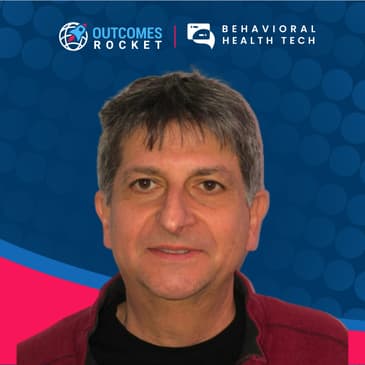
In this episode, Plamen Petrov, CEO of Healee, shares how AI-driven solutions are addressing critical challenges in healthcare scheduling. He also discusses the importance of provider-patient matching and operational optimization through technology. Plamen discusses the importance of identifying gaps in provider schedules and leveraging data-driven strategies to enhance care delivery and accessibility.
Tune in to uncover how cutting-edge technology is breaking barriers in behavioral healthcare!
Resources:
- Connect with and follow Plamen Petrov on LinkedIn.
- Follow Healee on LinkedIn and explore their website.
Fast Track Your Business Growth:
Outcomes Rocket is a full service marketing agency focused on helping healthcare organizations like yours maximize your impact and accelerate growth. Learn more at outcomesrocket.com
[00:00:01] This podcast is produced by Outcomes Rocket, your healthcare-exclusive digital marketing agency. Outcomes Rocket exists to help healthcare organizations like yours to maximize their impact and accelerate growth. Visit outcomesrocket.com or text us at 312-224-9945.
[00:00:25] Hey everyone, welcome back to another episode of the Expanding Access podcast recorded live here at the amazing Behavioral Health Tech Conference at the Biltmore in Arizona. Today I have the privilege of hosting Plamev Petrov, who is the CEO of Healee. Plamen, thanks for having us. Saul, it's a pleasure to be here. Thanks for having this podcast.
[00:00:54] Oh, it's a pleasure and I'm excited to really help our listeners and viewers understand more about you and Healee. But before we dig into that, what brings you to the conference, Plamev? So it's an incredible opportunity to meet our clients, prospects, and also really jump deep into the domain of healthcare and behavioral health. How can we help people get access to care? That's what Healee is all about.
[00:01:24] And where best to get to learn about it than here, where all the providers are, the technology is here, and we're all minded people that are looking to solve the same problems and help each other. We're learning, we're showcasing, and we're adjusting our future. I love it. I love it, Plamev. And for everyone watching and listening, tell them a little bit about you and tell them a little bit about Healee.
[00:01:52] Absolutely. So I am, of course, part of Healee, a very exciting company. I lead Healee as CEO. But more importantly, I'm very passionate about taking and bringing the latest and greatest in technology to solve people's problems. And really solve problems that have a big social impact. And I've been in healthcare and health tech for 25 years.
[00:02:18] And it has converted into more of a mission than just a techie farm stuff. My background has different aspects of healthcare. I've been with a large insurance company. Elevance Health is chief data officer in VP4AI. I was chief architect at Blue Cross Blue Shield. I was with a startup, Hydrogen Health, bringing virtual primary care during COVID times.
[00:02:45] And I'm very passionate about behavioral health and helping people in what is for sure a big problem in the U.S. and worldwide. People really needing care to figure out how to live in this ever-changing world. Yeah. It's very, it's always changing. And you're a technologist at heart. Yeah. And you've led some of the biggest organizations in healthcare with technology.
[00:03:15] AI is abuzz. We're hearing it everywhere. What do you think AI's role will be in healthcare generally? I am really very enthused about AI. AI is a technology. So just a little bit. I've been, for good or bad, I've had a chance to be involved with AI since 88. Also a few years back. Yeah. And I went through different generations of AI.
[00:03:40] Had a few implementations using knowledge-based systems and neural nets and natural language processing understanding. The more sophisticated AI becomes, the more magical it looks to people that are outside of it. Yeah. But under the covers, it is technology. And people that have been in AI for a while understand what's going on, but also understand the power and also the risks. It's a powerful technology.
[00:04:10] It needs to be managed properly. But I do want to start with something that really, I had a great experience coming here today. Yeah. I took a driverless car. Oh. So I just, I saw it running around here. I haven't had a chance to. And I just ordered it and it showed up right on time and politely asked me to open the door. So I opened the door. I sat in, politely explained to me that this will be just like a normal ride. Right.
[00:04:38] And very nicely, of course, got mad at me because I didn't put my seatbelt. So I had to put it on. And then very nicely drove me right from my hotel to the conference. Yeah. And I know people like 20, 30 years ago would say, this is magic. And I would say, this is technology. And some people will say, well, it's taking jobs away. And I would say, no, it's allowing people to move up and do other jobs.
[00:05:07] And that has been part of humanity all along. I just mapped this to healthcare, to behavior health. There are so many things we can do for good, for our patients, for our providers. And I believe AI is here to be part of that journey. And that's what HEAL is all about. We're applying AI to optimize care access, to optimize how providers and patients need. So we have the best match.
[00:05:35] And how we provide ample access to care. While there is a absolute shortage and it's really hard to find. People are waiting to get an appointment for months. And a lot of that has to do with not being able to optimize schedules and align bookings and availabilities. Match the right provider, the right counselor with the right patient, right therapist. And that's what HEAL is all about. We are on a journey to solve that problem and help people.
[00:06:05] That's great. It's a huge need. Something like 340 people to every one provider. Yeah. We can't do it without the help of technology. How do you think AI care access scheduling like Healy's can increase patient experience? Think about, again, I'm going to go back to my early morning experience. Yeah. Every moment throughout my journey, like ordering the driverless car and riding and getting here.
[00:06:34] My app was telling me where I am, where the car is, how far it is. Because I knew everything. I didn't have to worry about, will I be late? I was concerned that I'll be late for this. Oh, really? Early. You're early. Yeah. But I didn't have an issue. I saw immediately, oh, where the car is. It's coming. So think about all the boring but important things that are part of our daily interaction. And we sometimes need to worry about more than the actual thing.
[00:07:04] The actual thing is meeting with your counselor, meeting with your therapist, meeting with your clinician. And there are all these surrounding things. Am I late? Will the provider show up? Will I be late? Is it the right person? Did I have the right venue? Will, all of that can be solved with technology. And it's not rocket science. And it is something that we're pretty much used to in many other industries, like driverless, like retail, like transportation and travel.
[00:07:33] And we're adding that to healthcare because healthcare is, of course, a lot more personal. So we have to be careful. We're always dealing with people that have something to worry about. And we need to make sure that all the technology there is part of the solution, not part of the problem. So how can AI solve that? Yeah. Just a simple example. Think about Swiss cheese. All these holes.
[00:08:01] Frequently, a provider calendar looks like that. Yeah. There are gaps because appointments don't start on the hour. They start 15 minutes later. They have to last for a certain amount of time. There's no time for the other one. There is a mismatch. There are cancellations. There are a provider starts an appointment to figure out that's the wrong type of care that they need. So they have to reschedule. All of those calls in the Swiss cheese are very optimizable.
[00:08:30] We can pack them. We, on average, increase throughput by 30%, basically, without having to hire more providers, just get more work done. And that's what we're trying to solve. That's what we're building. That's what we're deploying. That's great. I know a lot of practices out there are working to try to grow faster and struggling with throughput.
[00:08:54] It sounds like the technology is really helping find those holes, those gaps, those misses, and solve for them. Yeah. Yeah. And I'm very passionate about optimization. I believe that when people say AI, lately, we always go towards large language models and the linguistic side, which is also a passion of mine, by the way. Yeah. But my earlier passion that keeps going is how do we optimize under very competing constraints?
[00:09:21] Like some of our providers and some of our future clients or prospects that we've been working here, some of the problem is pretty complex. So we have all the constraints. So a provider has or clinician therapist has to see a patient in a state where their license, where the patient resides. They have to match the language in order to make sure that the session goes well. Sometimes age matters, other characteristics.
[00:09:50] So there are a lot of hard, we call them hard constraints that need to be matched in order to make that appointment booking optimization. There are a lot of soft constraints or preferences. What I really would love to have my appointment early in the morning, but it may be later, but it's okay if the only opportunity is later, I'll take that. Yeah. So these are soft constraints. And we have a lot of heuristics.
[00:10:16] How do we keep the supply available, the supply of providers available so that we can match unexpected demands? Mm-hmm. So we apply a lot of different optimization heuristics and we are data-driven.
[00:10:32] We can have a good understanding of what is the propensity or likelihood of someone canceling last minute or of a session going over time because those are the types of sessions. And we can put the smarts, the AI smarts, to optimize for those unpredictable but possible events so that the whole experience scheduling is optimal.
[00:11:02] So that's part of my passion. That's part of what Heal is all about. Surrounded by our integrated telehealth, integrated intake, make the whole experience seamless. Well, it definitely sounds end-to-end. So many opportunities in that Swiss cheese of the practice to optimize for more throughput, higher quality care, and not missing any of those events, the access, right? Yeah. At the end of the day.
[00:11:28] What call to action would you leave our listeners and our viewers with today as they think about addressing some of the challenges? And what's the best place they could get in touch with you on the Healy team? Absolutely. Healy, we are, you will probably not see Healy on TV or we are, our technology is entirely white label. We brand it for our clients. So you will see the brand experience of the provider practice.
[00:11:56] Having said that, so our prospects clients, we encourage you to reach out to healy.com, H-E-A-L-E-E.com. And we're there to help. We love to set up, schedule an appointment. We're on social media. Of course, we're a proud to be an AI startup. So we're affiliated with Accelerator, University of Chicago Accelerator. We're a global company. I just came back from Dubai.
[00:12:24] We are sharing our technology at JITEC's, the largest innovation in health tech events. So we believe that we're doing something important and we have the mission to make it happen, to make sure that patients have access to providers and get the help that they need. Well, that's fantastic, Plamen. Folks, on the Expanding Access podcast, we talk about solutions to get us there.
[00:12:53] And there's no doubt that Plamen Petrov's solution with Healy is going to help get us there. He's the CEO of the company, and it's been so great to have him here on the podcast today. Make sure you check out the show notes for the ways to get in touch with him and find out how you, too, can take your practice to the next optimized level to make sure you can take care of all those patients that need the care that you deliver. Thank you all for tuning in. And Plamen, thanks for being with us. So thank you.
[00:13:21] And this is really a very exciting event. We're so glad to be here. Thank you. This podcast is produced by Outcomes Rocket, your healthcare exclusive digital marketing agency.
[00:13:48] Outcomes Rocket exists to help healthcare organizations like yours to maximize their impact and accelerate growth. Visit outcomesrocket.com or text us at 312-224-9945. Out Memorial Point. Out turnout Lightning Outcomes valuable