
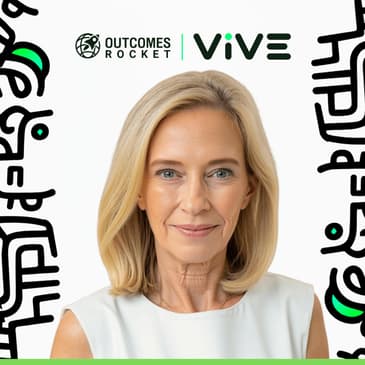
Healthcare technology should quietly remove friction and reduce burden so clinicians can focus on what matters most: caring for patients in a more human way.
In this episode, Lisa Gulker, Chief Nursing Officer at Oracle Health and Life Sciences, discusses how Oracle is rethinking healthcare technology by building AI directly into the foundation of its systems rather than layering it on as an afterthought. She explains how this approach can help clinicians spend less time in the chart, reduce workflow fragmentation, and make technology feel more seamless in the care experience. Lisa also shares how Oracle is applying these capabilities across providers, life sciences, and payers, creating opportunities to accelerate research, improve clinical trial matching, streamline prior authorization, and reduce administrative burden across the ecosystem. Throughout the conversation, she brings a nurse leader’s perspective to a central question in healthcare innovation: how do we use technology to make care feel more human, not less?
Tune in and learn how embedded AI could reshape the healthcare experience for clinicians, staff, researchers, payers, and patients alike!
Resources:
[00:00:09] Hello everyone and welcome back to the Outcomes Rocket recorded live here at ViVE in Los Angeles. Today I have the privilege of hosting an outstanding leader. Her name is Lisa Gulker. She's the Chief Nursing Officer at Oracle Health and Life Sciences. Lisa, thanks for joining us. Sure, thanks. I'm happy to be here. So you're a nurse by training.
[00:00:31] I am. I'm a critical care nurse for adults. I don't know that I could do children and too many of my own to empathize with. But yeah, so I'm not only a staff nurse, which is, you know, a registered nurse, but I'm also a advanced practice nurse, so a nurse practitioner as well. So if I need help with breathing, Yes, that's right. You're helping me with the cameras and the lights and the microphones. And if you fall down and you need airway protection or any kind of thing,
[00:01:01] kind of medical emergency help, I'm here for you. You're critical. I know. This is it. We've started our relationship off in a good way. Yeah, we really have. We really have. Well, Lisa, tell us a little bit about, I mean, everybody knows Oracle Health and Life Sciences, but tell us a little bit more about your role within the organization and your focus areas. Sure. So I think it's been an interesting journey. So I spent most of my career as a customer, as someone who made decisions about what kind of technology,
[00:01:30] we use for care. What's really interesting is I never expected to find a home in a company like Oracle. Huge, all sorts of industries, most secure cloud in the world, right? We all know the taglines. But bringing that the power of that technology to innovate on behalf of clinicians and their patients sort of been, I would say, one of the other than the work I get to do with patients,
[00:01:58] really one of the most gratifying things is to take care of the industry in a way that we've seen other industries transformed by technology. And it really hasn't come to health care yet. So that's been sort of the, so in my role, I'm kind of responsible for three things. One is an internal clinician along with our chief clinical officer culture. We've got hundreds of nurses at Oracle. Deep relationships with our industry partners.
[00:02:27] So there are chief nurse executives and chief nursing information officers across the world. Somebody that could talk their language. Exactly. And, you know, my job is to advocate for our company to them, but also for their perspective back into the company. And then the next is to work really closely with our business team. So there's a business of health care. It's a huge driver of economies across the world, but it's really important from a human perspective.
[00:02:54] And so to be able to got health are such smart product managers and engineers. Amazing use of our technologies translate what's needed at the bedside, what's needed in a pharma company, what's needed for payers, all the way into that technology. So working with the technologists in our company has also been really interesting. So those are sort of the three buckets and what's the best strategy to take forward to enhance the business.
[00:03:22] Well, very, very important focus areas, Lisa. And, you know, you mentioned, you know, this kind of like technology. I want to I want to touch on harnessing the power of AI. Yeah. And so huge focus for us for frontline health care staff. How do they how do they leverage that and how are you helping them? So it's interesting. Our perspective is, is that we'll know we've done it right if they don't think about it.
[00:03:47] But the fact of the matter is, is that we've for decades now driven workflow at the point of care, whether, again, you're a physician, a nurse, name your, you know, professional who's taking care of patients or even really the payers or the researchers. Their work has been driven by what technology they have available to them. And they try to fit their human process into the limitations of the technology.
[00:04:17] With what we're doing with AI, a ground up EMR, for example, agentic AI is just part of it. It's not bolted on. It's just part of the way we've done it. They don't have to think about that anymore. So the technology is working for them. So think of dozens, if not hundreds of AI agents who, even though that sounds kind of scary and like it would be burdensome, their job is to queue up the human nature.
[00:04:44] So you can be more human with your patients because you're no longer focused on what's on the screen. Right now we have cameras and microphones documenting our interaction. Why shouldn't it be the same when you're having health care delivered so that we're focused on each other, not on the microphone or the camera or the so. And that's the way it should be, especially when you're seeking care, when you're on some kind of a health journey.
[00:05:11] So seamless, seamless, not fragmented, fragmented, not driven by the way that something was coded. 10, 20 years ago on it's, it's really is going to completely change the game. I've had a couple of conversations here at VIVE about how are we going to change the way we measure the success of the technology?
[00:05:33] There's some real measures we're seeing that are important, but I think it's really going to change the game around helping clinicians rethink the way that they do their work. Or even frontline office staff or the back office that's doing patient accounting. Their jobs are going to completely change because we've removed the fragmentation and the burden. That's great. And, you know, I heard you say you ground up like a new. It is ground up. Yeah. Tell me more about that, right?
[00:06:00] Because obviously everybody knows Cerner and the acquisition. So is there something else, something new? Oh, it's yes. Yes. Completely new. Yeah. Now, it's interesting if we have existing customers who have Cerner, we're bringing them on this journey by bridging the AI across. But it's really ingenious the way that Oracle's brought this journey to us so that it is very interesting. So we know the database that they built over the years is really important to them as far as the fact that it holds their patient stories.
[00:06:30] It also holds their health system story, right? All of those transactions. So those become part of the new system. But the new semantic data layer, the way they've turned those transactions into objects that can be built not only with AI, right? Using AI to code, but also to develop those agents. And the data is now related to it's not silos.
[00:06:55] So those data points that tell the story of a patient or how a clinician likes to practice or how a pharma company likes to do their research, how they embed safety in every step of the way, or how a paper gets speed to their business processes that were driven by humans. Those databases now are built in a relational way that are made for speed and not for silos. Security for sure. And it lets you innovate.
[00:07:22] So the customer gets to decide what their standard is. We ingest their standard as part of that semantic data layer. And then we can really drive a workflow that's personalized to the organization, not just driven by our technology framework. Yeah. Yeah. It's more flexible. It is absolutely groundbreaking. Fascinating. Fascinating. Thanks for sharing that. I wasn't aware. I mean, well, and here I am, a nurse, talking about semantic data. But again, part of the gift.
[00:07:52] It is. It is. Yeah. So, you know, you mentioned earlier healthcare providers aren't your only company's focus. You're also focused on life sciences and payers taking advantage of the agentic capabilities. Talk to us about those emerging opportunities. Yeah. So what's really interesting is it takes too long to get innovation to, we just finished talking about it took too long for innovation to get to clinicians so that they had better tools to use so they had more time to focus on patients and less on administrative tasks.
[00:08:22] Well, we're doing the same for life sciences. So what that means is that the way that pharma companies operate, the way they embed safety, the way that they're able to pose research questions using an AI agent to a system, the way that they can connect all the data. So that's a lot of data. Speed to human beings is what we're all about in all of these parts of the industry.
[00:08:42] And so it's really important that they're able to do groundbreaking research on enormous data sets safely, quickly, so that there are, and then surface up those insights even into one of the biggest challenges, for example, is to get enough people to be in a study.
[00:08:59] Whether it's on those people's data, obviously de-identified secure permissions, et cetera, but not only the big data, but also then how does a physician know if there's a patient right in front of them that could benefit from a study?
[00:09:13] So not only are we working with the pharma companies to help speed their processes and get research studies done more quickly, but we're able to put that insight into either the patient portal or the physician workflow so that they know that a patient could be linked to a study to see if it's the right thing for them to do. That is, if you talk to families that are looking for that, yeah, you have to go out and do the research on your own, or you happen to have a physician who knows about the study.
[00:09:40] This is really making sure that that's made available to everybody, which is really important. And when it comes to payers, they spend an enormous amount of human capital on pushing all of the paperwork, frankly, through. We're still faxing, for example. Referrals take too long. Physicians on one side and payers on the other with a patient in between. No one knows where something is around a preauthorization.
[00:10:05] All of that data needs to move more quickly, and it can be done by an AI and not by a person who's working a list. So that's some of the innovation we're bringing to the payers. I love it. There's a huge need for it. And, you know, the ecosystem is interconnected, and we tend to silo it. So I'm glad you're looking at this from an integrated approach across all players. Yeah, yeah. I think it's fantastic. It is fantastic.
[00:10:31] So, you know, I want to focus on sort of your role as a nurse leader. In your role, how do you balance the integration of cutting-edge technology with the human-centered focus of care? Yeah, we talked about that a little bit. And I was here earlier at the conference talking about nurses and how nurses are going to bring these technologies into the spaces for care and the way they use it as nurses.
[00:10:53] If you're in a particular discipline, whether you're a physician, a nurse, a physical therapist, a pharmacist, certainly, you want to know that if someone's bringing you a new technology, it feels like it was made for you because it understands your disciplinary perspective. I have never seen in my entire career, it's kind of interesting, the amount of product managers and engineers who are out with our customers and talking to the actual end users.
[00:11:20] We did it before, but the scale with which we're doing it means that people will see their voice and their perspective in the way that the technology works. That's really important. And as I mentioned earlier, I don't want us to be the center of the relationship between humans who are seeking care and humans who are delivering it. We really want the technology to be the last thing they think about.
[00:11:45] But the first thing they turn to when they need to serve either their own health needs or deliver care. So it's kind of an interesting tension, which is we don't want it to be in the way, but we also want it to be there. And be the first thing they know where they can count on. If I'm using a patient portal, I can count on that. Just like, I mean, how many times did you use your smartphone today? Oh, I can't even count. Right. And so we expect that same kind of experience to help drive.
[00:12:14] It's a lot of work to try and manage a health journey, whether you're well or should be super easy if you're well. It should be easier if you don't feel well. So that's fantastic. That's the way we're thinking. I love that, Lisa. And, you know, having a chief nursing officer is a commitment. All the staff that are in the field doing massive learning is a commitment. Yeah.
[00:12:37] So it's clear that Oracle Health and Life Sciences is committed to making this a user-friendly experience. Yeah. I have a good story I want to show you. So just to kind of tell you how this really works. I have a colleague who's a nurse who works in product management like I used to before I took this role. And as any technology company I have, we have environments that mirror what our customers use, where we use for development, but also for training and also for testing, etc.
[00:13:05] And she has a set of patients she's been taking care of in that system for literally years. Oh, okay. Yeah. So these are in her... And these are mock patients, right? They are. They're not real, right? Yeah. Right? But, again, from her experience as a nurse.
[00:13:21] And if anyone's used a legacy EMR system, they know there are things in what we call free text fields, which before was an attempt by the clinicians to tell an important part of the patient's story that gives a personal touch to the care. And it's really hard to get that out of the system. So when we started these AI agents used by now at 70 specialties, hundreds, thousands of physicians now, it's just taken off. They don't need training. It's super fast.
[00:13:51] But one of the things we noticed when we were looking at this is she had documented something very special about a pretend patient she had been taking care of that she had a special needs son. She didn't necessarily feel safe at home. Things that were just personalized about this patient. And then when we started to develop the summaries that clinicians now are using all across the world, that summary told that part of this woman's story. Our customers are starting to see that now. Very cool.
[00:14:20] It would not have been, it wouldn't have shown up in older technology. And it had this not been a native AI part of the system right there. Those are the kinds of things that we knew we were going to, we were doing something right. And now it's showing in the data. Docs are spending 40% less time in the chart, seeing more patients if they want to, much more efficient, not doing work at home.
[00:14:49] It's been a lot of fun. But I love that story just because it shows that if anyone's used an EMR in the last 10 years, they know what it means to put something in a free text field and hope someone has seen it. And now... You don't have to hope. You don't have to hope. Yeah. Yeah. It's a great, that's a great way to put it. Yeah. Yeah. That's fantastic, Lisa. Well, thank you for sharing that story. We could keep going on and on. We could. This conversation has been insightful and informative.
[00:15:16] For everybody out there that's curious about what we discussed today, what's the best way they could get in touch with you and the company? Oh, sure. Well, we've got oracle.com. We're at every major organization, industry association, because we really love telling the story. But I would also say go out and look and see what our customers are saying. They're telling the story now. They speak better to it than we do.
[00:15:41] So we've got lots of customer stories now that kind of say it better than I did because they're living it every day. And we're so grateful that they're coming on that journey with us. Can't wait to do the next thing. I love it, Lisa. It's really important. That's great. Well, thank you very much for that. Sure. Thanks for having me. For everybody out there, thanks for tuning in to another episode of The Beat here with Lisa Gulker. She's the chief nursing officer at Oracle Health and Life Sciences. Everything's in the show notes.
[00:16:10] Make sure you check them out. Learn more. Listen to the customer stories. Now's the time to do that. And Lisa, thanks for being with us. Thank you so much. It was great to talk to you. It was a pleasure. Thank you. Thank you.