
The future of healthcare is not limited to clinics and hospitals. It is increasingly about meeting patients where they are and supporting them between visits.
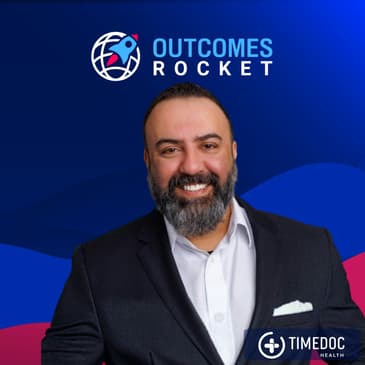
In this episode, I speak with Aqil Chishty, CEO of TimeDoc Health, about shifting healthcare from episodic visits to continuous, longitudinal care. Aqil explains how TimeDoc Health serves as a bridge between patients and providers through chronic care management, remote patient monitoring, behavioral health support, and other virtual care programs. We discuss why compassion is essential for effective care coordination, how regular communication can prevent unnecessary hospital visits, and why healthcare organizations must listen closely to both patients and clients. Aqil also shares why he believes the home will become an increasingly important setting for care delivery.
Tune in to learn how compassionate care coordination can close gaps, support providers, and help patients manage their health between appointments!
Resources:
[00:00:03] [SPEAKER_00] Hello, everyone, and welcome back to the podcast. I'm excited to be spending a little bit of time with Aqil Chishty today. He is the CEO of TimeDoc Health. He's just an outstanding operator focused in the private equity sector, has run many different businesses like WoonTech, where he was CFO and COO, and then president, where they saw over 400% growth.
[00:00:33] [SPEAKER_00] Just incredible work there across other businesses in the healthcare space. So I'm excited to dig into this sector of really kind of care coordination with Aqil on today's podcast. So Aqil, thank you so much for joining me today. Great. Well, thanks for having me on. Of course. So before we kick things off, tell me a little bit about you. What got you into healthcare and what brought you into the business of healthcare?
[00:00:58] [SPEAKER_01] Absolutely. So when I was in college, at that time, I wanted to become a physician. I realized early on, it's a long road. And after spending actually one summer with a friend of mine, his father was an emergency doc, and ended up spending a couple of weeks with him on call, I realized maybe it's not my calling.
[00:01:18] [SPEAKER_01] But what I did really enjoy was helping people and the outcomes that it brings. Again, fast forwarding many years into my career, I traversed many industries, healthcare is still near and dear to me, especially coming from a background where a lot of family members are in the healthcare space, as well as having two parents with multiple chronic conditions. I felt like healthcare was a very near and dear space for me to be in. And if I could make an iota of impact helping people, that's where I wanted to be.
[00:01:46] [SPEAKER_00] That's awesome. Yeah, I feel the same way. This space is a rewarding space to be in when you're contributing to healthier living, longer, let's call it health span. You know, you feel good about getting up in the morning. So I love that. I love that, Aqil. And so tell me a bit more about TimeDoc Health. What are you guys focused on?
[00:02:06] [SPEAKER_01] So TimeDoc Health is an interesting organization. We run a few primary programs, chronic care management, remote patient monitoring, behavioral health. We do some value-based care and annual wellness visits. The idea behind TimeDoc Health is really around focusing on patients that are longitudinal care. If you look at the current healthcare ecosystem, the way it's set up, it's really about you do an annual visit with your physician and then it's ad hoc as you need it.
[00:02:33] [SPEAKER_01] Well, what happens in between, like the 360 plus days when you don't see the doctor? How are you managing your health? And that's where TimeDoc comes in. We have regular touch points with the patients, with the care teams.
[00:02:45] [SPEAKER_01] So we're basically the bridge between the physician and the patient and their longitudinal care over time. Our regular cadence is once or more a month contact with patients, helping them from anything from setting up appointments, managing their chronic conditions, managing many different areas of issues they may have, like prescription refills, ability to be able to have transportation.
[00:03:07] [SPEAKER_01] So a lot of those SDOA determinants of health types of issues that we help mitigate and manage. Overall, if you look at our outcomes, how do we actually help the patients end up improving their overall care, reducing unnecessary emergency room emissions? It's a big cost driver as well as disruption to the patient and their family. So we play in all of these different areas. And as I mentioned earlier, we're just a bridge between the patient, the physician and their longitudinal care rather than the point in time care.
[00:03:36] [SPEAKER_00] Yeah. And it's so important. Episodic care can only get you so far, especially when you're dealing with chronic conditions. A lot of things happen in between those visits. Talk to me about what you believe makes TimeDoc Health different and what positions you guys in a way that helps make a difference for the customers you serve.
[00:03:55] [SPEAKER_01] So I think it always starts with the people, right? You have to have the right people doing the right things for the right reasons. And we focus heavily on recruiting the best care coordinators, the best clinical staff, and putting them through intensive training to make sure that they are prepared to handle patients and the work that they need to have. In addition, really understanding what our clients need. Different types of clients, say health systems versus federally qualified health centers versus physician groups, have different needs.
[00:04:22] [SPEAKER_01] And subsequently their patients may have a different type of conditions that we have to manage. So again, really just understanding what the client's needs are, requirements are, working closely with them, and then working closely with the patients to get them to their goals. And then at the crux of it all, it's compassionate care for the patients, right? So how do we make sure that we are providing them the value, the level of interaction and support that they need for them, their caregivers and the family?
[00:04:47] [SPEAKER_01] Additionally, what makes us different is our ability to scale. There's a lot of companies out there who have tons of logos on their websites, but they're not necessarily deep with the organizations. Our model is a little bit different where we go in very deep with whichever health system and organization that we work with.
[00:05:03] [SPEAKER_00] Got it. No, thank you. I appreciate it. Sorry, I interrupted you on that last point. And depth is key in this industry. What would you say makes a great care coordinator? What is that care coordinator's superpower and capability?
[00:05:18] [SPEAKER_01] As I mentioned, I think it's number one is compassion, right? Being able to meet the patient where they are and their needs and really being able to connect and understand what they need. Also focusing on the right things. There may be a lot of things that are going on with patients which are top of mind, but they may not be the most important in terms of their health. So how do we filter through all that noise and make sure that we're focused on the right things that's ultimately going to improve the patient's care and outcomes and really keep them out of the hospital and their chronic conditions getting worse?
[00:05:46] [SPEAKER_00] Thank you for that. Yeah, it's a big issue, especially as you get into the rural care setting where it's harder to get specialist type of attention. You don't have the right doctors there. Bridging those gaps becomes even more important. As you have been building the business, Aqil, talk to us about a setback that came up and what a key learning from that setback was for the business and for your clients.
[00:06:12] [SPEAKER_01] Yeah, so I think I'd rather talk a little bit more generally around, say, personal setbacks, right? So the way I want to think about it is thinking that you know everything and I think is one area where I think a lot of folks trip up and as I have as well, right? And just taking that learning and making sure that you're really focused on customers' needs, the patient's needs, and making sure that you're able to understand those and address those.
[00:06:37] [SPEAKER_01] And bringing it home back to the business, again, if we're not listening to our clients and what their needs are, right, we've had some clients that churned just because we weren't listening to what they needed and what they required of us. So, again, I think it really comes down to understanding what your clients need and being able to meet them where they need you to meet them. We spend a tremendous amount of time and energy acquiring clients and then having them drop off is a big hit, especially when they've been long-term clients and they're just not happy with you.
[00:07:06] [SPEAKER_01] So, again, focusing on what the clients need, bridging those gaps and making sure that we're delivering to their expectations.
[00:07:14] [SPEAKER_00] Yeah, for sure. That's a big one. That's a big one. Customer success, having an ear to the ground, having mechanisms to intake that information, and then oftentimes figuring out those three to four things that you could do for the client that will just time and again help them feel taken care of, heard, and that you're delivering on all cylinders. That's like the sweet spot, right?
[00:07:38] [SPEAKER_01] Absolutely. I mean, I feel that it's really most of it's communication, right? We can have an issue with the client we're working on, but we don't necessarily communicate to the client, hey, we got this and we'll be back to you, right? So, what I've seen is a lot of times the breakdown happens because you're not necessarily communicating openly with the client and making sure and keeping them updated in terms of what the progress is, what's happening, how we're working on it, acknowledging even that, hey, there is a problem, right?
[00:08:02] [SPEAKER_01] And just working through it together. Again, it just comes down, in my opinion, making sure that you've got, as you said, ear to the ground and that you're communicating openly with clients. Sometimes the issues, you know, are very complex, can't be resolved very quickly. But as long as the client's in the know and that you're working on it and you're their advocate, I think things do work out. I mean, we've had several times where clients were unhappy and we were able to mitigate and then frankly came out the other side with same store growth, if you will.
[00:08:29] [SPEAKER_01] You know, growth with the clients because we were able to materially impact their issues and actually improve and exceed their expectation.
[00:08:36] [SPEAKER_00] Yeah, well said, Aqil. I love that. Those challenging moments are what builds trust and character. And if you could come through, that's where I think tailwinds definitely come up. Love that. Appreciate you sharing that. In your mind, what's a trend, technology or even a policy that has changed the way healthcare is being delivered and how we can look at this differently now?
[00:08:58] [SPEAKER_01] Yeah, I think what I would expect a lot of folks to jump on would be like AI is going to be materially changing how healthcare is delivered. But I'm not necessarily in agreement with that. I think AI is definitely going to have an impact. I really think that the point of care, where you're delivering care, that's the material shift, right? It's no longer going to be in clinics and in hospitals as much as the home. So you can see a trend where there's many home health type of organization. Healthcare has been delivered in the home where the patient needs it.
[00:09:24] [SPEAKER_01] You can assess exactly what's happening via telemedicine, as you mentioned, for rural folks who don't necessarily have access. So really being able to open up that access to care and meet the patient where they are rather than mandating them to go to a hospital or a facility when they may have challenges in transportation, can't afford to get there, can't drive, whatever it is, right? So I think that's the material shift that I'm seeing is more and more care in the patient's homes, meeting them where they are.
[00:09:53] [SPEAKER_01] Obviously, technology is a big driver, right? How do we make sure that we're taking care of the right patients at the right time with the right types of services? But I really think that the trend towards the home, trend towards meeting where the patient is, is something that's going to continue and materially change the way we are. I mean, if you think about it, even five years ago, pre-COVID, if you will, not much telemedicine, not much work happening. There were some companies out there doing certain things, but now it's pretty widespread and it's been successful.
[00:10:21] [SPEAKER_00] It definitely has been. And while adoption has fallen post-COVID, it's still, it's at a level where it was pre-COVID. And man, I was just having a conversation with another leader in the home health space specific to pediatrics. And man, it's such a need. And I was learning from her about all of the issues that come up as far as Medicaid coverage on a monthly basis.
[00:10:48] [SPEAKER_00] That in itself is a huge minefield of just risk for care organizations.
[00:10:54] [SPEAKER_01] Oh, absolutely. The whole navigation of the payer space and how do you get paid? How do we, which programs are you in? I mean, I think it's so complicated and it's really hard for folks to be able to navigate through. We do, we work with a number of organizations who have significant Medicaid population and dual eligible and qualified Medicaid beneficiaries. And it's extremely complex to navigate. Folks are in and out of those programs based on qualification. And it's just, I think it's just getting more and more complex.
[00:11:21] [SPEAKER_01] Flex as funding cuts come out, as policy changes come out. And then they're pretty frequent, right? I mean, every year we already have like a physician fee schedule change. We've got funding that is changing to states, right? Whether it's getting cut or shifted in a different manner. And keeping up with all those policies and making sure patients have what they need. I think that's a task in its own. It really is.
[00:11:43] [SPEAKER_00] It really is. And that's where my next ponderance was headed is these, these care providers, they're pretty much up to their eyeballs with seeing patients. It's pretty tough to do it on their own, right? That's why organizations like yours exist. Tell me more about like why somebody adopts like the services and tech that you guys offer.
[00:12:06] [SPEAKER_01] Absolutely. Again, I think you hit the nail on the head. These care providers can't be doing everything on a daily basis, right? And it becomes super important that we really focus on what happens between the visits, right? You may see a patient once every six months, once a year, if that. And really, that one visit is not going to necessarily resonate for the rest of the year with the patient. We're the eyes and ears between visits for physicians. We communicate directly with the physicians if there are certain circumstances that are happening which require physician care. We do escalations.
[00:12:35] [SPEAKER_01] We contact the care teams as well as provide a number of resources directly to the patients for them to be able to take care of themselves. Many patients aren't even aware of these resources that are available. They've been paying out of pocket for prescriptions, but there may be programs available for them where they get significant discounts or even free medications. So again, really helping the patients and being their advocate and then working with the physicians to make sure that we take the load off the physicians. I mean, I'm sure you've heard of physician burnout, right? They're being asked to do more and more with all the reimbursement cuts for same or less pay.
[00:13:05] [SPEAKER_01] And how do we impact that? So, you know, we impact the physicians positively by taking a workload off of them, only bringing up issues that really need their attention, making sure that patients are being seen when they need to be seen. And overall, just really just keeping the patients on a trajectory that they're going to not get worse, but hopefully over time improve.
[00:13:24] [SPEAKER_00] That's great, Akil. I really appreciate context and better understanding how and why a provider group, FQHC, et cetera, would adopt the services. So that's really clear. Look, man, you guys are doing some great stuff. If people want to learn how to get in touch with you and the team, what's the best place they could visit you guys?
[00:13:43] [SPEAKER_01] Yeah, so we've got our website, TimeDoc Health. And then I'm on LinkedIn. We've also got a TimeDoc LinkedIn page. We're posting information quite a bit. And again, I think part of this podcast, I'm sure you're going to post some links and whatnot. So I think we should be able to outreach from that.
[00:13:59] [SPEAKER_00] Brilliant. Yeah, we'll make sure to do that, Akil. And for everybody on the line with us, appreciate you tuning in. As always, you know the show notes is where you get all the information on ways to stay in touch, get in touch, as well as the show notes that abbreviate our conversation with Akil Chishti. He is the CEO of Timedoc Health, just making a big impact in community health through their care coordination service and technology. Thank you all for tuning in.
[00:14:28] [SPEAKER_00] And Akil, thanks for being with us. I really appreciate the time. Take care.