
This podcast is brought to you by Outcomes Rocket, your exclusive healthcare marketing agency. Learn how to accelerate your growth by going to outcomesrocket.com
Innovative mRNA technology, equitable vaccine distribution, and collaborations are transforming the vaccine landscape and addressing global health challenges.
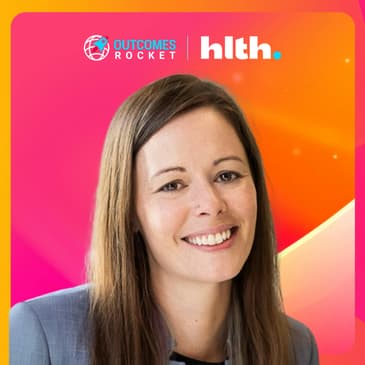
In this episode, Hamilton Bennett, senior director of vaccine access and partnerships at Moderna, shares her excitement about Moderna's innovative mRNA technology and its potential to transform the vaccine landscape, emphasizing equitable vaccine development and distribution. She discusses Moderna's collaboration with governments and stakeholders to build resilient health systems, the importance of understanding community needs, and the "mRNA Access Program" for academic researchers. She also highlights the need for collaboration, cutting-edge research, and global health equity, encouraging listeners to stay informed through Moderna's LinkedIn and website.
Tune in and discover the transformative potential of Moderna's mRNA technology in the vaccine field.
Resources:
- Connect with and follow Hamilton Bennett on LinkedIn.
- Follow Moderna on LinkedIn and visit their website.
Fast Track Your Business Growth:
Outcomes Rocket is a full service marketing agency focused on helping healthcare organizations like yours maximize your impact and accelerate growth. Learn more at outcomesrocket.com
[00:00:01] This podcast is produced by Outcomes Rocket, your healthcare-exclusive digital marketing agency. Outcomes Rocket exists to help healthcare organizations like yours to maximize their impact and accelerate growth. Visit outcomesrocket.com or text us at 312-224-9945.
[00:00:34] Hey, everyone. Welcome back to The Beat Podcast, recording live here from Health in Las Vegas. So excited to be kicking off this meeting and this podcast with the amazing Hamilton Bennett. She is the Senior Director of Vaccine Access and Partnerships at Moderna. Hamilton, thanks so much for joining us. Thank you for having me here. It's my first time at Health, so it's quite the experience.
[00:01:01] Oh, it's a pleasure to have you. We love having Moderna on the podcast, as I was sharing with you. I have had Shannon on the podcast several times, so excited to see you and be with you here. Tush used to film. We'll see if I can do it. You've got this. You've got this. All right, so let's kick things off. You know, right now, before we get into what you guys are up to, tell us a little bit more about you and what got you into Moderna.
[00:01:23] Yeah, so I have been a public health nerd for 15 years, working in community outreach and then in various stages of pharmaceutical companies, small molecule, monoclonal antibodies. But really, when you're striving for public health and equity, vaccines is the place to be.
[00:01:43] And almost 10 years ago, I looked at Moderna's portfolio and saw the power of mRNA and the way that you could use that to really upend the vaccine landscape. It had the chance to bring new products forward in ways that we hadn't done it before, really put health equity at the center of the way that you develop vaccines and how you choose which vaccines to develop. And then it's highly collaborative group of people.
[00:02:13] So you knew that you were going to get the right stakeholders in the room to get the right product to the right people. So it was just sort of this like perfect storm of that's the company that I need to be at and dogged pursuit of get me in the door wherever I can. That's awesome. And now almost a decade later, we've ended a pandemic. We've launched a public health portfolio. And so all these things, these visions that we had are really starting to come to fruition. It's beautiful to see. That's so great. You gave me goosebumps with that. Thank you.
[00:02:42] I'm so glad to see you be so happy. You know, when you're on mission, you're happy. Absolutely. And when you're helping with access and equity, it's something that is really meaningful work. Talk to us about building sustainable health systems. Why is it important for both local communities and also global health players in the landscape to work together? I think what we're seeing is an evolution of the way that people interact with their health systems.
[00:03:09] And in the vaccines and in the public health space, historically, our interventions have always been targeted to pediatrics. We know that through UNICEF and through others, the pediatric vaccination schedule is incredibly important and it saves millions of lives every year. But what we're seeing is as our populations get older, there's this cohort of older adults that also need vaccines. And there's a cohort of adolescents that need vaccines.
[00:03:37] And so what we're thinking about is how do you engage across your entire life course with your health system to make sure that should anything happen, you know who your provider is. You know you have access to a strong health system. And then in my space of public health, which kind of skews towards emergency response, pandemic preparedness, we need to make sure that that health system is strong and robust and resilient and present.
[00:04:06] Because you don't know necessarily when you're going to need to turn it on and amp it up. Right. And if you have a population that might be 20 to 60 who haven't engaged with their health system and they're struggling for that routine care, the health system doesn't have the capacity to deal with those surge in demand that we see during these emerging epidemics or these resurgence of vaccine preventable diseases.
[00:04:32] So what we think about is how do we, as we bring our vaccines to the market, who are the stakeholders that you need to have around that help you understand where is this product going to fit in a vaccination program? How am I going to make sure that people are aware of the risk and now the benefit? Because most of the diseases that we're trying to treat, your physicians will know about, but the population may not. And so it's this combination of the more robust the health system is, the better we can understand the needs of that health system.
[00:05:02] And then we can design vaccines and therapeutics to address those needs. And so we kind of have to work in this iterative hand in hand cycle. I love that. You called it out really well that it's critical that you be ready to turn it on at any moment's notice. Having that alignment, not only of the communities, but the care delivery organizations, the FQHCs if needed, you know, the government, all of these elements are super important.
[00:05:29] How is Moderna ensuring that our vaccines reach underserved communities? And what role do partnerships with health systems and governments play in this? Yeah, it really starts with the epidemiology. epidemiology. Do you understand what the population is experiencing? And do you think that you're going to be able to bring value to that health system? So that's kind of the first piece that I always challenge my team to think about is, how is there value improving patient outcomes if Moderna is part of this narrative?
[00:06:00] And really be ruthless about defending that our presence in a space is going to improve public health. Because I think that is, as you say, the purpose of what is going to get people excited. You need to be able to understand that you're going to have that impact. And then, who are the right people that you need to have in the room? And it is really engaging early on with governments to understand the constraints that might be on their immunization program.
[00:06:23] And the immunization program as it exists in the United States is going to be very different than the immunization program as it exists in kind of a universal payer model government or even in LMICs. So you have to think really early on, and it's something that we always challenge our teams to do. How will this product get out of our inventory and into someone's arm? And that's the only place you're going to see impact.
[00:06:46] So if you don't plan for that at the beginning, that's years and a lot of resources that you put in the wrong place. So we asked those questions early on. How will this product be used? Who are the people that are ultimately representing the patient and deciding what is best for them? Is it their physician? Is it a buyer on behalf of populations in low- and middle-income countries?
[00:07:11] Is it regulators that are looking across a landscape of a few different options, and they're saying, what is best for my community is X, Y, and Z? And so as you understand and you take all of those inputs in, it allows us to prioritize the products that we put in the portfolio, make sure that those products are aligned to the needs of the community, and then plan for that continued lifecycle management of the product to say, it's basically, at least I work in is infectious diseases, right?
[00:07:38] So infectious diseases will eventually influence diverse geographies, borderless, hundreds of millions of people. So we can't just stop at saying, oh, I have one license in this one geography. We really need to be prepared for that shift in the epidemiology at all times.
[00:07:54] So it's a lot of variables that you need to measure and understand, and having stakeholders at the table constantly that represent their perspective, make sure that you don't end up going too far in a path that jeopardizes equitable access to the product in the long term. That's fantastic. It's that big thinking, zooming out to really understand all the elements of the healthcare system.
[00:08:19] And, you know, when you say healthcare system, you're not thinking just the hospital, you're thinking the system of care delivery, right? You're thinking government, you're thinking schools, you're thinking all of it. Yes, all of the different ways that people interact to maintain health. And preventive health is so different because there's so much more flexibility in how you engage with primary care or community-based health systems than a treatment-based hospital system. 100%. So, yeah, you put everything on the table.
[00:08:49] Every way that somebody may have a conversation on health, whether it's their kitchen table or whether it is with a physician during their annual checkup, all of those are part of the system of how do you reach people and have the right conversation with them at the right time. That's fantastic. There's this balance always, right? You guys are a cutting-edge company. You've always been at the cutting edge. How do you balance the pursuit of cutting-edge research with the need for scalability and real-world impact?
[00:09:19] Yeah, it's definitely an evolution that has occurred, too, as we've shifted from a biotech into kind of a commercial pharma company. It's how do you make sure that that cutting-edge science stays at the core of who we are so that we continue to kind of, as we say in the company, push past possible. What I come back to is sort of a founding kind of question that we used to ask ourselves when we were a much younger company, which is, what must be true? Right.
[00:09:43] I think a lot of venture capital firms ask themselves of this when they're looking at new entrepreneurial endeavors, but what is the world that needs to exist in order for this thesis to play out? And that's where we have a lot of fun in the development space because we might not see a path now that says, here's a product and there is a ready and hungry known community that is waiting for this intervention. And I have a payer and I have a regulatory path. Rarely do all of those things line up.
[00:10:11] But what we can say is, well, what must be true for us to have the impact that we want to have? And then that tells you, are you having the right conversations along the way? Are you asking the right questions? Do you have the right people at the table? And it continues to reinforce that innovation into the system so that you don't end up just doing exactly what the person before you has done or what the expectation of a company might be.
[00:10:33] But you say, but if we could think differently, whether it's in the innovative science and in the mRNA technology or in the way that we think about regulating our products or the way that we think about engaging with governments and where we and how we manufacture. Every step of the supply chain end to end has the ability to think about this innovation and to say, if we had this, the impact to our patients would be significantly increased.
[00:10:58] So let's chase that down and let's resolve that so that we can live in this world where we have faster medicines approved. We have faster distribution around the world. Those are things that we really want to see in order to make sure that we have that impact. That's really great. It's a very strategic approach to the market, to communities solving problems. I mean, I think of it as like, you know, when you think of emergency preparedness, you got to think of everything that could be.
[00:11:27] Not just what it is and what is now, but what could be. And then preparing for that and the challenge of managing resources so that, like you said, you're not going down this path that potentially wasn't even needed. So it's a balancing act. And you guys are doing a fantastic job of it. The theme for this meeting is bold. Can you give us an example of how Moderna is being bold and making bold moves toward making health care better, more accessible and equitable? Yeah.
[00:11:56] I mean, I think it comes back to the collaboration and the way that we go about developing these products. Because what we've done in the last five years is take our company from a biotech that had a lot of promise in the research and development space to a global vaccine manufacturer that is making billions of doses of products. And what we are doing now is saying, how do we, as this company that is relatively young,
[00:12:22] use that capability of our technology to make sure that we are addressing the most burdensome kind of unmet medical need? I think what we've done by leaning in in the respiratory portfolio, whether it's influenza or RSV, COVID and then creating combination vaccines, shows us and the world that if you think differently about the way that our technology can be deployed, then here's the public health impact that we can have.
[00:12:51] I think that that's a really important way that we can work with regulators and with payers and with people that are getting one injection rather than two or three to say this is the benefit that having innovation across the system and being bold and thinking differently can have for you. And then I think I'm just going to highlight that you brought up resourcing. And one of the programs that I'm really proud about is a program we call our mRNA Access Program.
[00:13:16] And that is in recognition that as a company, we have finite resources and they're going to be deployed to build a baseline of response capability that is largely underpinned by our respiratory franchise. But the world of emerging infectious diseases is vast and you're planning for everything, as you said. So what we've done is open our technology up and allow other researchers around the world that are working at academic institutions
[00:13:43] that are thinking about these diseases day in and day out to work on our platform. Cool. So we give them their vaccines, they design them, and we send them back so that they can complete the testing and understand, is there value? Right? Comes back to that key question. Is there value in Moderna and mRNA being in this space? Do we think that we can do things that other technologies have never been able to do? And academic researchers are tough. They ask really good questions.
[00:14:08] And so when we put our products into their hands, we know that we're going to see really good outcomes and they challenge us. But what they also do is they give us evidence that shows that we can be more responsive to these emerging infectious diseases in the future. We have a baseline understanding and we've been able to do that in a collaborative way. And I think that kind of open source approach is something new that I've never seen in biotech before. I think it's one of our more bold initiatives that we've released in the last couple of years.
[00:14:37] I would definitely say that as well. And once you have the what in place, the solution, the way you get to the next level is the who. And by open sourcing it, you guys have definitely invited a lot of thinkers, pressure testers, and super exciting to hear about the development. Actually, I remember 10 years ago being, I was at a different conference. I was at Exponential Medicine and I remember seeing the founder of Moderna talk about the possibilities. And I remember being blown away by it.
[00:15:06] And now fast forward to everything that is. Yeah. It does bring in that kind of a definition to push beyond what's possible. So I love that you brought it back to the mission. What would you leave our listeners with as far as a call to action? And what's the best place that they could learn more about you and about what the company is up to? Yeah. Well, the best place to find more about Moderna is on our LinkedIn page. Check us out there. Check out our website. We are pretty prolific at updating things and keeping people informed.
[00:15:35] Just recognizing that social media is how a lot of people get their news these days. And with a portfolio of 50 products in development, we have a lot of updates that we're very proud to share with people. So check us out there. Amazing. Folks, there you have it. An incredible opportunity to be here with Hamilton Bennett, Senior Director of Vaccine Access and Partnerships at Moderna.
[00:16:00] Make sure you check out the show notes for all of the amazing resources that Moderna has on their LinkedIn page, as well as on the website. Thank you all for tuning in. And Hamilton, thanks for being with us. Thanks so much for having me. Appreciate it.
[00:16:36] This podcast is produced by Outcomes Rocket, your healthcare exclusive digital marketing agency. Outcomes Rocket exists to help healthcare organizations like yours to maximize their impact and accelerate growth. Visit outcomesrocket.com or text us at 312-224-9945. Outcomes Rocket.com or text us at 312-224-9945. Thank you. Thank you.