
Digital transformation in health care often fails due to a lack of stakeholder involvement, with a success rate of only 11%.
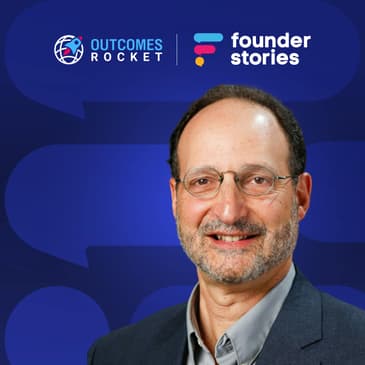
In this episode, Howard Rosen, CEO of Nova Insights, discusses how he and his team are contributing to humanizing healthcare technology. He emphasizes the importance of entrepreneurs having passionate ideas, addressing their constituency, and identifying root problems over buzzwords. Howard underlines the need to focus on core issues rather than AI hype and explains that implementing AI solutions in health care requires significant effort and stakeholder involvement to be effective. He stresses how digital transformation in healthcare often fails due to a lack of stakeholder engagement and explores how virtual healthcare is for disadvantaged and rural populations, bypassing legacy systems, and advocates for balancing passion with practical client needs.
Tune in and learn how to make technology work for healthcare transformation!
Resources:
[00:00:02] [SPEAKER_00]: Hey, everybody.
[00:00:03] [SPEAKER_00]: Welcome back to the Outcomes Rocket Founder Stories.
[00:00:07] [SPEAKER_00]: I am so excited to be back with you today because I have an amazing
[00:00:12] [SPEAKER_00]: guest and his name is Howard Rosen.
[00:00:16] [SPEAKER_00]: Howard is the CEO of Nova Insights.
[00:00:19] [SPEAKER_00]: I had him on the podcast about four years ago and so excited to have him back.
[00:00:25] [SPEAKER_00]: He's a seasoned health IT executive, inventor, and innovator
[00:00:29] [SPEAKER_00]: with over 20 years of experience.
[00:00:32] [SPEAKER_00]: Really humanizing digital health and delivery for major health industry
[00:00:37] [SPEAKER_00]: companies and agencies in North America.
[00:00:39] [SPEAKER_00]: Howard, such a pleasure to have you back.
[00:00:42] [SPEAKER_00]: Great to see you again, Saul.
[00:00:43] [SPEAKER_01]: It's hard to believe it's been four years, but it was a different world then that we
[00:00:46] [SPEAKER_01]: had this minor pandemic thing you may remember called COVID and we're indoors
[00:00:50] [SPEAKER_01]: doing this as a Zoom and so here we are post COVID post pandemic and here
[00:00:54] [SPEAKER_01]: we are indoors doing this again.
[00:00:57] [SPEAKER_00]: Yeah, you know what?
[00:00:58] [SPEAKER_00]: It has been a whirlwind.
[00:01:00] [SPEAKER_00]: I can't believe four years have passed since we connected and yeah, the pandemic.
[00:01:04] [SPEAKER_00]: It's changed so much for healthcare.
[00:01:07] [SPEAKER_00]: A lot of changes that have stayed and a lot of things are continuing to change.
[00:01:12] [SPEAKER_00]: So I'm excited to have you on to really highlight the work that you do, Howard,
[00:01:18] [SPEAKER_00]: with Nova Insights and really to help the leaders listening to this podcast, how they
[00:01:22] [SPEAKER_00]: could shape their business for the better.
[00:01:24] [SPEAKER_00]: So for the benefit of those that haven't met you, what is it that got you into
[00:01:29] [SPEAKER_00]: entrepreneurship and into healthcare?
[00:01:32] [SPEAKER_01]: Well, that's a loaded question.
[00:01:33] [SPEAKER_01]: How long is this podcast?
[00:01:35] [SPEAKER_01]: Really?
[00:01:36] [SPEAKER_01]: So the quick story, I know you're familiar with it, is by education, I have an MBA.
[00:01:40] [SPEAKER_01]: So I was trained to run a Fortune 500 company, but I have to admit, I missed a
[00:01:45] [SPEAKER_01]: few classes, particularly one that said you don't go from graduation to running
[00:01:48] [SPEAKER_01]: a Fortune 500 company.
[00:01:50] [SPEAKER_01]: So on graduation, I said, oh, I got to do something with my time.
[00:01:54] [SPEAKER_01]: And that was the first little entrepreneurship seed letter, but I better
[00:01:57] [SPEAKER_01]: be more initiative oriented.
[00:01:58] [SPEAKER_01]: And of course, naturally that meant I spent 20 years producing film and
[00:02:02] [SPEAKER_01]: television, so founded a film and TV company, worked with all the major
[00:02:07] [SPEAKER_01]: studios, and naturally with that background, I came on this idea of
[00:02:11] [SPEAKER_01]: inventing a communication platform in health and shifted over to health IT.
[00:02:17] [SPEAKER_01]: Which is, as you mentioned, I've been doing for the past 20 years.
[00:02:20] [SPEAKER_01]: And really the core of that was, I was doing a project actually dealing with
[00:02:25] [SPEAKER_01]: type 2 diabetes and seeing how few people were engaging in their health
[00:02:30] [SPEAKER_01]: management and ask these questions.
[00:02:32] [SPEAKER_01]: Well, why wasn't anyone doing it?
[00:02:34] [SPEAKER_01]: A lot of cool tools, but no one was using it.
[00:02:36] [SPEAKER_01]: And being a card carrying arrogant producers and all you got to do is have
[00:02:41] [SPEAKER_01]: a solution that engages people to be involved in their healthcare.
[00:02:45] [SPEAKER_01]: Why aren't they doing that?
[00:02:47] [SPEAKER_01]: And I went, oh man, that took about five minutes.
[00:02:49] [SPEAKER_01]: I think I've solved diabetes.
[00:02:51] [SPEAKER_01]: What can I do next?
[00:02:52] [SPEAKER_01]: And even think about it.
[00:02:54] [SPEAKER_01]: And six months later was actually working with Universal McCann on this new fangled
[00:02:59] [SPEAKER_01]: telephone called the StarTAC, which is one of the first clamshell cell phones.
[00:03:04] [SPEAKER_01]: And for those who were born after that time, there was a time when you had
[00:03:07] [SPEAKER_01]: clamshell cell phones that were actually phones and the engineers were telling me
[00:03:11] [SPEAKER_01]: sometime in the future, you're going to actually have programs on this phone.
[00:03:15] [SPEAKER_01]: And we're going, no, who wants a program on a phone?
[00:03:18] [SPEAKER_01]: It's a phone.
[00:03:19] [SPEAKER_01]: And that was kind of it.
[00:03:21] [SPEAKER_01]: And later that night working on both projects, I kind of went, you know, maybe
[00:03:25] [SPEAKER_01]: these cell phones will be the future to engage people to better improve their
[00:03:29] [SPEAKER_01]: healthcare.
[00:03:30] [SPEAKER_01]: And that was 2005.
[00:03:32] [SPEAKER_01]: And that led me on my odyssey of what where I am today, having invented a
[00:03:36] [SPEAKER_01]: communication platform, which crazily enough, I've been awarded eight patents
[00:03:41] [SPEAKER_01]: to date and involved that area.
[00:03:43] [SPEAKER_01]: Had founded a company in that area called LifeWire.
[00:03:45] [SPEAKER_00]: We had you on when you were leading that company four years ago.
[00:03:50] [SPEAKER_00]: So for those of you that haven't had a chance to listen to that episode, make
[00:03:54] [SPEAKER_00]: sure you check it out.
[00:03:55] [SPEAKER_00]: We'll link it up in the show notes.
[00:03:56] [SPEAKER_00]: Yeah.
[00:03:56] [SPEAKER_00]: Thanks.
[00:03:56] [SPEAKER_00]: Go ahead.
[00:03:57] [SPEAKER_00]: Continue.
[00:03:58] [SPEAKER_01]: Well, really talking about founders stories.
[00:04:00] [SPEAKER_01]: So really got to the stage and very quite honestly, you had COVID, you had
[00:04:04] [SPEAKER_01]: everyone who's sitting at the computer 24 seven, including my investors and
[00:04:08] [SPEAKER_01]: board who had spent far too much time on their computers asking all kinds of
[00:04:12] [SPEAKER_01]: questions and quite honestly, I was going, you know, maybe micromanaging
[00:04:16] [SPEAKER_01]: the micromanagement of the company.
[00:04:18] [SPEAKER_01]: And I went, you know what?
[00:04:20] [SPEAKER_01]: Life's just too short.
[00:04:21] [SPEAKER_01]: And if you guys want to micromanage it, maybe you guys should do this.
[00:04:25] [SPEAKER_01]: And I kicked in the succession plan for LifeWire.
[00:04:27] [SPEAKER_01]: I still remain on the board, but said, I'm going to go now do where I think
[00:04:31] [SPEAKER_01]: is the next stage of what I thought was a logical extension of LifeWire, which
[00:04:35] [SPEAKER_01]: was dealing with the bigger picture, which humanizing the digital transformation.
[00:04:39] [SPEAKER_01]: How do you make technology accessible and engaging?
[00:04:44] [SPEAKER_01]: And that's evolved into the consultancy doing that.
[00:04:47] [SPEAKER_01]: Plus a lot of work in artificial intelligence and machine language,
[00:04:51] [SPEAKER_01]: robotic process automation, all that sort of the buzzwords you're hearing today.
[00:04:55] [SPEAKER_00]: You're always up to something.
[00:04:57] [SPEAKER_00]: And so the opportunity I think for us to learn is really that transition, right?
[00:05:02] [SPEAKER_00]: You had reached the moment.
[00:05:03] [SPEAKER_00]: And I think there's a lot of listeners right now thinking about when they
[00:05:07] [SPEAKER_00]: reached that moment when maybe it wasn't working anymore and they transitioned
[00:05:13] [SPEAKER_00]: from their company to do something else.
[00:05:16] [SPEAKER_00]: And there's a lot of stories of it.
[00:05:17] [SPEAKER_00]: Like you think about Steve Jobs and a lot of others out there.
[00:05:20] [SPEAKER_00]: What advice would you give to entrepreneurs that might be in that situation right now?
[00:05:26] [SPEAKER_01]: As you mentioned, I do a lot of mentoring and do a lot of mentorship with various
[00:05:29] [SPEAKER_01]: organizations and companies on top of the advisory work we do.
[00:05:33] [SPEAKER_01]: You mentioned Steve Jobs, which was great.
[00:05:35] [SPEAKER_01]: He was an exception to the great number of people who start up businesses.
[00:05:39] [SPEAKER_01]: A lot of things you need to watch out for, and quite honestly, having fallen
[00:05:43] [SPEAKER_01]: through this myself on a number of times, it's one thing to have an idea, which is
[00:05:47] [SPEAKER_01]: great, you want, you need to start with an idea and something you're passionate about.
[00:05:51] [SPEAKER_01]: The second part of it is you're passionate about, but you want to make
[00:05:54] [SPEAKER_01]: sure those who you want to buy your product or your service are equally
[00:05:58] [SPEAKER_01]: passionate about needing that solution.
[00:06:01] [SPEAKER_01]: So you need to address and speak to your constituency to make sure they actually
[00:06:05] [SPEAKER_01]: see the same problem you see it.
[00:06:07] [SPEAKER_01]: Is the first step.
[00:06:09] [SPEAKER_01]: The second part of that is make sure it also ranks up there as a first or
[00:06:14] [SPEAKER_01]: second problem they need to solve today.
[00:06:16] [SPEAKER_01]: It may be a problem and it's in their top 10, but they've got all
[00:06:19] [SPEAKER_01]: kinds of pressures around them.
[00:06:21] [SPEAKER_01]: And you want to make sure it's a ranks first and second.
[00:06:23] [SPEAKER_01]: If you answer those questions, now you're onto something.
[00:06:26] [SPEAKER_01]: And that's what you should start thinking about jumping into
[00:06:29] [SPEAKER_01]: it and expanding from there.
[00:06:31] [SPEAKER_01]: And it's hard because a lot of the times they're going, yeah, that's a want to,
[00:06:36] [SPEAKER_01]: it's not a need to, and then as an entrepreneur you go, yeah, but you gotta.
[00:06:40] [SPEAKER_01]: And there's no such thing as you gotta.
[00:06:42] [SPEAKER_01]: You'd like to think as a you gotta, there isn't one from the buyer's perspective.
[00:06:47] [SPEAKER_01]: So it's the hardest part is pulling yourself back and thinking as they do and
[00:06:51] [SPEAKER_01]: think of all the larger projects that they have, and a lot of that actually
[00:06:55] [SPEAKER_01]: got reinforced when I started doing more of the consulting work in talking
[00:06:58] [SPEAKER_01]: to prospective clients in the first meeting, they say, okay, we need this.
[00:07:03] [SPEAKER_01]: And I might not have known anything about the client or what their issues were.
[00:07:07] [SPEAKER_01]: All I was a hundred percent certain of was them saying, I need this.
[00:07:11] [SPEAKER_01]: I knew that was exactly what they didn't need.
[00:07:14] [SPEAKER_01]: The part of the problem is everyone gets buzzword craziness around them.
[00:07:18] [SPEAKER_01]: And so we use AI as an example.
[00:07:21] [SPEAKER_01]: Everyone you speak to right now saying, oh, we've got to need AI this, AI that.
[00:07:24] [SPEAKER_01]: Sometimes it's generated by themselves.
[00:07:26] [SPEAKER_01]: Sometimes it's by their board or their investors.
[00:07:28] [SPEAKER_01]: So they know the buzzword, but they don't necessarily know what it means
[00:07:32] [SPEAKER_01]: or how it can really help them.
[00:07:33] [SPEAKER_01]: And likely many times they haven't really identified the real problem.
[00:07:37] [SPEAKER_01]: They've identified a problem, but not the root problem.
[00:07:40] [SPEAKER_01]: So it's really important.
[00:07:41] [SPEAKER_01]: And as entrepreneurs and founders is really getting to what is the root of
[00:07:44] [SPEAKER_01]: the problem that you're trying to solve?
[00:07:47] [SPEAKER_01]: Not up here.
[00:07:48] [SPEAKER_01]: Oh, we'll use AI, but down here.
[00:07:50] [SPEAKER_01]: No, their problem is they're not getting engagement on X or they're
[00:07:54] [SPEAKER_01]: not getting analytics on Y or the data is so bad, they can't even make an
[00:07:58] [SPEAKER_01]: analysis on it.
[00:08:00] [SPEAKER_00]: Yeah, it makes a ton of sense.
[00:08:01] [SPEAKER_00]: And getting to the root, oftentimes what you might hear from the market,
[00:08:05] [SPEAKER_00]: it's not exactly what's needed.
[00:08:07] [SPEAKER_00]: You got to dig a little deeper and make sure you have that need clearly identified.
[00:08:13] [SPEAKER_00]: So help us understand a little bit more on your current company.
[00:08:16] [SPEAKER_00]: What is it that you guys are focused on?
[00:08:18] [SPEAKER_00]: Who are you helping and what makes you guys different?
[00:08:21] [SPEAKER_01]: So in terms of Nova Insights, we're specializing in the area of, as I
[00:08:25] [SPEAKER_01]: mentioned, humanizing digital transformation.
[00:08:27] [SPEAKER_01]: Part of that came out of, as a vendor talking with the health systems and
[00:08:31] [SPEAKER_01]: health clients, and we think we have the greatest things in sliced bread.
[00:08:35] [SPEAKER_01]: If you didn't think that you shouldn't be doing it, but the implementation
[00:08:38] [SPEAKER_01]: was always rougher than you'd expect.
[00:08:40] [SPEAKER_01]: And utilization was always rougher than you expect.
[00:08:43] [SPEAKER_01]: And it took a lot of work.
[00:08:44] [SPEAKER_01]: When I become on the consulting side and actually started working on behalf
[00:08:48] [SPEAKER_01]: of the health systems and with technology and got inside, I went,
[00:08:52] [SPEAKER_01]: you start seeing the problem.
[00:08:53] [SPEAKER_01]: A lot of the times you had a situation where the IT department
[00:08:57] [SPEAKER_01]: were slapping on the solution, but there was no process of involving
[00:09:01] [SPEAKER_01]: the stakeholders in that solution and involving how to make it work.
[00:09:06] [SPEAKER_01]: And the industry statistics, and I know Saul you're aware of them,
[00:09:09] [SPEAKER_01]: is that I think it was McKesson that came out with this or McKinsey
[00:09:12] [SPEAKER_01]: got three years ago said digital transformation is at best 11%
[00:09:16] [SPEAKER_01]: successful in healthcare space.
[00:09:19] [SPEAKER_01]: And a lot of that was because they're bolting on solutions and not
[00:09:22] [SPEAKER_01]: involving all the stakeholders from design to utilization,
[00:09:26] [SPEAKER_01]: implementation, utilization.
[00:09:28] [SPEAKER_01]: And that's where we developed the system to really better
[00:09:31] [SPEAKER_01]: manage that side working with clients.
[00:09:34] [SPEAKER_01]: So with that evolved are doing more and more plus at the same time.
[00:09:39] [SPEAKER_01]: On the side noodling was continuing what I did with LifeWire looking at
[00:09:42] [SPEAKER_01]: virtual healthcare as a solution to be able to reach out to disadvantaged
[00:09:47] [SPEAKER_01]: populations, to deal with rural populations and to make it easier.
[00:09:50] [SPEAKER_01]: Because one thing that COVID showed was patients actually wanted access
[00:09:54] [SPEAKER_01]: to tools that didn't allow them to actually do things from home or from
[00:09:58] [SPEAKER_01]: the workplace without having to go to the hospital, the clinician work.
[00:10:02] [SPEAKER_01]: And a lot of the cases you can deal with virtual healthcare has
[00:10:05] [SPEAKER_01]: a lot of value across the board.
[00:10:07] [SPEAKER_01]: So it's concentrating on that and taking the bet, having the opportunity
[00:10:10] [SPEAKER_01]: to work and see what the best tools were for doing so.
[00:10:14] [SPEAKER_01]: So as part of what no insights doing, we're actually have been
[00:10:16] [SPEAKER_01]: built in and working with other partners, a virtual healthcare system.
[00:10:20] [SPEAKER_01]: And where we've been focusing, frankly, has been the third world
[00:10:23] [SPEAKER_01]: where we've been able to go.
[00:10:25] [SPEAKER_01]: We're not fighting legacy systems, but at the same time, you've got
[00:10:28] [SPEAKER_01]: populations who are looking for healthcare and the only solution
[00:10:32] [SPEAKER_01]: is through virtual healthcare because they don't have the infrastructure
[00:10:37] [SPEAKER_01]: to do it as we have, but at the same time, the beauty of they don't
[00:10:40] [SPEAKER_01]: have the legacy systems to get in a way of providing solutions.
[00:10:45] [SPEAKER_00]: Yeah, that's very interesting, Howard.
[00:10:46] [SPEAKER_00]: And it sounds like you've chosen to, to really put the focus of the work
[00:10:51] [SPEAKER_00]: that you're doing in third world countries because of the lack of
[00:10:57] [SPEAKER_00]: infrastructure blocks and legacy thinking.
[00:11:00] [SPEAKER_00]: There's a big opportunity there.
[00:11:02] [SPEAKER_00]: Are you able to translate any of the work that you're doing over there
[00:11:05] [SPEAKER_00]: to the U S and U S clients?
[00:11:07] [SPEAKER_01]: Oh, without any question, it's been very helpful, insightful talking
[00:11:11] [SPEAKER_01]: to the different in terms of different countries and the populations
[00:11:13] [SPEAKER_01]: we're working with to see what works, what doesn't work, what they're
[00:11:17] [SPEAKER_01]: looking for and getting best practices there, obviously it's not a direct
[00:11:21] [SPEAKER_01]: translation because there's a lot of different structures here, but there's
[00:11:25] [SPEAKER_01]: a lot of best practices we're building there that we're actually looking
[00:11:28] [SPEAKER_01]: to apply to the U S and it's to the early discussion having come from film
[00:11:32] [SPEAKER_01]: and television, not necessarily the traditional route for health IT, but
[00:11:37] [SPEAKER_01]: there are a lot of lessons I learned there from that side that I took over to
[00:11:40] [SPEAKER_01]: this side.
[00:11:41] [SPEAKER_01]: And in fact, a statistic I picked up actually, because at one point I was
[00:11:46] [SPEAKER_01]: actually doing, I actually created a course for the military, which is on
[00:11:51] [SPEAKER_01]: creative thinking.
[00:11:52] [SPEAKER_01]: And one of the statistics that I came up with was 80% of innovation in any
[00:11:57] [SPEAKER_01]: industry comes from outside that industry.
[00:11:59] [SPEAKER_01]: And as founders to be able to look at things from different perspectives,
[00:12:02] [SPEAKER_01]: it's the hardest thing to do, but the most valuable thing to do to understand
[00:12:06] [SPEAKER_01]: there's multiple perspectives on any issue.
[00:12:09] [SPEAKER_00]: Well said.
[00:12:09] [SPEAKER_00]: I love it.
[00:12:10] [SPEAKER_00]: And it sounds like your examples translate well, that statistic, that 80%
[00:12:15] [SPEAKER_00]: of the innovation comes from outside is definitely something that we should all
[00:12:20] [SPEAKER_00]: be thinking about to continue that innovation and forward movement in all
[00:12:24] [SPEAKER_00]: of our organizations.
[00:12:25] [SPEAKER_00]: Let's look outside to Howard's point.
[00:12:28] [SPEAKER_00]: Howard, thank you for that insight.
[00:12:30] [SPEAKER_00]: As we wrap up the podcast today, I love if you could just share a closing
[00:12:35] [SPEAKER_00]: thought with our listeners and if they want to engage with you and actually
[00:12:38] [SPEAKER_00]: activate their innovation projects so that they can beat that 11% statistic.
[00:12:45] [SPEAKER_00]: Where can they reach you?
[00:12:47] [SPEAKER_01]: Well, in terms of the best is my email, hrosen at Novapix.com, which is
[00:12:54] [SPEAKER_01]: Novapix.com is probably the easiest way.
[00:12:57] [SPEAKER_01]: You can certainly find me on LinkedIn, which is Howard Rosen 129.
[00:13:01] [SPEAKER_01]: I think it is.
[00:13:02] [SPEAKER_01]: I'm pretty sure that's what it is.
[00:13:04] [SPEAKER_01]: And what call to action?
[00:13:05] [SPEAKER_01]: Well, I guess the call to action is entrepreneur.
[00:13:08] [SPEAKER_01]: And again, you've got founders listening to it.
[00:13:11] [SPEAKER_01]: Entrepreneurship is in one sense, not for the faint of heart, but the
[00:13:15] [SPEAKER_01]: other hand can be very rewarding.
[00:13:16] [SPEAKER_01]: It's tough in terms of, well, you're trying to do something where you, whereas
[00:13:21] [SPEAKER_01]: as a founder, you're doing many cases without a net, so you really want to
[00:13:24] [SPEAKER_01]: make sure you really believe in the mission of what you're trying to do.
[00:13:28] [SPEAKER_01]: But at the same time, don't be afraid to get insight outside perspective
[00:13:32] [SPEAKER_01]: and actually contrary perspective.
[00:13:35] [SPEAKER_01]: You actually want people to push back in many cases, as I facetiously talk about
[00:13:40] [SPEAKER_01]: in many cases, and a lot of my friends who are founders is in sometimes when
[00:13:45] [SPEAKER_01]: you presenting an idea, the more vehemently people say that's not going
[00:13:49] [SPEAKER_01]: to work to me means you really may be onto something after the fact they'll
[00:13:52] [SPEAKER_01]: tell you, Oh yeah, I had that idea, but it's, it's, it is that balance.
[00:13:56] [SPEAKER_01]: But as I said, we talked about earlier, what's so fundamental is making sure
[00:14:01] [SPEAKER_01]: what you see a need is what your client sees as a need and not as a want.
[00:14:06] [SPEAKER_00]: What a great way to, to close the episode.
[00:14:08] [SPEAKER_00]: I think you've said it so well, I appreciate you sharing
[00:14:14] [SPEAKER_00]: the insights you have today.
[00:14:15] [SPEAKER_00]: And for all the listeners, make sure you check out the show notes.
[00:14:18] [SPEAKER_00]: We'll leave Howard's LinkedIn profile, his website and different
[00:14:22] [SPEAKER_00]: ways to get in touch with him.
[00:14:23] [SPEAKER_00]: So make sure you do if you want to make innovation a reality within
[00:14:28] [SPEAKER_00]: your health system or company.
[00:14:29] [SPEAKER_00]: And Howard, thanks again for being with us.
[00:14:32] [SPEAKER_00]: This is a lot of fun to reconnect with you.
[00:14:34] [SPEAKER_00]: Saul, it's always a pleasure.
[00:14:36] [SPEAKER_00]: Thanks so much for asking.