
The healthcare industry must embrace technology faster to keep up with the growing and aging population.
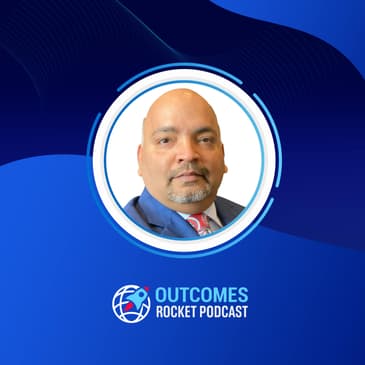
In this episode, Venkatgiri “Giri” Vandali, President of Healthcare and Life Sciences at Firstsource, discusses the pivotal role of technology in transforming the healthcare industry. He shares his journey from major tech companies to leading healthcare initiatives at Firstsource, focusing on data-driven solutions to enhance efficiency and effectiveness. Giri highlights the importance of addressing late payment interest, which can erode trust and compromise patient care, and explores the rise of telehealth and remote monitoring, accelerated by COVID-19. He also emphasizes the need for innovation and urges healthcare professionals to quickly adopt technology to meet the growing demands of an aging population.
Tune in and learn how technology is shaping the future of healthcare, the importance of addressing inefficiencies, and why adaptability is key in the evolving healthcare landscape!
Resources:
[00:00:02] Hey everybody and welcome back to the Outcomes Rocket. So excited you could join us for another outstanding interview with some of the best thinkers and leaders in healthcare. Today I've got the privilege of hosting Giri Vandali. He is the President of Healthcare and Life Sciences at Firstsource. They're a leading provider of business process management services, and he's responsible for providing commercial and strategy leadership for the business, playing a pivotal role in the business.
[00:00:32] And catalyzing the evolution of healthcare clients by leveraging Firstsource's digital services and solutions. I'm excited to have him here on the podcast and Giri so glad that you could make time out of your busy schedule to join us.
[00:00:46] Thank you Saul, it's great. It is an honor to meet you. And it's a privilege to talk to your audience.
[00:00:51] Thank you. No, I really appreciate that Giri. And look, before we have a chance to really unpack the work that you and the crew at Firstsource are up to,
[00:01:01] tell us a little bit about you. What got you into the business process, business and healthcare?
[00:01:08] Okay, it's a very interesting story. I grew up in technology world. I started my career with General Electric selling appliances.
[00:01:16] And then moved on to Google's and Cisco's of the world, serving thus their technology services in early 2000s.
[00:01:23] At some point of time, I incidentally landed up at Cognizant trying to set up their healthcare BPO practice in early 2010.
[00:01:34] My impression of looking at healthcare on day one, especially when you came from technology services world, it looked such an outdated business.
[00:01:43] Totally.
[00:01:43] And also then started looking at the spending world. At that point of time, healthcare in United States spent two and a half trillion a year, which is about 11% of US economy at that point of time.
[00:01:57] My view was, it is such a humongous spend. There must be a lot of wastage in this space.
[00:02:02] If I end up spending more time on understanding this business, my career would be safe and I don't have to look for a job ever in my life.
[00:02:10] That was my immediate reaction joining healthcare.
[00:02:13] I love that.
[00:02:14] It's 15 years since.
[00:02:16] I've only grown my appreciation to healthcare as an industry at the same point of time.
[00:02:22] I'm amazed at the inefficiencies this business has got.
[00:02:25] Right? If you look at it is 4 trillion spent today for United States.
[00:02:29] If you look at GDPs of countries, healthcare as an economy comes fifth largest economy or fourth largest economy in itself.
[00:02:39] That is humongous amount of work to do.
[00:02:41] I personally see it as one, a social cause.
[00:02:45] A lot of people who do not afford healthcare today because of the tremendous amount of costs involved.
[00:02:51] Even if we as an industry, as healthcare participants contribute to slight reduction in that cost, that would help hundreds and thousands of people.
[00:03:01] That keeps me motivated and that keeps me going in this industry.
[00:03:04] I love it.
[00:03:05] Yeah. I mean, the data alone, when people ask, why are you guys only focused on healthcare?
[00:03:10] The data alone, and I like you, Gidi, I focus on the GDP and now it's 18% and 4.7 trillion.
[00:03:18] Fast forward to today.
[00:03:20] So I share your passion for the data that speaks to itself, that this is a worthwhile industry to make things better in.
[00:03:28] True.
[00:03:30] So I love your passion.
[00:03:31] I love your drive for numbers.
[00:03:33] Talk to us about the company, FirstSource.
[00:03:35] What are you guys doing to add value, remove costs, improve things in the healthcare ecosystem?
[00:03:42] FirstSource and industry lives by two principles.
[00:03:46] And if you look at FirstSource, we are largely in three industries.
[00:03:51] Banking, healthcare, and technology services.
[00:03:54] Healthcare is our second largest business contributing to over a third of the company.
[00:03:59] We are very uniquely placed ourselves with our services equally distributed across payers and providers.
[00:04:06] That gives us a very unique vantage point of seeing this business differently in comparison to our computation.
[00:04:13] Our principle of existence goes into two facts.
[00:04:17] We want to be a tech first or a machine first company.
[00:04:21] And we believe we don't want to do anything and everything that a machine can do.
[00:04:26] So that human can always be associated with the task and the things that gets done.
[00:04:31] At the same point of time, it is largely tech led and human beings work with them.
[00:04:36] We mastered the co-pilot art before co-pilots came in.
[00:04:41] Right?
[00:04:42] And second, our belief is we exist because of helping our patients and members and providers.
[00:04:49] And we believe in moments that matter.
[00:04:52] That's another principle where we work at an intersection of technology and things that matter to the customer and solve the right problems for our business.
[00:04:59] So that cost of care ultimately comes down.
[00:05:04] That's our principle.
[00:05:05] That's first source.
[00:05:06] If you look at our services, we're largely in services where technology can influence outcomes much more for our customers.
[00:05:14] I love that.
[00:05:15] And I love that you said that, hey, you guys were doing co-pilot before people started marketing it.
[00:05:21] Like unpack that for me for a little bit here.
[00:05:24] Let's have some fun with this.
[00:05:25] Absolutely.
[00:05:26] So technology has always improved efficiency of human beings.
[00:05:32] Right?
[00:05:33] Tech led as an initiative, how you look at the problem.
[00:05:37] You can throw people at the problem or you can throw technology at the problem and look at what technology gives it back to you and leverage that to make human being a lot more efficient.
[00:05:47] That's been our philosophy for years to be.
[00:05:51] That if you look at the way that how AI has shaped out.
[00:05:56] AI and co-pilot has become famous in two years, last two years.
[00:06:00] But if you go back to even prior to COVID period.
[00:06:03] When COVID vaccine was invented, it is technology that invented that.
[00:06:07] It's AI that accelerated the whole.
[00:06:09] AI existed since World War II.
[00:06:13] Right?
[00:06:13] AI is not today's.
[00:06:14] What has changed over the last few years is how computing power has changed.
[00:06:19] How we can manage the data and manipulate the data to get to the right outcomes and analyze it very quickly has changed.
[00:06:28] And that has evolved over years.
[00:06:30] Gen AI has changed it quickly.
[00:06:31] But we have been using AI as technology, machine learning as technology for over a decade now.
[00:06:36] And we have been seeing the changes effect over a period of time.
[00:06:39] And if you look at large amount of data in any of the fields that work with, we work very, very closely with claims data.
[00:06:46] We work very, very close with patient data.
[00:06:49] Without technology, we wouldn't have survived.
[00:06:51] We work with payers to solve their late payment interest problems.
[00:06:57] For example, right?
[00:06:59] I give a large health plan.
[00:07:01] They generate over 14 million claims a year.
[00:07:05] 35,000 of them attract large late payment interest.
[00:07:10] And that's contribute to over $35 million a year.
[00:07:13] And we go to our customer and say, I will help you to reduce your late payment interest.
[00:07:17] That way, you can pay your providers faster so that their sustainability is successful.
[00:07:22] They are able to help their patients very well at the same point of time.
[00:07:25] You don't have to pay interest.
[00:07:27] But finding 35,000 claims, which has a potential risk of attracting interest over 14 million claims a year, is trying to find a needle out of a haystack.
[00:07:39] We wouldn't have done and achieved that without using technology.
[00:07:43] Hey, Giri, I love this.
[00:07:44] I have a quick question on that, just a clarifying question.
[00:07:47] So the late payment interest, is that, just to better understand the problem, is that something that the payer is incurring?
[00:07:55] That's correct.
[00:07:56] Payers incur that late payment interest when they pay late to the providers.
[00:08:02] Understood.
[00:08:03] If the claim was to be paid in 30 days and you pay in 45 days, for a variety of reasons, they pay you anywhere between 8% to 12% interest on those claims.
[00:08:12] Got it.
[00:08:13] That is an inefficiency that is going to be graded in the process.
[00:08:16] Got it.
[00:08:17] And since you're paying, and the providers are, there are a lot of small providers out there.
[00:08:21] If you pay them late, a lot of these providers depend on their payrolls or this claims payment to come in.
[00:08:28] If you don't pay them on, we are putting providers at risk, hence putting patients at risk.
[00:08:33] Yeah.
[00:08:33] Yeah.
[00:08:33] I mean, this morning I saw an article in Becker saying that a hospital in Nashville was late for payroll again.
[00:08:41] And it's the reality.
[00:08:43] And they are late because some payer did not pay.
[00:08:45] And the sizes of the claims today have gone up dramatically with people aging.
[00:08:51] Go back 10 years, million dollars claims used to be a minute percentage of what we would see.
[00:08:58] But if you look at large health payers today, million dollars claims come once in a week, once in two weeks, they become bigger and bigger.
[00:09:05] And with that, if you don't pay one $1 million claim on hospitals shut down overnight.
[00:09:11] So that's the kind of risk these hospitals are running.
[00:09:14] And we believe we play in a role, pivotal role in ensuring that both payer economics at the same point of time, hospital sustainability gets taken care and hence patients are in safe hands.
[00:09:27] I love it.
[00:09:28] No, this is such a great example, Giri.
[00:09:30] Thanks for sharing that.
[00:09:31] And it's very real.
[00:09:33] I mean, those late payment interests can add up on these large number of claims that keeps kind of going up in volume and also in value.
[00:09:42] And so help us kind of unpack this a little bit further.
[00:09:45] You guys are using technology and people to really fast track the business process automation for a lot of these health entities, both on the payer and provider side.
[00:09:55] There's so many different areas that you could do that in.
[00:09:59] So I get that it's 50 50 right ish payer provider.
[00:10:03] You could be tackling stuff from a clinical perspective, from a rev cycle perspective.
[00:10:09] Right.
[00:10:09] There's so many different functions within the hospital.
[00:10:12] Are there any in particular that raise up to the top where you say we do that better than anybody else?
[00:10:18] There are a lot of areas we do better than anybody else.
[00:10:21] If you look at class rates as number one on eligibility for a reason.
[00:10:27] Right.
[00:10:28] That's class is one of the best industrial benchmarks when it comes to how I provide business.
[00:10:34] We are ability to use technology and find uncompensated care.
[00:10:39] It's again a reason for care for us.
[00:10:41] Right.
[00:10:42] For we believe that those patients who end up at hospitals who do not have insurance coverage, do not get the right treatment in the end because hospitals are very worried.
[00:10:51] Will I get paid?
[00:10:52] Right.
[00:10:52] Our ability to bring technology and ensure that hospital gets paid for the coverage they're providing for that treatment or that episode gives us satisfaction of taking care of that patient at the same point of time.
[00:11:05] We do this better than much.
[00:11:07] We are in this industry for over 35 years now, and we understand that business like nobody else.
[00:11:12] Our ability to bring domain strength to the table, leveraging at the same point of time technology makes us very, very different.
[00:11:21] Also, if you look at the players in this industry, they're largely small sized mom and pop shops.
[00:11:29] When a billion dollar company brings the technology to the table at the same point of time that emotions and sincerity to serve the patient, our ability to bring technology and serve patients is far, far superior in comparison to our competition.
[00:11:43] Because our ability to bring capital, our ability to bring the right infrastructure to the table at the same point of time, right understanding of the business.
[00:11:53] That's where we differentiate.
[00:11:54] I like that.
[00:11:55] It's a scale.
[00:11:56] It's kind of more of a peer to peer engagement, so to speak.
[00:12:00] Yeah.
[00:12:00] And also we are not too large for customers to get lost, right?
[00:12:04] We keep saying that we are size for care and we're size for scale.
[00:12:08] We're a billion dollar company.
[00:12:09] We are not $20 billion, 300,000 employees.
[00:12:12] At the same point of time, we are not a $50 million company struggling for cash.
[00:12:18] Love it.
[00:12:18] That's great.
[00:12:19] Hey, look, and as you guys scale and differentiate and iterate on technology,
[00:12:25] all these things, these growth sort of segments, they don't come without challenges.
[00:12:31] So on the show, we like to talk about setbacks because we learn more from those often than our wins.
[00:12:37] So talk to us about one of your biggest setbacks, Giri, and a big learning that's come out of it.
[00:12:43] Oh, there are a lot of setbacks, right?
[00:12:45] As Thomas Alva Edison said, he figured out 999 ways of how bulb will not work.
[00:12:51] Right?
[00:12:51] So we keep iterating to innovate.
[00:12:54] That's the only way to survive.
[00:12:56] Right?
[00:12:56] If you want to be fast to the market, you will fail nine times, probably succeed once.
[00:13:00] That's the reality of it.
[00:13:02] Go back three or four years ago, right?
[00:13:04] When COVID hit, the world moved from in-person visits to largely telehealth, right?
[00:13:13] And also it moved to remote patient monitoring.
[00:13:17] Our belief was that technology will take such a grand proportion over a period of time.
[00:13:25] Our ability to leverage doctors to do many things than what they are doing today and technology taking care of a lot of treatments was a big belief.
[00:13:34] And we went and invested a bunch of money behind the technology.
[00:13:37] The speed at the RPM mind telehealth picked up, the moment COVID went away, it shrunk very, very quickly.
[00:13:44] We thought we were way ahead of time in that game.
[00:13:47] And we're seeing that slowly picking up, but it was a setback for us, but we learned a lot in the process, right?
[00:13:53] And then what works, what doesn't work, et cetera, et cetera.
[00:13:56] And we continue to innovate in that space.
[00:13:58] But that was a big setback for us as a company for being ahead of time.
[00:14:02] And we believe that's the reality of the game when you are trying to be an innovator versus follower.
[00:14:09] Yeah, I love that.
[00:14:10] Maybe you rode the wave during COVID, but then there was that slowdown, right?
[00:14:14] A lot of the stuff that happened with the digital diagnostics and things like PEAR.
[00:14:20] One of the integrated health system that we're working for, their telehealth visits went up from 2% to 78%.
[00:14:30] And we believe that's the place to then we created our ecosystem and our model.
[00:14:34] And here comes, it goes quite away and they're down to 15%.
[00:14:38] The infrastructure that we built to service the rest of the 60% suddenly disappeared or become unusable.
[00:14:44] Yeah, I would say, and that's tough, right?
[00:14:46] But like, I don't know.
[00:14:48] I mean, do you think that maybe it's shelved and not thrown away?
[00:14:52] How do you-
[00:14:52] It's definitely shelved.
[00:14:54] It's certainly-
[00:14:55] See, if you look at life threatening diseases, right?
[00:14:59] Yeah.
[00:15:00] Things that are very risky in nature.
[00:15:02] People do not want to continue what they did during COVID and they want to be in front of the doctors.
[00:15:07] And also my belief is human psychology is that most people do not believe in preventive care, right?
[00:15:14] If it was preventive care was a mantra people lived with, then remote patient monitoring as a technology will succeed dramatically.
[00:15:23] Everybody want to land up in front of a doctor when they have no other option left.
[00:15:27] And that's what it is, how people will psychologically live.
[00:15:32] Preventive care will take a while to get to where it needs to get.
[00:15:35] Yeah.
[00:15:36] The amount of technology available today and the way technology exploding itself, preventive care should be the way people have to live.
[00:15:44] Today technology can tell you based on how your body moves while you're sleeping.
[00:15:48] Are you experiencing fatigue?
[00:15:49] Are you experiencing sickness?
[00:15:51] Are you expected to be false sick in weeks, 10 days time?
[00:15:56] Today's shift is very, very easy to figure out with AI and remote patient monitoring as a combination of technology.
[00:16:02] People don't want to go there.
[00:16:04] I believe at five years, 10 years from now, all of us will have sensors in our body all the time.
[00:16:09] The 24 bar 7 will get monitored and we will be told this is how your health will look like 10 days from now if we don't do this, this, this.
[00:16:16] Yeah.
[00:16:17] I think you're spot on.
[00:16:18] And I was doing an interview.
[00:16:20] It was last week with the CEO of Sleep Score Labs.
[00:16:25] And they're doing what they call nearables, right?
[00:16:28] So literally with the phone, understanding your sleep patterns without even using any other tool, the phone.
[00:16:37] Phone is becoming a very integral part of our life now.
[00:16:40] We can live without our wife and kids, but we can't live without phone.
[00:16:45] You'll start feeling something is missing.
[00:16:48] The moment phone goes away, two minutes away from it.
[00:16:50] Oh my God, that is so true.
[00:16:51] That is so true.
[00:16:52] I love that.
[00:16:53] Gary, great and insightful point there.
[00:16:56] And I love the maturity with which, you know, you look at the investment you made, the learnings and the continued growth, taking a look at it very realistically, but yet moving forward and growing the business in the areas that are most, most problematic, right?
[00:17:10] Like when the air conditioner breaks and the weather's 95 degrees, you're getting that fixed today, right?
[00:17:19] Talk to me, I'm in Dallas.
[00:17:21] 95 is very real for us every day.
[00:17:23] You know exactly what I mean, yeah.
[00:17:24] I'm in Puerto Rico, so I feel you too.
[00:17:28] Okay.
[00:17:29] We are not even in Puerto Rico, are you in San Yon?
[00:17:31] I'm in Dorado, Dorado, Puerto Rico.
[00:17:34] Yeah, not too far, about 30 minutes west of San Yon.
[00:17:37] Yeah, yeah.
[00:17:37] We have a customer in San Yon.
[00:17:39] Oh, you do? Nice.
[00:17:40] Nice.
[00:17:41] Yeah, it's a nice city and some good customers to be had.
[00:17:44] It's a small market, but definitely some good cheer to be had here.
[00:17:47] Gary, so super insightful and I've really enjoyed our conversation.
[00:17:52] You know, for all the listeners and viewers wanting to engage with you guys, maybe explore opportunities.
[00:17:59] What's the best place they could reach out to you?
[00:18:02] And what's a closing thought that you would want to leave them with?
[00:18:05] The best way to reach out to us is through our marketing games.
[00:18:09] They are out in the market talking to customers, understanding their, et cetera, et cetera.
[00:18:13] So go to our website, look at firstsource.com.
[00:18:17] You'll see us and you'll see what we are doing and happy to work with you.
[00:18:21] And we're here to serve you as customers.
[00:18:23] One last thought I would like to leave.
[00:18:25] And it goes back to my 15 year of experience in healthcare.
[00:18:29] Healthcare continues to slow and adopting technology.
[00:18:32] All the healthcare participants, I would urge all of them to look technology more positively,
[00:18:38] adopt faster than what you are.
[00:18:40] We are all here to care to help our patients.
[00:18:44] World is only getting older and sicker.
[00:18:47] Provider, there is a need for health is a lot more than ever.
[00:18:51] And it's important for all of us to adopt technology so that give time and availability of doctors
[00:18:58] for people who need them so that providers can serve the right patients.
[00:19:03] Hey, that's a great call to action there and a great close.
[00:19:06] We are suffering from a physician caregiver shortage.
[00:19:10] Yeah.
[00:19:11] And I couldn't agree with you more, Geary.
[00:19:13] If we could use technology to our favor, to really help them work at the top of their license, folks,
[00:19:20] let's take Mr. Geary Vandali's lead here.
[00:19:23] Him and the First Source team could help us free up some hands and hearts to care for patients.
[00:19:29] And I think that's the game we're all in.
[00:19:31] So to get in touch with him, check out the show notes.
[00:19:34] You'll see all the links to get in touch with the company and with Geary.
[00:19:37] Geary, thank you all for tuning in for another episode today here with the amazing Geary Vandali,
[00:19:45] president of healthcare and life scientists at First Source.
[00:19:49] Geary, I want to thank you for joining us.
[00:19:50] This has been a lot of fun.
[00:19:51] Thank you so much.
[00:19:52] Take care.
[00:19:53] Have fun.
[00:19:53] You too.
[00:19:54] Bye-bye.