
Personalized medicine tailors healthcare interventions to individual needs, aiming to provide the right treatment at the right time.
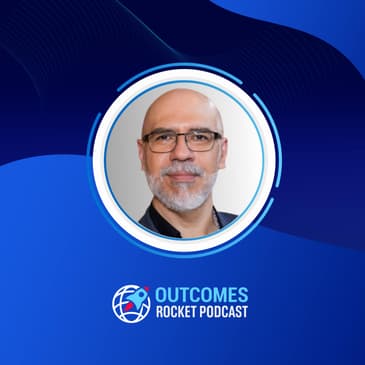
In this episode, Abbas Zavar, a pioneering physician and digital health leader with over two decades of experience in medicine and health information technology, talks about his commitment to the field, focusing on tailoring healthcare interventions to individual needs. He highlights the importance of prevention as he believes healthcare systems often lack the comprehensive data required for effective preventive care. Zavar is currently developing a Preventive Assessment Tool (PAT) designed to gather and integrate diverse health data, ranging from lifestyle and environmental factors to social determinants of health, into a comprehensive, personalized health profile. He also addresses the challenges of implementing innovative healthcare solutions, particularly around data integration and securing financial support, while stressing the essential role of augmented intelligence in managing vast amounts of health data and driving future healthcare innovations.
Tune in and learn how personalized prevention could transform healthcare, bridging the gap between current practices and ideal patient-centered care!
Resources:
Watch the entire episode here.
Connect and follow Abbas Zavar on LinkedIn.
Learn more about OntarioMD on their LinkedIn and website.
Email Abbas directly here.
[00:00:02] [SPEAKER_01]: Hey everyone, welcome back to the Outcomes Rocket. I'm so excited to have you all tune back in for another phenomenal episode.
[00:00:12] [SPEAKER_01]: Today I have the privilege of hosting Dr. Abbas Zavar. He is a pioneering physician and a digital health leader with over two decades of experience in medicine and health information technology.
[00:00:26] [SPEAKER_01]: His career encompasses clinical practice, digital health consulting, management and really just showcasing his tech savvy expertise.
[00:00:37] [SPEAKER_01]: He holds a doctorate in medicine, master's in public health, master's in health informatics from the University of Toronto.
[00:00:45] [SPEAKER_01]: He's got an incredible story and one that he's going to share today but really just interesting work that he's up to.
[00:00:52] [SPEAKER_01]: So Abbas, so grateful that you joined us today.
[00:00:55] [SPEAKER_01]: Great, thanks Saul. Thanks for having me.
[00:00:59] [SPEAKER_01]: It's my pleasure. It's my pleasure. So really just to kick things off I'd love to just learn about people's stories.
[00:01:05] [SPEAKER_01]: What inspired you to focus on personalized medicine and how do you envision transforming healthcare in the near future?
[00:01:14] [SPEAKER_00]: Great, thanks. Thanks again for this opportunity.
[00:01:19] [SPEAKER_00]: Yeah, for a long time I'm a strong believer on personalized medicine.
[00:01:26] [SPEAKER_00]: Just imagine that our healthcare system providing the right clinical intervention whether it's diagnosis treatment or prevention at the right time for the right individual.
[00:01:40] [SPEAKER_00]: This is fantastic. This is everybody expects from the ideal healthcare system patient centric.
[00:01:50] [SPEAKER_00]: So I'm focusing on this vision for a long time applying in my job, in my research, in my courses I'm teaching.
[00:01:59] [SPEAKER_00]: And because as I said this is the ideal version of healthcare system and I believe all of our healthcare ecosystem even digital part out of healthcare system we should be harmonized through that end goal.
[00:02:18] [SPEAKER_00]: So this is my vision I'm working on that. And specifically I'm very interested in prevention section of this approach that I can explain it in detail.
[00:02:33] [SPEAKER_01]: And thank you. This is where healthcare needs to go, focus on prevention.
[00:02:37] [SPEAKER_01]: From the prevention side of things and we'll get into the next questions here.
[00:02:42] [SPEAKER_01]: What's your thoughts on prevention say leveraging medications for cholesterol for prevention or do you believe more in a naturopathic pathway to prevention or both?
[00:02:57] [SPEAKER_00]: Indeed we need to consider all of those pathways and harmonize them because we have lots of different situations but my thought that all of them have to be harmonized together in the one point and point.
[00:03:14] [SPEAKER_00]: So prevention is the significant gap in our healthcare system. Most of healthcare systems are only focusing on acute care ignoring or missing prevention most of the time.
[00:03:29] [SPEAKER_00]: And even our healthcare system wants to invest or follow this approach in our current status.
[00:03:38] [SPEAKER_00]: We don't have enough data in our EMR system or EHR system.
[00:03:44] [SPEAKER_00]: We need to have the full healthcare profile for everybody each individual. It's not only health related data it's about omics, about lifestyle, environmental, occupational, social, developmental health.
[00:04:00] [SPEAKER_00]: So we don't have this data in our EMR system. There is a big lack of enough information to have a personalized preventive plan.
[00:04:11] [SPEAKER_01]: Yeah, I love it. Thank you for that and I'm asking you because hey I just got my labs back, my cholesterol was a little high.
[00:04:21] [SPEAKER_01]: And my wife just thinking about these things personally as a lot of the listeners and viewers are thinking about this too.
[00:04:28] [SPEAKER_01]: Now I want to zoom into you're working on some research and you have a preventive assessment tool. It's a project that you're working on and it adds value to the healthcare ecosystem.
[00:04:38] [SPEAKER_01]: Talk to us about how and its potential impact on preventative health.
[00:04:43] [SPEAKER_00]: Yeah, sure. Yeah, so I'm very passionate on prevention, personalized prevention approach.
[00:04:50] [SPEAKER_00]: As I said we have lack of data. So for years I'm thinking about how we can make a tool or approach to capture this data in our system at the point of care for clinicians.
[00:05:04] [SPEAKER_00]: So I started from my back home. I was the first founder of Preventive Medicine Institute.
[00:05:13] [SPEAKER_00]: We started in this idea and vision but unfortunately I couldn't apply it or implement it.
[00:05:20] [SPEAKER_00]: Came to Canada and now I'm following that because it requires technology available in the market.
[00:05:30] [SPEAKER_00]: Digitized form, AI, EMR system, primary care EMR system in a hospital all are available.
[00:05:39] [SPEAKER_00]: We just want to connect them in a perfect way.
[00:05:45] [SPEAKER_00]: So PATS project or prevention assessment tool project.
[00:05:50] [SPEAKER_00]: We want to develop a package of all questionnaires or we call it PATS, prevention assessment tool.
[00:05:58] [SPEAKER_00]: For all aspects of each individual not only health data available but about the lifestyle.
[00:06:06] [SPEAKER_00]: Your activity, your diet, your sleep pattern, your social behavior, your mental, your occupational health, about your environment.
[00:06:17] [SPEAKER_00]: Everything around you as exposed on chemical, physical or biological, social determinants of health.
[00:06:25] [SPEAKER_00]: Even about your situation about high cholesterol so we don't have enough information about your lifestyle, your personal to provide you the best personalized preventive approach even tertiary or secondary.
[00:06:41] [SPEAKER_00]: So we want to create that package of questionnaire, validate it, customize it for Canadian healthcare system.
[00:06:51] [SPEAKER_00]: And by digitizing them and make it available for physician they can select any of those questionnaire, patient completed, data enriching the EMR system and AI are available there.
[00:07:04] [SPEAKER_00]: AI can identify risk factor, provide preventive action or indeed suggesting preventive action.
[00:07:14] [SPEAKER_00]: This is the summary of our project.
[00:07:17] [SPEAKER_01]: I think that's super interesting and so are you thinking that through this process we're going to be getting these questions asked at the point of care?
[00:07:29] [SPEAKER_01]: Is that right?
[00:07:31] [SPEAKER_01]: Yeah exactly.
[00:07:32] [SPEAKER_01]: So you gather all this necessary information at the point of care through these assessments.
[00:07:38] [SPEAKER_01]: That way you have a full picture and you can do or prevent things.
[00:07:43] [SPEAKER_01]: Yeah exactly.
[00:07:45] [SPEAKER_01]: Understood, understood.
[00:07:46] [SPEAKER_01]: This is super interesting Dr. Zavara and just asking all these things at the point of care, integrating them all in a preventative pathway is the way.
[00:07:55] [SPEAKER_01]: What would you say have been the biggest challenges that you faced in developing and implementing innovative solutions like this and in particular the one that you're working on now?
[00:08:06] [SPEAKER_00]: Good question. For any innovation in healthcare system, you are facing with data integration, data access, regulations, patient engagement, ethical perspective or any of them.
[00:08:21] [SPEAKER_00]: But to be honest, they are not a significant challenge for PATH project at the moment.
[00:08:29] [SPEAKER_00]: We don't have any concern about ethical.
[00:08:33] [SPEAKER_00]: We hopefully have a patient engagement because by providing those information, patients will receive great health support by prevention approach.
[00:08:45] [SPEAKER_00]: The most challenging challenge that we are facing, I'm reaching out several AI companies.
[00:08:51] [SPEAKER_00]: They have the technology, they have the full workflow, they are just missing our tool to capture that data.
[00:08:59] [SPEAKER_00]: And they said okay, it's amazing, fantastic, but what is your business plan?
[00:09:05] [SPEAKER_00]: Who want to pay for this?
[00:09:07] [SPEAKER_00]: Patients, physicians, system, government, who want to pay for that?
[00:09:12] [SPEAKER_00]: So this is our main challenge right now.
[00:09:15] [SPEAKER_00]: We are inviting all sponsors, mostly public, they should invest on prevention and it would be cost effective for them long time.
[00:09:26] [SPEAKER_00]: So for implementing what we want to create, this is knowledge base, valuable knowledge base.
[00:09:33] [SPEAKER_00]: So we need some sponsor or grant or funds to support this project.
[00:09:38] [SPEAKER_01]: Yeah, for sure. And arguably, for self-insured employers, you would say that they also have a skin in the game to encourage these types of preventive assessment tools and the use of primary care, etc.
[00:09:56] [SPEAKER_01]: So I think there are many stakeholders that could win if it's deployed correctly.
[00:10:01] [SPEAKER_01]: And so you've been doing this for a very long time.
[00:10:05] [SPEAKER_01]: What are some of the emerging trends and technologies that you're seeing that could really make a significant impact in the next decade?
[00:10:14] [SPEAKER_00]: So, this is the hot topic right now, AI.
[00:10:18] [SPEAKER_00]: But I love to emphasize that augmented intelligence rather than artificial intelligence.
[00:10:26] [SPEAKER_00]: Because this technology is coming to support healthcare system and augmenting the capability of healthcare system and healthcare providers.
[00:10:39] [SPEAKER_00]: So back to personalized medicine approach and those five data domains that we need to capture all data to have a full understanding for each individual providing personalized plan.
[00:10:51] [SPEAKER_00]: So definitely we need AI to pass all of this data cleaning, data integration, data standard, all of them to help us to create knowledge and insights from the raw data.
[00:11:10] [SPEAKER_00]: And without AI, we can't do that.
[00:11:12] [SPEAKER_00]: Just one example. For only one domain, health-related data, by 2025 we have generated 10,000 exabytes data.
[00:11:27] [SPEAKER_00]: Each exabyte is 1 billion gigabytes.
[00:11:31] [SPEAKER_00]: It means that just for one domain we have created a 10 with 19 zeros.
[00:11:40] [SPEAKER_00]: That's a lot of zeros.
[00:11:44] [SPEAKER_00]: What about we added omics, lifestyle, environment, social determinants?
[00:11:48] [SPEAKER_00]: Without AI, we can't do that.
[00:11:51] [SPEAKER_01]: It's too much.
[00:11:52] [SPEAKER_01]: So there's a lot of business to be had for the microchip companies.
[00:11:59] [SPEAKER_01]: Right?
[00:12:01] [SPEAKER_01]: GPUs, processing these things.
[00:12:03] [SPEAKER_01]: That's why Nvidia stock is so high.
[00:12:05] [SPEAKER_01]: The need is enormous and the computing power that's needed to do this type of work is super important.
[00:12:12] [SPEAKER_01]: But to your point, the AI work is crucial as part of it.
[00:12:16] [SPEAKER_01]: Really insightful and appreciate that number.
[00:12:19] [SPEAKER_01]: I didn't realize it was so big.
[00:12:21] [SPEAKER_01]: It's so big.
[00:12:23] [SPEAKER_01]: Well, Abbas, this has been super interesting.
[00:12:25] [SPEAKER_01]: I always enjoy visiting with super smart people like you.
[00:12:30] [SPEAKER_01]: What closing thought would you leave our listeners with?
[00:12:33] [SPEAKER_01]: And what's the best place they could get in touch with you to learn more, to collaborate, become a partner, etc.?
[00:12:40] [SPEAKER_00]: Perfect. Thanks again for an amazing opportunity you provided.
[00:12:45] [SPEAKER_00]: So based on that personalized medicine approach, I just want to help our healthcare system by adding and creating a tool
[00:12:55] [SPEAKER_00]: to help us to put together all pieces of a puzzle for each individual to create a full picture of health profile for everybody.
[00:13:08] [SPEAKER_00]: Because right now these pieces of puzzle are fragmented and they are not available.
[00:13:13] [SPEAKER_00]: But hopefully by implementing and adopting the patch tool and that data we want to create on top of that
[00:13:22] [SPEAKER_00]: we want to map out all potential risk factors we can capture from the patch with any potential disease and disorder
[00:13:31] [SPEAKER_00]: and this knowledge base is required for any AI platform.
[00:13:36] [SPEAKER_00]: So by the whole phases of this project, hopefully we can create that picture of health profile for everybody
[00:13:45] [SPEAKER_00]: and hopefully we are welcoming for any scientific and financial support from all organizations, private or public ones.
[00:13:56] [SPEAKER_00]: I'm always available on my LinkedIn, on my website, Al-Bazaar.
[00:14:00] [SPEAKER_00]: This is the easy way. You can search it on Al-Bazaar at gmail.com for discussing any potential collaboration.
[00:14:09] [SPEAKER_01]: Amazing. Al-Baz really appreciate that.
[00:14:11] [SPEAKER_01]: Thanks folks. Make sure you take advantage of getting in touch with Dr. Abbas Zabar.
[00:14:18] [SPEAKER_01]: You can find all his information in the show notes.
[00:14:21] [SPEAKER_01]: So take advantage of this super interesting collaboration to help all of us have a better health through preventative assessments.
[00:14:28] [SPEAKER_01]: Abbas, thanks so much for being with us today. This has been a lot of fun.
[00:14:31] [SPEAKER_00]: Thank you. I really appreciate it. Thank you.
[00:14:34] [SPEAKER_01]: You too.