
Cybersecurity remains critical to protecting healthcare data from breaches.
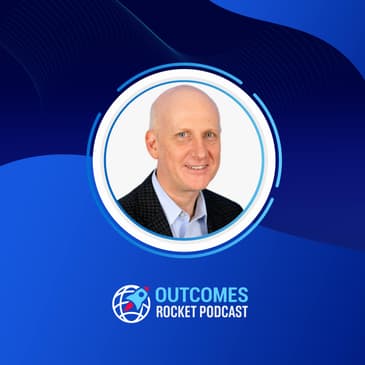
In this episode, David E. Williams, president of Health Business Group and founder of Atumcell, delves into his extensive experience in healthcare consulting, particularly focusing on AI and cybersecurity. He highlights the evolution of AI, emphasizing its strategic importance post-ChatGPT's introduction, enabling businesses to explore new opportunities and optimize existing processes. David shares insights on cybersecurity, discussing the vulnerabilities of US hospitals and his venture, Atumcell, which targets private equity firms to manage cybersecurity risks effectively. His consulting firm stands out for its primary data-gathering approach, combining expertise and networks to provide valuable insights to clients, while also reflecting on setbacks and celebrating successes like guiding clients through AI integration and strategic planning.
Tune in and learn from David's wealth of knowledge and experiences in healthcare consulting, AI, cybersecurity, and beyond!
Resources:
- Watch the entire interview here.
- Connect with and follow David on LinkedIn here.
- Learn more about Health Business Group on LinkedIn and their website.
- Discover more about Atumcell on LinkedIn and their website.
- Check out Saul’s episode on David’s podcast here.
- Enjoy more episodes from David’s podcast here.
- Email David here.
- Buy Elon Musk’s biography by Walter Isaacson here.
[00:00:02] Hey, everybody.
[00:00:03] Welcome back to the Outcomes Rocket.
[00:00:05] I have the privilege of hosting David Williams back on the podcast.
[00:00:10] We had him back on the podcast back in 2017 and it's so great to have him back.
[00:00:15] A lot has changed.
[00:00:16] He's been doing such incredible work.
[00:00:19] I also had the privilege of being a guest on his podcast, the Health Biz
[00:00:23] Podcast, where he interviews really awesome guests.
[00:00:26] I'll link that up in the show notes, but president, he is the president
[00:00:29] of the Health Business Group.
[00:00:31] They're a Boston-based consulting firm that helps clients in the life sciences,
[00:00:35] technology enabled health services, and private equity develop and
[00:00:39] execute innovative business strategies.
[00:00:41] He co-founded the company in 2003 after more of a decade as a consultant for
[00:00:46] Boston Consulting Group and L.E.K., very focused on AI and cybersecurity, two
[00:00:52] hot topics that are on all of our minds.
[00:00:54] So David, thanks so much for joining us again.
[00:00:57] Hey Saul, it's my pleasure.
[00:00:58] I feel privileged to be invited back after seven years.
[00:01:01] Most people don't invite me back for 10 to 20 years because of this
[00:01:04] uproar that I cause their show.
[00:01:06] So I appreciate that confidence.
[00:01:07] Hey David, I love, I love it.
[00:01:09] And I'm so glad to welcome you back.
[00:01:11] You have such a fresh approach and I made sure to tell you that
[00:01:14] while we were on your show together.
[00:01:16] You just have a really nice way of synthesizing and
[00:01:19] summarizing, so excited for today.
[00:01:21] Look, for the people that don't know you, tell them a little bit about you and
[00:01:24] tell them about the work that you focus on.
[00:01:26] Yeah, sounds good.
[00:01:26] I've done strategy consulting in healthcare for a long time and I
[00:01:29] started this company 20 years ago.
[00:01:30] But even before that at Boston Consulting Group, I got into that.
[00:01:34] And even way back in high school, I was in the computer and healthcare business
[00:01:38] when I had my first summer job at a VA hospital doing programming.
[00:01:42] But basically we help organizations to navigate in the ever-changing
[00:01:46] environment in healthcare.
[00:01:47] We work on growth planning.
[00:01:49] And then when we work with private equity firms and helping them do due diligence
[00:01:53] to make sure that they're making the right decision in
[00:01:55] the companies that they buy.
[00:01:57] That's awesome, David.
[00:01:58] Really important work.
[00:01:59] When you think about the biggest value you add to the organizations
[00:02:03] that you work with, what would you sum it up as?
[00:02:07] A lot of times it's the external perspective.
[00:02:09] And so for example, a company will be thinking about doing something and
[00:02:12] they may have a vague idea that others might be doing it.
[00:02:15] We'll get out there.
[00:02:16] We'll speak with the competitors.
[00:02:17] We'll speak with the customers and find out what's going on really
[00:02:20] in the external environment.
[00:02:21] So we're very good at doing that.
[00:02:23] And then strategic frameworks, helping people organize their various
[00:02:26] thoughts into a way that you can say, Hey, does this make sense strategically?
[00:02:30] Does it not?
[00:02:31] What do we need to do to sharpen up our strategy and our approach?
[00:02:34] Certainly providing some very important data points to help all of us move
[00:02:39] forward in the big bets that we're making.
[00:02:41] And one of the big bets that many people are making is on AI.
[00:02:45] Do you care to share some of the insights you've been gaining here in that respect?
[00:02:49] Well, AI is a real interesting space and it's been around for quite a while.
[00:02:53] The different types of AI and AI is actually used in a lot of places in
[00:02:57] machine learning within healthcare.
[00:02:59] What happened just about a year ago with the introduction of Chats GPT is now
[00:03:04] generative AI came out and people could see, wow, what does it really mean as
[00:03:08] opposed to being just a general concept in the past?
[00:03:11] So what we saw over the past, let's say eight months or so is companies saying,
[00:03:15] Hey, this is important to us.
[00:03:17] Now we need to take a strategic approach to using AI.
[00:03:20] So for example, they'll say, well, gee, we could do all these things that
[00:03:22] we never thought about before.
[00:03:24] And at the same time, if we look at how we built up our own business, maybe with a
[00:03:28] lot of, let's say pharmacists or physician input, you could say, if I were starting
[00:03:32] this business today and I had AI, I might do it a lot differently, a lot more cheaply.
[00:03:38] And so they have to think about what does that mean?
[00:03:41] And then they'll find actually, if they're in the, let's say the space where they've
[00:03:44] got existing data and relationships, they'll find a lot of startup companies
[00:03:47] coming to them and saying, Hey, can we use your database in order
[00:03:51] to train our models and so on?
[00:03:53] So there's a lot of new questions that come up because you've got
[00:03:57] potentially new customers.
[00:03:59] You've got new competitors.
[00:04:00] You've got new ways to do business yourself.
[00:04:03] And because now people can see generative AI, they can see that what the potential
[00:04:07] is and just actually what you can do right now.
[00:04:09] So it introduces a whole new flood of opportunities for us because people hire
[00:04:14] us when they have complicated new questions to answer.
[00:04:18] Yeah.
[00:04:18] And there's a lot of questions around it.
[00:04:20] The other area you cover is cybersecurity.
[00:04:23] So you also have a cybersecurity company.
[00:04:26] So tell us a little bit more about that, man.
[00:04:28] That's super interesting and talk about great timing.
[00:04:30] So what happened is during the pandemic, a lot of people got a new hobby, maybe
[00:04:34] got a new puppy or something like that.
[00:04:36] And I say that I started a new business.
[00:04:38] What happened is I was approached by some researchers in Europe and they said
[00:04:42] they'd been studying research, the whole internet scan, everything.
[00:04:45] And they said the most vulnerable organizations in the world are US hospitals.
[00:04:50] And since we work with hospitals and they have a way to stop ransomware,
[00:04:54] we should work together.
[00:04:55] Look at the analysis.
[00:04:57] It turned out to be exactly on point because as you'll see in hospitals in
[00:05:01] particular and others within healthcare have been hit hard by cybersecurity
[00:05:04] over the last few years.
[00:05:06] But I said, you know what?
[00:05:07] You're right about the vulnerability, but they're actually pretty difficult customers.
[00:05:12] They've got a lot of other things going on.
[00:05:13] They're very difficult environments to protect.
[00:05:15] They don't have the right budgets.
[00:05:17] And so let's not actually emphasize healthcare.
[00:05:20] So let's actually focus on private equity, which is a space that understands risk.
[00:05:25] They like to manage as a portfolio and have powerful tools that we use.
[00:05:28] That's why I actually created a separate company called Atomcell.
[00:05:32] So while we do work in the healthcare space and cybersecurity, we work
[00:05:35] actually across industries, but there's a lot going on in healthcare and
[00:05:38] cybersecurity, which I'd be happy to discuss some more if you'd like.
[00:05:41] Fascinating.
[00:05:42] I love this.
[00:05:42] And man, I don't even know how you do it.
[00:05:45] Two companies now.
[00:05:46] Like what's your secret?
[00:05:48] Secret is I used to have a big job running a volunteer organization, my synagogue.
[00:05:52] And I say, it's a lot easier to run a company than to run a synagogue.
[00:05:56] So I have time for two companies because I'm not doing that any anymore.
[00:05:59] Oh man.
[00:06:00] Well, listen, I'm sure they miss you there, but also the work that you're
[00:06:03] doing with the cybersecurity firm is very meaningful and of course, the work
[00:06:07] that you do in your consulting area.
[00:06:09] When you take a look at the industry and what you guys do, what
[00:06:13] would you say set you guys apart?
[00:06:14] What's your unique selling proposition?
[00:06:17] I started off work at LEK.
[00:06:19] I was consulting from right out of college.
[00:06:21] So it was a long while ago.
[00:06:22] And what they were really good at was the primary data gathering.
[00:06:26] We contrasted maybe to some of the other firms that relied maybe more on their
[00:06:29] experience or their networks and just give you guidance and really roll up
[00:06:33] our sleeves and get in there and speak with customers, speak with competitors,
[00:06:37] speak with experts and learn what's going on the ground.
[00:06:40] Now the difference here is rolling that forward a few decades.
[00:06:43] We still take that approach with a real primary research, but we also now do have
[00:06:49] the expertise, the networks and so on.
[00:06:51] So we combine the best of those.
[00:06:52] So our teams look different than a typical consulting firm, much more experienced.
[00:06:57] And at the same time, we do the in-depth primary research that might be done by
[00:07:02] more junior analysts.
[00:07:04] So that's what's unique about us.
[00:07:05] Yeah.
[00:07:06] Thanks for sharing that.
[00:07:07] I imagine the, that primary data is a huge difference maker with the work that you do,
[00:07:12] David, I'm sure you oftentimes can run into things that don't work out as well.
[00:07:17] So talk to us about setbacks, things that you've seen that have made you guys even
[00:07:22] better.
[00:07:22] We see, we have the opportunity for, to have learned a lot about consulting from
[00:07:27] having been in consulting for a long while.
[00:07:29] I have colleagues that have been at other firms in the past.
[00:07:33] And so when we set our firm up, we decided let's try to do it the right way.
[00:07:36] So one thing is that even very great place like where I work, Boston
[00:07:41] Consulting Group, you've got a team of five or six people and chances are there's
[00:07:45] one or two of them that aren't adding so much value compared with others.
[00:07:49] And so we just skip those two and we just include the two or three that
[00:07:52] are going to add the value.
[00:07:54] And then the other piece is that when you have somebody that's right out of
[00:07:57] business school or right out of college, I remember thinking like, phew, that's
[00:08:00] impressive that we're getting hired to do this.
[00:08:02] I don't really know anything about what I'm doing now.
[00:08:04] We had very good guidance, but we find that it's actually a more successful
[00:08:09] approach if we use ourselves, more senior people to actually do that rather than
[00:08:14] having separate team that's managing the client versus who's actually rolling up
[00:08:18] our sleeves and doing the work.
[00:08:20] I would say that's the case.
[00:08:21] Now, one of the things that we had tried to do at one point was to hire more
[00:08:25] junior people and to manage them remotely.
[00:08:28] This is before the pandemic.
[00:08:29] And it turned out that people needed, we assumed too much that people already
[00:08:34] knew too much, knew a lot, and were very experienced and didn't
[00:08:37] not need a lot of supervision.
[00:08:39] And what we found was that wasn't really the case.
[00:08:41] We weren't actually getting that much leverage.
[00:08:43] And also that clients are willing to pay for senior people to do the
[00:08:47] work if they do it effectively.
[00:08:49] Love it.
[00:08:49] Hey, I'd love to hear about some wins.
[00:08:51] Can you share any wins that you've been able to score for clients of late?
[00:08:56] I think we have wins in terms of clarifying thinking.
[00:08:59] And also we have, let's say in this area of looking at AI in healthcare, a big
[00:09:05] area is just to help people to figure out how to think about it.
[00:09:08] So we work with a larger company to understand where are the opportunities?
[00:09:11] They know they need to do something with AI.
[00:09:14] And so first it's just helping to define what are the different types of AI?
[00:09:18] We're talking about generative AI.
[00:09:19] What else is there?
[00:09:21] That's out there.
[00:09:21] What maps to the different parts of their business and then using a
[00:09:24] framework to help them say, Hey, there is things, some things you can do on
[00:09:28] the offensive side, which are going after new markets, and then there's
[00:09:32] some things that you could do more on the defensive side, like defending
[00:09:34] yourself from, from competitors that might be coming into your space.
[00:09:38] And so just really laying that out in a way that helped them
[00:09:41] understand where the potential is.
[00:09:43] And then also speaking with their customers and understanding from those
[00:09:47] customers that they actually are interested in our client doing work
[00:09:50] in AI, even though our company is clients, not really an AI company.
[00:09:55] And it turned out that the expertise that our client had, the trust that
[00:10:00] they built up because they do have professionals that are doing the work.
[00:10:03] They don't make mistakes.
[00:10:04] They're, they have very good quality.
[00:10:06] Plus how embedded they are in the workflow meant that they have an
[00:10:10] opportunity to actually work with AI in a way that they might not have thought of.
[00:10:14] So we helped to change their view on that and to get them started on some
[00:10:18] initiatives, to be able to take advantage of that and be successful in the space
[00:10:21] rather than just observers of others' success.
[00:10:24] That's awesome, David.
[00:10:24] Thanks for sharing that.
[00:10:25] And about how many people, just like I'm sure folks here, you're probably
[00:10:29] wondering, this is great, either you've done the research or you've worked with
[00:10:33] a company like David's to get insights for the work that you do for the strategy
[00:10:38] that you're employing to take advantage of these things like AI and what are you
[00:10:41] doing to protect your company against cyber attacks or your organization?
[00:10:45] But maybe some of you guys haven't.
[00:10:46] So David, for those that haven't, and even for those that have, how many people
[00:10:51] are you usually reaching out to and how does the whole process work
[00:10:54] and what's the right number?
[00:10:57] Yeah.
[00:10:57] So when we were doing our research, we're tapping existing networks.
[00:11:01] We also do work with some, some expert networks and then we'll
[00:11:05] go out and cold call people.
[00:11:07] And so a typical project, we might get input from anywhere from 20 to 50 people.
[00:11:13] And it depends on kind of the breadth of what we're doing or even more than 50.
[00:11:16] But usually in one phase, it's not more than, it's not more than 50.
[00:11:19] And so you want to get exactly to the right people that actually know something.
[00:11:24] There's a lot of people that will just talk without knowing that much.
[00:11:26] So a key thing is to be able to identify who's actually going to be able to give
[00:11:30] you insight beyond just the talking points.
[00:11:33] And then what I find also is that when we're dealing with something that's
[00:11:35] more conceptual, like a new product concept or even some things related to AI,
[00:11:41] it is useful in an interview, not just to speak with somebody, but let's say to
[00:11:44] have a one page illustration and say, this is what we're thinking about.
[00:11:48] This is the concept.
[00:11:49] And that way everybody's literally on the same page and you go back and it's
[00:11:53] not like we talked to 50 people and they all have a different view or they're
[00:11:56] saying things that are actually hard to compare, no, we showed them the same
[00:12:00] kind of an input and now this is what we're getting out of it.
[00:12:03] So that's maybe an answer for how many people we're seeing.
[00:12:05] That's great.
[00:12:06] And with 50 people, you're definitely getting a great sampling of insights from
[00:12:09] the market, seeing trends to be able to make some decisions off of that.
[00:12:13] I love it.
[00:12:14] What would you say is a trend or technology that people need to be on top of right now?
[00:12:21] I do believe that it's important to look at these various productivity tools.
[00:12:26] Especially since we've gone from a fully in-person working to remote to now hybrid
[00:12:32] and there's all sorts of tools.
[00:12:33] Everything out there has a co-pilot with it or some kind of an AI widget and used
[00:12:39] properly, you can actually get a lot of value out of these tools.
[00:12:44] So I would encourage people to look at various AI tools for automation and
[00:12:49] productivity.
[00:12:50] One trend that I have seen a lot of is the use of these AI based note takers
[00:12:56] that will come to a meeting and they do a summary of the meeting, they
[00:12:59] record the meeting and so on.
[00:13:01] I am actually not a big fan.
[00:13:02] I'm a general, yeah, I generally embrace technologies, but in this case, what I
[00:13:07] find is I'm a pretty good note taker and I want to take it there in the moment.
[00:13:12] It also actually helps me stay focused on the conversation if I'm writing as
[00:13:17] opposed to say, but the AI note taker is doing it and I'll review it later.
[00:13:21] So I find that's more of a crutch that I don't like.
[00:13:26] Now maybe it will get better.
[00:13:28] So I think people should evaluate them.
[00:13:30] If you're not a good note taker, maybe you want to try it.
[00:13:32] Or if you're sharing with the team.
[00:13:33] I love that.
[00:13:34] David, what do you do for fun?
[00:13:36] Like you do a lot of really cool stuff on the work side, but what do you do for fun?
[00:13:39] Yeah.
[00:13:40] Oh, I've loved working.
[00:13:41] So it's, so it is important, I think for sustainability to enjoy what you do.
[00:13:45] I love to go to the beach.
[00:13:47] Now a little problem I have with that is I'm a bald redhead.
[00:13:50] So I can only go to the beach for two minutes without getting burned up.
[00:13:53] So I do cover up well, but yeah, I like to go kayaking.
[00:13:56] I like to go swimming, biking that kind of thing, walking along the beach.
[00:14:01] So I like to do that.
[00:14:01] I like to read when I have time to do that, do podcast.
[00:14:04] I do my podcast.
[00:14:05] That's fun.
[00:14:06] I do crossword puzzles, go to the gym, hang out with my family, that kind of thing.
[00:14:10] Love it.
[00:14:10] Hey, you asked me the book question and now I want to ask you.
[00:14:13] So any book recommendations for us?
[00:14:16] Yeah.
[00:14:16] So I I've been reading the biography of Elon Musk by Walter Isaacson.
[00:14:20] The new one.
[00:14:21] There's a new one, right?
[00:14:22] Okay, cool.
[00:14:22] Cool.
[00:14:23] How is it so far?
[00:14:23] It's from 2023.
[00:14:24] It's great.
[00:14:25] It's highly recommended.
[00:14:26] And actually here's the technology.
[00:14:28] So on Spotify premium, if you have that, you could actually get audio books and
[00:14:32] they give you 10 hours a month.
[00:14:33] So I actually, I have the physical book, but then if I'm at the gym, I might be
[00:14:38] listening to it and then I'll just go between Spotify and the book.
[00:14:41] And I actually find that hybrid approach a good way for doing that.
[00:14:44] But I like that one a lot.
[00:14:45] I mean, Elon Musk has had just an incredible impact.
[00:14:49] I have some of his products and I've, I have a general understanding of what he's
[00:14:53] doing, but it's actually helpful to get the whole story down and I find it even
[00:14:57] is a bit helpful in my own management.
[00:15:00] I'm definitely tend to be on the empathetic and nice side, although
[00:15:04] hardworking of course, but so I don't want to be as much of a jackass as he is.
[00:15:08] But in some cases maybe I need to do a little bit more of that.
[00:15:11] So that's what I'm enjoying.
[00:15:12] Love it, man.
[00:15:12] Great recommendation.
[00:15:13] I saw it on the bookshelf at the airport a couple of weeks ago.
[00:15:16] I'm like, Oh, I got to pick that up.
[00:15:18] So now with your vote, I will be picking that one up and folks pick it up too.
[00:15:23] It's all about learning and advancing outcomes, both business and health.
[00:15:28] Look, if people want to get to know you better or learn more about the work you
[00:15:32] do, David, where can they reach you?
[00:15:35] So I think the best way to do it, you can email me at
[00:15:37] dwilliams at healthbusinessgroup.com.
[00:15:39] Take a look at the Health Biz podcast, which you can find anywhere that you
[00:15:44] get your podcasts as they say, including Apple podcasts and also it's available on
[00:15:49] YouTube.
[00:15:49] Those are good places where just tap me on LinkedIn.
[00:15:52] Amazing.
[00:15:53] David, folks, make sure you check out Dave's podcast.
[00:15:56] I was just on it.
[00:15:57] So go check out my interview.
[00:15:58] If you like our interviews.
[00:15:59] Yeah, check out that one.
[00:16:00] Make sure to like that one.
[00:16:02] And that's probably was a highlight.
[00:16:03] Now that was a good one.
[00:16:04] So we had a good time.
[00:16:05] Thanks Dave.
[00:16:05] No, but honestly, outside of me, he's got some really great interviews on there.
[00:16:09] And the way that David does his interviews is engaging, very personalized
[00:16:15] and you also leave with nuggets.
[00:16:16] So definitely a big fan of his podcast.
[00:16:18] Check that out.
[00:16:19] We're going to link up every way that you could get in touch with David,
[00:16:23] listen to his podcast in the show notes.
[00:16:25] So make sure you check those out.
[00:16:27] Thank you for listening everybody.
[00:16:28] And David, thanks for joining us.
[00:16:30] Hey, Saul, it's a great pleasure.
[00:16:31] I'll see you in another seven to 15 years.
[00:16:34] See you soon, my friend.
[00:16:35] Take care.