
Optimizing care while centering it around the patient allows for innovation without compromising quality.
In this episode, Bryan Carey and Jane Whang spotlight the innovative assisted hygiene model of Benevis, where dental assistants support hygienists, ensuring efficient care delivery to millions in 120 underserved areas. Bryan emphasizes the integration of oral care with overall health, drawing from experiences in the emergency room business to underscore the role of information sharing in improving outcomes, while Jane advocates for educating individuals, particularly children, on the significance of oral health, promoting collaborative efforts among public health teams, businesses, and foundations such as Glo Good.
Tune in and learn how collaborative efforts can shape a healthier future for children and families!
Resources:
- Connect with and follow Bryan Carey on LinkedIn.
- Learn more about Benevis on their LinkedIn and website.
- Connect with and follow Jane Whang on LinkedIn.
- Discover more about the Glo Good Foundation here.
[00:00:00] Welcome to Think Oral, where we connect and connected between oral and physical health.
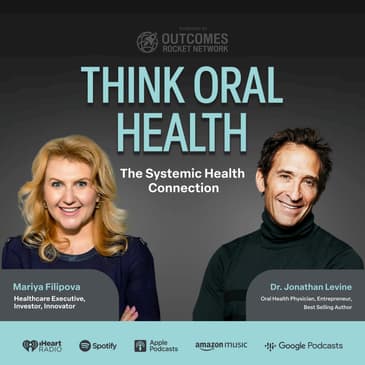
[00:00:11] I'm your host Dr Jonathan Levy, and I'm your host Maria Filippova.
[00:00:15] Let's get at it!
[00:00:22] Welcome everyone to another episode of the Think Oral Health Podcast.
[00:00:27] We are recording today from beautiful Winther in New York, and I'm very excited about
[00:00:33] the conversation topic because as you all know Jonathan and I are very committed to
[00:00:40] bringing and highlighting leaders in this podcast that are doing things differently
[00:00:45] and that are succeeding in bridging silos between different care teams.
[00:00:51] So today we have a really interesting discussion and a great surprise because not only do
[00:00:58] we have one exceptional leader, but we have two exceptional leaders doing amazing work
[00:01:04] that we want to talk to you about.
[00:01:06] The topic is doing well by doing good.
[00:01:10] The topic is serving the others served, and we are here to tell you all about the amazing
[00:01:15] work that and how that's happening.
[00:01:17] Like that, I would pass it on to my partner in crime and co-host of the podcast Dr Jonathan
[00:01:23] Levy who would introduce our two, not one, but two conversation partners for today.
[00:01:31] Thank you Maria, and yes, super excited to have Jane Wang and Brian Carey from Benevis.
[00:01:36] I must tell you, we're really looking forward, we've been looking forward to this conversation.
[00:01:43] We're going to dig in on how you can have a business model that can help the underserved
[00:01:49] and have a sustainable cash flow to support that effort.
[00:01:54] And we're going to dig in on that because that is truly special.
[00:01:58] Let me start with Jane, just a little bit quick, bio Jane.
[00:02:01] As a dentist she went to Columbia, she is passionate about dentistry, she worked at a multi-specialty
[00:02:07] practice in Denver, Connecticut.
[00:02:10] And she relocated to Maryland to join Benevis.
[00:02:13] I got up with Jane a couple of months ago and I'm so excited for her to tell us her personal
[00:02:18] story and what excites her about Benevis.
[00:02:22] Brian's the chief executive officer of Benevis, and that is a leading DSO for practices focused
[00:02:29] on life changing dental care and orthodontics.
[00:02:33] But what's really special about that is they're focused on creating equality where there's
[00:02:39] the underserved population.
[00:02:41] And if a 20-year history of providing a high quality care to approximately 5 million
[00:02:48] children and adults in 120 underserved communities, then I will tell you personally having a foundation
[00:02:55] and looking to help the underserved, I'm so excited for us to dig in on this.
[00:03:00] So welcome Jane, welcome Brian to the Think Oral Health Podcast with Maria Philip Pumpen
[00:03:06] myself.
[00:03:07] Thank you so much, really happy to be here, happy to represent Benevis and excited about
[00:03:13] this topic because I spend every day thinking of how can we be successful as a business but
[00:03:18] make sure that we're fulfilling a mission.
[00:03:21] Exactly.
[00:03:22] And Jane.
[00:03:23] Thank you Dr. Livy and Maria for having me on.
[00:03:26] I so enjoy speaking with you a couple of months ago, so it's great that we can reconnect.
[00:03:30] And I know that we had a lot of interweaving interests, which is to really provide access
[00:03:36] to care for the underserved community and something that we personally feel passionate about
[00:03:41] so it's great that I could do it professionally.
[00:03:43] Oh, amazing.
[00:03:44] Amazing.
[00:03:45] I'm so excited to have both Brian and Jane having you on the podcast.
[00:03:49] Let me start it off, Maria if I can with a big burning yearning question that I have
[00:03:54] to Brian, the CEO who is overseeing the profitability and the accountability of the
[00:04:00] organization from the top.
[00:04:02] Brian, how do you do it?
[00:04:04] How do you focus on the underserved community but also have a profitable enterprise so that
[00:04:11] you can maintain the sustainability of the organization going forward?
[00:04:15] Dr. Livy, I really appreciate that question because first and foremost, we have to provide
[00:04:21] the same care.
[00:04:22] We just can't do something different, but I want to talk about what we do differently because
[00:04:28] in order to be successful is what I call a purpose built business, we're only getting paid
[00:04:33] 70 cents on the dollar by Medicaid relative to other payers and how do you do that?
[00:04:38] We really do it with three things.
[00:04:40] One is that we have access and availability.
[00:04:44] Our offices are within the communities of the underserved population and so they are able
[00:04:49] to get to us and we're also open evenings and Saturdays at times that work for them.
[00:04:55] First is that you just have to be able to be where the patients are.
[00:05:00] The second is we have a care delivery model that is different.
[00:05:05] We have assisted hygiene where the hygienist has a lot of assistance from the dental
[00:05:10] assistance to make sure that they are able to see as many children as possible but
[00:05:16] again provide the same care.
[00:05:18] And then finally, we have systems.
[00:05:20] We have a proprietary system that helps us in terms of schedule management, confirmation
[00:05:25] rates or population has a hard time getting to a dental appointment and being able to show
[00:05:32] up on time because they just don't have all the ability that others and other communities
[00:05:38] do.
[00:05:39] It's really through those three things that essentially we're able to have our offices
[00:05:45] highly productive but again, providing the same care that they would in any other community
[00:05:50] in the United States.
[00:05:52] Amazing.
[00:05:53] We're going to dig in on that a little bit.
[00:05:55] That is amazing.
[00:05:56] I love the idea of an assistant hygiene to create efficiencies from a timing perspective
[00:06:02] and at a high level of delivery of care.
[00:06:04] How did you come up with that assisted hygiene model?
[00:06:08] Was that something that you folks have figured out through iteration and your own personal
[00:06:14] growth in the organization or was that something that was learned elsewhere?
[00:06:18] All of us Dr. Wang to maybe touch on it as well but as background, we started 20 years
[00:06:24] ago as a purpose built business and said we want to have an office design and a care team
[00:06:32] that can allow for this level of care to happen in a manner that also allows us to be effective
[00:06:38] in efficient.
[00:06:39] So the model has largely been in place since the business was started 20 years ago and Dr.
[00:06:45] Wang, maybe you could talk a little bit about how we're able to really assist the hygienist
[00:06:51] as well as the dental assistants and migrating to our care delivery model.
[00:06:54] Sure.
[00:06:55] I think it's important to remember that hygienist are dental providers and when they are supported
[00:07:00] they can be most efficient.
[00:07:02] And I think that with our model of seeing high volume of patients, when they have that support
[00:07:08] they can work more efficiently to provide the care that they were trained to provide which
[00:07:13] is hygiene pro fee or hygiene instructions and to have the dental assistants support them
[00:07:19] through taking the videographs and walking the patients in and out so that they have that
[00:07:24] because you don't need a clinician to do that.
[00:07:26] And to have the assistance to provide that support, I think helps us to be efficient and
[00:07:33] really provide that high quality care for our patients where we are able to see
[00:07:38] I have a high volume in our patient offices.
[00:07:41] And maybe Dr. Luene and Maria, for your listeners, they probably have not been to one of our
[00:07:46] offices.
[00:07:47] So let me explain what our office looks like because it's probably different than most
[00:07:51] of your listeners at the office.
[00:07:53] So we're probably in a strip mall.
[00:07:56] We have a big waiting room that looks almost like a motor vehicle department and then we
[00:08:01] have what we call hygiene bay which will have 8 to 10 chairs.
[00:08:05] In some ways it sounds like it's a mass operation but it's actually fun.
[00:08:10] When you're in there and there are 6-8 kids there with their sunglasses on getting
[00:08:14] ready to have a cleaning, it's a fun environment but it's an environment that is conducive
[00:08:19] to this assisted hygiene model.
[00:08:23] And so that might help as people are trying to say what is it that they're doing?
[00:08:26] I love the UN there because that gives us a visual and it also gives us a connection
[00:08:30] that care delivery doesn't always happen in a clinic, in a dental office or in a physician's
[00:08:37] office.
[00:08:38] It happens in the community because we need to meet patients where they are in their lunch
[00:08:43] break as they're going from work and coming back from work.
[00:08:46] And that's really critical so thanks for reminding us of this.
[00:08:50] I do want to dig into a little bit of that model, the very special model that you've created
[00:08:56] but before that I want to call out for our listeners the importance of the service that
[00:09:01] you provide because it is true that if we, especially for low income populations or
[00:09:08] other serve populations who don't have access to routine dental care, the alternative
[00:09:13] is going to the emergency room.
[00:09:15] And we're still seeing over 1.8 million more visits annually in the emergency room due
[00:09:22] to non-traumatic dental care.
[00:09:25] That's $3 billion of cost to the system.
[00:09:30] And so as we think about the importance of getting care in the community to patients
[00:09:36] really needed but don't have the access or the availability, it's really important.
[00:09:40] So this is not necessarily a oral health or dental care issue.
[00:09:44] This is overall health system issue that cuts right at the crux of the cost of the care
[00:09:50] that we're delivering today because for those listeners and we have two physicians or
[00:09:55] all of physicians on the phone, going to the ED is the most expensive, least efficient
[00:10:01] way to deliver care for oral health issues.
[00:10:06] And Dr. would be able to do what?
[00:10:08] Dr. Jonathan Levine and Dr. Wang, what would the ED doctor be able to do for a patient
[00:10:13] with oral pain?
[00:10:14] Hope he always or maybe antibiotics.
[00:10:16] And then they'll refer them to a dentist and they'll wind up in the strip mall center
[00:10:20] that you guys are running.
[00:10:21] If they're lucky.
[00:10:22] If they're lucky, that's right.
[00:10:25] And so it's important to think about the broader context in which you are running those
[00:10:29] clinics and how important that is.
[00:10:31] It's really important then because income has a very significant impact on access and
[00:10:37] care and children of lower income families or twice as likely to have tooth decay.
[00:10:43] So there are also then going to be twice as likely to have the school absence were
[00:10:48] end up in the emergency room.
[00:10:50] And that's what we are seeking to do is to close that gap, to be able to be available,
[00:10:56] accessible so that income is not a determination of whether or not you receive care.
[00:11:03] What is the role?
[00:11:04] You've created something really special here and you've scaled it and you've been doing
[00:11:09] three years.
[00:11:10] So maybe talk to us a little bit about the role of technology and innovation in that model
[00:11:16] that special model we've created.
[00:11:19] And people when they talk about technology, they say, oh, well, there's AI or innovation
[00:11:23] is associated with technology.
[00:11:24] But there's other ways in which you're innovating that are probably equally important and critical
[00:11:28] to that success of the model.
[00:11:30] So talk to us about that a little bit.
[00:11:33] I'll talk a little bit about the sort of business administration aspect of it.
[00:11:37] And I'd love for Dr. Wang to talk about the use of technology and the care delivery,
[00:11:43] but we actually do have a proprietary practice management system.
[00:11:47] And what sounds very basic, but it takes less time to do a cleaning and a real health exam
[00:11:52] for a child than it does for a 50-year-old.
[00:11:55] And so we have things, everything from our schedule blocks to our confirmation process
[00:12:02] to the use of technology around predictive confirmations, which again is really important
[00:12:08] for this cohort and this demographic where it is a challenge to balance your life and
[00:12:13] get your child to the dentist.
[00:12:16] And most of the innovation that we have on the business side is around schedule management
[00:12:20] to do everything we can to have appointments be at the right time and the right availability
[00:12:27] and then to really support our patients by confirming, make sure they get reminders
[00:12:32] seven days out, three days out, the next day out.
[00:12:35] And we are using AI around when the best time to do those confirmations as well as virtual
[00:12:42] assistance in terms of if someone doesn't need to make a change and try to reschedule.
[00:12:47] But I'd love for Dr. Wang to talk about also how we use our medical records since we are using
[00:12:53] one practice management system throughout the end of this.
[00:12:56] Yeah, I was going to say that as a clinician it's so I feel blessed to have a dental service
[00:13:01] organization that supports us on the operational side.
[00:13:04] So that as a clinician we can focus on patient care because that's what we went to school for
[00:13:08] and that's what we enjoy doing.
[00:13:11] And part of it is they are so good about supporting us through making sure that we're updated
[00:13:16] in terms of our general records.
[00:13:18] It's all digital, our radiograph system everything is digital so that we can access it in different
[00:13:24] ways following hip-hop rules.
[00:13:26] And I think that's really important so that we are able to provide the full quality care
[00:13:33] for our patients and create a dental home for our patients so that we can communicate
[00:13:37] with physicians, pediatricians and to keep that communication open so that we are not
[00:13:44] as you said Maria, we're not just focusing on oral health but we're really focusing
[00:13:49] on the overall health of our patients.
[00:13:52] And I love that we started out seeing children and that's why we have an open-day model where
[00:13:57] we know that children can learn from one another to say hey it's not as scary as I thought
[00:14:02] it would be because that child who is three years old is doing it and is enjoying seeing
[00:14:06] the dentist.
[00:14:07] And now we are able to provide care for the full family.
[00:14:11] We first started out with children, parents, now we are able to provide full family service
[00:14:17] for our patients and the communities which is great.
[00:14:20] And how do you, Jane?
[00:14:22] How do you balance the physical layout of an open bay for the children because children
[00:14:29] in North-Ordew that's an open-day model and it's great but how do the adults respond
[00:14:33] to that?
[00:14:34] What have you found because it's against the norm and it's very innovative in its own
[00:14:39] right could you tell us a little bit about that?
[00:14:42] Yeah, it's actually interesting because we have different schools of adults, right?
[00:14:46] Some adults they want to be treated like children because they have a lot of anxieties and
[00:14:52] they are nervous about seeing us so they love that they get to see, be seen with children
[00:14:57] but then there are also adults who want that privacy.
[00:14:59] So we have created different models within a hygiene bay where we call it transitional
[00:15:06] where it can be converted to be a little bit more private with barriers on the side
[00:15:10] of the cares which made us very equipped to see patients during COVID as well but even
[00:15:16] we also have different separate operator zones that were created for hygiene patients so
[00:15:21] that we can cater it to what the parent patient needs, the adult patient needs to feel comfortable
[00:15:27] and to continue to come back to follow up with their care.
[00:15:31] So adults they're all different, they're all different.
[00:15:34] Of course, Brian I'm going to love this back to you.
[00:15:37] I'm trying to do the math here.
[00:15:38] You're getting paid 30% lower, 70 cents on a dollar.
[00:15:44] You deliver care at an amazing level.
[00:15:47] You take care of the undersur and you have a sustainable model.
[00:15:53] And we're answering that question and we're looking at a certain level of efficiency and
[00:15:57] improved and more efficient layout proprietary probably SOPs but give me, wrap your arms
[00:16:05] around this a little bit because with you running at 24% margins in the DSO 28% in the
[00:16:12] dental practice, you're doing pretty good.
[00:16:15] So how back to my question, how do you do it?
[00:16:19] I would say it's really two things.
[00:16:21] One our doctors work very hard.
[00:16:24] They really do.
[00:16:25] Dr. Wang is a great kind of leader by example and they are from the moment they get into
[00:16:32] the office and are at the huddle.
[00:16:34] So when that last patient is walking out the door, they are working hard and we appreciate
[00:16:40] and everything relies on that.
[00:16:42] I happen to think a lot of them do it because they relate to the mission.
[00:16:46] A lot of more providers have been from these communities, live in these communities
[00:16:51] and in addition to just practicing their profession, they really do connect with the community.
[00:16:56] The second thing is it's an extender model.
[00:16:58] The assisted hygiene model, we are using the dental assistance to do as much as possible
[00:17:05] around x-ray medical record entry, positioning patients or other things.
[00:17:10] And I'd say it's really those two things that are key to our being able to deliver the
[00:17:16] same quality care but in an environment where the reimbursement is different and that
[00:17:20] requires us to be very focused on delivering that care in an effective manner.
[00:17:26] I mean, really tremendous.
[00:17:28] Like can I go back a little bit to innovation?
[00:17:32] I know that's very good.
[00:17:33] My favorite topic.
[00:17:34] No, we don't talk about innovation at all.
[00:17:37] But how did something really go about?
[00:17:40] It's really just even all of us who are on this call together and we talk about how we
[00:17:46] want to integrate health care and oral care because it is total care but even our own
[00:17:53] organizations have a hard time with change.
[00:17:55] I'll give you two examples.
[00:17:57] We had a payer come to us and say as of March 1 of 2023, we're going to require diagnosis
[00:18:04] codes on all of the claims.
[00:18:07] And everybody was up in arms of oh my gosh this is extra work and we're going to end
[00:18:11] up with claims being denied and we're going to have to figure out how to put this in
[00:18:14] our system, how to get it across.
[00:18:17] And I said wait a second.
[00:18:19] Have we all been saying how important it is for oral health care to be integrated with
[00:18:25] total care?
[00:18:26] And if somebody is looking for a diagnosis code so they can then try to correlate some
[00:18:31] other complexities or chronic disease or risk, we should be all over it.
[00:18:35] So I said, even if we're going to have to hire additional people in the interim to do
[00:18:39] this, we want to be leading this because it is so core to our mission but it's hard,
[00:18:45] right?
[00:18:46] Because you're talking about change and you're talking about we have to do something a little
[00:18:49] differently.
[00:18:50] And a similar thing where one of our payers asked us to just add additional medical notes
[00:18:56] in a certain nomenclature so that their systems could pick it up and then correlate it with
[00:19:02] the medical records.
[00:19:03] And we just don't have time, it's going to be an additional three minutes of medical record.
[00:19:09] And again I said but we've said how important this is and it's not going to happen unless
[00:19:14] we change it.
[00:19:15] It's not technology, it's just work but it's not going to happen unless we all think about
[00:19:21] what's the value downstream of doing a little bit extra work around this.
[00:19:26] And how do you I think that's a really important point because a lot of companies who are looking
[00:19:32] to develop those new solutions don't think ahead of what the solution would look like when
[00:19:37] it's deployed and when it's deployed in scale, right?
[00:19:41] We get so excited and say, this works.
[00:19:45] But we really have to think a couple of steps ahead to say what does this works mean in
[00:19:50] the hands of hygienists, hands of an administrator or a dentist who is probably overwhelmed with
[00:19:57] all the patients they need to see in a single day and managing all the complexity.
[00:20:02] And so it's interesting for our listeners to hear from you who are doing living a day
[00:20:07] and a day out.
[00:20:08] Some people say scarcity is the mother of innovation because you're figuring it out and innovation
[00:20:13] is just the creative way of problem solving.
[00:20:16] That's all it is to think about the workflow, the application in the field and tell us maybe
[00:20:23] a little bit what do you think the role of other ecosystem players?
[00:20:28] You touched a little bit about payment models.
[00:20:31] Are we in a place where its payment models or the care delivery system is conducive for
[00:20:38] trying different things or doing things in a more innovative way?
[00:20:43] What is your take on that?
[00:20:44] Let me say I'm brand new to dental.
[00:20:46] I'm like most of the folks on this call, I've been at Benevis for two years, I was on
[00:20:50] the board for a year before that.
[00:20:53] But part of what I think at least informs my perspective is having worked in other areas
[00:20:59] of healthcare.
[00:21:00] So I ran an emergency room business which is really sort of when the system fails.
[00:21:06] There are some people that should be in the emergency room but two-thirds of them should
[00:21:10] not.
[00:21:11] Two-thirds of them should have had some sort of any counter that would have prevented them
[00:21:15] from being in the emergency room and so having been there and seen that by Omoe's
[00:21:20] thinking about where are the things that could have been done earlier.
[00:21:24] And then this is before that was actually in cancer care where so much is around the coordination
[00:21:30] of care.
[00:21:31] And to me, the learnings all come back to the sharing of information and when there is
[00:21:38] the sort of sharing of medical records or it is QR codes so that a person brings their
[00:21:44] demographics and their history to the office with them in an effective way.
[00:21:49] I just know that those are things that are going to maybe not help us next year but over
[00:21:54] the next three to five years in terms of really improving outcomes and avoiding the chronic
[00:22:00] disease.
[00:22:01] As I like to say the fee schedule is in dentistry or upside-down.
[00:22:05] They try to pay as little as possible for an oral exam or health but then they'll pay
[00:22:10] so much for a really complex recovery and we actually do a study in Louisiana looking at
[00:22:17] our care delivery because we do a lot around prevention and sealants and others and we actually
[00:22:23] have a lower cost per patient of almost $80 per patient but that's working hard to work
[00:22:30] within the system.
[00:22:31] What the system really should be doing is paying more for preventative care because
[00:22:35] what we're talking about is going to help.
[00:22:37] It just takes a while.
[00:22:38] It's happened somewhat in Med Surge because their Affordable Care Act have been paying
[00:22:44] more for primary care and geriatric primary care.
[00:22:48] We need the same thing to happen in dentistry.
[00:22:50] Boy, I love what you just said.
[00:22:52] It's ups the fee schedules are upside down and we need to focus on diagnostics.
[00:22:56] That boy has a specialist and the leading teams that is so right.
[00:23:01] Jay, let me pivot over to you a little bit and let me change gears a touch.
[00:23:06] The concept company is culture.
[00:23:09] Company is culture.
[00:23:11] I know you live in breed this.
[00:23:14] How would you describe the culture that you have at that of us and what is the big driver
[00:23:20] there that really creates that?
[00:23:24] Here is mission.
[00:23:25] I think that's the reason that I have been in the organization for more than 13 years.
[00:23:31] I tell people that I can practice dentistry in so many different ways as you're aware, Dr.
[00:23:37] Levine.
[00:23:38] What keeps me here is the mission which is to provide access to care for the underserved
[00:23:42] and I think because of the mission it attracts like-minded leaders which is why there are
[00:23:48] a lot of people that I work with that have been here a long time and that even when they
[00:23:52] do join Ryan Hoespin here for a year or two.
[00:23:56] It seems like they've been here longer because they are here with the right mission and I think
[00:24:01] that when you keep that in mind things naturally go well because that's how I speak with my
[00:24:07] dentist.
[00:24:08] If you do everything make every decision in terms of what is the best interest and what
[00:24:13] is the best thing for this patient that I have in the chair, you cannot help but do the
[00:24:17] right thing for the patients but also be successful because you're going to make an effort
[00:24:21] not to waste, have them wait too long because their time is just as valuable as my time.
[00:24:27] You're going to make sure that you do the most you can in that limited time because you
[00:24:31] know that they have a hard time coming to the appointment.
[00:24:34] The fact that they came to the appointment is such an obstacle in miracle because these
[00:24:39] especially for children they're dependent on the parents who were obsessed with teeth
[00:24:44] because we're in the dental industry but not everyone is obsessed with teeth.
[00:24:48] So if something comes up they may forgo their dental appointment for other things in their
[00:24:53] life.
[00:24:54] So we want to make sure when they're coming for cleaning, if we have the time to provide
[00:24:58] the treatment for them let's do it because we care about the patients and I think that's
[00:25:04] for me that's the most important thing and that's what keeps me here and I think that we
[00:25:09] have this great mission but we also need to make sure that we continue to meet the margins
[00:25:13] so that we can carry out the mission and that's where the DSL and Brian and his team I think
[00:25:19] supports us with that.
[00:25:21] So it's a partnership at every level of the company and I think that's unique.
[00:25:26] A lot of times you have operational leaders who are overseeing health industry but you
[00:25:33] need that partnership, the clinical partnership so that we work together and I think that's
[00:25:38] what we have at the NIVIS which I really appreciate as a clinician.
[00:25:42] Yeah, you're beautifully describing servant leaderships where everybody is looking to make
[00:25:46] each other much better and in turn we be better.
[00:25:50] Brian in your own thinking about culture and as it relates to certain business metrics
[00:25:55] of turnover and retraining and training and the expense of that and longevity of the
[00:26:02] employees, the happiness of the employees.
[00:26:05] How has the build of the culture impacted those metrics?
[00:26:10] How do you look at that and how do you think about it?
[00:26:13] So I just have to be candid and honest, we're not as good at that as we need to be.
[00:26:18] We do a really great job of when a dentist joins Benavis providing them training and care
[00:26:26] and support to be successful.
[00:26:28] We have not traditionally done as good a job at that with our hygienists and our dental
[00:26:33] assistants who are so critical to our care delivery model.
[00:26:38] So we've actually just started to really address that in three ways.
[00:26:43] One is it's really hard because we all know the shortage of healthcare workers at particular
[00:26:48] in dental and I have said they are not going to be on the back providing care for 40
[00:26:55] hours.
[00:26:56] They're going to be trained supported and as much as we have patients waiting and everything
[00:27:01] like that, it's just not going to work unless we're giving them time and room to be
[00:27:06] trained in our care delivery model.
[00:27:09] The second thing is that we are making sure that there is some engagement because our
[00:27:15] offices are really busy and we're actually measuring the number of times that an office
[00:27:20] manager and a doctor have had a conversation with that new employee.
[00:27:25] And then finally, we are trying to come up with more ways of certification levels so
[00:27:32] that someone has been with us six months and they were able to now do whether it's
[00:27:36] radiography or other things that we are recognizing that not just in their compensation, but
[00:27:42] really in terms of their role in the office.
[00:27:45] It's a huge challenge.
[00:27:46] We are not as good at it as we need to be, but I think we have the model because we've
[00:27:52] done it for our doctors.
[00:27:54] We just need to make sure we're doing it for all of the care delivery professionals.
[00:27:58] That's the 1% rule, right?
[00:28:00] We get better 1% every day by the end of the year with 365 up.
[00:28:04] And as a clinician, healthcare provider, educator and businessperson, it really is so
[00:28:11] important.
[00:28:12] These things that we do really well, we do more of that and things where we can improve
[00:28:18] we build the KPIs in the metrics.
[00:28:20] We have to measure that and just focus on a power of intention as business people but
[00:28:25] also of course as clinicians.
[00:28:28] And today just to pivot it back to you, we all know service businesses, it's all predicated
[00:28:32] on that culture on your people side of the equation.
[00:28:35] How do you educate your teams?
[00:28:39] Are you a hygienist, assistance, operational people, doctors?
[00:28:42] How do you think about educating them and is that also an area that you're constantly working
[00:28:46] on and growing in development?
[00:28:48] Yeah, and I think Brian's on a good point about the training because what we're doing is
[00:28:53] we're investing in people.
[00:28:54] I think that when you invest in them, it you allow them to be supported and grow within
[00:29:00] the organization which is important.
[00:29:02] I think that in terms of having a robust training program allows the employees to understand
[00:29:09] that hey, we believe in you, you know that you can be successful with the right tools
[00:29:13] and we're going to do that for you.
[00:29:15] And one of the other great things within the organization is that we have a lot of upward
[00:29:19] growth for our team members, which I think is really exciting.
[00:29:23] We have district managers who started as dental assistants or front desk receptionists.
[00:29:28] And I think that to recognize those individuals, because I think that's one of the biggest
[00:29:33] things that sometimes people have rights about at a workplace where they feel like they
[00:29:38] work so hard and they're not recognized but we recognize them and we provide them if
[00:29:43] they have the potential, provide them with opportunities for growth and they are now
[00:29:49] get, they get to mentor and invest in other individuals to be, to create people like them.
[00:29:54] And I think that's really important.
[00:29:56] And I feel like that I'm a great example of it where I started as an associate dentist.
[00:30:01] I joined the company 13 and a half years ago thinking, hey, let's see, I like the mission.
[00:30:06] I like the people that I met among the way while interviewing.
[00:30:11] And then here I am where I get to be the voice for the associate dentist and the field as
[00:30:17] I'm visiting offices.
[00:30:18] And I think that's not something to take lightly.
[00:30:20] I know that and I love that it's an organization that gives me a platform where I can speak
[00:30:27] on behalf of the field.
[00:30:28] I speak with Brian all the time about things that are happening in the offices.
[00:30:32] And I think that's part of how the training program even started where Brian was visiting
[00:30:36] the offices and he realized, hey, we need to invest in the assistance and the support
[00:30:42] team so that the dentist can be even more supported and grow and provide better care for
[00:30:48] our patients.
[00:30:50] And I think that's important.
[00:30:52] I love the conversation because it's highlighting the depth and the richness of your thinking
[00:30:59] in how we deliver care that's affordable, that's high quality care because these are not,
[00:31:04] these are artificial trade-offs, right?
[00:31:07] High quality care doesn't have to come at a cost or at a cost of innovation.
[00:31:13] You could do all of these things if you're focused on optimizing the patient and centering
[00:31:19] around the patient, right?
[00:31:21] This whole conversation is how do I deliver the best quality of the care to the patients
[00:31:26] where they need it.
[00:31:27] And the rest of it, the bottom line metrics and everything else falls off of that first
[00:31:33] underlying question.
[00:31:35] The other piece that I love here is that we have a great, if I have an ideal view of what
[00:31:42] the most insightful conversations in oral health look like, it's probably a representation
[00:31:47] of the tapestry we have on the call here.
[00:31:49] We have 50% of folks who are non-clinicians, non-dental insiders and 50% of the room
[00:31:57] who are who live, breathe and deliver care on a daily basis.
[00:32:04] And 100% of the room is mission aligned, right?
[00:32:07] So if I have a formula for what a productive conversation looks like, it's a diverse group
[00:32:13] that is insiders across silos and all rowing in the same direction, that's that mission
[00:32:18] piece.
[00:32:19] And I do want to give a shout out to all of our listeners who are maybe faced with
[00:32:24] a little bit of trepidation of, I'm not a dentist or I'm not an expert or what do I know?
[00:32:30] I think there's so much room for growth and need for innovation and need for smart, hungry,
[00:32:36] brilliant, curious minds to come in and do work in dentistry.
[00:32:39] So if we're seeing anything from this conversation, I think that's probably an invitation.
[00:32:44] I don't know if Brian and Janey would be joining that but it's an invitation for non-traditional
[00:32:50] paths folks to come in and solve some of these problems with us.
[00:32:54] But are some of those biggest problems that you want to, you think that are worthy of
[00:32:58] innovation and some new solutions that we need so that your model and your organization
[00:33:03] can grow, continue to grow and scale in the next three to five years?
[00:33:08] Where would you want to put your efforts behind?
[00:33:11] What I've been new to dentistry and being new to pediatrics, it just never occurred
[00:33:18] to me that before you can enroll in school, you have to have an annual physical but
[00:33:25] you don't have to have an oral exam.
[00:33:28] And just how is it that we're saying that this is really important and we've always used
[00:33:33] schools as a key leverage point because parents will do anything to make sure their kid
[00:33:39] gets to school.
[00:33:40] And therefore, we use that to say let's make sure they get their annual physical.
[00:33:45] And why don't we also say there should be an annual or all these 50% of the children
[00:33:51] who have Medicaid benefits do not get to an dentist in any single year.
[00:33:56] And we need to do everything we can to support the families and to me, one answer is let's
[00:34:03] just make sure that it's a box you just checked that you've had that oral exam.
[00:34:08] And I know it will significantly increase the number of kids that get there and then we'll
[00:34:13] have diagnostic and preventative care which is really what's going to help us all.
[00:34:18] If we connect the dots having a foundation, our global foundation and we go into the schools
[00:34:23] what we've learned right and change deeply is that when we get to the children early,
[00:34:30] what happens?
[00:34:31] They get preventative, they don't develop the decay and the tooth loss and the loss of
[00:34:37] function and the loss of self-esteem that their adult parents have.
[00:34:41] There in a loop, there's no access to care people can die from a bee sting.
[00:34:45] They think walking around in pain not being able to have teeth extracted or ruchin out
[00:34:49] because they would have to fly the NASA, no access.
[00:34:53] But here we are in this country and we don't have a national model that says let's at
[00:34:57] least go into the schools.
[00:34:59] Let's get the basic screenings, the exam, the fluoride treatments and then treat those
[00:35:05] small capitals so they don't end up like some people that do with small little decay
[00:35:11] turns into a life threatening event.
[00:35:14] How do we then connect the dots between the public health themes of our dental schools because
[00:35:20] that's where I'm seeing is a very important stakeholder here.
[00:35:25] To a state or national business model, to the not-for-profits like our global foundation,
[00:35:30] to what you folks are doing, we have figured out how to create a viable economic model.
[00:35:36] How do we connect those dots because it seems to me that we really can?
[00:35:39] I think there's a terrific platform being somewhat new to this field.
[00:35:45] I am incredibly impressed and I never thought I would say this with the managed care organizations
[00:35:51] that are active in Medicaid.
[00:35:53] Because these states are ultimately their clients, they do really have both a structure
[00:35:59] and an orientation towards a public mandate.
[00:36:03] I just think we have to find more and more ways to connect that to education because there
[00:36:08] is so much that they are doing with the states and they do have progressive models around
[00:36:12] a dental home and around oral e-vows, but there's just not enough connectivity to the education
[00:36:19] system.
[00:36:20] That to me, I think that's the best platform to do it.
[00:36:24] I think the schools are important and then but in also partnership with the parents because
[00:36:29] I think that the parents need to take ownership over the children's oral health care.
[00:36:35] I think that's why we are able to provide that dental home for the children where parents
[00:36:41] come back with the children when they are getting their cleanings and when the hygienists
[00:36:45] are giving the oral hygiene instructions to the children, parents are listening to it
[00:36:49] and they are checking themselves out to see what they need to do for themselves but also
[00:36:55] for the children because the children are younger and may not be able to follow up with their
[00:36:59] care.
[00:37:00] So when we tell the child, because oftentimes the parents will be like, oh my four-year-old
[00:37:04] child loves to brush their teeth and I want to tell them that's great.
[00:37:08] I love that they care enough to do it, but as a grown-up, why don't we go in and help
[00:37:13] them because sometimes they may not be doing a thorough job as an adult.
[00:37:20] And then also to remember that with children, they have different pain threshold.
[00:37:24] When they have that dental pain, there may be an access too but the child may not feel it
[00:37:29] and that's when it's critical that they've been following up with their care where we identify
[00:37:34] it because within adult, when we have something that hurts a little bit, we're able to voice
[00:37:39] it but children may not be able to voice it so we need to make sure that they continue
[00:37:43] to follow up with their regular cleaning appointments and check up so that we can identify it in
[00:37:49] case the child is not able to identify it.
[00:37:52] And I think that's important.
[00:37:53] Also on the in terms of just providing that access to care, I think that another part
[00:37:57] is to we need more dentist dental providers and to be on this submission with us.
[00:38:03] We have about, I think only about 20% less than 20% of our providers accept Medicaid insurance
[00:38:10] and we need more providers to come on with us, come along with us, join our organization
[00:38:15] or other organizations like us to provide care and want to do that.
[00:38:20] And I think that that's the living you can't, you mentioned it where it needs,
[00:38:23] it starts at the dental schools but we talk about it and educate our dental students too
[00:38:29] about the importance of playing a part in a community where we can do good and play a part in it.
[00:38:37] You know, I think that's a very big connect because Carly were working with four universities
[00:38:42] at our foundation and you said it before chain, you said we're putting together like-minded people.
[00:38:48] People understand that we do well and do good at the same time and you have to find those people early
[00:38:53] but you can create an environment for them to thrive with that mindset.
[00:38:57] It's a very specific mindset that some people really have it and if you can foster that early
[00:39:02] to your point in dental school and connect into an organization like yours that has a viable
[00:39:07] sustainable business model, I think you're going to not have any doctor shortage or high
[00:39:13] generous assistance. It's all about our people that really help us execute on our vision and our
[00:39:19] planning. It's amazing. Jane and Brian, this has been just a great conversation.
[00:39:25] I personally learned so much and I have to tell you I'm so excited to follow up with you after
[00:39:30] this because I have some ideas that maybe we can work together a little bit and help solve
[00:39:35] some of these problems because we really believe in the equality of healthcare and that people have
[00:39:41] the rights to have it and to have the access to care that we all enjoy. Absolutely, it's an absolute.
[00:39:48] What do you say Maria Filippova? I echo everything that was really planted
[00:39:55] as seeds in this conversation. I think it was a really productive way to take a lot of complex
[00:40:01] issues and figure it and put them in a much more manageable bite-sized thing that we can wrap our
[00:40:07] arms around. I would like to also think about love, Brian's idea about hey if kids have a
[00:40:14] required annual physical, they should have a required oral health exam. I also think that by the
[00:40:19] time we need to really start earlier with the parents and the pregnant mom and family planning
[00:40:25] because having a relationship with your dentist and thinking about your dentist as part of your
[00:40:30] overall care team is mission critical. That's my challenge in invitation. There is no such thing
[00:40:37] as thinking about your child's oral health to early. Pediatricians are not necessarily sending
[00:40:43] that message or BGYS fertility clinics are not sending that message but we know
[00:40:48] that the risk of preterm labor increases multiple if your period on disease is not taken care of
[00:40:54] and if you are a high-risk pregnancy. To all the moms and young families looking to start one,
[00:41:00] please talk to your dentist, talk to your pediatrician or your family doctor about your oral health
[00:41:06] needs. That would probably mean my parting thought and invitation and I'm hoping that we find
[00:41:12] our listeners will find that interesting and find ways to connect. So Brian and Jane,
[00:41:17] what would be the best way for if our listeners want to be part of your journey, part of your
[00:41:22] mission and what's the best way for them to connect with you? Yep, the bed of us doc. We are in 120
[00:41:28] communities this year we're going to treat about 750,000 children. Our goal is to get to a million
[00:41:34] children a year very quickly and then get the 2 million and as Dr. Wang said we would love to have
[00:41:41] more people not just join us but also do what we're doing and we're happy to help others who
[00:41:46] are looking to do that in their community. Thank you so much for sharing your thoughts and
[00:41:50] for inspiring us and our listeners this was quite exciting. Enjoy it and look forward to
[00:41:55] work with you. Yeah thank you for having us on. Oh it was great to have you. Thank you Jane
[00:42:00] and thank you Brian.
[00:42:08] Thanks for listening to the Think Oral Podcast. For the show notes and resources from today's
[00:42:14] podcast visit us at www.outcomesrocket.health slash think oral or start a conversation with us on
[00:42:24] social media until then keep smiling and connecting care.