
This podcast is brought to you by Outcomes Rocket, your exclusive healthcare marketing agency. Learn how to accelerate your growth by going to outcomesrocket.com
Protecting those who protect us is a crucial mission, and it takes a village!
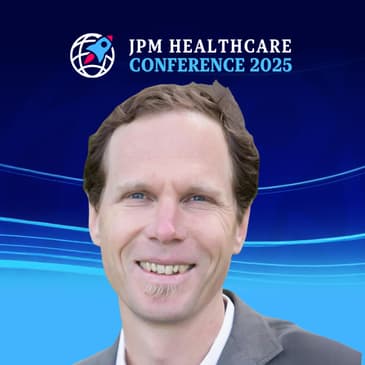
In this episode, Sunjya Schweig, founder and physician at the California Center for Functional Medicine, discusses his work providing lifestyle reversal healthcare to firefighters and first responders. He highlights the unique occupational exposures they face, which contribute to high rates of cancer, suicide, and sudden cardiac death. Sunjya emphasizes that these risks are largely preventable through functional medicine, lifestyle changes, education, and technology while also addressing the daily traumas and major disaster responses first responders experience. He explores the potential of AI to revolutionize healthcare and shares insights from the JPM Health Conference, where innovation and collaboration are driving new approaches to health behavior change.
Tune in and learn how to support those who bravely serve on the front lines!
Resources:
- Connect and follow Sunjya Schweig on LinkedIn.
- Learn more about the California Center for Functional Medicine on their LinkedIn and website.
- Discover more about the Functional Medicine Research and Technology Center on their LinkedIn and explore their website.
- Listen to Sunjya’s previous episode on our podcast here.
Fast Track Your Business Growth:
Outcomes Rocket is a full service marketing agency focused on helping healthcare organizations like yours maximize your impact and accelerate growth. Learn more at outcomesrocket.com
[00:00:01] This podcast is produced by Outcomes Rocket, your healthcare exclusive digital marketing agency. Outcomes Rocket exists to help healthcare organizations like yours to maximize their impact and accelerate growth. Visit outcomesrocket.com or text us at 312-224-9945.
[00:00:29] Hey everyone, welcome back to another episode of the Outcomes Rocket recorded live here in San Francisco. 2024 JP Morgan Health Conference always smokes. The conference, right? We are actually on the tail end of the conference. As you can see, things have simmered down a bit, but there's still some stuff left and Sanjay is actually living in the world.
[00:00:58] He's leading the way here for me to show me kind of some of the things that are left. So anyway, I'm here with Sanjay Schweig. He is the founder and physician at the California Center for Functional Medicine. And I'm so excited to have him back on the podcast after like almost six years. So Sanjay, thanks for coming back on, man. Sanjay, it's a pleasure. Yeah, I was super excited to run into you on Monday night at the Deloitte event.
[00:01:25] And I was walking past me. I was like, so I'm like, oh, shoot, Sanjay. Oh man. So I am so glad you stopped to say hi. And I'm glad we're here. So thanks for joining. My pleasure. Thanks for having me. Yeah. So I'm impressed. Like you had a day full of practice and now you're back for knowledge. Knowledge and connections. Yeah, I love it, man.
[00:01:51] And the thing that stood out to me was so Sanjay and I had a chance to talk yesterday. And, you know, it's cool when somebody does interesting things at work, but then when they do even cooler things or just as interesting things outside of work, you become even more fascinated. And Sanjay, I want to use this opportunity to plug what you're doing with the fire department. Yeah, amazing. Talk to us about that.
[00:02:14] Yeah, absolutely. So, you know, I've been running the California Center for Functional Medicine for 10 years, been in this space in functional medicine for my whole career. So probably 25 to 30 years. And in 2016, we were approached by the Berkeley Fire Department because as many people may or may not know, firefighters have a lot of very unique occupational exposures that puts them at risk. And the top two ways that firefighters die are cancer and suicide. And the top cause of on duty death is sudden cardiac death and heart attack.
[00:02:42] And in my opinion, those are at least if not largely preventable. And so I feel like we have a duty to really our mission is really to protect those who are protecting us. Yeah. You know, so we were approached by the Berkeley Fire Department and they recognized the need and they wanted us. This one gentleman in particular, Amore Langmo, was really like the start of this for us, you know, eight years ago. And, you know, they wanted to help. They wanted help with functional medicine. They wanted help with lifestyle change, with education and with support and with technology.
[00:03:12] And so we just had a really cool opportunity, really fun time building a program that we've delivered to multiple fire departments, delivering basically lifestyle, you know, reversal health care to these folks. And they're so hungry for it. So it's just really a big passion of mine at this point. I love it. And you know what? Yesterday I had a conversation with another leader and she was telling me about. Oh, no, no. Actually, it was a gentleman. He was telling me about the importance.
[00:03:41] So their platform takes care of PTSD and they talk about taking care of first responders. Actually, I need to put you in touch. I need to put you in touch with Joe. Joe's an amazing person in the behavioral health space. But I love what you're doing and it's just scratching the surface. Right. Like, I mean, everything going on in L.A., I mean, they're going to need help after that. Yeah, absolutely. Right. Yeah. So I think. Yeah, absolutely.
[00:04:06] Absolutely. And my heart really goes out to those people who are just like on the front line trying to manage and control these situations which are increasingly out of control. You know, these natural disasters which seem to just get bigger and more devastating every year. And they're doing their best, but they're really fighting against some tremendous forces. I think that, you know, it's becoming clearer and clearer that climate change and the state of our planet is shifting in a way that is increasing the intensity of these events.
[00:04:33] And so, you know, they're still out there trying to put out these fires and trying to save property and save lives. But we all resonate with like, wow, these huge disasters that happened. And what effect does that have on first responders and firefighters? I think it's also really important to understand that that's super important and super devastating. But also like day to day, they're seeing stuff and they're dealing with like, you know, what we call little T trauma or big T trauma. And like every single day, these people are going out and they're showing up on medical calls and they're doing resuscitations and they're trying to save kids.
[00:05:03] And then there's these sort of large medium or larger, you know, disasters or events that occur. And then these incredible stressors that their bodies experience from shift work and circadian rhythm disruption. And so. So it doesn't even have to be the big thing. It's the big thing that we all understand. I think that generates a lot of awareness and generates a lot of funding and grants, etc. Go fund me, etc. But it is really the day to day where I think our opportunity to intervene is and to provide. So I really felt like they need a new fabric of care and a new fabric of support.
[00:05:32] And that's involves all the different lifestyle pieces, whether it's diet, nutritional intake, recognition and command of stress, mindfulness techniques, how to sleep better. You know, mostly off shift because you can't really change a lot of what they're doing on shift. They have to be out there doing call. But there's a huge opportunity to intervene during their normal lives and provide them with education and feedback. It's kind of the same for them as it is for all of us. It's the little changes, right? You know, James Cleary, Atomic Habits is a little stuff that you do regularly. Yeah, it's a good book.
[00:06:01] You know, that really starts to build up. And that's how we're going to really affect change. I think it's the same way within the health care system, too. That's awesome. Great message there. And so, look, we're covering insights and predictions here from JPM. Sunja, what's an insight you've picked up while at the event here the last three days? Yeah. Yeah, I mean, one big insight is just how amazing it is and how people want to help. You know, and people want to help and they're coming at it from so many different angles.
[00:06:31] You know, like talking with Simon Gisby of Deloitte and Jay Batt on that first night that we met. And then last night connecting with Ida Sim of UCSF and the night before that, Fred Dory over at Cooley. And these people are all coming at it from their different silo, if you will. But they just get super excited. And I think that that is the magic of conferences in general, but really of JPMs. Right. Because you have so many different fields and so many different perspectives and so many different, you know, pieces of work that people are doing.
[00:06:58] And yet we all come together and there's this incredible cross pollination that occurs, which is so exciting. Right. It just kind of gets everybody jazzed out. I love it. I love it. Yeah. Well, the thing that I love and appreciate about you, brother, is like you could just do what you do and practice and go home. But you come out here and you're soaking it all in all the way until the last day. So I admire your thirst for knowledge and networking.
[00:07:25] You know, with that, I'm sure you get a lot of inputs around what's happening and what to expect. So what's your perspective on forecasts and, you know, predictions for 2025? Yeah. And also, by the way, I want you to say what you were going to say, but I also want to hear you talk about the importance of functional medicine. Maybe on the tail end of that. Yeah. Well, maybe we can even start with that.
[00:07:48] So, you know, coming out here and coming from my perspective and thinking about functional medicine, thinking about preventive medicine, sort of this end of one, really personalized approach, thinking about health span and longevity and how do we not only prevent and reverse chronic disease, but also how do we help people live the healthiest and longest possible life? And I think that that is just really resonates with everybody. And I see a lot of discussion about that here at the conference. Right. So how do we engage providers on that? How do we engage payers on that?
[00:08:15] What role and it's going to be huge, but what role is technology and AI going to take? Right. And so in terms of predictions, I mean, obviously, we're in this huge AI boom and this huge tech boom. And it's definitely like both very exciting, but overhyped. I don't think we know where it's going yet, but I do think it's going to be totally revolutionary, as I think we all do. We just don't know what that looks like in one, three, five years. Right. So I think there is a huge momentum there.
[00:08:41] I think we're going to see a lot of really more and more compelling tech and AI driven solutions come out that help us with both behavior change, to help us with coaching, that help us with like really curated, again, habit change. Right. Right. I think that's a really powerful tool that AI and tech can help. But I think that we're just scratching the surface in terms of like what that looks like right now. So there's going to be a huge change coming. So we'll see. We'll see where that ends. Exciting.
[00:09:08] You got to stay plugged in people, because the change is coming. The change is here and it's coming. And, you know, I mean, don't miss the boat, you know, just kind of get excited, get engaged, just learn what you can, try things out. It's not going away. It definitely isn't. It definitely isn't. And, man, I'll tell you, I definitely have to include San Francisco trips into my, I think, quarterly planning. Because every time I come down here, it's just invigorating.
[00:09:39] If you guys are tapping into like the forward bidking stuff, like times a hundred. Yeah. Yeah. I mean, again, like, you know, just like last night bouncing around from, you know, events put on by legal offices down to the Nucleate events down at the Exploratorium and then at UCSF events. I mean, just like incredible different perspectives and different age spans. You know, there's a lot of young scientists and young financial people. And there's a lot of people who are doing this forever.
[00:10:08] And they're also kind of iterating and changing. So that's the cross-pollination that I see. And also it's been really inspiring to kind of see how people really want to help and they really want to engage. And they really want to think about each other's pain points and help. So it's been really wonderful. Yeah. And so how long have you been coming to JPM or is this your first one? Or tell me about that. I've been peripherally involved. This is the first time where I've sort of carved out more time. And so like we were saying, you know, it's just been really inspiring.
[00:10:35] And I think next year I'm going to have to even block out more time for my schedule and plan ahead and just kind of really dig in even deeper. So, yeah, hopefully we think you'll be coming back next year. Oh, no, for sure. I am. And so on the back half of this, what we're doing is sharing tips and best practices for the meeting, like making the most out of the meeting. Yeah. I'll tell you what, now that we've reached the end, one of my learnings is give myself more breathing room in between events.
[00:11:03] Because I actually like overbooked myself. Yeah. And I wish I would not have done that. Yeah. But anyway, what advice would you give to folks with us today and kind of how they can make the JPM health experience. Yeah. Good. Amazing. Yeah. So to that point, I would say like, I mean, so like, you know, as you're planning for this, you might get a hold of a spreadsheet or, you know, different ways of the people have of collating the different events or the different possibilities of where you could be.
[00:11:29] And so we all kind of like plan ahead and think, oh, that looks cool. I might want to do that or that is irrelevant. And then I would say do that, but be flexible. You had your spreadsheet? Yeah. Of things? Yeah. Nice. I like that. Be flexible. Did you use the JPM guide? No, I use, somebody sent me a Google doc that was kind of curated even more. And then another air table. I mean, there's different ways of kind of pulling these together, but not an official JPM guide. So it was like already a little bit curated. You know, there's a JPM guide that they put out? Uh huh. Yeah. I haven't reviewed it, but yeah.
[00:11:58] Okay. Got it. Got it. Got it. Well, yeah. I mean, like this has come up a lot. And so I think what we're hearing from Sanja as well is talk to your friends. Talk to your friends. Right. Cause they have lists. Yeah, exactly. And you know, go where you, yeah, they know what to do. Ask them. I mean, that's a big lesson for me too, right? Because if you're hanging out with people that you like and people who, you know, stimulate your brain and your way of thinking, and they're probably, you know, both similar and diverse, they're going to take you to cool stuff.
[00:12:26] And so like plan ahead, you know, think about what you might want to do, but be flexible and go with the flow. Right. Because otherwise you're in the danger also of like FOMO of like, Oh, I'm here, but is this the right place? Is this good enough? Or should I go over there? And you spend time walking and then you end up with nothing. Right. So like, you know, it's like kind of the core there. Don't be driving in the car when the clock strikes 12 on New Year's. Right. Like be somewhere. You're settling, sinking, absorbing in. Yeah. Because you're going to meet interesting people wherever you are.
[00:12:53] Yeah. No, I love that. I love that. Unless that car is like a big van or a limousine full of cool people. Right. Full of cool people. Yeah. Then, then maybe you want to be in that car. No, I love it, Sanjay. Such a great time with you always. I want to thank you for spending time with us. If people want to learn more about you, the work that you do in functional medicine, we're going to find out more.
[00:13:14] Yeah. Thanks. So we're on social. My two main work presence places are clinic, the California Center for Functional Medicine, which is CCFmedmed.com. We also have a nonprofit, 501c3 called the Functional Medicine Research and Technology Center. Oh, and that's where we focus a lot on research, education and innovation for working to prevent and reverse chronic disease. So a lot of our firefighter projects are running through there now. That's really cool. That's really cool.
[00:13:41] So yeah, check us out there. We're on the web. We're on social. I'd love to hear from anybody if they want to talk further. All right. Well, there you have it. Outcomes Rocket Nation. Thanks for tuning in. And Sanjay Swag, the amazing founder and physician at the Center for California Functional Medicine with us. Wrapping up, JPMorgan Health. Thank you all for tuning in. Check out the show notes for ways to get in touch with him. And hey, man, it's such a pleasure to be with you again. Yeah. Thanks for taking the time, Saul.
[00:14:09] Oh my God. It's my pleasure. Take care. This podcast is produced by Outcomes Rocket, your healthcare exclusive digital marketing agency. Outcomes Rocket exists to help healthcare organizations like yours to maximize their impact and accelerate growth.
[00:14:38] Visit outcomesrocket.com or text us at 312-224-9945.