
This podcast is brought to you by Outcomes Rocket, your exclusive healthcare marketing agency. Learn how to accelerate your growth by going to outcomesrocket.com
Psychedelics are transforming mental health care accessibility and treatment.
In this episode, Dr. Dana Lerman shares her journey from being an infectious disease consultant to founding Skylight Psychedelics after facing personal mental health struggles during the COVID pandemic. She discusses her transformative experiences with psychedelic-assisted therapy, including an ayahuasca retreat, and how these therapies catalyzed profound personal changes and a career shift. Dr. Lerman highlights the critical role of psychedelics in enhancing mental health care accessibility, illustrated by her work with insurance companies to provide ketamine-assisted therapy benefits. She emphasizes the potential of psychedelics, like ketamine, in treating conditions such as suicidality, advocating for the de-stigmatization and respectful use of these medicines.
Tune in to learn how innovative approaches in psychedelic therapy are reshaping the landscape of mental health care!
Resources:
- Connect with and follow Dana Lerman on LinkedIn.
- Follow Skylight Psychedelics on LinkedIn and explore their website.
Fast Track Your Business Growth:
Outcomes Rocket is a full service marketing agency focused on helping healthcare organizations like yours maximize your impact and accelerate growth. Learn more at outcomesrocket.com
[00:00:01] This podcast is produced by Outcomes Rocket, your healthcare exclusive digital marketing agency. Outcomes Rocket exists to help healthcare organizations like yours to maximize their impact and accelerate growth. Visit outcomesrocket.com or text us at 312-224-9945.
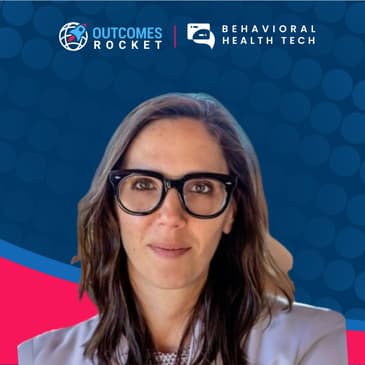
[00:00:33] Hey everyone, welcome back to another episode of the Expanding Access Podcast recorded live here at the Behavioral Health Tech Conference in Arizona. Today I have the privilege of hosting the amazing Dr. Dana Lerman. She is the Founder and Medical Director at Skylight Psychedelics. Welcome to the podcast. Thank you so much, Saul. Pleasure to have you here, Dana. Now, we're really excited to have you on. Before we start, tell us a little bit about what you're doing.
[00:01:02] Tell us a little bit about why you're at the conference. Sure thing. I'm at the conference because as a co-founder of Skylight Psychedelics, I am working with a company called Enthea. And Enthea is a third-party administrator. So they're an insurance company that helps employers offer mental health benefits, including ketamine-assisted therapy, primarily ketamine-assisted therapy to their employees. And I have a collaboration with Enthea, and they asked me to come and join them on a panel. So that's why I'm here. Nice.
[00:01:32] And then I just get the added perk of walking around the exhibit hall and looking at all the amazing, you know, technological advances in behavioral therapy and it's pretty great. I love it. Well, what was the panel about? It's really about mental health access and affordability, accessibility, like I said, and really introducing Enthea and yeah, really focusing on access. I love it. Well, that is the name of this podcast, Expanding Access.
[00:02:00] And a big part of Expanding Access is really normalizing a lot of what happens in behavioral health, mental health. Talk to us about you and your experience. Yeah. So my experience really, I used to practice infectious disease. So as an infectious disease consultant for well over a decade. And then I started my own COVID consulting practice during the pandemic and was doing a lot of business risk mitigation and testing all over the country.
[00:02:29] And I got a medical license in over 40 states. And in the middle of the pandemic, I really had a lot of burnout and my own mental health struggles. And then I ended up enrolling in a psychedelic assisted therapy training program because I wanted something different. I didn't know what, but I wanted something different. And the beginning of the training program, one of the lecturers came on. It was actually Rick Doblin. And he came on and said, you know, if you want to work with these medicines or learn about these medicines, you really have to have your own personal experience.
[00:02:56] So I ended up going down to Costa Rica to an ayahuasca retreat center and spent a week there drinking ayahuasca for several nights in a row. And ever since then, my whole life and career trajectory has changed. Has changed. Yeah. So I don't practice infectious disease anymore. All right. And are you happier for it? Yeah. Yeah. It's overall incredibly different. Awesome. Well, that's amazing.
[00:03:25] Congrats on the evolution of your career and just your willingness to do what's best for you. That's what a lot of folks struggle with. Let's talk about psychedelics. How have psychedelics helped change your life's trajectory? Psychedelics have changed every single part of my life. I mean, I started working with psychedelics. I wouldn't call it working with. I was using them recreationally, LSD when I was 16 years old. Yeah.
[00:03:50] And I really feel like those initial experiences in my life helped me to kind of be more of an outside of the box thinker. Yeah. And then I had a huge hiatus where I didn't have any substances, honestly, until I was in my 40s as a mother of three position. And so once I started working with ayahuasca, it then opened up my mind to other psychedelic medicines. And in Denver, many of them are decriminalized and really changed my life as a parent.
[00:04:18] I'm more connected to my children. I can hear them and listen to them. I mean, I used to make my kids go to all these different activities and they didn't want to do it. And then finally, I just started listening to them. And I don't force my children to do anything. I don't do time out. I like hug my kids when they're struggling. It's like, so it helped me in my parenting. It helped me to be more open and communicative in my marriage and in my work, like in my life.
[00:04:42] And I don't, you know, as an infectious disease doc going into patients rooms every single day, that is, it's trauma after trauma after trauma that you're witnessing. And no one's really talking about that. And the mental health space and community is just, it's a much more open kind of loving, sweet community for the most part. There's still a lot of stuff going on for the most part.
[00:05:06] And it's like, I felt like as an infectious disease provider, I was dealing with wounds and physical wounds, but I like, there was so much more that was underneath it. Like you can't even go near as an infectious disease doc, cause you don't have any tools and psychedelics are not tools. Most of them are, you know, plant medicine and essence of a plant, but they allow people to really go inside of themselves and do work on themselves that it's almost impossible to otherwise get there. Almost.
[00:05:34] So it's changed every facet of my whole life. That's great. And so there's healing potential to psychedelics. Let's talk about that. And then let's talk about ketamies. Yeah. I think the healing potential for psychedelics is endless. I kind of look at us like we're all these refrigerators. And sometimes for most of us, there's old stuff in the back of the refrigerator that needs to be cleaned out. Yeah.
[00:06:00] And I feel like psychedelics help you to open your refrigerator, take a look in the back and just start kind of one by one addressing the things that make your fridge stink. Yeah. Ketamine in particular, ketamine, in my opinion, and I think a lot of people share this opinion, it is a miracle medicine and specifically a miracle medicine for suicidality.
[00:06:21] And part of the reason why I went into this space is that my best friend in medical school, when we left medical school, we were both practicing. He was struggling with severe mental health issues, including suicidality to a point where he wrote me a suicide letter. And he was on all of these SSRIs and all of these other medications. So we under the care of his doctor, we got him to slowly taper off, treated him with ketamine.
[00:06:47] And after the fourth dose of ketamine, he hasn't had any suicidal ideation again. And that was over three years ago. So and that's one anecdotal story. But there's data and it really works for people. So, well, it's certainly important to consider all options. And it's great to have this. I mean, OK, you said it's not a tool. Yeah, I mean, I really talking when I say not a tool, I really refer more to the plants. Got it. Because that for us, there's an essence and a spirit about a plant.
[00:07:16] It's not just like a drug that we're just going to use. Got it. OK, no, I love that. I love that. And so the potential for these tools, these plants is enormous. And I think it's important that we talk about it in Denver. It's decriminalized. I feel like more states are starting to open up their minds to it, like California and others. And so a big part of what we do here through these conversations is share with our viewers and listeners.
[00:07:44] So as we close our conversation today, what closing thought would you leave them with as they consider expanding access to mental and behavioral health? Sure. I think it's all our duty as human beings on this earth to firstly protect the indigenous roots of these medicines and honor the indigenous roots of these medicines. I also think it's critical for us to all be a part of stopping the stigma.
[00:08:10] And that includes teaching our children about psychedelics and plant medicines, that these are sacred medicines that were miscategorized as drugs and they have endless healing potential. They need to be respected and you need to understand what you're doing. But when you engage with them, just like any medication, they need guidance. Right. I think it's our job, especially as parents and teachers to educate our children. I love it. Yeah.
[00:08:36] And so I think the opportunity is big for all of us. I really appreciate Dr. Dana Lerman being with us today. And if people want to learn more about you and the work that you do, where can they reach out? Yeah, sure. SkylightPsychedelics.com. We prescribe ketamine to be used in a licensed and trained therapist's office. And we provide the training and then we do it affordably. It's all online self-paced. And we have training courses in various different psychedelic medicines.
[00:09:05] Amazing. There you have it, folks. Please reach out in the show notes. You'll find ways to get in touch with Dr. Dana Lerman. Links to get in touch with her. The short notes on today's episode. Thank you all for tuning in. And Dana, thanks for being with us. Thank you. Thanks so much.
[00:09:35] This podcast is produced by Outcomes Rocket, your healthcare exclusive digital marketing agency. Outcomes Rocket exists to help healthcare organizations like yours to maximize their impact and accelerate growth. Visit OutcomesRocket.com or text us at 312-224-9945. Outcomes Rocket, your healthcare慢慢, your healthcare providers and your healthcare producers, Outcomes Rocket, your healthcare providers, and yourpercent marketing agency. With Oα