
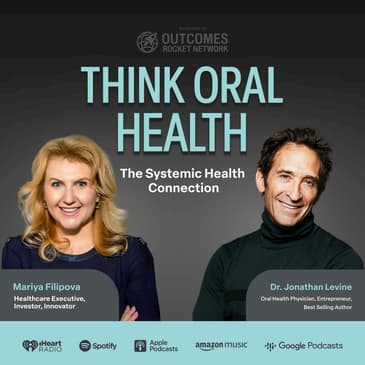
Back by popular demand, this fan-favorite episode is one you won’t want to miss! Whether it's your first time tuning in or you're rMariya Filipovaclassic, dive in now and enjoy one of our most listened-to episodes!
Connecting the dots across all healthcare silos is vital to achieving overall health integration. Oral, public, cardiovascular, brain, and overall health can be treated through whole-person care and it is becoming a reality in some parts of the world.
In this episode of the Think Oral Health Podcast, Mariya Filipova and Jonathan Levine host Daniel Kraft, founder and chair of NextMed Health, a unique interdisciplinary community dedicated to catalyzing and accelerating the arrival of a new, human-centric, technology-enabled health age. They discuss the development of scalable solutions in oral and overall health and how they can help get us from sick care to health care if worked in a more interdisciplinary way.
By reaching across the aisle, connecting dots, and thinking outside the silo, we’ll be able to achieve greater health outcomes, reduced costs, and greater life expectancy. During the podcast, we also cover the application of technologies like AR/VR, smartphone cameras, and other platforms that can elevate overall health if done so in an integrated way.
Tune in to get inspiration and more ideas on how you can make healthcare more integrated.
Resources:
- Connect with and follow Daniel Kraft on LinkedIn.
- Follow NextMed on LinkedIn.
- Visit the NextMed Website!
- Follow Digital.Health on LinkedIn.
- Discover the Digital.Health Website!
- Explore Daniel’s Website!
Think Oral Health is coming to HLTH. We are partnering with the Health Podcast Network and HLTH to bring you breaking news and updates from one of the largest health and innovation communities. Join us! Use this link to register: https://healthpodcastnetwork.com/hlth-registration and get a special discount on us. (Saves $250) Leave a comment to receive the discount code.
[00:00:04] [SPEAKER_01]: Welcome to Think Oral, where we connect you and connected between oral and physical health.
[00:00:10] [SPEAKER_02]: I'm your host, Dr. Jonathan Levine, and I'm your host, Maria Filipova.
[00:00:15] [SPEAKER_02]: Let's get at it.
[00:00:23] [SPEAKER_00]: Hi everyone, Maria Filipova here, and I am very excited to be joined by Jonathan Levine.
[00:00:29] [SPEAKER_00]: And we have a very special episode today for you.
[00:00:32] [SPEAKER_00]: This episode is very special because of our guest, a close friend of mine, but also because
[00:00:37] [SPEAKER_00]: of the topic.
[00:00:38] [SPEAKER_00]: We are talking about innovation today, innovation at scale, innovation in health care and innovation
[00:00:46] [SPEAKER_00]: in oral health.
[00:00:48] [SPEAKER_00]: Fun fact, do you know when was the last large-scale innovation that was adopted in oral health?
[00:00:58] [SPEAKER_00]: My personal answer to that question is that it has been 77 years since the last transformative
[00:01:05] [SPEAKER_00]: innovation in oral health care.
[00:01:08] [SPEAKER_00]: In 1945, fluoride was discovered and added to the drinking water in Michigan.
[00:01:15] [SPEAKER_00]: Since then it has had a profound impact on a large set of patients and communities irrespective
[00:01:21] [SPEAKER_00]: of their zip code, the social status education or medical background.
[00:01:26] [SPEAKER_03]: I love that analogy and it's a really perfect one because it had such a huge impact
[00:01:31] [SPEAKER_03]: on the decay rates for the children and in fact it was a 65 percent decrease, which was
[00:01:37] [SPEAKER_03]: quite incredible keeping children in schools, keeping them out of pain and a huge impact.
[00:01:42] [SPEAKER_03]: But it was the democratization of the impact.
[00:01:46] [SPEAKER_03]: It wasn't just for the few, the two percenters of the people who had access to super
[00:01:51] [SPEAKER_03]: high-end technology.
[00:01:52] [SPEAKER_03]: This was something that got into the drinking water and had a huge profound effect in
[00:01:57] [SPEAKER_03]: the United States.
[00:01:58] [SPEAKER_03]: And this can be really a very important question to ask our innovative colleagues what they're
[00:02:05] [SPEAKER_03]: building, can it flow to the greater mass of the people who do have the access to care,
[00:02:13] [SPEAKER_03]: but also for people who there is a high level of inequality and don't have access to care?
[00:02:19] [SPEAKER_00]: That's right.
[00:02:20] [SPEAKER_00]: I love this example as well because it doesn't require high tech.
[00:02:24] [SPEAKER_00]: It's not quantum computing and AI and neural nets solving a problem.
[00:02:32] [SPEAKER_00]: It's policy, clinical science coming together and doing something very foundational yet highly
[00:02:40] [SPEAKER_00]: impactful.
[00:02:41] [SPEAKER_00]: And that really sets the tone and the ethos for the innovation that we want to uncover,
[00:02:47] [SPEAKER_00]: validate and scale through our conversations.
[00:02:51] [SPEAKER_00]: That's truly the bar.
[00:02:52] [SPEAKER_00]: How many people could we impact with the simplest, most elegant solution to improve,
[00:02:59] [SPEAKER_00]: meaningfully improve access to care, improve equity and quality of care as well?
[00:03:06] [SPEAKER_03]: That's exactly right.
[00:03:07] [SPEAKER_03]: The word equality is so critical there because people who don't have access to care think
[00:03:13] [SPEAKER_03]: that walking around in pain is normal and losing teeth and extracting teeth is something
[00:03:20] [SPEAKER_03]: normal. And it's not until that people can reach out, foundations reach out and start
[00:03:27] [SPEAKER_03]: developing a level playing field to move these people more into an area where they
[00:03:32] [SPEAKER_03]: do have access to care.
[00:03:34] [SPEAKER_03]: Do you see this incredible change, this transformation change for these people?
[00:03:39] [SPEAKER_00]: And with that in mind, I want to introduce our guests for today.
[00:03:44] [SPEAKER_00]: I'm very excited that we are joined by the Stanford and Harvard trained physician
[00:03:50] [SPEAKER_00]: scientist, innovator and investor with over 25 years of clinical research,
[00:03:57] [SPEAKER_00]: biotech and entrepreneurial experience.
[00:04:00] [SPEAKER_00]: Dr. Daniel Kraft is joining us today from the West Coast.
[00:04:05] [SPEAKER_00]: He serves as the chair of medicine and singularity university.
[00:04:09] [SPEAKER_00]: He's also founder and chair of exponential medicine.
[00:04:13] [SPEAKER_00]: Now next med will speak to him about that and will speak to him about his
[00:04:18] [SPEAKER_00]: current entrepreneurial venture around digitizing medical solutions or digital
[00:04:26] [SPEAKER_00]: tools, digital therapeutics for all kinds of clinical applications.
[00:04:31] [SPEAKER_00]: And we'll speak to him specifically about how the lessons learned from
[00:04:36] [SPEAKER_00]: adopting innovation in medical community we could apply on the dental side.
[00:04:41] [SPEAKER_00]: Daniel, welcome to the podcast.
[00:04:43] [SPEAKER_00]: We're very excited to have you.
[00:04:45] [SPEAKER_00]: We are really looking forward to having a very pragmatic and real talk, if you
[00:04:51] [SPEAKER_00]: will, about what we could do to identify impactful and scalable
[00:04:55] [SPEAKER_00]: solutions in oral health.
[00:04:58] [SPEAKER_00]: The reality is that over a third of the US population sees a single provider,
[00:05:03] [SPEAKER_00]: one provider, either a dentist or a physician, but not both.
[00:05:08] [SPEAKER_00]: And so if we have an opportunity to touch a patient once in a year, then to me,
[00:05:15] [SPEAKER_00]: it makes sense to make the most out of that visit and that touch point.
[00:05:18] [SPEAKER_00]: And I share this openly that for me, the future of integrated health is when
[00:05:23] [SPEAKER_00]: your primary care physician talks to you about period on all health
[00:05:27] [SPEAKER_00]: and your oral health and your dentist talks to you about A1C levels
[00:05:32] [SPEAKER_00]: and managing your diabetes.
[00:05:35] [SPEAKER_00]: So without framing in mind, Daniel, what do you see as the most promising
[00:05:40] [SPEAKER_00]: opportunities for that future?
[00:05:42] [SPEAKER_00]: And do you think this is a reality to be a soon to be a reality?
[00:05:46] [SPEAKER_00]: Or do you really think this is more of an aspiration?
[00:05:49] [SPEAKER_04]: The future is coming faster than we think, hopefully, and including
[00:05:53] [SPEAKER_04]: it, oral care and health care and public health.
[00:05:55] [SPEAKER_04]: It's more about getting to a world of integrated health, right?
[00:05:59] [SPEAKER_04]: Where we're not so siloed in body parts and where we connect our oral
[00:06:04] [SPEAKER_04]: hygiene to our public health and our cardiovascular health and our brain health.
[00:06:09] [SPEAKER_04]: I don't think it's very far off in some parts of the world or much
[00:06:12] [SPEAKER_04]: more integrated in some systems even in the US.
[00:06:14] [SPEAKER_04]: So I think it's a real time where we have the opportunity now
[00:06:17] [SPEAKER_04]: to not think in such traditional silos, but recognize that, yes,
[00:06:21] [SPEAKER_04]: while you're in a dentist chair, you could have your blood pressure
[00:06:23] [SPEAKER_04]: ejector.
[00:06:24] [SPEAKER_04]: You could go in A1C and while you're at the primary care office,
[00:06:27] [SPEAKER_04]: they could be doing some elements of oral care that tied to other health
[00:06:31] [SPEAKER_04]: systems in the body beyond.
[00:06:33] [SPEAKER_04]: So I guess it's a time to connect the dots in technology and new
[00:06:36] [SPEAKER_04]: mindsets as we enter the era of 2023.
[00:06:40] [SPEAKER_00]: But it's easier said than done.
[00:06:41] [SPEAKER_00]: And technology is unfortunately not the limiting factor here, right?
[00:06:46] [SPEAKER_00]: So what are some of the real barriers to that future to making
[00:06:49] [SPEAKER_00]: that happen? And we've got, we're privileged.
[00:06:52] [SPEAKER_00]: We have a dentist.
[00:06:53] [SPEAKER_00]: We have a physician here on the podcast today.
[00:06:56] [SPEAKER_00]: So let's put some of these barriers out on the table.
[00:06:59] [SPEAKER_04]: Well, number one, just to be clear, I did get my annual cleaning done
[00:07:03] [SPEAKER_04]: about three weeks ago.
[00:07:04] [SPEAKER_00]: Maybe though, one step at a time.
[00:07:07] [SPEAKER_00]: That's right.
[00:07:07] [SPEAKER_04]: And the oral hygienist was awesome.
[00:07:09] [SPEAKER_04]: And of course she'd guilted it in me a little bit about not flossing very often.
[00:07:12] [SPEAKER_04]: So I just want to put that on the table.
[00:07:13] [SPEAKER_04]: But I did also get now a new connected toothbrush with an app that gamifies it.
[00:07:18] [SPEAKER_04]: So I'm doing a much better job at my brushing and my flossing.
[00:07:20] [SPEAKER_04]: Just put that out there.
[00:07:22] [SPEAKER_04]: So some of the barriers are behavioral.
[00:07:24] [SPEAKER_04]: Just highways remind my kids to brush your teeth in the morning and the afternoon.
[00:07:27] [SPEAKER_04]: I was not always the best brush.
[00:07:28] [SPEAKER_04]: And in fact, some of the barriers are again, are how we get integrated
[00:07:32] [SPEAKER_04]: thinking about oral care and our general health.
[00:07:35] [SPEAKER_04]: And I think we're entering an era now when folks are eating into this
[00:07:38] [SPEAKER_04]: era of more self-care.
[00:07:39] [SPEAKER_04]: And I just healthcare with a more engaged with their own health.
[00:07:42] [SPEAKER_04]: They can see some of their data, whether it's from their wearables
[00:07:45] [SPEAKER_04]: and other bowls giving the inside of their sleep and their activity
[00:07:48] [SPEAKER_04]: and their cardiovascular health and their mental health
[00:07:51] [SPEAKER_04]: and potentially tie that to other elements.
[00:07:53] [SPEAKER_04]: So some of the barriers are behavioral, some of them are societal,
[00:07:56] [SPEAKER_04]: but the big one, of course, in clinical health care are the culture of care.
[00:07:59] [SPEAKER_04]: It might be the culture of a clinician of any sort of physician, nurse,
[00:08:02] [SPEAKER_04]: dentist, pharmacist, how they see their workflow and their incentive models.
[00:08:08] [SPEAKER_04]: You can have the best telemedical visit or tell a dental visit
[00:08:12] [SPEAKER_04]: with a paid for the incentives are aligned.
[00:08:15] [SPEAKER_04]: It may not happen.
[00:08:16] [SPEAKER_04]: So a lot of it still drives from the incentive elements.
[00:08:19] [SPEAKER_04]: Now we get paid for care.
[00:08:20] [SPEAKER_04]: It's still a bit nutty that I have to get a separate health insurance plan
[00:08:23] [SPEAKER_04]: and pick a dental plan that's still optional, right?
[00:08:26] [SPEAKER_04]: That should be actually integrated together.
[00:08:28] [SPEAKER_04]: And of course, some of it is not just having the technology
[00:08:31] [SPEAKER_04]: but connecting the dots, whether it's the data from my connected toothbrush
[00:08:35] [SPEAKER_04]: or what does my dentist do with my oral microbiome if they have access to that?
[00:08:39] [SPEAKER_04]: Or how could the 3D printing in the clinic or AI
[00:08:43] [SPEAKER_04]: to better read imaging exams that would improve their efficiencies
[00:08:47] [SPEAKER_04]: but also improve their time face to face with their patients?
[00:08:50] [SPEAKER_04]: So lots of opportunities.
[00:08:52] [SPEAKER_04]: And again, a lot of it, as you mentioned, isn't about the technology.
[00:08:54] [SPEAKER_03]: That's right.
[00:08:55] [SPEAKER_03]: If you look at the facts, one or two adult Americans have periodological disease.
[00:08:59] [SPEAKER_03]: That's chronic inflammatory disease over the age of 65, 70 percent
[00:09:03] [SPEAKER_03]: chronic inflammatory disease.
[00:09:05] [SPEAKER_03]: And there's 58 systemic inflammatory disease
[00:09:07] [SPEAKER_03]: that now connects to inflammation, chronic inflammation in the mouth.
[00:09:12] [SPEAKER_03]: So when we think about these data points deeply
[00:09:15] [SPEAKER_03]: and what we think about in dentistry is that the hygiene room
[00:09:20] [SPEAKER_03]: because of some new innovation that's living in dentistry
[00:09:23] [SPEAKER_03]: becomes the innovation center connecting the dots of dentistry and medicine
[00:09:27] [SPEAKER_03]: through sensors, through genomics.
[00:09:30] [SPEAKER_03]: There's some very exciting young companies coming up
[00:09:33] [SPEAKER_03]: that are using all of the health care innovation
[00:09:36] [SPEAKER_03]: research and science and all of the great
[00:09:39] [SPEAKER_03]: genomics that's happening with our understanding and moving it into dentistry.
[00:09:44] [SPEAKER_03]: And because we know how long adoption takes in medicine, right?
[00:09:48] [SPEAKER_03]: Over 17 years, well, it's worse than dentistry
[00:09:49] [SPEAKER_03]: because it is still a fragmented industry.
[00:09:53] [SPEAKER_03]: The DSO is a coming organizing dentistry,
[00:09:55] [SPEAKER_03]: but they're still only about 18 to 20 percent, which is pretty good growth.
[00:10:00] [SPEAKER_03]: But still we're dealing with fragmented dental business models
[00:10:04] [SPEAKER_03]: of the dentist being the leader.
[00:10:06] [SPEAKER_03]: And it's difficult for them to get out of their same old way
[00:10:11] [SPEAKER_03]: and adopting these new innovations, not dissimilar to the cardiologists
[00:10:16] [SPEAKER_03]: in the United States that are still using the Framingham study
[00:10:18] [SPEAKER_03]: as a basis for their knowledge of cardiology.
[00:10:21] [SPEAKER_03]: Right? So it's these biases that everybody has.
[00:10:25] [SPEAKER_03]: We have to break down those walls between dentistry and medicine
[00:10:28] [SPEAKER_03]: and start really shaking it up a little bit.
[00:10:30] [SPEAKER_03]: And people like yourself, Daniel, please comment on that
[00:10:33] [SPEAKER_03]: because that's exactly what you folks are doing there
[00:10:35] [SPEAKER_03]: at X-Ban actual.
[00:10:36] [SPEAKER_04]: X-Ban actual is a known X-Ban health.
[00:10:38] [SPEAKER_04]: It's a bit about reshaping our perspective
[00:10:40] [SPEAKER_04]: then looking at when the X-Ban actual data
[00:10:42] [SPEAKER_04]: might be data back your mouth and your microbiome
[00:10:45] [SPEAKER_04]: to the size of your teeth to voices of biomarker.
[00:10:48] [SPEAKER_04]: But as you mentioned, the Framingham trial is a great example.
[00:10:50] [SPEAKER_04]: It was still not going trial,
[00:10:52] [SPEAKER_04]: but based on mostly a Caucasian population in Western Massachusetts,
[00:10:55] [SPEAKER_04]: I think most of them were nurses at the start.
[00:10:56] [SPEAKER_04]: That's not representative of our population in the US around the world.
[00:11:01] [SPEAKER_04]: The National Institute of Health and others
[00:11:03] [SPEAKER_04]: have now run this are ongoing with this all of us trial,
[00:11:06] [SPEAKER_04]: which you can still join as a data donor.
[00:11:08] [SPEAKER_04]: I that will help drive the insights
[00:11:10] [SPEAKER_04]: build different precision personalized guidelines for you
[00:11:12] [SPEAKER_04]: rather than the person who grew up in framing
[00:11:15] [SPEAKER_04]: certain social and physical construct.
[00:11:17] [SPEAKER_04]: I think going back to the oral health care space,
[00:11:20] [SPEAKER_04]: not all mouse and risk factors are the same.
[00:11:23] [SPEAKER_04]: I'm lucky to have maybe had one carry in my entire life.
[00:11:26] [SPEAKER_04]: Might have been help from my genetics with fact that my mom
[00:11:28] [SPEAKER_04]: tells me she took a fluoride tablet
[00:11:31] [SPEAKER_04]: when I was in utero in London.
[00:11:32] [SPEAKER_04]: So many factors involved and the rest of the medicine and health care.
[00:11:35] [SPEAKER_04]: It shouldn't be one science fits all in terms of prevention,
[00:11:38] [SPEAKER_04]: diagnostics and therapy.
[00:11:39] [SPEAKER_00]: Yeah, we like that example about a fluoride in the drinking water a lot
[00:11:43] [SPEAKER_00]: because it's a great way to show that you don't need tech
[00:11:46] [SPEAKER_00]: innovation to impact the lives of many.
[00:11:49] [SPEAKER_03]: But also the concept of access to care
[00:11:52] [SPEAKER_03]: that we're dancing around here
[00:11:54] [SPEAKER_03]: because fluoride did have this huge impact on the general population.
[00:11:58] [SPEAKER_03]: And I think some of the challenge that we have is how do we take
[00:12:03] [SPEAKER_03]: some of this new innovation, new science, new research,
[00:12:05] [SPEAKER_03]: whether it's genomics, whether it's airway and understanding
[00:12:10] [SPEAKER_03]: deep sleep and sleep and the impact on our systemic health?
[00:12:14] [SPEAKER_03]: How do we democratize that?
[00:12:15] [SPEAKER_03]: How do we bring that out?
[00:12:16] [SPEAKER_03]: And sleep is an airways is huge issue.
[00:12:19] [SPEAKER_03]: Not issue, but a fantastic diagnostics that the dentist
[00:12:23] [SPEAKER_03]: and the physicians have to work closely together
[00:12:26] [SPEAKER_03]: to get the proper solutions past some of the new
[00:12:30] [SPEAKER_03]: the existing solutions that aren't so wonderful
[00:12:32] [SPEAKER_03]: being driven by insurance companies.
[00:12:34] [SPEAKER_03]: These are the type of things that by working together
[00:12:36] [SPEAKER_03]: we can democratize what we do in health care
[00:12:38] [SPEAKER_03]: because of the opportunity for people who go to the dentist
[00:12:42] [SPEAKER_03]: more than they go to physicians.
[00:12:44] [SPEAKER_03]: So the hygiene room can become an innovation center
[00:12:47] [SPEAKER_03]: that connects information and data and real usable data
[00:12:52] [SPEAKER_03]: that's being shown by sensors and trackers in going up to areas
[00:12:56] [SPEAKER_03]: where we can communicate to the physicians and back to the dentist.
[00:13:00] [SPEAKER_00]: What do you think, Daniel?
[00:13:01] [SPEAKER_04]: When I do data is great when this data age
[00:13:04] [SPEAKER_04]: and data is in new oil, etc.
[00:13:06] [SPEAKER_04]: But it's not about more data.
[00:13:08] [SPEAKER_04]: In fact, many clinicians don't want the data or don't want to log
[00:13:10] [SPEAKER_04]: into your or ring or Fitbit or 23 me data or EMR of different siloed
[00:13:16] [SPEAKER_04]: segment. I think an opportunity for there to the dentist chair,
[00:13:19] [SPEAKER_04]: which some people try to avoid, is that could become a bit of a check
[00:13:24] [SPEAKER_04]: in for all sorts of health.
[00:13:25] [SPEAKER_04]: You may have heard in the African American population,
[00:13:27] [SPEAKER_04]: the barbershop study where they use the barbershop
[00:13:30] [SPEAKER_04]: where everyone goes every month or so for their cut as a place
[00:13:33] [SPEAKER_04]: to screen African American men for hypertension and identify
[00:13:36] [SPEAKER_04]: folks early and then be preventative of heart attacks, strokes,
[00:13:39] [SPEAKER_04]: renal disease.
[00:13:40] [SPEAKER_04]: Why not use the dental chairs?
[00:13:41] [SPEAKER_04]: A similar check in now that you can put on maybe a fancy
[00:13:44] [SPEAKER_04]: version of a wearable that can do a screen of everything
[00:13:47] [SPEAKER_04]: from blood pressure to a rhythm as maybe other point of care.
[00:13:52] [SPEAKER_04]: Lab elements could be done there, whether it's even globally
[00:13:54] [SPEAKER_04]: when you see your cholesterol.
[00:13:56] [SPEAKER_04]: In part of that, maybe we're going to move to this more
[00:13:59] [SPEAKER_04]: things called omnichannel care, right?
[00:14:01] [SPEAKER_04]: Where your care is integrated with your pharmacist and your
[00:14:04] [SPEAKER_04]: payer and your dentist and your primary care, your specialist.
[00:14:07] [SPEAKER_04]: So that the data can flow and be made actionable.
[00:14:11] [SPEAKER_04]: And this idea of crowdsourcing that knowledge, kind of building
[00:14:14] [SPEAKER_04]: I always call it the Google Maps or Ways at Health,
[00:14:16] [SPEAKER_04]: where the information applied to you or your patient is really
[00:14:20] [SPEAKER_04]: representative of where they are on their healthcare journey
[00:14:23] [SPEAKER_04]: and not just built on the one size fits all guidelines of
[00:14:26] [SPEAKER_04]: framing him or others.
[00:14:28] [SPEAKER_03]: So our listeners, that is such an important point.
[00:14:31] [SPEAKER_03]: And we got to where we needed to get to, which is actionable
[00:14:34] [SPEAKER_03]: data that the industries in its really transdisciplinary
[00:14:39] [SPEAKER_03]: is physician and stead is working together to improve
[00:14:42] [SPEAKER_03]: the lives of people, whether it's the microbiome of the
[00:14:45] [SPEAKER_03]: mouth that's causing inflammation and systemic
[00:14:48] [SPEAKER_03]: and flamm diseases, whether it's the ability to get into
[00:14:51] [SPEAKER_03]: deep sleep and airway and understanding those conversations
[00:14:53] [SPEAKER_03]: that all of the new research that's emerging.
[00:14:56] [SPEAKER_03]: So that is a great point.
[00:14:58] [SPEAKER_04]: One point that connects the dots there.
[00:15:00] [SPEAKER_04]: You mentioned the oral microbiome.
[00:15:01] [SPEAKER_04]: I tried at the Bristol platform and my oral microbiome
[00:15:04] [SPEAKER_04]: wasn't great.
[00:15:04] [SPEAKER_04]: I've done it once.
[00:15:05] [SPEAKER_04]: I now do see that I've got my teeth cleaned in my
[00:15:07] [SPEAKER_04]: better oral hygiene with that improved.
[00:15:10] [SPEAKER_04]: But to make sure folks are aware, it's also a health
[00:15:12] [SPEAKER_04]: care education that when you have information in your
[00:15:14] [SPEAKER_04]: mouth and gingival disease, et cetera, it gives you a
[00:15:17] [SPEAKER_04]: significantly higher risk for cardiovascular disease or
[00:15:19] [SPEAKER_04]: now the connection between was it P.
[00:15:21] [SPEAKER_04]: Ginger Valley and the neurologic issues.
[00:15:24] [SPEAKER_04]: And maybe there's even opportunities to making this
[00:15:26] [SPEAKER_04]: off reboot the mouth microbiome.
[00:15:28] [SPEAKER_04]: We've had now in the era of fecal transplants for
[00:15:30] [SPEAKER_04]: things like C.
[00:15:31] [SPEAKER_04]: difficile infections or potentially rebooting the
[00:15:33] [SPEAKER_04]: gut microbiome first things like C.
[00:15:35] [SPEAKER_04]: diff and obesity.
[00:15:36] [SPEAKER_04]: But could there be an oral microbiome preventative
[00:15:40] [SPEAKER_04]: or therapeutic platform too?
[00:15:41] [SPEAKER_04]: And then back to the early proviso, how do you
[00:15:44] [SPEAKER_04]: align the incentives?
[00:15:45] [SPEAKER_04]: Because most of medical care and dental care is driven
[00:15:47] [SPEAKER_04]: by fee for service and doing more to the
[00:15:50] [SPEAKER_04]: interactions or procedures and not being paid to
[00:15:51] [SPEAKER_04]: keep people proactively healthy.
[00:15:53] [SPEAKER_03]: That's exactly right.
[00:15:54] [SPEAKER_03]: But the science and the research now that we
[00:15:56] [SPEAKER_03]: understand that the mouth actually seeds the gut
[00:16:00] [SPEAKER_03]: and those microbiome, the organisms aren't killed
[00:16:04] [SPEAKER_03]: it in the stomach and one out of three hit the
[00:16:06] [SPEAKER_03]: gut and there's a connection between the inflammation
[00:16:08] [SPEAKER_03]: in the mouth and leaky gut.
[00:16:10] [SPEAKER_03]: Finishing up a book on oral systemic medicine and
[00:16:12] [SPEAKER_03]: it's really this leaky mouth that imposes on these
[00:16:16] [SPEAKER_03]: other areas started with 20 years ago with Moisey
[00:16:19] [SPEAKER_03]: Devereaux studies on the crowded artery and
[00:16:21] [SPEAKER_03]: P.
[00:16:21] [SPEAKER_03]: gingivalis to your point.
[00:16:23] [SPEAKER_03]: But by work, by working together and I thought
[00:16:26] [SPEAKER_03]: you made it makes such a great point as basic
[00:16:28] [SPEAKER_03]: as A1C for diabetes and hypertension and
[00:16:31] [SPEAKER_03]: blood pressure, the dental office in the
[00:16:34] [SPEAKER_03]: hygiene room starts connecting.
[00:16:36] [SPEAKER_03]: And then it's just technology that allows
[00:16:38] [SPEAKER_03]: these connected this connected information to
[00:16:41] [SPEAKER_03]: be actionable to your point.
[00:16:43] [SPEAKER_03]: If we started there and we can get more
[00:16:46] [SPEAKER_03]: preventative and can you just talk a little
[00:16:48] [SPEAKER_03]: bit about the wellness model versus this
[00:16:50] [SPEAKER_03]: reactive model of medicine that puts our
[00:16:54] [SPEAKER_03]: health care at almost 20 percent of our GDP.
[00:16:57] [SPEAKER_03]: Is there a way that we can be more efficient
[00:16:59] [SPEAKER_03]: as a business model by working?
[00:17:02] [SPEAKER_04]: I think as they all know, our trajectory
[00:17:04] [SPEAKER_04]: of healthcare spending in the US and
[00:17:05] [SPEAKER_04]: most Western countries is getting unsustainable.
[00:17:07] [SPEAKER_04]: We're at 18, 19 plus percent of our GDP.
[00:17:10] [SPEAKER_04]: Covid certainly impacted that was lots of long
[00:17:12] [SPEAKER_04]: covid elements as well.
[00:17:13] [SPEAKER_04]: But we know that if you spend more time
[00:17:15] [SPEAKER_04]: money on proactive prevention that will
[00:17:17] [SPEAKER_04]: ever great.
[00:17:18] [SPEAKER_04]: Our tax strokes, cancers, mental health
[00:17:20] [SPEAKER_04]: elements, etc.
[00:17:21] [SPEAKER_04]: Oral disease.
[00:17:22] [SPEAKER_04]: So I think there's a picture opportunity
[00:17:24] [SPEAKER_04]: with technology and beyond to look at the
[00:17:27] [SPEAKER_04]: proactive preventative side precision
[00:17:29] [SPEAKER_04]: wellness and attendance.
[00:17:30] [SPEAKER_04]: We'll have it next mid health this
[00:17:32] [SPEAKER_04]: March.
[00:17:32] [SPEAKER_04]: Lee Roy Hood is a real father of
[00:17:35] [SPEAKER_04]: omics, but also this idea of precision
[00:17:37] [SPEAKER_04]: wellness and other collect phenomics.
[00:17:39] [SPEAKER_04]: Right.
[00:17:39] [SPEAKER_04]: There's no one day to feed that's the only
[00:17:40] [SPEAKER_04]: important piece your genome or your labs,
[00:17:43] [SPEAKER_04]: your blood pressure.
[00:17:43] [SPEAKER_04]: And it's also your social constructs
[00:17:45] [SPEAKER_04]: and your financial health and your
[00:17:47] [SPEAKER_04]: sexual health and all these other pieces
[00:17:49] [SPEAKER_04]: that are measurable or getting
[00:17:51] [SPEAKER_04]: measurable.
[00:17:51] [SPEAKER_04]: And then we start to create the models
[00:17:53] [SPEAKER_04]: that often call the digital twin to
[00:17:55] [SPEAKER_04]: help optimize your health journey
[00:17:57] [SPEAKER_04]: for preventively better diagnostics
[00:18:00] [SPEAKER_04]: and then tying the right therapy to
[00:18:01] [SPEAKER_04]: the individual, whether that's a
[00:18:02] [SPEAKER_04]: digital therapeutic like an app or a
[00:18:04] [SPEAKER_04]: gene therapy or changing the microbiome
[00:18:07] [SPEAKER_04]: of your mouth or maybe picking the
[00:18:08] [SPEAKER_04]: right toothbrush or platform to
[00:18:10] [SPEAKER_04]: keep you on top and connecting the
[00:18:12] [SPEAKER_04]: dots with all these new digital other
[00:18:14] [SPEAKER_04]: platforms that can integrate care
[00:18:16] [SPEAKER_04]: anytime anywhere.
[00:18:18] [SPEAKER_04]: So in the future.
[00:18:19] [SPEAKER_00]: And if we go back to the point
[00:18:21] [SPEAKER_00]: around key to improving access
[00:18:24] [SPEAKER_00]: to care is actually only channel
[00:18:26] [SPEAKER_00]: care and not only talking about
[00:18:28] [SPEAKER_00]: the difference between the bedside
[00:18:30] [SPEAKER_00]: or the website of care, but
[00:18:33] [SPEAKER_00]: actually taking care outside of
[00:18:35] [SPEAKER_00]: clinical setting, right?
[00:18:36] [SPEAKER_00]: Taking care into the barber shop
[00:18:38] [SPEAKER_00]: or into the community or to the
[00:18:39] [SPEAKER_00]: schools.
[00:18:41] [SPEAKER_00]: And in that sense, we have to think
[00:18:44] [SPEAKER_00]: about that behavior change of care,
[00:18:47] [SPEAKER_00]: not necessarily something that you
[00:18:49] [SPEAKER_00]: get done once a year when you go
[00:18:51] [SPEAKER_00]: to your annual physical, but
[00:18:54] [SPEAKER_00]: self-care that you get done
[00:18:56] [SPEAKER_00]: when you're in school, when
[00:18:59] [SPEAKER_00]: you're shopping because it starts
[00:19:01] [SPEAKER_00]: with the food and the grocery bill
[00:19:03] [SPEAKER_00]: that you get when you go grocery
[00:19:05] [SPEAKER_00]: shopping. It's a lifestyle.
[00:19:07] [SPEAKER_00]: And so when you think about that
[00:19:08] [SPEAKER_00]: integrated view of health
[00:19:11] [SPEAKER_00]: and self-care rather than
[00:19:13] [SPEAKER_00]: health care, then in that
[00:19:15] [SPEAKER_00]: view, what is maybe
[00:19:18] [SPEAKER_00]: to make this a little bit more
[00:19:19] [SPEAKER_00]: pragmatic, right?
[00:19:20] [SPEAKER_00]: Let's make this very real.
[00:19:21] [SPEAKER_00]: What would you like to see
[00:19:23] [SPEAKER_00]: change from a patient side?
[00:19:26] [SPEAKER_00]: Right? What do we want to do
[00:19:28] [SPEAKER_00]: differently in the next one or two
[00:19:30] [SPEAKER_00]: years as patients that would add to
[00:19:33] [SPEAKER_00]: that behavior change over the long
[00:19:36] [SPEAKER_00]: period of time?
[00:19:37] [SPEAKER_00]: And what we might want to do
[00:19:38] [SPEAKER_00]: differently if you are a PCP
[00:19:40] [SPEAKER_00]: or if you're a dentist or
[00:19:43] [SPEAKER_00]: hygienist, or if you're actually
[00:19:44] [SPEAKER_00]: designing a health benefits plan
[00:19:46] [SPEAKER_00]: for your employees as an employer.
[00:19:50] [SPEAKER_00]: So let's just go around a little
[00:19:52] [SPEAKER_00]: bit the different stakeholders
[00:19:53] [SPEAKER_00]: and try and make this real.
[00:19:55] [SPEAKER_00]: In what can we impact in a year
[00:19:57] [SPEAKER_00]: or two?
[00:19:58] [SPEAKER_04]: Part of it goes back to help
[00:20:00] [SPEAKER_04]: education, particularly getting
[00:20:01] [SPEAKER_04]: while they're young.
[00:20:02] [SPEAKER_04]: I trained in pediatrics as well.
[00:20:04] [SPEAKER_04]: And we know that the first few
[00:20:05] [SPEAKER_04]: years of life zero to three.
[00:20:07] [SPEAKER_04]: And maybe when you have your
[00:20:08] [SPEAKER_04]: first teeth and maybe a teenager
[00:20:09] [SPEAKER_04]: plays such a role in let's say
[00:20:11] [SPEAKER_04]: your oral health, but also
[00:20:13] [SPEAKER_04]: all these other elements.
[00:20:14] [SPEAKER_04]: So they come back to
[00:20:16] [SPEAKER_04]: education, whether you're in
[00:20:17] [SPEAKER_04]: the dental chair or your
[00:20:18] [SPEAKER_04]: primary care doc or school
[00:20:20] [SPEAKER_04]: education and getting folks
[00:20:21] [SPEAKER_04]: more engaged.
[00:20:22] [SPEAKER_04]: This idea of the new drug is
[00:20:24] [SPEAKER_04]: the empowered and engaged patient
[00:20:25] [SPEAKER_04]: who might be able to look
[00:20:26] [SPEAKER_04]: at their base genome data
[00:20:28] [SPEAKER_04]: and know the risk for certain
[00:20:30] [SPEAKER_04]: diseases or be able to look at
[00:20:31] [SPEAKER_04]: their inflammation markers,
[00:20:32] [SPEAKER_04]: whether it's C reactive protein
[00:20:34] [SPEAKER_04]: or others, or now use some of
[00:20:36] [SPEAKER_04]: these digital tools to do
[00:20:37] [SPEAKER_04]: their own oral screening or
[00:20:38] [SPEAKER_04]: connect to dental care.
[00:20:40] [SPEAKER_04]: So part of it is the education
[00:20:42] [SPEAKER_04]: but the empowerment and back
[00:20:43] [SPEAKER_04]: to the data piece being able
[00:20:44] [SPEAKER_04]: to see that in an integrated
[00:20:45] [SPEAKER_04]: way that matches you.
[00:20:46] [SPEAKER_04]: This idea of precision
[00:20:47] [SPEAKER_04]: engagement or precision
[00:20:49] [SPEAKER_04]: digital health where it speaks
[00:20:50] [SPEAKER_04]: to you in your language based
[00:20:51] [SPEAKER_04]: on your age, culture, maybe
[00:20:52] [SPEAKER_04]: even religion, educational level
[00:20:54] [SPEAKER_04]: or incentive.
[00:20:55] [SPEAKER_04]: Some people are driven by social
[00:20:57] [SPEAKER_04]: points or application of badges
[00:20:59] [SPEAKER_04]: or they want to get a lower
[00:21:01] [SPEAKER_04]: premium because they've been
[00:21:02] [SPEAKER_04]: brushing and flossing more
[00:21:03] [SPEAKER_04]: regularly. So why should they
[00:21:04] [SPEAKER_04]: pay the higher premium?
[00:21:05] [SPEAKER_04]: So there's so many dots to
[00:21:07] [SPEAKER_04]: connect, but it comes
[00:21:08] [SPEAKER_04]: back to behavior and
[00:21:10] [SPEAKER_04]: culture shifts within the
[00:21:12] [SPEAKER_04]: individual and family unit
[00:21:13] [SPEAKER_04]: as well as in the clinical
[00:21:14] [SPEAKER_04]: realm where putting on the
[00:21:16] [SPEAKER_04]: MD hat, we don't get much
[00:21:17] [SPEAKER_04]: education in the medical realm
[00:21:19] [SPEAKER_04]: I don't recall.
[00:21:20] [SPEAKER_04]: And why should that not be
[00:21:21] [SPEAKER_04]: part of your more part
[00:21:23] [SPEAKER_04]: of your physical exam
[00:21:24] [SPEAKER_04]: or thinking about sleep
[00:21:25] [SPEAKER_04]: at me and the oral pathways
[00:21:29] [SPEAKER_04]: where you're your dentist
[00:21:29] [SPEAKER_04]: or an MD or an practitioner
[00:21:32] [SPEAKER_04]: or a pharmacist
[00:21:33] [SPEAKER_04]: and then potentially thinking
[00:21:35] [SPEAKER_04]: about these new digital layers
[00:21:36] [SPEAKER_04]: to connect and improve care.
[00:21:38] [SPEAKER_04]: I recently launched a
[00:21:39] [SPEAKER_04]: platform called digital.
[00:21:40] [SPEAKER_04]: It's easier to remember
[00:21:41] [SPEAKER_04]: digital.
[00:21:42] [SPEAKER_04]: And I'm looking at the database
[00:21:43] [SPEAKER_04]: now there's a whole bunch
[00:21:44] [SPEAKER_04]: of dental related applications
[00:21:45] [SPEAKER_04]: from tele-dentistry
[00:21:46] [SPEAKER_04]: to mouth watch
[00:21:48] [SPEAKER_04]: intraoral camera AI platforms
[00:21:50] [SPEAKER_04]: that will help the dentist
[00:21:51] [SPEAKER_04]: look at your your
[00:21:52] [SPEAKER_04]: and not miss a carry to
[00:21:53] [SPEAKER_04]: health management platforms.
[00:21:56] [SPEAKER_04]: Tons of stuff is coming in
[00:21:57] [SPEAKER_04]: space.
[00:21:57] [SPEAKER_04]: The trick is finding them
[00:21:59] [SPEAKER_04]: and as a clinician,
[00:22:00] [SPEAKER_04]: being able to maybe even
[00:22:01] [SPEAKER_04]: prescribe them to your patients.
[00:22:03] [SPEAKER_04]: So if you're a benefits manager,
[00:22:04] [SPEAKER_04]: should you make some of these
[00:22:06] [SPEAKER_04]: virtual care platforms
[00:22:07] [SPEAKER_04]: home, dentistry, kids,
[00:22:08] [SPEAKER_04]: telehealth elements paid for
[00:22:10] [SPEAKER_04]: and again align the incentives
[00:22:11] [SPEAKER_04]: for the care continuum?
[00:22:13] [SPEAKER_00]: I do want to make a highlight
[00:22:15] [SPEAKER_00]: where you just said
[00:22:15] [SPEAKER_00]: because there's a myth out there
[00:22:17] [SPEAKER_00]: that in order for us
[00:22:18] [SPEAKER_00]: to integrate care better
[00:22:20] [SPEAKER_00]: we need more data.
[00:22:21] [SPEAKER_00]: We may need petabytes of data.
[00:22:24] [SPEAKER_00]: And the reality is that more data
[00:22:25] [SPEAKER_00]: is not always a good thing.
[00:22:27] [SPEAKER_00]: It's not always the answer.
[00:22:28] [SPEAKER_00]: We need more contextualized
[00:22:30] [SPEAKER_00]: data in context,
[00:22:32] [SPEAKER_00]: data that could be actioned
[00:22:33] [SPEAKER_00]: into insights and data
[00:22:35] [SPEAKER_00]: that could move forward
[00:22:36] [SPEAKER_00]: the treatment or the access
[00:22:38] [SPEAKER_00]: of the care.
[00:22:39] [SPEAKER_00]: It's the difference
[00:22:39] [SPEAKER_00]: and there's no shortage
[00:22:40] [SPEAKER_00]: of data and that no shortage
[00:22:42] [SPEAKER_00]: of tools as digital health
[00:22:44] [SPEAKER_00]: could summarize these
[00:22:45] [SPEAKER_00]: and you did list quite a few
[00:22:47] [SPEAKER_00]: of those vetted,
[00:22:49] [SPEAKER_00]: validated technologies
[00:22:50] [SPEAKER_00]: that are already being used
[00:22:52] [SPEAKER_00]: in the dental space.
[00:22:54] [SPEAKER_00]: So myth number one,
[00:22:55] [SPEAKER_00]: let's make sure we're dispersing
[00:22:56] [SPEAKER_00]: that there's no shortage of tools.
[00:22:58] [SPEAKER_00]: There's no shortage of data.
[00:22:59] [SPEAKER_00]: There is gap in the clinician
[00:23:03] [SPEAKER_00]: in the hygienist or the dentist's
[00:23:05] [SPEAKER_00]: ability and the hours of the day
[00:23:07] [SPEAKER_00]: for them to stay on top of it
[00:23:08] [SPEAKER_00]: and to be able to coordinate
[00:23:10] [SPEAKER_00]: the workflows and the integration
[00:23:12] [SPEAKER_00]: across different systems
[00:23:13] [SPEAKER_00]: to talk to each other.
[00:23:15] [SPEAKER_03]: Maria, let me jump in one thing
[00:23:17] [SPEAKER_03]: but I want one thing
[00:23:18] [SPEAKER_03]: that I would add to what Daniel
[00:23:19] [SPEAKER_03]: was talking about is the
[00:23:20] [SPEAKER_03]: necessary roadways for communication.
[00:23:23] [SPEAKER_03]: So if we're really looking
[00:23:24] [SPEAKER_03]: at actionable data
[00:23:26] [SPEAKER_03]: as Daniel was talking about,
[00:23:28] [SPEAKER_03]: how do we take that data
[00:23:29] [SPEAKER_03]: and then put it in a place
[00:23:31] [SPEAKER_03]: like the cloud
[00:23:32] [SPEAKER_03]: and share it with our medical colleagues
[00:23:34] [SPEAKER_03]: and just the most basic thing
[00:23:36] [SPEAKER_03]: whether it was inflammatory
[00:23:37] [SPEAKER_03]: mercury, reactive protein
[00:23:38] [SPEAKER_03]: into lube,
[00:23:39] [SPEAKER_03]: which whichever ones
[00:23:40] [SPEAKER_03]: that could pre eat
[00:23:41] [SPEAKER_03]: and say there's potentially
[00:23:43] [SPEAKER_03]: cardiovascular event
[00:23:44] [SPEAKER_03]: coming down the road.
[00:23:45] [SPEAKER_03]: Just what's happening
[00:23:46] [SPEAKER_03]: with these other new technologies
[00:23:48] [SPEAKER_03]: that's looking at retinal scans
[00:23:49] [SPEAKER_03]: and all these other data points
[00:23:51] [SPEAKER_03]: that are coming in
[00:23:52] [SPEAKER_03]: from our breakthrough technologies.
[00:23:55] [SPEAKER_03]: saliva, we believe
[00:23:56] [SPEAKER_03]: is really the new blood diagnostics
[00:23:58] [SPEAKER_03]: and we know it's very well
[00:23:59] [SPEAKER_03]: from COVID-19.
[00:24:01] [SPEAKER_03]: We know that people with
[00:24:02] [SPEAKER_03]: periodontal disease
[00:24:02] [SPEAKER_03]: had three times greater chance
[00:24:04] [SPEAKER_03]: of ending up on a ventilator
[00:24:06] [SPEAKER_03]: and because of course
[00:24:07] [SPEAKER_03]: the cytokine storm.
[00:24:08] [SPEAKER_03]: So the importance
[00:24:09] [SPEAKER_03]: of what's possible
[00:24:11] [SPEAKER_03]: with some of this data,
[00:24:13] [SPEAKER_03]: Maria, to your point
[00:24:14] [SPEAKER_03]: and what are we doing with it?
[00:24:16] [SPEAKER_03]: There's a universal health record
[00:24:17] [SPEAKER_03]: in medicine
[00:24:18] [SPEAKER_03]: and because of Apple watches
[00:24:20] [SPEAKER_03]: and working with health care systems.
[00:24:22] [SPEAKER_03]: Let's bring the dental teams in on that.
[00:24:24] [SPEAKER_00]: Yeah, I wouldn't go as far
[00:24:24] [SPEAKER_00]: as we've achieved
[00:24:25] [SPEAKER_00]: the universal health record
[00:24:27] [SPEAKER_00]: in medicine just yet.
[00:24:28] [SPEAKER_00]: I think there's a bit of inspiration
[00:24:30] [SPEAKER_00]: there rather than the cottage industry
[00:24:32] [SPEAKER_00]: of different electronic records
[00:24:34] [SPEAKER_00]: and each DSO in the dental space.
[00:24:37] [SPEAKER_00]: Daniel, you just came back from Israel
[00:24:39] [SPEAKER_00]: and you had a great visit
[00:24:40] [SPEAKER_00]: with Khaled and Ron Ballasio
[00:24:43] [SPEAKER_00]: the chief innovation officer
[00:24:44] [SPEAKER_00]: of Israel's largest health care organization.
[00:24:47] [SPEAKER_00]: Anything we could learn
[00:24:49] [SPEAKER_00]: from other countries
[00:24:51] [SPEAKER_00]: who have probably
[00:24:52] [SPEAKER_00]: were a little bit further advanced
[00:24:54] [SPEAKER_00]: in integrated care
[00:24:55] [SPEAKER_00]: and other systems,
[00:24:56] [SPEAKER_00]: obviously with the limitations
[00:24:57] [SPEAKER_00]: and the differences
[00:25:00] [SPEAKER_00]: of incentive structures, right?
[00:25:01] [SPEAKER_00]: If you have a national health system,
[00:25:04] [SPEAKER_00]: be it the NHS
[00:25:04] [SPEAKER_00]: or as I said,
[00:25:05] [SPEAKER_00]: lessons from other countries.
[00:25:07] [SPEAKER_00]: What comes to mind?
[00:25:08] [SPEAKER_04]: I was visiting in Tel Aviv,
[00:25:10] [SPEAKER_04]: Ron Ballasio
[00:25:10] [SPEAKER_04]: who is the head of innovation for Khaled,
[00:25:12] [SPEAKER_04]: the largest sort of healthcare system
[00:25:13] [SPEAKER_04]: in Israel.
[00:25:15] [SPEAKER_04]: And they have a tremendous amount of data
[00:25:16] [SPEAKER_04]: and they were able to leverage that network
[00:25:18] [SPEAKER_04]: really importantly
[00:25:18] [SPEAKER_04]: to look at the rollout of
[00:25:21] [SPEAKER_04]: the Pfizer mRNA vaccine
[00:25:22] [SPEAKER_04]: and demonstrates efficacy
[00:25:24] [SPEAKER_04]: and safety and boosters
[00:25:25] [SPEAKER_04]: and that drove
[00:25:26] [SPEAKER_04]: not just vaccines in Israel
[00:25:27] [SPEAKER_04]: but the evidence base
[00:25:29] [SPEAKER_04]: to roll those out around the world.
[00:25:31] [SPEAKER_04]: So sometimes having a nimble
[00:25:33] [SPEAKER_04]: data rich platform
[00:25:35] [SPEAKER_04]: with an engaged population
[00:25:36] [SPEAKER_04]: is super powerful.
[00:25:37] [SPEAKER_04]: It's something that often doesn't have
[00:25:38] [SPEAKER_04]: in the US with many
[00:25:39] [SPEAKER_04]: scattered quote unquote health care systems
[00:25:41] [SPEAKER_04]: and data that siloed
[00:25:42] [SPEAKER_04]: and very challenging to move around.
[00:25:44] [SPEAKER_04]: So there's just lessons to learn
[00:25:46] [SPEAKER_04]: from startup nation and beyond.
[00:25:48] [SPEAKER_04]: I think it is back to this idea
[00:25:50] [SPEAKER_04]: of often the four P's
[00:25:51] [SPEAKER_04]: proactive, preventative, participatory
[00:25:53] [SPEAKER_04]: what's the other B?
[00:25:54] [SPEAKER_00]: Personalized.
[00:25:55] [SPEAKER_04]: Personalized, right?
[00:25:56] [SPEAKER_04]: That is what Clal-E
[00:25:57] [SPEAKER_04]: and some other systems
[00:25:58] [SPEAKER_04]: are trying to really bring to reality
[00:26:00] [SPEAKER_04]: and it ties often back
[00:26:02] [SPEAKER_04]: to the word we've heard a couple times here
[00:26:03] [SPEAKER_04]: which is workload.
[00:26:04] [SPEAKER_04]: For many clinicians
[00:26:05] [SPEAKER_04]: we are still working with
[00:26:07] [SPEAKER_04]: Epic fail, pun intended EMR systems.
[00:26:09] [SPEAKER_04]: I'm not sure about the dental EMRs
[00:26:11] [SPEAKER_04]: but they don't often seem
[00:26:12] [SPEAKER_04]: that much more user friendly.
[00:26:14] [SPEAKER_04]: Even when I had my oral hygiene cleaning
[00:26:17] [SPEAKER_04]: a month ago in Silicon Valley
[00:26:19] [SPEAKER_04]: it was a mix of phone calls
[00:26:20] [SPEAKER_04]: and finally I got into tech system
[00:26:22] [SPEAKER_04]: and actually this type of integrated
[00:26:24] [SPEAKER_04]: in my Google calendar.
[00:26:26] [SPEAKER_04]: Like wow, this is much better
[00:26:27] [SPEAKER_04]: than used to be playing voicemail tag.
[00:26:29] [SPEAKER_04]: So I think there's the potential
[00:26:31] [SPEAKER_04]: to learn from other systems
[00:26:32] [SPEAKER_04]: particularly maybe the importance of
[00:26:34] [SPEAKER_04]: in some socialized systems
[00:26:35] [SPEAKER_04]: about rewarding and paying for oil care
[00:26:37] [SPEAKER_04]: which again downstream
[00:26:39] [SPEAKER_04]: aligns the incentives.
[00:26:41] [SPEAKER_04]: In the US many healthcare plans
[00:26:43] [SPEAKER_04]: don't really care about
[00:26:44] [SPEAKER_04]: how your health is 20 years later
[00:26:45] [SPEAKER_04]: so they're not going to invest in it
[00:26:46] [SPEAKER_04]: because they figure you're going to change
[00:26:48] [SPEAKER_04]: insurance companies every
[00:26:48] [SPEAKER_04]: nine months to three years.
[00:26:51] [SPEAKER_04]: So we need to realize that all boats
[00:26:52] [SPEAKER_04]: float up and
[00:26:54] [SPEAKER_04]: include oral care with our healthcare
[00:26:57] [SPEAKER_04]: and connect some of those data dots
[00:26:58] [SPEAKER_04]: and workflow so that
[00:27:00] [SPEAKER_04]: when you show up in the primary care visit
[00:27:01] [SPEAKER_04]: or your dental visit
[00:27:02] [SPEAKER_04]: maybe some of those
[00:27:03] [SPEAKER_04]: dots connect between your medical record
[00:27:05] [SPEAKER_04]: and your dental
[00:27:06] [SPEAKER_04]: that your clinician of any sort can
[00:27:08] [SPEAKER_04]: cross fertilizing,
[00:27:09] [SPEAKER_04]: coordinate,
[00:27:10] [SPEAKER_04]: unscreening for sleep apnea
[00:27:11] [SPEAKER_04]: or taking a look at the microbiome
[00:27:13] [SPEAKER_04]: of your mouth or gut
[00:27:14] [SPEAKER_04]: or bring those together
[00:27:15] [SPEAKER_04]: as we build this era
[00:27:16] [SPEAKER_04]: of the proactive
[00:27:17] [SPEAKER_04]: crowdsourced digital twin.
[00:27:19] [SPEAKER_03]: Marie, you heard him say Maria
[00:27:21] [SPEAKER_03]: Yeah, you say it
[00:27:22] [SPEAKER_03]: oral care is part of the solution
[00:27:23] [SPEAKER_03]: and part of the healthcare solution.
[00:27:25] [SPEAKER_03]: Daniel, I've heard you say it.
[00:27:28] [SPEAKER_03]: Listen, this guy just said
[00:27:30] [SPEAKER_03]: the biggest thought later
[00:27:32] [SPEAKER_03]: amazing
[00:27:33] [SPEAKER_03]: and I'm just noting it
[00:27:34] [SPEAKER_03]: with a couple of asterisks.
[00:27:36] [SPEAKER_00]: That's right.
[00:27:36] [SPEAKER_00]: Do you want to connect with Jonathan,
[00:27:39] [SPEAKER_00]: your saying and Daniel
[00:27:40] [SPEAKER_00]: and answer the question I started with
[00:27:42] [SPEAKER_00]: if I'm a patient,
[00:27:44] [SPEAKER_00]: what do we suggest a patient do differently?
[00:27:46] [SPEAKER_00]: And I think what I
[00:27:47] [SPEAKER_00]: what we're all saying is
[00:27:49] [SPEAKER_00]: next time Daniel,
[00:27:50] [SPEAKER_00]: you go to your dentist
[00:27:51] [SPEAKER_00]: for your hygienist cleaning
[00:27:53] [SPEAKER_00]: ask them, talk to them about your sleep.
[00:27:56] [SPEAKER_00]: Talk to them about your stress levels
[00:27:59] [SPEAKER_00]: and your fatigue
[00:28:00] [SPEAKER_00]: and how you're feeling during the day
[00:28:02] [SPEAKER_00]: and see what the dentist could do
[00:28:04] [SPEAKER_00]: in diagnosing and treating
[00:28:06] [SPEAKER_00]: abstractive sleep apnea.
[00:28:07] [SPEAKER_00]: That's the first piece, right?
[00:28:09] [SPEAKER_00]: Engage in a conversation with your dentist
[00:28:11] [SPEAKER_00]: that goes beyond how white your teeth are
[00:28:14] [SPEAKER_00]: or your chipped tooth specifically.
[00:28:17] [SPEAKER_00]: So think about your dentist differently.
[00:28:19] [SPEAKER_00]: Think about them and the hygienist
[00:28:21] [SPEAKER_00]: and the dental team as core part
[00:28:23] [SPEAKER_00]: of your overall care team.
[00:28:25] [SPEAKER_00]: And that's self care,
[00:28:27] [SPEAKER_00]: not self healthcare to be clear.
[00:28:30] [SPEAKER_00]: And I and on the other piece
[00:28:31] [SPEAKER_00]: what I'm hearing is
[00:28:33] [SPEAKER_00]: I do want to underline
[00:28:34] [SPEAKER_00]: this opportunity for benefit leaders
[00:28:37] [SPEAKER_00]: for those who are in decision making roles,
[00:28:40] [SPEAKER_00]: taking care of these
[00:28:41] [SPEAKER_00]: or community of people.
[00:28:43] [SPEAKER_00]: We need to understand
[00:28:44] [SPEAKER_00]: that managing somebody's health
[00:28:47] [SPEAKER_00]: and their productivity,
[00:28:49] [SPEAKER_00]: their wellbeing and wellness
[00:28:51] [SPEAKER_00]: is requires thinking about their oral health
[00:28:54] [SPEAKER_00]: and their overall clinical health,
[00:28:56] [SPEAKER_00]: systemic health
[00:28:57] [SPEAKER_00]: as well as their financial wellbeing
[00:28:58] [SPEAKER_00]: as well as their safety
[00:28:59] [SPEAKER_00]: as well as social drivers of health.
[00:29:02] [SPEAKER_00]: Health is a complex interconnected system.
[00:29:04] [SPEAKER_00]: So the next conversation
[00:29:06] [SPEAKER_00]: about wellbeing and productivity of employees
[00:29:09] [SPEAKER_00]: ask the question of how oral health
[00:29:12] [SPEAKER_00]: is contributing or distracting
[00:29:14] [SPEAKER_00]: from the productivity
[00:29:15] [SPEAKER_00]: and the wellbeing of your employees.
[00:29:17] [SPEAKER_00]: And you might be surprised
[00:29:18] [SPEAKER_00]: that the answer will come from that question.
[00:29:21] [SPEAKER_04]: I wonder how many,
[00:29:22] [SPEAKER_04]: one of what sick days
[00:29:22] [SPEAKER_04]: are when you need to have that root canal
[00:29:24] [SPEAKER_04]: or have that not so pleasant dental visit
[00:29:27] [SPEAKER_04]: or the downstream costs
[00:29:29] [SPEAKER_04]: of cardiovascular events
[00:29:31] [SPEAKER_04]: that could be tied to improving oral care.
[00:29:33] [SPEAKER_04]: That might mean maybe your pair
[00:29:35] [SPEAKER_04]: is going to cover the medical selfie
[00:29:37] [SPEAKER_04]: and the camera,
[00:29:37] [SPEAKER_04]: the exponential power of our cameras
[00:29:39] [SPEAKER_04]: and our smartphones
[00:29:39] [SPEAKER_04]: can help you do your analysis.
[00:29:41] [SPEAKER_04]: Why not take a picture of your mouth
[00:29:42] [SPEAKER_04]: and your teeth and your gums
[00:29:43] [SPEAKER_04]: and give you,
[00:29:44] [SPEAKER_04]: oh, it looks like you're getting gingivitis.
[00:29:45] [SPEAKER_04]: You might need this particular new rinse
[00:29:48] [SPEAKER_04]: or new toothbrush
[00:29:49] [SPEAKER_04]: or get scheduled for your visit.
[00:29:51] [SPEAKER_04]: Maybe that comes through different interfaces
[00:29:52] [SPEAKER_04]: like your Google Home or Amazon Alexa.
[00:29:55] [SPEAKER_04]: Maybe we're now in this world of GPT-3
[00:29:57] [SPEAKER_04]: and generative AI
[00:29:58] [SPEAKER_04]: that they can now write you notes
[00:30:00] [SPEAKER_04]: that are going to talk to you,
[00:30:02] [SPEAKER_04]: Maria, in your native language of Bulgaria
[00:30:03] [SPEAKER_04]: that'll make you take action
[00:30:04] [SPEAKER_04]: that wouldn't make me take action.
[00:30:06] [SPEAKER_04]: And can we get...
[00:30:07] [SPEAKER_00]: That would be the Christmas gift
[00:30:08] [SPEAKER_00]: for my parents then next year.
[00:30:10] [SPEAKER_00]: That really could make that happen.
[00:30:12] [SPEAKER_00]: And more importantly,
[00:30:13] [SPEAKER_00]: I want to take a medical selfie of my smile
[00:30:17] [SPEAKER_00]: and then see the connection
[00:30:19] [SPEAKER_00]: over in the next 10 years
[00:30:21] [SPEAKER_00]: if I don't take care of my gingivitis
[00:30:22] [SPEAKER_00]: or the inflammation in my mouth
[00:30:24] [SPEAKER_00]: to see the implications of my cognitive health
[00:30:28] [SPEAKER_00]: and the cognitive decline
[00:30:29] [SPEAKER_00]: because we know there are clinical studies
[00:30:31] [SPEAKER_00]: that are connecting prevalence of Alzheimer's
[00:30:35] [SPEAKER_00]: and put me at the higher risk of Alzheimer's
[00:30:37] [SPEAKER_00]: if I have untreated periodontal disease.
[00:30:39] [SPEAKER_00]: So these are the connections
[00:30:41] [SPEAKER_00]: that we want to make sure that people are seeing.
[00:30:44] [SPEAKER_00]: So we talk about digital twins and medical selfies.
[00:30:47] [SPEAKER_00]: That's what we want to see as patients,
[00:30:49] [SPEAKER_00]: making things real.
[00:30:50] [SPEAKER_04]: And I remember as a kid having those...
[00:30:53] [SPEAKER_04]: The dentist tried to scare you
[00:30:54] [SPEAKER_04]: and show you pictures of what would happen
[00:30:56] [SPEAKER_04]: to bad cases of people
[00:30:58] [SPEAKER_04]: who hadn't brushed their teeth for months or years.
[00:31:00] [SPEAKER_04]: And you mentioned the study of the medical selfie,
[00:31:02] [SPEAKER_04]: but we can look in the mirror and see are you of the day.
[00:31:04] [SPEAKER_04]: But what if you could see you of tomorrow,
[00:31:06] [SPEAKER_04]: whether that was your oral mouth situation
[00:31:08] [SPEAKER_04]: or how that ties to cardiovascular mental health
[00:31:11] [SPEAKER_04]: or neurologic health?
[00:31:13] [SPEAKER_04]: Now you can personalize that.
[00:31:14] [SPEAKER_04]: You can have the...
[00:31:15] [SPEAKER_04]: Use the snapshot version of a filter
[00:31:16] [SPEAKER_04]: and make you older or healthier
[00:31:19] [SPEAKER_04]: and dial this up if you take care of X, Y, and Z,
[00:31:22] [SPEAKER_04]: working out, eating better oral care.
[00:31:24] [SPEAKER_04]: You'll look vibrant and ex at age 60 or 70
[00:31:27] [SPEAKER_04]: versus this might well look like
[00:31:28] [SPEAKER_04]: if you are your current trajectory.
[00:31:30] [SPEAKER_04]: So I call it kind of looking at your future self
[00:31:32] [SPEAKER_04]: and now augmented virtual reality can play a role
[00:31:35] [SPEAKER_04]: that even in the side, in the dental chair,
[00:31:38] [SPEAKER_04]: some people certainly don't like to have procedures done.
[00:31:40] [SPEAKER_04]: Now you can kick a low-cost, calculus quest
[00:31:42] [SPEAKER_04]: and put it on in the dental chair and be at the beach
[00:31:44] [SPEAKER_04]: and some folks might relax
[00:31:46] [SPEAKER_04]: and be more likely to go visit their dentist
[00:31:49] [SPEAKER_04]: when they might have some aversions otherwise.
[00:31:52] [SPEAKER_03]: And also when you think about where do you start?
[00:31:54] [SPEAKER_03]: I could tell you myself, I'm still practicing.
[00:31:56] [SPEAKER_03]: I'm a prostatoneous, credit bridge dentist
[00:31:58] [SPEAKER_03]: or a multi-special sleep team.
[00:32:00] [SPEAKER_03]: We establish in the hygiene room a healthy mouth baseline.
[00:32:03] [SPEAKER_03]: So we really try to get everybody
[00:32:05] [SPEAKER_03]: to get some basic microbiome testing, CBCT.
[00:32:08] [SPEAKER_03]: We're always looking at airway
[00:32:09] [SPEAKER_03]: and we start asking proactive questions
[00:32:12] [SPEAKER_03]: to see are there sleep disorders?
[00:32:14] [SPEAKER_03]: And I just make this as an example
[00:32:16] [SPEAKER_03]: that the dental profession needs to get elevated.
[00:32:19] [SPEAKER_03]: The medical profession needs to get elevated
[00:32:21] [SPEAKER_03]: and come together
[00:32:22] [SPEAKER_03]: in kind of this good communication pathway to start.
[00:32:26] [SPEAKER_03]: So we have a place to start.
[00:32:27] [SPEAKER_03]: I love the idea of having a sort of oral health baseline
[00:32:30] [SPEAKER_04]: because now there's all these new forms of data
[00:32:32] [SPEAKER_04]: but almost needs to be synthesized into,
[00:32:34] [SPEAKER_04]: I don't know if it's a single score.
[00:32:36] [SPEAKER_04]: Like we have a FICO score for our financial health
[00:32:39] [SPEAKER_04]: and I imagine not being a dental professional
[00:32:41] [SPEAKER_04]: that there could be an integrative score
[00:32:43] [SPEAKER_04]: around everything from your gums
[00:32:45] [SPEAKER_04]: to the health of your enamel to your quality of your breath.
[00:32:49] [SPEAKER_04]: There's now obviously voice as a biomarker
[00:32:51] [SPEAKER_04]: but there's also breath as a biomarker
[00:32:54] [SPEAKER_04]: where you can look at the molecules in your breath
[00:32:55] [SPEAKER_04]: that might be something else that could be screened
[00:32:57] [SPEAKER_04]: in the dental office to look at signs
[00:32:58] [SPEAKER_04]: as creeper lung cancer to metabolic disease.
[00:33:01] [SPEAKER_04]: Again, other things that can be done
[00:33:02] [SPEAKER_04]: from the oral cavity
[00:33:03] [SPEAKER_04]: including the respiratory pathway
[00:33:06] [SPEAKER_04]: that could be integrated into that overall score.
[00:33:08] [SPEAKER_04]: And when you have a score you can gamify
[00:33:10] [SPEAKER_04]: and try and I'm gonna get my tooth brushing score
[00:33:13] [SPEAKER_04]: from an eight to a nine.
[00:33:14] [SPEAKER_04]: And again, maybe that might align
[00:33:15] [SPEAKER_04]: with certain incentives financial
[00:33:17] [SPEAKER_04]: or otherwise depending on who your payer is
[00:33:19] [SPEAKER_04]: and how it's designed.
[00:33:20] [SPEAKER_03]: Yeah, because it drives behavior
[00:33:21] [SPEAKER_03]: just like that oral rate you're wearing,
[00:33:23] [SPEAKER_03]: I wear one also.
[00:33:24] [SPEAKER_03]: And when I see that sleep score again,
[00:33:26] [SPEAKER_03]: the little low I go, oh boy,
[00:33:28] [SPEAKER_03]: and it starts changing the behavior
[00:33:30] [SPEAKER_03]: of when I'm going to sleep or all of the things
[00:33:32] [SPEAKER_03]: that we do to get a good sleep.
[00:33:35] [SPEAKER_04]: I just have this idea like the ordering
[00:33:37] [SPEAKER_04]: I when I wake up in the morning,
[00:33:38] [SPEAKER_04]: now I look at, I'm addicted to looking
[00:33:40] [SPEAKER_04]: at my sleep score and my readiness score.
[00:33:42] [SPEAKER_04]: Readiness score comes from a bunch of things
[00:33:44] [SPEAKER_04]: from your temperature to your resting heart rate
[00:33:46] [SPEAKER_04]: to your sleep score to your exercise the day before.
[00:33:48] [SPEAKER_04]: What if your readiness score was tied
[00:33:50] [SPEAKER_04]: to your connected toothbrush
[00:33:51] [SPEAKER_04]: and it could tell you,
[00:33:53] [SPEAKER_00]: rush that morning and for how long
[00:33:57] [SPEAKER_04]: why not integrate with health kit
[00:33:59] [SPEAKER_04]: and these other platforms?
[00:34:00] [SPEAKER_04]: There's also an on Android platforms,
[00:34:02] [SPEAKER_04]: common health ways to again make this really actionable
[00:34:04] [SPEAKER_04]: and again, not design it as one size fits all.
[00:34:07] [SPEAKER_00]: And I'm very excited for not only
[00:34:09] [SPEAKER_00]: for that segment of our listeners
[00:34:11] [SPEAKER_00]: who are data geeks and get excited about data
[00:34:14] [SPEAKER_00]: like Jonathan, you're Daniel here,
[00:34:16] [SPEAKER_00]: but for those of us who just like
[00:34:18] [SPEAKER_00]: to feel good and feel better
[00:34:20] [SPEAKER_00]: and like to connect the dots.
[00:34:22] [SPEAKER_00]: And from that perspective, I think this part
[00:34:24] [SPEAKER_00]: of the conversation that we are entering in
[00:34:26] [SPEAKER_00]: and then we'll probably put a pin for the moment
[00:34:28] [SPEAKER_00]: is the most exciting part, the ideation part
[00:34:30] [SPEAKER_00]: because once you open up your mind
[00:34:32] [SPEAKER_00]: to think about the art of the possible
[00:34:33] [SPEAKER_00]: and what if we didn't think of our dentist
[00:34:36] [SPEAKER_00]: in a silo up to our PCP?
[00:34:39] [SPEAKER_00]: What if we could connect digital and tools,
[00:34:43] [SPEAKER_00]: digital tools to analog tools?
[00:34:46] [SPEAKER_00]: And what if we could actually action
[00:34:48] [SPEAKER_00]: some of the clinical connections that we know
[00:34:50] [SPEAKER_00]: from literature that connect our,
[00:34:52] [SPEAKER_00]: look at our health as a system of interconnections
[00:34:55] [SPEAKER_00]: rather than silo disciplines.
[00:34:58] [SPEAKER_00]: And so with that perspective,
[00:34:59] [SPEAKER_00]: maybe in last minute invitation, Daniel,
[00:35:02] [SPEAKER_00]: first of all, we would love to have
[00:35:04] [SPEAKER_00]: to continue the conversation
[00:35:05] [SPEAKER_00]: and for those, for our listeners
[00:35:06] [SPEAKER_00]: who could join you at NextMed in March.
[00:35:09] [SPEAKER_00]: I heard you say extended invitation
[00:35:11] [SPEAKER_00]: to all of those current and future
[00:35:13] [SPEAKER_00]: dental oral health entrepreneurs
[00:35:15] [SPEAKER_00]: that they're welcome to the NextMed community
[00:35:18] [SPEAKER_00]: and to NextMed in March 2023.
[00:35:22] [SPEAKER_00]: Where else could, what are great resources
[00:35:24] [SPEAKER_00]: and what else should those entrepreneurs
[00:35:27] [SPEAKER_00]: be looking at in terms of resources
[00:35:29] [SPEAKER_00]: and friendly audiences where they could brainstorm
[00:35:32] [SPEAKER_00]: some of those art of the possible ideas
[00:35:34] [SPEAKER_00]: or get more insights into how innovation
[00:35:38] [SPEAKER_00]: got scaled and adopted in medical?
[00:35:40] [SPEAKER_04]: I think the magic is,
[00:35:41] [SPEAKER_04]: and what we'll be doing at NextMed Health
[00:35:42] [SPEAKER_04]: websites, NextMed.Health come join us
[00:35:44] [SPEAKER_04]: is that the magic happens at the interface of fields, right?
[00:35:47] [SPEAKER_04]: Where you, where dentist runs into someone
[00:35:50] [SPEAKER_04]: who does 3D printing or AI or VR or blockchain
[00:35:53] [SPEAKER_04]: or nanotech or how Christopher might play a role
[00:35:56] [SPEAKER_04]: or someone who's run a healthcare system in Nairobi
[00:35:58] [SPEAKER_04]: that could apply to anywhere in the world,
[00:36:01] [SPEAKER_04]: cross-portalization.
[00:36:02] [SPEAKER_04]: And that opens up the realm
[00:36:05] [SPEAKER_04]: of the art of the possible as you mentioned.
[00:36:06] [SPEAKER_04]: And also realizing that there's this old quote
[00:36:09] [SPEAKER_04]: shared at a prior NextMed by the head of innovation
[00:36:11] [SPEAKER_04]: of NHS that challenges and often the new ideas
[00:36:15] [SPEAKER_04]: but escaping from the old ones.
[00:36:16] [SPEAKER_04]: And a lot of folks I think in the dental world
[00:36:18] [SPEAKER_04]: are still stuck in these old mindsets
[00:36:20] [SPEAKER_04]: and practices and billing realms.
[00:36:23] [SPEAKER_04]: So the idea is not when we talk about innovation
[00:36:25] [SPEAKER_04]: and disruption, not to just digitize the fax machine
[00:36:27] [SPEAKER_04]: but maybe blend all these new worlds
[00:36:29] [SPEAKER_04]: not just with the technology of 2023
[00:36:31] [SPEAKER_04]: which is already pretty fantastic
[00:36:32] [SPEAKER_04]: but imagine what we're gonna have in 2033
[00:36:34] [SPEAKER_04]: and build and like Wayne Gretzky's
[00:36:36] [SPEAKER_04]: speech where the puck is going to be
[00:36:38] [SPEAKER_04]: and all we'd look for pain points
[00:36:40] [SPEAKER_04]: and how to solve them.
[00:36:41] [SPEAKER_04]: In fact, I have a patent
[00:36:42] [SPEAKER_04]: and I would love some of your audience
[00:36:44] [SPEAKER_04]: to join me to build this company.
[00:36:46] [SPEAKER_04]: I was never a great toothbrusher.
[00:36:47] [SPEAKER_04]: I didn't admit that earlier.
[00:36:48] [SPEAKER_04]: How often did you brush your teeth?
[00:36:49] [SPEAKER_04]: Even if you're doing three minutes or five minutes
[00:36:51] [SPEAKER_04]: in which are you on any one tooth area?
[00:36:53] [SPEAKER_04]: So I designed a digital prototype a few years ago
[00:36:55] [SPEAKER_04]: of a 3D printed sort of mouth washing machine
[00:36:58] [SPEAKER_04]: that would in Dennis would stand your mouth
[00:37:00] [SPEAKER_04]: it would 3D print the sort of structure
[00:37:02] [SPEAKER_04]: that you'd bite into a mouth guard
[00:37:03] [SPEAKER_04]: and be connected to almost like a waterpicked version
[00:37:05] [SPEAKER_04]: then it would do your entire mouth cleaning
[00:37:07] [SPEAKER_04]: with different rinse cycles
[00:37:08] [SPEAKER_04]: depending on what you needed.
[00:37:09] [SPEAKER_04]: I think I've seen other versions come out of that since I...
[00:37:12] [SPEAKER_03]: There are, there's one came and went
[00:37:15] [SPEAKER_03]: one called Amabrush.
[00:37:16] [SPEAKER_03]: There's a new one now
[00:37:17] [SPEAKER_03]: that some technology people came together
[00:37:19] [SPEAKER_03]: that just getting commercialized is exactly right.
[00:37:21] [SPEAKER_03]: It's a waterpick but it's a mouthpiece
[00:37:24] [SPEAKER_03]: that the key is you got to get to the spaces
[00:37:27] [SPEAKER_03]: between the teeth.
[00:37:28] [SPEAKER_03]: Not so much on the front and back.
[00:37:29] [SPEAKER_04]: Yeah, so a good example
[00:37:30] [SPEAKER_04]: I had this great idea
[00:37:31] [SPEAKER_04]: we even prototyped it a few years ago
[00:37:32] [SPEAKER_04]: at Singular University
[00:37:33] [SPEAKER_04]: but you gotta execute on it.
[00:37:34] [SPEAKER_04]: We'll see if mine has some legs
[00:37:35] [SPEAKER_04]: but so for anybody out there
[00:37:37] [SPEAKER_04]: keep a little note
[00:37:37] [SPEAKER_04]: but whether you're a dental student
[00:37:38] [SPEAKER_04]: a medical student, a patient of any sort
[00:37:41] [SPEAKER_04]: find a pain point
[00:37:43] [SPEAKER_04]: think about how what's not working today, right?
[00:37:45] [SPEAKER_04]: Okay, the tooth based tube
[00:37:46] [SPEAKER_04]: is you have to sprinkle,
[00:37:47] [SPEAKER_04]: spread it out.
[00:37:48] [SPEAKER_04]: Couldn't that be designed in some new crazy new way?
[00:37:50] [SPEAKER_04]: Could that be tied to amplification?
[00:37:53] [SPEAKER_04]: Could there be a digital layer?
[00:37:54] [SPEAKER_04]: Could you imagine an era of a
[00:37:56] [SPEAKER_04]: making this up a personalized toothpaste
[00:37:58] [SPEAKER_04]: that has the right microbiome and elements
[00:37:59] [SPEAKER_04]: that matches your oral risk factors
[00:38:01] [SPEAKER_04]: and then dental components?
[00:38:05] [SPEAKER_04]: Could you use a toothbrush as a diagnostic device
[00:38:07] [SPEAKER_04]: because it'll be screening the microbiome
[00:38:08] [SPEAKER_04]: in your mouth and looking at your saliva?
[00:38:10] [SPEAKER_04]: All these ways to think about connecting the dots
[00:38:12] [SPEAKER_04]: and solving pain points
[00:38:13] [SPEAKER_04]: happen at this interface
[00:38:13] [SPEAKER_04]: that people, ideas, mindset and inspiration.
[00:38:17] [SPEAKER_00]: Very exciting.
[00:38:18] [SPEAKER_00]: So excited about the future of care, self-care
[00:38:20] [SPEAKER_00]: and integrated oral and systemic health.
[00:38:24] [SPEAKER_00]: Thank you Daniel for joining us.
[00:38:25] [SPEAKER_00]: We're right at the time
[00:38:26] [SPEAKER_00]: and we'll look forward to continuing the conversation.
[00:38:30] [SPEAKER_04]: Great, thanks for having me, Keith Smiling.
[00:38:32] [SPEAKER_04]: Check out the demo resources on digital.health
[00:38:34] [SPEAKER_04]: and come join us at nextmed.health.
[00:38:36] [SPEAKER_04]: See ya.
[00:38:37] [SPEAKER_01]: Great, see ya.
[00:38:37] [SPEAKER_04]: Looking forward to it.
[00:38:38] [SPEAKER_04]: Thank you Daniel, thank you Maria.
[00:38:40] [SPEAKER_01]: Thank you.
[00:38:40] [SPEAKER_02]: Always fun.
[00:38:45] [SPEAKER_02]: Thanks for listening to the Think Oral Podcast.
[00:38:48] [SPEAKER_01]: For the show notes and resources from today's podcast
[00:38:51] [SPEAKER_02]: visit us at www.outcomesrocket.health.thinkoral
[00:38:58] [SPEAKER_01]: or start a conversation with us on social media.
[00:39:02] [SPEAKER_01]: Until then keep smiling and connecting care.