
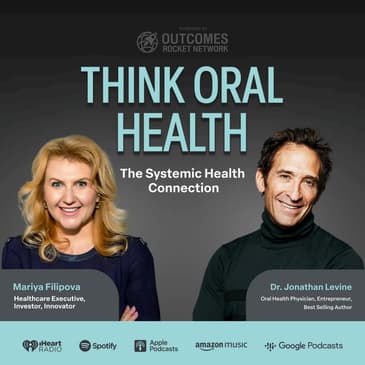
Back by popular demand, this fan-favorite episode is one you won’t want to miss! Whether it's your first time tuning in or you're revisiting this classic, dive in now and enjoy one of our most listened-to episodes!
Integrated health practices are key to facilitating a more holistic approach to patient well-being.
In this episode, Stephen Thorne talks about the critical integration of dental and medical care and how maintaining oral health contributes to overall systemic well-being. He discusses implementing the integrated model in dental practices, highlighting the significance of advanced technology, the need for education, and the importance of restructuring reimbursement and coding systems for comprehensive care.
Tune in to learn more about the potential positive impact of proactive dental care on overall healthcare costs!
Resources:
- Connect with and follow Stephen Thorne on LinkedIn.
- Follow Pacific Dental Services on LinkedIn.
- Visit the Pacific Dental Services Website!
Think Oral Health is coming to HLTH. We are partnering with the Health Podcast Network and HLTH to bring you breaking news and updates from one of the largest health and innovation communities. Join us! Use this link to register: https://healthpodcastnetwork.com/hlth-registration and get a special discount on us. (Saves $250) Leave a comment to receive the discount code.
[00:00:04] [SPEAKER_02]: Welcome to Think Oral, where we connect the connected between oral and physical health.
[00:00:11] [SPEAKER_00]: I'm your host, Dr. Jonathan Levine.
[00:00:13] [SPEAKER_02]: And I'm your host, Maria Filippova.
[00:00:15] [SPEAKER_00]: Let's get at it!
[00:00:21] [SPEAKER_02]: Hi everyone and welcome to another exciting episode of The Think Oral Health podcast.
[00:00:26] [SPEAKER_02]: I am Maria Filippova and I am joined by Mike Coho's Dr. Jonathan Levine.
[00:00:31] [SPEAKER_02]: We are both on the East Coast today, hopefully after a couple of weeks of travel.
[00:00:36] [SPEAKER_02]: And we are joined by a thought leader, change agent and a business guru who has been able to do the
[00:00:44] [SPEAKER_02]: unthinkable, which is build a successful business and scale, a successful business in oral health.
[00:00:50] [SPEAKER_02]: And we're very excited about the topic and the guests that we have lined up for you today.
[00:00:55] [SPEAKER_02]: With that in mind, I will hand it over to Jonathan to give us to reveal who is our conversation partner today.
[00:01:05] [SPEAKER_00]: We are so excited.
[00:01:06] [SPEAKER_00]: See Thorne is right at the faract beat of the connection of oral systemic health.
[00:01:14] [SPEAKER_00]: Did you get that at the art beat?
[00:01:16] [SPEAKER_00]: He is the founder and chief executive officer, the Sifick Dental Services, PBS.
[00:01:22] [SPEAKER_00]: And he has built it since what would we say?
[00:01:27] [SPEAKER_00]: 1994, maybe that was that early.
[00:01:31] [SPEAKER_00]: But P.S. is a global leader in this integration of dental and medical care with a dedicated focus on their
[00:01:41] [SPEAKER_00]: practicing clinician.
[00:01:44] [SPEAKER_00]: As a company, they're committed through the achievement of very efficient practices providing just excellent patient care, management services for the dental practices.
[00:01:57] [SPEAKER_00]: They have a core value which is really interesting.
[00:01:59] [SPEAKER_00]: It's called we believes we're going to be asking, even how he takes concepts and good ideas, but how does he really make it all happen?
[00:02:09] [SPEAKER_00]: Because that's what they do there.
[00:02:12] [SPEAKER_00]: They have also PBS foundation.
[00:02:13] [SPEAKER_00]: It's a 501 C3 Chapel organization.
[00:02:16] [SPEAKER_00]: We'll talk about that.
[00:02:17] [SPEAKER_00]: But through Steve Thoens leadership, PBS has become really a pre-evident authority on what they call the body, my
[00:02:26] [SPEAKER_00]: body connection, what will call the world systemic health.
[00:02:29] [SPEAKER_00]: And what we're doing at the same core is to talk to people like Steven Thoen of how they are creating this integration and the delivery of care and delivery.
[00:02:39] [SPEAKER_00]: This type of mindset and thinking, but how does it really turn into outcomes to improve the health of people, not only the oral health, but that connection into the overall health.
[00:02:53] [SPEAKER_00]: So with all of that, let's begin Steven Thoens say to you so much for joining us.
[00:02:58] [SPEAKER_01]: Great to have you.
[00:02:59] [SPEAKER_01]: Great to have you.
[00:02:59] [SPEAKER_01]: Thank you for that warm warm welcome.
[00:03:02] [SPEAKER_02]: You're an expert on PBS Jonathan.
[00:03:04] [SPEAKER_02]: What a great evening.
[00:03:05] [SPEAKER_00]: Well, I know Steven Thoens for quite a bit and I'm so impressed because we met together at, you know, where was the first time we met?
[00:03:13] [SPEAKER_00]: Yeah.
[00:03:14] [SPEAKER_00]: We met at one of their early preceptor programs and we shared that.
[00:03:18] [SPEAKER_00]: But Steven, let's start there.
[00:03:21] [SPEAKER_00]: What got you passionate about the oral systemic connection and expand not only what we do in dentistry, but how does it have that impact on the overall health for people?
[00:03:32] [SPEAKER_00]: What got you there?
[00:03:33] [SPEAKER_01]: We'll give you some context.
[00:03:36] [SPEAKER_01]: Okay, for for what got me so passionate.
[00:03:38] [SPEAKER_01]: The first part was pretty much purely business minded.
[00:03:43] [SPEAKER_01]: I'm a capitalist, I'm a businessman guy, not a dentist, not a clinician.
[00:03:46] [SPEAKER_01]: I think I've failed out of high school chemistry and biology and all that stuff but excelled in the business stuff.
[00:03:53] [SPEAKER_01]: It was about 2011, 2012.
[00:03:55] [SPEAKER_01]: I started seeing all these articles coming out in the dental rags and journals.
[00:04:01] [SPEAKER_01]: I was in a couple of boards talking about the oral systemic link.
[00:04:05] [SPEAKER_01]: I hadn't really heard of it before and I'd been in dentistry since I got in dentistry in 1989.
[00:04:12] [SPEAKER_01]: I mean, I started by putting in a computer system in my dad's dental office.
[00:04:16] [SPEAKER_01]: That's all I got started.
[00:04:17] [SPEAKER_01]: My grandfather's a dentist.
[00:04:18] [SPEAKER_01]: He graduated Harvard in 1939 or something to my brothers of dentists.
[00:04:23] [SPEAKER_01]: Once a period honest, and they still weren't all talking about this link.
[00:04:28] [SPEAKER_01]: Most of my friends were dentists but I started seeing all this and I go, wow, there's something happening here.
[00:04:33] [SPEAKER_01]: I was watching it over a couple of years.
[00:04:35] [SPEAKER_01]: I'd known about the surgeon general report in 2000 that said, look, basically, we can't have good overall health in America.
[00:04:43] [SPEAKER_01]: We don't have good oral health.
[00:04:44] [SPEAKER_01]: That was the first.
[00:04:45] [SPEAKER_01]: That was a kickoff for this.
[00:04:47] [SPEAKER_01]: And then the 2010 surgeon general report went much deeper and talked about the importance of the
[00:04:54] [SPEAKER_01]: dentists and overall health related to cancer, the job, the neck, the eat, went much broader.
[00:05:03] [SPEAKER_01]: So I put together a task force in 2015 to look at this for me.
[00:05:08] [SPEAKER_01]: And I wasn't on the task force because I didn't want to steer it.
[00:05:11] [SPEAKER_01]: And there was a bunch of leaders, names you would know from across the country that we're on a duty A-burmer.
[00:05:16] [SPEAKER_01]: I might call fauna a couple other leaders in this space and a couple of my team members too.
[00:05:22] [SPEAKER_01]: To collect the data. I wanted to, I wanted this to be real.
[00:05:26] [SPEAKER_01]: I wanted to know if this was real. So they came back and reported me. They met for about nine months.
[00:05:31] [SPEAKER_01]: Collected a bunch of data science, all of the things you guys have probably seen out there.
[00:05:35] [SPEAKER_01]: I said Steve, this thing's real.
[00:05:37] [SPEAKER_01]: We got to think about so I say that because one of the main as CEO of two main jobs.
[00:05:43] [SPEAKER_01]: One is capital allocation. They can share with them best in the right places to keep the company going.
[00:05:49] [SPEAKER_01]: Second one is pattern recognition. And staying looking at what's happening in the world and trying to figure out where things are going.
[00:05:59] [SPEAKER_01]: So we're there and we're not left behind.
[00:06:01] [SPEAKER_01]: In the famous example might be whoever was leading blockbuster at the time didn't really see the streaming thing coming and they missed that or co-dak who said,
[00:06:10] [SPEAKER_01]: Well, we like film nobody's going to switch to digital things like that. Right? Those are the examples of companies that didn't see the pattern.
[00:06:19] [SPEAKER_02]: There's a lot of the re-tasteings example always do you always have to come back.
[00:06:23] [SPEAKER_02]: This from yourself before you get co-dak.
[00:06:26] [SPEAKER_02]: Told him as pure demand is a good friend like this.
[00:06:30] [SPEAKER_02]: That's right. It's always you have to disrupt yourself.
[00:06:32] [SPEAKER_02]: Otherwise you're leaving the opportunity to somebody else to do it.
[00:06:36] [SPEAKER_01]: And what got me passionate is during that time my mom died of heart attack.
[00:06:42] [SPEAKER_01]: So she's 65 years old.
[00:06:47] [SPEAKER_01]: No reason the world she should have died that young.
[00:06:51] [SPEAKER_01]: She had just been to the cardiologist three weeks ago and the cardiologist told her she was going to live to be 100 years old.
[00:06:57] [SPEAKER_01]: Now, and she always suffered with bad breath, bad pario, and she'd marry to a deathst.
[00:07:03] [SPEAKER_01]: Yeah. Now, was it a direct causal relationship the parallel killer? She did a lot of other stuff.
[00:07:09] [SPEAKER_01]: She grew up in the 60s. But got me thinking, got me going about the relationship guarantee it played a part in how why she died and died at such early age.
[00:07:24] [SPEAKER_01]: So that task force prompted me then to go to a basically marketing company.
[00:07:32] [SPEAKER_01]: Because I wanted to see if there was a business here would consumers understand this and would clinicians gravitate to this.
[00:07:40] [SPEAKER_01]: They came back with a report about nine months and said absolutely, consumers love this concept of dental medical integration.
[00:07:48] [SPEAKER_01]: Being able to go to one location and get most of their primary care.
[00:07:53] [SPEAKER_01]: They also told me that the biggest problem you're going to face is the clinicians because dentistry has been siloed for so long
[00:08:02] [SPEAKER_01]: For whoever took them out out of the body way back when I'd love to meet that person, give them a piece of my mind.
[00:08:09] [SPEAKER_01]: So we've been separated for so long. So dinner great was going to be very hard.
[00:08:14] [SPEAKER_01]: I'm always up for a challenge. And so we learned and we started our first integrated practice in 2017 with one physician, you know, busy dental office in summerland.
[00:08:31] [SPEAKER_01]: So that's kind of a passion side but also the business side of it.
[00:08:36] [SPEAKER_02]: Health care is always personal. I'm glad.
[00:08:38] [SPEAKER_02]: It's local.
[00:08:38] [SPEAKER_02]: Your personal. Yeah, thank you for sharing your personal motivation. We all have our own healthcare experience and we're all touched as patients when we are now there. And that's what really drives us.
[00:08:50] [SPEAKER_01]: Well, I also Maria, it also caused me to look at myself.
[00:08:54] [SPEAKER_01]: And I learned that I have all the bad genetics for inflammatory disease.
[00:08:59] [SPEAKER_01]: My period was in bass.
[00:09:01] [SPEAKER_01]: Yes.
[00:09:01] [SPEAKER_01]: And we started the oral bacteria test and all my IL one, IL six everything. I got every bad gene you could get. I got them both from my parents. So I have to go to the dentist like six times a year.
[00:09:16] [SPEAKER_01]: And I had just in it to take care of my mouth.
[00:09:18] [SPEAKER_02]: And I look all that from the overlining of all of this is that you are now an activated engaged patient.
[00:09:24] [SPEAKER_02]: That is very much engaged in their own health, which is unfortunately not the majority of patients. But it's a big piece into moving the field forward and advancing integrated care.
[00:09:36] [SPEAKER_02]: Steve, I'll jump in here and I know Jonathan, I know you have something on your mind as well.
[00:09:41] [SPEAKER_02]: But tell us a little bit about that integrated model, right? You got inspired.
[00:09:46] [SPEAKER_02]: You did your homework.
[00:09:48] [SPEAKER_02]: You had a task force.
[00:09:50] [SPEAKER_02]: Tell us how this actually works today.
[00:09:52] [SPEAKER_02]: And, frankly, what took to convince that first dentist and that first clinic to try it out?
[00:09:59] [SPEAKER_01]: Yeah. So with disclosure, we're still trying to figure it out. Full disclosure. Okay. We figured out a lot.
[00:10:07] [SPEAKER_03]: Yes.
[00:10:08] [SPEAKER_01]: One of the, to yes, a couple questions there.
[00:10:10] [SPEAKER_01]: And how it works in the office and the operation. So patient comes in, take their blood pressure. It's 140 over 100.
[00:10:19] [SPEAKER_01]: So they're full hypertension patient. What is the typical dentist do?
[00:10:23] [SPEAKER_01]: Most dentists don't do anything.
[00:10:26] [SPEAKER_01]: What they should do is refer them to their PCP of high blood pressure. And the patient always says, oh, I'm nervous. I'm at the dental office.
[00:10:33] [SPEAKER_01]: The white hole syndrome is a little bit.
[00:10:35] [SPEAKER_03]: Yeah.
[00:10:36] [SPEAKER_01]: So what you're going to die of my chair, that should be the response.
[00:10:39] [SPEAKER_01]: But now it can walk over if the physician or nurse practitioners available. In this case there's a physician.
[00:10:45] [SPEAKER_01]: Grab the physician. Go talk to the patient or do you refer them over?
[00:10:49] [SPEAKER_01]: Walk them over to the physician.
[00:10:51] [SPEAKER_01]: So that's a very base level. One example.
[00:10:55] [SPEAKER_01]: What we do that with diabetic patients. We do that with mental illness patients. We do all of it. It's right there.
[00:11:02] [SPEAKER_01]: We all know how important it is when patient can activate into care at the moment.
[00:11:10] [SPEAKER_01]: And that's what it was all about activating into care at the moment.
[00:11:16] [SPEAKER_01]: What we learned to, at the time we put in, they we had an old dental system only running our company.
[00:11:25] [SPEAKER_01]: And we put in a medical system medically and mark.
[00:11:27] [SPEAKER_01]: That was a major roadblock to them helping patients get healthier for a major roadblock for the work between the dentist and the physician.
[00:11:39] [SPEAKER_01]: You need a data.
[00:11:40] [SPEAKER_01]: The collaboration.
[00:11:42] [SPEAKER_01]: They needed the data.
[00:11:43] [SPEAKER_01]: They needed to work in the same chart. So we started looking around.
[00:11:46] [SPEAKER_01]: And at that time there was only one option.
[00:11:48] [SPEAKER_01]: And it was epic.
[00:11:49] [SPEAKER_01]: Epic, is the largest health record on the planet.
[00:11:54] [SPEAKER_01]: 270 million Americans have some of their help information in epic.
[00:11:59] [SPEAKER_01]: 150, 160 million maybe more have a my chart app on their phone.
[00:12:05] [SPEAKER_01]: So it didn't.
[00:12:06] [SPEAKER_01]: And yes, it is a little bit more expensive than a dental only whatever we call a system, whatever you want to call it.
[00:12:13] [SPEAKER_01]: But epic is so much more than that.
[00:12:15] [SPEAKER_01]: Epic is the now for us.
[00:12:18] [SPEAKER_01]: It is the backbone to the entire company because everything we do runs through that system in order to help the clinicians understand more about their patients, which is key that health history.
[00:12:34] [SPEAKER_01]: But understanding more about the meds they're on, you know what other problems they may have.
[00:12:40] [SPEAKER_02]: Home work.
[00:12:41] [SPEAKER_02]: Everything.
[00:12:41] [SPEAKER_01]: Yeah, all the comorbidities all of that.
[00:12:44] [SPEAKER_01]: And so we have we now have that information at their fingertips and we're building the menus and the pop ups and alerts and all that into the system now, because we can.
[00:12:57] [SPEAKER_01]: We have the data we will share I don't know what the right.
[00:13:00] [SPEAKER_01]: Right up to a hundred million records now that we have that have been shared.
[00:13:04] [SPEAKER_01]: So there's two things on on epic one is interoperability here that term a lot right and I think is mandated by a lot to be interoperable.
[00:13:11] [SPEAKER_01]: That's important but that's not the most important thing.
[00:13:14] [SPEAKER_01]: The most important thing is the chart reconciliation.
[00:13:17] [SPEAKER_02]: Interesting.
[00:13:18] [SPEAKER_01]: Okay, so epic is the only company I know that it's done a good job of that of taking all this disparate information that the clinicians have put in the system.
[00:13:29] [SPEAKER_01]: Let's say a patient has gone to 15 different systems or physicians and been able to put it all together in a pretty seamless fashion.
[00:13:36] [SPEAKER_01]: It's not perfect yet, but pretty seamless fashion for dentists like Dr. Levine to look at and understand about that patient.
[00:13:45] [SPEAKER_01]: So we made that was in my 35 years the biggest risk I've ever taken as a CEO.
[00:13:51] [SPEAKER_01]: That was my biggest risk I've ever taken is converting the company to epic and I can imagine it's probably too soon to tell if it's paid off yet.
[00:13:58] [SPEAKER_01]: Oh no, it's not to be.
[00:14:00] [SPEAKER_02]: Oh, no, it's not to be.
[00:14:04] [SPEAKER_01]: Oh, you look at performance since we finished less that's six a month.
[00:14:08] [SPEAKER_01]: I don't know if I paid for the system yet, but to wear on record pace, we're having the best six months in the history of the and we're on track this month too.
[00:14:17] [SPEAKER_00]: And it's even company we see to stand there for a second because a lot of times the KPIs and the metrics are just a result of doing all of these great things first.
[00:14:27] [SPEAKER_00]: Right so talk about that a little bit.
[00:14:29] [SPEAKER_01]: Yeah, so you nailed it. Okay, it's not just the system is not just to keep you eyes. So education leads to awareness which leads to activation for many people without sick care education to awareness to activation that goes for clinicians also we've had to go through a massive change in our whole education program and onboarding program at PDS for every team member.
[00:14:55] [SPEAKER_01]: So I don't do as an oral surgeon all the way down to somebody that's coming in to pay do accounts payable we educate everybody on the mouth body connection and we're not done yet we're not done yet, but any we have different levels of it Jonathan where somebody working at counts people gets a base level understanding.
[00:15:14] [SPEAKER_01]: Adenis gets a much deeper understanding of all the world bacteria the test we can do just there's so much happening.
[00:15:23] [SPEAKER_01]: Yeah, it's that education component was is still critical to driving the behavior change and we know how hard changing clinicians behavior is we both know that it is so hard but it's working it's working and so now when a patient comes in.
[00:15:43] [SPEAKER_01]: The doctor actually talking about their A1C and you have diabetes and you know there's a correlation between your oral health and and your diabetes.
[00:15:51] [SPEAKER_02]: How we know that to act on that knowledge team for both the patient and the dentist okay, we know this is a hypertence of patient their diagnosis diabetic what happens next.
[00:16:03] [SPEAKER_02]: How does that knowledge change the workflow of the dental clean team and what patient with the patient does so it's a great question.
[00:16:15] [SPEAKER_01]: And we're again, we're still figuring out some of these things okay.
[00:16:18] [SPEAKER_01]: I want to back it up a little bit.
[00:16:21] [SPEAKER_01]: We have a saying in our company patients don't care how much you know until they know how much you care.
[00:16:26] [SPEAKER_01]: That's patient don't care how much you know until they know how much you care.
[00:16:30] [SPEAKER_01]: So the big bet for me as a CEO on the pattern recognition was that as patients believe that their dentist cares about them as an individual with individual needs and wants and cares about their overall health not just fixing it to.
[00:16:47] [SPEAKER_01]: Right, that they will be more likely to engage in care for fixing that to or for the scaling and reporting or getting that implant place to preserve the bone.
[00:17:01] [SPEAKER_01]: Whatever it may be for that oral systemic link and that is proving out to be true so the math equation people ask me all the time about epic man he spent so much money not really not really it's like I related to cards.
[00:17:17] [SPEAKER_01]: I don't think I don't drive a Nissan centron I highly doubt Dr. Levine does so we're we probably have nicer cars and we do that because we want the things to come with that nicer car epic is like a much nicer car it's like buying a Mercedes or something like that where you have more things that you can do and like but if we can get a little bit of turn every year.
[00:17:42] [SPEAKER_01]: Of more patients activating into care on our scale it's massive numbers so we will probably pay for the entire system in under three years for sure I was going to say maybe even two years the entire investment and it was a nine figure investment.
[00:18:01] [SPEAKER_00]: Steven is there an opportunity outside of PDS for you to have a greater impact on the profession.
[00:18:11] [SPEAKER_00]: Can what you figured out it ethic does that get commercialized to a level where if somebody wants to look at what PDS has done as a model that there is an opportunity to leverage these learnings what's that you've done and the technology together.
[00:18:29] [SPEAKER_01]: How do you think about that as we think about future yeah it's a great question I'll personalize a little bit.
[00:18:35] [SPEAKER_01]: No, I think people can probably guess I don't need I don't really need to work anymore but I'm on a business been good to me the professions been good to me but I want to change change world I want to change how dentists are thought about I want to get them to think about themselves differently as oral healthcare providers as physicians the mouth and take care of that whole patient.
[00:18:58] [SPEAKER_01]: And I want to change the profession so yes I'm working hard on that we have think now ten dental schools have switched over the epic platform I think we have 18 more in the queue that we're supporting to switch.
[00:19:10] [SPEAKER_01]: So I think that's where it starts getting the dental schools to change over and start thinking more holistically about patient care not reactive care which is where dentistry has been for for instance my grandfather graduate I know you don't practice that way but most dentists in America still practice way my grandfather practice.
[00:19:26] [SPEAKER_01]: Yeah patient comes in something's wrong they see what's wrong they tell the patients they're on and they fix it and they're great at it.
[00:19:34] [SPEAKER_01]: It's a great service that's not going on way there we're humans that be that's not going to go in our lifetimes but we have an opportunity to do so much more as we engage in the oral systemic length we call out party connection but there is an obstacle.
[00:19:52] [SPEAKER_01]: The big obstacle is the reimbursement system and I'm working hard.
[00:19:58] [SPEAKER_01]: Yeah it's hard because we're the only help profession that has our own coding system.
[00:20:03] [SPEAKER_02]: That's right it's now that I have to yeah and if I have to bring the quality piece here the coding system is not used for diagnosis it's used no treatments any very hard to be able to connect the dots.
[00:20:16] [SPEAKER_02]: And I'm on record.
[00:20:17] [SPEAKER_02]: And the implant is not a diagnosis and you can't say what's the diagnosis for that patient on the oral health.
[00:20:23] [SPEAKER_01]: And I want to change that and I'm on record and I think the ADA hates me for this but I would like to eliminate the CDT coding system and they go over the medical coding system so we have diagnostic coding and the treatment so move over the ICD 10 coding system and CPT so that we can understand why that dentists is diagnosing what they're doing.
[00:20:45] [SPEAKER_01]: And it's all there we can do it but there's a lot of that has to happen to make that change.
[00:20:54] [SPEAKER_00]: I want to take is where you're going because when you're really going, we believe collectively that dentistry could be the tip of the spear that oral health is overall health.
[00:21:06] [SPEAKER_00]: We believe that and if we think about the medical profession and the approach and the sickness model where healthcare spend is literally 20% of our overall GDP so imagine trillions of dollars.
[00:21:20] [SPEAKER_00]: And what happens when we get upstreet, what happens when we get more proactive?
[00:21:24] [SPEAKER_00]: And we know that patients go to the dental office more than go to their physicians and that's why your approach is so smart because it's really the beginning of taking healthcare.
[00:21:36] [SPEAKER_00]: More upstream and saving trillions of dollars downstream.
[00:21:40] [SPEAKER_00]: How do you think about that from a standpoint of the dental profession being more of that wellness model getting through the diagnostics of all of these systemic inflammatory diseases early and really playing an important role there.
[00:21:55] [SPEAKER_01]: It's a great question and that's really the big idea from the reimbursement side and why dentists would do this because the question I get asked often is why would I do it?
[00:22:07] [SPEAKER_01]: I'm doing fine right I tell number one you're going to help people be healthier that's number one number two we got to think differently about the financial model.
[00:22:17] [SPEAKER_01]: Okay dentists can be they need to be part of the primary care healthcare team.
[00:22:23] [SPEAKER_01]: They can be the first line in assessments and early intervention let's just take cardiovascular is a little harder because it takes longer for you to see the problem.
[00:22:36] [SPEAKER_01]: We're trying to see that's one of my favorites right there we can test right now Maria if you were wanting to get pregnant or our pregnant we could test how active your paradolns disease is in your mouth with a simple MMP eight test.
[00:22:51] [SPEAKER_01]: Then what we could do is if it came back high or elevated we could test your oral bacteria right now and see if you have high levels of FN or a one of the bacteria that are causal to preterm low weight births now does that mean you're going to have one no but it increases your likelihood and we both know that.
[00:23:10] [SPEAKER_01]: And so why isn't every dentist ask their female patients you're thinking about getting pregnant or your pregnant let's do these tests and what woman wouldn't do that.
[00:23:21] [SPEAKER_02]: Let's just you started with the reimbursement let me just finish that story and connect the dots having spent multiple years on the health plan side we know that one preterm labor.
[00:23:31] [SPEAKER_02]: Mom and baby in the new queue is on average 500 thousand dollars that's half a million on average we know that both mom and baby over their lifespan are more costly members in terms of total cost of care to treat because they have all kinds of other risk factors.
[00:23:48] [SPEAKER_02]: And we also know that frankly over the last years because of the demographic factor socioeconomic factors women are getting pregnant and choosing to have children later in life.
[00:23:59] [SPEAKER_02]: So this whole term of geriatric pregnancies anybody who is over the age of 35 which actually is over half of the pregnancies if not more in this country.
[00:24:09] [SPEAKER_02]: Is a geriatric aka high risk pregnancy and so that alone is a very important component in terms of bringing in the dental office the dental team into the overall care the only wrinkle here Steve is that the interventions that need to happen on the dental side right treating your period disease to reduce your risk.
[00:24:29] [SPEAKER_02]: of preterm labor happen on the dental side yet the savings in this case would materialize the big savings avoiding that half a million.
[00:24:37] [SPEAKER_02]: So the job claim is on the right.
[00:24:39] [SPEAKER_02]: So somebody needs to talk to each other about the business model is you have to invest on the dental side.
[00:24:46] [SPEAKER_02]: It's on the medical and these two teams need to share in the savings.
[00:24:51] [SPEAKER_01]: So what we're seeing happening you hit the nail on the head so what we're seeing happening is that plans to take risk are coming to us now.
[00:25:01] [SPEAKER_01]: Medicare vans plans I know that's not the pregnancy group okay but Medicare vans plans are coming to us in probes now because we can help intervene early we can help get there save them massive amounts of money by say the hypertension patient or diabetic patient that didn't know they had diabetes and then we also can bring up a level of service Dennis on the whole do a pretty darn good job on the service level right so we can help bring up their star rating.
[00:25:29] [SPEAKER_01]: So we can help these plans by intervening early if we find a problem let's say diabetic or maybe it's cardiovascular disease.
[00:25:40] [SPEAKER_01]: They get a higher per member per month reimbursement we can help them with their star rating where they get the benefits for their star rating.
[00:25:48] [SPEAKER_01]: Dentists need to play in that pool of money absolutely Dennis need to get remorse for this stuff.
[00:25:54] [SPEAKER_01]: Yeah we're seeing that we're seeing it with some employers now we're talking to some employers out taking full risk and they're really interested in this.
[00:26:04] [SPEAKER_01]: We do it I'm boy 15,000 people have 25,000 people on our planet and we do it and I'm trying to drive down our total cost so.
[00:26:13] [SPEAKER_01]: Yeah so I think it's only to take a couple of these plans to finally go let's go for it let's get the dentist in the medical plan and let's make this happen now.
[00:26:26] [SPEAKER_01]: We've also approached carriers that aren't taking risk so that's a lot of people and they say yeah and then when it comes to it's nothing happens because carriers that model has to change if we really want to have an impact because they're all about the spread right.
[00:26:44] [SPEAKER_02]: And I'm not taking risk it's hard.
[00:26:47] [SPEAKER_01]: Yeah I'm not.
[00:26:48] [SPEAKER_02]: I also do the model that Jonathan was describing if you are a fee for service model you cannot do preventative care and I think that's what it comes down to it's much harder to be able to execute on preventative care and have a longer term view.
[00:27:02] [SPEAKER_02]: Please put me wrong I'm open to it tell me if you see it work somewhere.
[00:27:05] [SPEAKER_01]: We're trying we're trying we did a deal it was publicized with Memorial Care here in California, but California today and the CEO of that gets this.
[00:27:17] [SPEAKER_01]: Okay so we did a long term deal to develop 25 integrated practices and they already have big commercial and at May and so we're providing the dental plan now for his employees which is big and we're co designing the dental plan for his MA pool.
[00:27:35] [SPEAKER_01]: So I think it only is going to take a couple of leaders like Memorial Care to step out and go no we can change this we can do a better job and then others will follow.
[00:27:50] [SPEAKER_01]: Please.
[00:27:51] [SPEAKER_01]: Please.
[00:27:51] [SPEAKER_01]: I'm on the CMS side on on a commercial side that by right that's on the commercial side if you have one employer that's taken risk and they're just the TPA it takes the employer pushing that.
[00:28:03] [SPEAKER_02]: It has to be.
[00:28:04] [SPEAKER_01]: It has to be anywhere.
[00:28:06] [SPEAKER_02]: It takes the risk absolutely correct.
[00:28:08] [SPEAKER_02]: That's right.
[00:28:09] [SPEAKER_00]: Yeah, it's it isn't it's getting these proof points so you you take this objective you create this strategy you set up your tactics and you prove it to work and the numbers speak.
[00:28:20] [SPEAKER_00]: And then you don't you don't you get everybody's attention at that point because you've taken that action for us.
[00:28:27] [SPEAKER_00]: I think today a lot of people are talking about it and I see even kudos to you in the team you're taking the action creating the partnerships on the collaboration and proving out.
[00:28:38] [SPEAKER_00]: I think that's a very extreme moves that we're going to say being millions billions of dollars down stream and healthcare which is a runaway train and it's a very reactive sickness model that needs to really change and everybody he's you started to build out awareness to that.
[00:28:54] [SPEAKER_01]: I don't know I agree I didn't MD tell me the other day and one of the larger vendors.
[00:29:00] [SPEAKER_01]: He said look.
[00:29:01] [SPEAKER_01]: This is an MD talking he said there is no better investment for these carriers or the risk bearing.
[00:29:12] [SPEAKER_01]: No investing in oral health or then oral investing in oral health maybe only smoking would be at a higher level and he waited.
[00:29:22] [SPEAKER_01]: But what we can do to maybe only one habit that people may have smoking that will do better job in saving these carriers money and I all the science is there John there we know we've seen the studies we have the science.
[00:29:39] [SPEAKER_01]: I'm over that it's like now I've got to get them to believe the science and studies we have studies from the Mayo Clinic we have studies from the New York Medicaid system where you are we have studies all around the world thousands of them thousands we don't need any more studies showing.
[00:29:54] [SPEAKER_01]: And then you guys help reduce costs and help improve care we don't need any more we just got to get them to go oh okay.
[00:30:04] [SPEAKER_02]: I actually think it's a bit more like the next the first step is aha okay wow but the next step Steven that's what was asking you about it needs to be easy to do something about it needs to be easy to operationalize it.
[00:30:18] [SPEAKER_02]: I would you build in pds is what it's pretty unique because the ability to refer a patient who is at either high or undagnosed diabetic to refer them somewhere where you're not just telling the patient and leaving in their hands to say go checking with your PCP.
[00:30:36] [SPEAKER_02]: What if they don't have a PCP what if they don't their uninsured on their insured and so we have to be able to connect the dots because that's where most of the lapses in care happen.
[00:30:48] [SPEAKER_02]: And so I don't want to lose two things that come came up in the last I made it to the conversation you quarter here first folks that dental team is part of the overall care team and the two most immediate measures if we're talking numbers here are reducing total cost of care.
[00:31:06] [SPEAKER_02]: And we've seen that in total cost of care when it comes to treatments or conditions like diabetes hypertension cardiovascular high risk pregnancies.
[00:31:17] [SPEAKER_02]: We see the numbers sleep diagnosing obstructive sleep apnea and treating in the or on the dental side with an oral plans therapy.
[00:31:24] [SPEAKER_02]: All of these conditions you could track to your point state literature tells us that they're saving still be made on a total cost of care perspective.
[00:31:35] [SPEAKER_02]: Now it's up to us our leaders or listeners ask the folks on the call to actually do something operationalize all those clinical insights and the other thing is you nailed it when you talked about so with the bottom one is reducing the cost of key on tons favorite mission.
[00:31:51] [SPEAKER_02]: How do we get this runaway train on the control and number two is increasing the reps of revenue side because if you have as a plan if you have higher star ranking that translates in higher reimbursement rates from the.
[00:32:05] [SPEAKER_02]: And so on both sides both on the top line and the bottom line there's a very meaningful connection on where doing the right thing also allows you to do well financially.
[00:32:16] [SPEAKER_01]: There, you're nailing it there is the money not only starving but the QD level or the patient right and so.
[00:32:22] [SPEAKER_01]: The patient by risk that's right so in our integrated practices where we have either an or practitioner physician.
[00:32:30] [SPEAKER_01]: So the dentist doesn't assess that.
[00:32:33] [SPEAKER_01]: Let's take his diabetes we did we do a when see testing now in about 100 of our offices so say that elevate a when see as a patient.
[00:32:41] [SPEAKER_01]: We did you know your your and would see very elevated not another refer over the patient if the patient is on that plan and we caught it early now we help that plan get a better reimbursement okay.
[00:32:55] [SPEAKER_01]: And we helped in that hopefully the patient gives them the better starting through press gaining which is what we use and then the medical team.
[00:33:05] [SPEAKER_01]: At the end of the year shares in that probably based revenue stream that's how that system works so it's creating the alignment with every everybody now what's not there yet.
[00:33:17] [SPEAKER_01]: It is there for us because we own both but what's not there yet is that reimbursement back to the dentist that's what we have to get so the dentist should share in that VBR revenue to some degree.
[00:33:29] [SPEAKER_01]: So you asked about we can't do it all fee for service there's has to be some fee for service component but then an alignment around the savings so it's in that dentist head.
[00:33:40] [SPEAKER_01]: If I intervenerly and get to make the referral it be end of the year and of the six months however the contract works they share in that profit.
[00:33:48] [SPEAKER_02]: Steve do you guys do anything in redirecting and avoiding ED admissions or read missions because that's another area that's very rich.
[00:33:57] [SPEAKER_02]: Well we haven't got quite that far yet. We're yes we'll get there we will get there for sure over half a billion of ED admissions or admissions a folks who are present with oral pain not much can be done in the ED if you present with all pain.
[00:34:11] [SPEAKER_01]: If you look back at the beginning of COVID there was a massive campaign in the United States actually went virtual around the world around staying out of the ER room go see your dentist for your pain and you can track back who started that.
[00:34:27] [SPEAKER_01]: You can't pay.
[00:34:29] [SPEAKER_00]: I think we're looking at them and the science came out and if you have parodinal disease you are five times more likely to end up on event later so.
[00:34:39] [SPEAKER_00]: People's awareness of the importance of controlling information in the mouth I think is probably at the highest level that that it's ever been.
[00:34:47] [SPEAKER_00]: And as you were saying, Steven the science is so big thousands and thousands of studies understanding that the body is a complete ecosystem.
[00:34:59] [SPEAKER_00]: And that the mouth the inflammation of the mouth and the pathogens of the mouth number one help see but gut and help and cause really the issues of a leaky gut and the and the science of a leaky gut.
[00:35:13] [SPEAKER_00]: Where these pathogens get into the rest of the body it's the same thing in a leaky mood those are systems they're all connected similar mechanisms.
[00:35:23] [SPEAKER_01]: There are studies that there's a couple different studies that are proven out which bacteria in bed.
[00:35:31] [SPEAKER_01]: In our arteries to cause that are causal the cardiovascular disease that which one and we can help.
[00:35:39] [SPEAKER_00]: The latest study came out with rheumatoid arthritis where we had a recent our research on that on our podcast Dana and she's at Rockefeller and they were taking the bloods on a weekly basis and people with period out of disease and testing it for PG and PG proved to increase the likelihood of rheumatoid arthritis with elevated PG in their blood from the blood tests.
[00:36:07] [SPEAKER_00]: And it's just one more connection of the right now 58 systemic inflammatory diseases directly related to inflammation of the mouth.
[00:36:17] [SPEAKER_00]: But it's so important for business leaders like yourself to take action because it's taking this action creating this these proof points to say let's connect the dots we will have a more efficient system on at the end of the day we're going to have a much healthier America and I greatly share.
[00:36:37] [SPEAKER_00]: I think as we get older the desire to have that legacy and to really help people and help the chosen profession that we've gotten involved and I love that you do that.
[00:36:49] [SPEAKER_01]: Yeah, and I want to second that I think you're spot on there's some some things that are happening that are causing this massive shift to right.
[00:36:59] [SPEAKER_01]: Aging population in the next 16 years we're going to see a 49% increase of people over 65 and I know you and I are getting we're not quite there, but we're getting there so this aging population that's happening so oral health you said earlier oral health awareness is probably in all time high my opinion I don't have the data on this is that it is at an all time high since I've been in this in 35 years and.
[00:37:25] [SPEAKER_01]: And then the tip tipping point of over 50% of seniors now on Medicare Advantage plans from Medicare fee for service so I think that's caught driving a lot of this behavioral change and we're feeling it because we're getting our phone is ringing off the hook.
[00:37:40] [SPEAKER_01]: And so we're going to be able to get to the right from these groups that want a partner to help where we they know we can intervene early because that's what it's all about for them.
[00:37:49] [SPEAKER_01]: And we can help raise their scores and lastly identify the acuity level that has to go through the physician side, but we can do the assessment so.
[00:37:59] [SPEAKER_00]: Amazing.
[00:38:00] [SPEAKER_00]: Yeah, I don't know about you but talking to see I have tremendous hope that there's going to be this wonderful positive wave of connecting these dots between as they would call the mouth body connection or oral systemic medicine so that.
[00:38:17] [SPEAKER_00]: People's awareness increases on delivery of care improves.
[00:38:22] [SPEAKER_00]: The industry becomes part of medicine healthcare Costco way down we save so much money downstream because of these upstream wellness and early diagnostic approach by connecting the professions of medicine and dentistry.
[00:38:37] [SPEAKER_00]: I'm very inspired by by listening to what you're doing over at PDS and what you personally so inspired us inspiring for I think all of our listeners.
[00:38:46] [SPEAKER_00]: What would you say Maria?
[00:38:47] [SPEAKER_02]: I'd love to pick up on this note and note of hope in knowing me you wouldn't be surprised if I'd like to add a bit of urgency to it.
[00:38:56] [SPEAKER_02]: We are inspired we're hopeful but hopefully also our listeners are picking up on all the nuggets of call to action items that Steve planted over the course of our conversation.
[00:39:10] [SPEAKER_02]: If you are a dental school a dean of dental school and you are not part of those early adopters or the list of 18 that are already signed up on being part of that medical record system tracking and integrating medical dental records.
[00:39:26] [SPEAKER_02]: Please consider getting involved.
[00:39:29] [SPEAKER_02]: If you are a dentist who is practicing dentistry and is concerned or aware of the potential of helping patients and really treating the whole person in the chair not only the mouth, please get involved.
[00:39:43] [SPEAKER_02]: And if you're a patient who happens to be listening to our podcast right now, please ask your dentist about your sleep, about your heart health, about your lung health, about your brain health.
[00:39:55] [SPEAKER_02]: Your dentist might have an answer or recommendation and if not, then you probably want to consider if that's the right dentist for you.
[00:40:02] [SPEAKER_02]: That's my personal opinion.
[00:40:04] [SPEAKER_02]: And so with that note of hope and urgency, Steve is there any other call to action on your end that you would want our listeners to be aware of.
[00:40:15] [SPEAKER_01]: Yes, there are. So in this area, dentists should be on the panels of all the medical plans.
[00:40:23] [SPEAKER_01]: It should not be excluded from that and that's a I think that's a simple change for these carriers.
[00:40:31] [SPEAKER_01]: Okay, what plan and then dentists should play a part in Medicare advantage.
[00:40:39] [SPEAKER_01]: They should be on those panels and they're very tactical note.
[00:40:43] [SPEAKER_01]: Very those two are I think the easy low hanging fruit to get dentists involved in the overall help of patients and get the reimbursement.
[00:40:54] [SPEAKER_01]: They do deserve for doing that.
[00:40:57] [SPEAKER_02]: Absolutely.
[00:40:57] [SPEAKER_02]: You heard it here folks on that.
[00:40:59] [SPEAKER_02]: That's on that.
[00:41:00] [SPEAKER_02]: Yes, thank you.
[00:41:02] [SPEAKER_02]: Steve for being part of this conversation.
[00:41:04] [SPEAKER_02]: This is just the beginning and let's roll up the sleeves and get to it.
[00:41:08] [SPEAKER_01]: Let's do it. Thank you.
[00:41:10] [SPEAKER_01]: Thank you.
[00:41:10] [SPEAKER_01]: Thank you so much for joining us.
[00:41:12] [SPEAKER_01]: Thank you.
[00:41:13] [SPEAKER_01]: Fantastic. Yeah, hopefully it's good and we'll see you soon in Jonathan.
[00:41:21] [SPEAKER_00]: Thanks for listening to the Think or Old Podcast.
[00:41:24] [SPEAKER_00]: For the show notes and resources from today's podcast visit us at www dot outcomes rocket dot health slash think or all or start a conversation with us on social medium until then keep smiling and connecting care.