
The future of healthcare demands a business-like approach with a focus on real-time data and decision-making processes.
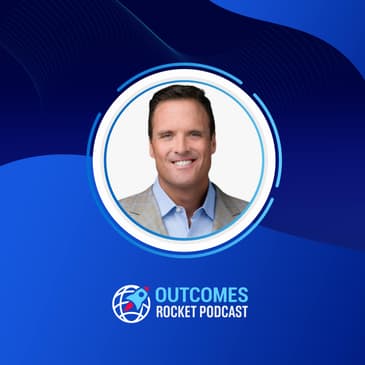
In this episode, Matt Seefeld, founder of myLifeLink and Executive Vice President of MedEvolve, underscores the significance of effective intelligence in navigating the healthcare sector's complexities, emphasizing the need to prioritize clinical outcomes over financial gains. Matt delves into the challenges facing health systems in terms of profitability and accountability, highlighting the importance of real-time data and task tracking for enhanced efficiency, while advocating for embracing innovative solutions within an antiquated health industry to drive positive change. Furthermore, he candidly shares his personal journey with addiction, underscoring the importance of community support and emotional sobriety, aiming to provide a platform through myLifeLink for individuals to connect, heal, and support one another on their recovery journeys. Matt also encourages listeners to seize opportunities for growth and innovation in healthcare revenue cycles and beyond, reflecting on the significance of actions and outcomes in achieving success.
Tune in and learn how to navigate the evolving healthcare landscape and contribute to positive change in the industry!
Resources:
- Watch the entire interview here.
- Connect and follow Matt Seefeld on LinkedIn.
- Discover more about MedEvolve on their LinkedIn and website.
- Listen to Matt’s previous interview on our podcast here.
- Learn more about myLifeLink on their LinkedIn and website.
- Download the myLifeLink app on the App Store and Google Play.
[00:00:02] Hey everybody, welcome back to the Outcomes Rocket. Saul Marquez here. Today I have the privilege of hosting Matt Seefeld on the podcast again. We had him on a few years ago and just blew me away with his approach to revenue cycle and technology.
[00:00:20] He's got over 25 years of experience in assessment design and implementation of process improvement and technology development across web cycle. He began his career as a consultant at top firms like PWC, Huron Consulting and Deloitte.
[00:00:37] He's got a lot of really cool things going on in addition to stuff that he does outside of work. He's the founder of myLifeLink. It's a free virtual community app that helps those suffering from addiction and we'll cover that here too.
[00:00:51] But Matt, so great to be together again. Matt Seefeld Yeah, Saul, it's great seeing you and catching up. I'm excited to give you a little update on where I'm at in personal and professional life and look forward to talking to some of your listeners. Saul Love it, man.
[00:01:07] We're excited to chat with you. And folks, by the way, I was catching up with Matt before we hit record and just talking about how much I miss sunny San Diego, which is where Matt is at. Matt Seefeld Yes, yeah. Little journey today. It's a place called home.
[00:01:21] You get off the airplane from a city that's hot, humid and full of mosquitoes or freezing cold and you're like, that's 68 and mild here in San Diego. I just gotta pay 13% more money to live here and seven bucks a gallon for gas.
[00:01:36] Saul Hey man, paradise has its price. Paradise has its price. Look, I remember last time we were chatting, it really stuck out to me this concept of effective intelligence. I want to touch on that again.
[00:01:53] And I also want to, toward the end of our podcast today, touch on MyLifeLeague as well. But before we get into that, why don't you tell our listeners that don't know you yet? Kind of what got you into the healthcare game? Matt Seefeld Yeah, it's interesting.
[00:02:08] You're in college. I was an NCAA athlete, wasn't really paying too much attention to career. I learned early on I wasn't going to be a doctor or a lawyer. And senior year comes around and I'm talking to my dad and he's like, you're about to graduate,
[00:02:23] sports or whatever. You're not going pro. What do you want to do? So I went, what am I going to do? Saul That's the talk. Matt Seefeld Consulting firm is not a bad idea. Why don't you check out the consulting firms?
[00:02:33] And so I happened to stumble across a bunch of former Anderson consulting guys that left Anderson back in the late 80s to start a boutique healthcare revenue cycle consulting firm and Stockcamp and Associates, which eventually got acquired by Huron Consulting Group out of Chicago.
[00:02:50] It's funny when I look back at the principles that Dale Stockcamp taught me at an early age in my career was really this, the principle is a measure to improve. He said, if you can't measure it, you can't manage, you can't improve off of it.
[00:03:01] The other thing was really around accountability of work. The accountability of, I'm paying you to do a job, are you actually doing it effectively? And so that really is started my career basically. And then I moved on to PwC and actually built my first workflow automation system with
[00:03:20] them. It was really focused in AR management at the time, and then went to Deloitte and had made a pitch to build one for them as well. And they love the idea.
[00:03:31] We were going to do it in the cloud, but then the priorities shifted to more coding charge entry focus. They're doing a lot of engagements around that piece. And so I actually left Deloitte to start Interpoint, which was my first company.
[00:03:43] And I basically followed the principles of Dale, right? It's a workflow automation system that could sit on top of any practice management EMR and told the individuals in Rebicycle what they needed to do, and then started to measure whether they did it or not.
[00:03:57] And so it really, that company I built from 07 until right around 2012 when I sold it to a public company out of Atlanta, streamlined, stayed on board with them for a few years,
[00:04:09] and then took about a year off to figure out what I wanted to do and came across MetaVolv. A good friend of mine had become the CFO of MetaVolv. And it was a company that is out of Little Rock, Arkansas.
[00:04:23] It's been around since the late 90s, started out as just a billing software company, a PM system, and then started to do revenue cycle services for some of their smaller clients, right? Smaller group practices. Fast forward to 2017, you're in a commodity space.
[00:04:40] Everybody has RCM services and you have a PM system that is not in the cloud and you don't own an EMR. That's not a growth story. So the founders and I and my buddy Matt who quickly had taken over the CEO role said,
[00:04:56] what are we going to do? Right? And I learned from the interpoint days, especially when those recession hit back in 2008, 2009, where I'm like, how do I keep this company going? I got to get creative, right? I got to find ways to upsell clients.
[00:05:09] The thing that was lucky for MetaVolv was because we had our own RCM insurance business, we had a lot of people, 80 plus people that were doing billing, coding, AR management for clients all over the US, right? So we had an incubator.
[00:05:23] And so what I did from now, the fourth time in my career was started to build what is now called our effective intelligence suite, work automation that sat on top of the MetaVolv system. Right?
[00:05:33] And what it does is again, it drives the work to the individual and it measures how well they accomplished that work or didn't accomplish the work. So it's really how it's evolved since we talked, right? Is that we've really expanded our focus to front office pre-registration.
[00:05:50] We all know that when things go wrong up front, don't get the pre-cert, don't verify benefits, don't collect co-insurance money, right? Bad things happen on the back. The interesting thing that's changed in healthcare when I first started my career is that
[00:06:05] doctors were making very good money on a much less volume of work. Now you have doctors doing three, four times the work and making less money. Then you have this beautiful word called inflation that hit.
[00:06:18] And so if you look at the supply chain cost, the clinical labor costs, the administrative labor costs, right? The employees to deliver a service, right? And the reimbursements keep going down. It doesn't take a business school education to realize that's a really bad business.
[00:06:36] So we've changed our thinking and I've been using Henry Ford as the example of a guy who, you know, all back in the early 1900s figured out that if you wanted to drive margin and
[00:06:47] scale, did you need to make sure you have people in the right order and you need to make sure that they're held accountable for the job that they're trained to do. And so that's where we've really taken our AI suite is that by deploying this suite with
[00:07:00] our clients, they now understand every human touch it takes to get claims paid. And by understanding the level of touches in different areas of the revenue cycle, you could start to diagnose the why. Why did this claim just go out the door and get paid?
[00:07:14] Why did a human have to start looking at it? So the PM systems don't measure that. PM systems were never designed to capture everything, right? I call an insurance company. They say it's denied. I send an email to so-and-so and I follow up with so-and-so a month later.
[00:07:28] Then I call insurance again. It's still like, those are all touches and interactions that are not efficient and they're costly. And so our whole effective intelligence methodology now is that I can diagnose where all the touches
[00:07:40] are occurring, the actions are occurring, and then look at the outcomes, positive outcome, negative outcome. Then I can start to deduce, is it a people issue? Possibly. Is it a process issue? Most likely. Is it a technology gap? Possibly, right? So it's getting into that.
[00:07:55] And I think that the healthcare market, that's the only thing that we control now. We've got a large urology practice and their president, their head physician president, made a comment that they're afraid they won't be in business five years from now.
[00:08:11] And my response to him was, I said, it's actually less than that. Right? So now they're actually deploying our EI suite because what they've realized is that they're considerably overstaffed and they are doing way too much work that's not producing outcomes.
[00:08:26] So you think of how value-based care, ACS, it's all about getting better clinical outcomes. So where's the focus on better financial outcomes? We have to have software that augments the practice management of our systems that actually tracks everything. And it holds the individual accountable.
[00:08:45] And that's really where we've evolved the last couple of years since the last time we spoke. And that's what's driving change. We have much different conversations with our clients about the administrative waste that goes into getting you paid for the services that are really expensive to deliver now.
[00:09:01] Yeah. And I love that Matt, with single digit, if it's not negative, profitability at some of the health systems and practices, it's a, you've got to measure. You've got to measure and you got to understand every step of the process to improve.
[00:09:17] And that accountability that you shared is also a huge thing. Even, I guess my mind just kept going to like emails and things that are maybe done outside of the system or how do those things get tracked as well? Yeah.
[00:09:31] So that's a big, that was the biggest thing we've developed again, since we last spoke was integrated tasking tied to the actual encounter or the visit. So if you need somebody other than yourself to assist in a resolution, you're now going to be tracked, right?
[00:09:47] You will assign the task individual. It could be to a physician that could be to another department. It could be an individual, right? And so it's all tied back to the visit because the key is you've got to look at it as it's profitability or lack thereof.
[00:10:00] You got to understand the human element, how much work effort did it take you to get a outcome knowing that it may not even be a good outcome. And that's the missing link. And so the email you can't track, right?
[00:10:13] The phone call you can't track, everybody's virtual, everyone's working from home, right? So there's another element there. And so we found early on, that's the only way to go. A lot of these PF systems have tasking systems, but they sit outside of the encounter.
[00:10:26] So it's, now you've got two separate work drivers that you're trying to maintain. My conversations with my RevCycle clients go like this, you know, because we assign actually we will assign tasks to our clients, right? Directly.
[00:10:40] So the client that's complaining about cashflow, I can go back and say, you've got 37 open tasks for about $122,000 that are more than seven days old that you haven't even acknowledged or responded to. It's a different conversation than saying, hey, I've been sending you a bunch of emails
[00:10:57] about coding clarifications. You guys aren't getting back to us. Or did you look at your spreadsheet this week? The fact that healthcare still runs off of spreadsheets and pivot tables is absolutely mind-blowing to me. It's mind-blowing to me.
[00:11:10] You think about, so we have no control over what we get paid. We have no control over the supply and drug costs and labor costs now that it costs to deliver care. So there's no alignment between the payer and the provider and the consumer, right?
[00:11:23] But yet we're also trying to run a business off of spreadsheets. Really? It ain't gonna work. It's not. That's why when we get into sales conversations, I always laugh when I get the person says, oh, that seems so expensive. I said, is it expensive?
[00:11:38] My software is expensive compared to what? Compared to you writing another 2% off every year in net revenue? Compared to you having AR that's way out of line with benchmark? Compared to the fact that you have 27 people following up on denied claims and you only need 10?
[00:11:53] So what's too expensive? So these administrators and these doctors have to start getting, wising up, right? I am definitely seeing a shift, especially in the physicians, because the physicians are now realizing that, wow, I really am losing my shirt when it comes to what I'm used to get.
[00:12:11] But they also have to make sure that their administration is also on par. And this has been a huge issue selling into the health care market is that you have a sophisticated ideas and technology being sold to an unsophisticated industry with an unsophisticated buyer.
[00:12:25] And I do not mean stupid, right? I'm not saying us just, these are smart people in most cases, but their priorities are wrong. I got into a debate with a client, not a client, but a prospect at a trade show.
[00:12:38] And she was adamant that her problem was not having a good contract management system. She said, that will solve my problems. I said, so you think you're just being underpaid? We're pretty sure we are. How many touches does it take to get paid anything? Do you know? No.
[00:12:52] Do you think you should know? Yeah. You see what I'm saying? It's a people like my problem is I don't have a good scheduling solution for my patients. That could be a problem, but the bigger problem is that you're doing expensive surgeries and
[00:13:05] you have no idea how much it's costing you on the administrative side to get paid anything. And so to me, it seems rational, but the healthcare industry is still living in the stone age. Henry Ford figured it out in early 1900s and we're not there.
[00:13:22] And so it's going to be really interesting to see where healthcare goes in the next five years. We know we're not going to go to a single payer system because there's too much lobbyists and there's too much money with big pharma and supply companies.
[00:13:33] It's just not going to happen, right? The payers, they need their billions in profit. That's what they need. So nobody's going to take that away. But the providers are the ones going out of business, right? It's the small communities that are hospitals are being shut down.
[00:13:45] I was talking to here in San Diego, right? I mean, good luck if you don't have a really good health plan, good luck getting treated for any sort of elective stuff, right? We're starting to see our ERs are now primary care clinics for people that don't have good
[00:13:59] insurance or no insurance. So the- I was talking to a friend, she was telling me that scripts over there and Chula Vista closed like weather deliveries. It's happening everywhere. It's everywhere.
[00:14:10] And yeah, I think one of the groups, one of the health systems up in the Northwest, San Diego, I think it was labor and delivery too, was not making enough money. They were losing money. So they shut it down.
[00:14:21] So now you have folks coming to their ER that have to be life flighted over to the health system on the West side. Again, any other industry would laugh at us. And yet again, we're run by spreadsheets.
[00:14:33] You know, the same people that think their problems contract management can't actually tell you what their net revenue is or their net collection rate is. So then if you deploy MedEvolve, does it help you get that intelligence? That's what it gives you back.
[00:14:48] And it gives it to you in a real time sense. And it actually just brings you the answer. So you're not having to go try to dig into the why anymore. And that's where I really had seen our company evolve is that I've gotten to the point where
[00:14:59] I realized that the industry is not going to be able to spend time trying to find where the problem is, no matter how easy the data is to access. And so we have to just bring the answers now to the industry and hope that person on the
[00:15:13] other end is actionable, is going to take action on it. So give me the before and after when somebody doesn't have you guys in place and then they put you guys in place. What does that look like?
[00:15:26] The biggest, so when we look at our biggest ROI measures are actually dramatically increasing capacity in the labor team. I used to say you can labor cost reduction, but it insults people at times.
[00:15:38] So you'll find that as you start to become more aware of where all the waste is and you start to solve for those problems, whether it's a people, personnel issue, or it's a
[00:15:48] process issue or a technology issue or combination of all three that you're, I call it the zero touch rate, but it's the claims that get produced and go out the door and get paid without a human having to look at it post-service. That rate starts to go up.
[00:16:00] We look at some of our clients who may start with us and their zero touch rate is in the low fifties or the forties, meaning they're getting intervening into so many of their claims. This isn't clean claim pass rate. That tells us just a component of it, right?
[00:16:15] I'm talking about no human actually get involved. Now how you measure that is you got to measure every touch, right? No more emails, no more spreadsheets. Like everything has to be tied back to the visit to know that I didn't have to touch this visit.
[00:16:25] It got coded and paid. But now we see some of those clients driving into the sixties and the seventies and even the low eighties. And so what is that now done to their margin by having so much less dependence on humans? So I, it's, that's what you see.
[00:16:41] And of course you start to see an improvement to net revenue, right? It says now you're holding people accountable. They know that you're watching. They know that they have a productivity effectiveness measures that they have to be focused on.
[00:16:53] So what happens is you have less labor, less touches and better outcomes, which drives margin. Now it's never going to give you back what you've lost because of the rising costs and delivering care and the declining reimbursement for the carrier delivering, but it's going
[00:17:08] to give you back some of that dollar. But the organizations that are not adopting these principles will not be relevant in the future. And we've seen already doctors retiring early doctors trying to desperately sell to the remaining private equity firms that are dumb enough to buy them.
[00:17:23] We're seeing it at hospitals. I'll just sell to the hospital. It's not the independence is harder and harder to maintain, or I just start to be more selective on who I treat. So that sucks for the community. You're like, Oh yeah, you don't have enough insurance.
[00:17:37] So sorry, you got to go to the ER for that. Yeah. Yeah. Hey, so I'm going to go back to the, this is, this makes a lot of sense. So thanks for sharing that before and after net revenue goes up zero touch. What'd you call it? A zero.
[00:17:50] I call it the no human had to get involved to get paid rate, but my marketing team was like, it's a little worried. Let's go zero touch. All right. Zero touch it is. I love it. Yeah. Zero touch. I like that. I like that better.
[00:18:02] Kudos to Ashley on that one. Ashley was good. Yeah. She keeps me accountable. Love it. Love it. Nice work, Ashley. And so back to this, cause I still haven't connected the dots. So help me connect them. So, so everything's tied to the encounter, right?
[00:18:18] And so when somebody does need to follow up on it, how does that get documented? Yeah. So there in our software, they're actually having to put in a lot more structured data around what they did.
[00:18:29] So for example, if you call on an insurance company, I'm going to ask you to document the activity, right? I called insurance. I didn't check a website. Then you're going to put a data point for status. What was the status you heard? It was denied. Denied for what?
[00:18:44] Medical records. What did you do about it? So we create now relationships. So we're creating a lot more structured data that then gets matched up with the billing practice management data and the clearinghouse data, which gives you a way more insight now into your organization.
[00:19:00] So it's the structured data that's created in our system in the cloud. That's really the driving, the value around looking at where you're touching things so much. And then once you know those things, then you can act on them. You're making informed business decisions.
[00:19:14] The PM systems aren't to blame. I don't blame the PM systems, the EMR companies because they've had to spend so many years now competing on the EMR side, making sure doctors buy my EMR. It's prettier than the next person's.
[00:19:29] Now they're trying to do everything they can on patient engagement. I want the consumer experience to be amazing, estimators and ways to pay and waiting room apps, all that AI scheduling. But what gets left behind always is it's the transactional teams and individuals that are getting you paid.
[00:19:48] You can produce all this amazing stuff for the doctor and for the patient, but if you don't get paid, you're out of business and then there is no business. And again, being a RebCycle guy my whole career, I see it like black and white.
[00:20:00] It's very straightforward to me, but the industry doesn't. There's a handful, but the industry is struggle to adopt those principles that Henry Ford figured out. And I'm starting to see a shift. It's not a fast one, but I'm definitely starting to see a shift in thinking that they
[00:20:18] actually have to start running these businesses like businesses. You think I always like to use the military analogies. If you've got a SEAL team deployed in a battle zone, right? They're not looking at spreadsheets to figure out how they're going to get out of the situation.
[00:20:32] They've got a lot of data points that are coming at them in real time. That's going to say what to do, where to go. And yet here we are in healthcare that still think it's okay to run a monthly aging. Okay. And then what?
[00:20:46] You're going to find out 10 days into the month that something went wrong last month. That's how it was when I started my career, which is why I left the consulting firms and the pivot tables to start Interpoint.
[00:20:55] That was the whole reason I left was I vowed I didn't want to be stuck in these one one views once a month. Is there a problem? Is the stuff I'm implementing making an impact or not? And yet here we are 20, 18 years later having the same conversation.
[00:21:11] And these are big groups, by the way. I have attempted to sell and failed in some very large organizations that had no concept of these principles. They were still making enough money to not worry. The time will come when they're not making enough money.
[00:21:29] Do you know what I'm saying? And then there'll be like, how much did you lose? That's why I always say you think I'm expensive in comparison to what? But what? Yeah. Hey, what do you think about Walmart? Like getting out of the business, similar story.
[00:21:43] I think a lot of these, a lot of technology companies, services companies, behavioral healthcare, like everyone seems to think it's an easy play. I got my younger brother. I won't name names, but it has been in a situation twice in the last 10 years where
[00:21:57] it's got great technologists, great vision has no concept of how North American healthcare works, no concept of the consumer is inside. And so I'm not surprised to see people getting in and then pulling out. I'm not surprised at seeing bankruptcies.
[00:22:16] You think of like behavior modification will shift eventually to my lifelink. The human condition doesn't want to change behaviors. Things have become so easy to them. So if you're trying to change behaviors, whether I might adhering to my physical therapy
[00:22:29] regimen after my knee surgery, or am I trying to lose weight to be less hypertensive or less chance of diabetes? Or right. We're assuming that people want to make changes. It's a more, way more complex than that.
[00:22:41] And so I think that you're going to find a lot of companies with a lot of money, a lot companies with a lot of money that we're trying to get into this space because they have the answer. Like pharmacy benefits. Think about it.
[00:22:54] I'm at an Amazon pharmacy or whatever. Let me just create the pharmacy. Pharmacy is not the problem. That's one problem. High drug costs is one problem, but that's not the problem. How are you going to solve the problem?
[00:23:05] And by the way, the precedents are nobody's solving the problem. I can't wait for the fall. Tell me more about how you're going to solve healthcare. You can't when the buyer or the consumer and the provider and the payer are all disconnected
[00:23:21] and there's no alignment between those three. You can't. I mean, heck the payer and the you think about this, like the drug and the supply companies are more connected to the payer than the providers connected to either one of them.
[00:23:37] And if you're a smaller group, good luck negotiating. Oh yeah. No, it's a challenge for sure. And the thing that gets me is despite all this, how do you justify CEO pay? Like I'm all about, Hey, make it and do well.
[00:23:55] But if the floor's falling out, how do you still manage to pay? And people pay millions of dollars a year to screw up the revenue cycle and be narrow-minded and short-sighted. Yeah. It's crazy to me. It's crazy, but that's a whole different ballgame, right?
[00:24:09] It's just thinking about giving back to this is something that I talk about a lot of the, when I speak at a lot of shows is this principle of how to motivate people. How do you give back some of that profitability to the individual contributors to create even
[00:24:24] more incentive to do better? And still so many organizations don't understand the incentive-based revenue cycle concept, right? It's something that we actually put into place at MetaVault for our RCM company is we gamified it.
[00:24:36] If you prove to me that you're delivering, and by the way, I can now measure that because I have dated far beyond the PM, then you will be recognized and rewarded. And we hope as a result of that, that you'll be retained. You'll want to stay here, right?
[00:24:48] But when you get into some of these large health systems and you're looking at the compensation packages for poorly run revenue cycles, again, it doesn't line up. It doesn't line up that you would be paying some of that kind of money and then not, and
[00:25:04] then thinking it's okay to pay your frontline workers 18 bucks an hour, give no incentives for them to do a good job and continue to watch your P&L erode. Why do you think it's eroding? Yeah.
[00:25:15] Again, I'm not a Harvard Business School guy, but I don't think you have to have a top MBA to figure out that what's going on in healthcare now is a train wreck happening right in front of our eyes. And people like to say I'm a little pessimistic.
[00:25:32] I consider myself more realistic than anything. Right? It's like you think of the sailing analogy, right? The optimist expects the wind, hopes the wind changes. I hope the wind's going to change and I'll make it across the lake.
[00:25:44] But the pessimist just complains about it and the realist adjusts the sails. So I'm just adjusting the sails. I'm just saying is that I truly believe that the only thing that we have in our control
[00:25:54] and North American revenue cycle today to hopefully claw back margin is to understand every unit of work it's taking and where in the revenue cycle these units of work are occurring that's driving our costs up and reducing our reimbursement. That's it.
[00:26:10] And you can get the labor teams efficient and identify ways to automate processes. Right? It comes back to people. There is a company that is touting a human-less revenue cycle. They're a software company.
[00:26:22] And they're like, by the end of this year, you won't need humans to run revenue cycle. And I flat out laughed out loud when I heard this. I said, again, you must be a bunch of tech guys sitting in a vacuum that never had to
[00:26:35] go do boots on the ground combat and revenue cycle management because you are never going to see a human-less revenue cycle. The only way you'll have a human-less revenue cycle is if you go to a super single payer
[00:26:47] system where everything's negotiated and done and you just get your service and it gets paid. Guess what? Not happening in our time. So it is a human revenue cycle. What our software is doing is telling you who and why. Right. It's who and why.
[00:27:01] And that's where I really believe that my career has landed is here. And I think the macroeconomic conditions in healthcare are aligned perfectly with what we've been doing. My hope for the industry is more people start thinking this way. Because they're businesses, right? They are. Yeah.
[00:27:16] So look, everybody, there's an opportunity here in the show notes. We'll leave ways for you to get in touch with Matt and the ManyVolve team. I do want to leave the last few minutes here to touch on MyLifeLink.
[00:27:28] Tell us, what is MyLifeLink and why are you doing it? Yes. Yeah. And I don't think the last time we met, we even really talked about it. So I'm glad you can give me a few minutes to talk about this.
[00:27:40] I'm coming up on seven years for this fall. Congratulations, Matt. I have a long history with using Alamogirl as a way to disconnect from feeling, right? I didn't want to feel. So instead of processing why I didn't want to feel, I found that drinking would do that.
[00:27:55] For me, it really accelerated when I was running my own company and the stresses of that, plus the recession. I just found that as a coping measure. I ended up in treatment and went to an awesome treatment.
[00:28:06] It was not a, I call it, it wasn't the avocado and massage treatment place in Malibu. It was a hard core, like brick and mortar, I won't name names, but a very strong rehab with lots of good services.
[00:28:19] And when I checked out after spending a month there of just rolling up my sleeves and work, doing everything I could to really look inward at why I was handed a guy, a name with a piece of paper, a piece of paper with somebody's name on it.
[00:28:32] And it was Bob F and it said, here's his number, give him a call. And I said, who is that? And he goes, some alumni of our program. He lives in San Diego. And I said, is he sober? And her answer was, I hope so.
[00:28:43] I said, what does he do for a living? Does he surf? What's his hobbies? Can I relate to this individual more on just, I have an addiction? And she said, oh, wow, those would be amazing things to know.
[00:28:55] So I'm sitting here as an entrepreneur going, okay, I could go on a match.com and allegedly find my future spouse. I can go on a cars.com and pick and choose my attributes I'm looking to and find the perfect car.
[00:29:08] But where do I go to find people suffering from similar addictions to me that could relate to me? And more importantly, the ones that have gotten healthy, right? They can start guiding me in a community. And that's really what started it. So I was so lucky.
[00:29:25] I found a platform company that had a very agile configuration layer to their app that I've been able to leverage and build a community around the world. We have people that log in every single day that they're able to track the things you're
[00:29:40] doing every day to stay healthy. I'm exercising. I'm making phone calls. I'm staying connected with community. Also allows you to track your emotional states, right? Feeling anxious, feeling triggered, feeling happy, joyful, and then service work. Service is the biggest thing for me.
[00:29:55] Is it how can I be of service to others and get some of those people so inspired by that work that they want to also then be service to others, right? We live in a world now where it's very selfish world. It's very about me.
[00:30:08] And I think that more people could be helping without expecting anything in return. Helping people, right? So for me, I'm big on sports. I was an athlete all my life, Walter College. So I coach travel baseball, Little League. I coach high school track.
[00:30:25] I'm coaching flight football, basketball, whatever I can do to help younger people start to understand what it takes to be mentally strong and know that the only person that can make you feel bad is you.
[00:30:39] And if you can start to live more in present moment, like we're doing right now, Saul, versus me worrying about what might happen or the thoughts that are in my head, which thoughts are not real. People need to understand that, right? A thought is a thought.
[00:30:52] It's not real. Hasn't happened yet. It's just a thought. And then what just happened a minute ago is already gone. So let that go. If we could start bringing ourselves here into present moment, that's going to make a huge impact on people's lives.
[00:31:04] And when you go beyond physical addiction to behavioral and more importantly, emotional addiction, and that's really where my lifelengths focus now is helping people understand the emotional addictions that drive our need to escape feeling through physical or behavioral addiction. Right?
[00:31:16] It's I wasn't an alcoholic because that was just literally the bigger issue that made me want to escape through alcohol or exercise, right? Is not wanting to feel what I was feeling. I'm trying to think of the best way to say this.
[00:31:34] I created my own feelings within myself. You can say something to me. You're not creating these feelings. I'm creating these feelings. So we're really trying to center our community around emotional sobriety. And my twin brother is an ER physician and a big addiction medicine guy.
[00:31:50] And he's also in recovery about the same amount of time I have. He's amazing. Actually, he's a guy at Subway. You should have him on the cast because he does the podcast. The podcast he does all of his work now around the country around emotional sobriety, emotional
[00:32:03] addiction and how it's helping people. Once you redefine addiction as it's really I think that the old adage of he's the alcoholic or he's a drug addict or he's addicted to sex or he's addicted to exercise, right? Those are just addictions because the obsession has become normal, right?
[00:32:24] When you become obsessed with something to the point where it's normal, it's an addiction, overeating, not eating enough. It's all of those things, but it's all driven from feelings of self-worth that get generated within ours. So the MindLifelink community, again, it's a free app, Android, iPhone, download it,
[00:32:42] join it. You can be as anonymous as you want to be. You can be as open as you wanted to be. But what you're able to do if you choose to is you can actually tag yourself with different attributes. So Matt Seafeld, father, right?
[00:32:55] I was separated for a while, so I can relate to people that are separated or have been separated. I'm a surfer. I'm a skier. I'm a coach. I'm a business executive. I'm in health care. I have some childhood trauma.
[00:33:06] So when you start identifying yourself with the app, what it'll do is start matching you with people that you could then connect with. I can't relate to somebody who's been to war, who's been incarcerated, who's an alcoholic.
[00:33:20] I could relate to him as an alcoholic, but I can't relate to the why on that front. But I know there are people on the platform today that have the same attributes or very similar that could help that individual. I call it precision recovery.
[00:33:34] If you think of precision medicine, especially with oncology, it's going to have two formulary drugs plus two over-the-counter. We believe with your genome that this combination therapy for your type of cancer will give you a higher success rate. Where's precision recovery?
[00:33:49] It beats that piece of paper with a name. It does. It also prevents you from walking into a meeting. I went to AA for a long time, and I am not knocking AA. I think it's an amazing organization.
[00:34:00] But you've got to remember most people with addiction, it's not one thing anymore. We look at a lot of the structured data being a data guy. It's amazing to see how many co-addictions exist and then how you start to relate co-addictions to trauma.
[00:34:15] On the platform, if any of your listeners download it or refer out, they'll see that groups have been formed that are very specialized groups. Some are private, and it's for women with a history of domestic violence or sexual assault that ended up addicted to benzos and alcohol.
[00:34:30] You start to get very specific tribes within the tribe. That community and that tribe, that's where the healing begins because you're no longer alone. Walking into an AA meeting, raising your hand and saying, hey, I'm Adam McCall, all I can tell you my story.
[00:34:43] I'm hoping somebody in that room can relate to me, but it's not guaranteed. If I start talking about other addictions that I have, a lot of the old timers are like, this is really for alcohol. Let's keep it strict on alcohol. It's intimidating.
[00:34:56] I wanted a softer entry point for people who were curious about what the world could be like if they put down their addictions and they start to rebuild and transform their lives into something extraordinary. The selfless work to me is the key.
[00:35:12] It is that if I become accountable to others, that is my biggest thing. For me, I don't think about drinking anymore because I know what's at stake if I did. That's part of the community and accountability. It's been a great time. I'll continue to grow.
[00:35:30] At some point, I would love to be able to focus more on that, maybe life after revenue cycle. For now, we've got it out there, and it's growing organically, and it's been a great experience. That's really cool.
[00:35:43] Now, I really appreciate you sharing not only my lifelink with all of us, so folks will obviously link it up, my lifelink, free to use. But also thanks for sharing your experience and what you've been able to do.
[00:35:59] You see something and you do something about it, and now it's adding service. Really awesome that you're doing this for everybody out there, Matt. Yeah, no, it's again, it's the old adage of you don't have to come up with the new idea the first time.
[00:36:12] You can look at something that's being done over and over again, but not being done efficiently and make a change to it. When I speak to students, especially around entrepreneurism and all that, I tell them that you don't have to come up with the new idea.
[00:36:24] Go look around you and then look at all the opportunities you have through technology. My lifelink has grown fast because somebody decided to create an iPhone, and then from the iPhone became apps, and from the apps became APIs. So don't sit in status quo.
[00:36:38] I know a lot of your listeners are high powered, high functioning, they're self-actualization folks. Keep pushing because that horizon line is never, you can't reach the horizon, but I'm telling you to keep charging at it. You're going to have an amazing ride.
[00:36:53] And I'll leave you with the principle I teach all my athletes about actions and outcomes. When I start a new team, I always say, hey, who wants to win? Who wants to play pro baseball? Who wants to win a championship?
[00:37:04] I want to be able to do this and that. I want to win a gold medal. Do you control that or do you not control it? And at the beginning of the season, everyone's like, I control it. You don't. What you control is actions, not outcomes.
[00:37:16] The outcome is you want to be something. The action will be how obsessed are you willing to get and how much work are you willing to put in to give you the best shot at achieving that outcome knowing you may never achieve it.
[00:37:27] But remember, even if you don't achieve it, think of the experiences and the journey and the fortitude and the mental toughness you're going to have. So keep pushing. Love it. I love seeing you, man. I love seeing you. It's always good to reconnect. It is, Matt. It is.
[00:37:48] Really appreciate reconnecting with you. It's been too long. So glad we did this. Folks, hope you enjoyed our interview with Matt Seafield today. Definitely a lot to unpack there. I would hit rewind and re-listen and check out the links too to take advantage of RevCycle
[00:38:06] opportunities for your business, your organization, but also my lifelink, right? Maybe something you're going through or somebody that you know or for your patients for that matter. Take advantage of it. Matt, appreciate you being with us. Yeah. Thanks, Saul. Looking forward to catching up again soon. Likewise.