
AI hype is high, but real use cases need exploration for practical applications.
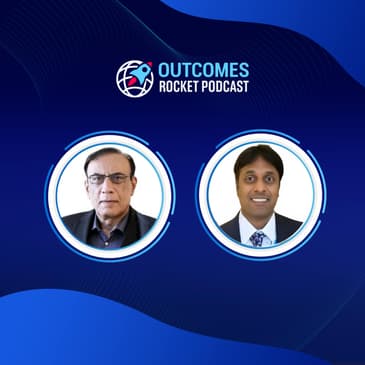
In this episode, Saul Marquez interviews Latif Khalil, CEO, and Nagesh (Dragon) Bashyam, CTO, of InteropX at HIMSS 2024, where they aim to connect with customers face-to-face and stay updated on healthcare technology trends. InteropX, founded in 2016, specializes in creating virtual data pipelines between payers and providers, ensuring up-to-date and usable clinical data for value-based care. Latif has extensive experience in technology and company management while Dragon is a technical expert in healthcare standards and regulations, and throughout this conversation, they emphasize the importance of focusing on business operations while letting technology experts handle data integration and maintenance. They also discuss the growing acceptance of healthcare standards alongside the ongoing exploration of practical applications amidst the persistent AI hype.
Tune in and learn how InteropX can streamline data management for improved healthcare outcomes!
Resources:
[00:00:00] Hey everybody welcome back to the Outcomes Rocket here at HIMS 2024. I'm super excited to have two extraordinary leaders in healthcare with me today.
[00:00:13] I want to introduce you first to Latif Khalil, he is the CEO of InteropX. Welcome.
[00:00:19] Oh thank you very much.
[00:00:21] I also want to introduce Nagesh Basham, the CTO.
[00:00:25] Thank you. Fantastic. It's a pleasure to have you both here. Now we're going to kick off this podcast by first asking you a little bit about yourself and the company.
[00:00:37] So why don't you go ahead and get us started Latif?
[00:00:40] Okay, InteropX is a company that was founded in 2016. Myself and Dragon we are the partners co-owners of the company.
[00:00:49] What we do is we create a virtual data pipeline between the payers and the providers and that way the payers can get their data up to date always fresh.
[00:01:01] And that is our key thing and that's what our business is.
[00:01:05] Would you add anything to that Dragon?
[00:01:08] Yeah, we are focused on making interoperability a commodity and towards that we are based on all the standards.
[00:01:16] We are compliant with all the regulations and we really make sure that the providers and the payers can focus on their businesses and we can focus on all the other requirements.
[00:01:27] That's fantastic. Thanks for clarifying that. Anything you want to share with our listeners about yourself that could help them connect with you and get to know you a little bit better.
[00:01:36] Dragon, let's start with you.
[00:01:37] Okay, yeah. So at my heart I am a technical person. I code, I develop, I do analysis.
[00:01:46] So I'm the author of many standards and specifications in the healthcare industry. Most of the regulations I work on all the regulatory aspects in the industry.
[00:01:56] So I connect with all the technical geeks out there more freely than the management.
[00:02:03] At the same time we do a lot of work on strategies, roadmaps, how to actually create interoperable product solutions for a large enterprise.
[00:02:11] So we do a lot of work that way but we can relate to all the different levels in an organization from a CIO, CEO level all the way to development because we are co-founders and we have multiple companies where we are working and we have been in the industry.
[00:02:25] So we know what is required by each level, what kind of problems there is, how to solve them and so on. That's my...
[00:02:30] Thank you Dragon. Steve, how about you? Can you also tell me a little bit?
[00:02:33] Okay, I started as a techie also. I have my computer science degrees. I started with pharmacy. I came to the United States to do my PhD in pharmacy.
[00:02:45] I ended up in computer science and then really become a technical person. So I have my 25 years of technology, software development, solutioning.
[00:02:55] Most of it in the security world. In my past I have been the CEO of another company that got acquired by computer associates.
[00:03:04] So I have the understanding of how to run a company, how to really manage an organization. So that's why I've taken that role in Intrap X working with my partner to make it a success.
[00:03:16] I love it. Thank you for sharing a little bit about each other. Let's dig into HIMS. You guys decided to come to HIMS. Tell us why you decided and one insight that has risen to the top in your time here the last three days?
[00:03:30] We have been coming to HIMS every year for the last six years. So not our first one. We come here for many reasons. One of the primary reasons is of course network and connect with our customers and our clients and our partners.
[00:03:44] The second thing being definitely looking at what kind of hype versus reality exists. Also get to know what others are doing and get a taste of all the different learning sessions that are out there.
[00:03:56] We get to talk to a lot of people about futuristic things. So there's a lot of things that we benefit from. This year there is a lot of hype around AI.
[00:04:06] And there is a lot of work that has been going on in interoperability and standard space that people have started to embrace now.
[00:04:12] So we see the standards is not being viewed as something dangerous or too much, too difficult of things like that. People have embraced standards a little more.
[00:04:21] But at the same time like a lot of hype around AI. But there's still a lot of work to be done in terms of real use cases, whether AI can be applied, how it can be applied and so on and so forth.
[00:04:34] We apply in very specific ways in our products to actually provide value for real world use cases. So we believe in having specific things that we can actually action on rather than follow the hype cycle.
[00:04:47] We invest time, we investigate, we get down to the details and so on and so forth. So one critical insight is more embracing of standards and a little of hype cycle on the AI. That's what I would say.
[00:04:57] Thank you Dragon. Latif, any insights that rose to the top for you?
[00:05:02] I would say either insight or benefit, I think the number one value that we have, we see here is that we meet our customers face to face.
[00:05:12] After COVID everyone is so remote and we talk over the phone all the time. But here we have the opportunity to really meet with them in person and better understand what their issues are and how we can really make a difference
[00:05:26] and really make them successful in their business. That's one thing. The other one is that we see the technologies and how others are really moving in what direction the health care is going and so that we can be prepared for the future.
[00:05:40] So it provides us a very good opportunity to understand and formulate our strategy for moving forward.
[00:05:47] That's fantastic. Thank you for sharing that. And ultimately InteropX is focused on the payer. You want to create those virtual pipelines for data, make it easy for them to do what they do best.
[00:06:01] If you wanted to leave our listeners with a call to action, maybe focus it around common problems that you see people have if they're not using your technology and what you recommend to them as a closing thought.
[00:06:13] Absolutely. The number one thing is all of our customers and even providers to a large extent should focus on their business, driving their business operations, making money, whatever is going on there.
[00:06:27] And let us focus on the technology pieces that will actually enable them to do better in their business and grow.
[00:06:34] So in use cases where they will be struggling is for example, they might have a lot of data sources, disparate data sources which they need to call it and integrate through data pipelines to create a CDR.
[00:06:45] And then expose that CDR for analytics or business users or some patients and so on. So without technology like ours, they will not be able to do that easily.
[00:06:54] Part of them might have to spend millions of dollars trying to do that whereas using InteropX off the shelf, they will get enabled to do that in rapid time, low money, low cost, better return on ROI.
[00:07:05] We understand the domain, we understand the data, we can give a better option for them and long term operations and maintenance because we are focused on data and maintenance and everything.
[00:07:15] We will continue to evolve the product including adding AI and other things so they can get a lot of value in these things.
[00:07:21] By using technology like us and just focusing on business rather than trying to do everything themselves, they're good at a lot of other things that they should be focused on.
[00:07:29] That's what I would say. Use technology like ours, all the use cases that are required by the regulations like pair to pair data exchange, provider to pair data exchange, prior authorization, CD creation of CDR,
[00:07:41] data deposit, writing back data, provider ecosystem, public health reporting. There's a lot of use cases where technology like ours can just come in and drop into their ecosystem.
[00:07:53] They will be part of their ecosystem. They can use it in their own environments and solve the problems.
[00:07:59] That's fantastic. Thank you, Dragon. Khalif.
[00:08:02] I had a few more things but more not technical. I would say to a customer, a pair of customers, if you feel that your CDR or the database where your clinical data is there,
[00:08:17] if the data is not really very good, the quality is not very good, it is not up to date and it's not really very usable for your analytics and reporting, then you need to talk to InteropX.
[00:08:32] And you come to us, we will make sure that the data that you have is clean, it's usable, it's up to date, it is standardized and your business will be able to use that data from day one.
[00:08:46] We make sure that your analytics are operational with InteropX products. That's what we do.
[00:08:52] That's great. Just question that popped into my head that I wanted to ask you guys, ghost networks and up-to-date provider directories, is this the type of stuff that you're...
[00:09:02] We have not focused on provider directories as such. We are focused on member data.
[00:09:06] Member data.
[00:09:07] Yeah, patient data.
[00:09:08] So that's what we are focused on, not necessarily provider directories.
[00:09:12] Clinical data of members.
[00:09:14] Not necessarily for the store.
[00:09:15] Got it.
[00:09:16] Because clinical data is really what is missing on the payer side, that is their need for the value-based care.
[00:09:23] In the value-based care, the clinical data, if it is missing, you really cannot really provide that kind of support and that's what we provide.
[00:09:30] Love it. Thank you for that clarifying point. If the viewers and listeners want to get in touch with you guys and the team at InteropX, where can they reach out?
[00:09:39] InteropX.com. That would be the first place.
[00:09:42] InteropX.com and they can contact me directly, LatifK at InteropX.com.
[00:09:49] Look us up on LinkedIn.
[00:09:51] Yeah, LinkedIn, we are both the first there. Connect with us. We'll be happy to talk.
[00:09:55] Outstanding. Folks, there you have it. In the show notes, you'll see links to their emails, their LinkedIn profiles, the website where you could learn more about InteropX and get in touch with the team.
[00:10:06] Latif and Dragon, thank you guys both for being on the podcast.
[00:10:10] Thank you.
[00:10:11] Thank you so much. Take care.