
Virtual care is no longer just about access. It is now becoming the infrastructure layer that helps health systems reduce fragmentation, strengthen workplace safety, and scale digital care more intelligently.
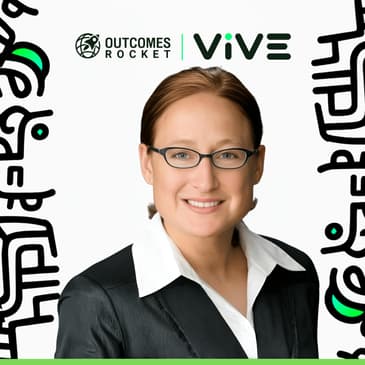
In this episode, Tammy Cress, Senior Vice President of Clinical Solutions and Innovation at Teladoc Health, discusses how health systems can move beyond fragmented telehealth strategies and start building more sustainable, integrated models of digital care. She explains how Teladoc is layering responsible AI onto its virtual care infrastructure through its Clarity solution, which helps sense, synthesize, and route the right information to the right care team member at the right time. Tammy also shares why workplace safety is one of the most urgent and practical use cases for these tools, how fragmented digital investments continue to drain staff and budgets, and why strategy, governance, and thoughtful alignment matter more than ever as organizations move from pilots to scalable transformation.
Tune in and learn how health systems can rethink virtual care and AI adoption in ways that are more proactive, sustainable, and grounded in what truly matters!
Resources:
[00:00:10] Hello everyone and welcome back to the Outcomes Rocket, recorded live here at Vive in Los Angeles. I am so excited to be back with Tammy Cress. Nice to see you again. Really great to see you. For a quick introduction, Tammy is the Senior Vice President of Clinical Solutions and Innovation at Teladoc. Tammy, so great to see you again and this is becoming our re-eam. I can't wait to do it again next year.
[00:00:36] You guys are always doing such fascinating work and I always appreciate your perspective about dates. For those that don't know you or Teladoc, maybe watching this for the first time, tell them about you and about the company. I'd love to. So I'm a nurse by background in training, hence Clinical Solutions and Innovation. And I joined the company about five years ago. I'm passionate about the work that I lead at Teladoc Health, which is making sure we're listening to the market.
[00:01:05] More importantly, delivering the solutions that actually matter. There is so much exciting stuff happening here at Vive. There are so many vendors, so many options. And what we're focused on is delivering the right solutions that are going to actually move the needle with health systems. Some of them feel very sexy.
[00:01:26] And some are, we need to have a conversation around how you're looking at your solution investment so that you can go further and carry yourselves into the next couple of years. Well, I think that the focus on what matters and what's most important versus just splits of oil is so key. Having a nurse in this position is so important.
[00:01:51] So it speaks to Teladoc's commitment to making innovation real. I completely agree with you. And one of the things that I enjoy most about my role is I've assembled partners who come from health systems who are along for the ride. And they are our development partners.
[00:02:11] And they are helping to test the concepts, the actual prototypes, the solutions that we're delivering into real environments and working directly with our frontline teams so that we don't waste time. And I think that is a powerful thing that we're doing on steroids since I met with you last year. Well, I love it. Well, let's get into some of these questions.
[00:02:35] How is Teladoc using digital health and technology today to drive meaningful change in health care? I know, it's the segue, right? It's a perfect segue in how we are doing it. I think you might remember from last year, we have over 20 years of experience building the most reliable enterprise platform for virtual care at scale. And when I say at scale, I mean every single use case. And they all require different things.
[00:03:04] Every single type of care location. Not just hospitals, but clinics, nursing homes, schools, online, at home. Think about the breadth of that. And we've been developing that for 20 years.
[00:03:17] And what I'm most excited about that we've been focused on over the last year is layering responsible AI and capabilities that organizations really need on top of that telehealth infrastructure for scale. So what we're really focused on right now is something that is our clarity solution. Clarity? Mm-hmm. Okay.
[00:03:42] And what clarity is, it is our AI engine that runs everything, sensing what's happening in patient rooms, packaging it up, understanding it, synthesizing it, sending the alerts off to the right care team number. Not everybody, because there's such cognitive strain on staff at the bedside so that they're smarter and they know what's happening.
[00:04:07] And it's helping them to not only manage information, fewer tasks, but better. And so that's what we've been focusing on. And can I expand on that for just a little bit more? So my favorite use case, use case for those who don't know what I mean, it's like, how are you actually bringing it to life and for what purpose? Is workplace safety. I'm sure you've heard that there's a problem with that.
[00:04:33] And what we have been doing, because it's such a large problem, it's an $18.2 billion problem in healthcare in the United States every single year. But if you look at the numbers, most of the money, 80% of the money is spent on the somebody got hurt. Somebody is suing us. Yes. And what we're doing, instead of having organizations have to put attendant or some other device on their care team member as they start their shift,
[00:05:02] instead using the solution that is where the care is happening, a patient room as an example, where it's listening for sounds, it's listening for how excited I am when I'm talking to you. And if I'm getting louder, as an example, anxiety, or a code word, or I have physically stepped into your space and something bad is happening. So constantly standing and being more, much more predictive instead of reactive,
[00:05:31] and much more able to protect not only the nurse who's wearing the pendant, but how about the family members or the patient who's in the room in their most vulnerable state? I think that's fantastic. I actually did a whole series on workplace violence. Did you? In nursing. A good friend of mine, Renee Thompson. I don't know if you know your name. I do. It's a big issue. It is. And I think it's so great that Teladoc Health is doing something about that. Thank you.
[00:06:00] We're really excited about it, too. Well, I've been in a hospital myself and with my mom, and I was afraid to leave her alone. Simply put, it is about solving for the most important problems, and this is an economic problem for health care. It is needing to switch it again from reactive to proactive. And why not get more value out of a solution that's already there in the room? I love that.
[00:06:26] I mean, folks, if this is an issue at your facility, maybe you didn't know that Teladoc has a solution. Correct. You've got to look up the information that Tammy is sharing today. In the show notes, you'll have a way to get in touch with her. Perfect. We'll get to that. But, Tammy, love this work that you're up to. You know, health systems are under unprecedented financial pressure. Yes. They need to do more with less.
[00:06:56] How and what kind of signals should health systems look at to determine whether new technologies are truly helping the clinician and patient versus making noise? If you think about what we measure in health care typically, it's efficiency. How many clicks? We have one partner of ours who calls it like two-click or three-click Charlie. Like, okay, you need to get it down to zero clicks. I understand.
[00:07:26] And we measure efficiency, though. We measure staff turnover. We measure return on investment soft and hard. Those are all proxies, though. What are we really solving for? We're solving for something that's costing health systems, you can see a theme here with me, a lot of money. And that is their fragmented system of care.
[00:07:50] So if you think about it, telehealth has been increasingly the standard of care over the last 20 years. And what did most organizations do, Saul? They bought a stroke solution. They bought a sitting solution. They bought a direct-to-consumer solution. They bought a nursing solution. Too fragmented. And what happens to the care team member in that scenario?
[00:08:19] It's just overwhelm, right? It's overwhelmed with too many solutions. That's correct. You want one. You do. You want one that actually can solve for your care team cognitive burden, ease of use, that you can turn on or off, that you can scale, and that you don't have to worry about support. You don't have to worry about different training.
[00:08:43] You don't have to worry about, well, we have to go back to contracting because we didn't realize when we entered into this relationship that we actually might want to do care in a school. And did you consider that when you were establishing this fragmented strategy on accident? It was all an accident. It was all an accident.
[00:09:04] And actually, what they learned is that they could get pretty good benefits, pretty good outhouse, but it just has been draining staff. And so, so much of what I am predicting is going to happen is the rationalization of crier investments to what really is going to be the right pathway forward with its focus on money.
[00:09:30] More importantly, care team sustainability by making it easier to function without having fragmentation. Well, I think it's fantastic, and you guys are working on this. And really kind of, we have to talk about AI, right? We do. You know, we're at a technology, health of the technology conference. So AI and virtual models are expanding. You mentioned several at the school, different points of care.
[00:09:54] What has to change in leadership, governance, and culture to ensure these tools strengthen the judgment, safety, and trust, rather than disconnect from human trust? Because if you have the disconnect from human trust, you won't scale. People will not adopt it, and you will have invested a lot of money to transform care. And you'd be sitting there as a CEO, maybe scratching your head and saying, why isn't this working? Yeah.
[00:10:23] So what you need to do differently. What I'm not seeing happen all the time yet, so I'll use that as my example. I am not seeing health systems reckon or acknowledge that they have a governance structure, meaning they have a group of people who are responsible for a virtual health program. They are developing different governance structures for AI.
[00:10:50] AI is being put on top of telehealth. It is all about digital care enablement to go further, faster, safer, better, right? What I would love to see happen is for there to be an acknowledgement that maybe that governance structure, that decision-making structure has to be aligned. And there shouldn't be a different one for different types of digital health tools.
[00:11:20] I think that we are going to regret if that merge doesn't happen. Because if you don't get aligned with all of your stakeholders right out of the gate on what the strategy is, what are you solving for, and how are you going to do that? You're going to have hiccups, if not major issues along the way that you're going to sweep up later. It's kind of like not sweeping up on workplace safety later. Don't sweep up on governance later. Take it on right out of the gate.
[00:11:49] Well said. Well said. And there's been a surge of new platforms created. AI coding is a huge issue. Oh, yes. And a big security compliance. That needs to be addressed. And I look at tried and true platforms, probably a safer bet than risking it on, you know, new ones. Yes. I'll just let that one go. Yes. In short. Yes.
[00:12:17] For leaders listening who are early in their telehealth and AI journey, what are the most critical decisions that they need to get right in the first 12 to 18 months to move from pilots, this pilotitis, to scalable technology and care delivery that stays? I think, number one, your strategy. It seems so obvious, but it often isn't. Yeah. Governance. We've talked about that as well.
[00:12:47] And thirdly, I really think that you need to take a hard look at your prior digital investments and figure out either can you somehow decrease the fragmentation with appropriate integration? Or do you really need to rethink if the pathway that you're on with existing investments is still the right strategy?
[00:13:11] I think as well along the lines of what are you planning for as you're looking at your strategy, getting aligned on what problems are you really solving for? I think it's going to be a multitude of things. I think it's going to be financial. I think it's going to be operational, which feeds your finances. But also, are you in it to grow your business? Are you really in this? And are you focused on making providing care better?
[00:13:40] As a few examples, you really need to get aligned on that because the direction that you go is going to be dependent on that. And there are going to be massive investments. And so they should slow enough, just enough to be thoughtful about their next chapter of their journey, which is going to be very different than the last year or two. Totally. Yeah, no, I'm glad you went there, Tammy, because the reality is a lot of health system leaders are on a treadmill. Yes.
[00:14:10] And they're running fast. Yes. And they're working to solve problems. Policy's not helping. You know, Medicaid dollars going out the window. Makes it so much harder. So much harder that it is hard to do the strategy. It is. When you're putting out fires all the time. And it's not only hard to do the strategy because you're not really sure about things like funding, but if you can get clear on what it is that you're going after and why,
[00:14:37] maybe some of this noise will be addressed by you getting clearer internally. Well said. I love that. So, Tammy, always a pleasure to connect with you. You as well. Thank you for being with us. Close us out with something that our listeners and viewers can take away from this interview from Vive and ways that they could better adopt these technologies in a sustainable way. I would just like to make myself available to them.
[00:15:05] My favorite work is having conversations like this with executives or frontline nurse leaders to help to inspire them on the... This is no longer the art of what's possible. It's the art of what we really need to get done together. And so I'd love to encourage them to reach out to me on LinkedIn. And I can have a one-on-one or I can get you into the hands of somebody else.
[00:15:32] The timing of this is so important that we all engage differently. And don't be afraid that the decisions that you made in the past were wrong. The fact of the matter is, I think every organization made the right decisions in the moment in time. Technology has evolved. Where we're going is evolving. It's time to do a little bit of a reset. Love that.
[00:16:00] Great call to action there for all of us, Tammy. Thank you all for tuning in to this episode of Outcomes Rocket. Straight come vibe in Los Angeles today with Tammy Kress, Senior Vice President of Clinical Solutions and Innovation at Teladoc Health. Check out the show notes for all the ways to get in touch with Tammy. The short notes on what we discussed. You're not going to want to miss those. Share them with your teams. Put them into action.
[00:16:25] Whether it be workplace violence, AI, and just scaling your care programs. This is the place to do it. Thank you all for tuning in. And Tammy, thanks for being with us. Thank you. I hope to see you again next year. Again. Looking forward to it. All right. Thank you. Take care.