
This podcast is brought to you by Outcomes Rocket, your exclusive healthcare marketing agency. Learn how to accelerate your growth by going to outcomesrocket.com
Increased awareness, empathetic management, and culturally competent care are essential for addressing the unique needs of neurodivergent individuals.
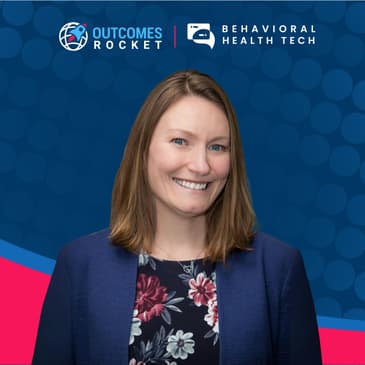
In this episode, Rebecca Warnken, Inclusive Benefits Leader at the Practice of Health Transformation at Aon, talks about navigating neurodiversity in the workplace and in healthcare. She discusses the challenges and opportunities associated with supporting neurodivergent individuals, both as employees and patients. Rebecca shares her personal and professional journey advocating for increased awareness, better benefits, and cultural competency in care for neurodivergent populations.
Tune in to learn how creating inclusive environments for neurodivergent individuals benefits everyone, from the workplace to healthcare!
Resources:
- Connect with and follow Rebecca Warnken on LinkedIn.
- Follow Aon on LinkedIn and explore their website.
Fast Track Your Business Growth:
Outcomes Rocket is a full service marketing agency focused on helping healthcare organizations like yours maximize your impact and accelerate growth. Learn more at outcomesrocket.com
[00:00:01] This podcast is produced by Outcomes Rocket, your healthcare exclusive digital marketing agency. Outcomes Rocket exists to help healthcare organizations like yours to maximize their impact and accelerate growth. Visit outcomesrocket.com or text us at 312-224-9945.
[00:00:25] Hey everyone, welcome back to another episode of Expanding Access recorded live here at the Behavioral Health Tech Conference in Arizona. I'm so excited to be hosting the amazing Rebecca Warnken. She is an Inclusive Benefits Leader at the Practice of Health Transformation at Aon.
[00:00:52] And I'm so excited to have her here to talk about her experiences in this space and how to make a big impact. So Rebecca, thanks so much for joining us. Thank you so much for having me. It's a pleasure. It's a pleasure. So what brings you to the conference? Well, I think just a great opportunity for people with this shared passion and mission to solve a lot of the big challenges in behavioral health to get together and just really share ideas. I think it's a different kind of conference. You know, it's less sales. It's less focused on, you know, you know, making a big sale. And it's just we're really here to solve big problems and do it together.
[00:01:22] I love that. And I'm definitely getting those vibes, too, from all of our guests walking the expo hall at being in sessions. I certainly feel that, too. Yes. A lot of shared mission here today. That's for sure. That's for sure. Rebecca, tell us a little bit about you and your experience. Absolutely. So I'm actually here today at the conference to talk on a couple panels on the topic of neurodiversity. And it's an area that's a big passion for me because of my own experience. So my journey started when my son, who's now 11, was diagnosed on the autism spectrum at age two.
[00:01:52] And this is back in 2015 when we were just starting to talk to employers about adding this new ABA coverage, applied behavioral analysis as a support way to help children on the autism spectrum. And little did I know I would be launched into that journey myself as a parent. Very quickly, I realized how difficult it was for us and even me working in the industry to access care for my child. Right. We were put on a wait list to see a developmental pediatrician that we were told maybe about 12 months.
[00:02:18] But I'm, of course, you know, type A was calling up every day to see if there's any cancellations. So I think we got in in about three or four months. But saw the developmental pediatrician. They did the screening, gave him the autism spectrum disorder diagnosis, a list of ABA providers and sent us on our way. I don't even think they scheduled a follow-up appointment for us. Wow. It was sort of like, great, here you go, go figure it out. So the next several years really were trying to navigate care for my son, really learning about the autism space. And that's not where my story ends, though. And actually, it was the start of my own personal journey.
[00:02:47] So as I was learning more about autism and reading about the experiences of women and girls, I started to see traits in myself that I identified with this people and the stories that were being told. And, of course, was never diagnosed or even on my radar. I was a woman in my 30s at the time realizing, oh, my gosh, I think I'm autistic. What does that mean for me? Being able to kind of look back on my life and think about things I had struggled with and the masking I had done really to get to the place I was in my life at that point.
[00:03:17] So, you know, for me, it's both as a parent and I now actually my second child was recently diagnosed with ADHD. So we are one big neurodivergent happy family. But I think navigating for me personally, that's the story I'm telling you now is very common. Yeah. Now we're getting better at recognizing and catching autism earlier and ADHD. And a lot of adults are now realizing, hey, wait a second. All these quirky things I thought about myself or all these things I struggled with. Or maybe I have a diagnosis of anxiety or something else. Maybe it's not that.
[00:03:47] Maybe I am neurodivergent myself. Yeah. Yeah. That's really fascinating. Super fascinating. And I love how you handle it all. You'll see the furious beyond below the water that I do every day. But yes, thank you. Yeah. No. And by the way, I love that you're speaking on it here at the conference. It's so important to have that lived experience, right? If you're going to be able to help people that are neurodivergent,
[00:04:14] how cool is it to get the help from somebody that's been there and done that? And I think people don't realize the scope of people impacted. One in six people are neurodivergent. So that's 15 to 20% of our population. And only about 3% of workers disclose a condition to their employers. So there's a lot of things happening there, right? There's the fear of stigma and the negative stereotypes that come with these conditions often. And also just the comfort and trust that you can share this with a manager
[00:04:43] and that that manager will know what to do. Totally. So I think a bigger issue for employers than they even realize today that the number of people affected by neurodiversity, it's really big. Yeah. I'm glad we're talking about this. What barriers and challenges have you faced in accessing support related to your mental health and well-being? Yeah. So I'm an open book. I was first diagnosed with anxiety after the birth of my second child. So postpartum anxiety. I was not only a new parent dealing with my second child, my older child was going through
[00:05:12] this process to get diagnosed. It was a lot for me. So I wasn't sleeping. I wasn't eating. Thankfully, I'm a supportive spouse who recognized you're not doing okay. And so I was able to get the help at that point. And so add anxiety to my chart. Well, I'm also someone who's a migraine sufferer. I have been my whole life. I'm someone who also has GI challenges. Went through a whole slew of doctors and specialists in my 20s. No one really figured out what was going on. I can now link all of those things to the fact that I'm autistic.
[00:05:38] And a lot of the masking I do every day just to cope with my sensory challenges and just kind of make sense and order of the world around me has manifested into anxiety, GI issues, migraines, right? And you wouldn't really think about all those conditions as being linked. So I have seen countless specialists. I've seen countless mental health providers until there was an understanding of the root cause of why I was experiencing those different physical and mental symptoms. There was never really going to be a way to help me really address those needs.
[00:06:06] So if you think about all the people out there that have been misdiagnosed with anxiety or depression or maybe have a co-according condition where they're autistic, ADHD, and maybe also anxiety. If we're not really addressing each of those things and understanding the unique needs of these different populations, we're not really going to be able to solve that emotional well-being need, right? And so how much spend are we investing in benefits and solutions?
[00:06:31] And if we're missing the 15 to 20% of the population that has those unique challenges and barriers, think about a loud, crowded waiting room at the doctor's office. If you are sensitive to light and sound, that could be a really uncomfortable experience for you. Or if you have trouble communicating how you feel or how you feel in the moment, it's going to be really hard for a provider without that training to really understand what's going on and provide you the help and care that you need. Wow. Yeah. And you're not addressing the root cause. Exactly. Exactly.
[00:07:02] And it's not even a medical condition at that point. I don't consider myself to be disabled, although many people on the spectrum do. I just, I have a different brain wiring and it means I experience my world a little bit differently than others. Yeah. And it's as much as about adjusting our environment that we're in and having that empathy and understanding as it is me and my own personal support. Yeah. No, I love that perspective. And so let's shift to your day job. Sure.
[00:07:26] You're working with large employers to evaluate and implement benefits and wellbeing strategies to support diverse workforces. To what extent is neurodiversity a priority for companies right now, given some of the challenges you outline in your own career and healthcare journey? Yeah. So neurodiversity is becoming a very hot topic for a couple of different reasons. First of all, you know, I'm talking about some of the challenges and barriers for autistic and neurodivergent people.
[00:07:52] There's also a lot of amazing skills, problem solving skills, creativity, pattern recognition. And it's not just tech jobs. There's a lot of different creativity. Think about all the diversity of brains and what we can do with that amazing power. So companies are cluing in that like, hey, wait a second, we're like missing out on this big population of talent if we're not recruiting and supporting people whose brains think differently. So there's, I think, a real business case for investing in neurodiverse talent, but it's not enough just to get the people in the door.
[00:08:21] We need to have the benefits and the support structure at a company to make sure that they're thriving and are able to be successful in a world built for neurotypical brains. Yeah, I love that perspective again. And thinking about building diverse workplaces is really great for results. Yep, absolutely. And there are companies like Microsoft that have done studies showing that more diverse cognitive diversity on their teams actually does increase productivity and increases innovation.
[00:08:51] Teams perform better when there's diverse thinking. And it makes sense, right? It does. Like the fact that we now have studies to really prove that neurodiversity is really important to our companies. And especially as AI is starting to manualize a lot of the routine work, the routine thinking in the middle, we need the people on the fringes, right? To continue to drive innovation. So we need neurodiverse talent and we also need to support them in a way that meets them where they are. Yeah. And as we advance our way of thinking about neurodiversity, I think we could start taking
[00:09:19] a look at, to your point, all the assets associated with that. Yeah, absolutely. Yeah. Okay. Well, super interesting. How are you helping clients expand access to mental health and neurodiversity care for their families and members? So I love, first of all, that this is called the Expanding Access Podcast. I would actually love to like unpack the word access a little bit in answering your question because I think often we think access as, oh, the number of providers within a certain number of miles of where I live.
[00:09:48] So physical brick and mortar providers. But I think it's a lot more complicated and nuanced when we're talking about a population where most providers haven't been trained to recognize and support neurodiverse needs. I actually, in preparation for this conference, was doing a little research of what percentage of providers, whether it's therapists or a PCP, actually get that training. And it's like not even on the radar to research yet. So I think there's not only the shortage of providers in the space to be able to diagnose
[00:10:16] and treat conditions like autism or ADHD. You know, these people also need to get basic primary care and might be managing a chronic condition like me with my migraines or my GI challenges. And if the providers are not trained from a cultural perspective in the needs of neurodivergent people, right, it's just not going to be a good outcome. So what we're doing is we're working with companies that are really starting to provide that care navigation, helping people find providers that understand their needs and background. Culturally competent care, I think, is a big buzzword now.
[00:10:46] But thinking about culture from also a neurodiversity perspective as well. And then also in the workplace, are companies evaluating their accommodations policies and their workplace policies to make sure that they're not creating unintended barriers for people who might not have a formal diagnosis or might not feel comfortable disclosing their condition to their manager. We need to increase the education and awareness about neurodiversity in the workplace because what happens is when you do that, people come out of the woodwork. Oh, yes, I have ADHD. I never told anyone.
[00:11:13] I'm getting that story over and over again as I'm starting to do this work more with employers that not only are we needing to focus on the hiring part, but all the people already at your company that need additional support. And think about all the different ways we like to communicate and collaborate and just different working styles. So supporting neurodivergent people actually benefits all of us. Right. So there's a lot of work to be done. But I think just starting with that education and awareness and auditing, what do you have in place today?
[00:11:41] And is this really meeting the needs? Ask your neurodivergent workers. Do you feel supported? That's a really great place to start. I love it. What a clear path there that you've laid for us. And so what advice would you give to managers and leaders? Yeah. We were talking big picture organizations, but for managers and leaders listening and watching who want to be more supportive with employees with these differences. Yeah. We get that question a lot because I think we're often thinking about the parent and caregiver perspective, which is me.
[00:12:11] Also neurodivergent people. That's me. But I'm also a manager and leader. And I don't know or understand the needs of all of my direct reports. And no one gives you a guidebook when you become a manager of what is neurodiversity and how to navigate this. Again, there's companies out there that are building those toolkits and we would love to help companies kind of make those connections. But really equipping managers so that someone does feel comfortable sharing that they have a neurocognitive condition and the manager can help that person find the right support.
[00:12:41] And I think just if we're talking about it more, like so many topics of the day, mental health, menopause, like neurodiversity needs to be in our lexicon of things we're talking about regularly. Love it. Well, I'm glad we're having this discussion and I'm glad we're having it on the podcast. So if you weren't at the conference, guess what? Now you have the opportunity to have learned this amazing topic. Let's spread the word. That's how we do it. Rebecca, what would you share as a closing thought for everybody watching and listening to us? And where's the best place they could reach out to you and the company?
[00:13:11] Well, I would say supporting neurodiversity is actually supporting everyone. I think we all can benefit from just more flexibility and empathy in the ways we prefer to work. So that's my first. And to reach me, you can find me, Rebecca Warnkin on LinkedIn. And you can also learn more about the services that Aon provides at aon.com. And I think you can be routed to me somehow through that website as well. I love it. Thank you for having me. Oh my gosh, Rebecca, such a pleasure. And for everybody watching and listening, thanks for tuning in to the Expanding Access podcast. Today, our episode with Rebecca Warnkin.
[00:13:40] She's an inclusive benefits leader for the health transformation practice at Aon. Just incredible opportunity to connect with her in the show notes. We're going to leave all the ways to get in touch. Make sure you spread the word. That's why we're doing this. That's why Rebecca came on to share her experience. So please make sure you share with the friend. Rebecca, thanks for doing this. Thank you so much.
[00:14:14] This podcast is produced by Outcomes Rocket, your healthcare exclusive digital marketing agency. Outcomes Rocket exists to help healthcare organizations like yours to maximize their impact and accelerate growth. Visit OutcomesRocket.com or text us at 312-224-9945.