
High deductible health plans have shifted a significant financial burden to patients, requiring new strategies for healthcare providers to collect payments.
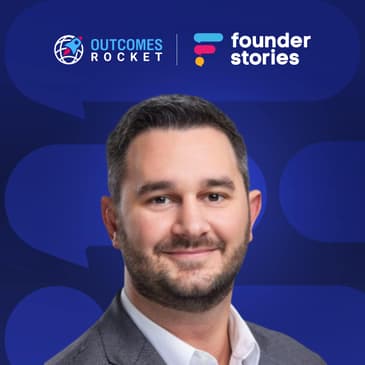
In this episode, Chris Cox, Chief Strategy Officer at iVitaFi, talks about his experiences with debt management and the challenges faced by hospitals in collecting payments. He explains how iVitaFi helps healthcare providers by offering non-recourse financing options that improve patient accessibility and reduce financial burdens for hospitals. Chris discusses the impact of high deductible health plans and the importance of digital transformation in healthcare, emphasizing the need for a patient-first approach and the potential role of AI once foundational digital systems are in place. He also shares insights on overcoming challenges like launching during the COVID-19 pandemic and highlights iVitaFi's commitment to providing 0% interest loans to patients.
Tune in and learn how innovative financing solutions can enhance healthcare accessibility and streamline revenue cycles!
Resources:
[00:00:02] [SPEAKER_00]: Hey everybody, welcome back to the Outcomes Rocket. I'm so excited to have you back on the
[00:00:08] [SPEAKER_00]: podcast today because I've got an extraordinary guest. We're talking a lot about founder stories.
[00:00:15] [SPEAKER_00]: That is the theme of our podcast now. Since we changed to this new theme, I've been meeting
[00:00:20] [SPEAKER_00]: such great people and one of those great people is Chris Cox. Chris is the Chief Strategy
[00:00:26] [SPEAKER_00]: Officer at iVitaFi. He's an expert on financial services, healthcare and fintech and he leads
[00:00:34] [SPEAKER_00]: product strategy and operations at the company. I'm excited to have him here on the podcast
[00:00:39] [SPEAKER_00]: to talk about the work that they're doing to make healthcare more accessible and to
[00:00:44] [SPEAKER_00]: health systems with their money. So Chris, thanks so much for being on the podcast.
[00:00:50] [SPEAKER_00]: Chris, thanks so.
[00:00:51] [SPEAKER_00]: Chris, being that we're indexing here on the founder story, tell us about you. What
[00:00:56] [SPEAKER_00]: is it that took you from doing what you were doing before and getting into entrepreneurship
[00:01:01] [SPEAKER_00]: and healthcare?
[00:01:02] [SPEAKER_01]: Chris Cox Sure. So I actually started my career in the financial services world, so I'm really
[00:01:07] [SPEAKER_01]: having nothing to do with healthcare and actually started working for a very large
[00:01:11] [SPEAKER_01]: debt buyer and saw just how many people were struggling to pay for credit card bills.
[00:01:18] [SPEAKER_01]: And I did that for a couple of years really running the analytics and ultimately think
[00:01:22] [SPEAKER_01]: by the time I left, I was managing a portfolio that was 40 or 50 billion in size. So just
[00:01:29] [SPEAKER_01]: massive dollars of people who can't afford to pay their bills. I then had an opportunity
[00:01:34] [SPEAKER_01]: to go work for a private investment fund who was making investments into kind of esoteric
[00:01:41] [SPEAKER_01]: industries and that's when I really started to see the healthcare challenges. We were
[00:01:48] [SPEAKER_01]: funding a company who was buying bad debt from hospitals and they were paying like a penny
[00:01:55] [SPEAKER_01]: or two pennies for the bills. And they were just massive files with tons of patients.
[00:02:02] [SPEAKER_01]: I'm thinking, gosh, there has to be a better way. And we got a group of people together
[00:02:07] [SPEAKER_01]: that had experience within this kind of specialty finance section of the industry and we
[00:02:14] [SPEAKER_01]: started digging around. And I was talking with a hospital CFO and I asked him, hey, how
[00:02:20] [SPEAKER_01]: much do you collect on your healthcare bills to patients? And he told me, we're doing
[00:02:24] [SPEAKER_01]: really good, Chris. We're doing about 35% in my job. That's not good. So that's really
[00:02:32] [SPEAKER_01]: where the impetus for the idea started and how we jumped in.
[00:02:35] [SPEAKER_00]: Well, yeah, man, I mean, billions of dollars, you were seeing this and pennies on the
[00:02:41] [SPEAKER_00]: dollar spreadsheets of patients. You're like, what is going on? That's healthcare right
[00:02:47] [SPEAKER_00]: now and it's terrible. And so accessibility is a huge issue. You wanted to do something
[00:02:53] [SPEAKER_00]: about it. And as we think about this, the one question that I did have on the business
[00:02:57] [SPEAKER_00]: is are you guys focused on the cash paying side then? Non-insurance?
[00:03:02] [SPEAKER_01]: Actually, we do both. So oftentimes, and we'll talk about this, I'm sure as
[00:03:07] [SPEAKER_01]: the show goes on, but folks are more and more often in rolling into high deductible
[00:03:13] [SPEAKER_01]: healthcare plans. So when you go to the doctor or the hospital, you're going to have a two,
[00:03:20] [SPEAKER_01]: three, four thousand dollar out of pocket that you'll have to pay for that visit. And
[00:03:26] [SPEAKER_01]: that's with insurance, right? If you don't have insurance, now you're talking to the
[00:03:30] [SPEAKER_01]: tune of potentially tens of thousands of dollars. But we focused really on both
[00:03:35] [SPEAKER_01]: sides of the uninsured, underinsured and the insured.
[00:03:41] [SPEAKER_00]: Understood. Got it. Thank you. Thank you. That's good to know. And so help us understand
[00:03:46] [SPEAKER_00]: how you guys are really helping unlock the revenue cycle for health systems and where
[00:03:53] [SPEAKER_01]: you're adding value. Sure. So if you think about where healthcare, well, I'm going to
[00:03:58] [SPEAKER_01]: take a step back and do a little storytelling. Sure. So if you think back in like the
[00:04:02] [SPEAKER_01]: nineties or early 2000s, around 90% of the financial burden of healthcare was being
[00:04:11] [SPEAKER_01]: shouldered by the payers, the insurance companies, right? Well then something
[00:04:15] [SPEAKER_01]: unique happened. There is the advent of the ACA and the really the popularity of
[00:04:22] [SPEAKER_01]: high deductible healthcare plans really started to take off. And what that did
[00:04:27] [SPEAKER_01]: is it shifted a lot of that financial burden over to the patient. So now we're
[00:04:31] [SPEAKER_01]: seeing about 20 to 30% of the financial burden is supported by that patient. Why
[00:04:36] [SPEAKER_01]: is that important? Well, these hospitals have built all of their systems, their
[00:04:40] [SPEAKER_01]: technology, their talent is focused on the reimbursement of claims by the
[00:04:46] [SPEAKER_01]: payer. And now they're finding that a large portion of the financial burden
[00:04:51] [SPEAKER_01]: is now the patient and you need a totally different strategy and approach
[00:04:54] [SPEAKER_01]: to that. And that's really where we plug ourselves in is helping these providers
[00:05:02] [SPEAKER_01]: in collecting from their patient population in a means that doesn't
[00:05:06] [SPEAKER_01]: frustrate that patient. If you think about the current workflow today, they
[00:05:12] [SPEAKER_01]: spend months and tons of time and people to try and collect this 30 to
[00:05:16] [SPEAKER_01]: 40 cents on the dollar where you plug in us where we're an embedded
[00:05:22] [SPEAKER_01]: financing company seamlessly integrated within the RCM workflow. You can
[00:05:28] [SPEAKER_01]: almost think of us like a payer in some respects. If you enroll the patient
[00:05:32] [SPEAKER_01]: into our program, we cut a check to the hospital for twice that they would
[00:05:38] [SPEAKER_01]: have collected on their own without any of the cost. And that's what we plug
[00:05:41] [SPEAKER_00]: in. Chris, yeah, that makes a lot of sense. And so are you guys so then
[00:05:45] [SPEAKER_00]: your company comes in? So I need to find comes in. Is it part of the
[00:05:49] [SPEAKER_00]: enrollment? Like the patient gets admitted and it's part of the discussion
[00:05:56] [SPEAKER_00]: like, Hey, what are you going to do about your deductible? Well, we have this
[00:06:00] [SPEAKER_00]: plan. Go ahead and sign up. You catch it that early or you catch it further
[00:06:04] [SPEAKER_01]: downstream. We do. And that was actually something that's unique to our
[00:06:07] [SPEAKER_01]: offering. We built our program with free service in mind and being
[00:06:14] [SPEAKER_01]: able to advance the discussion around the balance because I don't know
[00:06:20] [SPEAKER_01]: about your personal experiences with the US health system. We just had a
[00:06:24] [SPEAKER_01]: baby in February and congratulations. Thank you. And you go through this
[00:06:28] [SPEAKER_01]: whole process, no one brings up cost until you get a bill 45 days later.
[00:06:34] [SPEAKER_01]: And it's like, gosh, there's a better way to do this. Bring that
[00:06:37] [SPEAKER_01]: conversation forward and start communicating and setting expectations
[00:06:41] [SPEAKER_01]: so that people understand that they will owe a balance and estimate of how
[00:06:46] [SPEAKER_01]: much it will be. And that's really where we see the vast majority of use
[00:06:51] [SPEAKER_01]: for our program is at that patient access point. So it could be done
[00:06:55] [SPEAKER_01]: as early as scheduling, but we're also we've trained the staff to
[00:06:59] [SPEAKER_01]: offer it at registration. It could be bedside if it's in their
[00:07:03] [SPEAKER_01]: emergency department or post service through their typical billing
[00:07:07] [SPEAKER_01]: or donning statements.
[00:07:09] [SPEAKER_00]: Got it. Fantastic. Now, it's great to know and it definitely is a great way
[00:07:15] [SPEAKER_00]: for patients to be able to pay for these things and for health systems
[00:07:20] [SPEAKER_00]: to capture that collection upfront. So you mentioned right one of the key
[00:07:25] [SPEAKER_00]: differentiators that you guys do is where you show up in the revenue cycle
[00:07:30] [SPEAKER_00]: process. Anything else you want to highlight as things you guys do
[00:07:33] [SPEAKER_00]: different or better than what's out there?
[00:07:35] [SPEAKER_01]: Sure. No, it's a good question because there's lots of different patient
[00:07:39] [SPEAKER_01]: financing options out there and it actually took me some time to
[00:07:42] [SPEAKER_01]: understand and learn it all. So when you think about patient financing,
[00:07:46] [SPEAKER_01]: it really started with hospitals offering payment plans.
[00:07:50] [SPEAKER_01]: Payment plans have been around forever and they're not going anywhere.
[00:07:54] [SPEAKER_01]: The hospitals don't really love them because they're the pain in the butt
[00:07:57] [SPEAKER_01]: to administer and manage if you're not specifically built to run payment
[00:08:02] [SPEAKER_01]: plans. An example is someone's debit card expires, right? Well, that payment now
[00:08:06] [SPEAKER_01]: broke and now you've got to have someone to call them which now you
[00:08:10] [SPEAKER_01]: have a call center. So you have all these things that you don't really,
[00:08:14] [SPEAKER_01]: they're not purpose built to do that, right? Recourse lenders came around
[00:08:17] [SPEAKER_01]: in the I think the 80s maybe 80s 90s and basically what recourse means
[00:08:22] [SPEAKER_01]: is that the patient takes out a loan through this lender.
[00:08:26] [SPEAKER_01]: The lender will advance the funds to the provider
[00:08:30] [SPEAKER_01]: and so long as the patient makes their payments, everything's kosher.
[00:08:34] [SPEAKER_01]: But if the patient runs into hardship and starts missing payments,
[00:08:38] [SPEAKER_01]: the hospital actually has to hand the money back to the lender
[00:08:43] [SPEAKER_01]: and then the patient experience there is really walkie, right?
[00:08:46] [SPEAKER_01]: Like where does the patient fit into this transaction?
[00:08:51] [SPEAKER_01]: It seems like a bad deal.
[00:08:53] [SPEAKER_01]: Yeah. And if you think about it economically, it's no different than a payment plan
[00:08:56] [SPEAKER_01]: because once you stop, once they stop paying, you have to give back the money that wasn't paid
[00:09:00] [SPEAKER_01]: back. So it's not, it creates friction for the providers.
[00:09:05] [SPEAKER_01]: So what we do is completely non-recourse meaning it's what you typically think of
[00:09:09] [SPEAKER_01]: as a loan, right? We advance the money and if they stop paying, that's for us to eat.
[00:09:15] [SPEAKER_01]: And I think what really makes us unique is that our program is designed for everybody in mind.
[00:09:22] [SPEAKER_01]: So we believe that everybody deserves access to affordable healthcare
[00:09:27] [SPEAKER_01]: and not just the folks with gold-plated American Express cards.
[00:09:31] [SPEAKER_01]: So our approval rates into our program are north of 95%
[00:09:35] [SPEAKER_01]: and we never charge interest. We're a 0% interest company.
[00:09:40] [SPEAKER_01]: Some of our competitors out there will offer promotional 0% interest
[00:09:44] [SPEAKER_01]: and then retroactively charge you interest if you miss a payment.
[00:09:48] [SPEAKER_01]: We don't do any of that. It's truly zero interest.
[00:09:50] [SPEAKER_00]: That's pretty cool. That's pretty differentiated.
[00:09:54] [SPEAKER_00]: So then you guys just doing some rev share with the hospital on it then?
[00:09:58] [SPEAKER_01]: So basically what the hospital do is we'll go in and look at their data and say,
[00:10:01] [SPEAKER_01]: hey, how much are you collecting from your patient population?
[00:10:04] [SPEAKER_01]: And if it's 30, 40 cents on the dollar, we'll go in and say, hey, we'll give you
[00:10:09] [SPEAKER_01]: 70 cents on the dollar. So you can basically...
[00:10:12] [SPEAKER_01]: So they're winning off the bat.
[00:10:13] [SPEAKER_01]: You're winning off the bat. You have cost reduction from the provider side
[00:10:17] [SPEAKER_01]: because now they don't have to go face after it.
[00:10:18] [SPEAKER_01]: And they know that from the patient's perspective,
[00:10:21] [SPEAKER_01]: they're placing their trust in us to treat their patient
[00:10:25] [SPEAKER_01]: and we're never going to charge an interest or...
[00:10:28] [SPEAKER_01]: I mean, we even pay their leak fees from the bank.
[00:10:31] [SPEAKER_01]: So we are definitely a patient-first company.
[00:10:35] [SPEAKER_00]: Man, that's awesome. I was just assuming...
[00:10:38] [SPEAKER_00]: I was thinking this. I wasn't saying it.
[00:10:41] [SPEAKER_00]: I'm like, okay, cool. They must have some...
[00:10:43] [SPEAKER_00]: I don't know where their interest rates are.
[00:10:45] [SPEAKER_00]: And then you said this. So it's like you're right in my mind.
[00:10:48] [SPEAKER_00]: That's pretty cool, man. And that is a patient-first approach.
[00:10:53] [SPEAKER_00]: And I love it. And the other thing that I love is,
[00:10:56] [SPEAKER_00]: from a provider perspective, you don't have these clawbacks.
[00:11:00] [SPEAKER_00]: Like it's just like a really de-risk thing for the provider.
[00:11:05] [SPEAKER_00]: The pay... It's an access play. I love it.
[00:11:07] [SPEAKER_00]: Yeah.
[00:11:07] [SPEAKER_00]: I love it. Kudos, man. That's awesome.
[00:11:10] [SPEAKER_01]: Thank you. We strive to make it as simple as possible
[00:11:13] [SPEAKER_01]: because when we were serving the market,
[00:11:16] [SPEAKER_01]: trying to understand the financial modeling of some of these recourse providers,
[00:11:22] [SPEAKER_01]: it was really hard to understand how the money movement worked and the pricing mechanics worked.
[00:11:28] [SPEAKER_01]: And I was like, guys, you just need to make this stupid simple.
[00:11:30] [SPEAKER_01]: And that's what we've aimed to do.
[00:11:33] [SPEAKER_00]: That's awesome. Wow. Cool. I love it, man.
[00:11:36] [SPEAKER_00]: Great solution. For anybody listening, if you're in the...
[00:11:40] [SPEAKER_00]: If you're in the Rebs cycle game at a health system, or if you're not and you have a friend that is,
[00:11:46] [SPEAKER_00]: like definitely something you want to share, share this podcast.
[00:11:49] [SPEAKER_00]: Share it with a friend. That's how we get the word out on things like this.
[00:11:54] [SPEAKER_00]: Don't just sit on it. Forward it via text.
[00:11:57] [SPEAKER_00]: We're going to post this on LinkedIn.
[00:11:59] [SPEAKER_00]: Copy people on LinkedIn. Let's have a conversation about this because
[00:12:03] [SPEAKER_00]: it's an important conversation and we need more companies like IVidify
[00:12:07] [SPEAKER_00]: to make access friendly and not trying to make money off of every little thing.
[00:12:13] [SPEAKER_00]: Chris, as you guys have built a company and thinking as entrepreneurs here,
[00:12:17] [SPEAKER_00]: it's not always easy. We face setbacks. Can you think about a setback that you guys experienced
[00:12:23] [SPEAKER_00]: and what you learned from that key learning that's made you guys even better?
[00:12:27] [SPEAKER_01]: I think I'd have to point to the obvious answer here.
[00:12:33] [SPEAKER_01]: We launched our offering in the fall of 2019, which was obviously right before COVID.
[00:12:42] [SPEAKER_01]: And I can promise you, Saul, we did not have global pandemic on our enterprise risk assessment
[00:12:49] [SPEAKER_01]: when we were launching. I know what I'm saying.
[00:12:54] [SPEAKER_00]: That's so short-sighted, Chris.
[00:12:56] [SPEAKER_01]: Awful. So COVID was interesting because it gave us an opportunity to be introspective
[00:13:05] [SPEAKER_01]: because our thesis, our go-to-market thesis was to go and call on these hospital CFOs
[00:13:11] [SPEAKER_01]: and VPs of revenue cycle within hospitals but realize that they were a little preoccupied.
[00:13:16] [SPEAKER_01]: So we took that as an opportunity to focus inward and be hyper focused on our product
[00:13:23] [SPEAKER_01]: and making sure that the user experience was as seamless as possible, understanding that there
[00:13:29] [SPEAKER_01]: was so much noise and friction in the world. We wanted this to be as easy as paying for an Uber,
[00:13:36] [SPEAKER_01]: right? When you don't even think about it when you whip out your phone to pay for an Uber,
[00:13:40] [SPEAKER_01]: it's that seamless. That was what we had in mind for embedding the financing program
[00:13:47] [SPEAKER_01]: within the workflow of the revenue cycle. Additionally, we expanded our scope and started
[00:13:55] [SPEAKER_01]: focusing on ancillary health care services too outside of hospitals because there's a lot
[00:14:00] [SPEAKER_01]: of health care being done outside of hospitals. And as a result of those two things, we've seen
[00:14:07] [SPEAKER_01]: triple digit growth every year since. So it's been an interesting ride for sure.
[00:14:13] [SPEAKER_00]: And when you do the right thing, you solve the right problems in the right way, you're solving
[00:14:20] [SPEAKER_00]: problems for all of the stakeholders in that value chain. You're going to grow. And I think this is
[00:14:27] [SPEAKER_00]: an important message that we all should be thinking about is what's that network that you're
[00:14:34] [SPEAKER_00]: working in and are you providing value? This idea of every organism in the ecosystem has a role
[00:14:41] [SPEAKER_00]: in the minute that they don't serve a purpose, they get extinct. So you guys are like symbiotic
[00:14:48] [SPEAKER_00]: man with all of the organisms and you're having success triple digit growth. Congratulations.
[00:14:53] [SPEAKER_00]: I love hearing these types of growth stories. Chris, my pleasure. Look, leave us with the
[00:14:59] [SPEAKER_00]: closing thought. What do you want us to be thinking about? And for anybody listening to
[00:15:04] [SPEAKER_00]: this that you want to connect with that you want to learn more about you and I vitify
[00:15:09] [SPEAKER_00]: where can they find you? So take away and where can they find you?
[00:15:13] [SPEAKER_01]: Sure. So I think I'll leave the audience with kind of my thoughts on where the industry is going,
[00:15:22] [SPEAKER_01]: which is I think the fancy or the trendy answer would be like, oh, it's AI, right? Because AI
[00:15:27] [SPEAKER_01]: is now the flashy buzzword for, it's the answer to every question. I actually don't
[00:15:32] [SPEAKER_01]: think healthcare is ready for AI yet. And there's more of a digital transformation that's
[00:15:37] [SPEAKER_01]: needed. And the story that I like to tell, I was traveling for work a few years ago. I found myself
[00:15:44] [SPEAKER_01]: in Denver, Colorado. And I was, it was one of those, I was on a campaign, right? You wake up
[00:15:50] [SPEAKER_01]: in the morning, you don't know which state you're in. And I'm checking into the hotel,
[00:15:54] [SPEAKER_01]: it was a Marriott property and I see Kayla at the front desk and she's nice, but not overly
[00:16:00] [SPEAKER_01]: nice. I get checked in. You could tell she may not have been having a good day.
[00:16:03] [SPEAKER_01]: I get up to my room, I take out my car and I let myself in the room and my phone paints.
[00:16:09] [SPEAKER_01]: It looks like I had a text message and I look at it and it's Kayla. And she's saying, hey,
[00:16:15] [SPEAKER_01]: I hope you have a great stay. Please text me if you have any questions. We're happy to have you
[00:16:21] [SPEAKER_01]: with a little smiley face. And I'm like, oh my gosh, it's so kind. And it hit me.
[00:16:25] [SPEAKER_01]: What was it? Kayla, she's having a bad day. Like this was all automated, right?
[00:16:29] [SPEAKER_01]: It was all automated to say the register at the front, insert their name. And as soon as I swipe
[00:16:36] [SPEAKER_01]: my cards and make this text message, and it's like, why can't we have more of this in healthcare?
[00:16:41] [SPEAKER_01]: It is really this digital transformation that needs to continue to occur. I think about
[00:16:46] [SPEAKER_01]: healthcare, we avoid having conversations around price transparency. We avoid conversations
[00:16:52] [SPEAKER_01]: altogether. Most of the communication is done either over the phone or using paper billing
[00:16:57] [SPEAKER_01]: statements, which that's antiquated now. So really taking this digital first perspective and being
[00:17:04] [SPEAKER_01]: laser focused on the patient experience is where I think we need to go. And then once you have that
[00:17:10] [SPEAKER_01]: bad rock figured out, then you can start to layer on AI on top of it to then improve it.
[00:17:15] [SPEAKER_01]: We'll say so. That's what I'm excited to continue to monitor and watch in healthcare.
[00:17:20] [SPEAKER_01]: If anybody wants to learn more about our company or me, you can contact me on LinkedIn.
[00:17:25] [SPEAKER_01]: If you search for Chris Cox, there's probably 500 of us out there. So search for Chris.
[00:17:30] [SPEAKER_00]: We'll put the right one in the show notes. We'll put the right one in the show notes.
[00:17:34] [SPEAKER_00]: Yeah. Perfect. And then the website probably, right?
[00:17:37] [SPEAKER_01]: Yep. You want to go to our website, ID to financial, ID, financial.com. And you can follow us there too.
[00:17:45] [SPEAKER_00]: Amazing. Well, Chris, thank you. This has been informative, insightful. Love the work
[00:17:52] [SPEAKER_00]: you guys are doing. Love your entrepreneur story. And for all the listeners out there,
[00:17:57] [SPEAKER_00]: man, there's pearls of wisdom in our chat with Chris today, not only from a ref cycle
[00:18:01] [SPEAKER_00]: management, but also from a business development standpoint. So definitely one I would
[00:18:06] [SPEAKER_00]: re-listen to and take some notes on. Thank you all for tuning in. Stay tuned until our next
[00:18:11] [SPEAKER_00]: time. But until then, Chris, we want to thank you for being with us.
[00:18:14] [SPEAKER_01]: Thank you so much. Thanks for having me.