
Contraceptive care is being integrated into primary healthcare to improve accessibility and support.
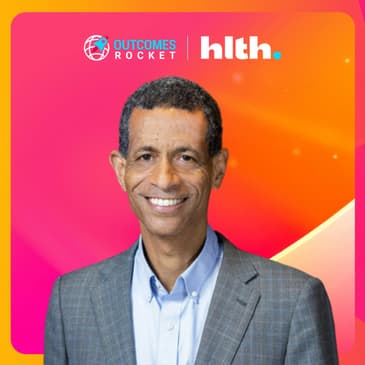
In this episode, Mark Edwards, co-founder and CEO of Upstream, explains that Upstream's mission is to ensure high-quality contraceptive services are accessible in primary care settings. This work addresses "contraceptive deserts" and supports clinicians in states with challenging reproductive health environments by training a wide range of healthcare providers. Mark highlights success stories in states with restricted abortion access, where healthcare organizations have expanded contraceptive offerings. He also explains how Upstream aims to assist providers in adopting contraceptive care as standard practice, making it possible for patients to receive immediate counseling and the method of choice during their visits.
Tune in to learn how Upstream is transforming contraceptive care in primary healthcare!
Resources:
Connect with and follow Mark Edwards on LinkedIn.
Follow Upstream USA on LinkedIn and visit their website.
Contact Upstream USA at info@upstream.org
[00:00:01] This podcast is produced by Outcomes Rocket, your healthcare exclusive digital marketing agency. Outcomes Rocket exists to help healthcare organizations like yours to maximize their impact and accelerate growth. Visit outcomesrocket.com or text us at 312-224-9945.
[00:00:33] Hello and welcome to another episode of the Beat Live Video Series. Today I have the privilege of hosting Mark with us. He is the co-founder and CEO of Upstream. Welcome, Mark. Mark Edwards Thanks for being here. Mark Edwards It's such a pleasure to be here with you. You're doing incredible work in the contraceptive space. Can you start off by telling us a little bit more about your organization? Mark Edwards Sure. I co-founded Upstream about 10 years or so ago.
[00:01:00] Mark Edwards We are the largest organization in the country training primary care facilities to provide best-in-class contraceptive care. Mark Edwards Our view is that high quality care should not just be in specialty clinics or women's health, but this should really be a centerpiece of primary care. Mark Edwards And we bring a strong equity lens to the work. Mark Edwards And so we're really trying to make sure that patients who are the most vulnerable get access to best-in-class contraceptive care.
[00:01:26] Mark Edwards Thanks, Mark. It's really important work. And today it's a difficult environment out there. Why should healthcare organizations be focused on this challenge? Mark Edwards So what the data shows is that in many places in this country, there are contraceptive deserts and there are places that OBGYNs are leaving. Mark Edwards And high quality contraceptive care can be really done by a whole variety of clinicians, not just by OBs.
[00:01:50] Mark Edwards And so particularly in those states that have less than positive reproductive healthcare environments, it's really important that this is actually a part of primary care, not just in specialty care. Mark Edwards And today there's a lot of opportunities like this that take a look at the convergence of healthcare where one particular specialty doesn't have to do it all.
[00:02:09] Mark Edwards This is important, especially in this environment of budgets, just restricted opportunities for health systems to make an impact. How can they do that? And can we really expect them to address this problem? Mark Edwards So we absolutely can. Right now we are working in 31 states. Mark Edwards We have worked with health centers that serve close to a million patients every single year on our way to serving health centers that work with 5 million patients.
[00:02:33] Mark Edwards And so what you see is that if you actually think about this from a systems perspective and work with the entire healthcare team, this can just become a regular part of care. Mark Edwards You can make sure that they are stocking the methods, that they have enough providers who are trained. Mark Edwards They know how to bill and code properly so they can get reimbursed. Mark Edwards This is all the work that we do to help them provide that high quality care. Mark Edwards And look, I get it. Primary care is under a lot of pressure right now. Mark Edwards But at the same time, given what's going on with reproductive access in this country,
[00:03:01] Mark Edwards It's so important that in primary care where the bulk of patients are seen, they're doing this high quality work. Mark Edwards And Mark, I know there's a lot of different ways that your organization assists organizations. Mark Edwards How much of it is boots on the ground versus digital? Mark Edwards So it's really both. Mark Edwards We've really come up with a very customized way of doing this training that really takes the burden of work. and off of the providers and support staff and makes it as easy as possible for them. So we have asynchronous training, which is part of this.
[00:03:31] We also do some in-person work to make sure that clinicians know how to place and remove, particularly IUDs and implants. And so we do that procedural-based work. But the point is, let's make it very customized. If your healthcare organization can do some of this work, but not all of it, we'll tailor it to make sure you're only getting trained on what you need to know. Wow, that's just impressive and something that I think all of our communities need. What are you seeing as pockets of success that the folks watching this can learn from?
[00:04:00] So because we're working now in 31 states, more than half of those states are actually states that have restricted access to abortion. So we're doing a lot of work right now in places like Texas, Louisiana, South Dakota, Missouri. And in all those places, we're seeing real success. We're seeing providers who are saying, we've got to do a better job with contraceptive access and care. And so we're seeing a lot of incoming interest because the work we do is entirely free. We bring some resources to help offset some of the training time. And you see some healthcare organizations
[00:04:30] that, for example, were doing no birth control at all. And now they're really able to offer the full range of methods to patients who come in. So a patient comes in and one of the things that happens is they get screened for the first time. They're screened and told, do you plan to become a parent in the next year? Now a standard screening question. If the answer is no, I don't, the important thing is they should be able to get counseled in that visit and then be able to leave with the method of their choice in that visit. And so they're healthcare organizations that have never done any of this work at all and are now doing it. And what we hear from them
[00:05:00] is they've really been empowered. They really are now serving patients in ways that really help them achieve their own goals. I think that's beautiful. And especially highlighting this, the laws against abortion, it becomes more important. And from your perspective, inside of these markets, how important is it for health systems to partner with government organizations to provide the care or even FQHC centers? So what we know is that many people want to do the right thing.
[00:05:30] They just don't have the training to be able to do that. And it's also hard to find time to get the training done when you're in a busy healthcare practice. And so we really try to make sure that we're customizing this work and doing it in many health centers where they are. So they're not spending a lot of extra time doing things they don't need to. So it would be wonderful if organizations like ours didn't have to exist. But the truth is that too often this work is siloed. And the truth is that this issue of contraceptive access has been a problem now
[00:06:00] for a long time. This is not just a recent phenomenon. The data shows that many patients are not able to get the methods they want. Many patients aren't getting, aren't on the methods they want to be on because the places they get their care are just not able to deliver. And so it's enormously important at this moment that we really lift up healthcare providers and think about this as a centerpiece of primary care. I think that's a beautiful mission. Why do you do what you do? Why this segment of healthcare? Why is it so important to you?
[00:06:29] So I think this is so important because what we know is that enabling people to get pregnant only when they want to is one of the most powerful things we can do to make sure they can achieve their own goals. I was working in a very different sector in the community college sector and saw how frequently people were getting derailed from their own trajectories because they got pregnant before they wanted to get pregnant. And so the irony is that we have a policy environment which by and large actually enables this work. It's just the healthcare environment is not set up to do this well.
[00:06:58] And so if we can just build this into basic primary healthcare and really empower everyone, whether they come in for their annual visit or their diabetes appointment, they can be asked and screened, do you plan to become a parent in the next year? And then ensure that if they don't, they really get the tools so they can choose the method that really works best for them. And so I've seen over and over again that when you can actually give people those tools, they'll make the choices that work for them and it enables them to achieve all their other goals.
[00:07:27] The ripple effect of your kindness and also this organization that you've built, I'm sure is being felt by many women, many families. So thanks for what you do. Well, thanks for having me. The real heroes here are the healthcare providers. Those are the ones who are seeing patients every day. And if they can just be trained up so they can actually do what they want to do, we see great results. Mark, I have one last question for you. Here at Health this year, the theme is bold. And so what bold moves
[00:07:57] is Upstream making this year to help achieve your big goals? 10 years ago, our very first year, we trained about six health centers that served about 30,000 patients. We're now on a path to try to serve health centers that serve 5 million patients. So we are interested in going nationwide. As I said, we're in 31 states now plus the District of Columbia. There's no state in the country that has great contraceptive access. And so our goal is to really be everywhere and ensure that people can get their birth control
[00:08:27] wherever they want it. It's a beautiful mission. Congratulations on the success. If anybody watching this wants to connect with you and learn more about how they too can take advantage of the services you offer, how can they reach out to you? Just email it to info at upstream.org. And we've got a whole team that is set up. We are willing and eager to work with anybody who's willing to prioritize this care. So we've got the resources to do it. We've got the financial resources to do it. We've got the expertise. And the goal here is to really make sure
[00:08:56] that anybody who wants to embed this high quality care into their practice can get trained to do so. Well, thank you so much for that call to action, Mark, and for being with us today. Thanks for having me, Saul. Folks, Mark Edwards, CEO of Upstream here with us. Make sure you check out the show notes on this episode to take advantage of the amazing services they're doing to revolutionize this area of care. Thanks, Mark. Thanks, Saul.
[00:09:42] This podcast is produced by Outcomes Rocket, your healthcare exclusive digital marketing agency. Outcomes Rocket exists to help healthcare organizations like yours to maximize their impact and accelerate growth. Visit outcomesrocket.com or text us at 312-224-9945. Thank you.