
The Guthrie Clinic advances rural healthcare with digital transformation and patient-centered innovation.
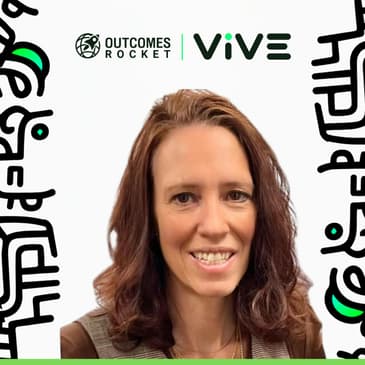
In this episode, Terri Couts, Executive Vice President and Chief Digital Officer at The Guthrie Clinic, discusses how her organization is helping to drive change in healthcare delivery. She shares insights into the integrated centralized care model redesign in their pulse center, which allows for real-time patient monitoring and supports virtual nursing. Terri also emphasizes the importance of balancing innovation with sustainability, building internal capabilities, and focusing on solving real problems. Finally, she touches on the role of leadership in fostering a culture of digital transformation and the impact of AI and virtual care models in addressing workforce shortages and improving patient access.
Tune in and learn how The Guthrie Clinic is leveraging technology to meet patients where they are, close care gaps, and create seamless experiences for both patients and providers!
Resources:
[00:00:01] This podcast is produced by Outcomes Rocket, your healthcare exclusive digital marketing agency. Outcomes Rocket exists to help healthcare organizations like yours to maximize their impact and accelerate growth. Visit outcomesrocket.com or text us at 312-224-9945.
[00:00:35] Hello everyone and welcome back to the Beat Podcast. I'm so excited that you guys joined us for another episode today because we have the outstanding Terri Couts with us. She is the Executive Vice President and Chief Digital Officer at the Guthrie Clinic. She's an accomplished healthcare technology leader with a passion for driving innovation and clinical care through digital transformation. Terri, welcome to the podcast. Terri Couts of The Guthrie Clinic Thank you so much for having me. We're excited to be here. Terri Couts of The Guthrie Clinic
[00:01:04] Oh, listen, it was a pleasure to have you be part of the VIVE conference and we're thrilled to get to know you and your organization better. So let's get started. How's your organization helping to drive change in healthcare delivery? Great question. At the Guthrie Clinic, we're really focused on building a more connected, intelligent, and patient-centered health system. We're doing this through providing integrated, centralized care model redesign in our Pulse Center. This is a center that allows us to monitor patients across our facilities real time. Terri Couts of The Guthrie Clinic
[00:01:33] It supports virtual nursing and enhanced care transitions. And we're really looking at investing in digital health solutions like remote patient monitoring or enhanced telemedicine to ensure that we can provide care beyond our extended hospital walls. Terri Couts of The Guthrie Clinic
[00:01:48] And this is really to address our rural healthcare setting and the underserved communities that we have. We don't sit in a community that allows us to do something like medical home. And so we really want to push the envelope of that structure to where to providing care in place. It's all about meeting the people where they are and using that technology to close those care gaps and creating an experience that feels seamless for both patients and providers. We serve about a 10,000 square mile region. And we really want to serve the patients where they're going to be.
[00:02:18] Terri Couts of The Guthrie Clinic And that could be in their home. It could be in a clinic or it can be in a hospital setting, but really just meeting their needs when they need it. Terri Couts of The Guthrie Clinic I love that. You got to use everything that you have at your disposal to be able to take care of folks. So that's great. And so let's talk about approaching a balance between innovation and sustainability and healthcare IT. How do you approach that? Terri Couts of The Guthrie Clinic
[00:02:44] Yeah, this is something that I get asked all the time because particularly in IT, you have a lot of things you need to keep the lights on. So there's everyday business needs, but then you have to be innovative too. And so how do you do that? And we're very intentional about balancing forward thinking and forward looking innovation. Terri Couts of The Guthrie Clinic
[00:03:45] Terri Couts of The Guthrie Clinic Terri Couts of The Guthrie Clinic Terri Couts of The Guthrie Clinic
[00:04:17] Terri Couts of The Guthrie Clinic Terri Couts of The Guthrie Clinic Terri Couts of The Guthrie Clinic Terri Couts of The Guthrie Clinic Terri Couts of The Guthrie Clinic Terri Couts of The Guthrie Clinic Terri Couts of The Guthrie Clinic Terri Couts of The Guthrie Clinic Terri Couts of The Guthrie Clinic Terri Couts of The Guthrie Clinic Terri Couts of The Guthrie Clinic Terri Couts of The Guthrie Clinic Terri Couts of The Guthrie Clinic
[00:04:43] very meaningful. At Guthrie, we really created a culture where IT, clinical, and operational leaders co-own transformation. It is not an IT-led project. It is a clinical-led project or a business-led project that IT help enables. And this helps us as we've made digital care model redesigns and allowed clinicians to do work differently. It helps with acceptance. It helps with the change management and, again, the ongoing sustainability. That's great. Leadership
[00:05:12] sets the tone, no doubt about it. And it seems like every year there's something new. There's trends. There's technologies. What's top of mind for you and what you believe is going to make the biggest impact over the next five years? Yeah. I mean, I hate to say it because AI, the last couple of years has been the buzzword, but I think we're beyond the buzzword with AI. I think it's really going to fundamentally reshape healthcare. And it's not about replacing people,
[00:05:39] but it's doing things differently and more smart. And what I mean by that is we have workforce challenges. That's not going to change. And so how do we redesign the care model to do the work just a little bit differently and make sure that those teams are working at the top of their scope of practice, whether that be front office or the clinician? So we're looking at everything from ambient documentation to predictive analytics. I think it's even more important that there's a convergence
[00:06:09] between AI and virtual care models that's going to really allow us to kind of superpower this transition. I think together, these technologies are going to allow healthcare systems to operate with greater efficiency. You know, we're really focused on provider and clinician burnout, particularly in our nurses as well. And we want to proactively manage our population health. I think as we get into more value-based care, these kinds of models are really going to help us transform. And if you're not getting there today, you're going to be behind.
[00:06:38] Yeah, for sure. I couldn't agree with you more, Terry. And so as you think about the problems that your organization solves, I know you're in a rural area, so there's obstacles there. What would you say the biggest pain points you all are solving today are? I think it's probably not unique to other healthcare systems, just maybe a little bit more pronounced in the rural setting, but, you know, workforce shortages are a huge barrier for us. We can't keep
[00:07:04] up with the cost of staff either. And so, you know, financial acclimate to that, care access. Again, we serve a 10,000 square mile region. It's not unusual for a patient to have to drive an hour and a half to two hours to get specialty care. We have OB services that are almost gone in most regions. And so how do we get that care access to our patients? And then again, clinician burnout, you know,
[00:07:33] you've heard for years about provider burnout and how many clicks providers have to do, but we're really seeing it in our front office staff, our nursing staff, even my IT staff talks about burnout. And, you know, those are all high on the list. We're tackling each one of these by trying to rethink differently. How can we deliver care differently? We just had a transformation meeting where we were just, throwing out ideas of what are things that can be transformative. It's not about implementing tech,
[00:08:03] but how do we transform the organization so that we can stay, be sustainable in the future? Because the current trends are just so hard to face all these headwinds. For sure. And are you guys looking to virtual care, much partnering with virtual care providers and things like that to help with some of the gaps? Yeah. So we do have some partners. So we have a partner that helps supply some virtual intensivists
[00:08:27] and some virtual specialty consulting. We're using virtual care though, with our own clinicians. We try to staff with our own staff. We think it's really important that the providers are connected to our mission and our values because we serve a very different population. So even our virtual nurses are guthrie nurses. But what we're trying to do is allow these care models to exist in a setting that can
[00:08:53] extend maybe the nursing career. So somebody who can no longer do the bedside work because they have a back injury, but they have all the knowledge and all the training. Could they not help us in a virtual setting that can then help assist the new nurses coming out? And so we, again, we're trying to rethink a little bit differently and we partner where we have to, but we're not looking to go out to, you know, a big company that's servicing a lot of organizations because we really feel like they need to be connected to our mission.
[00:09:22] That's great. No, I really appreciate you sharing the approach that you guys are taking there. And so you see these things every day, Terry, you're evaluating so many options. How are you ensuring that technology investments actually improve the patient and provider experience? Again, it goes back to what I said earlier about it being not an IT-led project. It really starts with involving the end users early, whether it's a provider or nurse or a patient, whatever the source
[00:09:50] that you're trying to influence. We don't roll out tech for the sake of tech's sake. Nothing we do in IT is, well, very little we do in IT is for IT. So we're constantly asking, will this reduce friction? Will it support better decision-making? Will it give time back to the provider or build trust with a patient or improve our operational effectiveness? For example, we've invested heavily in epic
[00:10:14] optimization with a clear focus on provider burnout. And that comes with measured outcomes. It comes with measured satisfaction in their press gainy scores. It comes with our retention rate of our providers and being able to keep them, which is a very hard thing to do in their rural healthcare setting. On the patient side, tools like remote patient monitoring and self-scheduling are designed around access and convenience. So if we're not measuring how the patient's using that, then we're
[00:10:40] not going to be successful. So it's not just about making care easier, but it's about doing it better and keeping them engaged in our health system. That's really great. No, I love the approach very much focused on solutions, not just technology. Bringing the clinician to the center of it, just a fantastic way to tackle that. Terry, this has been an incredible opportunity to get to know you and Guthrie Clinic better. Can't thank you enough for spending time with us. If the listeners want to get in touch with you
[00:11:08] or learn more about the organization, what's the best place they could do that? So I'm active on LinkedIn. They can certainly connect with me on LinkedIn or reach out through our connection and I can connect through email through them as well. Outstanding. Thank you so much for that, Terry. We'll provide that information in the show notes for everyone. Thanks for tuning into the Beat Podcast. Really excited that y'all tuned in. Terry Kautz, Executive Vice President, Chief Digital Officer at the Guthrie Clinic with us. Terry, thanks for joining us. Thank you.
[00:11:38] This podcast is produced by Outcomes Rocket, your healthcare exclusive digital marketing agency. Outcomes Rocket exists to help healthcare organizations like yours to maximize their impact and accelerate
[00:12:06] growth. Visit outcomesrocket.com or text us at 312-224-9945. Thank you.