
By focusing on repeatable, monetizable, and scalable growth, Tele911 has saved over 50% on health plans.
In this episode, Ramon Lizardo, CEO of Tele911, sheds light on their groundbreaking initiative, connecting patients with emergency physicians swiftly via 911 calls, aiming to triage patients effectively, especially those seeking dental care, to reduce unnecessary ER visits and reshape healthcare delivery. He also underscores the importance of insurers understanding the impact of dental issues on value-based care, and advocates for preventative measures to curb costly ER visits.
Tune in and learn how Tele911 is bridging the gap between emergency medicine and preventative care while urging stakeholders to collaborate for a healthier future!
Resources:
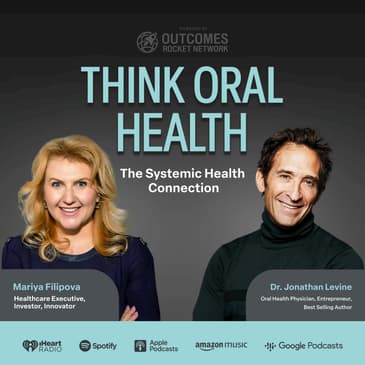
[00:00:00] Welcome to Think Oral. Where we connect you and connected between oral and physical health. I'm your host Dr Jonathan Levine and I'm your host Maria Filippova. Let's get at it.
[00:00:22] Jonathan, excited about today. I still remember when the first time you and I were talking about the podcast and I was asking you why are we doing this?
[00:00:30] And you, our answer was, we've got a trillion dollar healthcare spending. We're spending it in all the wrong places in all the most ineffective ways as a clinician.
[00:00:42] And I shared your frustration. I was like, you know, as a business person, if we could design the most ineffective, expensive system, that would be it. So excited about today's conversation, huh?
[00:00:53] I really am. Also, you know, as we know, we always say the healthcare system is so siloed. It's siloed within medicine. It's siloed within dentistry and it's siloed across dentistry and medicine and back again.
[00:01:08] What does that really mean? At the end of the day, people are talking to each other and then not figuring out how do we communicate, use technology and literally build some new business models to drive efficiency in the healthcare industry.
[00:01:25] We got to get upstream more to the early days before these diseases spin out of control and get so expensive.
[00:01:34] Yeah. It's interesting though, because you said innovate on the business model. It's so interesting how people in the entrepreneurs these days are very quick to reach for the AI model, the chat GPT, pick your technology and say, I'm just going to have a technology solution.
[00:01:52] And our guests today will show us that sometimes you could innovate on the business model and go back to common sense solutions, delivering value to the right people, all the right stakeholders.
[00:02:06] And frankly, you could do that by allowing clinicians and ED doctors to practice at the top of their license and balance their life and demonstrate savings.
[00:02:17] Money talks. You don't need technology when you're adding real value and people can see the savings.
[00:02:23] Exactly right. The focus, new world focus primary cannot just be technology. You really got to be thinking what are the problems that were solving? What are those pain points?
[00:02:35] And in healthcare there are numerous ones because our overall focus as we always talk about is a sickness model. Everybody talks about it.
[00:02:44] And if the insurance companies are incentivized to pay for things, way down streams where it's costing tens of thousands of dollars instead of going more to that preventable early stage of disease, root causes of disease.
[00:02:58] Unless they go there, we're just going to continue to have this runaway train. So who do we have on this podcast that has innovated a tremendous solution?
[00:03:09] We have an ED doctor, a father of two, a fellow troublemaker like the two of us.
[00:03:16] Yes.
[00:03:17] A visionary and at the per newer who not only built a company that is based on value first, clinical delivery outcomes first, technology second, but also somebody who is the definition of exponential scale, right?
[00:03:32] And who is doing some pretty crazy things like six X's in his pricing for his customers and their customers are still staying with him.
[00:03:40] Amazing. Well, let's go after it. I'm so excited for this podcast. I know it is going to be one of my favorite ones. Let's go.
[00:03:49] I couldn't be happier to welcome Dr. Lizardo to our call and our conversation today. Ramon, welcome.
[00:03:58] Hey, I'm going to be here. Honestly, excited about this podcast and send out this conversation.
[00:04:03] I think I'm excited to have you. I can't wait to tell us about your company, but let me just give our audience a bit more information on who you are.
[00:04:12] And we love seeing this up the conversation at the beginning. So you lead a company called Talon 9-11.
[00:04:19] It's a nationwide initiative that connects patients who call 9-11 with board certified emergency positions in less than 40 seconds.
[00:04:28] This is an amazing opportunity to a triage, to have more effective response.
[00:04:33] But you're also a board advisor and a board member to companies like different kind and paired health.
[00:04:39] And both of these companies are getting at how do we get dental emergency care services more effectively?
[00:04:46] We're very excited to have you because you are a visionary leader. You are also a doer.
[00:04:51] You are a fellow troublemaker for good. With that, now I'm going to pass it on to you.
[00:04:56] And so please tell us about Talon 9-11 and what the origin story, what prompted you to start at the company
[00:05:03] and how are you bridging that medical dental divide?
[00:05:07] Absolutely. And I think the storm really starts with a 20-year-old recent grant from undergrad
[00:05:15] and went to Rutgers University. What's the matter?
[00:05:18] And by 24, I was a doctor, but I always say I need to be adopted to meet my wife. That's how I've run that.
[00:05:25] But one of the things that going to the New Turbine and see medicine really highlighted
[00:05:29] was to see a lot of primary care that I'm board experiencing in the ED.
[00:05:33] I got really lucky and worked really hard, joined a few companies that eventually exited.
[00:05:38] You're in the right companies at the right time and will still be successful.
[00:05:42] But again, I remember certain instances, particularly being a young doctor of these patients coming into the ED
[00:05:49] because of dental care, something that we were getting regularly at one of the events every six months
[00:05:55] and seeing that they had not gotten a dentist for years.
[00:05:58] They're walking to the ED because of a release of pain.
[00:06:01] So tell them what actually comes out of the onset.
[00:06:04] About seven or eight years ago, there were medical conferences over in North Carolina.
[00:06:09] And I was eating bulldozer, by the way, and I was thinking the pride of the chicken grease.
[00:06:14] And I played the napkin off.
[00:06:16] And on the back of the napkin, I was like, what is it?
[00:06:19] People call memo one, and instead of being taken to the hospital, they would see a doctor there.
[00:06:24] This is before Zoom. And this is before video calls were either popular, right?
[00:06:30] But I knew that this concept should exist, right?
[00:06:33] And then what happened over the next few years is just that journey of trying to get this all
[00:06:39] and multiple attempts of failure over and over again.
[00:06:43] And the pediatrics and what used to be possible became normal.
[00:06:49] The industry was trying to push for telemedicine for 20 years.
[00:06:52] And in two weeks, if you're like, yep, this is what we're going to do.
[00:06:56] And I knew it was the right time for a company like follow on them and want to come along.
[00:07:00] And since then, this is what telling them when does and this is what will become of that idea that was scribbled in the back of the leasy napkin.
[00:07:08] Now, if you call 901 in key cities in California, Texas, Florida, and respectively, Maryland,
[00:07:18] a percent of the US population currently up five million lives has access to this where you fall 911.
[00:07:25] The anvuling comes to your house as they regularly do it about eight to 10 minutes.
[00:07:30] But instead of taking you to the hospital, we virtually bring a doctor on site within 40 seconds of activated telling anyone.
[00:07:39] And that has been revolution because it is what used to be it.
[00:07:44] The process was used to be taken to the hospital waited for hours and sometimes not even see it.
[00:07:50] Right?
[00:07:51] What we did is basically wanted the real registrants to go to the hospital and we basically brought the doctor truly to the home,
[00:07:59] the board certified emergency medicine doctor.
[00:08:02] And this concept was large last year.
[00:08:04] We thought, hey, new could do this a few hundred times.
[00:08:07] And within a few months, we were doing this by the thousands and now the coverable spot million lives and we're tracking towards 35 million lines.
[00:08:14] And we have a two year wait list.
[00:08:16] So this company that now sees patients from 60 health plants in and out of network has revolutionized the space.
[00:08:23] But the reason why I wanted to come to the talk as I had in some recession is because between three and five percent of the colonists all of them in one,
[00:08:32] it's become a bit that it's all quote unquote emergency.
[00:08:35] Out really an emergency.
[00:08:37] It's basically a bill laid here and these patients are engaged.
[00:08:41] Hey, I mean so much pain.
[00:08:44] I cannot afford to go to or my dentist doesn't have an appointment for a long time.
[00:08:50] I mean so much pain or I have an infection and I need caring now.
[00:08:57] They're thinking the best way to get your fast is not by going to the world.
[00:09:03] They thinking I need to care fast and why how does falling on what a calling in one and the ambulance is not coming.
[00:09:10] And what we've done is we basically trained your doctor for the Senate.
[00:09:15] This is a subset of these spaces.
[00:09:17] And now we're training a doctor sort of sense that this is going to this is basically to come for the most work call.
[00:09:23] The same attention that you would give over and you need you're actually able to give it virtually with the camera,
[00:09:30] whether it's peanuts or antibiotics for more progression.
[00:09:35] It takes like that.
[00:09:36] But what we want to recognize is oral health is critical to emergency.
[00:09:43] It has to tell a large subset millions of patients are actually doing this.
[00:09:48] And now they don't look at the patients to be exact 76 million patients do not have dental insurance.
[00:09:55] And for them delaying care is the only way.
[00:09:58] Absolutely.
[00:09:59] I thought let's add to that number.
[00:10:02] So 76 million patients don't have dental insurance.
[00:10:05] The majority of the US population has medicated in Medicare and most dentists do not take insurance.
[00:10:12] So they'll have a viable path to actually take care of oral health.
[00:10:17] But when they're calling them once they're with insurance, they're still expecting some sort of relief.
[00:10:23] So the insurance part doesn't provide a relief.
[00:10:26] No, it's actually what we need to do is go the right path for these and the doors for these patients to be able to walk through the door because this is part of all patient care.
[00:10:35] Yes.
[00:10:36] And if I could just jump in as a dental professional, the problem also that you're facing,
[00:10:42] you have the telemed call, but let's say the patient has a space infection.
[00:10:46] And in other words, dental decay, endodontic treatment necessary, couldn't afford it, didn't go.
[00:10:53] Now we have inflammation at the periapopal area of the root and now we have inflammation and starting a cellulitis.
[00:11:01] Now I'm describing a life threatening situation.
[00:11:04] What has happened traditionally?
[00:11:05] You go into the emergency room and there's nobody to treat that person short of an antibiotic or a pain bed.
[00:11:11] And I know you have a solution to this.
[00:11:13] And I think this is so groundbreaking because you're going to connect the dots here.
[00:11:17] Please tell all of us about it.
[00:11:19] Absolutely.
[00:11:20] So one of the things that I help insurers understand the things that are happening in the middle of fact value-based care as well.
[00:11:28] I think you just walk the through pathway of something that started small doesn't get taken care of.
[00:11:34] Now the patients calling them on one, now they're going to the hospital.
[00:11:38] Now they're having a complication.
[00:11:40] Now it becomes that just a mouth situation becomes a whole wide.
[00:11:44] And sometimes think about some of these infections that can go all the way to the heart and how we're talking about a parietation.
[00:11:51] Right?
[00:11:52] And then my responsibility is since what we do is the first time in history, this has been done, right?
[00:11:58] This company has changed the paradigm of the lines of back-to-back care.
[00:12:02] Let's also retain the paradigm of how they're connecting the dots at the health plan.
[00:12:07] And my responsibility is basically to help the health plans understand, hey, something that happens this small, if we don't take care of it now,
[00:12:16] this is kind of turning to a very expensive ER business within 30 days.
[00:12:20] Right?
[00:12:21] So either we treat it now and create a tangible pathway to treat it now or expect the bill in 30 days because this patient eventually is in.
[00:12:29] Right?
[00:12:30] And these are the kind of preventative measures that feel like now the government, but both laws, private insurance, you need to do it lastly.
[00:12:39] Let's not wait until this gets to the $10,000, $20,000, $30,000 cost-probable when it can spend $600 on the patient and the dressing.
[00:12:49] You're going to meet the patient.
[00:12:51] Yeah.
[00:12:52] They now are paid better than these insurance.
[00:12:55] Let's put that on shirts, on t-shirts and the ED.
[00:13:00] And it's interesting because you could tell, Ramon, that this topic is near and dear to us and we've been looking at the numbers.
[00:13:07] We know that actually the average cost per ED visit for non-traumatic or all related case is increasing to your point.
[00:13:16] And by the time you get to the ED, Jonathan is right.
[00:13:20] It's too late, right?
[00:13:21] Because the ED cannot treat, they couldn't give you a root canal or do an extraction.
[00:13:26] Most EDs don't have a dent test at the ED.
[00:13:29] And so going to the emergency room is the most expensive, least effective way to treat oral health issues because you could best case scenario get antibiotics.
[00:13:40] Worst case scenario, get opioids.
[00:13:42] One in seven opioids get prescribed in the ED for oral health related issues.
[00:13:47] And we have to avoid the, by the time again, by the time we get to the ED it's too late.
[00:13:52] Going back to that example, I'm having pain.
[00:13:56] I think it's life threatening.
[00:13:58] I'm picking up the phone and calling 911.
[00:14:00] Somebody is at my home triaging me with telling 911 how many cases that you receive make it to the emergency room versus you reroute somewhere to a specialist including the dental office.
[00:14:16] That's a really good question.
[00:14:18] First, let me pour back to the first part of your question because I think it's critical in order for us to be one of us.
[00:14:25] So let me pick a random state, California.
[00:14:28] Just so we know, let's say a patient has an infection or two drape.
[00:14:33] When they call 911 and it's a private ambulance company, that bill alone is $6,300 to take your loss.
[00:14:41] Yes.
[00:14:42] It's an expensive Uber ride.
[00:14:44] That's a very expensive Uber ride.
[00:14:46] It's a very expensive Uber ride.
[00:14:48] $6,300.
[00:14:49] We're not counting then the $3,000 facility fee.
[00:14:53] What's the things that are going to happen?
[00:14:55] Which honestly, that much is going to happen.
[00:14:59] Matter of fact, I remember being at a turn and saying, I'm not a dentist.
[00:15:03] How much can I do?
[00:15:05] So we'll quantify this is a very expensive Uber ride without any tangible help.
[00:15:12] But quickly leave for the patient.
[00:15:15] There are no dentists in the ED.
[00:15:17] And the people that work in the ED, like myself, took one class in anatomy that included T.
[00:15:26] You're very first semester and never saw it again.
[00:15:30] Just so you know, that's as far as dentistry goes for our MDs to work in an ED.
[00:15:36] When I looked at the data, and I was going to do four toning, what does this sound like
[00:15:40] time?
[00:15:41] But for every thousand patients, consider three to five percent are dental lily.
[00:15:45] Now we have a success rate of almost 80% of these patients are dentists, basically
[00:15:52] treated at home.
[00:15:54] A subset of those patients are actually other patients that are not treated at home.
[00:15:59] They're basically sent over to a network facility.
[00:16:03] So what we do is basically, we bought them to go to a center.
[00:16:07] You do not want to send you to a general hospital where we know this is a part of case and you've
[00:16:11] been treated for our transplanted exiles.
[00:16:14] That's our responsibility basically to all the types.
[00:16:17] And what we're doing now is we're figuring out which are the pathways that we can
[00:16:23] walk in patients were hauling for this three to five percent.
[00:16:28] Now think about it, worse, we're on track for 35 million lives.
[00:16:34] Three to five percent of that, it's a lot.
[00:16:37] And trust me, unless you deal with it, they will call you again.
[00:16:40] So what we're doing is creating the pathway where people can, we can hold their hands
[00:16:46] into an appointment with an internet network of facility that's covered by their insurance.
[00:16:53] Why is this important?
[00:16:54] Because now someone called 911, our doctors are able to prescribe something for the instant
[00:16:59] relief that they need, whether it's the infection or the pain.
[00:17:03] But also now there's a next step of, oh wait, there's a follow up appointment that's going
[00:17:08] to be set up here where I'm going to basically be taken care of within my network of
[00:17:14] insurance for good.
[00:17:16] And that's what's key part of this conversation.
[00:17:20] At top of that, our doctors are basically covering this patient until that visit.
[00:17:26] Let's say you run out of script where you need a follow up with zero infection.
[00:17:30] We're taking care of them.
[00:17:32] So what we don't want is for them to call 911 again.
[00:17:36] What we want is to hold the patient's hand until they get any public care.
[00:17:41] And that happens, that is for oral when it happens just across all pathophysiology.
[00:17:47] Just speak to this.
[00:17:49] Yeah, it doesn't make a lot of sense.
[00:17:51] I can't believe, I can't believe both your dental school experience.
[00:17:55] I can't believe that now it's the same thing on the medical side.
[00:17:58] What was your dental school experience like in terms of getting medical anatomy
[00:18:02] incorporated into your dental curriculum?
[00:18:05] Yeah, I was fortunate at Boston University Goldman School the first two years
[00:18:09] you're in medical school.
[00:18:10] So I had full body anatomy.
[00:18:12] I had a lot of medical and that's, and I'm a microbiology immunology
[00:18:15] background from Cornell for me diving into the microbiome of the mouth
[00:18:20] and understanding the connection of oral health, no oral health
[00:18:23] in the inflammatory process.
[00:18:25] I'm very interested in that because as Mary Otto said in her book,
[00:18:30] the mouth is connected to the rest of the body.
[00:18:33] We all know that.
[00:18:34] What I love what you're doing is you're taking a practical approach
[00:18:37] to a very major issue and you're really upstream
[00:18:41] and saving the healthcare industry.
[00:18:43] Really, when you look at those numbers as you grow to your subscriber base
[00:18:47] your 35 million plus it will be millions and millions of dollars.
[00:18:52] As you think out a little bit, how do you see scaling it and creating
[00:18:56] a greater level of effectiveness?
[00:18:58] Is your call center an effective call at a call center
[00:19:01] be your board certified professionals also inclusive of dental professionals
[00:19:07] and do you connect the dots if a patient doesn't have insurance
[00:19:11] or maybe can get Medicaid?
[00:19:13] How do you close all of those potential loops as you're evolving
[00:19:16] as a Yale company?
[00:19:18] Absolutely.
[00:19:19] That's a really good question.
[00:19:20] But first let me walk you through how we built this division
[00:19:23] because I think it's going to highlight the power behind it.
[00:19:27] When I was getting started with Tom and I'm lying,
[00:19:30] we started Tom and I'm one at a point where 50% of emergency medicine
[00:19:36] and residencies were unfilled.
[00:19:39] Most pandemic nobody wanted to work in emergency medicine
[00:19:42] and we realized I wanted to provide the best care.
[00:19:46] The mission of the company is to be one of democratized access
[00:19:49] to the best care as fast as possible with an admin network.
[00:19:53] But I was on a losing ground as people were leaving
[00:19:56] and my wife is chasing over at GYN
[00:20:00] and what we were during the pandemic
[00:20:03] was we had to take turns between working and taking care of the kids.
[00:20:07] And then both of them said I would like to take some time
[00:20:10] and raise her two-year-old.
[00:20:12] But then she said it's so unfair that people choose to take care
[00:20:15] of the kids can't work with insurance, not triptypes.
[00:20:19] And I said yeah let's do something about that.
[00:20:22] Emergency medicine is only practice in person at the hospital
[00:20:28] till telling them what we want to do.
[00:20:30] And we created a new fellowship that allowed people to practice
[00:20:34] virtual emergency medicine.
[00:20:36] And we told their friends and their friends told their friends
[00:20:40] and when I tell you that within three weeks
[00:20:43] moms and dads who were staying out only started showing up in droves
[00:20:48] with their kids on their hips to the interiors
[00:20:52] saying this is what life looks like for me.
[00:20:55] After I spent 12 years going to school
[00:20:57] but I only have this time to have a baby
[00:21:00] and I want to practice what I can.
[00:21:02] Hoping on the U-Dust.
[00:21:04] And they were like my kid takes a two hour nap
[00:21:07] and I sign up for a shift there.
[00:21:09] And I said yes.
[00:21:10] My kid sleeps during this time
[00:21:12] while my kids in school during this time
[00:21:14] for four hours can I do this?
[00:21:15] Yes.
[00:21:16] And we said yes and yes.
[00:21:18] And what happened is we ended up building
[00:21:21] the largest virtual emergency medicine practice
[00:21:24] in the entire United States
[00:21:27] simply by saying yes to parents and kids.
[00:21:31] And that changed the game for a better later.
[00:21:36] We started to we were writing fellowship
[00:21:40] we were writing what this looked like
[00:21:42] which I mean they said it was extremely dangerous
[00:21:44] but another step is amazingly innovative
[00:21:47] having doctors practice with someone else
[00:21:50] feed their hands in years right?
[00:21:53] Having someone else on a screen do an EK
[00:21:55] do you get say let me see it?
[00:21:57] That's mutile right?
[00:21:59] For emergency medicine.
[00:22:01] And what we did is we got really good
[00:22:03] because we started doing this thousands of times
[00:22:06] and then to add another layer to that
[00:22:08] we started doing unconventional
[00:22:10] hey I need a picture of the full oral.
[00:22:13] I want to make sure that I'm able to see
[00:22:16] the infected site because remember
[00:22:18] we had a lot of doctors and our doctors
[00:22:21] trying to see are we basically need oral?
[00:22:24] Now there are things that are outside of Bursk
[00:22:28] and what we did is we started figuring out
[00:22:31] what companies do we partner on
[00:22:33] since insurances by the way
[00:22:36] we take patients from almost 60 insurances
[00:22:39] in and out of network and it was very
[00:22:42] they started coming to us getting out of our waitlist
[00:22:46] and saying hey how can we work with you
[00:22:49] with these initiatives?
[00:22:51] Can I get me a list of my in network
[00:22:54] and by doing so we basically became really strong
[00:22:57] really strong partners to the point now
[00:23:00] that we now leverage higher payment
[00:23:04] for these doctors
[00:23:06] that are taking care of these patients.
[00:23:08] So the ones that remember at the beginning
[00:23:10] of the call these doctors don't want to take
[00:23:12] Medicaid and Medicare now they do
[00:23:15] when it's through time and on one because they know
[00:23:17] they're going to be paid a premium
[00:23:19] and insurances are willing to pay a premium
[00:23:22] because they know these are high.
[00:23:24] So you would get Medicaid patients
[00:23:28] higher rates than and that's a CMS negotiated contract?
[00:23:34] Yeah so it depends for Medicaid events
[00:23:37] it depends on the other the insurance
[00:23:39] that's basically doing managed Medicaid.
[00:23:42] So as part of the negotiating power that we have
[00:23:45] right 60% of our patients are either in a bubble
[00:23:49] or an allergic one up to a bubble rate
[00:23:51] and we now since more of the pipes
[00:23:53] in the insurances have to contract with us
[00:23:56] we have to negotiate which is pretty.
[00:23:59] You're also proving lightly to the insurance companies
[00:24:03] that you're saving them those dollars
[00:24:06] by some little bit of the ball
[00:24:08] and not waiting for the $35,000, $40,000
[00:24:11] to hold a visit when things are spun out of control.
[00:24:14] They love me because I've heard from them
[00:24:16] that they're able to save 60% man.
[00:24:18] The only people that hate me
[00:24:20] I'm the number one most hated executable
[00:24:23] in this hospital executives
[00:24:25] because they figured out
[00:24:27] wherever height go the patients
[00:24:29] aren't walking through their door.
[00:24:31] Peaks are not going anywhere though
[00:24:33] there's so many people high utilizers of you.
[00:24:36] Unfortunately there's so many other areas
[00:24:39] other people are keeping EDs busy and how
[00:24:42] Maria that's why they call it the troublemaker
[00:24:45] that's exactly what you have
[00:24:48] he's creating a more efficient system.
[00:24:51] I'm happy to do it by the way
[00:24:53] honestly it's yeah I tell people
[00:24:55] I saw three things that are key
[00:24:58] in my life time
[00:25:00] the first one is
[00:25:01] I saw the issue for real emergency
[00:25:04] going into the hospital
[00:25:06] because all the lower emergencies were basically
[00:25:08] holding up the cardiac arrest they were calling
[00:25:10] and they were like actually
[00:25:12] you were taking a paper cut
[00:25:14] so I saw that for the EMS
[00:25:16] and the ambulance industry
[00:25:18] I then went and saw from the health plan industry
[00:25:20] this all plans are about 80% utilization
[00:25:22] managed they're just trying to control costs
[00:25:25] and now they look at me they're like
[00:25:27] actually you have the front door
[00:25:29] so they're very happy
[00:25:31] but the number one thing that I also saw
[00:25:33] was the medical debt
[00:25:35] the number one reason why people are going into
[00:25:37] medical debt in the United States
[00:25:39] in the United States because of medical debt
[00:25:41] and the number one reason to pass this is
[00:25:43] because they go
[00:25:45] and now there's a better way
[00:25:47] and by building a company like Tullin
[00:25:49] we literally solved the problems
[00:25:51] so and you did this
[00:25:53] in barely two years how many years have you guys been
[00:25:55] that we've actually been commercial
[00:25:57] now for 18 months
[00:25:59] I do want to say this
[00:26:01] you know how I think it was Jordan
[00:26:03] that was like 23 years
[00:26:05] in common overnight success
[00:26:07] we tried this so many times
[00:26:09] to the point that I was at one of giving up
[00:26:11] remember seven years before launching
[00:26:13] this was an idea
[00:26:15] on the back of a recent after
[00:26:17] I have I've listened multiple times
[00:26:19] but when I tried it and it was the right time
[00:26:21] it worked so good
[00:26:23] thinking about it our goal
[00:26:25] was to get 300 patients
[00:26:27] to see if this idea worked
[00:26:29] now we're like
[00:26:31] oh yeah that's the next shift hour
[00:26:33] that's nothing within a few
[00:26:35] first months we were like this isn't
[00:26:37] saying we're doing this by the
[00:26:39] thousand it really
[00:26:41] has changed the way
[00:26:43] the health industry
[00:26:45] actually works so think about
[00:26:47] every not only health plan but think
[00:26:49] about any risk bearing entity the idea
[00:26:51] or us the old the previous the Alan
[00:26:53] to build businesses upon
[00:26:55] keeping people out of a hospital
[00:26:57] but never figured it out and I'm saying
[00:26:59] hey they're walking through my door
[00:27:01] what do you want me to do
[00:27:03] but I also I think there was also
[00:27:05] been a huge power shift
[00:27:07] where it's now and we are
[00:27:09] negotiating for the right of the people
[00:27:11] to get this
[00:27:13] it's what an inspiration
[00:27:15] so if
[00:27:17] there are other
[00:27:19] and then we have both of you entrepreneurs here
[00:27:21] if you could this still
[00:27:23] what it takes to
[00:27:25] this is the entrepreneur's
[00:27:27] dream story right find the problem
[00:27:29] that's so painful for so many people
[00:27:31] find a credible enough solution
[00:27:33] sells itself practically
[00:27:35] and
[00:27:37] you're the first one to do it
[00:27:39] what you have is not a technology
[00:27:41] advantage you don't have
[00:27:43] I you don't use
[00:27:45] blockchain quantum computing chat
[00:27:47] GPT or any of the cool buzzwords
[00:27:49] of the day
[00:27:51] truly adding value to so many people in
[00:27:53] the system if you could just now
[00:27:55] with the benefit of looking back
[00:27:57] what would you identify as the key
[00:27:59] decisions that you made
[00:28:01] that are getting into that
[00:28:03] exponential part of the growth curve right now
[00:28:05] anyone who has a conversation
[00:28:07] what we understand that
[00:28:09] there's a concept that I have applied to
[00:28:11] everything and it's called
[00:28:13] repeatable on a ties and bullying scale
[00:28:15] okay those three things
[00:28:17] I'm a kidnapper street
[00:28:19] I'll get the seat thing every day
[00:28:21] go out at the same time
[00:28:23] I get to the T
[00:28:25] but along the way
[00:28:27] that's in how I
[00:28:29] build and scale and run companies
[00:28:31] and yesterday I knew think that's been
[00:28:33] a shining light in my trajectory
[00:28:35] of success
[00:28:37] when I think about myself
[00:28:39] in this moment what is driving me
[00:28:41] to do this right now
[00:28:43] and I remind people
[00:28:45] what made me leave the
[00:28:47] emergency medicine was the fact that it was
[00:28:49] a primary care and the fact
[00:28:51] that I was like man this soft
[00:28:53] spot hey then when I signed up
[00:28:55] for you sign up for action and you get a
[00:28:57] lot of disappointment
[00:28:59] and I realized I had to
[00:29:01] do something about it
[00:29:03] and I ended up
[00:29:05] building this wild thing really
[00:29:07] that you'll buy the stories
[00:29:09] that I hear on the other line
[00:29:11] just so you know I'm the CEO
[00:29:13] that gets up and actually calls patients
[00:29:15] to hear about their journey
[00:29:17] and I'm like oh my god
[00:29:19] I'm just so grateful
[00:29:21] right we shared stories
[00:29:23] and then at the end
[00:29:25] I just have one question
[00:29:27] what's the CEO
[00:29:29] and I told them that just means I work for you
[00:29:31] but
[00:29:33] when I hear the story
[00:29:35] that's what fuels these people
[00:29:37] need
[00:29:39] and I'm like
[00:29:41] I'm not sure if it's a good idea
[00:29:43] but I'm not sure
[00:29:45] but these people
[00:29:47] we've changed
[00:29:49] clinicians because we wanted
[00:29:51] to help people that need good care
[00:29:53] right and I'm
[00:29:55] able to do that
[00:29:57] at a massive scale
[00:29:59] right so I'm pushing
[00:30:01] for this because it's changing the way
[00:30:03] healthcare is being delivered
[00:30:05] this is rewriting
[00:30:07] history for something
[00:30:09] that's been done the same way for 16 years
[00:30:11] and there's still a couple of points
[00:30:13] that my kids are going to be like
[00:30:15] hey yeah that was the end of the year
[00:30:17] but that's an old invention
[00:30:19] but I want them to say actually
[00:30:21] my dad was part of that revolution
[00:30:23] right the change
[00:30:25] the way healthcare was delivered
[00:30:27] I'm incredibly excited and thankful
[00:30:29] but for them to feel by these stories
[00:30:31] that I fear are the other
[00:30:33] the industry is so riddled with
[00:30:35] compromises and you as
[00:30:37] your background as an emergency room physician
[00:30:39] you saw firsthand
[00:30:41] what those compromises were all about
[00:30:43] the inefficiencies, the wasted
[00:30:45] dollars, the missed expectations
[00:30:47] on both sides of the coin
[00:30:49] I'm so impressed with the first company
[00:30:51] that you really went after the provider side
[00:30:53] and you figured out a solution
[00:30:55] when it was in the time of COVID
[00:30:57] and then you went over to
[00:30:59] the patient side
[00:31:01] and also COVID gave that acceleration
[00:31:03] effect where the
[00:31:05] timing is started to make real
[00:31:07] sense because before that yeah
[00:31:09] why do I need telemedicine
[00:31:11] or even teledentistry
[00:31:13] back then it's very impressive
[00:31:15] to look at how quickly you're scaling
[00:31:17] if you had a look
[00:31:19] out future let's go
[00:31:21] another 18 to 24 months
[00:31:23] tell us where are you
[00:31:25] yeah we're happy
[00:31:27] to announce the legislation was passed
[00:31:29] in Maryland now covering
[00:31:31] every single
[00:31:33] patient that calls them
[00:31:35] on wanting costs with time
[00:31:37] and money
[00:31:39] and the only one
[00:31:41] that's in medicaid
[00:31:43] it's the first time in history
[00:31:45] that's been done
[00:31:47] that's going to be lodging in six weeks
[00:31:49] but the legislation was passed about
[00:31:51] say two or three months ago
[00:31:53] it was one of those money makes
[00:31:55] you say this is our story
[00:31:57] just funny because Maryland
[00:31:59] was they all said hey can we try
[00:32:01] something like that we've heard about
[00:32:03] and I thought oh yeah
[00:32:05] we'll see that
[00:32:07] just goes to show how fast
[00:32:09] governments willing to move when they see something good
[00:32:11] but there are also four
[00:32:13] additional states that are on the way
[00:32:15] so then what has a weight
[00:32:17] up to about two years
[00:32:19] and over 30 million lives
[00:32:21] if that comes away if we do nothing
[00:32:23] and just some poor little we have
[00:32:25] right now
[00:32:27] we'll hit our goal
[00:32:29] that's what's fascinating
[00:32:31] general what's the bottom like more clinicians
[00:32:33] and what's the next
[00:32:35] yeah so right now
[00:32:37] what we did is what we do is
[00:32:39] what we remember repeatable
[00:32:41] one-fifth of a scale
[00:32:43] so what we do is we basically
[00:32:45] build a lead company
[00:32:47] that meets a spiritual
[00:32:49] and expands
[00:32:51] and that's what we do
[00:32:53] we work with the payers
[00:32:55] we'll work with the counties
[00:32:57] and different benchmarks are set
[00:32:59] within the next few months
[00:33:01] this is a company that because
[00:33:03] of the critical
[00:33:05] part that this company does
[00:33:07] this is a company that doesn't have
[00:33:09] the luxury of family
[00:33:11] because fairly being
[00:33:13] millions of lives
[00:33:15] lose coverage
[00:33:17] of healthcare right so
[00:33:19] my responsibility as the CEO is to
[00:33:21] role this company in a way that's sustainable
[00:33:23] long-term and responsible
[00:33:25] not fast but right
[00:33:27] in a way that's based
[00:33:29] on the
[00:33:31] what we're doing
[00:33:33] and there are some states that are pushing us
[00:33:35] and saying please do this
[00:33:37] but we want to follow our protocol
[00:33:39] and do it correctly
[00:33:41] and then two we're always growing
[00:33:43] more practice in emergency medicine
[00:33:45] now we're going into the lead-up
[00:33:47] schools and teaching this
[00:33:49] that's the future of specialty
[00:33:51] so it's an exciting time
[00:33:53] I think we re-edited emergency medicine
[00:33:55] because we've added a different
[00:33:57] so it's Laura Paul
[00:33:59] absolutely incredible
[00:34:01] Ramona I have a question for you as a fellow
[00:34:03] entrepreneur
[00:34:05] repeatable monetizable scalable
[00:34:07] I'm feeling you got a book there
[00:34:09] that is the great one two three
[00:34:11] and all businesses
[00:34:13] how do you think about building an enterprise
[00:34:15] that from the beginning
[00:34:17] is the
[00:34:19] vision is a cash flow
[00:34:21] positive business
[00:34:23] instead of going to more of a blitz scaling
[00:34:25] we're raising
[00:34:27] new dollars and new dollars
[00:34:29] how do you think of capitalizing your business
[00:34:31] and as a business builder
[00:34:33] I love this question it's another one
[00:34:35] and I tell a lot of people
[00:34:37] that because
[00:34:39] I think startups are building correctly
[00:34:41] I've been part of a team startups
[00:34:43] she will exit
[00:34:45] and I talk to people
[00:34:47] the free landscape of freedom
[00:34:49] and know what you want to do is
[00:34:51] build something that's solid building
[00:34:53] and willing to pay you
[00:34:55] so you know
[00:34:57] we went back to help plants in 7-9x
[00:34:59] our price points from last year
[00:35:01] and yet still they say
[00:35:03] we're still saving
[00:35:05] over 50% so we're going to
[00:35:07] but that's just a testament
[00:35:09] to the product now
[00:35:11] we literally did that at it
[00:35:13] we literally just told them
[00:35:15] you want to continue to do this is how much it's going to cost
[00:35:17] so when a customer
[00:35:19] repeatable monetizable scalable
[00:35:21] how to tell them all
[00:35:23] and percent of our population
[00:35:25] that we see is uninsured
[00:35:27] it's actually a gift back to society
[00:35:29] and what could go into
[00:35:31] be able to be agnostic to all
[00:35:33] payers but also to all patients
[00:35:35] we do not turn a patient
[00:35:37] down because they're out of
[00:35:39] sure now when one doesn't do
[00:35:41] that neither really
[00:35:43] now 30% of our business
[00:35:45] is government
[00:35:47] and care of Medicaid
[00:35:49] and 40% of our business
[00:35:51] is in a bubble
[00:35:53] rate or eligible for a bubble
[00:35:55] and what happens is
[00:35:57] those premium members actually
[00:35:59] pay for the audience
[00:36:01] and that allows us to
[00:36:03] continue to move forward
[00:36:05] there's a matter of fact
[00:36:07] we then just said you know
[00:36:09] what's that number that I gave you
[00:36:11] about 6500 bucks for the ambulance
[00:36:13] and then 3000 dollars for
[00:36:15] the Hulba Rye Pustling visit
[00:36:17] Hulba Rye Pustling facility fee
[00:36:19] so we cap this down to a size
[00:36:21] because we do it so much
[00:36:23] so on average each visit costs us
[00:36:25] about 60 to 70 dollars
[00:36:27] at least 100x cheaper
[00:36:29] yes absolutely and I say that
[00:36:31] and I didn't tell the health ones
[00:36:33] now then they'd go and debate me
[00:36:35] they're like yeah if you're charged a thousand bucks
[00:36:37] for this I'm like sure if you want to send them
[00:36:39] to the hospital so you can get both 3000
[00:36:41] and then it gets really quiet
[00:36:43] so we just have to play the game
[00:36:45] so what I do let them know is
[00:36:47] that doesn't go to me
[00:36:49] we basically take a portion of that
[00:36:51] and actually give it back
[00:36:53] so what we did is we built the right company
[00:36:55] it was the right model
[00:36:57] and the right wheel that continues to
[00:37:01] I love it
[00:37:03] incredible so amazing
[00:37:05] to have this practical wisdom
[00:37:07] and it really translates
[00:37:09] to so many different
[00:37:11] arms of healthcare
[00:37:13] to create how do we focus on
[00:37:15] innovation
[00:37:17] which brings the efficiency
[00:37:19] and the operational excellence at the same time
[00:37:21] absolutely a change agent
[00:37:23] Ria, thank you so much for bringing
[00:37:25] Ramon on our podcast
[00:37:27] Thank you for being a trouble maker
[00:37:29] in crime here
[00:37:31] for your trouble maker
[00:37:33] I just can't think of how many companies
[00:37:35] I've talked to who have
[00:37:37] six extra rates and kept all their customers
[00:37:41] and had a ways
[00:37:43] and you know what it's funny
[00:37:45] very grateful
[00:37:47] thank you Jonathan thanks Ramon
[00:37:49] to be continued we can't wait
[00:37:51] please share your success with us
[00:37:53] and if there's anyone who wants to
[00:37:55] from our listeners who could be a partner
[00:37:57] or a customer
[00:37:59] how could they get in touch with you
[00:38:01] absolutely so I want to encourage
[00:38:03] everyone that
[00:38:05] is part of a large
[00:38:07] medical practice, typically dental
[00:38:09] that would want
[00:38:11] to be in California, Texas, Florida
[00:38:13] and Maryland right now
[00:38:15] that is open
[00:38:17] to receiving patients that are calling them
[00:38:19] when they want and we basically
[00:38:21] create a pathway for us booking them
[00:38:23] through you
[00:38:25] and is willing to be included
[00:38:27] in our contract with health plans
[00:38:29] because we want you to get paid a premium
[00:38:31] please reach out to me directly
[00:38:33] at lasardoatillimanualone.com
[00:38:35] or feel free to go to our website
[00:38:37] and there's a tab where you can contact
[00:38:39] us on the email
[00:38:41] because we want to build this right
[00:38:43] but we also understand
[00:38:45] this is the reason why I'm in this podcast
[00:38:47] 3-5% of these 911 calls
[00:38:49] should be going to you
[00:38:51] you should be getting paid a premium for it
[00:38:53] and that's why I'm here
[00:38:55] I want to make sure that we're circling up
[00:38:57] with the right partners
[00:38:59] to ensure the best kick
[00:39:01] thank you again we will take you up on the invitation
[00:39:03] and we will include links
[00:39:05] to your email and the website
[00:39:07] thank you, good luck
[00:39:09] and keep at it that's the only thing
[00:39:11] we could say thank you again
[00:39:19] thanks for listening to the think oral
[00:39:21] podcast
[00:39:23] for the show notes and resources from today's podcast
[00:39:25] visit us at
[00:39:27] www.outcomesrocket.health
[00:39:29] slash
[00:39:31] think oral
[00:39:33] or start a conversation with us on social media
[00:39:35] until then keep smiling
[00:39:37] and connecting care