
Successful medtech commercialization requires founders to know what only they can do best, then bring in the right partners to help scale the rest.
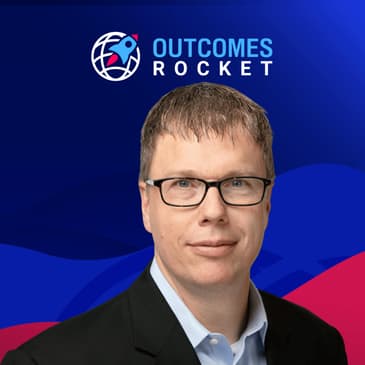
In this episode, Dan Purvis, Chairman and Co-Founder of Velentium Medical, joins Saul Marquez at the MedTech Innovator Radar Forum to discuss the evolution of complex medical device development. Dan explains how Velentium was designed to integrate engineering, firmware, mechanical design, cybersecurity, testing, and manufacturing under one roof to better support OEMs from development through production. He also reflects on how medtech innovation has matured, with more companies arriving at events with working technology, animal data, and clearer paths to human use. Finally, Dan emphasizes that successful commercialization requires founders to focus on their strengths, build expert teams, and delegate specialized work.
Tune in and learn how medtech companies can move from promising technology to scalable, secure, and patient-impacting solutions.
Resources:
[00:00:02] Hello everyone, welcome back to the Outcomes Rocket. I'm excited to be here at the Medtech Innovator Radar Forum with another podcast interview. Today we have the privilege of hosting Dan Purvis. He is the Chairman and Co-Founder of Velentium Medical. Dan, thanks for joining us.
[00:00:19] Man, my pleasure. Glad to be here. Yeah. How's the event going for you so far? It's been great. I mean, the energy in an event like this, when you have hundreds of pitching companies and then judges that are truly passionate about the industry all together under one roof for several days like this, it's really magnificent. Yeah, it's a good crew, cross-functional, like all the disciplines you could think of. Tell us a little bit about you and about Velentium.
[00:00:43] Yeah, you bet. So, Velentium Medical started 14 years ago and our premise was to put under one roof all of the different aspects of tough medtech development end-to-end all under one roof. So, you no longer have the electrical consultant pointing at the firmware person, pointing at the mechanical person. It's just one finger to point and we handle all of that.
[00:01:04] And then in 2021, we took private equity so we could build a factory. And so now in Houston, Texas, we've got class seven clean rooms and the ability to actually build the output of our projects to design products in partnership with OEMs to actually then go and build those products as well. And then I would say in the last few years, there's been a big focus on cybersecurity because it's just a big trend in the industry.
[00:01:25] And then the feds have said, yes, this is something we're all going to do to make sure that we are now cyber securely designing products, building those and finally testing them well. That's great. So, you guys are focused really across the supply chain in the creation of devices, both physical as well as software and cyber. That's right. Yeah. So we will focus on projects predominantly that involve electronics and software.
[00:01:50] And so electromechanical devices that have some kind of smarts in them is where we specialize. And then specifically in neurostimulation, both wearable and implantable neurostimulation, but also surgical tools, interventional neuro as well. Lots of things that involve this idea of complex medical devices end-to-end. That's great. Here at the conference, what insights are you gathering, whether it be from the interviews or, you know, one-on-ones with companies or even as you hear the pitches? What are you hearing?
[00:02:20] Yeah. Yeah. I love judging these pitches because you get shoulder to shoulder and face to face with some of the brightest minds in our industry. And one of the things that, well, my wife says that her three most dreaded words in my career are, does it work? And what I'm seeing more and more is that as this conference evolves over the years, that the companies that are being invited to pitch, that's already done. It works. And the tech they're bringing to this conference is like mind-bendingly remarkable.
[00:02:49] And so where I think the medtech industry was perhaps a bit less mature a decade ago and it was just an idea on a napkin. Now we have true working. Yes, we put it in an animal and we were going toward first in human. It does work. And the cool thing about that is that now you have in Medtech Innovator a partnership with a whole cohort of judges, ecosystem, etc. that can say, here's how you would commercialize. Here's how you would get reimbursement.
[00:03:16] You might think about this in regulatory. Have you thought about the way you're going to test that device? That's beyond just the mad science and into the turning these into true successful businesses. So you must be running into a lot of companies here that are at the stage where they're like, hey, you know, we're ready to start commercializing this in a bigger way. Right. What insights or lessons can you share with them as they think about next steps in their commercial journey?
[00:03:43] Yeah, as you think about the path to commercialization in a medtech firm, I think the key thing to think about most fundamentally is what are you uniquely gifted to do? And that may be the medical science. That may be the clinical. Whatever your thing is that you're leading this company to do, that's the thing that you should do. And everything else you can hire out. And obviously, I'm a captive audience there. I want to be the guy that you hire. But the fact is, find an expert that that's what they do and let them do it for you,
[00:04:12] which then frees you to continue to do the thing that you're uniquely gifted to do. That's so well said. I mean, both from a technical, challenging medtech space, but also from an entrepreneurship perspective. Right. Like if you stick with where you shine and what you're best at, you're likely to do the best work. It's perhaps surprising that a larger company is easier to run. When you're a early startup, you're part-time janitor, part-time scientist, part-time full-time fundraiser,
[00:04:40] and all these pieces that you have to do all of it. But as you grow, you find a top-notch CFO that's better than you would ever be as the CFO. And you can focus on other things. A larger company is increasingly easier to run than a smaller company because then you go find the CFO that is industry leading and better than you could ever be as a CFO. And you go find a commercial access person in reimbursement and regulatory. And you go find all of these different places that can do things that perhaps you were having to do,
[00:05:10] but you can never do as well, which frees you up to be able to do the thing that only you can do the best. And I think the challenge for us as founders, myself being one of them as well, is what got you here won't take you there. And so the idea is that as founders, we rolled up our sleeves and just got the job done. But to truly scale a company, you have to step away from that just a bit and be willing to let others around you lead as well. Let them shine and then shine in the areas that you're best at. Well said.
[00:05:39] Well said, man. Well said. As folks get out and look to innovate and move the industry forward, what's the best way that they can get in touch with you and your company if they want to engage? Yeah, for sure. So next step at valentiamedical.com is the way that people get in touch with us. And we are thrilled to interact with each and every one of you on a regular basis to look at the feasibility of your project, to look at the testability of your project, to look at the way to make your projects more secure.
[00:06:09] And then how are we going to make sure that we can build it? And so our goal at Valenti Medical is to change lives for a better world. That's why we're in this industry. We're Velentium Medical for a reason. And changing lives for a better world means that when it gets difficult in R&D or in manufacturing because we can't find a part that we thought we could find, etc., and it's going to be a little bit dicey, are we arm-in-arm or nose-to-nose? And with our company, we'll be arm-in-arm because we're partnering with you to change lives for a better world one patient at a time,
[00:06:39] one device at a time, one indication at a time. And so next step at valentiamedical.com is the way to get to us, and we can't wait to have the next conversation. That's awesome, Dan. Well, we really appreciate you jumping on the podcast today. And for everybody out there, thanks for tuning in. You'll be able to find all the ways to get in touch with Dan Purvis. He's a co-founder and chairman at Valentium Medical in the show notes. So check those out. And if something today resonated with you, make sure you share it with your friends. That's how we get the word out.
[00:07:08] That's how we move MedTech forward. Thanks for tuning in. And Dan, thanks for being with us. Thank you, Saul. Appreciate it.