
What if the real power of AI in healthcare isn’t the technology itself, but how we apply it responsibly and intentionally?
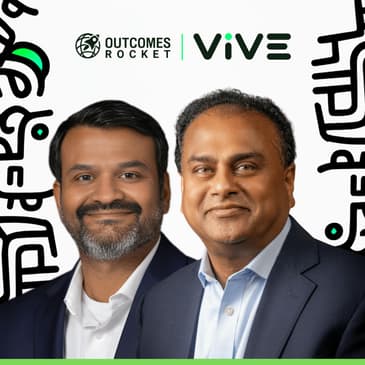
In this episode, Ajoy Ranga, Chief Digital Officer of Healthcare at UST Global, and Ashok Chennuru, Chief Data & Digital AI Transformation Officer at the Digital Platforms and Artificial Intelligence Office at Elevance Health/Carelon, discuss how their partnership between UST and Elevance Health is leveraging AI, data, and digital transformation to improve healthcare outcomes and consumer experience. They emphasize that scaling AI responsibly requires strong governance, human oversight, and a clear stance against using AI to deny care. Both highlight that high-quality, actionable data is foundational, but must be practical, cost-effective, and usable even when imperfect. Ultimately, they stress that success in healthcare innovation comes from starting with user experience, rapidly prototyping solutions, and fostering a mindset of continuous learning and experimentation.
Tune in to hear how Elevance Health and UST are balancing innovation with responsibility to unlock AI’s true potential in healthcare!
Resources:
[00:00:08] Hello everyone, and welcome back to the Outcomes Rocket, recorded live here in Los Angeles. I'm so excited to be hosting two outstanding leaders in healthcare. First, I want to introduce you to Ajoy Ranga. He is the Chief Digital Officer of Healthcare at UST Global. I also want to introduce Ashok Chennuru. He is the Chief Data and Digital AI Transformation Officer at Elevance. Ajoy, Ashok, welcome to the podcast. Good morning. Thank you.
[00:00:37] Such a pleasure to have you both here. How's the event going for you so far? It's been fabulous. This is my first time here. But more importantly, being able to chat with Ashok yesterday on the Fireside Chat was a highlight for me. And meeting everybody here doing what people are doing. That was amazing. A lot of learning for me.
[00:01:01] Likewise, I've been here a few times, but spending time with Ajoy and catching up with some of the innovative technologies because AI is evolving so fast. Just checking out what's real and what's not and catching up with old friends. It's been fun. That's great. That's great. Well, I'm glad you guys are enjoying it. And for those of you that didn't get a chance to check out the Fireside Chat, Vive does a really great job of putting all these interviews and Fireside Chats on the platform.
[00:01:31] So make sure you check that out. And so tell us a little bit more about yourselves and also about the businesses and the partnership. Ajoy, why don't we start with you?
[00:01:40] Yeah. So I work for UST now, but I was a previously 11-Celt employee for 25 years. But now I came on to the services side. The good thing for me is I'm still able to work with the same folks that I used to work in the past because from a UST perspective, I manage the 11-Celt account, providing services to them.
[00:02:03] And, you know, we'll talk more in the session. But really interesting to see where we are now. Things that we thought were not possible just a few years ago, what the technology advancement that has happened and what it is allowing us to do is just amazing. And tons and tons of opportunities to use the technology to probably make a little bit of dent in healthcare. Yeah, that's great.
[00:02:32] Yeah, no, thank you for having us. And now it's good to be doing it with Ajoy. We've known each other for almost 20 years. And so I lead all things data analytics and digital transformation for Elevance Health.
[00:02:48] And we've been partnering on several initiatives. You know, I think healthcare, like Ajay said, it's at a critical moment where, you know, it's all about, you know, how do you help the consumer and, you know, focus on affordability and by partnering with all the ecosystem, whether it is with the care providers, the government, employers, putting the member in the center of everything and leveraging partners who know our business well, like UST, we see a great opportunity.
[00:03:18] Yeah, the opportunities are huge. And partnerships are what helped get us there. So it's really great to hear the history that you guys have together. And now the two businesses coming together to offer more to every stakeholder in the equation. You know, when discussing AI, some people bring up concerns around bias, but also other potential risks. How do your companies address potential bias? And Ashok, maybe we start with you on that one.
[00:03:44] Yeah, great question. See, we grapple with the speed versus safety, you know, on a daily basis because AI is evolving, you know, rapidly. And so one of the first investments we made is, you know, building a very robust, responsible AI program and a platform. You know, it's not just tech, it's a discipline, you know, and it's a multifaceted team that includes tech, you know, like legal, compliance,
[00:04:12] and you know, and it's a business audit, you know, like, not just when we are deploying an AI model, but on a repeated basis where, hey, you know, is there an implicit bias or, you know, is it something that, you know, if regulators come and check, you know, do we have enough data to prove? Like, you know, like, you know, like, you know, like, you know, like, you know, like, can we unpack the black box of AI, you know, like, and do we have the right data to prove it?
[00:04:37] You know, so we've invested a lot on, you know, like scaling, what we call scaling AI responsibly, responsibly. And then certain, as it's not one size fits all, certain components of AI that have relevance to consumer, whether it is denial aspects of things or, you know, like targeting certain population, we get a lot more sensitive on that, right?
[00:05:04] Certain components like, hey, using AI to deliver better interactions with the members on, you know, analytics may not have the same level of scrutiny.
[00:05:13] So our focus has been very much around, like, responsible AI first, but also we don't want to slow down our innovation, you know, like, because we may potentially have, you know, like a issue in the future, you know, because, you know, a lot of times, you know, like you can deploy something and then, you know, figure out that it needs to be perfected. And then we keep improving it as well, right?
[00:05:42] But certain components, like, for example, we were very clear that we don't use AI to deny care. You know, yeah, we use AI to help automate the care decisioning process. Like, but yeah, so those are, you know, some of the key aspects of how we look at AI in a way, responsible way. Thank you, Ajok. Yeah. Thank you, Ashok. Ajok? No, totally agree with what Ashok said. Like, you know, I mean, nobody disagrees, right?
[00:06:11] Saying that whether it's AI or something else, that it should not impact our patients and consumers negatively. Now, what we do as a service provider, you know, there are companies like Elevance Health, which are massive. They can invest on AI governance frameworks. But there are a lot of companies that cannot afford that.
[00:06:37] So, what we are doing at USD and what we have done is providing that governance framework and make it deployable in different companies, small, medium, large companies, and then tune it to make it work. Now, the other aspect is we look at AI as an accelerator for sound digital design, not as a replacement.
[00:07:04] Because as you know, right, you know, we, AI hallucinates. And when it's hallucinates, especially in the setting for healthcare, it can be pretty bad. Yes. So, investing on that governance, also making sure that there's a human in the loop. But from a technology perspective, investing on things that reduces that hallucination.
[00:07:29] Like, for example, right, today, the biggest challenge with AI is limited context window. And when things go outside of that, that's when LLMs hallucinate. So, we are working closely on how do we, what can we do to increase that context window? Right? And that handles the accuracy part. Now, the other part is the speed.
[00:07:53] During inference, when people are, providers, patients, you know, other people within this setting, when they're using it, real time, it cannot take 10 seconds, 15 seconds, 40 seconds to give an answer. So, how do we increase the speed by also looking at solutions that are, you know, the GPUs and the LPUs, the hardware accelerators to reduce or increase the speed of the response?
[00:08:23] So, both remain, you know, treating AI as an accelerator and providing governance frameworks for that. But at the same time, providing research, providing capabilities to enable the technology behind that or the hardware behind that is what we are focusing on. Some great examples there. And, yeah, you know, when you're a user at that end point, you want it to work fast. I mean, you have a job to do.
[00:08:53] And then, as an organization, how do you protect, you know, safety? And so, really great examples from both of you. You know, people often don't talk about the data behind AI. Would you share your company's approach when it comes to that data and how that data is important to AI? Ashok, let's start with you again. Yeah. No, it's a very relevant topic. And I talk about it quite a bit.
[00:09:20] As I mentioned in my introduction, I lead all things data for the enterprise. And so, fortunately, we invested, you know, quite a bit in terms of getting all most of our data assets into a common platform, you know, with the right governance, right quality, timeliness, you know, accuracy, et cetera. So, and that's helped us to scale AI in a responsible way.
[00:09:47] And then within healthcare, with digitization of medical records that started about 15 years back, you know, like the data footprint is increasing on a very exponential basis. You know, like because in the past, we used to look at it with just a payer lens, which is administrative data like claims and member data. But now we do get a lot of medical records and a lot of it is unstructured.
[00:10:14] And all the other like social drivers of health, zip code level data, any data set that can influence your health outcomes is game for us. You know, genomic data, behavioral data, you know, food as medicine, you know, like nutrition data. So, and we not only just get the data, we also make it integrated and make it actionable so you can leverage value from it, you know, and AI is a key enabler there.
[00:10:42] But we are also looking at in terms of if you have a good data foundation, you know, you could even agentify that and, you know, simplify the processing of that. Because a lot of times if we have the data and if we have the right insights, but if you don't automate some of the, you know, like decisioning where a human is in the loop, like it can slow things down. You can still have human oversight, but you just don't need paper pushers, if you will.
[00:11:12] Right. So, and it is something that, you know, like even from an university perspective, you know, they're passionate about, hey, if we don't get the data right, it doesn't matter. Tight edge, I, you know, like, yeah. Totally. I mean, I think, see, and this is a topic, as Ashok said, over the years, we have debated quite a bit. So, we understand what each other's opinion is, but totally agree, you know, data is foundation for everything.
[00:11:42] One thing I would say is this, though. Everybody thinks that clean data is act of God. Yeah. It is not. You have to deal sometimes with redundant data, with messy data. If you think that only clean data will enable all this, then I don't think it will work. So, second is, especially from a UST perspective, which is a services company, right?
[00:12:07] Our biggest focus is on how to enable companies to build a data platform that is not too expensive. See, you can take Databricks, you can take Snowflake, you can take so many platforms, but if that is not implemented properly, your cost will be skyrocketing. So, within this, working with these tools, finding out a way where you can keep the cost to the minimum is something that we are focused on.
[00:12:36] There is, as Ashok said, right? Actionable infrastructure is extremely important. That will enable personalized AI experiences. Rather than provider knowing something in December, how can we tell that provider in March itself? Providing these insights at the point of KM, rather than as an analytics dashboard previously.
[00:13:01] So, in order to do this, you need a very strong data foundation that allows you to research, experiment, and going into production works as we expect. So, there's a lot of things that go into this. If not done properly, it will either not work for your business outcome or it will work, but you cannot afford the cost. So, really interesting things.
[00:13:29] Now, what is great about this day and age with AI is you can do all these yourselves very fast. If you have the right set of talent that knows how to use AI, with small teams, you can build this quickly. You can demo it. You can do a POC. If it doesn't work, it gives you the flexibility to change it quickly rather than, you know, investing multiple years and finding that, oh, boy, it didn't work. Yeah.
[00:13:57] So, at the very beginning, you had alluded to, you know, this, what was not possible in the past is now possible. And is that what you're talking about? Yes. The ability for smaller teams to do this? Yeah. Absolutely. That's great. That's great.
[00:14:26] You could do the same thing, you know, in a very differentiated way. Right? I think that's where the focus should be. And for all of us, it has to be a lifelong learning. You know, gone are the days where you get, if you become an expert that you can, you know, tag on for 10 years, you know, and then learn something new. Changes every year. Yeah. Changes every year.
[00:14:55] And what are some pieces of advice that you have for technology leaders to help them succeed in their partnerships, but also in their own businesses? Why don't you start that one? See, this is what I think. And purchase upon the AI again. See, what is more important now is focus on experience first. What is the experience that the business wants?
[00:15:23] And make sure you nail it down first. So just recently, Ashok and I started working on an initiative. What I loved about that initiative is we are not talking about data. We are not talking about architecture. We started with experience. Now, experiences can be developed using AI so fast nowadays. And when you say experiences, are you talking about a consumer experience or, yeah, like a member experience?
[00:15:51] In this case, it was member consumer experience where you can put together a working prototype very fast. I love that. Now, when you do that, right, what that is doing is it's bringing all the stakeholders immediately to alignment. Otherwise, there's a lot of discussion. There's a lot of repetition of the same things. There's a lot of documentation, handoffs. But if you make it real, right, with the demo, what it is doing is it's removing the noise out of the picture.
[00:16:20] And then you are able to see exactly what you want and then just focus on that. Yeah. No, I couldn't agree more. I think when you start with experience, you're trying to solve a real problem, keeping the end user in mind. And then trying to get everything aligned versus when you start with tech or data. You know, we try to problem solve without really knowing how they're going to use it. Right.
[00:16:46] You know, so I think my take is also, you know, like for a lot of the folks who are getting into this right now. You know, they have to have a mindset of, you know, like increased curiosity and that passion for being a lifelong learner. Right.
[00:17:05] You know, and then number two, if you're not hands on, if you're not in the details, you know, like and if you don't know how to leverage the tools, you know, like a couple of weeks back, Ajay and I were talking, you know, he was, you know, comparing between Gemini versus ChatGPT. You know, the only way you can talk to others, the only way you can learn is by using them. Yes. You know, and you have to focus on now being that curious. You have to experiment.
[00:17:33] You have to learn, make mistakes, repeat, et cetera. And if you don't have that mindset, I don't think you can survive. Yeah. Some great, great tips there for all the leaders out there listening and watching this podcast. You got to be that lifetime learner. You got to have that experience in mind. Don't start with the tactics and the technology. Start with the experience. I think those are great takeaways.
[00:17:58] If people wanted to get in touch with you and learn more about your companies and partnership, where can they do that? Yeah, I think LinkedIn. LinkedIn on our website. Yeah, websites. Yeah. Yeah. We're all there, you know. And, you know, there are a lot of avenues. Yeah. So in any shape or form, if there is out there, we can help them. That's fantastic, guys. Well, I really want to thank both of you for your time today.
[00:18:27] And for everybody with us, just want to say thank you for tuning into this podcast. Just an incredible opportunity to see what's happening in the edges of technology with Ajoy Ranga, Chief Digital Officer of Healthcare at USD Global, and Ashok Chennuru, the Chief Data and Digital AI Transformation Officer at Elevance. In the show notes, you're going to find all the ways to get in touch and the short notes to share with your friends and your colleagues so you too can take technology to the next level. Thank you all for tuning in.
[00:18:57] And gentlemen, thanks for being with us. Thank you for the opportunity. Thank you very much. Thank you. Thank you. Thank you.