
This podcast is brought to you by Outcomes Rocket, your exclusive healthcare marketing agency. Learn how to accelerate your growth by going to outcomesrocket.com
Preventative mental health education is essential for student success, and integrating quick, practical tools into daily routines can foster emotional resilience and prevent crises.
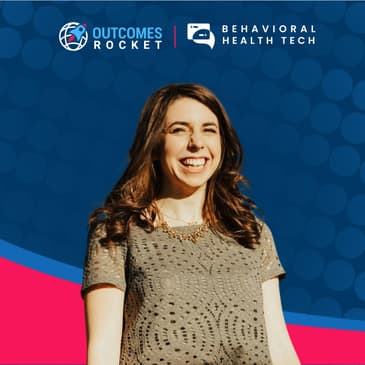
In this episode, Tessa Zimmerman, founder of Upstream Education, discusses her mission to revolutionize mental health education for students. She talks about her struggles with severe panic attacks as a child and how it impulsed the development of a program that equips educators with tier-one social-emotional learning tools. Tessa mentions how, with the help of a student task force and mental health experts, Upstream Education ensures its programs remain relevant and impactful. She also explains the three pillars to aim to prevent mental health crises: stress management, self-regulation, and attachment.
Tune in to learn how small changes and bite-sized tools in education can make a big difference in mental health and foster emotional well-being for students and staff!
Resources:
- Connect with and follow Tessa Zimmerman on LinkedIn.
- Follow Upstream Education on LinkedIn.
- Explore the Upstream Education Website.
Fast Track Your Business Growth:
Outcomes Rocket is a full service marketing agency focused on helping healthcare organizations like yours maximize your impact and accelerate growth. Learn more at outcomesrocket.com
[00:00:01] This podcast is produced by Outcomes Rocket, your healthcare exclusive digital marketing agency. Outcomes Rocket exists to help healthcare organizations like yours to maximize their impact and accelerate growth. Visit outcomesrocket.com or text us at 312-224-9945.
[00:00:33] Hey everyone, welcome back to another episode of the Expanding Access podcast recorded live here at the Behavioral Health Tech meeting in Arizona. I'm so excited to be with the amazing Tessa Zimmerman today. She is the Founder and Executive Director at Upstream Education. Tessa, thanks so much for being with us. Thanks so much for having me. It's a pleasure. What brings you to the meeting?
[00:00:58] Yeah, I am really honored to be here today as one of the winners of Hope Love's Young Innovator in Behavioral Health Award. Congratulations! The Entrepreneurial category. Thank you! Good high five for that one. Thank you. And so is there an award happening today? A ceremony or something like that? Yeah, tonight. Ooh, love that. We'll make sure to attend to see you on stage.
[00:01:24] Congratulations for that. Talk to us a little bit about you and your experience. I grew up having really severe panic attacks in the classroom since I was eight. And whenever I'd have a panic attack, my teacher was always the first responder, but never really knew what to do. Usually she would hand me a stress ball or send me to the principal's office. Yeah. And I found both responses to be really frustrating.
[00:01:51] I really wanted to learn how to manage my anxiety, how to manage my emotions. And it felt like there wasn't a space in school to do that. And it wasn't until I received a full scholarship to a private high school that really prioritized student mental health that I learned how to manage my anxiety, how to foster well-being.
[00:02:13] And it was really because every morning in homeroom, my high school principal would take five to ten minutes and facilitate a different mindfulness or positive psychology tool. And it really changed the trajectory of my life because how to self-regulate, I learned how to manage my emotions. And when I got to college, I just recognized the inequity in my education experience.
[00:02:39] I've been so blessed to go to a private high school and get a full scholarship to go there to have this type of education. But I believe all students deserve to go to school and be able to support their mental health of well-being. I love that you found a solution. A lot of people don't. A lot of people are left with this unanswered problem and challenge.
[00:03:04] And so walk us through the mission and vision behind Upstream Education and share a couple examples of how your programs are making tangible impact at schools. Absolutely. So Upstream Education is a nonprofit, and our mission is to train and equip educators in a program of bite-sized Tier 1 mental health and social-emotional learning tools.
[00:03:27] Our niche as an organization is that all of our tools take less than ten minutes to implement so they can be integrated throughout the academic day. So schools will use Upstream and homeroom and advisory and academic classes and small groups or one-on-one. And that makes it really versatile to meet different communities' needs. And so one school I love, Lake Middle School in Denver, Colorado. Shout out Lake Middle School. They are an incredible school.
[00:03:57] And why I love them so much is they use our Upstream tools daily in homerooms. It's the first thing students do to start off their day. Imagine starting off your day by taking a pause, taking a deep breath, learning how to manage your stress, and then you go to school. That's awesome. Yeah. And what's so special about Lake is that they also do these tools in staff meetings. I was just thinking that would be so useful for us, right? Like in the professional environment. Totally.
[00:04:24] And I think that's like what is so powerful, right? This like idea that we model behavior, right? And so by having adults also model and practice these tools, it like impacts students. So shout out Lake. Yeah. Shout out to Lake. You guys are leading the way. That's awesome. That's awesome. Yeah. And given how fast-paced the mental health landscape is, how do you ensure that Upstream
[00:04:50] Education's programs stay relevant and adaptable for future challenges? So there are a few ways we do this. The first is that we have a student task force. It's a group of high school students that attend different upstream schools across the country. And actually, we pay them to work on our program each summer. So our student task force edits about 24 of our lessons, and they also propose new tools to the creative rub. And I think that's really important, right?
[00:05:20] If you are going to have a program that is impacting students, I believe it should be built with them. And I think that's how we stay relevant. But it's also really important to marry that by having mental health experts and advisors as well. So we have a program advisory board that we work with to really ensure efficacy. And then we put that all together.
[00:05:43] And during the summer, we're updating all of the content so that it's ready to roll the following year. So it really ensures that we can be a program that is responsive to what's happening in the world around us. I think that's wonderful. And the question of who pays for this comes up, right? Because it has to be addressed in mental health. And oftentimes there aren't budgets for this.
[00:06:12] So talk to us about how this is super impactful. How do we pay for this? That's a great question. What question I ask myself every night? So there's two bolts. First thing I'll say is during COVID, there are these federal ESSER dollars that were incredibly helpful. Many of our schools were able to leverage this federal funding to pay for programs like us, but also school social workers, more counselors, more mental health professionals.
[00:06:42] Those dollars ended on September 1st of this year. Of this year. So that's been really challenging to navigate. There was no plan. Post-ESSER, what are we going to do? So what we at OpStream are really blessed is a nonprofit. We have a lot of foundation partners that really also set the cost to schools. And we as an organization believe that no school shouldn't get access because of their finances. They should be able to access our program. And we work really hard to do that.
[00:07:12] But that being said, my invitation is to policymakers. We need to be advocating for more school-based. And I think a lot of those, I wouldn't call them cries for help, but shouts for more are super important. And so for all of the policymakers out there watching these and listening to these episodes, the work being done is super impactful. And it's critical that we have your support. Can I add one thing to that too?
[00:07:40] I would say that we're sometimes so focused on funding crises that we forget to invest in prevention. And so it's really my hope is that we can encourage more folks to invest in preventative harm. That's really what we need right now is not to wait till something's a crisis, but how can we go upstream? That's spot on. And that's why the name's upstream. Thanks for connecting with us.
[00:08:04] How would you respond to those who view mental health as a secondary priority related to what we're chatting about here rather than as a core component of student success? Great question. There's this incredible framework. It's called the Building Blocks for Learning. And the Building Blocks for Learning demonstrates that the foundational three building blocks we need are attachment, stress management, and self-regulations.
[00:08:31] And we can't have executive functioning skills or growth mindset or all these other things we want to foster in students until those bottom three building blocks are met. Attachment, stress management, and self-regulation. Can you unpack those just a nutshell? So attachment, like for us at Upstream, it's helping students have a healthy relationship to trusted adults. Like when your teacher says, I see you, I care about you, I care about your mental health.
[00:08:59] We're going to practice these tools to foster well-being. Like we are helping students build that healthy relationship with a trusted adult. Stress management. So really being able to manage your stress. So like noticing when stress is arising in your body and like how do you respond? And that really builds off of self-regulation, right? Being able to manage your emotions. And that's why I say to educators, it's counterintuitive, right? To take 10 minutes out of your core content to do Upstream.
[00:09:28] It may seem that way, but it's actually in service to students' learnings because this is what they need to get their brains to a state of learning. I love that. That is so solid. And something, I have a seven-year-old and seeing how he responds in school, I'm thinking how helpful this would be to him. Totally. So maybe we got to hook you up with our school. For sure. For sure. All right. So definitely something to look into. Do you have children? Are you working with a school?
[00:09:57] Is this something that's resonating with you? I hope the answer is yes. And we're going to give you a chance to do something about it now. So, Tessa, give us a call to action, but also for everybody that can't be here, how can they get in touch with you and learn more about the program? Absolutely. My invitation to those watching is this notion that I have learned from Melissa Carter, who is the head of mindfulness education at New York University.
[00:10:26] And she says we are human models. So my invitation to the audience is how are you modeling taking care of your mental health? How are you modeling managing your stress, self-regulating? I believe that when we as adults model taking care of ourselves, that has ripple effects in the young people around us. So my invitation is to focus on yourself as well.
[00:10:53] And for those that want to learn more about Upstream and want to really prioritize mental health in their school, you can go onto our website, upstreamedu.org, and you'll get access to some of our tools. You can learn from our student task force and also explore how to bring the program to your school. Amazing. Tessa, thanks for that opportunity. Let's all take advantage of that. In the show notes of this podcast, you're going to see all the ways to get in touch with Tessa and her organization.
[00:11:22] So make sure you take advantage of that. Take action. That's how we make a difference. Let's be models, as Tessa has shared. And Tessa, thanks so much for being with us. This was a great episode. Thanks for having me.
[00:11:47] This podcast is produced by Outcomes Rocket, your healthcare exclusive digital marketing agency. Outcomes Rocket exists to help healthcare organizations like yours to maximize their impact and accelerate growth. Visit outcomesrocket.com or text us at 312-224-9945.