
Start earlier than you think: why proactive quality and regulatory planning can save medtech companies time, money, and costly remediation.
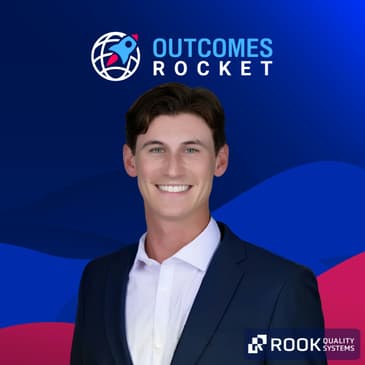
In this episode, Joseph McGonnigal, Account Manager at Rook Quality Systems, discusses how medtech companies can build stronger quality management systems and better prepare for regulatory submissions. He explains how AI can help teams lay the foundation for high-quality documentation, while emphasizing that experienced professionals remain essential to review outputs, address technical details, and ensure compliance. Joseph also explores the growing regulatory complexity surrounding software-as-a-medical-device, AI-enabled technologies, and de novo submissions. Finally, he shares why startups should document decisions early, establish quality processes from the outset, and avoid waiting until regulatory issues become costly problems.
Tune in to learn how early documentation, expert guidance, and proactive quality management can help medtech companies move toward regulatory approval with greater confidence!
Resources:
[00:00:03] Hi everyone, welcome back to Outcomes Rocket. We are live here at Device Talks in Boston and we're back for another episode speaking to some of the great folks who are here. And I'm so fortunate to be here with you, our special guest for day two. How are you finding the event so far? Yeah, the event's going well. A lot of it is, I'd say, heavily focused on the robotic side. But there's still stuff going on in the device space and there's a lot of good suppliers, good manufacturers here, a lot of people that we can partner with on our side.
[00:00:33] I love that. I love that. And for our audience who is tuning in, all the great folks at home, tell us a little bit about yourself and your company. What kind of brought you here to the event? Yeah, yeah, of course. So my name is Joseph McGonnigal. I work for Rook Quality Systems and we basically help companies with pre-market QMS establishment, QMS maintenance, design file documentation, risk management files, all the way through a regulatory submission. So we help with 510Ks, DeNovo submissions, and then expanded markets outside the U.S.
[00:01:02] So our main goal here is really to meet companies, meet startups in the space and see if there are any areas that we can support. And also just find more partners in the space too where we're helping somebody find a good testing manufacturer, help somebody with marketing. And then we can help them on the quality or regulatory side of things. I love that. I love that. And so just based on whether it's this event or just like thinking about the industry as a whole, I'm wondering if you can share with me like, what are you seeing? What trends? What shifts are you observing?
[00:01:31] Yeah, sure. You've heard it a thousand times already, but AI is coming in hot. So especially in our space, when it comes to quality documentation, a lot of people are using basic AI tools right now to build a QMS. We've seen some issues in terms of remediating those sisters. And then same thing goes for design file documentation and regulatory submission. It's a great tool. It's going to be, it's going to continue to be a great tool and it's obviously going to help get companies to a good initial starting point.
[00:02:01] But it is something that needs to be looked over, especially when it comes to the quality regulatory side, because there's so many areas that you don't want to fall into the wrong bucket. Yeah, absolutely. It makes me think of something I've heard before, which is like this idea of like quality in as quality out and like the quality of your prompting and almost like the level of knowledge you bring into the prompt is what results in that output. And I could just assume based on what you're saying, I bet you see a lot of people who are like,
[00:02:28] yeah, I use AI, but they don't have the right ability to prompt to like have an effective output for what you need on that level. Exactly. Yeah, you got to have some base knowledge. And even when you have that base knowledge, you do need some extra nitty gritty, high skilled quality engineers to support you on the back end. Yeah, got you. OK, great. So you're seeing AI. What else are you seeing from a landscape? From a landscape, a lot of software as a medical device is coming into play.
[00:02:55] More and more, we're seeing not just typical hardware devices in the space. They have some aspect of quality in play. Yeah. And then when it comes to that software side, it does get it gets tricky, especially if you're tracking AI early on. Yeah. In quality, it's something that needs to be proactive, not reactive. Once you get to that reactive point, you're spending more time, more resources and inevitably more money, which is going to be where it gets tricky for those downers, especially if they just raised around.
[00:03:23] Yeah, absolutely. Absolutely. Anything else? I mean, I know that's on your radar. I know we're heading into June, which is the second half of the year. But what is your team, your company or something you focused on going into the second half of the year? Yeah, we have a lot of regulatory support we're focused on right now. A lot of different testing protocols we're supporting companies with. We don't do the execution ourselves, but we do help with a lot of clinical protocols, all of that. More and more often, we are helping companies from a monthly quality perspective.
[00:03:51] So teams that are smaller, they have a five-person team, and those five people are fully booked up that they're very busy. So we're helping with that monthly quality maintenance, especially once you're post-market and you're dealing with any of those complaints. You have to make sure you're logging those as needed. Yeah, I would assume more and more, especially people are probably trying that AI arm, but then realizing they need that monthly support from you all. Exactly. Yeah, yeah. Awesome. Yeah, I'm just trying to think, are you seeing a shift in the types of submissions?
[00:04:20] You're seeing the types of companies, the types of tech. What has been going on from your point of view? Yeah, we're seeing some more de novo submissions. I think that is due to the increased use of AI on that side. There's just more things that need to be documented, more things that need to be compliant from that perspective, especially as these tools are constantly learning upon themselves. So more and more de novo submissions are coming into play than in the past. And that's something our team has been really excited to support teams on. Those are fun projects. They're really long projects. Yeah.
[00:04:49] But it's really exciting when you get the positive feedback at the end. Totally. Totally. I love that. So I guess this sort of thinking here, what's one thing you're betting on or you're really excited about for the future related to healthcare, MedTech, all of it? Yeah, I think the integration of companies like ours, you know, we're able to continue to partner and grow in the market. There are a lot of big names in quality and regulatory and on the marketing side of that as well. Yep.
[00:05:18] But I think the smaller teams that are getting together and continuing to grow are going to make a big impact, especially if we're using different tools that we're building together through AI. Yeah. And then also just our team is working on a bunch of different 510ks right now, a couple de novo projects in the next six to nine months should be receiving some good feedback, which is really exciting. I love that. Our team works. They just work so hard. So it's really exciting to see that positivity come out of that and how excited they are when we do get to those positives. I love that. Yeah.
[00:05:44] And any advice for anyone who's thinking about making a submission, who's kind of in that process, what would you say to them? I would just say start earlier than you think. Document everything off the bat and make sure that when you are sure about something and that design frees, you're documenting everything from square one. Being reactive, like we said, is going to cost you a lot of money in the long run.
[00:06:07] And especially from an investor's perspective, you're going to want to have everything in place and your ducks in a row and not wasting their money. Yeah. Amazing. I love that. I think that's really powerful. So what I will say is last little bit, where do you want people to go to learn more, whether it's your LinkedIn, your company page, where should people go to tune in? Yes. Our company page is rookqs.com. Rook like the chess piece. Yes. And then my LinkedIn is Joe McGonigal.
[00:06:34] Maybe they're going to be subtitled right there because it is a bit longer of a name. Yeah. My LinkedIn, please feel free to reach out. Joe Joseph McGonigal. And then our website is rookqs.com. Awesome. Thank you so much, Joe. For those who are tuning in, listening at home, I encourage you to share this episode, comment about what kind of stuck out to you, the piece of advice, weigh in on that and kind of react to what Joe said. And thank you so much for having us here or being on the episode with us. Appreciate it. Appreciate it. Thank you so much. Thank you.