
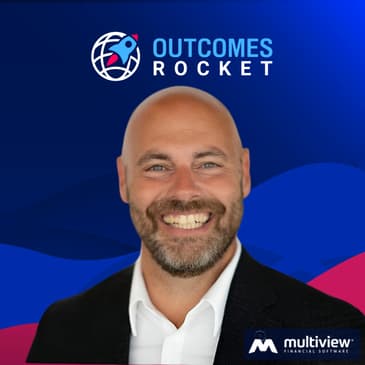
Healthcare organizations are under increasing financial pressure, making efficiency, visibility, and better decision-making more important than ever.
In this episode, Jeff Norton, VP of Business Development at Multiview Financial, explains how automation and financial technology can help healthcare organizations reduce manual work, improve reporting, and potentially cut the time required for month-end close. He also discusses why organizations should approach AI strategically by first fixing inefficient processes and establishing clean, reliable data rather than simply accelerating broken workflows. Jeff’s advice for healthcare leaders is simple: slow down to hurry up, do your homework, and make sure the technology you adopt delivers real value for your organization.
Tune in to hear Jeff Norton’s perspective on making AI and financial technology work for healthcare organizations, not just adding another piece of technology to the stack!
Resources:
[00:00:03] Hello everyone and welcome back to the Outcomes Rocket reporting live from CHI 26 in Las Vegas. I'm here at the Aria Hotel where community health leaders are gathered to talk about what's happening, trends, movements in the industry. And today I have none other than Jeff Norton with us. He's a Vice President of Business Development at Multiview Financial. Jeff, thanks for joining me.
[00:00:29] I appreciate it. Saul, thanks for having me. Yeah, so glad you could make it. I know you guys have been busy downstairs talking with clients, meeting new ones. Tell me a little bit about you. What got you into healthcare and what keeps you in healthcare? Oh wow, I'm an age of myself. I fell into it about 25 years ago. Started working for a small hardware manufacturer developing tools for Alzheimer's patients and kind of just rolled from there. Always been focused in the US healthcare although I'm a Canadian. Go Canada, go.
[00:00:57] What part of Canada are you from? Ottawa, Ontario. All right. Nation's capital. And just happened to fall into this role where we continue to evolve from the hardware side more going into then software, going SaaS, software service, doing EHRs. And most recently joining Multiview where we're helping them scale up their sales organization to further penetrate within the not just acute but post-acute markets. I love it. And are you in the US now or? We're 100% US focused. Okay. But no, I mean you personally. Oh, personally, no. I still live in Ottawa.
[00:01:27] Oh, I love it. You know what? I got to make it. Toronto is Ontario, right? Correct. Okay, cool. That's where I'm going to go. Yeah. How far are you from Toronto? Four hour drive. So 300. That's not bad. Yeah, but 250 miles maybe. Okay, that's not bad. That's not bad. Okay, so acute, post-acute. You guys, as I understand, have made a name for yourselves in the FQHC, smaller rural health system. Talk to us a little bit about Multiview and what you guys do and how you're different.
[00:01:56] Yeah, so Multiview, we've been fortunate enough to align ourselves with some really good partners in the space. So when you think about Multiview, we are very much vendor agnostic when it comes to EHRs. And so about four or five years ago, we were able to align ourselves with some of the bigger EHR vendors in the space. And there's a lot of value and we can integrate our tools with the EHR. And so we were fortunate enough to have these partnerships, develop some really good clients and get recognized by class.
[00:02:26] So we're two years in a row now, recognized by number one in class for hospitals sub 300 beds. And so taken off from that point and 100% of everything we do is dedicated to healthcare. So there are other vendors in the space that may dabble in healthcare, but we live, eat, breathe. And like everything we do is about how do we help our operators end month end. Okay, now are you really going to end the month end close? Probably not. But what if we could reduce your month end close by 50%? What's the impact it's going to have on your organization, the decisions you make?
[00:02:55] And so when we think about whether it's sales, client success, once the client gets handed off to a client success team, everything that client success rep does is helping the client improve their adoption utilization so you can get to that point where they're reducing your month end close by 50, 60%. Me not being in finance. Yeah. What does that mean? Like if you can reduce month end by 50%? Well, you're getting producing better data, better reports for your board, for other decision makers within your organization to make those critical decisions.
[00:03:24] When you're operating on raising the operating margins already, having that data at your fingertips is going to allow you to make better decisions faster. Okay. So it's about speed. Speed, efficiency, and visibility. Okay. And accountability. There's also a lot of oversight when it comes down to compliance and such. So it all ties together. Got it. Okay, cool. And what are you seeing, Jeff, at this conference rise up as key themes? AI. Community health. Yeah. AI, right?
[00:03:53] I mean, walk by the booth. Every booth down there has something geared towards AI and talking about AI. And I think the hard part for the market now is how do you distill that? And what's really going to be important for me to adopt? Right? It's easy for an organization to say, we want to be AI focused, but what does that really mean? And it doesn't necessarily mean replacing people, right? Maybe it's more along the lines of replacing processes that hinder our good people from actually being very effective at their jobs.
[00:04:19] So I think we're seeing a lot of vendors like Multiview talking about AI strategies and initiatives, but it's really up to us as well to guide the clients in terms of what they should be thinking of for their organization, how they should be leveraging AI technologies. Yeah. And I like your take on process. AI can drive process. But if the process is broken, then you don't want to accelerate that process. Absolutely not.
[00:04:45] And so for our focus really is identifying the processes that really don't work, that shouldn't have human intervention. And then how do you then build that into something repeatable to then give you the results that you're trying to achieve? For Multiview, we like to think of ourselves as a system of record. Okay. And so for us, it all starts with being that system of record and having good, clean data to work with.
[00:05:10] At that point, then you can leverage an AI technology to help you make better decisions or help you understand the health of your business. I love that. That's a good way to look at it. And so what made you guys decide to come to CHI? Do you come every year? So this is our third year attending CHI. Okay. And when I think about the challenges we see in the acute care market, a very similar challenge you can have within community health care as well. You've got eroding margins, you've got staffing challenges, and there's a lot of oversight.
[00:05:39] And so what our clients see in acute, post-acute, we can also see our clients within community health care having those same challenges. And so I think this is an underserved market. And as I said, being the only health care focused ERP or financial vendor in the space, it does provide us with the opportunity to really help these communities navigate some of their financial challenges. Again, it's razor thin operating margins. Yeah.
[00:06:04] So at what point do you actually engage with a CFO or a COO at an organization? The team is constantly on the road. We're probably, I looked at the deals we closed last month. 90% of the deals we closed was face-to-face meeting. What we're trying to do is engage with the client probably about 12 to 18 months before they're ready to make a change. Generally, there's some contractual obligations they've got to fulfill with the previous vendors.
[00:06:32] And so a lot of our job is educating our clients on how to purchase software. If you think about the last time they purchased software, it may have been 15 or 20 years ago. And so there's a lot of things they've got to take into consideration. It's not just purchasing or subscribing to a service. We've got to think about what's the implementation going to look like? What's the data conversion going to look like? What kind of security rules do you have built in? Because we are dealing with PHI. So are you HIPAA compliant? And what rules and what layers security have wrapped in your application to ensure that my data is protected?
[00:07:01] Some may say it's a lengthy process, but I still think it's somewhat expedited. Because there's a lot of decisions that the organization have to make as well. Because you can't just implement a new system and do the same thing you've been doing all along. The intent is we've got to improve and want to achieve certain outcomes. So we also need to work with our clients to identify those outcomes so we can actually hold ourselves accountable to driving those outcomes for our clients. Love that. Yeah, and I totally agree. And it's been a theme here. In-person accelerates.
[00:07:28] From a marketing perspective and sales perspective, when you're able to see people, shake hands, they could see you, read you. It becomes trust accelerates. 100%. Like I think this is the one area AI is not going to replace this. I hope. I could be wrong though. You never know. But I think for now at least, for now, until they start doing holograms of us of Star Wars. Oh yeah. Maybe that'll be the future of meetings. But for now, we're still here. Got it.
[00:07:57] Hey, so just a side thing. We were chatting about food trucks. Oh yeah. You guys know Vegas is like culinary city. So naturally we start talking about food and Jeff was telling me about food trucks. I'd love to talk about that for a bit. Yeah, I mean if my wife's watching this, she's got to know that this is one of my dreams. So at some point when I decide to leave a SaaS sales, there's going to be a food truck in my future. Or even while you're doing stuff. It could. It very well could be. Yeah. What's the concept? What do you ask her?
[00:08:26] Yeah, I want to align myself with some local liquor brews and do more of a farm to table type service. I've got some thought into the menu already. I've got my go-tos that will keep people coming back but then have weekly specialties on certain whether it's more of a Korean barbecue flair or love Korean barbecue or like Italian, a little French. Like we've got a little bit of everything. That's awesome, man. And are you the chef at home or? I am. You are? Yeah, self-proclaimed. Nice. I love it.
[00:08:55] And what about the food truck inspires you, that whole idea? I just love, I guess I just love to see people enjoy themselves. And to me, you can sit down and enjoy a meal with one another. You can have laughs, have a good conversation. Love to create. And I get a lot of enjoyment in terms of watching people enjoy what I've created. That's cool. Not to toot my own horn, but it's pretty good. Yeah? What's your like favorite dish to cook? Gnocchis. What? Gnocchis? Yeah. Those are like the little dumplings, right? Potato dumplings, Polish? Or it's Italian, it's Italian.
[00:09:25] Yeah, yeah. Pierogis. Pierogis. Yeah, pierogis would be more Ukrainian, maybe? Ukrainian. Okay, got it. Yeah, gnocchi is the Italian potato dumpling. Yeah. Oh, okay. So are you Italian? You like Italian background? I'm not Italian, but I just love Italian cuisine. That's cool, man. Yeah. Well, look, when you're in Vegas, it definitely fuels your creativity. I'm a big fan of like imagination is wisdom. Okay.
[00:09:52] And if your imagination tells you something, you should listen. Okay. I love it. Yeah. We're going to pursue that. I've already, we've already laid the groundwork. I've got a friend of mine who's agreed to be come on as a partner and part-time chef. So. All right. Do you have a name or not yet? Not yet. Okay. All right. TBD on that one, folks. Yeah, TBD. But just know that if you're going to be in the Toronto area, there's an amazing food truck coming soon to a micro brew near you. Absolutely. Absolutely. That's great.
[00:10:21] As things shift in the market, we talk about them at events like this. Any topic that you have heard kind of shifting tides that this segment of the industry is faced with that we should be discussed up? It's a common theme, which is just the financial pressures that organizations are faced with. Access to healthcare is at an all time high. And we're trying to deal with an increased patient base, reduced margins or reduced payments for your payers.
[00:10:50] And so I think it's a reoccurring theme that we still try to solve for. Yeah. In this space, it's not going to change ever. I know the current legislation is not helping with that. So certainly we have to work our way through that. And partners like Multiview can help your organization look around the corner and more properly plan. Absolutely. And I think, you know, when we look at the partnership we create with our clients, it is really helping
[00:11:20] them identify areas of opportunity to succeed. Help them identify where we can actually save some money, but also make additional investments to provide the care the community needs. What's one of the, I would say, biggest use cases for your platform that people need to know about? Jeez. I think when we, you know, I were talking about this earlier, it's like Multiview, we're an ERP, but for some facilities or for some folks that may be more clinically focused, I try
[00:11:48] to describe it more as it's really the EHR for your finance team to help understand your financial health. I would say that like the, one of the things that we're really going to help organizations with is really create more of that automation to help eliminate those human interventions that aren't really needed for the organization. So we can save you hundreds of hours each month and something as simple as not having a key in invoices as an example. To actually consume that invoice and have everything populate and get those invoices paid promptly. Cool.
[00:12:15] There's a lot of wasted hours, a lot of manual work that doesn't have to be manual. And you guys help automate that. Correct. That's big. And maybe you or somebody you know is drowning in paperwork or spending more hours than they should at the office. There's opportunities like those to consider Jeff's team to help with some of those financial challenges. So Jeff, I've really enjoyed our discussion. If you had to leave folks with one closing thought, what would it be?
[00:12:44] And where can people find you and the company? Yeah, I would say let's slow down to hurry up when it comes down to your technology adoption. Take your time. There's a lot of technology going to be presented with what other vendors take your time and truly try to understand the value it's going to provide to your organization. Because I think there's some vendors that are very new to this space and can assume that AI is going to be a buzzword that people latch on to. So really take your time. Do your homework. I'm a sales guy by nature.
[00:13:11] And I'd want to make sure that any company I'm looking at, I really want to validate that use case is actually functioning as they advertise on their websites. I love it. I think that's a great closing note and one that we should all be thinking about as we adopt technology. Technology is one of those things that, you know, there's so many options. You can get really tactical.
[00:13:35] And if you're strategic about it and you have a strategy around how you adopt AI and other tech, as Jeff points out, you'll have a better chance for success and not get lost in the tactics. So Jeff, I love that close that you've given us. For anybody that wants to reach out to Jeff or the team at Multiview Financial, check out the show notes. You'll find all the ways to get in touch with Jeff and his team there. Thanks for tuning in. And Jeff, thanks for being with us. Appreciate it, Saul.