Strategic supply chain management involves sourcing, distribution, logistics, and clinical integration to reduce waste and unnecessary variation.
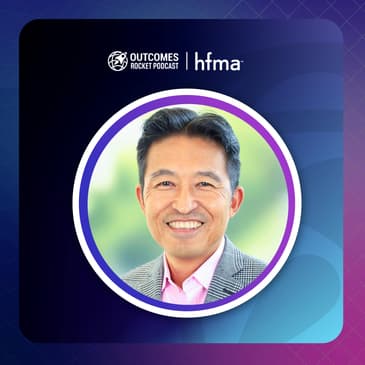
In this episode, Dr. Jimmy Chung, the Chief Medical Officer at Advantus Health Partners, discusses the significant waste he observed in operating rooms and how it motivated him to focus on optimizing resource utilization. He explains the critical role of the supply chain in reducing costs and improving patient outcomes, emphasizing its strategic importance in the financial health of hospitals. Throughout this interview, Dr. Chung highlights the innovative approach of his company, which partners with select industry giants to streamline supply chain processes and maximize value. He uses Costco's analogy to illustrate how limiting choices can lead to greater efficiency and cost savings and challenges leaders to engage in clinical discussions to enhance healthcare value.
Tune in and learn how innovative supply chain strategies can transform healthcare delivery and financial sustainability!
Resources:
[00:00:02] [SPEAKER_01]: Hey everybody and welcome back to the Outcomes Rocket.
[00:00:06] [SPEAKER_01]: And thanks for joining us for this series from HFMA 2024.
[00:00:11] [SPEAKER_01]: We're providing fresh insights with people that I had a chance to meet from some of
[00:00:16] [SPEAKER_01]: the most innovative companies changing the game of revenue cycle and finance in healthcare.
[00:00:21] [SPEAKER_01]: And for today's insights interview, I have the privilege of hosting Dr. Jimmy Chung.
[00:00:27] [SPEAKER_01]: He's the Chief Medical Officer at Advantus Health Partners.
[00:00:31] [SPEAKER_01]: He's a board certified surgeon with over 25 years of experience in direct patient care,
[00:00:36] [SPEAKER_01]: physician leadership and healthcare administration.
[00:00:39] [SPEAKER_01]: He's been a renowned clinical thought leader across supply chain,
[00:00:43] [SPEAKER_01]: which is the area that we're going to be focused on today's interview for over 10 years.
[00:00:48] [SPEAKER_01]: Dr. Chung, thanks so much for joining us today.
[00:00:50] [SPEAKER_00]: Thank you. It's a real privilege.
[00:00:52] [SPEAKER_01]: For sure. And hey, I really enjoyed connecting with you while at the conference
[00:00:56] [SPEAKER_01]: to kick things off, let us know a little bit about you and what got you into
[00:01:02] [SPEAKER_01]: healthcare but also revenue cycle. That's quite the shift from physician to revenue cycle.
[00:01:07] [SPEAKER_00]: Well, I'll just clarify it's not revenue cycle, it's supply chain,
[00:01:11] [SPEAKER_00]: which from a financial perspective sometimes seems like they're at opposite ends.
[00:01:17] [SPEAKER_00]: But let me, I'll just briefly tell you a little bit about my journey.
[00:01:23] [SPEAKER_00]: When I was a surgeon in practice, obviously I loved taking care of patients and
[00:01:29] [SPEAKER_00]: I got quite good at this. I thought I was very good at what I was doing.
[00:01:34] [SPEAKER_00]: One thing that I knew that I would eventually do is getting to physician leadership and
[00:01:39] [SPEAKER_00]: healthcare administration because I really am passionate about changing
[00:01:43] [SPEAKER_00]: the state of healthcare in our country.
[00:01:46] [SPEAKER_00]: And as a surgeon, one thing that I know I always noticed was all of the products
[00:01:52] [SPEAKER_00]: were being used in the operating room that went to waste.
[00:01:55] [SPEAKER_00]: On the back table, which is supposed to be the sterile field, I often saw a lot of
[00:02:02] [SPEAKER_00]: products like sponges and instruments that had been open for the case
[00:02:06] [SPEAKER_00]: that without even a single drop of blood were being thrown away.
[00:02:10] [SPEAKER_00]: And some of that, of course, had to do with claims of sterility and infection
[00:02:15] [SPEAKER_00]: control and so forth. But a lot of it was because we just didn't have a standard as
[00:02:20] [SPEAKER_00]: how we can minimize waste and utilize appropriately products and resources that we have.
[00:02:28] [SPEAKER_00]: And when I started my journey into healthcare administration, roughly, I want to say 13, 14
[00:02:36] [SPEAKER_00]: years ago, one of the jobs that really piqued my interest was in supply chain.
[00:02:42] [SPEAKER_00]: At the time as a physician, I had no idea what that was. In fact, before my interview,
[00:02:46] [SPEAKER_00]: Google supply chain figure out what that meant.
[00:02:51] [SPEAKER_00]: And this is actually a true story that when I talked to the recruiter and I felt that I was
[00:02:59] [SPEAKER_00]: interested in the job, but didn't really know what it was, it was like a director of medical
[00:03:05] [SPEAKER_00]: value analysis or something like that. And I said, I'm a surgeon.
[00:03:09] [SPEAKER_00]: So according to your job description, I think I'm qualified for this job.
[00:03:14] [SPEAKER_00]: But can you tell me a little bit more about it? Because I'd never heard of this job before.
[00:03:19] [SPEAKER_00]: I've heard of the typical medical director and CMO, and the recruiter said,
[00:03:23] [SPEAKER_00]: oh, well, we're hoping you'd tell us because we'd never heard of it before either.
[00:03:28] [SPEAKER_00]: So to put it in a few words.
[00:03:30] [SPEAKER_00]: Oh my gosh.
[00:03:31] [SPEAKER_00]: So long story short, it was a very unique position that I was very lucky enough to
[00:03:36] [SPEAKER_00]: identify and apply for. And very soon after I started the position, I realized what it was
[00:03:44] [SPEAKER_00]: a component of a supply chain called value analysis, which is to assess the total value
[00:03:52] [SPEAKER_00]: of products and resources as it pertains to health care.
[00:03:57] [SPEAKER_00]: And being able to identify opportunities where we can optimize that value through a process
[00:04:03] [SPEAKER_00]: called value analysis. And then creating that system for physicians across a newly,
[00:04:09] [SPEAKER_00]: I guess, wasn't a merger necessarily, but it was a newly focused large IDN of about 32 hospitals.
[00:04:16] [SPEAKER_00]: They were having issues with centralizing their supply chain processes and having
[00:04:23] [SPEAKER_00]: that communication with their physicians. So I think they wanted to hire a surgeon who
[00:04:29] [SPEAKER_00]: has an understanding resource utilization and then create the value analysis process
[00:04:35] [SPEAKER_00]: across the system. So that was how I got into supply chain.
[00:04:39] [SPEAKER_00]: And then I decided to try to learn more about supply chain by joining ARM,
[00:04:45] [SPEAKER_00]: which is the Association for Health Care Resources and Materials Management,
[00:04:49] [SPEAKER_00]: which is that professional division under American Hospital Association.
[00:04:54] [SPEAKER_00]: So once I joined them, I tried to learn more. Eventually I got on their board as their first
[00:05:00] [SPEAKER_00]: physician board member and eventually became chair. So I have to say, I really enjoy
[00:05:05] [SPEAKER_00]: being in the supply chain world. It's a very small, tight, passionate people,
[00:05:11] [SPEAKER_00]: a group of passionate people and very intelligent and just a really nice community.
[00:05:17] [SPEAKER_01]: HOFFMAN That's really great, Dr. Chong. I love that. And you gravitated to this role.
[00:05:22] [SPEAKER_01]: That story about the recruiter is hilarious. Well, let me tell you about the role. You
[00:05:30] [SPEAKER_01]: did that. And now here you are. And thank you, by the way, for correcting me at the beginning of
[00:05:35] [SPEAKER_01]: the interview. Rev cycle, supply chain, two very different things. And much of the discussions
[00:05:41] [SPEAKER_01]: at HFMA were around revenue cycle, but supply chain is a critical part of the entire financial
[00:05:49] [SPEAKER_01]: standing of a health system. And Dr. Chong, maybe you could help us understand
[00:05:54] [SPEAKER_01]: more about the company and what you guys are doing and any recent news or insights
[00:05:59] [SPEAKER_00]: you want to share about what you guys are up to. CHOCHATWONG Sure. Yeah. Well, in a nutshell,
[00:06:05] [SPEAKER_00]: I think supply chain has been undergoing some tremendous transformation in the industry.
[00:06:12] [SPEAKER_00]: In the old days, supply chain used to be called materials management.
[00:06:15] [SPEAKER_00]: Most of us were, and I wasn't involved during that time, obviously, but most of supply chain
[00:06:20] [SPEAKER_00]: was in the basement opening boxes and things like that. Literally supply chain offices or
[00:06:25] [SPEAKER_00]: management offices were next to the morgue. And so there's a lot of ongoing joke about that. But
[00:06:31] [SPEAKER_00]: as healthcare itself becomes more cost conscious and now migrating towards a value-based
[00:06:39] [SPEAKER_00]: model, supply chain becomes a much more strategic and broader function for a hospital system
[00:06:51] [SPEAKER_00]: where it's no longer just about products, but really strategic management of all non-labor
[00:06:58] [SPEAKER_00]: resources. And when I said it's on the opposite end of revenue cycle, in a sense,
[00:07:04] [SPEAKER_00]: it is because we're managing expense for the most part. Now, a lot of the products that we may
[00:07:11] [SPEAKER_00]: procure has impact on reimbursement and surgical volume and things like that. But
[00:07:18] [SPEAKER_00]: for the most part, supply chain is all about finding efficiencies, reducing waste,
[00:07:23] [SPEAKER_00]: reducing unnecessary variation, and reducing the total cost of care delivery. So that
[00:07:30] [SPEAKER_00]: cost of delivering care improves the value of the care that's actually experienced
[00:07:36] [SPEAKER_00]: from the patient perspective as well as costs to our community and our society.
[00:07:40] [SPEAKER_00]: So there's a lot of tremendous change in the supply chain industry. Everything from
[00:07:49] [SPEAKER_00]: that very first tier sourcing to distribution to logistics, but also from my specific focus,
[00:07:56] [SPEAKER_00]: which is the clinical integration, is are we producing, are we procuring products
[00:08:01] [SPEAKER_00]: that will ultimately result in good patient outcomes and patient experience?
[00:08:06] [SPEAKER_00]: And are we reducing harm? Are we reducing errors? Are we actually appropriately utilizing
[00:08:14] [SPEAKER_00]: the resources that we have to ensure that the patients get the care that they need?
[00:08:19] [SPEAKER_00]: And so integrating that clinical aspect into supply chain function becomes a much more high
[00:08:27] [SPEAKER_00]: level strategic function that in many hospitals and hospital systems is up in the C-suite
[00:08:34] [SPEAKER_00]: level. And it's a very exciting field to be in. Now, our company, what's unique about
[00:08:40] [SPEAKER_00]: what we're doing is that we've also identified that in the supply chain industry that involves
[00:08:47] [SPEAKER_00]: not just hospitals but suppliers, group purchasing organizations and so forth,
[00:08:54] [SPEAKER_00]: there's a lot of waste and inefficiencies as well. So most hospitals in this country
[00:09:01] [SPEAKER_00]: are members who will procure their products through one of three large GPOs. And as the
[00:09:09] [SPEAKER_00]: current GPO model expands, some of us, and with no disrespect, might jokingly call them
[00:09:16] [SPEAKER_00]: three. We refer to them as the big three. And oftentimes some people might describe them
[00:09:22] [SPEAKER_00]: as a cartel or a monopoly because they're so big that it's hard to make any significant
[00:09:28] [SPEAKER_00]: change. And from the supplier perspective, if you know that the only way you can get into a
[00:09:35] [SPEAKER_00]: hospital and get a hospital contract is through a GPO, then you really have no choice and you
[00:09:43] [SPEAKER_00]: don't get any real price protection. You don't get any exclusivity because you're in there
[00:09:48] [SPEAKER_00]: competing with everybody else. And from the provider perspective, you can take advantage of
[00:09:55] [SPEAKER_00]: savings through purchasing through a group purchasing organization because you're doing it
[00:09:59] [SPEAKER_00]: on at scale and taking advantage of the economy of scale. But then again, there's really no
[00:10:06] [SPEAKER_00]: additional value, especially if you're a large IDN that you can get because you can just do
[00:10:13] [SPEAKER_00]: it yourself. And there's been a lot of criticism of the current GPO model.
[00:10:18] [SPEAKER_00]: And we saw that as an opportunity to create a different kind of maybe I would say,
[00:10:23] [SPEAKER_00]: personally, it's not a company logo or anything like that. Personally, I might consider it almost
[00:10:29] [SPEAKER_00]: like an anti where our model for the GPO is to create value by starting from the clinical
[00:10:38] [SPEAKER_00]: need so that if we know that we take care of these patients for these conditions and
[00:10:45] [SPEAKER_00]: will perform these surgeries, what products do we need? And then we scoured the marketplace
[00:10:50] [SPEAKER_00]: to see which industry partners would share our vision the most and create value together.
[00:10:57] [SPEAKER_00]: And we limit our portfolio to those those partners only, we don't try to put in every
[00:11:04] [SPEAKER_00]: vendor on our portfolio like the other GPOs would. So while it might appear to
[00:11:15] [SPEAKER_00]: reduce the choices that a perhaps a hospital or physician might have, we're actually narrowing
[00:11:22] [SPEAKER_00]: the choices deliberately to maximize the value to both supplier and provider and ultimately to
[00:11:29] [SPEAKER_00]: the patient. So that's the model that we're using. Some of the innovative things that you
[00:11:34] [SPEAKER_00]: you're asking about that we've already achieved, creating very strong unique partnerships with
[00:11:40] [SPEAKER_00]: the giants in the industry like Medline, GE, Tronic and other large companies towards this
[00:11:47] [SPEAKER_00]: vision has really attracted a lot of attention and I already gained a lot of savings for not
[00:11:54] [SPEAKER_00]: just for Bonsacoma Mercy Health but some other hospitals as well. So we're really excited about
[00:11:59] [SPEAKER_01]: moving forward in that direction. That's great Dr. Chong. The innovation, the business model
[00:12:04] [SPEAKER_01]: innovation is really something that we could all focus on and literally create value out of what
[00:12:12] [SPEAKER_01]: we already have just by thinking differently and deploying a model like Dr. Chong did.
[00:12:17] [SPEAKER_01]: Actually when we were together at HFMA, Dr. Chong you gave the analogy of Costco and I think
[00:12:22] [SPEAKER_01]: that analogy of what you just talked about, everybody loves Costco. You go get great value,
[00:12:28] [SPEAKER_01]: there's less choices but all the choices that are in there are high value for you.
[00:12:32] [SPEAKER_00]: Right, exactly and there's some psychology behind that because if you and I think the analogy
[00:12:39] [SPEAKER_00]: that I made as well is that let's say you're a mother who has five kids
[00:12:45] [SPEAKER_00]: and each of the five kids wants a different breakfast cereal. Well then maybe you'll take
[00:12:50] [SPEAKER_00]: them to Walmart or some other large super center where you can have choices between 20-30
[00:12:55] [SPEAKER_00]: different brands of cereal and say okay kids you choose what you want. I don't want to have
[00:12:59] [SPEAKER_00]: to deal with unhappy kids but that's not economically sustainable if you translate
[00:13:07] [SPEAKER_00]: that into healthcare. If you are a mother who has five kids and says you know what
[00:13:13] [SPEAKER_00]: we're just going to get Cheerio because it's healthy, it's economical and if I go to Costco
[00:13:20] [SPEAKER_00]: I can get it at bulk for a much lower price and you guys are going to get the same nutrition
[00:13:25] [SPEAKER_00]: and if you're ready to have that conversation with your kid, you go to Costco, you don't waste
[00:13:30] [SPEAKER_00]: time looking at the shelves that's already there, pick it up and you go. That's efficiency
[00:13:35] [SPEAKER_00]: and that's what we want and that's what we want to create for the hospitals that are ready
[00:13:40] [SPEAKER_00]: to go down that value-based care path and we know it's a challenge, we know it's not easy.
[00:13:45] [SPEAKER_00]: Some hospitals still have five kids who want different things and they cater to it but again
[00:13:50] [SPEAKER_00]: that is not a sustainable healthcare model. We know that so for the future we want to make sure
[00:13:55] [SPEAKER_00]: that we have a value-based clinically vetted portfolio that's ready and available to go for
[00:14:02] [SPEAKER_00]: those hospitals that are ready to join us on our journey. Amazing Dr. Chung, that is such
[00:14:08] [SPEAKER_01]: a great way to close. I appreciate you coming to our interview here and providing such incredible
[00:14:14] [SPEAKER_01]: insights from the conference but also from the work that you do every day. What call to action
[00:14:19] [SPEAKER_01]: would you leave our viewers and listeners with and where's the best place they could get in touch
[00:14:23] [SPEAKER_00]: with you and your company to learn more? Yeah, I would just say that I know that the
[00:14:29] [SPEAKER_00]: audience was HFMA attendees or those who couldn't attend. I would say as a physician,
[00:14:37] [SPEAKER_00]: I encourage and empower financial professionals or finance professionals to
[00:14:43] [SPEAKER_00]: care about the clinical outcome and care about clinicians and that I hear a lot of finance
[00:14:51] [SPEAKER_00]: professionals say things like, well it's not up to me because it's a clinical decision,
[00:14:56] [SPEAKER_00]: I can't really tell doctors what they can and can't do. And I would challenge you to rethink
[00:15:02] [SPEAKER_00]: that. That we all have, if we collaborate and we work together, we all have expertise and
[00:15:09] [SPEAKER_00]: the lens through which we look at healthcare and ultimately I truly believe that we all want the
[00:15:15] [SPEAKER_00]: same thing, which is the highest value care for our patients. And if you're in a position to
[00:15:21] [SPEAKER_00]: make some significant change and you want to contribute to that conversation with your
[00:15:26] [SPEAKER_00]: physicians to say maybe we can find additional efficiencies if we just do this differently
[00:15:31] [SPEAKER_00]: and come up with those ideas, I would say please speak up and be involved in that discussion.
[00:15:38] [SPEAKER_00]: I'm easy to find. You can find me on LinkedIn or on our website, advantagehp.com.
[00:15:47] [SPEAKER_01]: Outstanding Dr. Chung. Thank you for that and we'll be sure to include your LinkedIn,
[00:15:53] [SPEAKER_01]: the company's website, on the show notes. And folks, that endorsement here feels,
[00:15:59] [SPEAKER_01]: it's powerful, right? Dr. Chung is challenging us to say we could do something about this,
[00:16:04] [SPEAKER_01]: think about, go with it with empathy. But it's okay to challenge if it's going to make the
[00:16:09] [SPEAKER_01]: system more sustainable and better for everyone. Dr. Chung, thanks so much for being with us.
[00:16:14] [SPEAKER_01]: This has been a really great pleasure. Thank you very much for having me.