
This podcast is brought to you by Outcomes Rocket, your exclusive healthcare marketing agency. Learn how to accelerate your growth by going to outcomesrocket.com
Neurodivergent care is being revolutionized through technology and innovation.
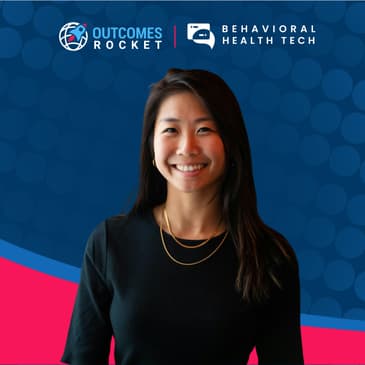
In this episode, Christal Wang, co-founder and CEO of Shimmer, at the Behavioral Health Tech Conference in Arizona, discusses Shimmer's strengths-based coaching platform for individuals with ADHD. She emphasizes shifting the perception of neurodivergence from a deficit-focused to a strengths-focused approach. Christal explains how AI can assist neurodivergent individuals by handling tasks that challenge executive function, allowing them to leverage their unique strengths. Shimmer's mission includes raising awareness, decreasing stigma, and offering educational resources to support the neurodivergent community.
Tune in to learn how neurodivergent care and innovative technology are transforming the landscape of mental health!
Resources:
- Connect with and follow Christal Wang on LinkedIn.
- Follow Shimmer on LinkedIn and explore their website.
- Connect with Shimmer on Instagram and Facebook.
Fast Track Your Business Growth:
Outcomes Rocket is a full-service marketing agency focused on helping healthcare organizations like yours maximize your impact and accelerate growth. Learn more at outcomesrocket.com
[00:00:01] This podcast is produced by Outcomes Rocket, your healthcare exclusive digital marketing agency. Outcomes Rocket exists to help healthcare organizations like yours to maximize their impact and accelerate growth. Visit outcomesrocket.com or text us at 312-224-9945.
[00:00:25] Hey everyone, welcome back to another episode of Expanding Access recorded live here at the Behavioral Health Tech Conference in Arizona. I am with the amazing Chris Wang today. She is the co-founder and CEO at Shimmer. Chris, welcome to the podcast. Thank you. Thanks for having me.
[00:00:52] It's a pleasure to have you here. Look, before we dive into the interview, tell us what brings you to the conference? I guess the short answer is I was a speaker. We spoke at the Neurodiversity. I think the technical title was Reimagining Neurodiversity Care. So that was the original reason I came. We're a consumer behavioral health company, which is not super common here. Yeah.
[00:01:15] So it started off with just being a panelist, but now I've been able to connect with a lot of folks that I've been meaning to meet or folks that I've met a couple weeks ago at the health conference as well. Oh, you were in the health conference as well. Yeah. I ended up seeing a little bit more than I bargained for. That's awesome. And it's only day one. Hey, I love it. I love it. So much more to go with two more days. I love it. And so let's dive into it. Tell us about you and your experience.
[00:01:39] I was diagnosed with ADHD two years ago and I was in my late 20s and I was pretty floored by the fact that I didn't know my whole life I had ADHD. I think a lot of it had to do with my cultural upbringing of being Asian and not talking about mental health within the family. But since then, the short version of the story is I was looking for a behavioral solution again because I was Asian.
[00:02:02] I was trying not to take a medication first approach and very quickly found that the system was completely broken. I couldn't find a coach. The prices were pretty exuberant. And I was in a state of no ADHD community, no support system, didn't really want to take medication yet. And that's when I started what now is Shimmer, which is an ADHD coaching platform.
[00:02:27] And I'm happy to dive into whichever part of the lived experience talking about like growing up with ADHD or building a company from my ADHD experience, whatever kind of direction we want to go. Yeah, no, I think we could go both ways. Let's take this next question and take it where you feel best with that. What do people get wrong about neurodivergent people and neurodivergent care? This is something I think a lot about.
[00:02:51] When I first got diagnosed with ADHD, the things that were told me were basically, these are the things you're bad at. These are the symptoms. These are the things you're struggling with. And what that does to a person, especially for me as an adult, but imagine being a kid, is that really weighs down on your self-esteem and your self-image. And I knew that I wasn't all bad. I had great things about me. I had strengths. I had things that I liked about myself.
[00:03:17] And so I think the biggest thing that people get wrong about neurodivergencies or neurodiversities is that it's something that needs to be fixed. Of course, there are challenges that need to be solved, but it's not that this person is a broken person and they need to be fixed. We actually have strengths that often neurotypical people don't have or skews more neurodivergent. And so the solution in that vein requires to actually help this person find their strengths.
[00:03:44] And that path is a far more empowering one also than just trying to fix everything along the way. So even with our product, the way we approach it is, okay, here are your goals that you want to get to. Here are your strengths that you have. And then let's see if we can get you there. And if we can't get you there with your strengths, what are the weaknesses or the challenges that you need to solve along the way? And taking that path is more efficient, is more empowering than just saying, okay, here are all your symptoms. Let's try to solve them one by one.
[00:04:12] And at the end of the day, you don't even become happier or have a better life because all you've done is really just beat yourself over and over again on the things that you aren't good at. Yeah, I think that's so great. And I always like to think about things like if you're going to tackle something, have an end goal or not. And I love your example of here's everything that is wrong with you, which isn't, but that's the approach right now. Yeah. And you've really flipped that on its head with the platform that you have.
[00:04:40] Yeah, I am a big fan of strength-based development. And also the two kind of foundations that our methodology is built off of is positive psychology, which is more around the science of well-being rather than mental illness, and acceptance commitment training. And this methodology is more around accepting the things in your life that you aren't going to change and still deriving happiness from what you want to do and living a life based on your values, not based on just fixing everything that's along the way.
[00:05:10] So I think it's really important because the narrative around neurodivergence, in my opinion, is changing pretty quickly. There's people speaking up more that, hey, I have ADHD, but that doesn't mean I'm broken. I have ADHD. This is a part of my identity that I'm actually proud of. And I think that there's not many different conditions. There's not that many condition areas where it's also an identity that people are proud of. So it's a very unique space of health care with a little bit health care and a little bit just like a cultural movement. Sure. I love that.
[00:05:38] And so where do you see the future of neurodiversity care going and what gaps need to be filled? This might be a little bit crazy, but now with AI, I think it's not that crazy anymore. But all the things that people with ADHD and neurodivergence and people in general who struggle with executive functions, the tech is so close to being able to do all those things for us. Imagine if you wake up in the morning and your watch or a voice in the sky buzzes and says, hey, it's time to get up. Here's your morning routine.
[00:06:08] Here's your favorite song that is going to get you through it. Here's your three steps. Let's get started. It motivates you the exact same way you need to get motivated. A little AI assistant helps you get your dentist appointment, all your appointments done. And then in that moment where you really want dessert from the fridge, but you are on a diet for your wedding, it'll beam a picture of you in a wedding dress. And you're going to be like, oh, yeah, that's what I'm working towards.
[00:06:32] And so all of these things with technology in a non-invasive way, it's not like you're putting a bunch of more screens in your face, can be solved. And I think that when you take all the things that people with ADHD and neurodivergent people struggle with and you take those parts away, you're just left with the parts that are unique to them, potentially strengths, potentially personality traits. And if we can move forward from that perspective, not just for neurodivergent people, but just for everyone, then the world will be a lot better place.
[00:06:59] And I think that a lot of times people are scared that AI is going to replace their job or make their life even harder and add more complexity. But I think really, if it's done thoughtfully with neuroaffirming design, with universal design, we can get to a place where there's less screens in between us and more things that we need done get done so that we can spend more time doing the things that we love. I love that perspective. And how are you helping expand access to mental health and substance use care with your platform?
[00:07:28] So neurodivergent care is interesting because there's a lot of downstream effects. So when you do preventative care for people who are neurodivergent, there are going to be less substance use disorders. There's going to be less ER visits, less anxiety, less depression. And a lot of the reasons why for neurodivergent people, the rest of these conditions have flared up is because they were not diagnosed when they were a kid. So you have a whole life of anxiety and depression that maybe didn't need to be there if you had your ADHD treated.
[00:07:54] So I think for us, what we're doing is, one, raising a lot more awareness and destigmatization for neurodivergence to frame it as something that you don't need to be scared about and something that you can almost even be proud about. And then, two, being able to disseminate these resources out into the community. So we do a lot of free webinars, free body doubling, co-working events, and just free content on social media for the wider audience. Because it's not just about the person who's neurodivergent actually making a change in their life.
[00:08:24] Maybe their parent, their teacher, their workplace, making things easier for them. So the more we can get the information out there, the more really we're pushing forward all of the outcomes that are related to mental health. It's education, right? Yeah. In a big way. And not just of the person, but the clients, the community. Yeah. I always make this parallel to women's rights. Women's rights is not just about women going out and doing things. It's about the whole world changing the way that the system and the stigmas that are in place. And I think neurodivergence is very similar, too.
[00:08:53] It's not just about people who are neurodivergent getting better at time management. No, it's about also even if they have the best time management in the world and then they get to their work and then their manager is creating a space that is very stifling for them. It doesn't they're still going to move to a different job. So it's really about this whole system changing altogether. I love it. Great perspective. This has been such an interesting conversation. To wrap things up, Chris, what call to action would you leave our viewers and listeners with?
[00:09:22] And where can they find you and your team? Call to action. I think that I'm going to guess that most of the people are probably neurodivergent adjacent who are listening to this. And you probably know someone in your life who's neurodivergent. Maybe you're neurodivergent yourself. I think it's really taking the time to question what stigmas or what beliefs that you hold in your head about people who are neurodivergent.
[00:09:47] And if everyone can take that lens and take a more positive oriented approach, then it'll make life a lot more easy for people who are neurodivergent who they're putting in the work to get coaching, to go to therapy, to do all these things. And it's really about the whole world stepping up, not just for neurodivergent people, but really all people. And in terms of where to find me, we were just talking about this a little bit earlier. I am on Instagram at ADHD.crystal. We are on Instagram at Shimmer.care.
[00:10:15] And we are starting to build up LinkedIn as well, but mostly Instagram and Facebook, I think. Okay, great. Thank you for that. Ladies and gentlemen, thanks for tuning in to another episode of Expanding Access here at Behavioral Health Tech. Chris Wang, co-founder and CEO at Shimmer with us, has shared a ton of value. So I encourage you guys to take a look at the show notes for ways to get in touch with her and her team on socials.
[00:10:43] And make sure you take action on anything that resonated with you at the interview today. Chris, thanks for being with us. Thank you. This podcast is produced by Outcomes Rocket, your healthcare-exclusive digital marketing agency.
[00:11:11] Outcomes Rocket exists to help healthcare organizations like yours to maximize their impact and accelerate growth. Visit outcomesrocket.com or text us at 312-224-9945.