
AI-driven virtual agents are revolutionizing call centers by handling mundane inquiries, freeing up staff for more personalized patient interactions.
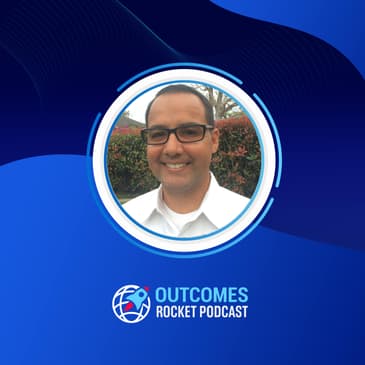
In this episode, Joseph Hernandez, the Vice President of Channel Sales at BluIP, highlights the exciting opportunity of healthcare technology advancements that will improve population health and enhance the patient experience. Specializing in AI and virtual agents for healthcare, BluIP underscores the importance of digital transformation, emphasizing the necessity for automation and sophisticated technologies to manage vast data and improve care quality. Throughout this conversation, Joe discusses exciting technological innovations like AI-driven virtual agents and ambient recording, which facilitate efficient patient care and physician workflows by reducing administrative burdens. He explains how BluIP's efforts focus on making healthcare technology accessible and equitable, particularly for underserved communities, by providing affordable solutions and fostering partnerships.
Tune in and discover how BluIP is revolutionizing healthcare technology for better patient outcomes!
Resources:
[00:00:00] Hey everybody, Saul Marquez here and welcome back to the Outcomes Rocket. We are recording today's episode live at the Vive event in Los Angeles, California. Today I have the privilege of hosting Joe Hernandez on the podcast. He's the vice president of Channel Sales at Blue IP. Joe, thank you so much for joining us today. Thank you Saul. Thank you for having me. I'm excited.
[00:00:30] We're kicking things off. Tell us a little more about you, your background and Blue IP. What is it that you guys do? Yeah, so we were a carrier. We focus on artificial intelligence and virtual agents in the technology space. So essentially what we do is we work with payers and providers that are interested in introducing virtual agents in the context and environment, augmenting staff replacing their on-prem phone system with more sophisticated technologies that will enable them to use cloud technologies a little bit more effective
[00:01:00] and hopefully. Love it, appreciate that. How do you see digital transformation speaking of cloud technology reshaping healthcare delivery in 2024? And what are the main challenges and opportunities this presents? I think that 2024 will continue to be an exciting time for healthcare and the overall market. The sheer amount of data analysis and effort that goes into providing quality care for all
[00:01:30] the underserved as well as those that can't afford healthcare and insurance. The sheer amount of data analysis and effort is overwhelming. What that means is that the manual efforts, the technologies that were used prior are just not enough. So what I think is that hospitals and healthcare providers and payers will continue to adopt technologies that will enable them to do it in more of an automated fashion. I mean, introduced technologies that before they wouldn't even consider.
[00:02:00] Or weren't yet not even available. So I think over the course of the next 10 years and then even beyond, it's going to be very exciting to see technologies and solutions that are adopted by both providers and payers.
[00:02:12] Yeah, for sure. And around these technological shifts and innovations can you share some of the most exciting technological innovations that you think are going to significantly improve patient care and outcomes?
[00:02:24] Yeah, it's obvious that AI is the most exciting technology and most exciting advancement to impact the healthcare market. There are so many areas in which this is actually true, depending on the area that you focus on.
[00:02:39] My specialty is surrounding call center agents and agent assist type applications. So what that looks like is call center agent, augmentation and providing call center agents tools to
[00:02:52] to provide better service to patients and other businesses that are calling in and asking questions to that provider. So agent augmentation is one in which a call center agents virtual agent will work alongside of a group of call center agents and answer those mundane questions that typically come in that can certainly be handled by a virtual agent.
[00:03:14] So information and questions surrounding questions about the facility visiting hours and hours of operation and word of visitors park and so on and so forth. Those are the easy ones.
[00:03:26] But in addition to that, agent augmentation could actually in virtual agents can handle inbound inquiries like scheduling setting schedules, modifying schedules, canceling it's good appointments, pharmacy type operations like refills, cancellations, so on and so forth.
[00:03:43] So virtual agents are very good at handling those inbound inquiries and therefore freeing up those call center agents that are very knowledgeable and know how to work with patients, allowing them to work with those patients and interface with those patients and giving them more time to do so because the virtual agents are handling the other mundane questions that typically they'd have to spend time on.
[00:04:06] Other areas are integrating knowledge bases to effectively provide better patient care and interaction between the patients and in the healthcare system.
[00:04:16] So those ones are I think the most exciting having a virtual agent work alongside of agents call actual live call center agents is really going to make a major impact and very exciting for us.
[00:04:28] Yeah, that's huge and the virtual agent is one piece. There's also the technology infrastructure right from my understanding Joe. The infrastructure has gotten a lot more streamlined and actually less costly.
[00:04:41] It's true. It's true. So one of the things that we do and we focus on so we have customers that are very large well known household names from a healthcare facility in hospital group.
[00:04:52] Now what we also do is we provide these services to what we call FQHCs the federally qualified health centers and what we do is we try to provide these technologies in a manner that is affordable to those providers that dedicate their services to providing service to the underserved.
[00:05:10] They struggle often with technology. They struggle with staffing in virtual agents and AI are technologies that if they're provided in a proper manner can be provided and consumed by some of the smaller FQs that don't have the funds that the Mayo clinic that's either sign eye and other major health systems actually have access to.
[00:05:35] So the exciting thing is that the technology is there providing that technology and enabling all providers to consume it.
[00:05:44] Is very exciting because it is consumable. It is affordable and the idea that a small clinic cannot employ these technologies or deploy these technologies is not even a question anymore. That's something that's very exciting to us. It makes it very proud to be involved in that process and working with the communities, the Medicaid community.
[00:06:04] Yeah, that's great. I really love that it's about technology that works technology that's democratized and you guys have done that from large ID ends that you work with to the small FQHCs there's no stone unturned which is really exciting about what you guys offer.
[00:06:22] AI and machine learning to buzzwords that we keep hearing here in the at the meeting and in healthcare in general. In what ways do you see these technologies making a tangible impact on both healthcare providers and patients.
[00:06:36] Yeah, my skill set in our expertise like I said, surrounds contact centers and cloud-based PB access. But we're students of artificial intelligence and machine learning. We've been doing it for a very long time and
[00:06:49] I truly think that one of the most impactful technologies as it relates to AI and machine learning actually surround something that we don't even offer. It's just in the market and that's ambient recording.
[00:07:02] So what that looks like is when a patient goes to an appointment and they have an encounter with their physician an ambient call recording solution will listen to that conversation.
[00:07:13] And then after the encounter, the mccall recording solution will assist the physician to do the to do the charting necessary and also provide a health plan in the necessary paperwork to wrap up that that encounter.
[00:07:29] No matter how much technology we roll out, no matter how much solutions as it relates to providing faster service better service to patients.
[00:07:38] Physicians there's a huge shortage of physicians and our job I think is to provide technologies to these physicians that allow them to work more efficiently so that they could see more patients and have a more intimate conversation with them and empathetic conversation with them as opposed to
[00:07:57] being focused on charting as they're having that interaction and then encounter. So I think that is likely the most impactful, I believe because again it's solving the problem of
[00:08:09] the shortage of physicians and the ability for the physicians to actually see these patients and work with the patients and help them. I think that's one of the most exciting one. Yeah, I really appreciate that. And yeah, we've had a lot of conversations here at the event for the podcast
[00:08:24] around technologies like the ambient recording technologies. Just how can we help physicians care providers practice at the top of their license, right? So it's definitely a promising tech.
[00:08:37] Yeah, that's something that we hear a lot of we talked to like I said a lot of providers and they're looking for technology to to help their staff work more efficiently and provide better care.
[00:08:49] But there's also this overwhelming obstacle is the shortage of physicians those that are actually providing care. That's really a big challenge. So I think if you can
[00:09:01] roll out a technology like ambient recording that reduces the amount of time it takes for those physicians to do the paperwork come up with a care plan and
[00:09:11] diagnose as well. I think that's very impactful and it's very much like what we do for hospital staff. So if you could automate those processes that are a bit mundane and repetitive for the staff, it frees them up to work with those patients that need to interface with the live person.
[00:09:29] It's very much the same with physicians by automating some of the repetitive tasks like charting and diagnosing simple diagnoses, like a common cold or the flu or something like that.
[00:09:41] If we can provide that in leverage AI machine learning to help them with that, then they can focus on those patients that truly need more more attention and they could provide better care. So it's they go hand in hand.
[00:09:54] Yeah, for sure. And Joe, you had touched on access, right?
[00:09:58] Access, equity, your organization's working hard. I know based off of our conversations to provide access to what else are you guys doing with healthcare technology to make it accessible and equitable, particularly underserved or rural communities.
[00:10:13] I really so this population in these these these providers, the FQs and rural health centers. They often want to employ technology. They often want to want to subscribe to new technologies, but they don't have either access to it or even know of it.
[00:10:30] So what we do is we get involved with our customers in this space and we work with them to promote these technologies. We work with them to share their experiences and employing this technologies.
[00:10:42] And we do a lot of work as it relates to partnering with these organizations. We are a relatively small provider. We are a carrier, just like AT&T is, but a small more boutique type provider.
[00:10:54] So it gives us the ability and the agility to introduce these technologies in a way that they could actually afford and truly partner with us. And what the net result of that is in working with them and providing more of a partnership with them in technology for healthcare.
[00:11:11] It enables them to come to us and say, look, what you guys have deployed, you guys helped us with our phone system, the least common denominator, if you will.
[00:11:19] Then our patient population is in fact consuming and using the virtual agent that we've put in place. Our call center agents are now freed up to help these patients that need a live body, right.
[00:11:32] Now we are struggling with a different issue. So they bring these issues to us and because we're a software development firm, we're a cloud technology provider.
[00:11:41] We're able to provide services to them and come up with solutions to help them meet these challenges that they have on an ongoing basis, not just what's listed on our price sheet, if you will.
[00:11:52] And what we find is as we as the years progress in the more customers we bring on, the more and more features and functions were able to actually develop for them and introduce them to this the complete community as a whole.
[00:12:07] Thanks Joe. Yeah, and you mentioned in your comments that you're a carrier as well. Can you tell me more about that?
[00:12:14] Yes, in the telecom space, historically there's been manufacturers that manufacture phone systems like your Cisco's and Avias and Nortel's and so on and so forth.
[00:12:24] And then there's carriers and they're typically separate organizations. So we are a carrier and a cloud PBX provider. That means that, like I said, just like AT&T, we're shrunk down. We are registered with the FCC.
[00:12:35] And what that does is it enables us to go into a health system and a hospital 600 bit hospital 900 bit hospital and help them replace their on prem phone system that is aging and is failing and out of support.
[00:12:51] And then what we can do is because we're a carrier, we could essentially carve out a portion of our carrier network for these providers. A lot of these providers are large enough that they should in fact have resources that a carrier actually has.
[00:13:09] That means access to direct numbers access to free numbers access to circuits so that they can they can do migrations there all 24 by 7365 mission critical organization. So they should have access to do migrations to do maintenance without impacting other aspects of their business and other departments.
[00:13:28] And that's what carriers are designed for. That's what carriers do. That's how we're actually built out. So as a carrier, we're able to deliver these solutions to these large health systems and essentially make them a carrier.
[00:13:40] So when we do stuff like that, it only enables them to develop what we call carrier redundancy solutions, which is again unheard of in the market.
[00:13:49] For example, we have customers that struggle with outages from AT&T on an annual basis. Right. When that means another project. I hit by one of those.
[00:13:59] It was recently. It happens. It happens. And if you can imagine a regular currents is a health system can no longer receive in non calls. Right.
[00:14:09] And that means that that could happen for a full day and even multiple days when that happens. It's absolutely catastrophic for a health system. That means patients can't call in.
[00:14:20] I mean, you can only imagine so as a carrier we're actually able to design solutions that if an underlying provider has an outage, we could fail over to another provider and keep that health system in business.
[00:14:31] Those types of solutions are required to provide the most optimal patient care for these health systems, especially the large organizations which we also do business with.
[00:14:41] And it also enables them to migrate there on prem technologies like their phone system and their contact centers out to the cloud and then giving them access to these cloud solutions and APIs and low code and no code type applications that enable them to introduce
[00:14:56] workflows that are really impactful to their business. It's not just a phone system anymore. It's not just a call center. It's actually technologies that are designed to work with other technologies to introduce more efficient workflows. So that's what we specialize in.
[00:15:10] That's fantastic. A great opportunity for redundancy, reliable network, a reliable system there. So really great opportunity. Joe. Look man, this has been super interesting. Thank you for sharing everything that you and the blue IP team does.
[00:15:25] What closing thought would you leave our listeners with?
[00:15:28] What I would say is I believe that everybody shares in the same excitement coming to these events and seeing the different technologies and seeing the health care market adopt technology to provide better care and enhance population health is really exciting.
[00:15:43] So I would just I would just say, hey, listen, this is a great time for the health care community. It's a great time for Americans that are investing whether you're a technology provider software developer, a pair.
[00:15:55] Anybody in this community it's really as exciting and it's a great business to be in. So really excited about that.
[00:16:01] Yeah, for sure. And you guys are doing a big part of that lived and shift for these organizations. Right. So very exciting. Thank you for being with us today.
[00:16:10] And where can people learn more about you and the blue IP team?
[00:16:12] Yeah. So we're pretty good at hiding who we are. So we are blue IP that's a blue IP without the ESO BLU IP dot com. Please go to our website, see what we do and reach out to us. There's different mechanisms that you can reach out to us for.
[00:16:27] So I'm happy to help and solid really appreciate this time. It's been great. Thank you very much.
[00:16:33] It's been a pleasure, Joe. Thanks for being with us and folks. Make sure you check out the show notes on today's podcast where we'll leave a summary of our discussion with Mr. Joe Hernandez and links to ways to get in touch.
[00:16:46] Joe, thanks again. Thank you so