Poor sleep is directly linked to chronic diseases like Alzheimer's, dementia, and diabetes, making sleep quality a critical health factor.
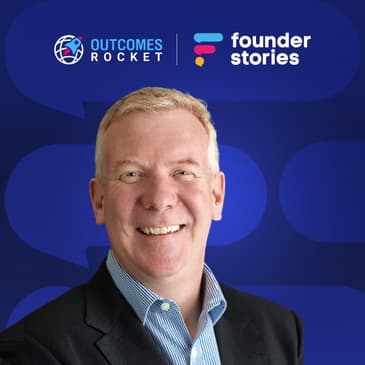
In this episode, Colin Lawlor, CEO of SleepScore Labs, emphasizes the crucial role of sleep in overall health and how technology can enhance sleep quality. Drawing on his 30 years in the health tech industry, Colin highlights the connection between poor sleep and chronic diseases. He explains how SleepScore Labs uses innovative technology to collect sleep data, integrating it into health platforms to improve patient outcomes. Colin also discusses the shift towards data-driven solutions, leveraging AI and ML models for better health, and encourages businesses to prioritize sleep for customer well-being.
Tune in and learn how SleepScore Labs is transforming sleep science into a key driver of health outcomes!
Resources:
[00:00:02] [SPEAKER_00]: Hey everyone, welcome back to the Outcomes Rocket founder stories. I'm so excited to have
[00:00:09] [SPEAKER_00]: you all join us again because today I've got a very special guest. His name is Colin Lawlor
[00:00:15] [SPEAKER_00]: and if you've been listening to our podcast since the beginning, the name sounds familiar
[00:00:20] [SPEAKER_00]: or if you're in the sleep health business, the name will sound familiar. He is the
[00:00:25] [SPEAKER_00]: chief executive officer at SleepScore Labs. He's a wellness and sleep veteran and he's
[00:00:31] [SPEAKER_00]: a passionate believer in the power of technology to connect the dots and drive better health outcomes.
[00:00:37] [SPEAKER_00]: His career has spanned over 30 years having worked at ResMed, BiancaMed and Biomedical Research.
[00:00:44] [SPEAKER_00]: He's leading firms in the sleep science and wellness space and that's what we're going to
[00:00:48] [SPEAKER_00]: be talking about today. He was a guest back in 2018 on the Outcomes Rocket two years into our
[00:00:53] [SPEAKER_00]: journey and so glad to have him back. Colin, welcome. Hey Saul, delighted to be back and it
[00:00:59] [SPEAKER_01]: honestly feels like a blink since the last time we were on the show. So that's incredible.
[00:01:05] [SPEAKER_00]: Where does that song go? It's incredible. So we're in 2024 now. That was six years ago.
[00:01:12] [SPEAKER_00]: So like a lot has happened. Colin, you and I had a chance to catch up
[00:01:16] [SPEAKER_00]: before this podcast to really kind of think about, you know, the discussion and I had a lot
[00:01:22] [SPEAKER_00]: of fun with our catch up session and now it's time to catch up our listeners. So for the people
[00:01:26] [SPEAKER_00]: that haven't had a chance to get to know you, help them understand what got you into healthcare and
[00:01:32] [SPEAKER_00]: why did you decide to be an entrepreneur? Oh cool. Let me go back to the very beginning
[00:01:37] [SPEAKER_01]: to help answer that question. You know I started my life in consumer marketing
[00:01:41] [SPEAKER_01]: in the beer business, a certain little Irish company called Guinness right now.
[00:01:46] [SPEAKER_01]: And an amazing company I learned an enormous amount but it wasn't fulfilling for me, right?
[00:01:53] [SPEAKER_01]: I felt like I wanted to make a difference. So I spent quite a number of years in management
[00:01:57] [SPEAKER_01]: consulting and a couple of other areas and then I joined my first company in the health and wellness
[00:02:03] [SPEAKER_01]: area, Biomedical Research and there I found my home because really at the end of the day
[00:02:10] [SPEAKER_01]: to me this business is growing a business, there's driving a business and being successful but
[00:02:14] [SPEAKER_01]: the sweet spot for all of us in the health space, it's about making a difference at the end of the
[00:02:20] [SPEAKER_01]: day to people's lives and to health, right? And so to me that is the most motivating,
[00:02:24] [SPEAKER_01]: unimportant challenge, right? There are 8 billion on people on the planet, 4 billion waking up
[00:02:29] [SPEAKER_01]: tired every day. There's a continued growth in pretty much every major chronic disease.
[00:02:35] [SPEAKER_01]: The healthcare systems all around the world are struggling to solve the problem.
[00:02:39] [SPEAKER_01]: So when you look at it, the outlook even though there's been tremendous achievement
[00:02:43] [SPEAKER_01]: in many, many areas of health, the outlook is a real challenging environment. So that's a place where
[00:02:49] [SPEAKER_01]: I really believed as an opportunity to make a difference and so hence that's what gets me
[00:02:53] [SPEAKER_00]: out of bed every morning if you forgive the pun. I love that. I love it. So good. And look,
[00:03:01] [SPEAKER_00]: sleep is a critical, critical piece of every single comorbidity, chronic condition out there
[00:03:11] [SPEAKER_00]: and we're going to unpack this a little bit more and the meaningful work that Colin and his team is
[00:03:16] [SPEAKER_00]: doing in research but also in interoperability and data. So Colin, help us really understand
[00:03:22] [SPEAKER_00]: the business. What are you guys up to at Sleep Score Labs and how are you adding value to the
[00:03:28] [SPEAKER_01]: healthcare ecosystem? Well, I think it starts as it always does when you think about it. If
[00:03:32] [SPEAKER_01]: you want to manage any problem, you have to be able to measure it. So we set out on our journey
[00:03:38] [SPEAKER_01]: many, many years ago starting with how to measure it. The great news today is that there are many,
[00:03:42] [SPEAKER_01]: many different ways to measure sleep and inside that once you've got the ability to measure it,
[00:03:48] [SPEAKER_01]: then it's about learning what affects it and what changes it. To your point about
[00:03:53] [SPEAKER_01]: comorbidities and so forth, when I started my journey in the sleep space, sleep was for
[00:03:58] [SPEAKER_01]: wimps. 14 years ago, you were a hero as you pulled an all nighter. It was a badge of honor
[00:04:04] [SPEAKER_01]: to walk around the offices to guide us, slept least and worked hardest. That is where we were
[00:04:10] [SPEAKER_01]: coming from. We had a belief right from the very beginning that better sleep could deliver
[00:04:15] [SPEAKER_01]: better outcomes but we actually had to explain that at the time. We had to educate people
[00:04:20] [SPEAKER_01]: and since we started in that work, ResMed itself and the founder in particular, Peter Farrell,
[00:04:25] [SPEAKER_01]: he had a tremendous, tremendous simple statement which was ignorance is our greatest
[00:04:30] [SPEAKER_01]: competitor. Even though at that time, ResMed's number one competitor was Phillips, the truth was
[00:04:36] [SPEAKER_01]: it was ignorance. What has happened since then has been really transformative. Now people get it.
[00:04:42] [SPEAKER_01]: But I still get asked a question from time to time which is it the chicken or is it the egg?
[00:04:47] [SPEAKER_01]: What role does sleep play in health? Does poor sleep cause chronic disease?
[00:04:52] [SPEAKER_01]: Or does chronic disease cause poor sleep? Truth is there is certainly a bi-directional
[00:04:58] [SPEAKER_01]: relationship but we are getting better and better and better in terms of the science and
[00:05:04] [SPEAKER_01]: understanding the causative effect of poor sleep pretty much every area of chronic disease.
[00:05:10] [SPEAKER_01]: So literally in the last six months there have been a bunch of the new landmark studies
[00:05:16] [SPEAKER_01]: further illustrating this as if people don't already know but just to highlight three points,
[00:05:21] [SPEAKER_01]: a person age 60 for every 1% change in deep sleep. So that's typically one to two minutes.
[00:05:29] [SPEAKER_01]: So a one to two minute change in the amount of deep sleep to the negative has a 27%
[00:05:34] [SPEAKER_01]: increased risk of Alzheimer's and dementia. There is now another landmark study done in type 2
[00:05:41] [SPEAKER_01]: diabetic populations even when diet is controlled, if sleep is not it is very difficult to
[00:05:49] [SPEAKER_01]: actually control blood sugar levels. We know the relationship between poor sleep and mental health
[00:05:55] [SPEAKER_01]: and so forth. So our hypothesis from the beginning has been that sleep is a driver of better or worse
[00:06:02] [SPEAKER_01]: outcomes and so therefore understanding how people sleep and in helping them to sleep better
[00:06:08] [SPEAKER_01]: is a critical part of delivering outcomes in almost every area of health. I actually believe
[00:06:14] [SPEAKER_01]: as we are looking at this more and more, the great and tremendous investments in building
[00:06:19] [SPEAKER_01]: digital health platforms in mental health to support people with cardiovascular disease
[00:06:24] [SPEAKER_01]: and oncology and so forth. All of those platforms are doing great work but every one of them
[00:06:30] [SPEAKER_01]: struggles with how do I engage people and how do I further improve the outcomes from my digital
[00:06:35] [SPEAKER_01]: health platform? And I believe based on the data that the missing ingredient is you're
[00:06:43] [SPEAKER_01]: ignoring the effect of sleep. Let me give you one more little statistic here which is really,
[00:06:47] [SPEAKER_01]: really, really key and published in the Lancet very recently the timing of the therapeutic
[00:06:53] [SPEAKER_01]: intervention if it's timed in line with the chronobiology or the kind of natural circadian
[00:06:59] [SPEAKER_01]: rhythm of the individual if it's timed optimally the effect on outcomes is up to 40% greater.
[00:07:06] [SPEAKER_01]: So I tell you what listen I don't want to be treated at the wrong time to get sub-optimal
[00:07:11] [SPEAKER_01]: outcomes and how do we know right? And Colin is this one about radiation? No, this chemotherapy.
[00:07:21] [SPEAKER_01]: Not only is the timing of chemotherapy very important for the outcomes but it's also
[00:07:27] [SPEAKER_01]: very important for the side effects and you know personally in this space I'm sorry I've
[00:07:32] [SPEAKER_01]: lost two of my parents in the last number of years both to cancer I did not know that I
[00:07:37] [SPEAKER_01]: sat with my mother waiting for her chemo in a hospital in Dublin four hours late at 5pm. I didn't
[00:07:44] [SPEAKER_01]: know I had no idea so the key for me is look these are not enormous interventions what this
[00:07:52] [SPEAKER_01]: is about is leveraging the data and the insights about how a person sleeps about their circadian
[00:07:58] [SPEAKER_01]: rhythm to direct and drive better outcomes in every aspect of their care. So my contention is
[00:08:05] [SPEAKER_01]: if you are ignoring sleep and you are in any one of those fields you are leaving outcomes on the
[00:08:12] [SPEAKER_01]: table and you are not delivering the best in care so what we have to do and this is what we now do
[00:08:18] [SPEAKER_01]: is we have made all of our insights all of our technology all of our research available in a suite
[00:08:26] [SPEAKER_01]: of very very simple to implement and integrate software tools. So you don't have to go figure
[00:08:31] [SPEAKER_01]: sleep out all by yourself we're happy to provide our technology the Sleep Score inside technology
[00:08:36] [SPEAKER_01]: for you to add that to your platform and basically that's our vision. Our vision is you cannot
[00:08:43] [SPEAKER_01]: help a person to get best outcomes without taking sleep into account and for the most part
[00:08:50] [SPEAKER_01]: unless you've got a very strong evidence-based database approach to sleep you are not going
[00:08:57] [SPEAKER_01]: to do a good job with it. So putting those two things together making those available to your
[00:09:02] [SPEAKER_01]: patients, to your consumers, to your customers in all of those areas of health and wellness
[00:09:06] [SPEAKER_01]: that's what we have in mind and that's what we've been building. That's outstanding Colin
[00:09:11] [SPEAKER_00]: congratulations on the advancements that you've made you and the team have made
[00:09:15] [SPEAKER_00]: not only on the research side of things but also on the business model as you've
[00:09:20] [SPEAKER_00]: grown and evolved you sort of have what it sounds like now have a database business
[00:09:26] [SPEAKER_00]: that enables connectivity and anybody with health apps which is how many are out there?
[00:09:32] [SPEAKER_00]: Like more than 350,000 health apps out there. So the market's huge and for any of any I mean
[00:09:39] [SPEAKER_00]: look guys gals you guys are running these companies you're listening to this do you
[00:09:43] [SPEAKER_00]: have a validated tested and research backed way to really measure sleep within your app?
[00:09:50] [SPEAKER_00]: If the answer is no you got to be taking Colin's information because he and his team have it for
[00:09:56] [SPEAKER_00]: you the API as I understand are in place to be able to leverage this data is that right?
[00:10:01] [SPEAKER_01]: That's exactly right look what we've figured along this pathway we started with our own
[00:10:06] [SPEAKER_01]: technology our own proprietary technology developed in Bianca Med improved in res med
[00:10:11] [SPEAKER_00]: and spun into sleep score labs I remember you sent me one I had it next to my bed it was a little
[00:10:16] [SPEAKER_01]: black device that's the one yeah and we started with that device and started to collect data right
[00:10:22] [SPEAKER_01]: and then we made a breakthrough because we developed new technology to convert a typical
[00:10:27] [SPEAKER_01]: smartphone into a bio motion sensor using sonar not audio sonar so measuring bio motion respiratory
[00:10:35] [SPEAKER_01]: pattern you know basically body movement respiratory pattern etc by converting the
[00:10:40] [SPEAKER_01]: smartphone into a bio motion sensor is that meant hey Colin I have a quick question on that
[00:10:46] [SPEAKER_00]: because that's super intriguing so is sonar built into the phone or is it an attachment?
[00:10:51] [SPEAKER_01]: No it's we just commandeered the speaker and the microphone in a typical smartphone to send out
[00:10:58] [SPEAKER_01]: sound waves to measure the response times it's not listening to audio there's nobody
[00:11:02] [SPEAKER_01]: somewhere in the center kind of you know machine learning listening to your conversations
[00:11:07] [SPEAKER_01]: it's simply using sound waves to measure respiratory movements incredible and so we built that technology
[00:11:14] [SPEAKER_01]: what that enabled us to do was to collect now 120 million hours of sleep data from you know people
[00:11:21] [SPEAKER_01]: of with all sorts of issues around the world and that is a ground truth data and then we opened
[00:11:28] [SPEAKER_01]: up the platform and now we take data from pretty much any major wearable or even device like a
[00:11:36] [SPEAKER_01]: bed itself and we've got about half a billion hours of that data wow what that enabled us to do is to
[00:11:42] [SPEAKER_01]: understand the relative strengths and weaknesses of each and therefore how to use the data to help
[00:11:48] [SPEAKER_01]: identify what the sleep issues for any given person are so basically we've solved all of those
[00:11:55] [SPEAKER_01]: problems so if you just think about this for a moment if you have a health and wellness app
[00:11:59] [SPEAKER_01]: you don't have to worry about whether your customer or patient or end consumer has a particular wearable
[00:12:07] [SPEAKER_01]: it doesn't matter they can have any wearable or no wearable believe it or not and we can still
[00:12:12] [SPEAKER_01]: I've heard them call them nearable precisely and nearable a wearable and in fact for 1.2
[00:12:18] [SPEAKER_01]: billion people just the iPhone itself and yeah with no tracker and we can find from the data
[00:12:25] [SPEAKER_01]: available inside there very very very good picture of a person's sleep what the relative issues are
[00:12:30] [SPEAKER_01]: and so forth so all of that technology is now built into a suite of APIs and models that can be very
[00:12:37] [SPEAKER_00]: very easily integrated into any platform that's amazing so for somebody listening to this
[00:12:43] [SPEAKER_00]: Colin that wants to improve their sleep is this something that's available to consumers
[00:12:49] [SPEAKER_01]: or is this mainly a B2B play at this point yeah our focus is primarily B2B got it because what we
[00:12:57] [SPEAKER_01]: figured out was okay we have to be the best of the world at something so we can be the best in
[00:13:02] [SPEAKER_01]: the world at consumer marketing or we can be the best in the world when it comes to the data
[00:13:06] [SPEAKER_01]: and the science to support better outcomes and so our decision is we want to and we believe the
[00:13:12] [SPEAKER_01]: best in the world are providing this technology to other companies that's why we've been
[00:13:16] [SPEAKER_01]: building partnerships with really great companies in all sorts of areas from health and wellness
[00:13:21] [SPEAKER_01]: through to consumer products companies like international flavors and fragrances i. f. after
[00:13:26] [SPEAKER_01]: on the new york stock exchange we have partnerships with mattress firm significant
[00:13:30] [SPEAKER_01]: investor in the company of course that makes a huge amount of sense because they sell
[00:13:36] [SPEAKER_01]: products connected to sleep to consumers yeah so across the board the focus for us is
[00:13:42] [SPEAKER_01]: building partnerships and we are therefore focused on building better and better data and
[00:13:47] [SPEAKER_01]: the insights from that data and more and more tools that can help people to sleep better and our
[00:13:51] [SPEAKER_01]: partners build them into their offerings and services and that helps them to drive their
[00:13:56] [SPEAKER_00]: businesses that's outstanding thanks for sharing that and look we're talking about founder stories
[00:14:00] [SPEAKER_00]: here we're talking about healthcare innovation and we all know that it's not a smooth road
[00:14:06] [SPEAKER_00]: all the time so you know kallen like what would you highlight as maybe one of your biggest setbacks
[00:14:12] [SPEAKER_00]: to date and what did that setback teach you that we could teach outcomes rocket listeners today
[00:14:18] [SPEAKER_01]: wow well i think probably one of the biggest if i could highlight that was we started with a
[00:14:24] [SPEAKER_01]: hardware approach so we started by building our own sensor device and it is the best
[00:14:31] [SPEAKER_01]: sensor device in the world even to this day there isn't one which is more published and
[00:14:35] [SPEAKER_01]: so forth but what we realized was that that isn't enough to be successful and that isn't
[00:14:40] [SPEAKER_01]: enough to make the difference because by definition unless four billion people buy that sensor which
[00:14:46] [SPEAKER_01]: of course is a huge business we're not going to reach people at scale so what we had to do
[00:14:51] [SPEAKER_01]: is to ask ourselves how else can we derive the insights necessary to help a person how
[00:14:56] [SPEAKER_01]: else can we do that and i think that's ultimately where we've now ended up because
[00:15:00] [SPEAKER_01]: ultimately consumers have their preferences some people want to wear their wearable device on their
[00:15:06] [SPEAKER_01]: wrist on their so other people on their finger and there's you know hundreds of such devices right
[00:15:11] [SPEAKER_01]: and other people don't want to wear any device but they're happy to have a bed that tracks data
[00:15:15] [SPEAKER_01]: and other people have nothing at all because they forget to do it but they do have
[00:15:19] [SPEAKER_01]: an iphone sitting beside them every night the point being if you want to you want to
[00:15:24] [SPEAKER_01]: help them all and what you want to do is you want to extract the most value from
[00:15:28] [SPEAKER_01]: that data the most insights from that data so that you can provide the services to screen those
[00:15:33] [SPEAKER_01]: people for disorders to coach and personally coach and help each individual leveraging the
[00:15:39] [SPEAKER_01]: technology so i guess the hardest part was realizing that look a hardware play is not
[00:15:46] [SPEAKER_01]: going to work and in the end the funny thing is we ended up basically leveraging our hardware
[00:15:51] [SPEAKER_01]: play to drive a whole new business and that whole new business is in sleep r&d services we help companies
[00:15:58] [SPEAKER_01]: by enabling them to collect data and insights about how their products perform in terms of
[00:16:04] [SPEAKER_01]: their impact on sleep quality and we've now completed 235 studies so those studies are really
[00:16:11] [SPEAKER_01]: really important because i want to say to you so the answer isn't always only in medicine
[00:16:17] [SPEAKER_01]: yeah the answer is in behavior it's in the environment it's in the sleeping surface
[00:16:22] [SPEAKER_01]: and it's in medicine it's in all of it right so you can't by definition solve a person's
[00:16:28] [SPEAKER_01]: sleep issue by only looking at one little vertical within that you actually have to connect the
[00:16:32] [SPEAKER_01]: doubts across all of them and so from that perspective what it's enabled us to do
[00:16:37] [SPEAKER_01]: the hardware play that we set out to leverage as the driver of the business ended up being
[00:16:44] [SPEAKER_01]: an enabler of a different business but also it pushed us into thinking about how can we
[00:16:50] [SPEAKER_00]: leverage data that's already accessible and available totally hey kallen that's so interesting
[00:16:55] [SPEAKER_00]: right and it's waking up to that fact of where the market's going and having the guts right
[00:17:02] [SPEAKER_00]: because the whole thesis was we have hardware there's four billion units and this is the
[00:17:07] [SPEAKER_00]: market and now you shifted to no it's actually different and i have a question for you on that
[00:17:13] [SPEAKER_00]: just a little nuance question so with this sleep study business did you initially start with
[00:17:19] [SPEAKER_00]: deploying the capital units and then evolve to not even having to yeah i mean for the sleep
[00:17:27] [SPEAKER_01]: study business yes in essence we started by deploying the units for the sleep studies
[00:17:32] [SPEAKER_01]: and actually we still use units for a lot of sleep studies okay but we now collect data from
[00:17:38] [SPEAKER_01]: anything and everything so yeah right so what we have learned i mean this is where the new new
[00:17:44] [SPEAKER_01]: technology ai ml models that's really key because it's about combining the data from all of those
[00:17:50] [SPEAKER_01]: sources plus other kind of proprietary approaches and that that enables us to build very very
[00:17:55] [SPEAKER_01]: effective predictive models so for example if a person has no tracker whatsoever but they
[00:18:01] [SPEAKER_01]: have an iphone there is information collected about when they put the phone down every night
[00:18:06] [SPEAKER_01]: how many times they pick it up during the night when they get up in the morning and so forth
[00:18:10] [SPEAKER_01]: and if they're happy to share that data and answer a couple of particular proprietary questions
[00:18:14] [SPEAKER_01]: we can help that person with a very very quick immediate insight and so to us it's all about
[00:18:21] [SPEAKER_01]: leveraging the data that's available and minimizing the impact on the consumer or
[00:18:27] [SPEAKER_01]: the patient and packaging all of that so that it can be easily integrated into
[00:18:32] [SPEAKER_01]: the health and wellness services that those companies are using but the data
[00:18:36] [SPEAKER_01]: is really critical and it's now becoming very very very exciting and that's the key like you
[00:18:43] [SPEAKER_01]: know half a billion hours of that data is great and a lot of people have a lot of data
[00:18:47] [SPEAKER_01]: but the problem that people have with data is how do i get quality data that i can really
[00:18:53] [SPEAKER_01]: use and that's not easy and so if you're building and training ai models for example to
[00:19:00] [SPEAKER_01]: coach and train a to help personally coach an individual the data that you feed into that model
[00:19:06] [SPEAKER_01]: is really really important we know that an llm which is trained by scraping the web is not going
[00:19:12] [SPEAKER_01]: to give a person good advice right we also know from our own research which spoiler alert will
[00:19:18] [SPEAKER_01]: be publishing relatively soon an llm is also not capable of taking a data set and truly
[00:19:23] [SPEAKER_01]: understanding that when it comes to sleep we don't know about other health fields but when
[00:19:27] [SPEAKER_01]: it comes to sleep it's not by itself but llm's are still incredibly valuable tools in parts of the
[00:19:33] [SPEAKER_01]: chain so for us the key here is when it comes to a person's sleep it's too important for it to be
[00:19:40] [SPEAKER_01]: left to guesswork snake oil and insufficient data so what we have to do and what we focus on doing
[00:19:47] [SPEAKER_01]: is bringing the data and the science to understand exactly how a person is really sleeping
[00:19:52] [SPEAKER_01]: and what we can do to guide and help them and that's the key so i think that in the broader picture
[00:19:58] [SPEAKER_01]: and as we're talking about trends right now there is absolutely no doubt that the leveraging of ai
[00:20:05] [SPEAKER_01]: tools is key and we have been leveraging ai tools basically since the very beginning
[00:20:10] [SPEAKER_01]: we even acquired a company called sleep.ai in 2017 or 2018 yeah so you know we've been doing
[00:20:17] [SPEAKER_01]: that from the very beginning but with guardrails you can't allow the models the model is not capable
[00:20:23] [SPEAKER_00]: of achieving the outcomes all by itself. Well we look forward to getting this new research
[00:20:31] [SPEAKER_00]: from you Colin the work that you guys have done around this the ai models and in sleep
[00:20:35] [SPEAKER_00]: so we're excited to get that when it's hot off the press and i gotta tell you i always enjoy
[00:20:41] [SPEAKER_00]: connecting with you this has been an incredible opportunity to hear the advancements in your
[00:20:47] [SPEAKER_00]: journey and the company's journey what closing thought would you leave us with and if anybody
[00:20:51] [SPEAKER_01]: wants to get in touch where can they do it? I think this is both personal and business right
[00:20:56] [SPEAKER_01]: so i tried to think about something in terms of a closing thought and you use the phrase i'm
[00:21:01] [SPEAKER_01]: gonna repeat it it's wake up to sleep right wake up to sleep for the personal level i have
[00:21:06] [SPEAKER_01]: witnessed it myself please don't ignore us every one minute makes a difference figuring out how to
[00:21:13] [SPEAKER_01]: add that minute to this minute to the other minute is the difference between i believe later in life
[00:21:18] [SPEAKER_01]: being very sick or not and or being less sick and i think from a personal point of view wake up
[00:21:24] [SPEAKER_01]: to sleep from a business point of view every one of your customers every one of your patients
[00:21:30] [SPEAKER_01]: sleeps or sleeps poorly and you don't know but believe it or not the difference between those
[00:21:36] [SPEAKER_01]: two things has a outsized impact on how they engage and the outcomes that you can achieve with them
[00:21:42] [SPEAKER_01]: so you have to include sleep by ignoring it you are actually putting differences in terms of
[00:21:50] [SPEAKER_01]: outcomes of 30 and 40 percent you're making them unavailable to your patient or consumer
[00:21:56] [SPEAKER_01]: you can't do that any longer you can't ignore it we will be delighted to help of course and that's
[00:22:01] [SPEAKER_01]: our business and you can find us at sleepscore.com you can find me on linkedin collin j lullar
[00:22:07] [SPEAKER_01]: and look we'd be delighted to help regardless but the mission is clear we believe if we can
[00:22:13] [SPEAKER_01]: help people to sleep better we can deliver better outcomes but also we believe that we cannot do
[00:22:19] [SPEAKER_01]: it alone and nobody can do it alone there's four billion people to help and so it's about
[00:22:24] [SPEAKER_01]: connecting dots and working with people and that's why we make the technology that we put all this
[00:22:28] [SPEAKER_01]: blood sweat and tears into available so that other companies don't have to put the blood sweat
[00:22:33] [SPEAKER_01]: and tears into figuring it out instead they can go do it and make the difference and deliver
[00:22:37] [SPEAKER_00]: the outcomes amazing collin well i'm inspired and i know the listeners are too about just the
[00:22:44] [SPEAKER_00]: depth at which you've approached this topic of sleep you left me with the thought that hey
[00:22:50] [SPEAKER_00]: you got to control the controllables in business and in health and with sleepscore you could control
[00:22:56] [SPEAKER_00]: sleep so measure it make a difference as collin says wake up to sleep and do something about it
[00:23:03] [SPEAKER_00]: in your business and in your life collin this has been so great grateful that you came back on
[00:23:08] [SPEAKER_01]: and looking forward to staying in touch thanks a lot so and thank you everybody really
[00:23:12] [SPEAKER_01]: appreciate it thanks sleep well that's right sleep well