
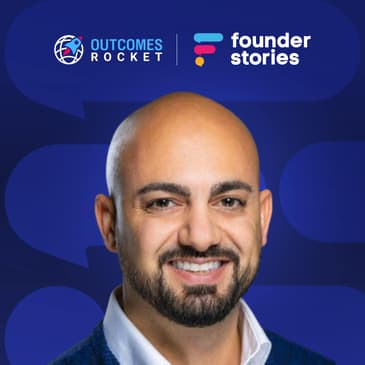
Psychedelics offer a new frontier in psychiatry, providing profound shifts in perspective that can enhance therapeutic outcomes.
In this episode, Dr. Sam Zand, founder of Anywhere Clinic, a holistic psychiatrist and professor of psychedelic medicine, shares insights into his immersive wellness retreat in Puerto Rico, where patients experience a combination of nature therapy, meditation, and ketamine therapy to reset their mental health. He also talks about his entrepreneurial journey, the growth of telepsychiatry, and the integration of new treatment modalities like ketamine in mental health care. Dr. Zand covers the challenges of scaling mental health services, addressing the cost barriers to treatments, and the role of psychedelics in transforming psychiatric care. He also emphasizes the importance of personal mental health in achieving success and unlocking one’s full potential.
Tune in and learn how innovative approaches to mental health can enhance both personal well-being and professional effectiveness!
Resources:
[00:00:02] [SPEAKER_00]: Hey everybody, welcome back to the Outcomes Rocket Founders Stories. I'm so excited to host Dr. Sam Zand on the podcast today. He's a holistic psychiatrist, professor of psychedelic medicine and he's on a mission to evolve mental health.
[00:00:22] [SPEAKER_00]: I'm excited to have him here. He is back friends also in business from Hopkins, LeChealth, his psych studies where at UNLD, we're going to cover
[00:00:34] [SPEAKER_00]: telepsychiatry, we're going to cover psychedelics, we're going to cover mental health. It's going to be a great one. So stay with it. Sam, so great to have you.
[00:00:44] [SPEAKER_01]: Hey, thanks for having me. It's great we're on the same island and having a conversation.
[00:00:49] [SPEAKER_00]: We're on the same island, which is so cool. So hey man, like just to share with people, what are you doing on the island as a way for them to understand what you do?
[00:00:59] [SPEAKER_01]: Yeah, so I moved to Puerto Rico and we live on this immersive wellness retreat center, out in the jungle and the foothills of the rainforest.
[00:01:08] [SPEAKER_01]: We're breaking people out and just do all the immersive work, free for night retreats where you just wake up, do a river plunge right there on the property.
[00:01:17] [SPEAKER_01]: I'm up this meditation and some group works, yoga, somatics, and then the modality we use is pedamine therapy.
[00:01:24] [SPEAKER_01]: You're going to have a lot of them just to have a little bit of a little bit of a little bit of a little bit of a beautiful view from the experience and just come to this beautiful nature and we'll do waterfall hikes and everything digital detox, interesting all the talks. So it's an early exciting to put that together.
[00:01:42] [SPEAKER_01]: My work in psychiatric violence allowed it's obvious how much we need a little bit of a break and breaking routine get out of the grind and really comes down to that narrow plasticity.
[00:01:53] [SPEAKER_01]: So in exciting journey you're being out of the island and it's just seen times right there, we're on retreat and all of a sudden the power is out of the water goes out there's just a lot of circumstances but I think it makes it really flum and charming and a really connected nature and a fierce patient.
[00:02:12] [SPEAKER_00]: I totally agree man, we've been here for a year and I love the nature and the water falls the beaches definitely right there with you, my man and it's so great that you're here and literally folks, I literally just found out that Sam's here in Puerto Rico.
[00:02:28] [SPEAKER_00]: So Sam, we're going to have to connect for sure.
[00:02:30] [SPEAKER_00]: So yeah man, looking forward to that transitioning to your journey. What got you into entrepreneurship? You guys are now in over 20 states.
[00:02:41] [SPEAKER_00]: What is it that put the bug in you to pursue this and why in healthcare?
[00:02:46] [SPEAKER_01]: Yeah, okay, question. I mean, looking at the kind of journey for me from a young age, I was always that like you're there with the host there. I was always trying to element just go sell pencils middle school,
[00:02:56] [SPEAKER_01]: I think it was just always fun for whatever reason, I don't know how that certainly young age became my childhood habit.
[00:03:04] [SPEAKER_01]: And then, or guys and teams putting together this small versions of infrastructure, a young age like I was a coach for basketball. My dad always said,
[00:03:14] [SPEAKER_01]: you're never going to make it to the NBA, but I could be a coach. So when I'm going to pursue there a little bit, it's very good.
[00:03:20] [SPEAKER_01]: And it was that parental guidance and make that forced to model their sisters. They are both doctors. So it's the expectation that I would go and be a doctor as well.
[00:03:31] [SPEAKER_01]: But I thought it and I know why it goes because it's almost as serious.
[00:03:35] [SPEAKER_01]: I'm so proud of the struggle. I'm so proud of the people who are really in my office this one to Harvard and competitive cut throw of the environment, you cry, oh my god, why did I do this?
[00:03:44] [SPEAKER_01]: And then I'm like, do I want to do this? And so it was always this pushback don't want to go into medicine.
[00:03:50] [SPEAKER_01]: But business was my calling and I was just always told them, what do you want to do in business? Why ought to you be a doctor first and then create a business?
[00:03:58] [SPEAKER_01]: And actually focus on helping people at scale. And the young kids, I was the only one year out of the other. But I think finally, I got up realizing that the education with public health, the entrepreneurship and management,
[00:04:10] [SPEAKER_01]: and then really the specialty of the mind early kind of became that calling for me to help people on mental health and also scale it out in a way where we can really provide that access.
[00:04:20] [SPEAKER_01]: And everybody who's a part of that ecosystem, it's to pride, learn models, patients first, teen second, business last.
[00:04:29] [SPEAKER_01]: And just baby ecosystem. So it's just always been a rough figure out getting the thumb like this.
[00:04:35] [SPEAKER_00]: That's great, man. It sounds like there's little resistance at first, but then you open yourself up to it and you've just blossomed into really some great work.
[00:04:45] [SPEAKER_00]: So let's spend a little time uncovering that. So tell us about how you're adding value to the ecosystem. You share with some of the retreats and things like that, but tell us about the practice and the biggest way you add value. Yeah.
[00:04:58] [SPEAKER_01]: Yeah. So we primarily in the company is called anywhere clinic. We started in 2017 before COVID, with the intention of saying in psychiatry, we don't always really need to be in the same room.
[00:05:10] [SPEAKER_01]: I saw so many of our patients struggle in the waiting room physically. There's a stress that just their garpho look their anxious their stressed out, their PTSD and mental health.
[00:05:20] [SPEAKER_01]: Once they got on some yopp, I had to help them relax before we can start. Now if you do that from the company on home, we don't have to deal with the obstacles. So it was evident from early in my career to tell us that psychiatry was something that needs to be brought to the public.
[00:05:36] [SPEAKER_01]: It just didn't happen back then because insurance wasn't covering it. There were some stipulations where if it was a rural city, then insurance would cover it. So that's what we started.
[00:05:46] [SPEAKER_01]: What we grew to during COVID was now everybody can access to psychiatry until they're the intelligents of mental health. So we expanded beyond our home state and the vatter and just kept growing into new states.
[00:05:58] [SPEAKER_01]: And that's now become quite the norm by telling the tell us that psychiatry care. So now where we differentiate is, I think, inside psychiatry we all understand it's a little bit of an archaic field.
[00:06:10] [SPEAKER_01]: We were stuck in ways of treatment that we've been doing for 50 years.
[00:06:14] [SPEAKER_01]: And when we have new modalities, it's really exciting to see that efficacy and the patient response just improved.
[00:06:20] [SPEAKER_01]: The ketamine therapy did that from me and our practice. The MS and now stimulation does that. And so these new tools that we teach and we train our providers for a lot of them are accessible all the in office, a lot of them.
[00:06:47] [SPEAKER_01]: What are the barriers to where are the gaps that we need to plug one is something like ketamine therapy and they're really high costs associated with it when at the high price tag when the cost isn't that high.
[00:06:59] [SPEAKER_01]: And everybody's fighting for to try not to lower their margin, but they're all competing in its space where the customer acquisition cost is so high.
[00:07:08] [SPEAKER_01]: So how do we then go to that population, which are you the most people who need this kind of care can't afford online prices right now in self paid market.
[00:07:19] [SPEAKER_01]: So we bought insurance coverage to online at home ketamine therapy. That's something I'm really excited about because now you can't medicate in the state that we accepted and we're slowly growing and the challenge to getting there.
[00:07:32] [SPEAKER_01]: But you can't medicate and have the same service that another clinic is my cost a thousand dollars. So I think plugging those gaps in self-boarding.
[00:07:42] [SPEAKER_01]: And there's so much more in this industry, but these are the things that it's fun kind of staying at large scale. How do we ship what the people need and provide a service that still works on the business and as well.
[00:07:54] [SPEAKER_00]: Yeah, that's cool Sam and interesting right I love to hear the story of the beginning right and that you saw that virtual psychiatry was a play and you saw that rural settings was the way in so you're like you know what if that's where it makes sense and that's where the reimbursement is I'm going to do it there.
[00:08:14] [SPEAKER_00]: We all know what happened with COVID and thanks to your foresight you're able to take advantage of infrastructure experience and scale massively.
[00:08:25] [SPEAKER_00]: And now it sounds like you're doing it with other things such as ketamine therapy and things like that so that as the markets slowly start to open up.
[00:08:35] [SPEAKER_00]: You're in a position of advantage and I think folks I love just hearing stories like this from Sam if you have insight and foresight.
[00:08:45] [SPEAKER_00]: Take advantage of it find that opportunity like Sam has in his business many times this is like this is a habit successes a habit as Aristotle says when you keep doing it over and over and this is a great lesson to take away from this discussion with Sam.
[00:08:59] [SPEAKER_00]: And so Sam talked to us about setbacks feel like we learn more about the stuff we got ourselves into versus the stuff that works out all the time so talk to us about that and how it's made you better.
[00:09:11] [SPEAKER_01]: Yeah, I think I should have kind of worried and also that guidance to all the listeners that once you have that insight into the future it's not only just go after but understand that there's not a little battle there right if it's not the norm.
[00:09:22] [SPEAKER_01]: You're going to need to ruffle some feathers and figure it out and make some mistakes and mistakes are very difficult to make or very costly to make in a medical service industry.
[00:09:32] [SPEAKER_01]: So there's a lot of fear that's why medicine doesn't innovate that much right we can kind of stick with our path because the risk is so high.
[00:09:39] [SPEAKER_01]: So I think some of the learning lessons there are beyond was one was the energy in which we approach a new business on which can very appealed that especially might be costed a carry to the norm to the status quo.
[00:09:52] [SPEAKER_01]: I was very resistant and combative with psychiatry in the beginning. I still call myself a kind of anti psychiatry like I just.
[00:10:01] [SPEAKER_01]: I feel that it's just for so many reasons why I signed up for the work and I started residency over like wow we're doing a real good gel ward.
[00:10:10] [SPEAKER_01]: I'm not without a care provider in that patient's psych hospital outpatient really I started with on the beauty and it was this resistant energy.
[00:10:19] [SPEAKER_01]: And it comes back to Bruce Lee D. Water and I go in and move forward if you're fighting and so just go with the current and that change in energy.
[00:10:28] [SPEAKER_01]: I think released a lot of tension and opened up a lot of possibility where psychiatry is doing good things. I don't have to be a kind of an a mossy to every industry but let's evolve.
[00:10:39] [SPEAKER_01]: Let's understand why we have some shortcomings be honest about it with our patients and then keep teaching what we're learning day to day and add to grow.
[00:10:49] [SPEAKER_01]: And so that that shift really I think was a learning lesson that I had to go through. There's that that was the emotional one there's a lot more on legal side of the infrastructure on training on medical service that I don't stand out to me about.
[00:11:04] [SPEAKER_00]: Yeah, and I'm glad you went there it's those what we say to ourselves what we believe internally could be what holds us back. Those lids that we put on ourselves.
[00:11:13] [SPEAKER_01]: And we'll move the words we use with ourselves the energy we carry ourselves like that's part of the mental health work that we're trying to help people with and start with taking care of ourselves.
[00:11:26] [SPEAKER_01]: Understanding that the programming we give ourselves becomes in language and internal thought and I think we say a lot of different behaviors and habits and all of those little things that up so.
[00:11:38] [SPEAKER_01]: And I think that's the way we want to be successful in business. They're just happy in life.
[00:11:41] [SPEAKER_01]: We have to pay attention to the way in which you carry ourselves and the choice of words so we have.
[00:11:46] [SPEAKER_01]: That's really why I'm getting this industry because now plasticity and ability to understand the brain of the computer and to upgrade the programming and upgrade the hardware.
[00:11:56] [SPEAKER_01]: That's just a powerful transformation that I get to see every new location and we're just not there yet a norm of an understanding of the setting.
[00:12:07] [SPEAKER_00]: Yeah, it definitely is and well while we were first setting up for the podcast before hitting me chord.
[00:12:14] [SPEAKER_00]: We talked about where this could go where the conversation could unfold and one of those one of those areas of discussion is psychedelics I recently had a conversation with with a good friend.
[00:12:25] [SPEAKER_00]: Nico Skavaski he's started his business in this area at software company to help with the supply chain of it.
[00:12:33] [SPEAKER_00]: Talk to us about psychedelics the role of psychedelics in mental health and what you guys are doing with them.
[00:12:40] [SPEAKER_01]: And let's start from the just science and the impact that it can have on us. So psychedelics for those who might be new to it as a medicine we've known for thousands of thousands of years that cultures, shaman,
[00:12:55] [SPEAKER_01]: doctors of the old days for using them and we just didn't really get why we know about old-nab and 19-hundreds or these things were disturbing with your medicine that we were down by the government.
[00:13:06] [SPEAKER_01]: And I mean, became in recent years widely used to in mental health and it was done as an IV injection or nasal spray we do it as a law's engine, tongue is love.
[00:13:19] [SPEAKER_01]: And it's an experience, it changes the paradigm of how we treat medicine and mental health instead of taking this pill passively every day.
[00:13:29] [SPEAKER_01]: We're saying haven't experienced very intentionally. You're going to feel something. So I'm going to feel a little dissociated, a little off, a little meditated, a little clairvoyant.
[00:13:39] [SPEAKER_01]: There's this overview of fact where you're perspective shifts and that help perspective shift is a concept of neuroplasticity and psychedelics is right now plasticity our rocket fuel.
[00:13:48] [SPEAKER_01]: You were just in a state where your brain is so open and communicated and flexible that sometimes it's even a little bit hallucinatory.
[00:13:57] [SPEAKER_01]: But that also is I think a little bit of a misnomer in this industry like we're not trying to get people to hallucinate, that's the high dose of drainage at a very low dose.
[00:14:06] [SPEAKER_01]: It's a gentle introduction to a new perspective of self.
[00:14:09] [SPEAKER_01]: And it's not scary and it's just this reset. So the brain where we get to see ourselves outside of our day-to-day and then when we come back to ourselves, if I wow, there was some insights there or there was something that was focusing on that seemed so stressful but now that I look at it from a big picture, it's just not.
[00:14:27] [SPEAKER_01]: And that accelerates with therapeutic work that we do in mental health so it's such a mixed-siding opportunity. I give someone a prosack now Mike let's do some inter child work.
[00:14:36] [SPEAKER_01]: Okay, like the pros I didn't really influence the inter child's work that we're doing, but what we'll do with pedamine threshold and when we get to dive in, now the brain is malleable, the walls are down, the subconscious is open.
[00:14:47] [SPEAKER_01]: And with the right guidance we can accelerate therapy to growth, such as like for instance more efficient ways. I remember just a few of that kind of pill battle when you don't talk therapy.
[00:14:59] [SPEAKER_01]: So let's see excitement that we have on our clinical thought.
[00:15:04] [SPEAKER_00]: Yeah, that's big man. And what about on the business side? You're going to comment on the business side of things.
[00:15:09] [SPEAKER_01]: Yeah, and 2020 when COVID happened the DNA had to make a decision about how to doctor street their patients. And we all know that they opened up the ability to prescribe controlled substances without in person visit.
[00:15:21] [SPEAKER_01]: This created a boom and a lot of controlled substance markets that catered to a self-pacrow still wanted to get there testosterone and play a small that needed their side commands.
[00:15:32] [SPEAKER_01]: And pedamine therapy came really huge opportunity because it was the gateway in to psych don't mess in the legal auction.
[00:15:40] [SPEAKER_01]: So in a time where all so disconnected and we were isolated in our box and we were the opposite of neuroplastic, we were narrow rigid weren't having healthy social outlets. There were no big patients who just we were stuck all watching tiger in together.
[00:15:55] [SPEAKER_01]: It was a time where we really needed this disruption and so mind-blowing was the pioneer. And I have all personal opinions, I know a lot of those people I think if anything, what you can commend mind-blowing people is to take in our chance.
[00:16:10] [SPEAKER_01]: I mean they're doing the same thing. They say we're just not doing that. I mean therapy you get drugs in the mail, we have the clinicians who are trained and we found it a company called better you.
[00:16:21] [SPEAKER_01]: We were a third or fourth to market at the time and also the platform was anywhere clinic in the around four five years we were able to rapidly expand and go into markets that we were already in.
[00:16:33] [SPEAKER_01]: It was such a huge, fast-paced time, build trip went probably on shore all the listeners remember all these things.
[00:16:43] [SPEAKER_01]: There was so much action and COVID there was so much money going around as well.
[00:16:49] [SPEAKER_01]: So these investors were all over it and you need to take a psychedelic and it's like, oh I believe it's a very different product.
[00:16:56] [SPEAKER_01]: So I have a business picture, that's like, you tried it. No, are you open a chart or if it's having you made with all doctors or the world needs this.
[00:17:06] [SPEAKER_01]: We said the one thing you shouldn't do up for having a ketamine therapy experience is tell all your friends to try to get in.
[00:17:12] [SPEAKER_01]: I could be just telling me, but that's the feeling that they get so was a boom in the industry. But then the column starts to look down a little bit.
[00:17:20] [SPEAKER_01]: So if you're looking at the market, you can see that there's a lot of money that's dried up a little bit.
[00:17:22] [SPEAKER_01]: Saturation of market. You got people coming in who are undercutting very well prices.
[00:17:28] [SPEAKER_01]: There are companies that are marketing companies that are foreign seats right there. The drug company and ketamine is just a way to get them to get a margin on the charts.
[00:17:38] [SPEAKER_01]: We are a mental health company.
[00:17:40] [SPEAKER_01]: And so that primary focus patients come first.
[00:17:43] [SPEAKER_01]: It's like I'm just sitting there and understanding what moves the country right now.
[00:17:48] [SPEAKER_01]: And so that's why I landed swords recently how big it is.
[00:17:51] [SPEAKER_01]: But let's treat the people who need to think about it. Let's take medicine, let's take medical care, let's still pilot payers
[00:17:57] [SPEAKER_01]: and provide with certain dirt and service. So it's an interesting market right now.
[00:18:03] [SPEAKER_01]: I think people are just fighting for cost investors.
[00:18:06] [SPEAKER_01]: And you've either been in and things happened sometimes in a sort of part.
[00:18:11] [SPEAKER_01]: It's an old American well, but the excitement really fizzled out with MEMA,
[00:18:16] [SPEAKER_01]: got that introductory denial. I will do a advisor and board.
[00:18:20] [SPEAKER_01]: And so it's like, when I go on as fast as we go.
[00:18:23] [SPEAKER_01]: And that was an adolescent. We'll focus on the exit.
[00:18:25] [SPEAKER_01]: Let's stop focusing on how quickly we can grow.
[00:18:28] [SPEAKER_01]: Let's hope to see how many people we can reach and how effective that care could be.
[00:18:32] [SPEAKER_00]: Yeah, I think that's a great paradigm shift and focus that will keep us
[00:18:38] [SPEAKER_00]: honed on the right things. It's making people better.
[00:18:43] [SPEAKER_00]: Sam, this has been so interesting. I love the work that you're up to.
[00:18:46] [SPEAKER_00]: The history, the business side of things has been a great discussion.
[00:18:50] [SPEAKER_00]: What call the action would you leave our listeners with today?
[00:18:55] [SPEAKER_01]: Yeah, I know we're all probably in the business world or healthcare is supposed to us.
[00:18:59] [SPEAKER_01]: I think the call to action is start with yourself.
[00:19:02] [SPEAKER_01]: Take care of number one.
[00:19:03] [SPEAKER_01]: Be sure business before anything else.
[00:19:06] [SPEAKER_01]: Check in with yourself.
[00:19:08] [SPEAKER_01]: I think there's a misnomer that if we see mental health care or something wrong with us,
[00:19:13] [SPEAKER_01]: I work with high achievers, CEO's, professional athletes,
[00:19:17] [SPEAKER_01]: we're all just trying to unlock our best potential.
[00:19:20] [SPEAKER_01]: All sorts of mental health.
[00:19:21] [SPEAKER_01]: So called action is if you haven't ever really started that journey,
[00:19:26] [SPEAKER_01]: whether it's yourself, you've got some workbooks,
[00:19:28] [SPEAKER_01]: you have a therapist, like the astronaut provider.
[00:19:31] [SPEAKER_01]: If you've never tried or heard of,
[00:19:33] [SPEAKER_01]: like, the medicine and the health.
[00:19:35] [SPEAKER_01]: Just start learning because it really is the way you can unlock your best self.
[00:19:39] [SPEAKER_01]: Our website is anywhere clinic.com
[00:19:41] [SPEAKER_01]: or rapidly expanding. We're in about 15 to 26 right now.
[00:19:46] [SPEAKER_01]: And anybody who wants to act here, I'm the psychiatrist that seems like
[00:19:49] [SPEAKER_01]: actress. Let's help the leaders in our community.
[00:19:52] [SPEAKER_01]: You do that about cells because that trickles down.
[00:19:55] [SPEAKER_01]: So appreciate the time.
[00:19:56] [SPEAKER_01]: All right, so it's warm.
[00:19:59] [SPEAKER_00]: Of course, Sam, thank you so much.
[00:20:01] [SPEAKER_00]: This has been a great session with you.
[00:20:04] [SPEAKER_00]: It's been a lot of fun and also informative and folks take key
[00:20:07] [SPEAKER_00]: on what Dr. Sam Zand share with us today,
[00:20:12] [SPEAKER_00]: founder and CEO of anywhere clinic,
[00:20:14] [SPEAKER_00]: and take care of yourself.
[00:20:15] [SPEAKER_00]: And that was the time to do that in the show notes.
[00:20:18] [SPEAKER_00]: We'll leave all the ways to get a hold of him or his team.
[00:20:20] [SPEAKER_00]: He's in a lot of states and likelihood he's taking care of people
[00:20:23] [SPEAKER_00]: in your state right now.
[00:20:26] [SPEAKER_00]: So certainly reach out to learn more.
[00:20:28] [SPEAKER_00]: Thank you all for tuning in and Sam.
[00:20:30] [SPEAKER_00]: This has been a true pleasure.
[00:20:31] [SPEAKER_00]: Appreciate you joining us.
[00:20:33] [SPEAKER_01]: Yes, I'm what's fine. Thank you very much.