Empowering patients with access to their health data and information is crucial for better health outcomes.
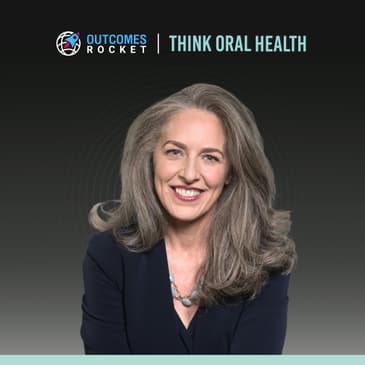
In this episode, Susannah Fox, author of "Rebel Health" and technology strategist, discusses the importance of patient-led healthcare revolutions, the democratization of health information, and the need for patients to own their data. She also highlights the importance of improving collaboration between dental and medical care, empowering patients with credible information, and recognizing the seeker, networker, solver, and champion archetypes as essential roles in navigating complex healthcare systems.
Tune in and learn how patients, clinicians, and innovators can work together to create a more equitable and effective healthcare landscape!
Watch the entire episode on YouTube and get more details at Think Oral Health.
Resources:
- Connect with and follow Susannah Fox on LinkedIn and her website.
- Buy Susannah Fox’s book, Rebel Health, here.
- Watch the entire episode on YouTube and get more details at Think Oral Health.
- Mariya Filipova - https://filipova.health/
- Systemic Health Investor - https://www.4100dx.com/
- Care Convergence Thought Leader: Dental Economics
- Forbes Technology Council Member
- Jonathan Levine - www.drjonathanlevine.com
- Founder - JBL New York City www.jblnyc.com
- Founder - GLO Science LLC www.gloscience.com
- Co-Founder - GLO GOOD Foundation www.glogoodfoundation.org
[00:00:01] This podcast is produced by Outcomes Rocket, your healthcare-exclusive digital marketing agency. Outcomes Rocket exists to help healthcare organizations like yours to maximize their impact and accelerate growth. Visit outcomesrocket.com or text us at 312-224-9945.
[00:00:31] Welcome to Think Oral. Where we connect the unconnected between oral and physical health. I'm your host, Dr. Jonathan Levine. And I'm your host, Maria Filipova. Let's get at it. Hi everyone, and welcome to another episode of Think Oral Health,
[00:00:55] the podcast where Dr. Jonathan Levine and I explore the connections between medical, dental teams, and the entire universe of specialties and disciplines and keeping patients healthy. I am so pleased today to welcome a good friend and a fellow rebel for healthcare and interconnected care, Susanna Fox. Susanna, welcome to our podcast and great to have you. And hello, Jonathan. Thanks for having me.
[00:01:25] Hello, Maria, and welcome, Susanna. So excited to get into the conversation. So Susanna, I'll just do a very quick flyby, select highlights of your stellar background. Would love for you to tell us more, but just for our listeners, you are the author of a new book called Rebel Health, A Field Guide to Patient-Led Revolution in Medical Care. It was just published last year by MIT Press.
[00:01:52] You're also a technology strategist. You served as the former chief technology officer for the U.S. Department of Health and Human Services. You led the open data and innovation lab there and continue to serve as a mentor and entrepreneur, but you served as the entrepreneur in residence at the Robert Wood Johnson Foundation, where you directed the health portfolio at the Pew Research Center for Internet Project. So I'm really excited to have you. Welcome to the podcast.
[00:02:20] We'll ask you about so many of the different threads in your background, but maybe let's start here. What is your personal why that drove you to healthcare, to technology, and continues to drive you to write things like patient-led revolution in healthcare today? Tell us about that journey. Thank you very much. I like to tell people that I'm mentoring that everyone can tell a good story in retrospect.
[00:02:46] So someone's career, you can see the zigs and the zags, and it eventually makes sense. But for me, I studied anthropology. I am also the daughter of an engineer and a writer. And so I'm really a hybrid of the technical and the liberal arts. And what I learned as an anthropologist is that you need to enter into any situation,
[00:03:13] any community with respect for the work that's already going on that you've come to learn from. And I did that with technology in the 90s. I was a startup kid. I helped start real networks. I helped launch the first website for the magazine, U.S. News & World Report. What I fell in love with was how the internet was democratizing access to information and data. I switched gears and became a researcher.
[00:03:42] And I started looking for ways that the internet was going to democratize access to information and data. And what I saw was that healthcare was going to be the biggest target because it was the biggest imbalance of power between the people who needed the information, patients and survivors and caregivers, and the people who had all of the information, all of the data. And here I'm talking about electronic health record data.
[00:04:12] I'm talking about device data. And now we have so much instrumentation for personal science. There's so much data that we can collect about ourselves that people don't have access to or certainly didn't 20 years ago. And that's when I fell in love with healthcare as the place that there was going to be so much action in terms of this democratization.
[00:04:36] And I'll conclude by saying what I found out is that the most important aspect of the internet is that it gives us access to each other. That the internet collapses these boundaries between time and space and allows anyone with a question to find people who might have the answers for them or at least be able to help them formulate an even better question. Wow. There's so much to unpack there.
[00:05:05] And when you think, especially when you think how this applies to healthcare, right? In the best interpretation or use case of the internet, you might have a question about your health. You might have in my personal healthcare journey, it manifested as a rare condition that, you know, you didn't go to medical school to learn how to resect the giant angiomyelipoma, kidney tumor. But with the internet, I was able to find people who could, to your point, either answer a question,
[00:05:30] connect me to somebody who could answer the question or reframe and refine my question. So I love that, you know, framing of the internet as a bridge that connects those different silos of knowledge pools that we could tap into. That's pretty special. And I got to say something that I think all three of us have in common is a real interest in empowering regular people, patients,
[00:05:54] so that they don't experience a division between the different kinds of healthcare and the pursuit of health, that they're on the path towards health. Again, whether it's dental health, whether it's heart health, wherever someone needs information and support, whether from a clinician, a scientist, or from a peer patient, they should have access to that in their pursuit of health. It's so true.
[00:06:23] You know, today we are living in a society where I think everybody understands we have to be our own patient advocate, don't we? And we really have to understand that information. And it's incredible how much data research science has grown because of, you know, all of the convergence of technologies and quantum computing and all of that. So the big question I have for you is, you know, what's your thoughts on the ability for people to own their data
[00:06:50] from a standpoint of these companies, these new companies that are marketing directly to the consumer and looking at longevity and functional medicine like Mark Hyman's company Function. And these healthcare systems that are trying to look at maybe the patient knows their data, patient portals. Because we know in New York, you go to NYU to an orthopedic surgeon and you want to get a second counselor to hospital special surgery. You got to go walk a disc over there.
[00:07:20] And it's 2025, right? So what's your thoughts on that? And, you know, you've been, you have such an incredible, you know, background in all the different pieces of the healthcare puzzle. I'd love your take on that. Thank you. Well, I'll say that my personal belief that if we have data that's generated by our own bodies, then we should not only have access to that, but we should own that data.
[00:07:44] We should be able to have all of that data flow to us and so that we can redirect it. So we don't have to do this sneaker net, which is what, you know, we in the 90s used to call this idea of taking a disc down the street or down the hallway. Instead of the internet, we call it sneaker net because you'd have to walk it. So I really believe that having access to one's own data, having ownership of one's own data is very important.
[00:08:13] I also think that it's the right thing to do for businesses, that there are going to be consumers increasingly who are asking for this. And you shouldn't be surprised when a customer is asking for their data. When I was working for the U.S. government at the U.S. Department of Health and Human Services, we were involved in an initiative that started in Veterans Affairs.
[00:08:39] It started with the healthcare in the VA and then moved to CMS, the Centers for Medicare and Medicaid Services, where what we believed and implemented was that each beneficiary, whether they're a beneficiary of care in the VA or a beneficiary of Medicare, they should be able to have individual access to, at first it was just a text file, just the very basics of your medical record.
[00:09:09] For some people, it was revolutionary to have a complete medication list. And we called it Blue Button because this idea was that you could go to the portal for the VA or go to the portal for CMS and hit a blue button on the website and download a text file of the basics of your medical record. And that idea has since blossomed into the idea of individual access to your entire medical record,
[00:09:39] which is now the law of the land, implemented in different ways, still pretty choppy. There's some issues there. But at the base, that is where the future lies. And it should be the present for most of us. Exactly. And it's interesting to see how it's not, I mean, I love the idea about the blue button, but it's still not one click easy. Right. Even though that's, it's the law of the land, it's regulatory mandated that the patient can request data.
[00:10:08] The onus is still on the patient to find the right form, fill the right form, submit it, wait, get, and whatever format that thing comes in. And then I still believe that there is something to be said about, okay, I have the data, I have the text file. Is that the same format that my other specialist accepts? Is the MRI done on the machine that this other specialist uses?
[00:10:35] And there's this, I don't know what's the name to put on this, but there's always like, well, it's just easier to do another CAT scan. It's just easier to do another MRI. And I like it when it's done by this one lab and this one provider, and they always do it for me super quick. So by the time your files come over here, Maria, let's just do another, let's just do another test. And so that's where we find ourselves in most of the time, because it's easier to replicate the test than to transfer the files and make them usable for the next specialist.
[00:11:05] And it degrades the experience for the consumer. It degrades the experience where you find yourself over and over with a clipboard in your hand. And over and over, you're asking, do I have access to my data? And you're finding out no. And what I'm intrigued by are companies and organizations that are making it easier for people to get access to their data.
[00:11:32] And whenever I'm working with a large legacy healthcare company, whether it's a hospital system, whether it's a government agency, I will always advocate for making sure that they're removing barriers so individuals could get access to the data. But I'm also saying this to medical device companies, because I think I really, again, build for the future. The future is going to be about individuals having access to all of that data and information.
[00:12:01] And you're going to really serve your customer if you make it easy for them. And, you know, I'd actually really love to hear Jonathan's perspective on this of how difficult is it for one of your patients to get their record and take it somewhere else if they needed to? You got to back up on that question because, you know, dentistry is very siloed. It's not hospital based.
[00:12:26] And the traditional business model of dentistry, and I don't know your personal experience, but it's one dentist, one assistant, one hygienist. Dennis wears multiple hats. He's the caregiver. He understands the science. He also has to understand that life's a team sport. And so is healthcare. So dentistry is evolving because money's flowing into the industry is really the easiest way for me to see it. So it's getting more organized in these dental service organizations and multi-doctor practices.
[00:12:55] So having said that, technology's improved. Having said that, now we got CAT scan for the jaws, salivary diagnostics, intraoral scans, pH testing, on and on and on of data. Finally, in dentistry, beyond just, I'm going to see if you have a little decay in your tooth or I'll take a periodontal probe and see if you have a little pocket. Okay. Okay. And we look at things volumetrically also. So we look at these multiple domains of aesthetic structure, function, biology.
[00:13:23] Now that data needs to go somewhere. Okay. So is healthcare growing up? Yes. 17 years of adoption in medicine. Dentistry is longer. You imagine. We have scanners that came out 35 years ago, and it's still only in about 25, 30% of the dental offices. So I can't make this stuff up. Everything takes a long time. But it's changing. That's our good news. I'm very involved in those kinds of things. And I would tell you personally, you have to build this. So there's some companies that are very forward thinking.
[00:13:53] And there are companies like, I'll mention one, Henry Schein Cares, who supports our foundation. And Henry Schein has 60% of the market on the computer software system. Patient. Face meditation. Yeah. And it's called Dentrix Ascend. And this software that they're building is cloud-based. And they're building it for the future where people will have access. So it's coming.
[00:14:20] And on top of that, the opportunity is for the medical side. Let's say the epics of the world who are also now built out dental and it's going into a number of the dental schools. That they're talking also to the dental software companies. And when that really happens, then you really can share data and we can start connecting the dot spring dentistry and medicine that Marie and I love to talk about. But also for the patient to be able to have access to that data.
[00:14:50] Because the industry is still, there's the periodontists working together. The oral surgeons work separately together. I'm prosthodontist. Prosthodontist, which is that whole kind of world of aesthetics, but also structure, function, biology. And that's changing too where we're all under one roof. Like in my practice, we're all under one roof. We have folks like me. We have perio. We have orthodontics. And so it does change everything in a very positive way. So it's starting.
[00:15:20] It's starting. And we say it's a golden age in dentistry because of the impact of technology, innovation, new science and the changing business. And one of my questions also was so much of what I do is act as an ambassador between different industry sectors. And I try to bring stories from different sectors to the other.
[00:15:42] So when I'm speaking to people who specialize in rare disease and genetics, I might tell a story about diabetes device and data access and vice versa. And I had a great fun this last summer where I got to speak to a group of veterinarians. And they are very far ahead of human health in terms of interoperable.
[00:16:08] They have universal interoperable electronic records for pets. But they were interested for me to tell them more about kind of a dispatch from the future related to how they might expect things to evolve based on my observations of human health. I wonder if that is also something that you bring forward.
[00:16:31] And I know you do in this podcast of talking about how do we learn from different fields so that we don't recreate the same mistakes, so that we don't recreate the silos that we all grew up in. And as you describe the dental practices that were kind of mom and pop shops, well, that's how medicine used to be, too, right? Like, so primary care was mom and pop shops. And then they've been consolidated. And that's what you're describing.
[00:17:01] And by the way, that's what the veterinarians were describing, too. Yes. I'm fascinated by this. And so how do we make sure that we don't have these siloed conversations? We talk across all of health. Because sometimes when people, I wrote this book about the patient-led revolution and say, well, what's the enemy? Is the enemy science? Is the enemy clinicians?
[00:17:29] You know, are you aligned with the people who are anti-science? And I say, no, not at all. People in this revolution that I'm describing are pro-social and pro-science. And the enemy is disease. Right. Right. Right. So I'd love to get your perspective on that. Yeah. It's such a great question, right, Marina, to unpack. You know, I would start by saying this, that the opportunity in front of us.
[00:17:56] Well, first of all, the enemy also, you know, a lot of times is me, right? Like Pogo. The enemy is me. Because it needs to be a vision. We need to have a big vision now. What's the vision? How do we improve the quality of care? How do we get upstream to prevent these inflammatory type expensive diseases that we're discovering them too late? How do we get prevented? How do we get proactive? Patient goes to the dentist. Whether they go to their primary care physician.
[00:18:25] Now we can detect inflammatory markers, blood glucose, all these things, either at a finger prick or celebrate diagnostics. And I'm just portending. I'm showing you this is what the future is going to be in dentists. Absolutely. I love them. And the old guys, they're going to retire. And this new breed, which I love lecturing to, and I'm involved in those things, are the ones that are going to push this forward. And technology is going to help us get there. But the big vision is how do we join forces? You know, I always love to say life's a team sport.
[00:18:55] And that's my background. In thinking about the team, the computer system, the software, the patient records all have to connect. That's numero uno. That has to happen. That's going to happen. Which is how long? Technology to adopt, right? Maria, we talk about this all the time. It has to get fast. And it goes back to the vision for the thought leaders and people pushing forward an industry. These change agents, right? We call them.
[00:19:23] And then something great happens because we can diagnose earlier. We can get to disease earlier. We can communicate better back and forth. You know, the mouth's connected to the rest of the body and vice versa. So we can talk about the 54 disease. Name every one. They're inflammatory. And the mouth has a huge impact on those diseases. Some directionally related to and some just one of the constellation of risk factors.
[00:19:49] So, you know, and you can dive into the science of this, but it's very definitive. It's been 25 years now of this evidence. So we know that there's so many things we can do when we work together. And that's to me is that is as simple as that and put that big vision out there. Like this is what we want to accomplish in the last 10 years. You know, it's very interesting when they did the oral health report, oral health of America, the surgeon general. Right. Right. And it's it was 20 years later.
[00:20:19] And unfortunately, the oral health in America hasn't changed that much. It really hasn't. We do have a growing awareness because of our functional medicine. People are much hymens of the world of Andrew Huberman's a podcast of people like yourself getting the word out like there is an important change that has to happen in medicine. It's two siloed. The body's an ecosystem. Bam. And people are talking about it.
[00:20:46] So the consumer you're talking about, that book you wrote, that's what we need because they're going to push the health care system. They're going to walk into the doctor's office and question things. And then all of a sudden they say, oh, well, how come you don't have a CAT scan in this dental office? I just read about it. I hear it should be a standard of care. I heard that podcast that Philip Pover was talking about, you know, and that's how it starts. You know, it starts that snowball effect. So, yeah, vision.
[00:21:15] And then, you know, we talk a lot about the education, educating these young doctors, young dentists. Here you hear something that's interesting. The connection of the mouth and the body, oral systemic medicine. It's a discipline. Now, one dental school teaches it. In five years, probably 20 will because it's starting to get there. How many medical schools teach nutrition? It's 2025. I was my first two years in medical school at BU Dental.
[00:21:42] So when I went zero, today, less than 50 percent. Nutrition. It's one of the four pillars of longevity. Everybody knows that. Food is medicine. I mean, come on, wake up, folks. So we've got to hit it at every level, every level. You got on my favorite topic. So, you know, I get a little excited. I know. It was like it's one of it's this is one of those conversations where the the hosts become the guests. And yes, well, I'm the host. I apologize. Why? Because I was so curious.
[00:22:10] And and I think what you're describing about how there's some people who are ready for this because they are tuned in because of podcasts, because of books they've read, because they hear something from friends. Friend looks really vital. And they say, what's your secret? And they start to tell them about food is medicine. The body is a system. Ask your dentist. And so what I love is that that's that's like a those are always the people who are going to be kind of living in the future of health and good for them.
[00:22:40] Like if they have the wherewithal just naturally within them or a reason to do that. The people I'm concerned about is the iceberg under the water where most people are just kind of trying to go along life. They're on the conveyor belt. They're hoping that there's no reason why they ever really need to see any kind of significant health care professional. But then something happens. Something happens to them, to their kid, to their mom, to their sister.
[00:23:09] And all of a sudden they need to wake up and get access to the information, get access to the data, get access to fellow patients, survivors and caregivers. And that's why I wrote my book to say this is a field guide to the revolution that you are now part of. Right. You might not have wanted to be part of it, but because you've fallen off the conveyor belt
[00:23:35] of mainstream health care, you now need to become a rebel. You need to start asking different questions. You need to start connecting with different people and getting the information that you need to take care of yourself and your family. Right. Susanna, could you double click on that a little bit? Give us maybe for those listeners, what are the give us the highlights of if you find yourself in that situation where you have to be what I call a reluctant rebel, because we really don't
[00:24:03] have a choice to navigate that system. So give us a bit of the highlights from that navigation guide that you've written. Sure. I spent 20 years doing fieldwork like an anthropologist will do in online patient communities. I paired that with national survey research. And what I observed over the course of 20 years is that people have different reactions
[00:24:29] to a life-changing diagnosis, to a significant setback, whether it's an acute illness or a chronic illness. The one reaction is that when your questions are not being answered, maybe somebody can't actually give you a diagnosis. Maybe you don't understand why they are recommending something and your questions just aren't being answered.
[00:24:54] You become a seeker and a seeker will go out on the hunt for information. And what I love about seekers is that they will not stop until they get that information. They are honey badgers and they will keep going. And we need to do, frankly, everything we can to serve people so that they can get their questions
[00:25:17] answered to their own liking, to their own satisfaction, because then they'll vaccinate their kid. Then they'll come in for the cleanings, etc. They'll do that work that we all want them to do in public health and personal health. The second group are networkers. Some people react to a life-changing diagnosis by saying, I feel like I could learn a lot from other
[00:25:47] people like me. And so they know that they learn in community. This is where we see, for example, we've got 50 years of experience in literature in mental health. Anyone who is connected to addiction recovery, eating disorder recovery, knows that so often the wisdom can come from someone who's just ahead of you on the path.
[00:26:12] And networkers, that's the group of people that I'm talking about, they learn in community. They're incredibly powerful for clinicians and businesses because they can serve as an early warning system for if there's a problem in the population or if there's actually an emerging solution. Networkers can make sure that the community knows about it. They can spread the good ideas as well as the bad.
[00:26:38] That's why we need to fight against misinformation by leveraging the networkers. The third group that I observed are what I call solvers. Solvers are people who see something that's not working and they can't help but come up with a new solution. We see this in people who work in the hardware of healthcare, people who might have a physical disability and so they need an assistive device.
[00:27:05] People who live with something that requires a medical device, like I talked about, the diabetes device hackers who are able to create essentially a do-it-yourself open-source artificial pancreasist. Because they were not being served by the medical device industry. And so they created something. We also see solvers working in the redesign of clinical trials.
[00:27:30] So they're systems thinkers who can't resist but to change what needs to be fixed. And the fourth group are champions. Champions are people who have access to resources that are controlled by mainstream healthcare. And here I'm thinking about information. I'm thinking about attention. I'm thinking about funding.
[00:27:53] Champions notice when a patient-led group is creating something really amazing and they get them the funding or the regulatory guidance or the attention that that team needs to scale up and spread this new innovation. So you need all of the different personalities and archetypes to advance. Or maybe we all need to self-identify where we land. Are we a solver, a seeker, a champion?
[00:28:22] Maria is all four. I just want to put that out there right now. Fill of politics. Maria, it's not just one thing with you. I've seen you in action. Come on. Well, and that's the key. Depending on the problem that you're trying to solve, you either need to become or here's what's so important. It can sound exhausting. If you're ill, you say to yourself, how am I going to become a networker or a solver? You can recruit that person to your team.
[00:28:51] All of us, hopefully, have friends and family members who would love to help. And this is the perfect role for someone who might live far away who wants to help a family in need. They can be the seeker or the networker, for example, who goes out onto the Internet and gets the answers that the family needs. Yeah. That's so beautiful. So well said and so well structured.
[00:29:18] Then, yes, some of us have been fortunate or unfortunate enough to have to go through situations where you have to learn to be all of these things for yourself. And again, I go back. I have flashbacks to my personal patient journey when I was dealing with a giant kidney tumor. And some could say this was the most overwhelming and daunting experience. But frankly, I still go back towards those days. And I am who I am today as a business leader and a healthcare executive and investor
[00:29:46] and a friend and a caregiver because of my personal patient journey. My giant kidney tumor, who I still fondly refer to by her name, Bertha. Bertha made me who I am. And that patient journey, that empathy that I had to experience, that problem solving, the dot connecting, that's still real. And only a patient who, if we actually remind ourselves, we're all working in healthcare,
[00:30:11] but if we remind ourselves that first and foremost, everybody is a patient. Healthcare is so personal. And it's not like we're not manufacturing widgets out of a conveyor belt. We're dealing with somebody's health and somebody's quality of life. And so if we remind ourselves about, hey, how is this helping a patient? That I find, for me personally, always lights a fire.
[00:30:38] I was like, every time when I hear something, well, this has always been that way. And that patient in me, right, that scared, overwhelmed patient just says like, no, that's not acceptable. What I love about what you just said, Maria, is that you've walked through fire. And you now, you know the path, right? Like you can go back in and help someone else through that maze of fire that you went through.
[00:31:04] And we all walk around with this knowledge, right? Like you look at me and you might not know that I have a kid with food allergy or I've been a two-time cancer caregiver. And so I really know a lot about a few narrow topics in healthcare. What I love to tell people, and this is really what I love for any clinicians who are listening to know,
[00:31:28] that you might have patients in your practice who would love to share their wisdom with other patients. If someone is being hesitant about a certain procedure, what if you could connect them with someone who has been through that procedure and can say, it's going to be okay. I've been through it. Let me tell you about it. How might we create more of a conversation around things that might be daunting or even scary?
[00:31:57] How might we leverage the fact that there are so many people who've been through things like you have, Maria, who are willing to share their experience? That's what I really want to tap into. Yeah, and it's powerful. The other thing is, probably as a patient, you don't appreciate what you've gone through and how helpful it might be for somebody else. And so there's so much value and there's so much wisdom there.
[00:32:24] And I still think about, I mean, we think about oral health as, oh, you know, it's just a cavity or it's just like, I have this tooth. It's no big deal. But there's big, life-altering things that people face when they're in the dental chair, in the dental office. And periodontal disease is not insignificant. Jonathan sees complex patients in his practice. A lot of the things are scary. There's a lot of anxiety from going to the dentist.
[00:32:53] And let's not even start on oral cancer and how that could change your life and impact the life of those around you. There's some really scary conversations and life-changing conversations that happen in the dental office that we need to find ways to shepherd those conversations to the other end. I completely agree. And what I would say is, I like to say that I'm an ambassador from the future.
[00:33:17] I'm just here to tell you what's going to happen, that if it hasn't started yet in oral health, it will soon, that people are connecting online and bringing that insight and those questions into the office. How do we get ahead of that? How do we make sure that people are going to the best information online?
[00:33:39] How, if someone is using ChatGPT to sharpen their questions, how do we make sure that their queries are as best as they can be in order to leverage the fact that people are going online, connecting with each other, connecting with information? Yeah. And it is the problem of our social media today. I was, yeah, well, you know, you go on TikTok and you realize how many people who don't have access to care.
[00:34:07] Dentistry, unfortunately, is usually not supported well in any state. And you have these, what Maria loves to call them, and I think she's spot on, is these dental deserts, right? These people don't have any access to care. Or they can't afford it. And that's where dentistry becomes, unfortunately, life-threatening. Abscesses, encephalitis, airway closure because of the infection and swelling.
[00:34:33] I mean, 70% of the population of the United States over the age of 65 has periodontal disease. That's chronic inflammatory disease. That bacteria ends up in all these distant organs loading up the body on inflammation and what ends up with systemic inflammatory diseases. So, you know, when you know all these things, it's so helpful for people to be educated.
[00:34:56] And then for, unfortunately, our policymakers, I'm not going to discuss this current administration, but the policymakers to understand this. Because people who don't have access to care, you know, you're going to take fluoride out of the water just to talk about that for a second. That's going to be an issue. Those people who go on, their decay rate is going to go flying up because they just don't have access to the kind of products that we all do have access. And, you know, the worst that happens to a lot of us is we get decay or we get inflammation in the mouth.
[00:35:25] And it's solved if we're on it, you know, and knowledge is power. So there's that whole other side of the coin of healthcare of these medical and dental deserts that people don't have that access. And we have to really think about that, especially from a policy perspective and how we can help each other. You know, I started this foundation 10 years ago and we see it up close. What happens when dentistry and medicine work together? It is amazing.
[00:35:51] And when we go into the schools with public health teams to teach the kids proper habits, educate them, the whole world changes. They don't become like their parents with losing teeth and decay and walking around in pain and thinking it's normal and on and on and on. And we have many of these pockets in the United States, many of them. And I just I have to break in and say thank you for doing that work. I'm so excited that you're out there advocating and changing these people's lives.
[00:36:20] So thank you. It's my pleasure. It brings a lot of joy to myself and a lot of my colleagues that we bring in. We're creating like a magnet for good people that kind of help people, you know, and trying to scale it a little bit more. So it's just brings the joy for us, as we all know, helping people. I love that because what we're going after is the power of the question, the informed question.
[00:36:44] And frankly, I believe that when it comes to your care, care team or care journey treatment plan, there is no such thing as bad question. There are questions that move your treatment plan forward. There are questions that help you accept and and get comfortable with it.
[00:37:04] And frankly, there's questions that need to be asked to disperse myths, because Jonathan, I 100 percent agree with you, because I've there's so much information out there and there's no real incredible and consistent way to sift the facts from the myths. And that that process actually takes work. It takes independent thinking and takes extra legwork. And no one's out there saying this is factual.
[00:37:32] This is supported versus opinion. Everybody's entitled to their opinion, but not everybody's really entitled to have their facts. That's the dynamic that we need to make sure that we are aware and helping sort this through. Because, Jonathan, you're saying, you know, the question around fluoride. Absolutely. That seems like scientific community and clinical community is aligned on that. And yet patients decides to do something different because they're getting their source of information from somewhere else.
[00:38:01] So, Suzanne, I'm going to ask you this very easy question. This is such an easy question. How do we effectively, consistently sift through the noise to find the right information we can act on as patients and caregivers and clinicians? What I like to tell people is that your reaction should fit the situation.
[00:38:27] So, if you are asking a question that is very important to you, it's about a life-altering situation for yourself, you should take that seriously. You should get multiple sources. You should ask many people many different questions.
[00:38:48] And you shouldn't rely on just one person, whether it's an influencer or a friend, to give you the answer to that very, very important question. How you sift through the sources. What I always do is actually say there's a lot of guides out there. I really like the Medical Library Association guide to understanding whether it is a good source, whether it is a credible, up-to-date source.
[00:39:16] And even though it can sound kind of old-fashioned, all of the ways that people have always seen whether something is credible, it still holds. You should make sure, for example, if you're using Dr. ChatGPT or Dr. Gemini as a secondary source in addition to your clinician,
[00:39:38] you should make sure that you actually verify that the publications that they are citing are actually in PubMed. And what I would recommend is making sure that you are looking at the most up-to-date, credible literature that you possibly can. Yeah, you see, all of that sounds exhausting, Susanna. No, it's like, look this up, right?
[00:40:03] It's just so easy to look at all the TikToks that have gathered the highest number of likes and say, well, clearly that's the path, right? So if it's just that alone, you know, and you're giving all these good examples, get multiple sources. I like to go to people that would give me a completely opposing view and I would try to understand why they're giving me that opposing recommendation, right? That puts in even extra work because sometimes you don't know what you don't know.
[00:40:32] You have blind spots, right? But talking about extra legwork, and you could only afford to do that for the decisions that are really important. How many decisions we make a day that require us to, you know, frankly, understand what's fact, what's not, what's not fact. And then we just don't have the time to go in and get the extra sources. Go look up on PubMed. Is this the latest publication? Is it PubMed? Is it Jada? Is it an affiliate of Jada? How reputable is the publication?
[00:41:01] So I don't know if we actually have the answer to this. Wait, wait, wait, wait, wait, wait. One second there, Philip Paul. But wait one second. But Susanna is saying, no, white flag, I'm waving it. Because what Susanna is saying is knowledge is power. We have to go after it ourselves. It's like being preventable, preventive, proactive, understanding, you know, what's going to make us healthy long-term, so-called longevity approaches.
[00:41:31] What are those pillars of health? What do we eat? How do we sleep? How do we manage stress? How do we work out? We want to get proactive. But if we have something acute in our lives, we better do our homework, our research. Who's the expert? Who can we get access to? If you can't afford access, you have to find out how you can get access. There are university hospitals. There are community health centers. There are places to go. And you've got to, I'm sure what Susanna talks about all over her book is you've got to own it.
[00:42:01] You yourself got to own it. Yeah. When you know that, Maria, from your own journey. And what I honor is that it does sound exhausting to do all that work, which is why I so often recommend bringing in a proxy, bringing in someone who in your life loves to do that work. Do you have a niece who's a nursing student?
[00:42:22] You know, do you have someone who is a librarian in your life who delights in finding the latest research? If this sounds too difficult for you, you are not alone. There are people who would love to help you if only they knew how to find you. If you are brave enough to raise your hand and ask a question, you should be brave enough to ask for help as well.
[00:42:50] In this information hurricane that we're all experiencing, we need to ask for help. There it is, Maria. You've got to be brave enough to raise your hand and ask for help. I mean, that's it. What a great conversation. Susanna, thank you so much for joining us. This was like really fantastic. And we got Leah Filipova to open up about things that she loves to talk about also. It was really great. That's great. Thank you for joining us.
[00:43:19] And we can't wait to see what you do. And if there are any listeners and patients out there who want to get involved, Susanna will leave your contact information in the notes. And we'll make sure that you have even more amazing stories to tell across different silos as you champion that topic. So thank you. Thank you for having me.
[00:43:47] Thanks for listening to the Think Oral podcast. For the show notes and resources from today's podcast, visit us at www.outcomesrocket.health.com. Or start a conversation with us on social media. Until then, keep smiling. And connect in care.
[00:44:17] This podcast is produced by Outcomes Rocket, your healthcare exclusive digital marketing agency. Outcomes Rocket exists to help healthcare organizations like yours to maximize their impact and accelerate growth. Visit outcomesrocket.com or text us at 312-224-9945.