
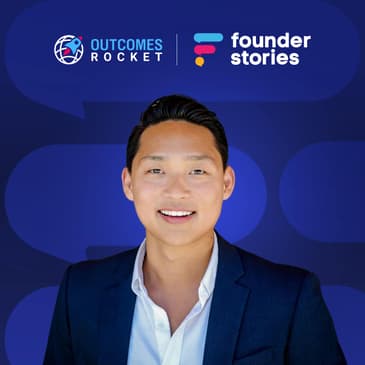
AI platforms like DeepScribe can drastically reduce physician burnout by automating up to 80% of medical documentation.
In this episode, Matt Ko, co-founder, President, and Chief Operating Officer at DeepScribe, highlights how the platform eases physician burnout by capturing and organizing patient-physician conversations, allowing doctors to focus more on patient care. The platform also offers features like HCC assist, which helps identify chronic conditions, and customization options that make clinical adoption more seamless. Throughout this interview, Matt stresses the importance of leveraging unstructured data from EHRs to improve patient outcomes and explores the future of AI in healthcare. He also urges listeners to embrace new ideas and explore the innovative solutions provided by AI in healthcare.
Tune in and learn how AI is shaping the future of medical documentation!
Resources:
[00:00:02] [SPEAKER_02]: Hey everyone, welcome back to the Outcomes Rocket Founder Stories. I'm so excited that you tuned back into our podcast
[00:00:11] [SPEAKER_02]: We're interviewing some of the best leaders in the industry in healthcare and today is no exception
[00:00:17] [SPEAKER_02]: I've got the pleasure of hosting the amazing Matt Ko on the podcast
[00:00:23] [SPEAKER_02]: He is the co-founder and president and chief operating officer of DeepScribe
[00:00:29] [SPEAKER_02]: They're an AI platform that automates medical documentation for clinicians
[00:00:34] [SPEAKER_02]: DeepScribe is a leader in generative AI for clinical documentation serving over 1200 provider organizations
[00:00:41] [SPEAKER_02]: Across the us. I'm so excited to have him here. I mean this guy's even been named Forbes 30 under 30
[00:00:49] [SPEAKER_02]: Just incredible. So I want to welcome him here to the podcast Matt. So glad you're able to make it
[00:00:55] [SPEAKER_02]: Thanks for having me Saul
[00:00:57] [SPEAKER_02]: Oh, it's a true pleasure. Look you've had an incredible career
[00:01:01] [SPEAKER_02]: Leading up to your jump into entrepreneurship and so one of the first things that I love to ask our guests is
[00:01:08] [SPEAKER_02]: What is it that got you interested in entrepreneurship and in healthcare?
[00:01:14] [SPEAKER_00]: That's a great question
[00:01:15] [SPEAKER_00]: Like it's funny if you asked any of my friends if they would ever imagine that I would be running a clinical
[00:01:21] [SPEAKER_00]: Documentation company they would all just laugh at you
[00:01:25] [SPEAKER_00]: Why why?
[00:01:27] [SPEAKER_00]: I think for me like I've always been a very passionate person
[00:01:30] [SPEAKER_00]: I've always kind of wanted to do things that I absolutely love and
[00:01:35] [SPEAKER_00]: Healthcare was not something that came naturally to me or in my opinion naturally to most people
[00:01:40] [SPEAKER_00]: Right. So my background is really in technology
[00:01:43] [SPEAKER_00]: I served as kind of a data analytics consultant for a small consulting shop called EY
[00:01:49] [SPEAKER_00]: Really helping me is like learn and understand how to use data
[00:01:52] [SPEAKER_00]: And when I was working at EY that I was also serving as a care coordinator for my mom when she had breast cancer
[00:01:59] [SPEAKER_02]: Oh, man
[00:02:00] [SPEAKER_00]: And so my mom's from Taiwan
[00:02:02] [SPEAKER_00]: She doesn't speak English very well
[00:02:04] [SPEAKER_00]: And I was mainly serving as my mom's translator
[00:02:08] [SPEAKER_00]: And we had this joke at deep scribe that you know all of this chaos started
[00:02:15] [SPEAKER_00]: When my mom asked me this one question
[00:02:18] [SPEAKER_00]: And it was are you lying to me?
[00:02:21] [SPEAKER_00]: And you know at first I thought she was just making fun of me because my Mandarin is just terrible
[00:02:26] [SPEAKER_00]: But she was like Matt, you know, you're telling me everything is going well
[00:02:29] [SPEAKER_00]: But why am I being treated like I'm already dead?
[00:02:33] [SPEAKER_00]: And you know that that had just a tremendous impact on me
[00:02:38] [SPEAKER_00]: And I just became inspired to be a better advocate for her
[00:02:41] [SPEAKER_00]: And so, you know, I went to the only person that I knew who was an oncologist, which is my co-founder's dad
[00:02:48] [SPEAKER_00]: And I was like, you know, maybe he can refer me to somebody that can take better care of my mom
[00:02:52] [SPEAKER_02]: Wow
[00:02:53] [SPEAKER_00]: And it was in that conversation where we actually learned about the problem that we're solving today
[00:02:58] [SPEAKER_00]: You know, he was like Matt you as a patient, you know, you don't see all the other
[00:03:03] [SPEAKER_00]: Things that your physician needs to do
[00:03:05] [SPEAKER_00]: After you leave the room and he kind of explained to me on how
[00:03:09] [SPEAKER_00]: Physicians are spending nearly half their day writing notes
[00:03:14] [SPEAKER_00]: And there's solutions out there that is in the hands of over 75 percent of physicians called
[00:03:22] [SPEAKER_00]: Dication, but you know, they're still spending half their day writing notes
[00:03:25] [SPEAKER_00]: And that was really kind of the first
[00:03:28] [SPEAKER_00]: Exposure to the problem that we're solving today
[00:03:30] [SPEAKER_00]: And it just so happened that Auclash my co-founder was leading the natural language processing group at the Berkeley research lab
[00:03:37] [SPEAKER_00]: And was studying synchronization
[00:03:39] [SPEAKER_00]: You know, this was back in 2017 before l over sexy and all that and that's kind of how
[00:03:46] [SPEAKER_00]: You know, we said why don't we try to take some of that technology and apply it to this problem
[00:03:51] [SPEAKER_00]: So that's really kind of how everything started and here we are seven years later. That's amazing, man
[00:03:56] [SPEAKER_02]: Thanks for sharing the story about your mom. Is she okay? She's okay. Oh, thank god. I'm glad you made it
[00:04:03] [SPEAKER_02]: God that that story's at, you know, kind of a point of frustration
[00:04:07] [SPEAKER_02]: That ended up in a happy ending
[00:04:09] [SPEAKER_02]: But now you're leveraging your experience right to make that really kind of very challenging
[00:04:15] [SPEAKER_02]: Experience for many people in the health system easier and not to mention the physicians
[00:04:20] [SPEAKER_02]: Right that are burned out and suffering from this
[00:04:23] [SPEAKER_02]: Love it brother. And by the way, hey, my brother is actually at e y he's doing data analytics at e y
[00:04:28] [SPEAKER_02]: Really?
[00:04:29] [SPEAKER_02]: Yeah, I've read it to him
[00:04:31] [SPEAKER_02]: I love that man. Well, look talk to us about your company, you know, this is a great opportunity to really
[00:04:38] [SPEAKER_02]: Tell us more about deep scribe oftentimes. It's stuff that maybe you feel people already know
[00:04:44] [SPEAKER_02]: Maybe we don't so help us understand more about you guys and how you add value to the ecosystem
[00:04:49] [SPEAKER_02]: Yeah
[00:04:49] [SPEAKER_00]: So the basic premise of deep scribe is we essentially record natural patient physician encounter
[00:04:57] [SPEAKER_00]: And we use ai to identify all the clinically relevant information and summarize that information into
[00:05:04] [SPEAKER_00]: A clinical note that the physician would have otherwise written
[00:05:07] [SPEAKER_00]: And that in turn saves physicians a tremendous amount of time
[00:05:11] [SPEAKER_00]: We were able to save physicians up to 80 percent of their time documenting
[00:05:16] [SPEAKER_00]: But I think one unique thing that I I'd like to share is a lot of people think that the problem that we're solving is just
[00:05:23] [SPEAKER_00]: clinical documentation and it's just burnout and
[00:05:27] [SPEAKER_00]: I think the perspective that we have at deep scribe around the problem resolving is unique in the sense that
[00:05:31] [SPEAKER_00]: We believe most of the value that we're going to create in this market
[00:05:35] [SPEAKER_00]: It's not really in improving the quality of life for physicians
[00:05:38] [SPEAKER_00]: But it's in taking all the data that is being harvested in these conversations
[00:05:43] [SPEAKER_00]: And using that to actually build functionality to improve patient care
[00:05:48] [SPEAKER_00]: So one of the key insights that aaklesh and I had when we started this company
[00:05:52] [SPEAKER_00]: Was you know, we would listen to these patient conversations that were filled with so much life
[00:05:58] [SPEAKER_00]: And filled with so much color and then we would read these notes that these physicians are writing
[00:06:02] [SPEAKER_00]: And all that detail all that color all that patient narrative was lost
[00:06:08] [SPEAKER_00]: And not only was it lost it was kind of put into an e h r that was very inaccessible
[00:06:14] [SPEAKER_00]: And it was unstructured data that was not primed for modern day machine learning applications
[00:06:20] [SPEAKER_00]: So we kind of looked at this as an existential risk in health care
[00:06:24] [SPEAKER_00]: In that we won't be able to achieve the full potential of ai and medicine
[00:06:28] [SPEAKER_00]: If we were continuing to rely on these busy burnt out physicians to harvest all this clinical information
[00:06:35] [SPEAKER_00]: so that insight led us to really be
[00:06:38] [SPEAKER_00]: Thoughtful about how we're labeling all the data that is going through our service
[00:06:43] [SPEAKER_00]: And today, you know, we're actually using that data to provide additional functionality on top of documentation
[00:06:49] [SPEAKER_00]: So some examples of this is you know using that data to identify participants for clinical trials
[00:06:55] [SPEAKER_00]: Using that data to help with the clinical
[00:06:58] [SPEAKER_00]: Coding and the billing side of the house
[00:07:00] [SPEAKER_00]: Using that data to even run kind of sentiment analysis or doing you know work with local biomarkers
[00:07:08] [SPEAKER_00]: With that data so to summarize like what we're doing is not just automating clinical documentation
[00:07:14] [SPEAKER_00]: We're trying to build this new foundational kind of data set for for health care that we believe will truly unlock
[00:07:21] [SPEAKER_02]: Kind of the full potential of ai that's great. Yeah, it's a lot bigger than just documentation
[00:07:27] [SPEAKER_02]: There's so many things that happen in that conversation. So are you guys doing ref cycle too now?
[00:07:31] [SPEAKER_00]: So we have components of ref cycle where we're able to you know, basically code the entire note
[00:07:37] [SPEAKER_00]: There's more that we want to do in terms of the clinical workflow
[00:07:40] [SPEAKER_00]: So one of the features that we have that we launched with one of our health system partners is called hcc assist
[00:07:46] [SPEAKER_00]: So that's basically we're able to pull the problem list from that patient identify all the hcc's that need to be
[00:07:52] [SPEAKER_00]: recapture and also suspected this hcc's that we suspect that can be captured
[00:07:58] [SPEAKER_00]: And then we're able to use that conversation to evaluate the conversation or the care that was delivered against me criteria
[00:08:05] [SPEAKER_00]: And that gives the physician the ability to look, you know
[00:08:09] [SPEAKER_00]: Have I actually
[00:08:10] [SPEAKER_00]: Compliantly captured these hcc's and what we found is that with just that simple workflow
[00:08:15] [SPEAKER_00]: We've been able to improve hcc recaptured by over double digits and look just because this is health care and
[00:08:22] [SPEAKER_02]: And I love this example level set on hcc. What is the acronym for?
[00:08:27] [SPEAKER_00]: The acronym is called a hierarchical condition like coding. I believe okay hcc
[00:08:32] [SPEAKER_00]: hcc yeah, so
[00:08:34] [SPEAKER_00]: Hcc's are essentially
[00:08:36] [SPEAKER_00]: essential to value-based medicine
[00:08:39] [SPEAKER_00]: So it identifies kind of the chronic conditions that a patient has and it determines basically the risk factor for these patients
[00:08:47] [SPEAKER_00]: Got old when you think about value-based care hcc's are critical in terms of
[00:08:52] [SPEAKER_00]: Determining, you know, what is the actual true cost of care for that patient?
[00:08:56] [SPEAKER_00]: and you know the health organizations are
[00:08:59] [SPEAKER_00]: It's incentivized to reduce that total cost of care depending on the risk factor of that patient
[00:09:03] [SPEAKER_02]: That's so helpful, man. I'm glad I asked you that because I mean it's such a valuable
[00:09:08] [SPEAKER_02]: I mean it's such a valuable use case
[00:09:11] [SPEAKER_02]: So like let's unpack that a little bit
[00:09:13] [SPEAKER_02]: I do want to unpack that to really kind of help the value shine
[00:09:16] [SPEAKER_02]: We're talking about
[00:09:18] [SPEAKER_02]: A patient comes in. I mean is it a Medicare Advantage patient? Is it any patient? Are we talking about acos?
[00:09:25] [SPEAKER_00]: Like help us really frame this out. Yeah, I would say ma lives are probably
[00:09:29] [SPEAKER_00]: The main use case that it's being used in today
[00:09:31] [SPEAKER_00]: right so say a patient comes in and
[00:09:34] [SPEAKER_00]: Before the physician actually sees the patient they would actually look at our app
[00:09:39] [SPEAKER_00]: That would actually highlight the accs that need to be recaptured
[00:09:43] [SPEAKER_00]: So a good example of this is you know, say a patient comes in for a shoulder injury
[00:09:47] [SPEAKER_00]: But they actually have you know diabetic neuropathy
[00:09:50] [SPEAKER_00]: And if you didn't know that you would only treat the shoulder injury
[00:09:54] [SPEAKER_00]: Yeah, I mean you would miss your opportunity to be able to recapture and
[00:09:58] [SPEAKER_00]: You know monetary value-assess of treat some of the chronic conditions that the patient has
[00:10:03] [SPEAKER_00]: So using this feature we're able to kind of remind the physician about you know
[00:10:08] [SPEAKER_00]: The more holistic kind of perspective on that patient and then also help them make sure that
[00:10:12] [SPEAKER_00]: The care that they're providing allows them to comply lead capture those codes and get reimbursed for the services that they're rendering
[00:10:20] [SPEAKER_02]: That's huge and one last question here matt. Can you apply your algorithm?
[00:10:26] [SPEAKER_02]: On say just previous data that wasn't initially captured through your system
[00:10:31] [SPEAKER_02]: Could you clarify that so you mean? Yeah, so basically the question behind the question is
[00:10:35] [SPEAKER_02]: All right, somebody just came in from another health system
[00:10:38] [SPEAKER_02]: And maybe we have access to their old EMR records or EHR records
[00:10:42] [SPEAKER_02]: Can we digest their previous stuff and then help provide like a decision support for the provider or no?
[00:10:49] [SPEAKER_00]: So that's actually a really good question. It's not something that we do today, right?
[00:10:53] [SPEAKER_00]: But it's something that we do kind of in theory
[00:10:55] [SPEAKER_00]: So one of the things that our models does that is unique is we're actually able to read the EHR to make our models contextually aware
[00:11:03] [SPEAKER_00]: So, you know, you can actually take that information and help guide the model to determine what's clinically relevant for that specific patient
[00:11:10] [SPEAKER_00]: Today, we don't integrate with like an hie
[00:11:14] [SPEAKER_00]: That is able to pull kind of disparate records from that patient from other health systems from other EHRs
[00:11:19] [SPEAKER_00]: And use that as context for our model
[00:11:21] [SPEAKER_00]: But you're kind of reading off our product roadmap right now. Very cool, man. Very cool. I love it
[00:11:26] [SPEAKER_02]: Yeah, no, I mean this stuff is so promising and you really touched on a very high value piece here
[00:11:31] [SPEAKER_02]: It's sort of value-based scribing here that we're talking about
[00:11:36] [SPEAKER_00]: Yeah
[00:11:37] [SPEAKER_00]: It's just one it's a tiny sliver of all the amazing use cases
[00:11:42] [SPEAKER_00]: For this technology my perspective
[00:11:45] [SPEAKER_00]: And this is kind of a hot take is that in the next three to five years
[00:11:48] [SPEAKER_00]: I believe that 90 percent of patient conversations are going to be recorded
[00:11:51] [SPEAKER_00]: And I think the question that we really need to start to interrogate
[00:11:55] [SPEAKER_00]: Is what does care look like in that world?
[00:11:58] [SPEAKER_00]: What kind of data is available to us that can actually help us improve the care that we deliver to patients?
[00:12:04] [SPEAKER_00]: And so I think these use cases that we've developed with all of our health system partners
[00:12:08] [SPEAKER_00]: Are just little glimpses into the reality that we can be living into so great. Yeah, I love your vision
[00:12:13] [SPEAKER_02]: I definitely see it going that way too and I remember like
[00:12:18] [SPEAKER_02]: Man, I remember it must have been like seven years ago where these were just ideas, right?
[00:12:24] [SPEAKER_02]: Like people were thinking about doing it and now it's like fast track making it happen
[00:12:29] [SPEAKER_02]: So you guys were early on talk to us about
[00:12:33] [SPEAKER_02]: Differentiating in an ever more noisy environment of these types of technologies. How do you guys stand out?
[00:12:40] [SPEAKER_00]: That's a great question. You know, I feel like every other day I get a ping from somebody saying have you heard of this company?
[00:12:46] [SPEAKER_00]: Have you heard of this company?
[00:12:48] [SPEAKER_00]: You know, and I do think that after the advent of lms
[00:12:51] [SPEAKER_00]: It's really enabled innovators to build kind of products in our space
[00:12:56] [SPEAKER_00]: What I will say is that being able to produce a demo of something
[00:13:01] [SPEAKER_00]: Is very different than being able to produce a product
[00:13:04] [SPEAKER_00]: And one of the things that we've learned and I can kind of I could show you the scars on my back to prove it
[00:13:10] [SPEAKER_00]: Is like all these little
[00:13:11] [SPEAKER_00]: Things that you don't think are important that end up becoming the difference between a cool demo and a battle tested product
[00:13:20] [SPEAKER_00]: So one example of this that I think we kind of lead the industry with is our ability to customize our notes
[00:13:26] [SPEAKER_00]: So one of the key lessons that we've learned very early on was
[00:13:30] [SPEAKER_00]: Physicians and clinicians really view
[00:13:33] [SPEAKER_00]: Themselves as artisans and they view the notes that they're writing as a reflection of their own competency
[00:13:40] [SPEAKER_00]: And so if the note doesn't look feel sound
[00:13:45] [SPEAKER_00]: Exactly like
[00:13:46] [SPEAKER_00]: Them even if it's 100 clinically accurate, they're going to spend a lot of time editing that note
[00:13:52] [SPEAKER_00]: And you know in a business where your value proposition is time savings
[00:13:55] [SPEAKER_00]: That is just eating away at the value that we're delivering
[00:13:58] [SPEAKER_00]: So we had to really figure out how do we accommodate for all these personal preferences of these clinicians and really meet them where they are
[00:14:06] [SPEAKER_00]: And so what we've done is we've kind of taken the learnings from the thousands of the
[00:14:11] [SPEAKER_00]: Deployments that we've done and we productize that into what we call our customization studio
[00:14:16] [SPEAKER_00]: So our customization studio allows physicians
[00:14:19] [SPEAKER_00]: To be able to make preferences into their model for simple things such as you know
[00:14:24] [SPEAKER_00]: I want to refer to the patient with these pronouns or by their first name
[00:14:29] [SPEAKER_00]: To more sophisticated
[00:14:31] [SPEAKER_00]: Customizations like I want to write my history present illness in pros
[00:14:35] [SPEAKER_00]: But I want my plan in bullets and I wanted my plan to be organized by problem
[00:14:39] [SPEAKER_00]: And so all these little customizations
[00:14:42] [SPEAKER_00]: We have over 50 different ways that you can customize your notes
[00:14:44] [SPEAKER_00]: Have really been the difference between getting 30 clinical adoption of your tool to what we are able to achieve
[00:14:51] [SPEAKER_00]: Which is around 80 clinical adoption screen or intercarousel?
[00:14:55] [SPEAKER_02]: That's great. That's huge and a big insight in this space
[00:14:58] [SPEAKER_02]: I've heard you know, I've had conversations with clinicians and they've said the importance of their note like it's a very personal thing
[00:15:06] [SPEAKER_00]: Yeah, and like I said, it's a reflection of their own competency, right because they're sending that note to their patient
[00:15:10] [SPEAKER_00]: They're sending that note to the physicians that they're referring
[00:15:13] [SPEAKER_00]: And they need it to sound like something that sounds like them
[00:15:17] [SPEAKER_00]: Totally. I love that
[00:15:18] [SPEAKER_02]: So yeah, Matt, you know in any conversation in healthcare entrepreneurship
[00:15:23] [SPEAKER_02]: Like you really have to ask the question about biggest setbacks. It's hard, right? It's a hard business to innovate in
[00:15:30] [SPEAKER_02]: It's a hard business to monetize
[00:15:31] [SPEAKER_02]: What's been one of your biggest setbacks and you know, what's been a big lesson that's come out of it?
[00:15:37] [SPEAKER_02]: How much time do we have?
[00:15:40] [SPEAKER_00]: You know, obviously
[00:15:41] [SPEAKER_00]: As a founder, you know, your job is to will things into existence
[00:15:45] [SPEAKER_00]: And when you're at the very beginning not a lot of people really understand
[00:15:50] [SPEAKER_00]: You know your vision and so it was the same for us, right?
[00:15:54] [SPEAKER_00]: Everyone thought that we were just building dictation for the first three years of our business
[00:15:57] [SPEAKER_00]: but you know, if I were to
[00:16:00] [SPEAKER_00]: Really kind of think about one major setback that we've really kind of came back from
[00:16:04] [SPEAKER_00]: I think it would be the customizations, right? So very early on like we would produce a note that was 100
[00:16:10] [SPEAKER_00]: percent clinically accurate and then we would get feedback that our product sucks
[00:16:15] [SPEAKER_00]: And you know as non clinicians building a product for clinicians
[00:16:20] [SPEAKER_00]: It was really hard to understand this especially as data scientists. We believe that there's an answer and what we've
[00:16:27] [SPEAKER_00]: Really had to wrap our minds around is that it may not be a single answer
[00:16:33] [SPEAKER_00]: And we have to build a system that's elastic enough to meet all of our different users
[00:16:40] [SPEAKER_00]: Where they're at and so that's really stuck with us
[00:16:43] [SPEAKER_00]: Throughout the seven years that we've run this business and in our design thinking of you know
[00:16:48] [SPEAKER_00]: We always have to listen to the users, right? Like as much as we have a people into the future and where we want to take this technology
[00:16:56] [SPEAKER_00]: There are people that are using your product that need to solve problems today
[00:17:00] [SPEAKER_00]: And so you need to strike that balance between looking too far ahead
[00:17:05] [SPEAKER_00]: And ignoring the problems that they're facing today
[00:17:07] [SPEAKER_00]: Versus only so focusing on what's in front of you and not really preparing yourself for the future
[00:17:13] [SPEAKER_02]: Yeah, really well said and great example matt something that we all need to be thinking about like if somebody has
[00:17:21] [SPEAKER_02]: a broken
[00:17:22] [SPEAKER_02]: Water heater like you can't talk to them about redoing their staircase like they need that water heater fixed, right?
[00:17:30] [SPEAKER_02]: And you just got to listen and that's such a great reminder for all of us folks like
[00:17:35] [SPEAKER_02]: Listen and spend extra time listening to what our customers need
[00:17:41] [SPEAKER_02]: At the end of the day like matt said this is so insightful
[00:17:44] [SPEAKER_02]: If there's a problem that needs to be fixed now it needs to be fixed now
[00:17:47] [SPEAKER_02]: And if you could hone into that like the note
[00:17:51] [SPEAKER_02]: personalization
[00:17:52] [SPEAKER_02]: Uh example that matt brought to us you're going to hit home runs
[00:17:55] [SPEAKER_02]: I love that matt really appreciate you sharing that win and and sort of the insight
[00:17:59] [SPEAKER_02]: That's become a core feature of the platform. Look, there's so many opportunities to keep going
[00:18:05] [SPEAKER_02]: Fortunately, we only have so much time. So look really all of this in I want to say this has been a really
[00:18:10] [SPEAKER_02]: Fun discussion. What do you want to leave us with? What call the action would you leave to the listeners and
[00:18:16] [SPEAKER_02]: What's the best place they could reach out to you to learn more about you and to learn more about deep scribe?
[00:18:22] [SPEAKER_00]: Yeah, you know one of the things that I've been thinking about a lot recently
[00:18:26] [SPEAKER_00]: Is one of the things that one of our board members said to us
[00:18:29] [SPEAKER_00]: And what he said was you know, what got you here is not going to get you there
[00:18:33] [SPEAKER_00]: And I think in healthcare it's so important for us to remind ourselves of that because
[00:18:38] [SPEAKER_00]: healthcare is such an institutionalized industry and I think everybody knows that we're the furthest
[00:18:45] [SPEAKER_00]: behind in terms of technology adoption
[00:18:48] [SPEAKER_00]: And at the same time everyone knows about all the existential risks that we have in healthcare with respect to outcomes
[00:18:55] [SPEAKER_00]: respects the staffing shortages
[00:18:57] [SPEAKER_00]: medical errors
[00:18:59] [SPEAKER_00]: All these problems that healthcare is plagued with and so we really need to have a fresh perspective
[00:19:05] [SPEAKER_00]: On how we're going to solve these problems and be open to new ideas
[00:19:09] [SPEAKER_00]: So as an innovator it's important to never lose that spark
[00:19:13] [SPEAKER_00]: Believe in yourself that you can will things into existence
[00:19:16] [SPEAKER_00]: And you know the world is not going to be the same if you keep pounding it on the head with a hammer
[00:19:26] [SPEAKER_00]: So I think that's what I would like to leave kind of the audience with in terms of where to find us
[00:19:31] [SPEAKER_00]: Our website is deep scribe.ai
[00:19:34] [SPEAKER_00]: You can learn everything about our company there
[00:19:36] [SPEAKER_00]: You can always shoot me an email and my email is matt at deep scribe.ai
[00:19:40] [SPEAKER_00]: And i'm always happy to chat so
[00:19:42] [SPEAKER_02]: amazing
[00:19:43] [SPEAKER_02]: Matt really really want to say thank you for
[00:19:46] [SPEAKER_02]: What you do in this business because it's very much needed kudos to you and your team for building what you have
[00:19:52] [SPEAKER_02]: Early in the game before it was actually a thing before llms showed up
[00:19:56] [SPEAKER_02]: So you guys are have literally paved the way of possibility so kudos to you and your team
[00:20:01] [SPEAKER_02]: Thanks for jumping on with us and folks all the things that we talk about are available in the show notes
[00:20:06] [SPEAKER_02]: So we'll have a short summary of our discussion with matt co
[00:20:11] [SPEAKER_02]: He is an outstanding leader co-founder and president chief operating officer of deep scribe
[00:20:18] [SPEAKER_02]: It's an ai platform that automates your medical documentation. You got to check them out now is the time
[00:20:23] [SPEAKER_02]: So make sure you check those out take action
[00:20:27] [SPEAKER_02]: And do something about what you heard today if it inspired you matt. Appreciate you being with us. Thank you so