
Integrating behavioral health into existing healthcare workflows can improve patient outcomes, especially for those managing chronic diseases.
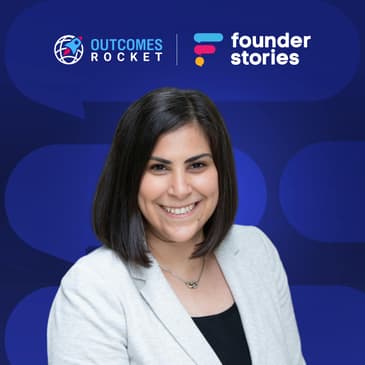
In this episode, Shana Hoffman, president and CEO of Lucet, explains how Lucet uniquely combines technology with behavioral health services, integrating them into existing healthcare workflows. She highlights Lucet's navigate-and-connect platform, which efficiently matches patients with clinicians and addresses chronic conditions through mental health screenings. Shana touches on leadership, emphasizing the importance of continuous growth, finding the right fit for roles, and having honest conversations about expectations. Shana also highlights her vision for making mental health screenings a standard part of chronic disease management and primary care visits.
Tune in and learn how integrating technology with behavioral health can transform patient care and leadership in healthcare!
Resources:
[00:00:02] Hey everybody, welcome back to the Outcomes Rocket. So excited that you joined us yet again. I'm so excited to have today's guest. Her name is Shana Hoffman. She's president and CEO at Lucet. And I'm excited to have her here on the podcast to uncover all the outstanding things that she and her team are doing in healthcare. Shana, thanks for joining us today.
[00:00:26] Thanks so much, Saul, for having me.
[00:00:28] It's my pleasure. So look, before we get started and have the fun that we're going to have talking about Lucet, talk to us a little bit about you. What is it that got you into the business of healthcare? And why do you do what you do?
[00:00:41] Absolutely. So, you know, I always joke sometimes that I'm the most jaded person in healthcare for my age. But no, I've spent my whole career in healthcare really a mix of large corporations, was at DaVita in the dialysis services space for some time,
[00:00:55] and then spent time in tech VC kind of backed startups in the patient provider matching space, as well as starting my own company in the senior care space. How I ended up in healthcare, I'm an engineer by background, and I sort of from a young age have always been interested in kind of problem solving solution orientation.
[00:01:11] And I think, you know, no better sector to do that in. And for me, I actually like this sort of medium-sized company. We've done a lot of turnaround work at what was New Directions, now Lucet, incorporating technology together.
[00:01:25] And it kind of brings all of those optimizing things subject to constraints that are sort of very familiar from an engineering perspective.
[00:01:31] From a personal perspective, you know, how I sort of ended up both in healthcare, but also in behavioral health is, I've talked before in other programs, is kind of from a young age, my dad had a lot of health issues.
[00:01:42] And I think what I observed is sort of in addition to needing really to be your own kind of patient advocate through the system is really the force multiplier that mental health has on kind of taking care both of a loved one, but also that person dealing with chronic disease.
[00:01:55] And it's just really powerful, even not in a formal setting of therapy or psychiatry, but even just in a peer group setting.
[00:02:02] For him, it was with, you know, being diagnosed with heart disease at a young age and kind of having a really strong peer group that to this day, he's in his 80s.
[00:02:09] And that sort of really, it is akin to therapy in terms of what is being provided, just has such an impact on his ability to then manage that as well as other kind of chronic diseases.
[00:02:19] And so I was able to sort of bring that all full circle is what we'll talk about today, because that's what I'm really passionate about is the intersection of really behavioral health and all of these chronic diseases of which it has such an impact.
[00:02:31] And from my perspective, it's really hard to treat many other medical conditions if you haven't addressed the underlying EH pieces.
[00:02:37] So a little about me, sort of my path and background into healthcare and sort of my why, if you will.
[00:02:43] I love it, Shana.
[00:02:44] Your experience spans chronic conditions with Davida.
[00:02:48] You had your own company for a while.
[00:02:50] And now through lived experience, are focused on this behavioral health piece, which is a growing field and a field that we need a lot of help in.
[00:03:00] So talk to us a little bit about Lucid.
[00:03:02] What are you guys doing to move the needle on behavioral health and how is it different than what everybody else is doing?
[00:03:09] Yeah.
[00:03:09] So, you know, for Lucid, we are a behavioral health company that's actually been around for 25 years,
[00:03:14] purpose-built to drive labor and behavioral health solutions, primarily in the services space for health plans.
[00:03:19] And that focus historically has really been on kind of those member types of services and working with those health plans.
[00:03:25] In the last few years, we've really pivoted to be focused on, we purchased a technology company,
[00:03:30] a technology-enabled services product that allows us across the full acuity spectrum to screen, triage, and connect members directly to care.
[00:03:39] So that might not sound that different from kind of a lot of the behavioral health companies out there.
[00:03:42] But for us, the real big differentiators are, one, the combination of services plus technology.
[00:03:47] And two, is really embedding ourselves in the workflow of the healthcare kind of systems as they exist today.
[00:03:54] That's something that I'm really passionate about.
[00:03:55] I think innovation and disruption is great, but I think you have to make sure that you're plugging into the existing infrastructure.
[00:04:01] And so when I talk about that, for example, we today have our Navigate and Connect product,
[00:04:07] which allows us to kind of break the mold on the person that's overcoming the highest activation energy
[00:04:12] to pick up the phone and say, hey, I would like to get connected to a behavioral health provider.
[00:04:16] We are making that into a seamless process where we do first call resolution and directly connect them into high quality care.
[00:04:23] However, we realize that some people want to do that through more of a member channel
[00:04:27] where they're just coming directly to a website and schedule.
[00:04:31] And for that, there's a lot of solutions out there, but it's really unique for Lucid that we kind of launched that platform.
[00:04:37] And because we have the services component, 10 to 15% of the people that are filling out the assessment
[00:04:43] to want to get scheduled for care are actually screening positive to need a clinician in the moment.
[00:04:48] They're screening higher on the acuity spectrum.
[00:04:51] And so what we are able to then do is we immediately are routing that to a call queue for a clinician
[00:04:57] to get that person directly connected for that kind of higher touch care,
[00:05:02] in addition to the people that can kind of sail through the process getting directly scheduled.
[00:05:07] So this is sort of kind of brings together what I'm describing around that kind of technology plus services,
[00:05:12] but also the idea of embedding in the workflows of kind of the existing systems.
[00:05:16] We're doing that same workflow in primary care, full integration into the EMR,
[00:05:21] where you can click a button and create a referral the same way you would for a specialty
[00:05:25] to get that person over to a cardiologist or a pulmonologist to be able to do that for behavioral health care.
[00:05:31] So I'm sure we're going to spend more time on these pieces,
[00:05:33] but it's really being able to screen triage, connect members to high quality care,
[00:05:40] which we do a lot on the outcomes measurement piece.
[00:05:42] But doing that within the contours of the existing health care system,
[00:05:46] because while I love and I'm passionate about behavioral health care,
[00:05:49] it is a force multiplier in driving impact on other kind of conditions that are primarily on the medical side.
[00:05:56] Oh, totally. Yeah. I mean, if you have diabetes and you have mental health challenges,
[00:06:02] you know, your glucose is going to probably be the third or fourth or fifth thing you're worried about.
[00:06:07] One example of many.
[00:06:09] And so I hear the differentiator kind of you're sharing with us, Shaina,
[00:06:13] is really being able to provide technology and services, but embedding it within an existing framework.
[00:06:19] You're working with payers. It sounds like you're also working with providers and layering into their existing workflows,
[00:06:26] whether it be a care coordination, a journey or a primary care, you know, visit.
[00:06:32] That's right. You know, I think a lot of times you see kind of that triangle on pitch slides for health care companies,
[00:06:39] right, where there's usually kind of the payer or health plan or whoever's kind of the enterprise paying for the services,
[00:06:45] the member patient and then kind of the provider that's actually rendering the care.
[00:06:49] And we've spent so much time sort of bringing that triangle to life again in actually creating those connection points.
[00:06:57] Right. So in order for us to sort of our system ecosystem to work right,
[00:07:01] we have the health plan that's covering those members.
[00:07:04] And those are folks that we're trying to get as many members as possible that will benefit into behavioral health service.
[00:07:10] If you look at the statistics today, we talk a lot more about behavioral health.
[00:07:14] But if you actually look at the percentage of utilization, it's still really low within a population.
[00:07:19] Right. So that's sort of one leg of the stool where we're using analytics.
[00:07:23] We're trying to drive those members from that health plan into care.
[00:07:26] So then we have kind of the member that's now sort of in a touch point either with us again,
[00:07:30] because they've self-identified in or we've reached out to them outbound kind of through an algorithm that we've identified them
[00:07:36] or they're presenting in some other care setting.
[00:07:38] And at that point, we are taking that member and ensuring that we know what is going to be the right care for them in terms of do they need a prescriber?
[00:07:47] Right. Do they need a higher level of care?
[00:07:49] What do they need as far as all the kind of SDO, social determinants of health needs,
[00:07:53] as well as kind of cultural competency meeting,
[00:07:55] all their other kind of preferences around gender, race, ethnic preferences, all of those pieces.
[00:08:00] So that's kind of the member leg of the stool.
[00:08:02] The only way that this triangle works for us, though, is if we have a supply center providers.
[00:08:07] So we've actually in our network teams, we really think about it as air traffic control
[00:08:12] around matching the demand coming through for patients or members through to the provider supply.
[00:08:18] And so we've built what we call our behavioral specialty sub stack,
[00:08:21] where we are putting together all of the providers that are ready to see those patients.
[00:08:27] And that's not just in-network, contracted credential, data loaded.
[00:08:31] That is actually understanding what do we have from a geo perspective in terms of zip code,
[00:08:37] so that if we know we've got a lot of need for prescribers in the Miami-Dade zip code,
[00:08:42] how do we make sure we have that right supply side?
[00:08:45] And that's kind of a constant rebalancing that we're doing.
[00:08:48] And so and then we, as I mentioned, are fully integrated into those providers' systems
[00:08:53] so that we have full access to their schedule.
[00:08:55] So that's what I think one of the unique things, again, about Lucid is, again,
[00:08:59] if you think about that triangle that, again, is probably prevalent in almost every pitch deck,
[00:09:04] we've created really bi-directional flows that actually work day to day, right?
[00:09:10] We can get the reports of here how many referrals were created out of the EMR,
[00:09:14] how many connections to care were driven.
[00:09:16] That I think is, you know, to me where the rubber meets the road
[00:09:20] of where you actually deliver value in the system versus being like a cool,
[00:09:24] this sounds really great in theory,
[00:09:26] but does it actually work in practice in the guts of the system?
[00:09:29] That's great.
[00:09:30] No, I really appreciate you zooming into that and kind of helping us understand that triangle.
[00:09:35] It makes a lot of sense.
[00:09:36] And then the one question that I had, Shana, is do you guys at Lucid also have your own providers
[00:09:41] or are you referring these out to a network that you've established?
[00:09:45] Yeah, so Lucid contracts for creating a network of providers.
[00:09:48] So we don't own or kind of employ any of those providers.
[00:09:52] That's a contracted network that we either work with,
[00:09:55] either some cases we own the network for that health plan
[00:09:57] or some places we work with that health plan's network.
[00:10:00] But it is really an important point that we are kind of working with the existing infrastructure
[00:10:06] and making sure that we're bringing together both the bricks and mortar local providers
[00:10:10] that sit within a network and then layering in some of those new or entrance
[00:10:15] kind of on specialty conditions that are some mix of virtual and in person
[00:10:19] and kind of building that stack together.
[00:10:22] That's great, Shana.
[00:10:23] Thanks for clarifying that for us.
[00:10:25] And look, I love that you're driving this with data.
[00:10:29] We all know, like you go to any of these conferences,
[00:10:33] behavioral health is on the topic, right?
[00:10:36] Like it's on the stage.
[00:10:38] We're having these conversations.
[00:10:40] However, what you're sharing with us is that the data doesn't show more utilization
[00:10:45] where there is a need.
[00:10:47] So what does that mean for everyone listening today on that triangle?
[00:10:52] Yeah, I mean, it's a great point, Saul.
[00:10:54] I think, you know, you actually do hear people talking about increased utilization, right?
[00:10:59] You hear on a lot of earnings calls from sort of health plans,
[00:11:01] well, we're seeing a real increase in outpatient utilization of behavioral health services.
[00:11:05] But what we sort of see in the data is it's great that people are self-navigating to care.
[00:11:10] But if you sort of look at the members that are in need and drive costs on the medical side,
[00:11:15] there's a much lower prevalence of those folks connecting in
[00:11:18] because those people may not be the people that self-navigate to care.
[00:11:22] And you actually need to have more of a wrapped around approach
[00:11:25] and you actually need to be able to get to those people in a care setting
[00:11:29] where they're already presenting,
[00:11:30] which may be more likely to be a medical care setting, right?
[00:11:34] So you have to be able to kind of embed yourself into those workflows on the medical side.
[00:11:40] And I think this is one of the challenges for us to some degree
[00:11:43] is sometimes I think about us as an enablement engine
[00:11:45] that has to plug into something else that kind of exists.
[00:11:49] And so I do think you'll sort of see over time,
[00:11:52] in addition to sort of the emerging trends that are going on
[00:11:55] in terms of players taking risk for different chronic conditions,
[00:11:58] really thinking about how do they use that behavioral health engine
[00:12:01] or sort of putting together pieces of the pie
[00:12:04] for how are you managing chronic kidney disease?
[00:12:07] How are you managing cardiac disease?
[00:12:09] How are you managing cancer?
[00:12:11] And then what's your behavioral health engine
[00:12:12] that sort of underlies all of that as well?
[00:12:15] I love it.
[00:12:16] I think that's so neat.
[00:12:17] I appreciate you calling that out.
[00:12:18] Certainly an area that deserves more inspection.
[00:12:21] Shana, I want to give you credit
[00:12:22] and you and your team credit for really pushing the envelope on that
[00:12:26] because it is something that we need to do more of.
[00:12:28] All right.
[00:12:29] So like, you know, you guys are doing incredible things.
[00:12:32] You know very well, as much as all of the entrepreneurs
[00:12:35] and business leaders out there,
[00:12:37] that when you build something that's valuable,
[00:12:40] you do it and there's obstacles.
[00:12:42] So this is the part of the podcast
[00:12:43] where we unpack a potential setback that you had.
[00:12:47] What was it all about?
[00:12:48] And how has it made you and Lucid better?
[00:12:52] Thanks all for the question.
[00:12:53] I actually love these kind of portions of the podcast.
[00:12:55] I feel like they're the best places
[00:12:57] that you can kind of learn from other people.
[00:12:59] Although I do think you have to kind of go through it yourself
[00:13:02] and figure it out.
[00:13:03] I think from my perspective, you know,
[00:13:04] I tell people all the time as CEO,
[00:13:06] the most important thing is your management team, right?
[00:13:08] You live and die by the people
[00:13:09] that you kind of put in those seats
[00:13:11] because they are sort of carrying how you want,
[00:13:14] what you want to be delivered
[00:13:15] and how you want to be delivered.
[00:13:17] And I think for me, you know,
[00:13:18] there was some point of recognition.
[00:13:19] So I've been in this role coming up
[00:13:21] actually on four years now.
[00:13:23] You just want to get your management team right.
[00:13:25] Like in every other role in a company,
[00:13:27] you sort of get your team
[00:13:28] and you're like locked and loaded.
[00:13:29] I've sort of realized it's more of an evolution
[00:13:31] than it is kind of a moment in time
[00:13:33] that you've got all the right folks in the right seats.
[00:13:35] And I think it took me some time
[00:13:36] and I still, you know, I think,
[00:13:38] oh, I've learned that.
[00:13:39] And then I'm like, oh, we're locked for a little bit.
[00:13:40] And then you realize,
[00:13:41] oh, we need more growth orientation over here.
[00:13:43] Hey, we can't live with, you know,
[00:13:45] that sort of challenge
[00:13:46] with that individual over in this lane.
[00:13:48] And so it's kind of this idea
[00:13:50] that you're, you know, constantly rebalancing.
[00:13:52] And I think it's led to, you know,
[00:13:53] hiring mistakes on my part.
[00:13:54] It's led to sort of leaving people in seats,
[00:13:57] you know, too long
[00:13:58] when they're sort of that right,
[00:13:59] they're not the right fit.
[00:14:00] And I think it's really this recognition
[00:14:02] that again, it is an evolution.
[00:14:04] And so the same person
[00:14:05] that might've been perfect for that role
[00:14:06] three years ago,
[00:14:08] when the organization has moved quite a bit,
[00:14:10] they actually might not be the right fit for that role.
[00:14:13] And at the senior executive level,
[00:14:15] then they may not have a role at the company, right?
[00:14:17] Because it's not as easy as saying,
[00:14:18] hey, let's find you an alternative opportunity, right?
[00:14:20] You're not taking your chief ex over here
[00:14:23] who's going to move over to be,
[00:14:24] you know, to your chief people officer, right?
[00:14:26] And so, but I think you just have
[00:14:27] to get comfortable with that.
[00:14:28] And it's taken me some time
[00:14:30] because there's nothing that feels better
[00:14:31] than kind of that stable team
[00:14:33] where like everyone's the ELT
[00:14:35] and a week to week,
[00:14:35] it's all the same, right?
[00:14:36] And so I think for me, that's again,
[00:14:39] I always come on
[00:14:39] and I like talk about these learnings
[00:14:41] and then I make the mistake again.
[00:14:43] So, but I think that's kind of
[00:14:44] what leadership is, right?
[00:14:45] Like it's just the constant evolution
[00:14:48] and particularly on the people front,
[00:14:50] which is to me,
[00:14:51] the most critical piece of anything.
[00:14:52] Like it doesn't actually matter.
[00:14:54] You could have the best problem solver
[00:14:56] who you can put in a room
[00:14:57] with any challenge
[00:14:58] and they'll like figure out
[00:14:59] how to get the claim paid
[00:14:59] or whatever it is.
[00:15:01] But if they're not,
[00:15:02] you know, the right kind of people fit
[00:15:04] relative to what your organization needs,
[00:15:06] the culture that you're trying to build
[00:15:07] and can't work in the ecosystem
[00:15:09] that you're trying to create,
[00:15:11] like it actually doesn't matter.
[00:15:12] I love that.
[00:15:13] And Shannon, thanks so much.
[00:15:14] That's hugely valuable
[00:15:16] for a lot of the founders
[00:15:17] and entrepreneurs and leaders
[00:15:19] listening to our podcast.
[00:15:20] And so like if somebody is struggling
[00:15:23] with maybe somebody
[00:15:24] on their leadership team,
[00:15:26] what advice would you give them?
[00:15:28] Just kind of something
[00:15:28] that's worked for you.
[00:15:29] Yeah.
[00:15:30] So I think the first thing
[00:15:31] is just on the hiring front,
[00:15:33] one piece of advice
[00:15:34] that I've sort of found really helpful
[00:15:35] is everybody has things
[00:15:37] that they're great at
[00:15:38] and everybody has things
[00:15:39] that they're not so great at.
[00:15:40] Usually in an interview,
[00:15:41] you can actually say,
[00:15:43] hey, this person is really great
[00:15:44] at these things.
[00:15:45] I'm not sure they spike
[00:15:45] on these things as much.
[00:15:47] And then you should just ask yourself
[00:15:48] if that thing that they didn't spike on
[00:15:50] is 10x what it is in the interview,
[00:15:53] can you live with that
[00:15:53] in your leadership team, right?
[00:15:55] So if somebody is super consensus driven,
[00:15:57] there may be times
[00:15:58] where that's super valuable.
[00:15:59] There may be times
[00:15:59] where like that is not going to function.
[00:16:01] So like if you see that
[00:16:02] and that's what comes back
[00:16:03] in reference checks,
[00:16:04] assume that's going to be 10x
[00:16:05] whatever it is.
[00:16:06] So because I do think
[00:16:07] the biggest thing on the front end
[00:16:08] is trying to get the right people in
[00:16:10] because it's much harder
[00:16:12] when you kind of get
[00:16:13] the wrong person in the seat.
[00:16:14] Once everybody's sort of in their seats
[00:16:16] and if you're experiencing,
[00:16:17] hey, this may not be the right fit.
[00:16:19] To me, it's the first thing early on
[00:16:21] before you're trying
[00:16:22] to performance manage
[00:16:23] and provide feedback
[00:16:23] is really just having
[00:16:25] an expectations conversation, right?
[00:16:27] So if you sort of are seeing
[00:16:28] some inklings of like,
[00:16:29] I'm not sure,
[00:16:30] maybe it's the wrong fit
[00:16:31] or maybe your business has evolved now
[00:16:33] to going out of turnaround mode
[00:16:34] and going into growth mode
[00:16:35] and you're like,
[00:16:36] hey, the next three years
[00:16:37] is going to be really different.
[00:16:38] Then it's really sort of saying,
[00:16:40] here's what's going to be required
[00:16:42] in your role, right?
[00:16:42] It's almost like the re here on paper.
[00:16:44] Here's what the JD,
[00:16:45] the job description is
[00:16:46] and saying like,
[00:16:47] this are going to be my expectations
[00:16:48] and what's going to be required, right?
[00:16:50] This is what we're,
[00:16:51] how we're leveling up
[00:16:51] or this is sort of the new world
[00:16:52] we're entering into.
[00:16:53] Like you've got to be comfortable
[00:16:54] doing these things
[00:16:55] and giving the person
[00:16:56] the honest opportunity
[00:16:58] to say like,
[00:16:59] is that what I want to sign up for?
[00:17:01] I've turned over
[00:17:02] my management team here entirely.
[00:17:04] Very few of those people were fired.
[00:17:06] It was an honest conversation around
[00:17:08] this is what this is going to be,
[00:17:09] this role and expectations going forward.
[00:17:12] Do you want to sign up for that or not?
[00:17:13] It's usually when you've already seen like,
[00:17:15] hey, this might be not the right fit
[00:17:16] that you have that conversation.
[00:17:18] Sometimes people will opt out.
[00:17:20] Sometimes people will say,
[00:17:21] no, no, up for the job.
[00:17:22] Like, sign me up, let's go, right?
[00:17:24] And then if you get to kind of that point
[00:17:26] and you're still,
[00:17:27] some people obviously turn the corner
[00:17:28] and like get there.
[00:17:29] It's harder sometimes
[00:17:31] for those people to make,
[00:17:32] turn the corner.
[00:17:36] Where you're reinforcing
[00:17:37] whatever that thing is
[00:17:39] that you're seeing
[00:17:39] that's not working well
[00:17:40] on a regular basis.
[00:17:42] Because to me,
[00:17:43] the worst thing you can do to somebody
[00:17:44] is surprise them
[00:17:45] if you get to the point
[00:17:46] that you have to say
[00:17:47] this is not working out
[00:17:48] and we're going to part ways.
[00:17:49] That should never be
[00:17:51] a surprise to someone, right?
[00:17:53] That should have been,
[00:17:54] hey, we have this conversation
[00:17:56] around expectations.
[00:17:57] I told you I was going to need you
[00:17:58] to be like next level accountability
[00:18:00] on P&L.
[00:18:01] And what that was going to require
[00:18:02] is having difficult
[00:18:03] customer conversations,
[00:18:05] doing all these things.
[00:18:06] You said you were up for it.
[00:18:07] Hey, like we have an example now
[00:18:09] of a customer
[00:18:10] that we should add a renewal
[00:18:12] or a renegotiation on
[00:18:13] and we're like three months before
[00:18:15] don't have it locked.
[00:18:16] Like that's an example, right?
[00:18:18] Against what we talked about there.
[00:18:20] And then as you sort of progress,
[00:18:22] you're kind of getting to the end.
[00:18:23] So that's my like tactical.
[00:18:25] Like I said in the prior
[00:18:26] kind of comment and question,
[00:18:28] do I get there right every time?
[00:18:29] Absolutely not.
[00:18:30] Do I get to like the end
[00:18:31] where I'm like,
[00:18:32] clearly this is not working out,
[00:18:33] but I've not had enough
[00:18:34] of those conversations?
[00:18:35] Absolutely.
[00:18:35] And that's kind of why I said,
[00:18:37] I think you got to give yourself
[00:18:38] some grace and sort of
[00:18:40] try to get it right
[00:18:41] more times than not.
[00:18:42] Totally.
[00:18:43] Interation.
[00:18:44] No, I love it.
[00:18:44] Great, valuable points here, Shayna.
[00:18:48] And folks,
[00:18:48] I literally would rewind this section,
[00:18:51] like just kind of hit
[00:18:51] the 15 second rewind twice
[00:18:54] because that was really good.
[00:18:56] Take some notes on that.
[00:18:57] And what I share
[00:18:58] with everybody listening
[00:18:59] and watching this is,
[00:19:00] man, like you are hearing value
[00:19:03] from Shayna Hoffman.
[00:19:05] And don't stop at the interview.
[00:19:07] I'm telling you,
[00:19:08] if you're a founder out there
[00:19:10] doing great things,
[00:19:11] running an awesome company,
[00:19:12] there's a chance that
[00:19:13] if you reached out to Shayna,
[00:19:15] she would want to connect with you too
[00:19:16] because it's lonely at the top.
[00:19:19] You know, like we're all looking
[00:19:20] for groups where we could learn
[00:19:21] from each other.
[00:19:23] Outcomes Rapunet is one of those groups.
[00:19:25] But remember that the leaders here
[00:19:27] are available to chat.
[00:19:30] Shayna, I'm sure,
[00:19:31] would you say yes or no
[00:19:32] if somebody that was a peer of yours
[00:19:34] and said, hey, let's chat
[00:19:35] and not competitive,
[00:19:37] would you chat with them?
[00:19:38] Oh, absolutely.
[00:19:38] Because I mean, I always,
[00:19:40] that's how I learn
[00:19:40] a lot of new things again
[00:19:42] is people that have sort of
[00:19:43] lived through
[00:19:44] a different permutation
[00:19:45] of your problem
[00:19:45] because that's the other thing
[00:19:46] you'll find is that
[00:19:47] you just keep having
[00:19:49] different situations.
[00:19:50] You're like, oh,
[00:19:51] I figured out how to handle this thing.
[00:19:52] And then like the next thing comes up
[00:19:53] and I have my group of peers
[00:19:56] in kind of similar roles to me
[00:19:57] and other, you know,
[00:19:58] not to your point,
[00:19:59] non-competitive organizations.
[00:20:00] And I love those calls
[00:20:01] more than anything
[00:20:02] because it's just a great
[00:20:03] sounding board.
[00:20:04] The other thing I would mention
[00:20:05] on that's all just your point is
[00:20:07] for everybody that's early on
[00:20:09] in their career,
[00:20:10] what I would encourage you to do
[00:20:11] is I actually kept
[00:20:12] like a Gmail draft
[00:20:13] of all the people
[00:20:14] that I interacted with
[00:20:15] that I thought were just awesome.
[00:20:16] Then I was like, you know what?
[00:20:17] I don't like that.
[00:20:18] I'm not hiring.
[00:20:19] Like I'm like,
[00:20:20] this was actually as a
[00:20:20] like senior analyst at Davida.
[00:20:22] I started my list of like,
[00:20:24] hey, that person
[00:20:25] in revenue operations
[00:20:25] is just like awesome.
[00:20:26] And I really liked
[00:20:27] working with them.
[00:20:28] And then when I got
[00:20:29] into this role,
[00:20:30] I like went back to that,
[00:20:32] you know,
[00:20:32] which had probably 40 people
[00:20:33] on the Gmail draft.
[00:20:35] And as we started
[00:20:35] to have roles
[00:20:36] in various portions
[00:20:37] of our organization,
[00:20:38] I was like,
[00:20:38] hey, there was that person,
[00:20:40] you know,
[00:20:40] who was at whatever organization
[00:20:42] that was not at all
[00:20:44] related to me in the time.
[00:20:45] Right.
[00:20:45] But then once you start
[00:20:46] to get some more
[00:20:47] senior executive roles
[00:20:48] and you have to hire
[00:20:49] across functional areas
[00:20:50] that were not like,
[00:20:51] I grew up in ops.
[00:20:52] So that's the other thing
[00:20:53] I would say.
[00:20:54] And it relates
[00:20:54] to your point around
[00:20:55] you should always be building
[00:20:56] your talent pool.
[00:20:58] And sometimes
[00:20:59] a pure conversation
[00:21:01] could end up
[00:21:02] as a career opportunity
[00:21:03] either, you know,
[00:21:04] for me that they want to hire me
[00:21:05] or I need to hire
[00:21:06] for a role
[00:21:06] or somebody pings me
[00:21:07] and says,
[00:21:08] hey, do you have someone?
[00:21:09] So I think it's also
[00:21:10] just great thing to do.
[00:21:12] It's why I'm always
[00:21:13] very open to that
[00:21:14] because I think
[00:21:15] that to me is
[00:21:16] I prefer that type
[00:21:17] of networking
[00:21:17] to like cocktail hour
[00:21:19] where you're doing
[00:21:19] like the flybys.
[00:21:21] Oh my gosh,
[00:21:22] that's awesome.
[00:21:23] I'm going to start
[00:21:23] my Gmail list.
[00:21:24] You know,
[00:21:25] I don't have
[00:21:25] like an official list.
[00:21:26] I do kind of like
[00:21:27] keep a mental tab of folks,
[00:21:30] but I love that recommendation.
[00:21:32] Yeah,
[00:21:32] I'm definitely going
[00:21:33] to take that one
[00:21:34] and use it.
[00:21:35] Folks,
[00:21:35] use it too
[00:21:35] because as you build
[00:21:36] your career,
[00:21:37] it's amazing how
[00:21:38] people can filter in
[00:21:40] and really become a partner
[00:21:41] when you least expected it.
[00:21:43] So Shana,
[00:21:44] I love how you're
[00:21:44] always looking for talent.
[00:21:45] Look,
[00:21:46] this has been fun.
[00:21:46] I want to like go longer
[00:21:48] with this interview.
[00:21:49] Unfortunately,
[00:21:49] we're here at the end.
[00:21:51] So what I want to do now
[00:21:52] just to close this off,
[00:21:53] Shana,
[00:21:53] is give you a chance
[00:21:54] to give the listeners
[00:21:55] and viewers
[00:21:56] a call to action
[00:21:57] and the best place
[00:21:58] that they could reach out
[00:21:59] to you
[00:22:00] and your company.
[00:22:01] My call to action
[00:22:02] really kind of
[00:22:03] harkening back
[00:22:04] to what we do
[00:22:04] at Lucid
[00:22:05] is I would love
[00:22:06] to get to a place
[00:22:07] where everybody
[00:22:07] newly diagnosed
[00:22:08] with a chronic disease
[00:22:09] gets a mental health
[00:22:09] screening alongside it
[00:22:11] and every primary care visit
[00:22:12] has a mental health
[00:22:13] screening as part of it.
[00:22:14] Again,
[00:22:15] I think we've come very far
[00:22:16] but I can guarantee
[00:22:18] that somebody
[00:22:18] is going to go
[00:22:19] to listen to this
[00:22:20] and go to their primary care visit
[00:22:21] and not get screened.
[00:22:22] Somebody's going to be postpartum
[00:22:23] not get screened,
[00:22:24] right?
[00:22:24] And certainly
[00:22:25] on the chronic condition
[00:22:26] case,
[00:22:27] that is not top of mind,
[00:22:28] right?
[00:22:28] You're told,
[00:22:29] hey,
[00:22:29] you have diabetes,
[00:22:30] let's get you on
[00:22:30] a glucose insulin plan.
[00:22:31] You're not told,
[00:22:33] let's talk about
[00:22:33] what that means for you
[00:22:34] and how it might impact
[00:22:35] your day-to-day life,
[00:22:37] your diet,
[00:22:37] exercise,
[00:22:38] all the things
[00:22:38] that are like important to you,
[00:22:39] right?
[00:22:39] So that's kind of
[00:22:40] where I want to get to.
[00:22:41] But as far as reaching out
[00:22:42] to me,
[00:22:43] LinkedIn,
[00:22:43] my husband jokes,
[00:22:44] LinkedIn's my social media.
[00:22:46] So, you know,
[00:22:46] that's where I'm going to
[00:22:47] do my nightly doom scrolling.
[00:22:49] So that's the best place
[00:22:51] to reach out to me
[00:22:51] or you can always
[00:22:53] reach out to me
[00:22:54] at Lucid as well
[00:22:55] and check out our website
[00:22:56] and see kind of
[00:22:57] what we're up to
[00:22:57] and if you see something
[00:22:58] that is interesting to you,
[00:22:59] just give us a ping.
[00:23:00] I love it, Shayna.
[00:23:01] By the way,
[00:23:02] like I'm not hating
[00:23:03] on LinkedIn doom scrolling
[00:23:04] because I do it too.
[00:23:06] When you're a professional
[00:23:07] and you're deep in the game,
[00:23:08] LinkedIn is the platform.
[00:23:10] So everybody knows,
[00:23:11] especially in healthcare.
[00:23:13] So I think you're
[00:23:14] well aligned there
[00:23:15] and I want to thank you,
[00:23:16] Shayna,
[00:23:17] for being with us.
[00:23:18] This has been
[00:23:19] extremely valuable.
[00:23:20] Folks,
[00:23:20] thanks for joining us
[00:23:21] on today's podcast
[00:23:22] with Shayna Hoffman,
[00:23:24] President and CEO
[00:23:25] at Lucid.
[00:23:26] There is a future
[00:23:27] where all chronic conditions
[00:23:29] will be accompanied
[00:23:31] by a mental health exam
[00:23:33] and that's going to happen
[00:23:34] because of Shayna
[00:23:35] and her team.
[00:23:36] So we're aligned
[00:23:37] to her vision.
[00:23:38] Let's make it a reality
[00:23:39] by picking up our phones,
[00:23:41] connecting on LinkedIn
[00:23:42] and doing something
[00:23:44] about today's episode.
[00:23:45] So thank you all
[00:23:46] for tuning in.
[00:23:46] Check out the show notes
[00:23:47] for how to connect
[00:23:48] and Shayna,
[00:23:49] thanks for being with us.
[00:23:50] This has been really valuable.