
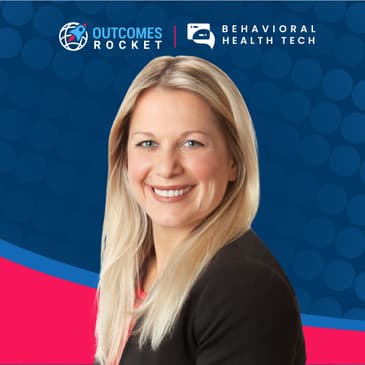
Incorporating lived recovery experiences improves Wayspring's programs for Medicaid recipients with substance use disorders.
In this episode from the Behavioral Health Tech Conference in Arizona, Ashley Potts, VP of Operations at Wayspring, with 18 years of recovery from substance use, shares how her lived experience informs Wayspring's programs for Medicaid recipients with substance use disorders. She emphasizes the value of incorporating perspectives from individuals with similar experiences to enhance recovery programs. Ashley also discusses engagement strategies that focus on meeting individuals emotionally where they are, advocating for a recovery-friendly workplace, and including those impacted by the criminal justice system in educational forums.
Tune in for this inspiring conversation on enhancing recovery program effectiveness and making a difference in behavioral health!
Resources:
[00:00:01] Welcome to Expanding Access, a podcast by Behavioral Health Tech, where we explore the cutting edge of mental health, substance use, and autism and IDD care. Each episode features insightful conversations with industry leaders who are driving real change through technology and innovation. Whether you're a provider, payer, or just passionate about expanding access to behavioral health care, you won't want to miss these stories. Let's dive in.
[00:00:30] Hey, everyone. Welcome back to another episode of the Expanding Access podcast recorded live at the Behavioral Health Tech Conference in Arizona. Today, I have the privilege of hosting Ashley Potts. She is the Vice President of Operations at Wayspring. Ashley, welcome. Thank you so much. So excited to be here. It's exciting to have you here. And so what brings you to the conference? Yeah, I actually had the honor and privilege of being a presenter at the conference this year.
[00:00:58] So very exciting opportunity. I was one of the panelists on the lived experience panel. Amazing. What was that about? It was about how you can leverage your own personal lived experience to transform behavioral health care. So sharing a little bit about my background and kind of my experiences and how I utilize that to help create innovation and change. Amazing. And we're going to be digging into that today.
[00:01:24] Okay. So excited to chat with you about that. But can you share a story, a personal story about how your lived experience shaped your understanding of recovery and how that informs your work at Wayspring? Yeah, absolutely. So I'm an individual who is in recovery from substance use. I'm a former injection drug user. And I haven't used any substances for 18 years now, but I very much carry that experience with me on my day to day operations. Yeah. You know, never forget where you came from.
[00:01:53] Oh, totally. Yeah. So, and when I was 20 years old, I was a Medicaid recipient. I was an injection drug user. I was homeless. I was facing a state prison sentence. I had all of these different complexities in life. And I honestly didn't think I was going to live to see my 21st birthday. Wow. And I was able to, thankfully, navigate going to treatment one more time. And that really kind of started my process of recovery and my recovery journey.
[00:02:21] So, and at Wayspring, we work with individuals who are Medicaid recipients who have a diagnosis of substance use disorder. So I'm really able to take my personal experience into the work that we do, how we are building out our programs. And during those 18 years of my recovery, I was also able to go to school. I got my master's degree and my clinical license in social work.
[00:02:45] And I've worked in behavioral health care the entire time. So I'm able to take my personal experience, my education, my work experience. I lost my mother to, as a direct result of substance use disorder. So I have a lot of different ways and perspectives I can bring to the table. That's beautiful. Thank you for sharing that. Yeah. It is impactful when the population you serve, you can relate to, you know what they're going through. It's so powerful.
[00:03:12] In what ways do you believe incorporating perspectives from individuals with lived experience could enhance effectiveness of recovery programs? And can you provide any examples of Wayspring's initiatives? Yeah, absolutely. I think that our voices need to be at the table, right? Because we know what it's like to be there. You know, we know what it's like to try and just get, you know, the door closed in your face for metaphoric purposes.
[00:03:37] And really just trying to seek help and somebody saying that, you know, that they can't help you or just that stigma associated with it. You know, there are plenty of times where I would end up in the emergency department and trying to get an IV and the nurse would be like, are you a junkie? Just so many examples of what that experience is. And so being able to be a person at the table and have various team members at the table that can say, you know, hitting blood is hard if you have this experience, right?
[00:04:06] Having lab work done is a challenge. This is why. This is how you can make someone feel comfortable in that situation and in that moment. Things that other people might not ever think of if they've never experienced that. So just really utilizing that perspective and at WaySpring, we are so innovative with the things that we do. And so many of us are in recovery that work there. And if they're not in recovery, they have a passion and a mission or a family member. There's a why that we're tapping into.
[00:04:32] And so everything that we built is putting the patient or the member first and at the forefront. And one of the really great examples of what we do is building out our I'll use our engagement strategies, for example. So we really emphasize on building up that relationship and meeting someone where they are. That doesn't necessarily mean I'm going to physically where you are. That means I'm going to meet you where you are emotionally and where you are in your stage of life.
[00:04:57] And really kind of building that out as far as body language, tone of your voice, frequency, pitch, literally focusing in on all of those various types of communication, building out that platform, allowing someone to feel safe, allowing someone to feel comfortable, allowing someone to just be like, I'm going to be okay today. Yeah, that's really great. That's really powerful. And there's nothing like knowing where you've been to relate to those that are going through it.
[00:05:25] And you said not necessarily physically, but just tone and things like giving. Like I didn't even think about giving blood or labs. Like that was even a thing, right? Right. So I love that. How do you engage with individuals in recovery to ensure their voices are heard in the program development process? Yeah, absolutely. This is another great thing that we do at WaySpring is we have several different forums. We'll call them like focus groups, right? If we want to do different things or, you know, we want to bring different perspectives,
[00:05:55] we'll rally a group of individuals together and we'll really gain their insight and their perspective. What are we missing? How can you move from this lens or that lens? So we're constantly drawing from different experiences within the company, allowing those individuals who are in recovery voice their perspective. You can enter recovery in so many different ways, right? So making sure all of those different ways are heard and are navigated. Another big thing that we did was we did a whole criminal justice education forum
[00:06:23] where we basically used voices of individuals who have been impacted by the criminal justice system to educate the entire company on what that was like and what that experience was like. And what it's like to try and come out of prison or jail and reintegrate back into the community. I told you myself, I was arrested several times and I was able to share that experience of what it was like to... I was a convicted felon for 12 years prior to receiving a governor's pardon.
[00:06:49] So I was able to bring that experience and everybody had a different facet that they were able to share. And it's really creating that recovery-friendly workplace, right? That person-centered care of like, maybe I should think about it like this or like that, like you were just saying. Yeah, I love that. That speaks a lot to the company's philosophy and really wearing the person's shoes to be able to serve in a way that makes an impact. Yeah, absolutely. I love that.
[00:07:16] And actually, just kind of one question that I have as well, like who does WaySpring mainly work with? Yeah, we mainly work with individuals who are Medicaid recipients and they have a diagnosis of substance use disorder. We are set up in a variety of different states, but that is the main population. Got it. And so you administer your programs through the state? We administer our programs through our health plan partners. So we partner with Medicaid health plans in a variety of different states. Yeah. Amazing. Amazing. Thanks for sharing that. Always curious about the business model. Yeah.
[00:07:46] And it's very clear about how you guys do that. Well, incredible. I just want to say, Ashley, thank you. Yeah, thank you so much. For being who you are and contributing the way you have. It's just a beautiful thing. And for everybody watching and listening to us today, what call to action would you leave them with? And where's the best place for them to get in touch with you and the company? Yeah, absolutely. So I would say I always encourage everyone.
[00:08:12] One of my favorite quotes is people might not remember the things that you do, but they'll remember how you made them feel. So always be that person that has that lasting impact. When I think back over the history of my life, I don't remember everybody's space. I don't remember what everybody did, but I know the people that were kind to me. Yeah. And I know the people that made me so comfortable and gave me that sigh of relief. So always offer that warm smile. Always offer that hello. How are you? Can I sit beside you?
[00:08:40] Because we just don't know how far the gravity of kindness can truly take us. And, you know, individuals can reach me on LinkedIn or on the WaySpring website. My contact information is there. So and I'm happy to filter any questions or, you know, stay in contact. Amazing. Thank you so much, Ashley. This has been an incredible interview. For everybody listening and watching, thank you for tuning in. In the show notes, you're going to find ways to get in touch with Ashley and the WaySpring team.
[00:09:10] Ashley Potts, Vice President of Operations at WaySpring. And look, the way you expand access is by taking action on the insights that you hear straight from the conference from leaders like Ashley. So make sure you take action on what you heard today. Thanks for tuning in. And Ashley, thanks for being with us. Yeah. Thank you so much for having me. It's been great. Thanks for tuning in to Expanding Access. We hope you're feeling inspired by today's discussion.
[00:09:38] If you've enjoyed the episode, subscribe and share it with your network. For more content and opportunities to get involved in transforming care, visit behavioralhealthtech.com. Until next time, let's keep pushing boundaries and expanding access together.