
Navigating healthcare economics, particularly Medicare Advantage, presents challenges but offers learning opportunities.
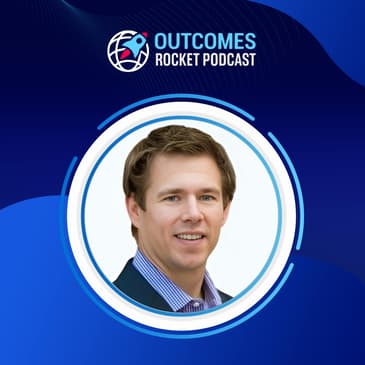
In this episode, Ed Liebowitz, EVP and Chief Strategy Officer at Solera Health, discusses his path from being diagnosed with juvenile diabetes at 26 to getting inspired for a bright career in health tech. Solera Health started by supporting digital diabetes prevention and expanded to cover various health areas, including mental health, weight management, and hypertension. Ed explains how the company utilizes a pay-for-performance model, ensuring cost-effective, clinically relevant outcomes. Throughout this interview, he shares insights on the complexities of healthcare economics, especially in Medicare Advantage, and the potential of AI in improving healthcare delivery. Ed also emphasizes the importance of innovation, patient care, and leveraging technology to empower individuals and encourages listeners to stay updated on digital health advancements.
Tune in and learn about the transformative power of digital health solutions and the future of healthcare innovation!
Resources:
- Watch the entire interview here.
- Connect and follow Ed Liebowitz on LinkedIn.
- Learn more about Solera Health on their LinkedIn and website.
- Learn more about Solera Health’s partners:
- Sworkit
- Kaia Health
- Sword
- Vori Health
- 9amHealth
[00:00:02] Hey everybody, welcome back to the Outcomes Rocket. So excited to have you tuned back in. We are talking to some incredible leaders in the healthcare space and lately having conversations in the payer space and ways that we can aggregate solutions to make a difference instead of the fragmented approach that we typically see.
[00:00:22] And to speak to that, today I have the privilege of hosting the outstanding Ed Liebowitz. He is the Executive Vice President and Chief Strategy Officer at Solera Health. He has spent more than a decade building, commercializing and scaling digital health businesses, serving stakeholders across the continuum of care, and he's developed products too, representing a broad spectrum of digital health use cases from diet and fitness applications to AI solutions,
[00:00:51] all the things that we need today to engage patients for healthier lives. And that's why we got Ed here to talk to us. So Ed, appreciate you joining us.
[00:01:00] Thanks, Sol. Thanks for having me. And unfortunately, it reminded me of how old I am. I think it's closer to two decades now than just a decade.
[00:01:06] So you're looking good, man. You're looking good. Keep up whatever you what's the secret. What's the diet? You exercise a lot.
[00:01:12] It's yeah, you know, post-40 had two orthopedic surgeries last year. So this has been the year of, as my wife says, not getting another surgery.
[00:01:20] So it's going well.
[00:01:22] I love it, man. I love it. Well, hey, man, you look good. So keep that going for yourself. Let's dive in. Before we dive into Solera Health, we covered Solera many years ago, actually. So I know a lot has changed.
[00:01:35] So talk to us about you. What got you into health care, into product development and into leadership?
[00:01:40] Yeah. So my journey is probably a little different than some other folks that you talk to in industry.
[00:01:46] So I grew up in the tri-state area. And like most kids who grew up here, started my career in financial services.
[00:01:52] So at undergrad, was at Standard & Poor's and then Brown Brothers Harriman.
[00:01:56] And I really thought I wanted to get into cyber wealth management.
[00:02:00] During my application process to graduate school, I actually got diagnosed with juvenile diabetes at 26.
[00:02:06] So that started to turn the light bulb on that the U.S. health care delivery system was pretty messed up.
[00:02:12] So when you kind of introduced it as being a fragmented system, at the time I had a Palm Pilot, I had the Calorie King book, and I built my own care team.
[00:02:21] And I was like really figuring out, like, what did it mean as a, you know, a young adult to completely learn a new lifestyle?
[00:02:28] And at that point, I also had to prove to myself again that I was still an athlete.
[00:02:33] So started training for Ironman triathlons, having never done a triathlon before.
[00:02:37] So what that taught me, though, was like.
[00:02:40] That's what it taught me.
[00:02:41] Yeah. And I'm a startup guy. So that goes pretty pervasive across my personal and professional career.
[00:02:47] But, you know, what it taught me was like, if you give people the right information and you give them the right tools, you can kind of overcome chronic conditions.
[00:02:54] And when you think about health care delivery, it's so episodic in nature.
[00:02:58] And most folks aren't as sophisticated to be able to navigate the health care system.
[00:03:03] And, you know, I was a tech guy, so I kind of understood how to do some of this stuff.
[00:03:07] Yeah.
[00:03:08] So I wind up at University of Virginia for my MBA.
[00:03:11] And that summer I went up to GMO, which is a big institutional money manager.
[00:03:16] End of the summer, Sri Lanka comes in to ask for a loan to rebuild their military after by what all accounts was an unethical civil war.
[00:03:22] I go home that night and I'm like, you know, software wealth management would be great.
[00:03:26] Maybe I could help lots of people, but it's never going to scratch the social lich that I have.
[00:03:30] So when I went back to business school, I was like, let's figure out what we really want to do.
[00:03:34] Lifelong athlete. I have that experience with type one diabetes.
[00:03:37] And I was like, OK, let's figure out what digital health is all about.
[00:03:40] And I built a business plan for a corporate wellness program that was based on iterative improvements for folks as they progress through their daily health journey.
[00:03:49] Right. It was like, don't be dumb was kind of the idea of it.
[00:03:52] If you had a bacon cheeseburger for lunch, for dinner the night before, don't have a bacon and cheese for breakfast.
[00:03:58] Right. Like just make smarter choices when you can and really leverage that to network into VCs.
[00:04:04] And from there, that's why I wound up at Kia's out in San Francisco and really learn from Adam Bosworth and George Kasabji.
[00:04:11] Like, what does it mean to start a company, digital health?
[00:04:14] How chaotic is a series A company?
[00:04:16] And then how do you cater to the different pain points of, you know, health plans, employers, physicians, etc.
[00:04:23] And that's that's really how I got my start.
[00:04:25] That's awesome, man. What a cool story.
[00:04:27] Appreciate you sharing the origins of kind of where it all started.
[00:04:30] And I mean, you just saw it, you felt it.
[00:04:33] You were one of those DIYers before this was even a thing.
[00:04:37] Right. And so it was a thing.
[00:04:39] Yeah.
[00:04:39] That's awesome, man.
[00:04:40] I just imagine you with your Palm Pilot trying to figure it all out.
[00:04:44] And here you are.
[00:04:44] Life would have been a lot easier finding an iPhone if it didn't even exist yet.
[00:04:48] So, yeah.
[00:04:50] It's amazing how some of these technologies just unlock the possibilities.
[00:04:54] And the iPhone was just one of those.
[00:04:56] And I think AI is probably one of those.
[00:04:58] We'll touch on AI here at the end.
[00:05:00] So talk to us about Solera Health.
[00:05:02] You know, how is Solera Health making an impact in the health care ecosystem?
[00:05:05] Yeah.
[00:05:06] You know, in a way, we are developing a digital health delivery system.
[00:05:10] So, you know, what's interesting about Solera is Brenda founded the company as a platform to support digital diabetes prevention programs.
[00:05:17] So at the time, Affordable Care Act said that folks with prediabetes need to be offered DPP programs for free.
[00:05:24] But local community-based organizations are offering them.
[00:05:27] The question was, how do your local YMCA enter a payment agreement with UnitedHealthcare and be able to file reports with the CDC?
[00:05:34] Right.
[00:05:34] Local Ys don't have those capabilities.
[00:05:37] So Solera developed some technology that matched folks to classes that were available to them with a new J-graph radius.
[00:05:42] And then the technology to ingest data from those community-based organizations to turn that into a billable claim.
[00:05:49] And to standardize our reporting structure to file what was a DPRP report with the CDC.
[00:05:53] So over time, right, Mary Lengowski comes in as CEO.
[00:05:57] I come on as, at the time, chief product officer.
[00:06:00] And the market was asking us, like, what else can you leverage that technology set for?
[00:06:05] So COVID had the influx of mental health startups as well as folks needing mental health support.
[00:06:10] And that's when we developed the idea of an acuity network and the pay-for-performance business model that we have today.
[00:06:17] So we were able to take that underlying technology and say, let's become, like, the system of record for the digital health ecosystem.
[00:06:23] So now when we launch condition networks, we have multiple solutions per condition network.
[00:06:29] We've identified what are the clinical personas that exist for that clinical category.
[00:06:34] And we say, you know, what are the folks that need low-intensity interventions to high-intensity interventions?
[00:06:39] And then create a payment model so that the health plan or the employer is only paying for activities that will lead to the clinical outcome,
[00:06:47] the clinical outcome itself, or maintenance of that clinical outcome.
[00:06:50] So we're really trying to be disruptive as essentially the EMR that's connecting the dots between the whole system,
[00:06:56] developing both longitudinal patient records, and having a revenue cycle management system that supports all that.
[00:07:01] That is fascinating.
[00:07:03] So I had no idea that was sort of the infrastructure and the ecosystem that you guys have created.
[00:07:09] So this same technology that ingests the data and enables claim development,
[00:07:15] you're able to help all of the organizations that you work with.
[00:07:20] You have a network, right?
[00:07:22] So help us understand what the network is, because I feel like there's lots of impact there.
[00:07:25] Yeah.
[00:07:25] So we have 35-plus point solutions that we've directly contracted with.
[00:07:29] It's across eight different condition categories.
[00:07:32] So weight management, hypertension, diabetes management, mental health, MSK, women's health, digestive health, and tobacco cessation.
[00:07:42] So each of those solution categories includes multiple point solutions.
[00:07:46] And if you take MSK, for example, what our AI does is say,
[00:07:52] oh, this is a person that just needs some functional mobility, right?
[00:07:56] Maybe they had a creaky back, right?
[00:07:58] But they don't need a guided PT program.
[00:08:00] So they're going to get into something like Swerkit.
[00:08:02] Then you're going to have folks that, you know, maybe are weekend warriors.
[00:08:05] They have some chronic knee pain, but they don't yet need a full spectrum of virtual physical therapy.
[00:08:11] So they're going to get into KIA, slightly more expensive.
[00:08:13] Then you're going to have folks that are needing physical therapy intervention.
[00:08:18] And they need, you know, that continuum of care, guided PT interventions.
[00:08:21] They're going to get into SORD.
[00:08:23] And then there's going to be folks that are considering surgery.
[00:08:25] And maybe it's a high BMI candidate where knee replacement surgery isn't going to be successful.
[00:08:29] And if they just lost a decent amount of weight, they can avoid surgery altogether.
[00:08:34] And Vori is going to advise those people.
[00:08:36] So we take that approach across all the different condition networks.
[00:08:39] And then they're all on that pay for performance model.
[00:08:42] So when you combine the ability to match people to the intensity of solution that they need
[00:08:47] and only pay for the stuff that they're actually doing that's clinically relevant,
[00:08:51] you introduce tremendous savings into the system and eliminate a lot of the waste,
[00:08:55] which, you know, you'll find on PPM or PNPM based models.
[00:08:58] Then further, where that data model is taking us is if you look into what we're doing with GOP-1s,
[00:09:04] is we're now saying if you take a clinical event at the start, like prior off,
[00:09:09] you can trigger a health literacy campaign for an individual.
[00:09:12] You can introduce step therapy that's aligned with the medical policy design of the health planner and employer.
[00:09:18] So maybe that person starts in Weight Watchers for a couple months after they demonstrate some success,
[00:09:23] get them into obesity medicine doctor with something like 9am,
[00:09:26] get them on a frontline defense medication.
[00:09:29] That obesity medicine doctor then identifies, you know what?
[00:09:32] This person lives in a food desert.
[00:09:34] Let's then ping back Celera and get them food delivery from something like Modify
[00:09:38] or RD services from something like Season if they need some more one-on-one counseling.
[00:09:43] And then if it's an underlying root cause that is forcing that person to struggle with obesity,
[00:09:48] like an unhealthy relationship with food,
[00:09:50] get them into a mental health service,
[00:09:52] or it's an MS case issue, get them into something like Swerve or Bori, right?
[00:09:56] So we're now connecting the dots between our digital ecosystem
[00:09:59] to deliver a comprehensive step therapy for some really advanced conditions that are out there today.
[00:10:04] That's pretty cool.
[00:10:05] And I imagine, thank you for unpacking that for us, Ed.
[00:10:07] It really helps understand the ecosystem and the value that you guys deliver.
[00:10:12] I like the pay for performance thing that you mentioned,
[00:10:15] because that's so different than what we have in healthcare today.
[00:10:19] And as employers, aside from labor and taxes, it's healthcare, right?
[00:10:24] Biggest line items that we have to pay.
[00:10:27] Critical to have partners like you guys to really deliver what they're paying for.
[00:10:32] Okay, so walk me through the experience of a user, you know?
[00:10:36] And so I'm thinking there's a lot of tracks here, but let's think an employer or a payer, for example.
[00:10:43] Yeah, so Solera is very much in the background.
[00:10:45] There are so many different digital solutions out there today.
[00:10:48] We don't believe another brand needs to be introduced.
[00:10:51] And that's it.
[00:10:51] So first and foremost, yeah.
[00:10:53] And the accolades and quantums of the world, they're all doing great things.
[00:10:57] But we want to be integrated into the digital navigation system that the health plans and the employer are building, right?
[00:11:03] Why disrupt that flow?
[00:11:04] So our solution is pretty light in terms of the front end.
[00:11:08] It plugs directly into the member portal or the employee portal.
[00:11:11] It's an SSO login.
[00:11:12] So no friction.
[00:11:14] We're not introducing any additional friction to that experience.
[00:11:16] What the health planner employer does is they also don't want their employee population hit over the head by 10 or 15 different point solutions.
[00:11:24] So we streamline that, right?
[00:11:26] We're able to take in clinical data as well as augment that with some of our models.
[00:11:30] We can target people on a one-for-one basis for clinical outreach.
[00:11:34] Or we can do broad-based outreach because of the broad set of solutions that we have.
[00:11:40] That can be delivered via email, SMS text, telephonically, or snail mail.
[00:11:44] The people then come into the application.
[00:11:47] Again, because it's SSO, they don't have to enter in any of their credentials.
[00:11:50] They're then introduced with their health categories.
[00:11:53] Our AI helps that person identify which solution is going to be best for them.
[00:11:58] About 95% of the folks who start one of our matching experiences will finish it.
[00:12:02] We then assign that person a clinical score, and that's what gives them their recommendation.
[00:12:06] Based on that recommendation, the person then would commit to the program.
[00:12:09] Let's say in this case, S.W.O.R.D.
[00:12:11] We then hand the person off via our API to S.W.O.R.D.
[00:12:15] But we're passing over all those clinical barriers, right?
[00:12:18] So it's a truncated registration experience once they get to S.W.O.R.D.
[00:12:21] And then S.W.O.R.D. sends us back all the digital engagement data and digital activity data that they're collecting on the individual.
[00:12:28] And that's what allows us to do longitudinal management of that person, right?
[00:12:31] If we see them fall out of the experience, we can nudge them back in.
[00:12:34] We partner with our network partners to deliver the optimized cadence of outreach.
[00:12:39] And then we're also allowing the health plan or the employer to see what that person is doing in case it triggers any of the case management workflows on their side.
[00:12:47] That's fantastic.
[00:12:49] Thank you for that.
[00:12:49] So not only is it a network that helps prioritize a solution on a disease state, depending on the severity, but you're also a network of data that helps really empower the entire patient journey.
[00:13:03] That's right.
[00:13:03] Beautiful.
[00:13:04] I love that.
[00:13:05] You say it so clearly, and I love that.
[00:13:07] You made it so easy for all of us watching and listening to understand.
[00:13:11] So thank you for that, Ed.
[00:13:12] I really appreciate how well you know your stuff.
[00:13:14] I have this conversation frequently, so it's not the first time.
[00:13:19] So we learn a lot from our successes, but we oftentimes learn a lot more from our setbacks.
[00:13:25] Talk to us about maybe a setback that you guys experienced that really has made you even stronger as a result.
[00:13:31] You know, as a company, we explored Medicare Advantage really strongly.
[00:13:35] Obviously, the value prop of what we do sounds like it would really fit Medicare Advantage.
[00:13:41] And we entered that model or that business line probably with a bit too much hubris, which I think a lot of digital health companies maybe sometimes tend to do.
[00:13:50] And in filing our first job bid, we realized that given the complexity of filing the bid with CMS to help the health plans kind of get the spread that they need to manage their MA books, that the way that we have networks caused all of the PMPMs to stack on themselves.
[00:14:09] So buying it through MA made it vastly more expensive than I ever should have been.
[00:14:14] And, you know, that our billing model just worked really well for the commercial populations.
[00:14:19] But when you got to kind of how MA operates, and we probably spent a year and a half trying to figure it out and just banging our heads against the wall.
[00:14:28] And, you know, finally made the strategic decision to be like, you know, commercial is where we really focus for now.
[00:14:33] And certainly the data model can help in MA a lot.
[00:14:37] But the full comprehensive set of solutions and, you know, how we bill for it was really just such a bad fit.
[00:14:43] And I think we probably could have answered that earlier on and saved ourselves a lot of legwork that we went through.
[00:14:49] Yeah. And in retrospect, like, are you better at making those cutoff decisions?
[00:14:53] Like, what did you learn? What's the is there a framework that maybe we get?
[00:14:57] Yeah, it's, you know, healthcare economics, say broadly is so hard.
[00:15:01] Yeah, because, you know, with the PBMs and health plans and everything, right, that just those business models are very complicated.
[00:15:07] And sometimes the easiest path to the clinical outcome is not aligned to how the solution would get paid for.
[00:15:14] And knowing that with how there's inertia in some of the large healthcare enterprises, being really mindful of fitting into that and not trying to disrupt too many things at once allows you to make faster decisions and kind of build from strength rather than trying to be the ultimate disruptor.
[00:15:32] Well said, Ed. And folks, I'd hit rewind on that one because that one was a value bomb.
[00:15:38] Make sure you learn from that. You might be going through it right now and maybe you aren't listening.
[00:15:43] Hit rewind because you got to listen to that part again. Love that, Ed.
[00:15:46] All right. You know, I told you we were going to unpack AI slightly. All the hype. What's real? What's not? Talk to us.
[00:15:53] You know, it's funny. My when I was at Bicton Dickinson, we were building a chat bot to support folks that were newly insulized with type two diabetes.
[00:16:00] And at the time we had built the whole model in Excel.
[00:16:05] And I learned really quickly how important it is to understand intents and entities when you're trying to answer the question, can I eat pizza?
[00:16:13] And not every human asked, can I eat pizza the same way?
[00:16:16] And, you know, when you look at what LLM does, right, like I feel like I was five years too early in kind of creating it because it solves that, you know, insurmountable intent and entity problem,
[00:16:27] which, again, was a challenge we had at Health Reveal when we were trying to develop clinical decision support for primary care physicians.
[00:16:32] So where I think it's real is this ability to ingest massive data sets and having technology solve that intent and entity problem for you.
[00:16:42] Right. It really reduces the investment you need on content experts, which is where, you know, cognitive agents were really hard to manage before.
[00:16:51] I think where there's still growth needed is understanding which use cases it is safe to use for today.
[00:16:59] And then how do humans want to interact with the technology?
[00:17:03] So I've now explored technologies for telephonic services, for chat services, for, you know, backend algorithms that support everything.
[00:17:12] And the unknown is when these things are released to the wild, how does it elegantly fail?
[00:17:18] And I think with how sophisticated some of the LLMs are becoming, the chance of hallucinations preventing the elegant fail could lead to some really incorrect advice.
[00:17:27] So I think in the early innings, supervision is going to be really, really important and the technology is going to improve.
[00:17:34] But the content available to push through these new models is just massive.
[00:17:38] And that does create a pretty big oversight challenge.
[00:17:41] Yeah. No, big time, especially for everyone really involved, whether you're in product development.
[00:17:46] You know, you should be thinking about this.
[00:17:47] You're an organization seeking to implement AI into what you do.
[00:17:52] If you're not, your employees are already doing it.
[00:17:54] So I'm like, what's the governance, right?
[00:17:56] We got to be thinking about these things.
[00:17:58] Ed, spot on.
[00:17:59] Really appreciate that.
[00:18:00] And thanks for your perspective.
[00:18:03] Hey, look, we're here at the end.
[00:18:04] This has been a ton of fun.
[00:18:05] I've really enjoyed this conversation.
[00:18:07] And I know the listeners have too.
[00:18:10] Leave us with the closing thought, Ed, and the best place that the listeners and viewers can connect with you and Solara Health.
[00:18:16] So, yeah, my closing thought just on the digital health ecosystem is, you know, keep being innovative, keep the patient in mind and figure out what's going to drive that outcome.
[00:18:23] And, you know, my true belief is if you inform the consumer and help them have more educated conversations and give them the right tools are going to make the right choice.
[00:18:31] So how do you empower people to do better?
[00:18:34] And then on Solara, right?
[00:18:35] Solaranetwork.com is our website.
[00:18:37] It's in the process of having some updates.
[00:18:39] So it's going to be pretty cool here in the near future.
[00:18:41] And, you know, you can always find me on LinkedIn and at basically any of the big conferences that are out there.
[00:18:45] So look forward to meeting my listeners at Sun Next Event.
[00:18:47] That's outstanding.
[00:18:49] Looking forward to seeing you at the next event, everyone.
[00:18:52] And Ed, you too.
[00:18:54] Folks, remember in the show notes, you'll find the links to get in touch with Ed via LinkedIn.
[00:18:58] Solara Network and a summary of all the things that we've discussed.
[00:19:03] And Ed, this has been a true pleasure.
[00:19:06] Really appreciate you being with us.
[00:19:08] Great. Thank you, Sol.