
Precision targeting and real-time messaging are key components of Doceree's success in healthcare advertising.
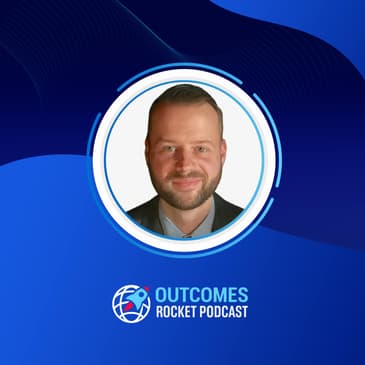
In this episode, Thomas Shea, Chief Revenue Officer at Doceree, shares his journey into healthcare marketing, highlighting the unique approach of his company in delivering messages to physicians at critical decision-making moments. Doceree's global platform strategically targets physicians utilizing real-time data to ensure message relevance, with a dual focus on supply and demand sides, integrating multiple platforms seamlessly to reach over 2 million physicians globally. While Thomas distinguishes Doceree from similar platforms for its programmatic messaging across healthcare platforms, it remains agile despite challenges like lengthy onboarding processes, and continuously innovating to meet customer needs. He also emphasizes the importance of exploring new partnerships and customizing solutions for clients, encouraging listeners to reach out and discover how the company can enhance its marketing strategies.
Tune in and learn how Doceree is revolutionizing healthcare marketing with precision targeting and real-time messaging!
Resources:
[00:00:02] Hey, everybody. Welcome back to the Outcomes Rocket. So excited you tuned in today. I'm a huge fan of sales and marketing. And today my guest is Thomas Shea. He is the chief revenue officer at DotCare is with us.
[00:00:18] And he's been a key part of the DotCare leadership team. He serves as the chief revenue officer, as I shared. And he brings over a decade of experience in the realms of digital marketing and advertising with a distinct focus in healthcare and pharma.
[00:00:33] So great to have you here, Tom, and excited for our conversation today. Same. Thanks for inviting me. I really appreciate it. Of course. So look, let's kick things off, Tom. A lot of people listening today want to know more about how could they do better
[00:00:45] in sales and marketing for their companies, for their organizations? Before we go into that, help us learn more about you. What is it that inspired your journey in healthcare and Doctorate? I think specifically it just happened by chance, right?
[00:00:58] I was in sales, ended up over 12 years ago at a small ad tech company, stayed there for about nine years and just really fell in love with the niche nature of what we were doing and how we were getting messages in front of either
[00:01:10] professionals or at that point, even patients. What really drove me to DotCare was the specificity of what we had, right? So we're delivering messages to physicians. Usually the last message they'll see before making a prescription decision or a diagnosing decision.
[00:01:25] So it was really that ability to deliver that message at the right place at the right time, which was something I hadn't seen in the previous 10 years working in this pretty much the same space, but just doing it in a completely different
[00:01:34] way and so that's two and a half years ago what made me decide to join the team. That's cool, man. And reaching physicians is a specialty in itself. So we'd love to use this opportunity to really untap that a little bit more.
[00:01:48] Help us understand how DotCare is helping your customers do that. Yeah. So to start, we're a global platform. So we reach physicians in not only the US, but 22 countries outside of the US. So we do have that global footprint and what's really made our company successful
[00:02:05] is defining what's the right time to serve a physician a message and for us, it's when they're in that clinical mindset. So either they're on a medical journal or a physician education website or directly engaging with a patient within an EHR or a telehealth setting.
[00:02:19] So that's really what makes DotCare special is right message, right time and using a lot of proprietary and real time data to ensure that at that perfect moment between that interaction or when the physician's mind's on medicine, we're going to get the appropriate message in front of them.
[00:02:32] That's awesome. And look, fascinated by ad tech like this. So for those of you listening, you're probably wondering how are you doing this? And so I think that's part of the fun conversation you get to have and would love to dig there, Tom.
[00:02:47] Help us understand how you're getting this information and how you're specifically targeting it. And if you have an example or two, that'd be great. Sure. So we've built our company from the ground up in two primarily focused areas.
[00:03:00] One is our supply side and one is our demand side. So our demand side is working with agencies and pharmaceutical companies looking to get those messages in front of physicians. But our supply side is partnering with medical journals or in EHR or telehealth platform.
[00:03:15] And what we do is we offer them this proprietary technology that allows us to understand the actions that are happening across hundreds of platforms at once, as if it's under one interface and that interface is the DockCare interface.
[00:03:26] So we use the technology to connect our advertisers to multiple platforms at once for our advertisers, which is this one place that they need to go to. But for our supply team, they're aggregating and working with all these partners to make it really seamless.
[00:03:38] So by being able to do that allows us to build a network of over 2 million physicians globally and about 700,000 physicians in the US that are all on the DockCare provider network, but are working independently on multiple EHRs or websites.
[00:03:52] We bring that all together using our supply side technology. Love it. Well, very succinctly put and a lot of folks are leveraging different platforms. They're leveraging LinkedIn, they're leveraging Doximity for example. How are you guys different? Yeah.
[00:04:09] So we're under the same mind frame of a Doximity essentially, right? So it's professionally focused and we are professionally focused as well. What's different from DockCare is we try to put together multiple platforms.
[00:04:19] So it's platforms similar to that, but what really has made us unique is our ability to deliver messages programmatically in real time across EHRs, e-prescribing platforms and telehealth platforms. So originally it was not available essentially, right?
[00:04:35] So that's what our company really came into market and they said, it's possible. It's just that no one's built the technology yet. So for the last two years, what we've been doing is really building that supply side.
[00:04:45] So aggregating those partners or our partners that we have that we can serve messages to and do it in an automated fashion. So what makes us unique is our ability to do that across hundreds of platforms at once, using the technology that we have.
[00:04:58] We've made an area that's never been programmatically available for the last two years programmatically. That's really impressive and kudos to the team for being able to pave roads where they haven't existed yet. Exactly. So Tom, let's talk about putting this all together. It wasn't always easy.
[00:05:14] So we learned more from our setbacks. While you were doing this and while the team was building this out, what's a setback that happened that has made you guys even better? Yeah, I think anyone that works in healthcare would have a similar
[00:05:26] setback no matter where it's just the time that it takes to do anything. Right. Because of the way in which we are working, because of the platforms in which we're working, we have to make sure, and the providers that we work with have to
[00:05:38] make sure that it's done in the correct setting and the right fashion. So everything takes longer than you would think it takes. And because we were building it from the ground up, there wasn't really a playbook there.
[00:05:47] So we had to go out to each individual partner one by one. We had to tell them exactly who we are, what we're doing in the space, how we're different in the space, and then we had to have them buy into doing something that they hadn't seen before.
[00:05:59] So it just takes a lot longer than you think. And it's just that time, just from start to finish, even though you get that buy-in pretty immediately, it just takes a lot of time to go through the process of onboarding platforms and onboarding providers, and then the
[00:06:12] same on the advertising side, right? So a pharmaceutical company is going to be very selective with who they work with, particularly if it's a new partner, you're going to have to go through some process to be vetted and that process can take some time.
[00:06:22] So that's really what we've done over the last year and a half, but it takes time. I would say time has been the biggest setback. Yeah, for sure, man. I think a lot of us listening to this message are in complete agreement with you on that point.
[00:06:37] So really appreciate you helping us understand what you do, how you do it, and why it's different. As you think about ways that organizations can make an impact with their end customer, what key learning would you share and is it a tech or
[00:06:51] a trend that's part of that? Yeah, I think it's for one, it's testing new things, right? It's trying new things. And if you continue to do the same thing, you're going to get the same results.
[00:07:01] You're not going to find out whether there is something even better out there. So I think it's first, it's that opportunity or that openness to test the new partner, right? So we've been around for a few years now, but a couple of years
[00:07:10] ago, that was where we were. We were in the space where we were a test partner. We've moved past that, but I still remember that it wasn't very long ago that we were doing that. I think there's a lot that can be said for who you're messaging
[00:07:23] and when you're messaging them. And that's really our key point. It's not, do you message someone or message a physician just because you can, but is it the right time? Is it appropriate? Is their mind directly on the patient or on medicine? Are they thinking about work essentially?
[00:07:36] And so that's really what we focus on here is making sure that we're delivering that message at such an appropriate time and that's the, just the whole focus overall. And then obviously global for us is a big focus, right?
[00:07:46] So we do have that ability to continue through and serve a campaign again across the globe. And that's another focus for us and has been a focus since we started. Thank you, Tom. Really appreciate that. Look, I certainly have enjoyed our conversation today.
[00:08:00] There's, you have left us with a clear picture of what you guys do and how you can help our listeners. What closing thought would you leave them with beyond what you've already left us with and in the really valuable conversation we've had?
[00:08:13] Yeah, I think one of the things that I would leave them with is reach out to us or vendors like us in centrally in general that are trying to move forward or trying to do things a little bit differently, explain that process, bring
[00:08:24] your potential problems to them and see if they can figure out, I think too much is just, this is what someone does. And you have to fit into what you're looking to do as opposed to going to a
[00:08:33] partner, providing what you're looking for and see if they can create something a little more custom for you. And that's another focus that we have here. And I think in general should be a focus for everyone. That's fantastic, Tom.
[00:08:43] So not only do you have a paved way of doing things, but you're also open-minded to ideas, partners bringing ideas. That's how you're, you guys are willing to engage. Love that. Well, we love partners like you guys, Tom, and I know our listeners do too.
[00:08:58] So just wanted to end by saying thank you for being with us and folks take Tom up on reaching out and learn more about doc care. We'll leave all of the ways to get in touch with Tom and the doc care team in the show notes.
[00:09:11] So make sure you check those out. Tom, appreciate you jumping on with us. Thanks so much. I appreciate the time.