
This podcast is brought to you by Outcomes Rocket, your exclusive healthcare marketing agency. Learn how to accelerate your growth by going to outcomesrocket.com
The most crucial aspect of clinical financial decision support is knowing what not to say to physicians to avoid alert fatigue while still impacting cost-effective patient care.
In this episode, G.T. LaBorde, CEO of IllumiCare, explains how the company integrates with electronic medical records to provide real-time insights on the financial and patient safety implications of clinical decisions. By analyzing data on patient activity, medication orders, lab results, and costs, IllumiCare helps hospitals determine the actual cost of every order and suggests clinically appropriate, lower-cost alternatives. LaBorde highlights the challenge of accurately assessing costs due to the complexity of formulations, pack sizes, and suppliers. With a 30% adoption rate of its recommendations, IllumiCare empowers physicians to make cost-conscious decisions, and the company is now expanding to outpatient settings to reduce duplicative testing and imaging.
Tune in and learn how to balance cost considerations with effective clinical care!
Resources:
- Connect and follow G.T. LaBorde on LinkedIn.
- Learn more about IllumiCare on their LinkedIn and website.
- Listen to G.T.’s previous interview on our podcast here.
- Contact G.T. through IllumicCare’s contact page here.
Fast Track Your Business Growth:
Outcomes Rocket is a full-service marketing agency focused on helping healthcare organizations like yours maximize your impact and accelerate growth. Learn more at outcomesrocket.com
[00:00:01] This podcast is produced by Outcomes Rocket, your healthcare-exclusive digital marketing agency. Outcomes Rocket exists to help healthcare organizations like yours to maximize their impact and accelerate growth. Visit outcomesrocket.com or text us at 312-224-9945.
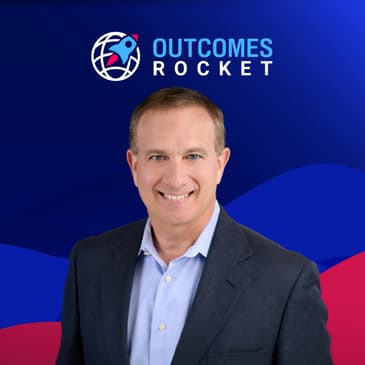
[00:00:29] Hello, everyone, and welcome back to the Outcomes Rocket. I'm so excited to have G.T. LaBorde with us again. It's been a few years, so really excited to have him back on the podcast. He's the CEO of IllumiCare. They're a pioneering health tech company that integrates directly into electronic medical records to really help the workflow, to help providers see real-time insights on financial patient safety implications and clinical decisions.
[00:00:58] G.T.'s on a mission to help physicians become better stewards of patient safety and hospital resources. He's an entrepreneur that I admire, and I'm excited to have him back here on the podcast. G.T., thanks for joining. Thanks. Great to be back. Yeah, yeah. It's great to have you back. So what's new since we've been together? You know, it's fascinating. We started this journey really to create something new.
[00:01:22] Clinical decision support has existed for a long time, and we kind of created a new category, which is clinical financial decision support. That is, when it's appropriate, and that's probably the key differentiator in this conversation. When it's appropriate, let's show providers the cost of the decision they're about to make and perhaps what alternatives they could have that might be cheaper to allow them to be better stewards of resources.
[00:01:47] And it's important. Hospitals are fighting increasing costs and squeezes in their margins, and patients more than ever are taking bigger responsibilities. Medical debt is one of the top drivers of bankruptcy in the United States. So it's important that providers think of running up the bill, perhaps, as kind of an iatrogenic risk of care. But the most important thing of all this is that while everything costs something, there are only a relatively small number of decisions where the cost really does matter.
[00:02:17] There really is a cheaper alternative. There really is a lack of clinical utility relative to the cost and what they're about to do. And so the biggest part of all of this, you know, a lot of people use AI and fancy technology to figure out what to say. A lot of our science is around what not to say and what not to say it. Doctors have a lot on their minds. They have a lot to think about already. Alert fatigue is a real thing.
[00:02:41] And so the most important thing is to pick your battles, pick those spots where you ask them to think about the cost of something and to be very judicious about that. And we just get better and better every year at not only having more content, but being really judicious about what we say and when we say it. Down to 60 seconds a day is the average amount of attention span that we ask an inpatient provider to consider in an entire workday. Well, that's significant.
[00:03:07] And I totally feel you on it's what you don't say because there's a lot you could say that could go the wrong way, especially in a really busy day where physicians spending so much time on the EMR. Although that's getting better, right? And there's a lot of things pointing toward a positive direction there. So talk to us about your business, Illumicare. What do you guys specifically do? How is it different and why does it matter? Yeah, specifically, we work for hospitals, primarily health systems.
[00:03:36] And in the main part of what we do, we are ingesting in real time lots of a stream of data of what's going on with patients who's admitted and moving around and discharged. What medications are they receiving? What lab orders are there? Radiology, procedural orders, all kinds of information. We also ingest costs. So that hospital's actual wholesale acquisition costs, for example, from today, from their wholesaler, what does this drug actually cost to buy on the shelf?
[00:04:06] If we're going to give it to a patient, what's it going to cost to replace in our inventory? And in real time, we put all this together and figure out the cost of every single order from every single doctor on every single patient in real time. And we are using a proprietary account. We had to do all of the original research ourselves to figure out what's expensive and where are their legitimate alternatives. And some drugs have a cheaper alternative but only in certain clinical situations.
[00:04:33] So how do we define what those situations are and how do we tell in the stream of data that the patient actually meets this clinical scenario that it's very likely that you could do something cheaper? And so, boy, it's been a challenge over time to do that. But what you get then is this real-time opportunity to weigh in and affect decision-making. And what's been most exciting is kind of being right in the order workflow when people are doing this. They take our advice about 30% of the time.
[00:05:03] And when you compare that to other clinical decision support, it's actually much better than the typical kind of rate of agreeing with these advisories that kind of appear in their workflow. So we're excited that we do find value. And what's fascinating about what we do is when someone agrees with us, we know exactly how much money has been saved when they do. Because we're the ones that calculated the difference in cost between what they were about to do and what they did ultimately do.
[00:05:27] And so you can see an immediate effect on both the behavior of clinicians and the value that that generates for them. And that's such a powerful thing for a clinician to be able to quantify how much value they're delivering to the health system, for hospitalists to quantify their role as kind of the quarterback of the case, and how much value they're able to deliver to everybody by being better stewards.
[00:05:51] So it is going from like data to analytics to behavior change to the quantification of that in specific dollars. And tying that all together has really been fun. Yeah, no, it sounds really meaningful. And if you had to say one thing that most people don't know about the problem you solve, what is it? How extraordinarily complicated it is to figure out what this order costs. You should think that simple.
[00:06:17] You would think that there would be a, hey, how much did the hospital pay for this drug? In reality, this drug comes in many formulations and many forms. And even within a specific, you know, it's a pill form. It's a 100 milligram tablet. Well, actually, they can buy that in a 50 pack or they can go to Sam's and get, you know, a really big pack and get a cheaper pill. Or even the formulations, like how much does it cost to mix together this IV that's given in milliequivalents.
[00:06:46] And by the way, they can buy that from multiple companies selling it. And so it's an extraordinarily complicated thing to just figure out what does this order cost to the health system? And that's been one of the first challenges we had to overcome. It seems so simple. But given how complicated it is, it's extraordinarily hard to do in real time. Yeah, no, great call out. And all this lack of standardization sounds like you guys get it all inside of the system and you give them control again. We do.
[00:07:14] All of that complexity is job security for us. That's awesome. That's awesome. And then in turn, you make that complexity more simple for folks, right? Which is the beauty of it. Yeah. I mean, a provider doesn't need to do or want to know any of that stuff, right? You have to distill all of this. You have to do all the hard work on the back end so that you can crystallize a specific decision for a specific patient and say, hey, here's one of those times.
[00:07:39] I'm going to take some of my 60 seconds because this is a time when I think it's worth you considering the cost of something and perhaps an alternative. And the fact that they do relatively frequently is very validating to all the hard work we do to get to that point. That's great. And do you guys focus on medications? Is that the sweet spot? You know, medications is a big one, but we do labs and radiology. And we really focus on what are the things that physicians can control? Like, what are the costs that their decisions really directly influence? Because that's whose workflow we're in the midst of.
[00:08:09] So that's why we focused on those things. And is there a focus in particular with at-risk populations, value-based care, Medicare Advantage? You know, we started this business on the inpatient side because most inpatient reimbursement is fixed fee. It's DRG-based or per diem or something like that. So hospitals have the financial risk for those patients.
[00:08:31] But now we're working on projects on controlling these decisions in the outpatient setting for the health plans or the ACOs whose pocket it's coming out of. There are a lot of decisions made about lab testing or imaging study on the outpatient basis that are duplicative and don't add a lot of value. So that's one of the places we're really leaning into currently. That's exciting. Well, GT, we love to learn from successful people.
[00:08:57] What would you say is one of your favorite business resources or hacks that you'd like to recommend to our listeners and why? You know, I find that I love being a business engineer. And by that, I mean, I love understanding how businesses tick, how they make money, what the KPIs are for that given business. To give an example, I ran into an executive the other day, a person who was a former executive at Avis, car rental. And I just took that opportunity. We just happened to be seated next to each other at a charity event. But I asked him, like, tell me how Avis makes money.
[00:09:27] Like, what's the key? And I had no idea that they make money not by renting cars. That's actually like just an ancillary adjunct to how they actually make money, which is selling used cars. Is that right? Yeah, that's true. So their main engine is selling used cars. 100%. They can buy cars because they buy so many cars. Yeah, yeah. They can buy them at a tremendous discount relative to me and you.
[00:09:51] So when they only turn around on the used car market, they're able to kind of sell these cars at a profit on what they bought them new. And honestly, what we pay as renters is just sort of carrying just to pray the carrying cost between the buying and the selling. It's like in the more businesses you sort of understand the nuances of how they work, the more, I guess, the bigger your toolbox is to figure out, well, how am I going to make this business work? Totally. Like the $5 rotisserie chicken at Costco. It's like, what? How do they do that? Yeah.
[00:10:21] Like, you know, and that opens up lots of things. You know, you're like, I think I can use that in this little spot, right? GT, I heard that airlines don't make money from airfare, that they make them off credit cards. Is that true? Do you know that or not? I don't know that one. I don't know that one. We got to talk to somebody. This is the beautiful thing. There are so many different businesses. There are so many opportunities for a business leader to sort of like figure out, what about this little business and how does this work? I love that. No, that curiosity is key for all you entrepreneurs listening to our podcast.
[00:10:49] Definitely stay curious because that curiosity, you never know where you're going to find a new idea like GT has in Avis's model. Do you have an answer to the airplane industry question? We want to hear about it. Definitely. We share these on LinkedIn. So chime in if you have an answer to that. But if you, more importantly, have a health system that could use some help in the area of efficiency, GT is your man.
[00:11:14] What's the best place that folks can reach out to you, GT, learn more and get in touch if they want to continue the conversation? You know, fun fact. You can just go to our website. If you fill out that little form of our website, it comes to me. So I get to see all of the inbound to info at or from the book. It's been a great way to just keep a pulse on who's making inquiries and stuff. So that's super easy. Love it. Straight line to the man himself. There you go. You have no idea. I respond to all kinds of people that way. They have no clue who's responding.
[00:11:45] Who's this customer service joker? Yeah. That is phenomenal. Straight line to the amazing GT Laborde. He's the CEO at Illumacare, just pioneering the way in this business, helping provide real-time insights on the financial and patient safety implications of clinical decisions. Check out the show notes for ways to get in touch with him. And GT, thanks for joining us again. This is always fun to be with you. Same here.
[00:12:21] This podcast is produced by Outcomes Rocket, your healthcare exclusive digital marketing agency. Outcomes Rocket exists to help healthcare organizations like yours to maximize their impact and accelerate growth. Visit outcomesrocket.com or text us at 312-224-9945.