
In an era where technological advancements are transforming healthcare, the challenges of interoperability and patient experience continue to loom large, revealing deep flaws within the system.
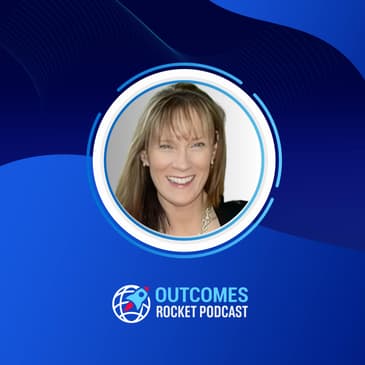
In this episode, Carol Flagg, managing partner of Answers Media Company, shares insights from her journey from publishing to healthcare, leading a pioneering role in media and digital health transformation. Carol discusses the power of Healthcare Now Radio, the challenges and personal experiences that shaped her perspective on the healthcare system, and the role of AI and interoperability in shaping the future. She also emphasizes that achieving full interoperability is crucial to prevent unnecessary patient losses and stresses the need for a safety-first approach to deploying AI technology in healthcare.
Tune in for an eye-opening discussion on innovation, communication, and the human side of healthcare!
Resources:
- Connect with and follow Carol Flagg on LinkedIn.
- Follow Answers Media Network on LinkedIn.
- Explore Health IT Answers website.
- Check out the What’s My Tagline? Podcast.
[00:00:02] Hey everyone, welcome back to the Outcomes Rocket. So excited that you joined us again for another exciting episode with some of healthcare's biggest and most innovative thinkers. Today I have the privilege of hosting an amazing person and leader in the space. Her name is Carol Flagg. She's a managing partner of Answers Media Company with over 30 years of experience in the publishing industry. She leads the company's sales and marketing initiative,
[00:00:32] including new business development, sponsorship sales, social media outreach and email initiatives. She's also the producer and host of What's My Tagline. It airs on the Healthcare Now radio and it's just an incredible show. I had a chance to be on it a month ago and I recommend it to all that are listening and watching us today. So Carol, with that intro, I want to welcome you. Oh, thanks for having me on your show. I'm looking forward to it. Looking forward to it as well. And you're going to be able to join us today.
[00:01:02] You're calling in from Phoenix, Arizona. Phoenix, Arizona, where it is definitely dry and not underwater like parts of Florida, but just hopefully winding down a very long, long hot summer. So yeah. Getting into the good season over there. Yes. Yeah. A little late this year, but hopefully we'll be below 100 starting this weekend. So yeah. Fingers crossed for that. Fingers crossed. I'm hoping it's 99 degrees. Yeah, exactly.
[00:01:30] Fingers crossed. Well, speaking of bringing the heat, you certainly are doing that in the media space and in the publishing space for all the listeners and viewers that don't know about you, help them understand what got you into healthcare and what got you into entrepreneurship.
[00:01:48] Yeah. Yeah. That's a great question. So I was living in Austin, Texas in the publishing business and involved in things like South by Southwest and whatnot during, you know,
[00:01:59] 98 to 2008, you know, in essence, the start of the dot-com boom, a little bit of a bust and then started to boom again. And, you know, and I relocated back to Phoenix. My mom had passed away and I wanted to be closer to my dad and family.
[00:02:16] In 2008, which coincided with, of course, what they now call the deep recession. Everybody calls it a depression with the housing crisis, but the deep recession. And my best friend and I, Roberta Mullen, we were in Las Vegas. I think we were the only two people in Las Vegas at the time in the spring of 2009.
[00:02:36] And the Obama administration had passed AARRA, the Recovery Act. And part of that Recovery Act was the HITECH Act, which was an incentive program that went on for many years through CMS, through Medicare reimbursements, to incentivize hospital physicians to adopt EHR technology.
[00:02:55] My business partner was in the medical field anyway. I had the media side of things and I thought, what an exciting time for me to probably explore this. I'm not a healthcare person. I've never been a healthcare worker. Don't even have a family member that's worked in healthcare, ironically enough.
[00:03:08] But I was really intrigued by this idea of this movement for going digital because obviously that's where the media was going. Obviously newspapers, print newspapers were dying at that point.
[00:03:22] So I thought, well, you know, this idea of taking what media background I had and, you know, the burgeoning digital aspect of media and applying it to what was going on in healthcare was very appealing.
[00:03:34] That's great. Well, you had great timing.
[00:03:36] Or bad timing, depending on how you know.
[00:03:39] Yes. I look at it as great timing. You got in at the right moment. Obviously, like it was a turning point. Let's call it that.
[00:03:47] Yeah, it was. It was. Yeah, it was definitely a pivotal point, I think, in the healthcare industry.
[00:03:52] And so you got in and when you got in, was it what you're doing today? Was it the Answers Media Company?
[00:04:02] Yeah. It started with our first new site, which was HITECH Answers. Again, the HITECH Act is what we were reporting on and providing information out there for hospitals and physicians looking to adopt the EHR technology, earn their incentives and whatnot.
[00:04:17] And that went on from 2010 into 2015 when MACRA passed.
[00:04:24] Yeah.
[00:04:25] Well, perhaps the Days of Hymns when you would walk on the exhibit floor 2011, 2012, and every banner said Meaningful Use on it. It's just like, you know, it's all they could talk about.
[00:04:34] I mean, and there were talks, of course, of health information exchanges on a statewide level. It was the infancy of interoperability that term began to get kicked around.
[00:04:42] So we rode that HITECH Answers pony for quite a few years. And then when MACRA passed and things really began to wind down on that HITECH side, and we were expanding our coverage anyway into security with the Omnibus Bill of 2013, MACRA passing in the RCM space, and just the expansion of health IT in general.
[00:05:05] And so we eventually morphed into Health IT Answers, which is our new site, part of the Answers Meeting Network. And then I know we're going to talk about this, I'm sure, in a second.
[00:05:13] And then we debuted our health care, our radio station in 2012. So that's been cooking along. Oh, gosh, you know, 14 years now.
[00:05:23] Amazing.
[00:05:24] Yeah, yeah.
[00:05:26] The time flies. And you guys are creating such great content. I think of you guys as a great source for connecting with the right people.
[00:05:35] to the right audiences, to learn about what's out there, the latest and greatest. As you guys started down this road, and now, what would you say differentiates you?
[00:05:44] What makes you guys different or better than other solutions that people might have out there?
[00:05:50] Yeah, that's a great question. You know, definitely from a media standpoint, I think the real differentiator for us is healthcare not radio,
[00:05:57] which includes a podcast side of the coin as well. Obviously, podcasts, you know this, really began to take off and rise in 2016 with the Apple update and release of a podcast icon on the iPhone.
[00:06:12] But that's a long story. But I think really, the radio side of it, you know, healthcare is first and foremost, a streaming radio station that streams 24 seven,
[00:06:24] you know, obviously an internet radio station in the US and even overseas, we have a certain percent of our audience listens worldwide, right?
[00:06:31] And I believe we still are the only internet radio station in the healthcare B2B space.
[00:06:39] Oh, really?
[00:06:39] Yeah, I think so. You know, again, differentiating radio from podcasts. And I think that that is a pretty big differentiator for us, you know, and I think there are people now today that we talk to and we talk to us who actually don't even know our high take answers, health IT answers roots, right?
[00:06:56] They just think, oh, you're out on our radio. I listen to you on my car, I stream you here, you know, whatnot, or I listen to you, you know, all your podcasts, as episodes go on demand on our podcast channel.
[00:07:07] And so I think that's what differentiates us. And, you know, as time has gone on through, you know, the digital transformation of healthcare and what's going on in a cybersecurity standpoint and COVID and all those kinds of things, you know, our healthcare and our radio, I think is what allows us to really provide a diversification, I guess, of voices across the industry in a wide range of topics that really go beyond our health IT centricity that you find in health IT answers.
[00:07:37] I love that. That's a very clear differentiator. And to that point, I mean, I also didn't know about the Answers Media Network. I always knew you guys as the Healthcare Now Radio.
[00:07:49] Yeah, yeah.
[00:07:49] So, you know, when we started to get to know each other, and you started explaining everything to me, I was like, oh, wow, that's cool. The roots are beautiful and sort of grounded in the history of what's been happening in healthcare.
[00:08:01] And the digital side of it, I think for sure. It's the health IT side and the digital movement of healthcare, right?
[00:08:08] Yeah, I love it. Okay. So, you know, as you guys have been building the business, the media platform, what's one thing that's sort of risen up as a challenge or a setback that's been a trying one, but that's made you guys so much better as a result?
[00:09:24] No interoperability. Paperwork every time they went to a specialist. The record's not being able to move. Insurance companies denying procedures in certain aspects.
[00:09:33] And the frustrations and the delays that they went through and the lack of back and forth and lack of communication, I was hoping we were solving in healthcare really was part of both of their demise.
[00:09:48] And it was a big moment for me. And I remember thinking, wow, we've been doing all these great stories and voices and conversations for years on our radio station and stuff over printing.
[00:10:02] You know, we're always talking about the latest and greatest in innovation.
[00:10:05] And yet here I was in a personal standpoint, I lost two people, a family member. And then my admin person, I was very close. I thought of her as a daughter to these circumstances that make healthcare suck in the U.S.
[00:10:19] That's why, you know, healthcare is hard. Healthcare is complicated, right? And that really hit home.
[00:10:24] And I really began to sort of reach out to various hosts in our network, someone who I'm very close to. They've been on our radio station for a long time.
[00:10:34] And I was like, you know, it's okay to have tough conversations about this, you know? Yes, certainly healthcare today with innovation and tools and applications have saved a lot of patients.
[00:10:46] But for a lot of people, they don't see the benefit of that. And how do we shed some light on that?
[00:10:52] You know, I had Rachel's mom on Dr. Nick's radio show a couple of times. I was on a couple of radio shows.
[00:10:58] And some of these hosts, again, and I'm close to, they continue to explore really difficult things that I don't experience personally in my healthcare.
[00:11:08] Maybe you don't, but that so many people in the U.S. are experiencing and frustrated about.
[00:11:14] Yeah, it sounds like, and sorry for what happened. And, you know, it just sounds like those events, you know, losing close people to you really kind of open your eyes to a lot of the hardships that people are going through.
[00:11:29] And it sort of opened up a new outlet for what you guys are covering.
[00:11:34] Yeah, I think that it opened up this idea that innovation, you know, we live in a world of innovation, right?
[00:11:43] Not just healthcare, but, you know, across our entire lives, you know, there's new things coming.
[00:11:47] The apps, AI, of course, is changing the world that we live in.
[00:11:51] And I think what it brought home to me and, you know, obviously to my business partner, who's also my best friend and very close to the situations that I went through,
[00:11:59] you know, that we can, as a voice out there, talk about these things, you know.
[00:12:05] We have a radio host now that's spending some time really talking about diabetes, which is an epidemic in the U.S.
[00:12:12] And again, my younger brother died of complications from diabetes.
[00:12:15] And, you know, great that we have these technologies to help manage, but really, you know, what is that person's home life?
[00:12:23] This kind of gets back to social determinants of health, right?
[00:12:26] Like, you know, what are their challenges?
[00:12:27] What is the financial side of what they're dealing with, the personal stuff they're dealing with, their family situation?
[00:12:33] Are they alone?
[00:12:34] Do they have a ride?
[00:12:35] You know, why is it they just can't call a doctor's office to get an appointment, you know?
[00:12:41] Yeah.
[00:12:42] Just simple, these simple things that we think that we should be able to accomplish, but we can't.
[00:12:48] And I didn't say this, but I heard somebody say this not too long ago in the last year or so, that there's a difference now between how people can be categorized almost in healthcare.
[00:13:00] There's the consumer and then there's the patient.
[00:13:03] If I'm the consumer, I'm doing my due diligence, I'm researching, I'm online, I got portals, I'm looking at my lab results.
[00:13:09] I mean, very actively involved, right?
[00:13:11] And that's just my nature anyway, you know, maybe digital savvy.
[00:13:15] But then there are patients who still, you know, maybe they're a generation older or maybe they're not, but the patients who are just patients telling me what to do.
[00:13:25] Can I just talk to somebody?
[00:13:27] Can I just call today and make an appointment?
[00:13:29] You know, I don't understand these 20 hurdles I have to go through in order to see a doctor about my condition.
[00:13:35] And so are you a consumer or are you a patient?
[00:13:39] You know, and I think that these are the stories that are resonating with me today.
[00:13:43] And so, and when we have those kinds of stories in our podcast network, you know, for shows that we syndicate or on our radio station, they're the ones that I like to shine a light on.
[00:13:52] I love that, Carol.
[00:13:53] Yeah.
[00:13:53] It's such a really nuanced idea, but very clear.
[00:13:57] And what are you guys all thinking about yourselves?
[00:14:00] Are you a patient or are you a consumer?
[00:14:05] Yeah.
[00:14:05] Hmm.
[00:14:05] I like to think of myself as a consumer.
[00:14:08] I dig into things and, you know, I guess that's one to unpack for sure.
[00:14:13] Yeah.
[00:14:13] We could definitely spend more time chatting about that.
[00:14:15] I want to leave this idea with all of you to think about yourselves, but also this is the world that we live in now.
[00:14:21] You know, we're all consumers.
[00:14:23] You know, we have Netflix, we have Starbucks, we have Amazon.
[00:14:26] So it's time that we start looking at ourselves as consumers of healthcare instead of just passive patients, to Carol's point.
[00:14:33] So really appreciate that idea that you left us with, Carol.
[00:14:36] As we sort of think about trends and technology in healthcare that's really game-changing, what's one thing that you would point to that is worth a double look?
[00:14:49] Yeah.
[00:14:49] So, well, obviously, AI.
[00:14:51] That's like the duh.
[00:14:53] That's the Homer Simpson moment.
[00:14:54] Duh.
[00:14:55] You know, right?
[00:14:57] And I, obviously, there are a lot of people who are, AI is going to, is already changing healthcare, whether it's on the patient-facing side, consumer-facing side, whether it's with technology, all that kind of stuff.
[00:15:09] And then there are people who are talking a lot about responsible use and ethical use of AI, you know, where that lands, which I think is actually, to me, a really interesting side of this.
[00:15:23] It's obvious I use AI in my life every single day.
[00:15:26] I mean, we all do.
[00:15:27] Maybe we don't think we are, but we do, right?
[00:15:29] We definitely do.
[00:15:29] But the ethical and responsible use of AI, I think, is sort of fascinating.
[00:15:34] And there are lots of conversations going on around that.
[00:15:37] As AI gets more prevalent in healthcare delivery, I think those things have to be tackled.
[00:15:43] I don't know if they should be tackled.
[00:15:45] You know, some of it's trying to be tackled, I think, on the governance side.
[00:15:48] Obviously, the security side, you know, is imperative.
[00:15:51] But I think it's just really interesting.
[00:15:54] You know, the genie was let out of the bottle quite a while ago.
[00:15:58] And, you know, whether you're one of those like, oh, AI is great, AI is good.
[00:16:02] Or whether you're like, hey, I saw the Terminator five times, AI is going to kill us, right?
[00:16:07] You know, but like everything, the truth is probably someplace in between.
[00:16:11] And I think that when it comes to that conversation about the user-responsible AI, whether it's on that provider side or as a consumer, i.e. patient, our side, I think that that's an interesting conversation to come.
[00:16:23] I also do think that, you know, brought on by, just from a government policy standpoint, brought on by TEFCA and the designation of QINs and Q-H-I-N, you can Google the acronym.
[00:16:36] This idea of perhaps taking that next step towards interoperability, you know, across the healthcare ecosystem.
[00:16:45] You know, my personal opinion, again, through my experiences that I went through, is that without full scale interoperability, we're going to lose more patients than we should.
[00:16:55] We're going to lose more people than we should.
[00:16:56] Yeah.
[00:16:56] I agree with you completely on that one.
[00:16:59] And I think we're steps in the right direction.
[00:17:02] Something to, you're leaving us with a lot to think about.
[00:17:05] Like, consumer or patient?
[00:17:10] How are you ethically deploying AI?
[00:17:13] Are you thinking about your safety?
[00:17:15] Guys, like, you know, this is the right podcast to be listening to today.
[00:17:20] Safety first.
[00:17:22] That's right.
[00:17:22] Safety first.
[00:17:23] No, I love it.
[00:17:24] Very stimulating, Carol.
[00:17:26] Always appreciate our conversations and how thoughtful you are about these topics.
[00:17:31] Look, we're here at the end.
[00:17:32] And I want to give you an opportunity to share where people can listen to your show.
[00:17:37] How could they get in touch with you?
[00:17:39] Ways to engage with Answers Media Company.
[00:17:42] Yeah, yeah.
[00:17:43] So our Health IT Answers news site is healthitanswers.net.
[00:17:48] Just power signs.
[00:17:49] And then our station website is healthcarenowradio.com.
[00:17:52] And that's where you can stream our live radio stream and also check out all our podcasts and shows.
[00:17:58] Also, always looking to connect with people on LinkedIn.
[00:18:00] Amazing.
[00:18:01] Well, folks, there you have it.
[00:18:03] Carol Flagg, an extraordinary leader in healthcare, managing partner of Answers Media Company.
[00:18:09] Here with us today, she shared a couple ways for you to find her and listen to her show and all of the different podcasts that are on their network.
[00:18:19] Take a look at that in the show notes.
[00:18:21] Take advantage of it and reach out to her on LinkedIn if something she said resonated with you.
[00:18:26] This is how we make things happen.
[00:18:28] So thank you all for tuning in.
[00:18:29] And Carol, thanks so much for being with us.
[00:18:31] Oh, thanks for having me on.
[00:18:32] I appreciate it.