
This podcast is brought to you by Outcomes Rocket, your exclusive healthcare marketing agency. Learn how to accelerate your growth by going to outcomesrocket.com
Ensuring healthcare providers continuously receive feedback on patient outcomes is crucial for improving care and personalizing treatment plans.
In this episode, Matthew Gitelis, Founder and CEO of PatientIQ, shares how his company is transforming patient-reported outcomes data in healthcare. PatientIQ partners with hospitals, specialty practices, and medical device companies to automate data collection and provide actionable insights. Matt emphasizes the importance of closing the feedback loop between patients and providers, as assuming patient improvement after discharge is often inaccurate. He also introduces PatientIQ’s new DataPro product, which allows customers to benchmark performance and leverage AI-driven insights for better care.
Tune in and learn how PatientIQ is using data to transform patient care in a transformative way!
Resources:
- Connect and follow Matthew Gitelis on LinkedIn.
- Learn more about PatientIQ on their LinkedIn and website.
Fast Track Your Business Growth:
Outcomes Rocket is a full service marketing agency focused on helping healthcare organizations like yours maximize your impact and accelerate growth. Learn more at outcomesrocket.com
[00:00:01] This podcast is produced by Outcomes Rocket, your healthcare exclusive digital marketing agency. Outcomes Rocket exists to help healthcare organizations like yours to maximize their impact and accelerate growth. Visit outcomesrocket.com or text us at 312-224-9945.
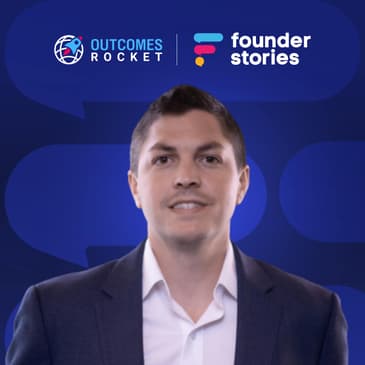
[00:00:30] Hey everyone, welcome back to the Outcomes Rocket Founder Stories. I'm so excited to have you all join us again. Today, I have the privilege of hosting Matt Gitelis. He is the founder and CEO at PatientIQ. Matt started his career as a financial analyst covering mergers and acquisitions and capital raises for clients based in New York, Chicago, Toronto.
[00:00:55] And after leaving the finance world and Wall Street, he worked as a researcher at North Shore University Health System and others. And he saw a lot of challenges. That's where his idea for PatientIQ came out. That's what we're going to be talking about today. Matt, I'm so glad you could join us. Yeah, thank you so much for having me. It's our pleasure. So look, let's get right into it, Matt. Tell us about your business. What do you guys do? How is it different? And why does it matter? Sure. Yeah.
[00:01:24] First, PatientIQ is a healthcare software company. The business itself is headquartered out of Chicago. And what we do is we help automate the collection of patient-reported outcomes data at scale. So we have this great privilege where we work with more than 750 healthcare institutions across the U.S. healthcare market in a variety of different care settings that we'll talk about.
[00:01:45] But at our core, what we do is when a patient schedules treatment at a provider, we automate the collection from their perspective on how they recovered after that treatment. And so I'll give a quick story because I think this maybe doesn't resonate with everyone. So as you graciously gave my background, I'm actually a business guy at heart, even though now I've worked in healthcare the last decade.
[00:02:09] So my quick story is that I started on Wall Street and I was working with data and data analytics and built a lot of my foundational skills. But I left the world of Wall Street because I wanted more impact and more mission, like a lot of people who actually pursue careers in healthcare. I'll give a quick story. So now I'm in my mid-20s. I'm going to, I actually totally pivot my career and I'm going to medical school. So that was my first pivot. Now I'm wearing a white coat as a 26-year-old.
[00:02:38] And I remember this first time I actually worked in a clinic. And I think a lot of patients don't really appreciate this, is that I'm working next to a whole team of surgeons and we're seeing about 60 patients in a day. And a lot of these patients are at various points of their care. Some of them are new patients that we're evaluating. Some of these are post-operative patients that are now recovering. And I'll just give a quick example of a post-op patient. We go into the clinical exam room. We examine the patient.
[00:03:07] We don't see anything wrong with the patient on exam. They're recovering in the way that we expect them to. And it's now the three-month post-op appointment. So we say, you're now discharged. And what we do in medicine is that once we discharge that patient, we just really assume they're going to get better unless they come back through the system in the way of an ER visit, a readmission, or they call us in the office.
[00:03:28] So that's like the one quick story I like to tell because I was so naive when I first started wearing the white coat that I didn't realize that once the patient leaves the facility, the providers just assume they get better. And then one thing that I learned is that that's really not always the case. If you actually follow these patients a little bit further, six months, one year, and you actually track these patients, and this is what patient IQ measures at scale.
[00:03:53] If you ask these patients, how are they recovering their functional assessments, what we learn is they don't always get better. And as providers, if we close that feedback loop, we can actually incrementally improve the way we deliver care going forward. So patient IQ has built this entire portfolio around measuring patient outcomes data and getting insights back to frontline providers so we can treat that next patient better and also personalized care plans. Thanks, Matt.
[00:04:22] Really appreciate you highlighting that insight that a lot of times people don't get better. And we need to stay on top of where they're at in their care journey, not just assume. What end customer do you serve in the healthcare ecosystem? Yeah, we have a first, the way we define our business segments are first, we have our provider solutions business. And that's really deployed in all sorts of customers ranging from large health systems and integrated delivery networks, academic medical centers. We call that health systems.
[00:04:51] And then we also work with specialty practices and ambulatory surgery centers. Another facet of our business is where we work directly with medical device and life science companies. So if you think about that initial patient journey, where you're a patient and you're being treated, doctors are treating patients with products that are provided by device companies and life science companies. So a really quick example would be, imagine the patient that presents with knee osteoarthritis and they have chronic debilitating pain.
[00:05:20] And then they ultimately get indicated for surgery, let's say a knee replacement. Well, not only is the surgeon going to perform that surgery, they're going to be aided by the biomedical device provided by a manufacturer. Those devices in the teams that work very hard to design those products are equally invested in that patient having a great outcome. So they also need to know how their products are performing out in the real world. So that's what we do with medical device and life science companies.
[00:05:48] We help them capture this data at scale across all of the medical community in the United States. Our last customer segment, we do work with nonprofits and societies as well, specifically around the research mission of improving patient outcomes. The bulk of our business is for just the standard of care, quality improvement. However, we do a lot of work in multi-center research and that's facilitated through our nonprofits vertical. Yeah, thanks, Matt. Very succinct.
[00:06:16] And I appreciate you sharing all the divisions of your company. Seems like you're serving a lot of folks in the space, your tech platform. Look, we love insights here. What's one thing most people don't know about the problem you solve? I know you shared one at the beginning, right, with sort of assuming people leave healthy. But what's something most people don't realize? So on the surface, if you think about this problem, and we, Patient IQ was founded in 2016.
[00:06:40] So we've been developing technology over the last almost 10 years now in this category of how do we actually measure patient outcomes and get insights back to frontline providers to treat the next patient better? On the surface, it sounds like a relatively easy problem to solve. If you think about other industries, and like I said, I came from other industries. Like I like to use an example. When you take, when you, let's say, order an Uber, within three seconds of getting out of your ride,
[00:07:09] you're going to get a quick survey to rate that driver. And then that feedback is going to actually go into the algorithm to help that driver improve their performance, but also might affect how they get more rides in the future. In healthcare, that feedback loop is really broken, where providers aren't continuously getting feedback about patient outcomes. And then if you do, meaning if you're able to measure that data at scale, what do you do with it?
[00:07:34] So what we've been doing is building technology that's automated into the electronic health record for every patient that is being treated at these hospitals. We then acquire data from the medical record as well, and then we provide insights back to these doctors on how to better treat the patient. So while it's a very simple problem, if you do this very, very well, you will be rewarded with being a highly high-performance healthcare organization,
[00:08:02] and there's a lot of financial benefits to do that. That's great, Matt. Yeah, for sure. It's not as easy, but you guys are helping folks do that, so I really appreciate you highlighting that. And look, you've been at this for almost 10 years, and we love to learn from successful founders like yourself. What's your favorite business resource or business hack that you'd recommend to our listeners, and why? So one thing that I think I've recently come to appreciate much more is that as our companies become much larger,
[00:08:31] obviously, as the founder of the company, when the teams were really small, I was always on the front line doing the day-to-day to service our customers. But as our company's gotten larger, there's a lot of other responsibilities that CEO needs to be thinking about, such as learning from the market or meeting with investors or other constituents. So the one piece of feedback that I would give is that what I've since reflected on and what I've really learned
[00:08:57] is that where I could be most impactful to my organization is if I'm directly customer-facing all the time. So what we really think about at PatientIQ is each phase of our customer journey, starting when institutions are first trying to become educated around how do we collect patient-reported outcomes data, and then how do we deploy this within our facilities, all the way through to how do we get implemented with that technology, and then how do we ultimately derive the most value from the program?
[00:09:25] What I have learned and what I would recommend to others is that even though you have a lot of responsibilities as a CEO, for instance, to actually talk to your customers, get on the front lines, learn about the problems at each of those phases of the customer journey, and that will get you into problem-solving mode with your team members on those same front lines. Of course, I read a lot about other companies in the industry more broadly.
[00:09:50] What I find to be the most impactful for my continuous learning is to actually get into the weeds a little bit, to learn about the customer pain points, because this market is evolving very quickly. And then when I can work directly with my team members on the front lines, that's when we can actually develop the most creative solutions to improve this overall. So that's one thing that I think a lot of people forget over time, is that one of the best ways for continuous learning is just to be on the front lines and actually hear from the market directly.
[00:10:20] That's awesome, Matt. Yeah, it's a great reminder. When an organization does grow, it's a lot easier to be removed from that customer relationship. And so a great reminder for all of us to stay close to our customers. They're the ones that sign our paychecks. I love that, Matt. Look, this has been awesome. I've really enjoyed our conversation today and learning more about what you and the team at PatientIQ do for reported outcomes and keeping things more front and center.
[00:10:49] What's the best place our listeners and viewers could get in touch with you if they want to learn more? Sure. First and foremost, if you're just curious about what do we do at PatientIQ or some of our products and services, I would first just point you to our website. There's a wealth of information that you can learn about the real-world impact that our solutions deliver. And you could just reach out. Someone on our team will get on a call with you nearly immediately just to answer your questions. We're also out and about.
[00:11:15] We have this awesome privilege where we're on the road a lot going to trade shows and conferences, and we publish that on our website as well, some of the industry events that we tend to go to. But yeah, that would probably be the first place I would recommend you go. In addition to our website, we also have a very exciting announcement that we'll be sharing more information about, and that's the launch of our new product, Datapro.
[00:11:37] So as I've been mentioning, PatientIQ has had this wonderful opportunity where we've been building this patient-reported outcomes network all across the U.S. healthcare market, where we now have more than 750 institutions participating. We're deployed in more than 5,000 sites of care, and we're actually engaging more than 2 million patients a month by measuring their outcomes after treatments and procedures.
[00:12:00] What Datapro does is it takes us to the next level where we're going to be providing our customers tools so they can start to dive deeper into understanding how they perform relative to their peers across the U.S. healthcare market. So not only are we building detailed performance benchmarking, but also AI-driven insights so you can dive in to each of your treatments and procedures and identify where you can improve and get that information back in the hands of care providers on the front lines.
[00:12:29] So we're very excited about this. It wouldn't have been possible if we hadn't already been enrolling about 30 million longitudinal outcomes into our dataset, and this is something that we think is going to have a big, big impact in the industry. So I hope you check out the website to learn more, and we'll be sharing a bunch of cool stuff about it very soon. Well, Matt, thank you so much. Super impactful, and thanks for sharing all those figures. Very impressive. So folks, make sure you check out PatientIQ in the show notes.
[00:12:55] Check them out at one of the upcoming conferences if something that mentioned was interesting to you. I'm sure that's a great place to go do a demo and meet the team. And most importantly, Matt, thank you for joining us. All right. Thank you.
[00:13:19] This podcast is produced by Outcomes Rocket, your healthcare-exclusive digital marketing agency. Outcomes Rocket exists to help healthcare organizations like yours to maximize their impact and accelerate growth. Visit OutcomesRocket.com or text us at 312-224-9945.