
Nearly 50% of US counties lack access to a cardiologist.
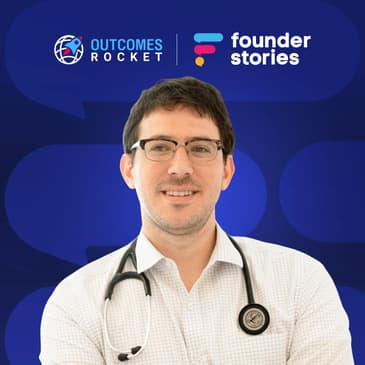
In this episode, Dr. Jeffrey Wessler, a cardiologist, founder, and CEO of Heartbeat Health, discusses how he is transforming the field of cardiology through a digital, nationwide approach. The company focuses on a decentralized model, offering remote cardiac diagnostics, televisits, and ongoing care, particularly in underserved areas where access to cardiologists is limited. Dr. Wessler stresses the importance of collaborating with payer organizations to reach the patients who need care the most. He highlights the potential of home-based diagnostics and emphasizes the need to study clinical outcomes carefully to ensure the effectiveness of remote care. Dr. Wessler also highlights the significance of staying focused, making strategic pivots, and building a clear vision for the future.
Tune in and learn how digital innovation is reshaping cardiology and improving patient outcomes across the nation!
Resources:
[00:00:02] [SPEAKER_00]: Hey everybody, welcome back to the Outcomes Rocket Founder Stories.
[00:00:08] [SPEAKER_00]: I'm really excited to host an amazing guest with us today.
[00:00:12] [SPEAKER_00]: His name is Dr. Jeff Wessler.
[00:00:16] [SPEAKER_00]: He is a cardiologist, founder, and the CEO at Heartbeat Health.
[00:00:22] [SPEAKER_00]: They're transforming the business of cardiology from a digital perspective and really across
[00:00:28] [SPEAKER_00]: the entire nation.
[00:00:29] [SPEAKER_00]: So I'm excited to have him here with us today.
[00:00:31] [SPEAKER_00]: Jeff, thanks for being with us.
[00:00:34] [SPEAKER_00]: Hey Saul, great to be here.
[00:00:35] [SPEAKER_00]: Thanks for having me.
[00:00:36] [SPEAKER_00]: Absolutely.
[00:00:37] [SPEAKER_00]: You guys are really changing the game in cardiology from access to really delivery.
[00:00:44] [SPEAKER_00]: And so we're going to have a chance to really unpack that and why what you guys
[00:00:48] [SPEAKER_00]: do is so unique.
[00:00:49] [SPEAKER_00]: But before we dive into that, Jeff, I'd love to really learn more about you.
[00:00:53] [SPEAKER_00]: What is it that inspired your work in health care and entrepreneurship?
[00:00:58] [SPEAKER_01]: Yeah, it wasn't, it was not always in my cards, I'd say to do entrepreneurship, but it
[00:01:03] [SPEAKER_01]: was always in my cards to be in health care.
[00:01:06] [SPEAKER_01]: My grandfather was a cardiologist.
[00:01:08] [SPEAKER_01]: My middle older brother is a cardiologist.
[00:01:11] [SPEAKER_01]: We've been keeping it in the family.
[00:01:13] [SPEAKER_01]: That's cool.
[00:01:13] [SPEAKER_01]: And I think about maybe 15 years ago or so I started to get the bug of I'd
[00:01:21] [SPEAKER_01]: like to really work on how we deliver care.
[00:01:24] [SPEAKER_01]: I've always been somewhat fascinated, maybe even obsessed with how we bring new
[00:01:29] [SPEAKER_01]: clinical interventions to market.
[00:01:31] [SPEAKER_01]: But there seems to have been a gap in how we get something from the approval
[00:01:37] [SPEAKER_01]: clinical trials space actually into patients and out to broad swaths of
[00:01:43] [SPEAKER_01]: patients who really need and will benefit from it.
[00:01:45] [SPEAKER_01]: And that's the space that I took a love and a real focus on in my career.
[00:01:50] [SPEAKER_01]: Ultimately that turned into an entrepreneurship track when I said, Hey,
[00:01:54] [SPEAKER_01]: cardiology is, which is the specialty field that I went through with training.
[00:01:59] [SPEAKER_01]: And is a field that may be one of the prime opportunities to actually improve
[00:02:03] [SPEAKER_01]: that gap between treatment.
[00:02:06] [SPEAKER_01]: That's amazing, but doesn't really get to all the people who need it.
[00:02:08] [SPEAKER_01]: And then focus on how do we get that care out there?
[00:02:11] [SPEAKER_00]: I think that's great.
[00:02:12] [SPEAKER_00]: Jeff, Oh, were you going to continue?
[00:02:14] [SPEAKER_00]: Please, please go for it.
[00:02:15] [SPEAKER_01]: Well, just to say that I think that ultimately that made its way to
[00:02:19] [SPEAKER_01]: heartbeat health about seven, eight years ago when I was doing work in the
[00:02:25] [SPEAKER_01]: academic setting on different ways of studying, delivering and getting care
[00:02:28] [SPEAKER_01]: out there and really saw that there was a big opportunity and gap in the
[00:02:33] [SPEAKER_01]: market for creating this national decentralized practice to do cardiology
[00:02:39] [SPEAKER_01]: and be the provider of services across the U S.
[00:02:42] [SPEAKER_01]: And that's eight years later, what we've built at heartbeat.
[00:02:44] [SPEAKER_01]: And it's, uh, it seems to be going pretty strong, man.
[00:02:47] [SPEAKER_00]: That's so cool, Jeff.
[00:02:47] [SPEAKER_00]: I love the vision that you had.
[00:02:50] [SPEAKER_00]: And we had a nice chat before recording the podcast, just how
[00:02:54] [SPEAKER_00]: fast things have changed.
[00:02:56] [SPEAKER_00]: And so, you know, the entrepreneurial journey is as much vision as it
[00:03:01] [SPEAKER_00]: is grit and sticking with it.
[00:03:04] [SPEAKER_00]: So as we chat about heartbeat health and what makes you guys unique, I
[00:03:07] [SPEAKER_00]: want to kind of pull on some of that story that, and your journey there,
[00:03:11] [SPEAKER_00]: but talk to us about heartbeat health.
[00:03:13] [SPEAKER_00]: What is it that you guys do that's so unique for the people that don't
[00:03:16] [SPEAKER_00]: know? Yeah.
[00:03:17] [SPEAKER_01]: Heartbeat is the best way to think of us as a large cardiology practice in
[00:03:22] [SPEAKER_01]: the cloud.
[00:03:22] [SPEAKER_01]: So we've got hundreds of clinicians doing care across the U S everything
[00:03:28] [SPEAKER_01]: from cardiac diagnostics, like rhythm monitors and echocardiograms and
[00:03:33] [SPEAKER_01]: CT scans all the way to tele visits, e-consults, and then ongoing
[00:03:38] [SPEAKER_01]: care, including ordering medications, titrating those medications, for
[00:03:42] [SPEAKER_01]: example, with patient for patients with heart failure who have very
[00:03:45] [SPEAKER_01]: high care needs and places where they need clinical interactions.
[00:03:50] [SPEAKER_01]: And when you think about that care, the big missing component as
[00:03:55] [SPEAKER_01]: compared to where things were before heartbeat is that it is really,
[00:03:59] [SPEAKER_01]: really hard to access that care in most parts of the country.
[00:04:03] [SPEAKER_01]: There was just a landmark study that came out that's been reported
[00:04:07] [SPEAKER_01]: in a lot of the major news outlets about how almost 50%, I think 46
[00:04:11] [SPEAKER_01]: is the actual number, 46% of counties in the U S don't have access to
[00:04:16] [SPEAKER_01]: a cardiologist.
[00:04:17] [SPEAKER_01]: And when you think of such an important high risk condition, that's
[00:04:22] [SPEAKER_01]: almost unacceptable, you know, for obviously for people's health, but
[00:04:26] [SPEAKER_01]: the outcomes that that bears.
[00:04:28] [SPEAKER_01]: So that's the gap we play in.
[00:04:29] [SPEAKER_01]: That's the place where heartbeat says, well, we, we can give you
[00:04:32] [SPEAKER_01]: that access and we can provide that care at scale throughout the U S.
[00:04:36] [SPEAKER_00]: Man.
[00:04:37] [SPEAKER_00]: I mean, that number is staggering.
[00:04:38] [SPEAKER_00]: I wasn't aware of that.
[00:04:41] [SPEAKER_00]: 46% of counties do not have access to a cardiologist.
[00:04:44] [SPEAKER_00]: That is just wild.
[00:04:45] [SPEAKER_00]: That's right.
[00:04:46] [SPEAKER_00]: It's amazing.
[00:04:47] [SPEAKER_01]: And yeah, in this country, in this country, and we're so used to
[00:04:51] [SPEAKER_01]: seeing like a lot of the places where high quality cardiovascular centers are
[00:04:57] [SPEAKER_01]: actually have five academic centers in a, you know, I'm from New York
[00:05:01] [SPEAKER_01]: and we've got five academic centers in five square blocks of each other.
[00:05:05] [SPEAKER_01]: But that's not the majority of care in the U S and that causes some real
[00:05:11] [SPEAKER_01]: disparities and real issues for people who need this care.
[00:05:13] [SPEAKER_00]: Totally.
[00:05:15] [SPEAKER_00]: So talk to us about your model.
[00:05:17] [SPEAKER_00]: You're obviously, you know, improving access and I would even say
[00:05:21] [SPEAKER_00]: equity along the way it's much needed.
[00:05:25] [SPEAKER_00]: How does it work?
[00:05:25] [SPEAKER_00]: And do you have an exclusive provider network or are you partnering
[00:05:30] [SPEAKER_00]: with other health systems?
[00:05:31] [SPEAKER_00]: Talk to us about that.
[00:05:33] [SPEAKER_01]: Yeah.
[00:05:33] [SPEAKER_01]: Good question.
[00:05:33] [SPEAKER_01]: So over the years we've worked in different models and finally
[00:05:37] [SPEAKER_01]: found our core model.
[00:05:39] [SPEAKER_01]: I'd say three or four years ago, which was we will be the network.
[00:05:44] [SPEAKER_01]: So heartbeat medical group now has its own clinicians, everything from
[00:05:48] [SPEAKER_01]: cardiologists to advanced practitioners, to nurses, to care
[00:05:52] [SPEAKER_01]: coordinators, to sonographers all doing care.
[00:05:55] [SPEAKER_01]: So think of it like a large division of cardiology, but for one thing,
[00:05:59] [SPEAKER_01]: which is that no one's in the same location and everyone's doing care
[00:06:04] [SPEAKER_01]: across the U S so we mostly do that care for primary care groups and
[00:06:09] [SPEAKER_01]: particularly groups that are bearing risk, financial risk on their population.
[00:06:14] [SPEAKER_01]: And the reason that that has become the main model is that those groups
[00:06:18] [SPEAKER_01]: stand to benefit from keeping the care in house when they have to send
[00:06:22] [SPEAKER_01]: somebody out to a fee for service cardiologist, and then I have to put
[00:06:27] [SPEAKER_01]: bills for the cascade of diagnostic tests they might get or the procedures
[00:06:32] [SPEAKER_01]: that they get, it's a lot more cost effective of a model to say, well,
[00:06:36] [SPEAKER_01]: let's keep as much in house as we can and only send someone when they
[00:06:40] [SPEAKER_01]: really need a procedure or really need an advanced diagnostic.
[00:06:44] [SPEAKER_01]: Otherwise we can keep the incentives aligned with improving
[00:06:47] [SPEAKER_01]: their outcomes and quality.
[00:06:48] [SPEAKER_00]: That's excellent, Jeff.
[00:06:49] [SPEAKER_00]: So you guys have your own network and you're pairing up with primary
[00:06:54] [SPEAKER_00]: care and folks that take risks.
[00:06:56] [SPEAKER_00]: So you're looking at ACOs, Medicare Advantage, and really kind of this
[00:07:00] [SPEAKER_00]: population that could really benefit from this.
[00:07:03] [SPEAKER_01]: That's exactly right.
[00:07:04] [SPEAKER_01]: And it happens that Medicare Advantage is growing, maybe the fastest
[00:07:08] [SPEAKER_01]: growing line of business in the U S right now by 2030, the majority
[00:07:13] [SPEAKER_01]: of patients will be in these accountable care payer contracts.
[00:07:18] [SPEAKER_01]: And that matches, it turns out the, where the risk of
[00:07:22] [SPEAKER_01]: cardiovascular disease lies.
[00:07:23] [SPEAKER_01]: It lies in older patients, Medicare and Medicare Advantage.
[00:07:26] [SPEAKER_01]: Patients have much higher risk of cardiovascular disease or much
[00:07:30] [SPEAKER_01]: higher prevalence of cardiovascular disease.
[00:07:32] [SPEAKER_01]: And it's being severely under managed and under diagnosed simply
[00:07:38] [SPEAKER_01]: because of this access problem.
[00:07:40] [SPEAKER_01]: It can take months to get to a cardiologist in lots of
[00:07:44] [SPEAKER_01]: areas throughout the U S.
[00:07:45] [SPEAKER_00]: Amazing.
[00:07:46] [SPEAKER_00]: And so with that said, I guess you're partnering with the
[00:07:49] [SPEAKER_00]: payer organizations as well, right?
[00:07:51] [SPEAKER_00]: To be able to deliver this.
[00:07:53] [SPEAKER_01]: Yep, that's right.
[00:07:54] [SPEAKER_01]: So like a lot of health tech companies, we started and said, let's go
[00:07:58] [SPEAKER_01]: direct to consumer and build a market there.
[00:08:00] [SPEAKER_01]: We actually did okay in the New York area specifically, and built a
[00:08:05] [SPEAKER_01]: fairly large clinical direct to consumer practice in pretty short time, about
[00:08:10] [SPEAKER_01]: a year, I had several thousand people, but what we found was they
[00:08:14] [SPEAKER_01]: weren't the patients who really needed us, who we were going to get
[00:08:17] [SPEAKER_01]: the most benefit and help the most.
[00:08:19] [SPEAKER_01]: And if we wanted to realize the vision of really inflecting outcomes in care,
[00:08:24] [SPEAKER_01]: then we had to work with payers to focus on their patients who needed it
[00:08:29] [SPEAKER_01]: the most and that ended up being a hard transition, but ultimately a
[00:08:34] [SPEAKER_01]: fruitful one, and we're in a much better place now that we're directly
[00:08:38] [SPEAKER_01]: partnered with those paying for care and also those who know
[00:08:41] [SPEAKER_01]: their highest risk members.
[00:08:43] [SPEAKER_00]: That's great.
[00:08:43] [SPEAKER_00]: No, that's really, really interesting.
[00:08:45] [SPEAKER_00]: Look, we connected.
[00:08:47] [SPEAKER_00]: I saw a post that you did on LinkedIn.
[00:08:50] [SPEAKER_00]: You were unboxing your 12 lead Cardia.
[00:08:53] [SPEAKER_00]: So that really got my attention kind of, and where the model is going.
[00:08:58] [SPEAKER_00]: We had Dr.
[00:08:59] [SPEAKER_00]: Albert, you know, on the podcast we were at ACC.
[00:09:01] [SPEAKER_00]: It was an awesome meeting, tons of innovation this year.
[00:09:05] [SPEAKER_00]: Just incredible.
[00:09:06] [SPEAKER_00]: Right.
[00:09:06] [SPEAKER_00]: Were you there this year by the way?
[00:09:07] [SPEAKER_01]: I was, and also spent some time with Dave.
[00:09:10] [SPEAKER_01]: So we missed each other there.
[00:09:11] [SPEAKER_00]: Man, we missed each other.
[00:09:12] [SPEAKER_00]: I'll catch you next year for sure.
[00:09:14] [SPEAKER_00]: Um, but I was super intrigued by that because you have this device.
[00:09:19] [SPEAKER_00]: So are you guys looking at shifting to start making house calls?
[00:09:24] [SPEAKER_01]: Yeah, good question.
[00:09:25] [SPEAKER_01]: So first just to say, I think the device and diagnostic space in
[00:09:30] [SPEAKER_01]: cardiology is changing and accelerating more rapidly than any other.
[00:09:34] [SPEAKER_01]: And I'm, I think that's one of the things that has kept me so excited
[00:09:39] [SPEAKER_01]: about this space over the last decade is that every year, a new diagnostic
[00:09:44] [SPEAKER_01]: or a new version of a cardiac device comes out that is moving closer and
[00:09:49] [SPEAKER_01]: closer to realizing that goal of cardiac diagnostics from home.
[00:09:53] [SPEAKER_01]: So we've been right there with the cutting edge of that trend and using
[00:09:58] [SPEAKER_01]: diagnostics as closely as we can to deliver care.
[00:10:02] [SPEAKER_01]: Our rhythm monitoring is probably the first and best example of
[00:10:06] [SPEAKER_01]: a use case that works there.
[00:10:08] [SPEAKER_01]: So we now run the largest rhythm monitoring program in the country in
[00:10:13] [SPEAKER_01]: partnership with a group called iRhythm that sends rhythm monitors to
[00:10:17] [SPEAKER_01]: high-risk individuals or symptomatic individuals to look for a
[00:10:21] [SPEAKER_01]: rhythm as like atrial fibrillation, which if found early enough, can be
[00:10:26] [SPEAKER_01]: managed and treated and do, you know, get yield amazing outcomes,
[00:10:29] [SPEAKER_01]: like prevent strokes, which can be devastating.
[00:10:32] [SPEAKER_01]: So these programs, I'd say two things about them.
[00:10:35] [SPEAKER_01]: Number one, the potential is just amazing to really change huge broad
[00:10:40] [SPEAKER_01]: outcomes with large, large populations because you get to get rid of that
[00:10:45] [SPEAKER_01]: barrier of having someone to have to go in to a brick and mortar clinic
[00:10:49] [SPEAKER_01]: or diagnostic center to get that diagnostic.
[00:10:52] [SPEAKER_01]: But the flip side to that is they need to be studied cautiously and
[00:10:57] [SPEAKER_01]: carefully to make sure that you're doing more benefit than harm and that
[00:11:00] [SPEAKER_01]: the benefit is yielding the right clinical outcomes.
[00:11:03] [SPEAKER_01]: So one of the things that I've always brought, I think to the heartbeat
[00:11:07] [SPEAKER_01]: line of thinking, but also to our different partners is the need to say,
[00:11:11] [SPEAKER_01]: it won't be the business model that drives this forward and keeps this
[00:11:14] [SPEAKER_01]: to be a multi-decade long company and opportunity.
[00:11:18] [SPEAKER_01]: It'll be the clinical outcomes.
[00:11:19] [SPEAKER_01]: And if this innovation of remote delivered care in cardiology is
[00:11:24] [SPEAKER_01]: going to work, then we have to study it.
[00:11:25] [SPEAKER_01]: We have to prove that it works in that it's at least as good as,
[00:11:28] [SPEAKER_01]: if not better than, you know, similar care being done in the
[00:11:32] [SPEAKER_01]: brick and mortar or I've started calling it the terrestrial world.
[00:11:36] [SPEAKER_00]: I love that by the way.
[00:11:39] [SPEAKER_00]: Love that big thinking, big thinking is where it starts.
[00:11:42] [SPEAKER_00]: You have to have vision and you have vision Jeff, and I love
[00:11:46] [SPEAKER_00]: your vision for this business.
[00:11:48] [SPEAKER_00]: Building the company certainly, you know, is never easy.
[00:11:51] [SPEAKER_00]: It's never easy to build a company like this.
[00:11:53] [SPEAKER_00]: If you could reflect on any setbacks that have really defined
[00:11:58] [SPEAKER_00]: the company's future movement, what would you point to?
[00:12:02] [SPEAKER_01]: Over the years, the biggest challenges for us have been every time
[00:12:06] [SPEAKER_01]: we've made a big pivot and most of the time that has to do with focus
[00:12:12] [SPEAKER_01]: and becoming unfocused and chasing too many different things.
[00:12:16] [SPEAKER_01]: And so I think in this space in particular, every week I see
[00:12:21] [SPEAKER_01]: new opportunities, new directions we could go, new devices or diagnostics
[00:12:25] [SPEAKER_01]: or channels that might be a good idea.
[00:12:28] [SPEAKER_01]: And I think it's easy to say, look, we got to go chase them all.
[00:12:31] [SPEAKER_01]: Focusing and bringing yourself back and saying, actually let's stick to the
[00:12:35] [SPEAKER_01]: model that's working and prove that out first before we expand and move into a
[00:12:40] [SPEAKER_01]: new area has been a lesson that hard learned, but one that's paid off over
[00:12:45] [SPEAKER_01]: time. And I think when I think about the hard moments over our last seven
[00:12:50] [SPEAKER_01]: to eight years or so that those have been the moments that stick out is
[00:12:53] [SPEAKER_01]: when we've had to shut something down, not because it's not a good idea,
[00:12:56] [SPEAKER_01]: but because we need to stay focused on what is working and what's going to
[00:12:59] [SPEAKER_01]: be most effective for our short and medium term roadmaps.
[00:13:03] [SPEAKER_00]: I love that. Yeah, I remember being at a conference.
[00:13:06] [SPEAKER_00]: It was Becker's and at the time it was Omar Ishrac, the previous CEO of
[00:13:11] [SPEAKER_00]: Metronik. Yep.
[00:13:13] [SPEAKER_00]: And he spent like just as much time talking about what they don't do as
[00:13:19] [SPEAKER_00]: much as what they do do.
[00:13:21] [SPEAKER_00]: And like that just kind of back to what you're saying, you know, it's
[00:13:24] [SPEAKER_00]: so important as a founder to really be crystal clear and communicate that
[00:13:29] [SPEAKER_00]: what do you do to communicate that to your team, to investors?
[00:13:33] [SPEAKER_00]: Like what's your process for that?
[00:13:35] [SPEAKER_01]: Yeah, it's a good question.
[00:13:36] [SPEAKER_01]: And I'll give you, I'll answer that and then give you an example that's
[00:13:39] [SPEAKER_01]: happening right now.
[00:13:40] [SPEAKER_01]: So we, number one, I think I have found the need to find clarity myself
[00:13:47] [SPEAKER_01]: about what the vision is, what the roadmap is, what our message is first
[00:13:50] [SPEAKER_01]: and then over communicate that again and again and again.
[00:13:54] [SPEAKER_01]: Our company is one of many that are remote team that's all over the
[00:13:58] [SPEAKER_01]: country. We're not all in the same place.
[00:14:00] [SPEAKER_01]: So it takes over communication and simple communication of what our
[00:14:05] [SPEAKER_01]: goals are, what our vision is and how we're going to achieve those.
[00:14:08] [SPEAKER_01]: And I've found myself learning how to communicate and message things in
[00:14:12] [SPEAKER_01]: a much better way than I ever have before.
[00:14:15] [SPEAKER_01]: And I think that's the most effective.
[00:14:17] [SPEAKER_01]: And then the example that we're facing right now, and I'm sure
[00:14:20] [SPEAKER_01]: you're seeing this in your view of the landscape is value-based care
[00:14:24] [SPEAKER_01]: is everywhere and everyone is talking about value-based care nonstop.
[00:14:27] [SPEAKER_01]: My view of the market is that in specialty care, in particular,
[00:14:32] [SPEAKER_01]: cardiovascular, we're really still a few years off from being ready to
[00:14:36] [SPEAKER_01]: do full value-based cardiology.
[00:14:38] [SPEAKER_01]: And so even though that is so exciting to work on it's, you know,
[00:14:43] [SPEAKER_01]: that full vision of realizing outcomes at better cost and quality
[00:14:47] [SPEAKER_01]: at scale, we need to take baby steps to get there.
[00:14:50] [SPEAKER_01]: And we can't abandon the fee for service care model that gets us
[00:14:54] [SPEAKER_01]: there. And most importantly, we can't abandon the path that actually
[00:14:58] [SPEAKER_01]: proves out outcomes and metrics and milestones before we're ready to
[00:15:02] [SPEAKER_01]: take full risk and full value-based care.
[00:15:04] [SPEAKER_01]: So that's been a clear point of me somewhat pushing back against
[00:15:09] [SPEAKER_01]: the wave of VBC work that's being pushed on everyone right now
[00:15:14] [SPEAKER_01]: and saying, let's take a more measured approach and hopefully
[00:15:17] [SPEAKER_01]: that'll pay off in the long run.
[00:15:19] [SPEAKER_00]: Yeah, no, I actually really, I agree with that approach and, you
[00:15:23] [SPEAKER_00]: know, I'm having a lot of conversations with the data and analytics
[00:15:26] [SPEAKER_00]: companies that are trying to power this type of work and payers.
[00:15:30] [SPEAKER_00]: I agree with you. I actually had a friend suggest something similar
[00:15:34] [SPEAKER_00]: to what you said, and he called it fee for service 2.0.
[00:15:38] [SPEAKER_00]: So it's like, this is the evolution.
[00:15:41] [SPEAKER_00]: You could buy into that, right?
[00:15:42] [SPEAKER_00]: Like it's something that's more thoughtful.
[00:15:44] [SPEAKER_00]: It's not VBC yet, but it's fee for service 2.0.
[00:15:47] [SPEAKER_00]: What do you think about that?
[00:15:48] [SPEAKER_00]: Yeah, it's a good one. I might steal that one.
[00:15:50] [SPEAKER_00]: Cheers man. Take it.
[00:15:51] [SPEAKER_00]: But it's about advancing it, right?
[00:15:53] [SPEAKER_00]: And that's what we're all about.
[00:15:55] [SPEAKER_00]: And you guys are all in on this.
[00:15:57] [SPEAKER_00]: So I love how you're thinking about this.
[00:15:59] [SPEAKER_00]: It's good to be thinking about it.
[00:16:01] [SPEAKER_00]: Let's be practical and take those baby steps.
[00:16:03] [SPEAKER_00]: Great message from Dr.
[00:16:05] [SPEAKER_00]: Westler. Look, we're here at the end.
[00:16:06] [SPEAKER_00]: I wish we could keep chatting about a lot of the different
[00:16:10] [SPEAKER_00]: things that you guys have doing.
[00:16:11] [SPEAKER_00]: Maybe we'll do a part two, but kind of here as we're coming
[00:16:14] [SPEAKER_00]: to a close, Jeff, what call to action would you leave our listeners with?
[00:16:19] [SPEAKER_00]: And what's the best place they could get in touch with you and the heartbeat crew?
[00:16:24] [SPEAKER_01]: So my call to action is I think a clear one to focus on building outcomes and
[00:16:29] [SPEAKER_01]: evidence, if you start with care that actually generates value, then you can't
[00:16:35] [SPEAKER_01]: lose.
[00:16:35] [SPEAKER_01]: And if you can use that to tweak the model, to find the care model that
[00:16:39] [SPEAKER_01]: actually works for patients and outcomes.
[00:16:42] [SPEAKER_01]: So focus on that above all else and you'll land in a really good spot.
[00:16:45] [SPEAKER_01]: And then as for where to reach me, I'm always reachable on LinkedIn.
[00:16:49] [SPEAKER_01]: I'm happy to share my email, which is Jeff at heartbeat health.com and look
[00:16:55] [SPEAKER_01]: forward to hearing from anyone.
[00:16:57] [SPEAKER_00]: Amazing.
[00:16:58] [SPEAKER_00]: Jeff, thank you so much for your time today.
[00:17:01] [SPEAKER_00]: It's been a really great pleasure to chat with you and for all the
[00:17:04] [SPEAKER_00]: listeners, Dr.
[00:17:06] [SPEAKER_00]: Jeff Westler here, cardiologist, founder and CEO at heartbeat health,
[00:17:11] [SPEAKER_00]: doing incredible things to transform healthcare for really all of us.
[00:17:15] [SPEAKER_00]: It was a pleasure to have him on the podcast.
[00:17:17] [SPEAKER_00]: If you heard something that he said that resonated with you, take action on it.
[00:17:22] [SPEAKER_00]: So many people listen to podcasts or audio books and they just stop with,
[00:17:26] [SPEAKER_00]: Oh, that was cool.
[00:17:27] [SPEAKER_00]: Well, I want you to literally hit pause on this episode, go to LinkedIn and
[00:17:33] [SPEAKER_00]: hit Jeff up because if you do, I promise you great things will happen.
[00:17:38] [SPEAKER_00]: Partnerships will start and you too can improve the populations you serve.
[00:17:43] [SPEAKER_00]: So certainly take action.
[00:17:44] [SPEAKER_00]: Don't stop at listening.
[00:17:45] [SPEAKER_00]: Thank y'all for tuning in and Jeff, I want to thank you for being with us today.
[00:17:49] [SPEAKER_00]: This was a real pleasure.
[00:17:50] [SPEAKER_01]: Thank you.
[00:17:51] [SPEAKER_01]: So this was great.
[00:17:51] [SPEAKER_01]: I really appreciate it.